
Central Oregon · Oregon
Retiring in Redmond: Is It the Right Fit for Your Next Chapter? (2026)
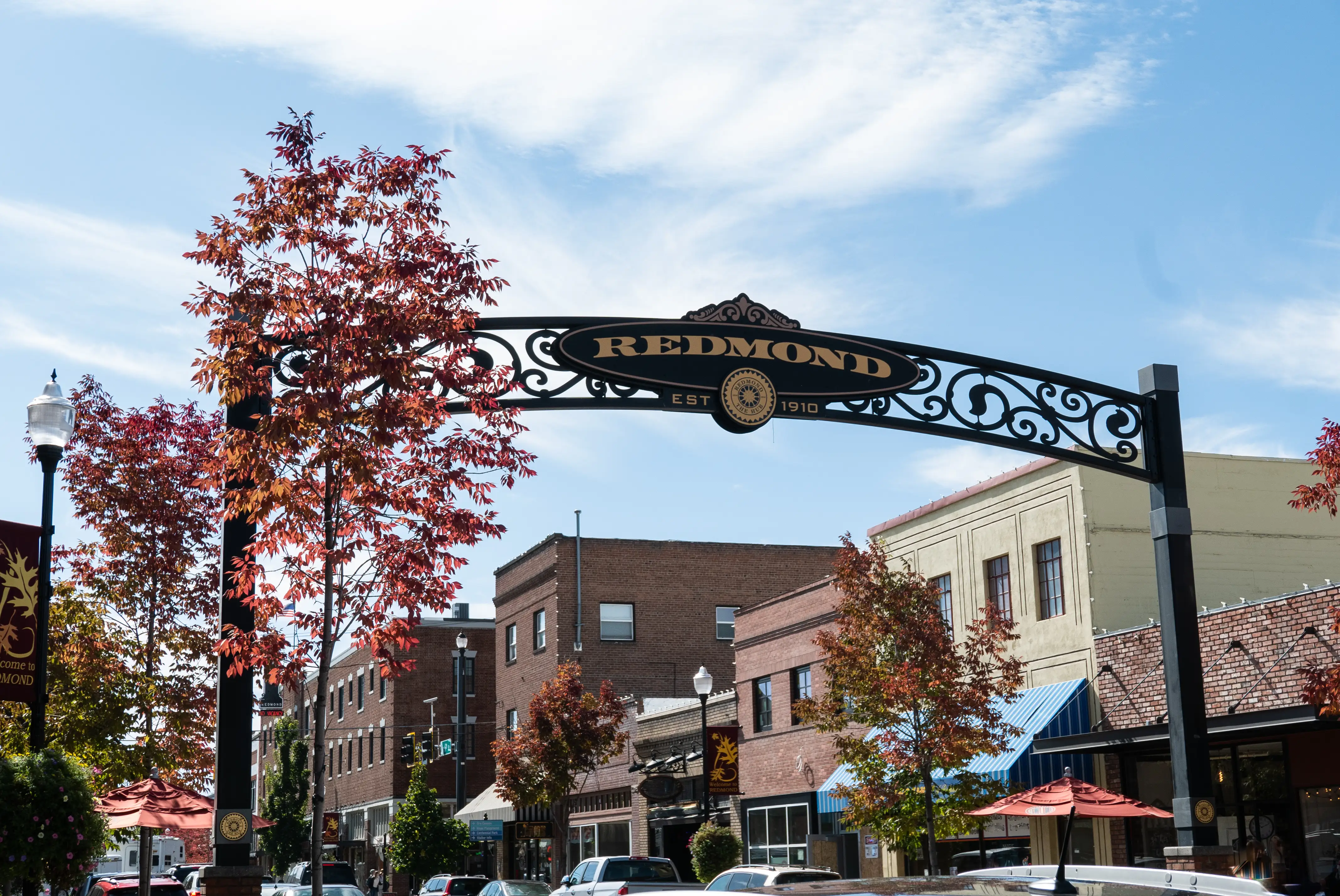
Redmond doesn't try to be a retirement destination the way Scottsdale or Asheville does. It's a working Central Oregon city with a hardware store on the main drag, a wildfire base in the industrial park, and a high school football team that fills the stands on Friday nights. But for a specific kind of retiree — one who wants 300 days of sunshine, a real hospital nearby, outdoor access without the Bend price tag, and a community where people still wave from their driveways — Redmond consistently outperforms its reputation.
The retiree who lands well here tends to be someone who prioritizes financial breathing room over cultural density. They want trails over theaters, a manageable home that leaves room in the budget for travel, and a pace that doesn't feel like a city trying to become something else. They're comfortable driving 20 minutes to Bend when they need the wine bar or the specialty specialist — and they don't mind a little high desert wind in exchange for the view.
This guide covers what retirement in Redmond actually looks like in 2026 — the tax picture, the healthcare infrastructure, senior living options, day-to-day walkability, and an honest comparison against the other places retirees in this region tend to consider.
Oregon's tax treatment of retirement income is a mixed picture that catches many out-of-state retirees off guard. The state levies no sales tax, which helps at the register, but it also taxes most retirement income — including Social Security for higher earners, pensions, and IRA withdrawals — at ordinary income rates that climb into the 8–9% range for incomes above modest thresholds.
| Income Type | Oregon Tax Treatment |
|---|---|
| Social Security | Exempt if income below ~$22,500 (single) / ~$45,000 (married); partially or fully taxed above that |
| Public pension (Oregon PERS) | Partially exempt depending on hire date; most subject to state income tax |
| Private pension / 401(k) / IRA | Fully taxable as ordinary income |
| Military retirement pay | Up to $6,250 exempt for qualifying veterans |
| Investment income (dividends/capital gains) | Taxed as ordinary income; no preferential capital gains rate |
| Property tax | ~0.72% effective rate; deferral program available for qualifying seniors |
| Sales tax | None |
| Estate / inheritance tax | Oregon estate tax applies above $1 million threshold |
Oregon's income tax bite matters most for retirees drawing substantial pension or IRA income — a household pulling $80,000 annually from retirement accounts will see a meaningful state tax bill compared to peers in Washington or Nevada. The silver lining is the property tax picture. At approximately 0.72%, Redmond's effective rate is low by national standards, and Oregon's Senior Property Tax Deferral Program allows qualifying homeowners age 62 and older to defer property taxes on their primary residence until the home is sold — a genuine financial cushion for retirees on fixed incomes.
Compared to Washington, where Social Security and pension income are untaxed at the state level, Oregon looks less favorable on paper. But Washington's home prices in comparable communities routinely run $100,000–$200,000 higher, and the absence of a sales tax in Oregon narrows the gap meaningfully for everyday spending. Retirees who enter Oregon with paid-off homes or modest income distributions often find the net difference is smaller than the headline rates suggest.
St. Charles Redmond at 1253 NW Canal Blvd is the anchor of local healthcare — a Level 3 trauma center with a medical-surgical unit, ICU, emergency department, surgical services, and an outpatient rehabilitation program. It carries Healthgrades recognition for outpatient prostate care, vascular surgery, and gastrointestinal surgery excellence, which matters if you're evaluating day-to-day specialty access. The facility has roots going back to 1952, when Redmond became the first city in Oregon to form a public hospital district — and a $30 million expansion in 2006 brought its capabilities substantially forward.
For most retirees, St. Charles Redmond will handle the large majority of what they need. The honest limitation is what Level 3 trauma status implies: complex cardiac events, major trauma, and neurosurgical emergencies will require transfer to St. Charles Bend, the full regional medical center about 20 miles south. That 20-minute drive is worth understanding before you move here, not after. For elective procedures, multi-specialty consults, and anything requiring advanced imaging or oncology, Bend's campus is the destination.
St. Charles Health System as a whole operates across four hospitals with over 4,000 caregivers and more than 220 employed providers serving a 32,000-square-mile region. That scale means Redmond patients benefit from system-wide care coordination, shared electronic records, and access to specialty services across the network — even when the specific procedure happens in Bend or Madras.
Redmond has approximately 20 senior living communities and retirement-oriented housing options, ranging from independent apartment-style living to full memory care. That's a meaningful depth of options for a city this size, and it's one reason retirees who do their homework often end up here rather than in a larger city where the comparable facilities cost considerably more.
| Community | Type | Location | Est. Monthly Cost |
|---|---|---|---|
| Brookdale Redmond | Independent, Assisted, Memory Care | 1942 SW Canyon Drive | $3,500–$5,500 |
| Regency Village at Redmond | Independent, Assisted, Respite Care | Redmond | $3,200–$5,000 |
| Regency Redmond Rehab & Nursing | Skilled Nursing, Continuing Care | 3025 SW Reservoir Drive | $7,000–$11,000 |
| Heights Assisted Living Center | Assisted Living | 3000 SW 32nd St | $3,500–$5,500 |
| Countryside Living of Redmond | Assisted Living | 1350 NW Canal Blvd | $2,800–$4,500 |
| Fox Hollow Independent & Assisted | Independent, Assisted Living | 3000 SW 32nd Street | $5,000–$7,000 |
| Juniper Springs Senior Living | Independent, Assisted, Memory Care | Redmond | $3,500–$6,000 |
| East Cascade Retirement Community | Independent Living | Redmond | $2,500–$4,000 |
For retirees who plan to age in place rather than move into a community, Redmond's home health infrastructure is worth noting. Home health aide services run in the range of $6,100 per month, with homemaker services slightly lower at roughly $5,900. Adult day programs — a frequently overlooked middle option — run considerably less, in the range of $1,800 monthly, and can be an effective bridge before more intensive care becomes necessary.
The Redmond Senior Center at 325 NW Dogwood Avenue is a resource that often surprises newcomers. Named the Chamber's Business of the Year for Customer Service in 2025, the center delivers over 31,000 Meals on Wheels annually at no charge to recipients. Social programming, wellness classes, and transportation assistance are all available — and the center functions as a genuine community hub rather than an afterthought.

Looking to buy in Redmond? Estimate your payment.
Enter your numbers to see an estimated monthly mortgage payment.
Estimate only. Excludes HOA fees and mortgage insurance.
The daily texture of retired life in Redmond orbits around the outdoors in a way that's hard to replicate in most Pacific Northwest cities. The Dry Canyon Trail cuts right through the middle of the city — a 3.5-mile rimrock path that feels like an improbable gift in a mid-sized working town — and most mornings you'll find retirees walking it before 8am in weather that would send Portland retirees indoors. Smith Rock State Park is 15 minutes away, and while the technical climbing draws younger visitors, the lower trails along the Crooked River are well-suited to older hikers. Juniper Golf Course gives golfers a public option without the Bend pricing or the wait times.
Culturally, Redmond is honest about what it is. The Redmond Expo Center hosts a steady rotation of trade shows, livestock events, and the annual Deschutes County Fair and Rodeo — a legitimate community gathering with deep local roots. The First Friday Art Walk in Old Town draws a consistent crowd, and the weekly farmers market during the growing season creates a regular social rhythm on SW 7th Street. What Redmond doesn't have is a symphony, a significant theater district, or the restaurant depth that Bend has accumulated. Retirees who need that kind of cultural density as a daily fixture tend to spend a lot of time driving south on Highway 97.
Getting around without a car is genuinely limited. Cascade East Transit operates fixed bus routes connecting Redmond to Bend and within the city, and the Senior Center provides some transportation assistance — but Redmond is a car-centric city, and the grid between neighborhoods assumes you're driving. Retirees who give up their licenses should have a clear plan before they arrive. The flip side: everything you regularly need is accessible and not far. Fred Meyer, Walmart, and Grocery Outlet cover groceries; St. Charles Redmond sits on the west side of town convenient to most residential areas; and the Old Town core puts coffee, hardware, and a few good lunch spots within a walkable cluster.
The city's 300 annual sunny days and low humidity matter more than they might seem on a spec sheet. High-desert air — dry, clear, and consistently above freezing more than Portland but colder than Bend's floor — tends to suit retirees with certain respiratory concerns better than the Willamette Valley's damp winters. Snow does fall, mostly in January and February, but it melts quickly, and the shoulder seasons here stretch longer than in comparable altitude communities east of the Cascades.
| City | Median Home Price | Hospital Access | Walkability | Senior Community Depth | Overall Fit |
|---|---|---|---|---|---|
| Redmond, OR | $501,307 | Level 3 on-site; Level 2 20 min | Low-moderate | Strong (~20 communities) | ★★★★ |
| Bend, OR | ~$778,000 | Level 2 trauma on-site | Moderate | Very strong | ★★★★½ |
| Prineville, OR | ~$360,000 | Critical Access Hospital | Very low | Limited | ★★★ |
| Sisters, OR | ~$650,000+ | Nearest ER: Redmond or Bend | Very low | Minimal | ★★★ |
| Crooked River Ranch | ~$400,000 | Nearest ER: Redmond | Very low | Minimal | ★★½ |
| La Pine, OR | ~$370,000 | Nearest ER: Bend | Very low | Limited | ★★½ |
The comparison that matters most for most buyers is Redmond versus Bend. Bend offers more restaurant depth, a stronger arts calendar, better walkability in the Old Town core, and a trauma center on-site. Redmond offers a home price roughly $277,000 lower at the median, less traffic, a slower pace, and the same physical access to Smith Rock, the high desert trails, and the St. Charles system. For retirees who are genuinely location-flexible, the financial math of Redmond is hard to ignore. For retirees who need daily cultural stimulation, Bend's premium has a real justification.
Sisters is a tempting alternative for its aesthetic — the Western-themed downtown and mountain backdrop are legitimately beautiful — but it's a very small town with no hospital and minimal senior living infrastructure. It works well for healthy, mobile retirees who don't anticipate needing assisted living options anytime soon. Prineville's affordability is real but comes with trade-offs in services, senior housing depth, and the cultural calendar.

Local Expert Takeaway: Redmond's retirement sweet spot is the active, budget-conscious retiree who wants outdoor access without the Bend mortgage. Southwest Redmond and the neighborhoods near Dry Canyon offer single-level homes in the $480,000–$530,000 range with trail access built in. Eagle Crest works for buyers who want resort amenities and can tolerate a slightly longer drive to services. Who should look elsewhere: retirees who need walkable daily errands without a car, or those who need a Level 2 trauma center within 10 minutes — Bend is the better answer in that case.
Is Redmond a good place to retire?
Redmond is an excellent fit for active retirees who prioritize outdoor lifestyle, financial breathing room, and a slower community pace over urban amenities. The combination of affordable home prices, the Dry Canyon Trail system, proximity to Smith Rock, and a solid hospital network makes it one of the stronger value propositions in Central Oregon. Retirees who need daily walkable services or a dense cultural calendar will likely find themselves spending considerable time driving to Bend.
What healthcare options are available for retirees in Redmond?
St. Charles Redmond at 1253 NW Canal Blvd is a Level 3 trauma center offering emergency care, surgical services, rehabilitation, and outpatient specialty care. For higher-acuity needs — advanced cardiac care, neurosurgery, complex oncology — St. Charles Bend is approximately 20 minutes south and operates at a higher trauma designation. The overall St. Charles Health System covers the region with over 4,000 caregivers, so continuity of care across facilities is well-managed.
How does Oregon's retirement tax treatment compare to neighboring states?
Oregon taxes most retirement income — pensions, IRA withdrawals, and Social Security above modest income thresholds — at ordinary income rates that can reach 8–9%. It collects no sales tax and has a relatively low property tax rate, approximately 0.72%, with a senior deferral program available for homeowners 62 and older. Washington State exempts Social Security and pension income entirely, but home prices in comparable communities are substantially higher, and the net financial difference for many retirees is narrower than the headline rates suggest.
Explore the full Redmond series: The Ultimate Redmond Relocation Guide · Is Redmond Safe? · Cost of Living in Redmond · Best Neighborhoods in Redmond · Redmond Schools & Family Life · Redmond Youth Sports · Redmond Parks & Recreation · Retiring in Redmond · 1031 Tax-Deferred Exchange in Redmond · Redmond First-Time Homebuyers Guide · · Moving to Redmond from California
Tell us what you need help with and we'll connect you with local resources.

About the Author
Todd Davidson is the founder of Living in Oregon and Living in Washington, where he publishes in-depth city guides, neighborhood resources, and local market insights covering more than 180 communities across the Pacific Northwest. While his background is in home financing and real estate, he created these digital platforms to help families research and compare regions before making a move.