
Central Oregon · Oregon
Cost of Living in Redmond: Housing, Taxes, Utilities & Lifestyle (2026)
Most people comparing Bend and Redmond start with home prices and stop there. That's a mistake. Redmond's median home price of $501,307 tells you something important about affordability, but it doesn't tell you why groceries cost more here than in the Willamette Valley, why your property tax bill will be lower than nearly anywhere else in Oregon, or why driving to Costco in Bend is just part of life rather than an inconvenience.
What shapes the cost picture here is geography. Central Oregon's relative isolation — no major metro within an hour, a high-desert climate that affects utility costs, and a regional economy anchored by healthcare, education, and government — creates a cost structure that's distinct from anything west of the Cascades. Housing is genuinely more affordable than Bend and far more affordable than Portland. Everything else tracks closer to national norms, with a few categories running slightly above average.
This guide breaks down what it actually costs to live in Redmond in 2026 — housing, taxes, rent, utilities, groceries, and commuting — with a realistic monthly budget and an honest comparison to the cities people most often weigh against it.
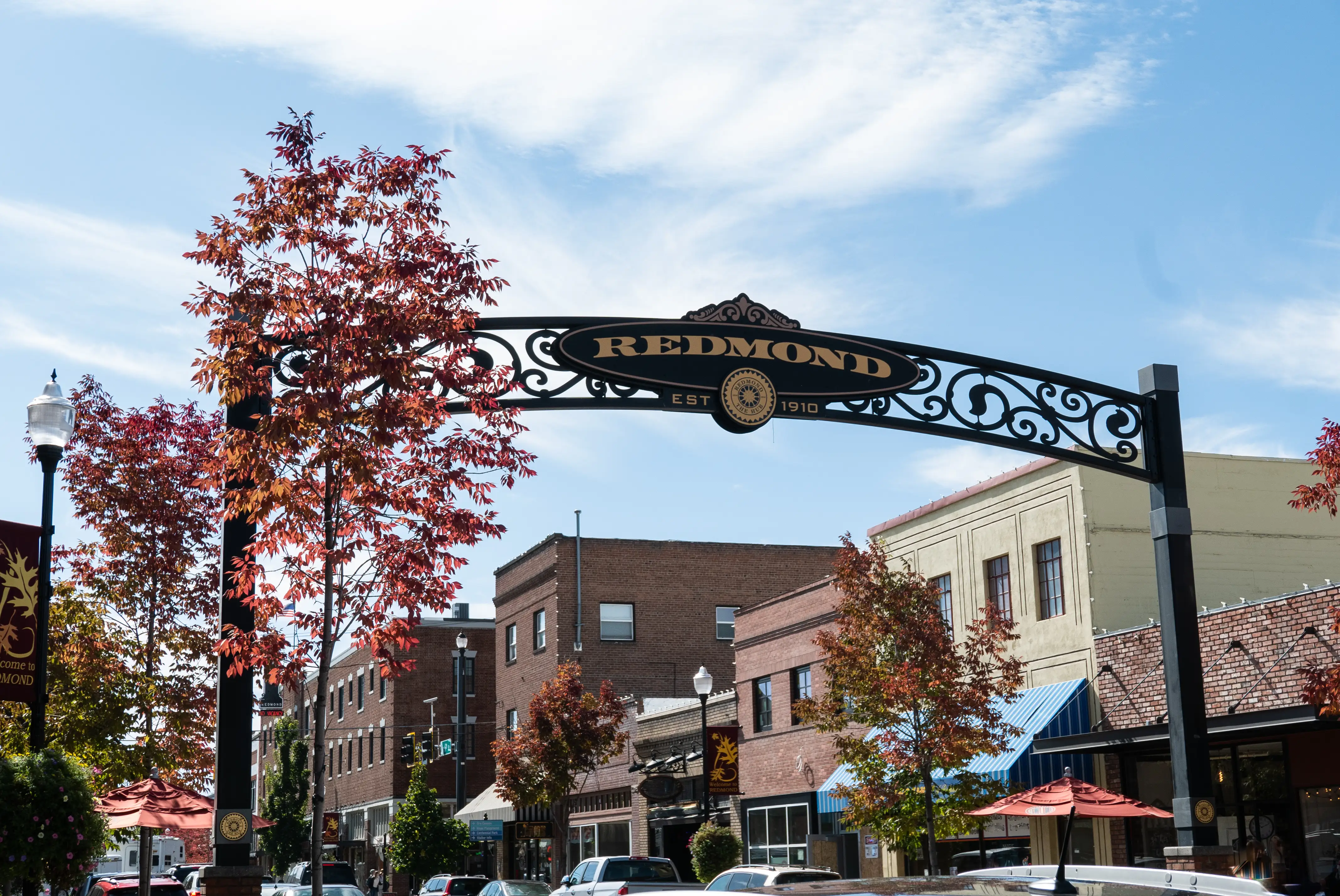
The median home value in Redmond sits at $501,307 per Zillow's composite index — but the actual sold price range in early 2026 runs from roughly $480,000 to $525,000 depending on the quarter and source. That spread matters less than what the number means in practice: for under $500,000, buyers in Redmond are finding three-bedroom homes with yards, garages, and a reasonable commute to work. That deal is largely gone in Bend, where comparable properties run 20–30% higher.
The market has cooled from its 2021–2023 peak. Homes are averaging around 45–66 days on market, and most listings are receiving one to two offers rather than five or six. Buyers who were sitting on the sidelines waiting for prices to crater have mostly been disappointed — values dipped modestly year-over-year but didn't collapse — while buyers who moved in late 2024 or early 2025 captured both reasonable prices and a relatively stress-free purchase process. Entry-level inventory in the $380,000–$430,000 range still exists, primarily in older construction or outlying areas, while newer builds in developments like Obsidian Trails and Fieldstone Crossing push into the $520,000–$600,000 range.
Price per square foot runs approximately $322, which gives buyers a useful anchor when comparing listings. A 1,500-square-foot home at that rate lands around $483,000; a 2,000-square-foot home approaches $644,000. The practical reality is that most families relocating to Redmond from California or the coast find the price-to-space ratio genuinely surprising — in a good way.
| Budget Range | What to Expect |
|---|---|
| Under $400,000 | Older homes (pre-2000), smaller lots, may need updating; limited inventory |
| $400,000–$500,000 | Core of the market; 3BR/2BA, established neighborhoods, solid condition |
| $500,000–$600,000 | Newer construction, open floor plans, some HOA communities, canyon or Cascade views |
| $600,000+ | Premium lots, Eagle Crest golf community, Cascade View Estates, luxury finishes |
Redmond's effective property tax rate runs approximately 0.72%, placing it at the higher end within Deschutes County — the county's median rate is 0.62%, while Sunriver sits as low as 0.49%. On a $501,307 home, that translates to roughly $3,500–$3,600 per year, depending on which specific tax district your parcel falls in. Oregon's Measure 50, passed in 1997, caps annual assessed value growth at 3% regardless of market appreciation, which means longtime homeowners often pay taxes on an assessed value significantly below market — a meaningful long-term protection that new buyers won't enjoy immediately but will benefit from within a few years of ownership.
The average rent across all apartment types in Redmond runs approximately $1,863 per month, a figure that's risen about 6% over the past year. That number is still roughly 9% below the national average, which surprises people who assume Central Oregon must be priced at Portland levels. The rental market here is smaller and less diverse than Bend's — the inventory leans toward standard apartment complexes rather than the walkable mixed-use buildings you'd find near downtown Bend — but it's not thin enough to cause real stress for renters relocating with a few months of lead time.
| Unit Type | Average Monthly Rent |
|---|---|
| Studio | $1,145–$1,550 |
| 1-Bedroom | $1,483–$1,670 |
| 2-Bedroom | $1,847–$1,900 |
| 3-Bedroom | $2,287–$2,350 |
The most accessible options in the market include The Bluffs, where studios start around $1,135 and one-bedrooms begin at $1,306, and Redmond Landing, which offers two-bedrooms from $1,424 and three-bedrooms from $1,642. Nova Apartments, with studios starting around $1,300, fills out the middle of the market. About 34% of Redmond households rent, which creates steady demand but not the vacancy-crisis conditions that have plagued larger Oregon cities.
Redmond's utilities index runs slightly below the national average — a useful counterweight to the housing cost premium. Pacific Power serves the area for electricity, with typical monthly bills in the $80–$130 range depending on season; the high desert's cold winters and warm summers mean both heating and cooling costs are real factors, though neither is extreme. Natural gas through Cascade Natural Gas handles home heating for many properties, with winter bills typically running $60–$120 depending on home size and insulation.
Car ownership is not optional in Redmond. The city has no meaningful public transit system, and while the Dry Canyon Trail and downtown core are reasonably walkable, grocery runs, medical appointments, and weekend recreation almost universally require a vehicle. The upside is that gas prices in Central Oregon typically run $0.10–$0.20 below Portland metro averages due to lower local taxes, and parking is free and abundant throughout the city. The transportation cost index of 108 — slightly above national average — reflects the car-dependent reality rather than any specific fee structure.
For groceries, Redmond has a Fred Meyer on the south side of town and a Safeway near downtown, which covers most households' needs adequately. The Fred Meyer carries the fullest selection and handles the bulk of family grocery shopping for most residents. For Costco, Trader Joe's, or Whole Foods, you're looking at a 25-minute drive to Bend — a trip most Redmond households make once or twice a month rather than weekly. Dining out is genuinely more affordable than in Bend; local restaurants and brewpubs average $15–$22 per entrée, and the craft beer scene anchored by breweries along the 6th Street corridor keeps evening costs reasonable.

Looking to buy in Redmond? Estimate your payment.
Enter your numbers to see an estimated monthly mortgage payment.
Estimate only. Excludes HOA fees and mortgage insurance.
| City | Median Home Price | Property Tax Rate | Commute to Bend | Oregon Income Tax | Sales Tax |
|---|---|---|---|---|---|
| Redmond, OR | $501,307 | ~0.72% | 25 min | Yes (up to 9.9%) | None |
| Bend, OR | ~$680,000–$720,000 | ~0.62% | 0 min | Yes (up to 9.9%) | None |
| Sisters, OR | ~$620,000–$680,000 | ~0.65% | 30 min | Yes (up to 9.9%) | None |
| Prineville, OR | ~$350,000–$390,000 | ~0.65% | 35 min | Yes (up to 9.9%) | None |
| Tumalo, OR | ~$700,000+ | ~0.62% | 15 min | Yes (up to 9.9%) | None |
| Crooked River Ranch, OR | ~$380,000–$430,000 | ~0.60% | 35 min | Yes (up to 9.9%) | None |
| Kennewick, WA | ~$350,000–$400,000 | ~0.95% | N/A | No income tax | 8.6% |
Redmond's position in this table is clear: it's the affordability anchor of the Central Oregon market, sitting well below Bend, Sisters, and Tumalo while remaining close enough to Bend's job market, medical facilities, and airport to make the commute genuinely manageable. Prineville and Crooked River Ranch are cheaper, but buyers there trade proximity to Bend for an additional 10–15 minutes on the road each way. Washington state's lack of income tax looks attractive on paper, but the combination of a higher property tax rate and a sales tax that reaches 8.6% on purchases typically erases that advantage for households earning above $70,000.
This table reflects a household purchasing the median-priced Redmond home at $501,307 with 10% down, financing approximately $451,000.
| Category | Monthly Cost |
|---|---|
| Mortgage (principal + interest, ~7% rate) | $3,001 |
| Property taxes (~0.72% annually) | $301 |
| Homeowner's insurance | $120–$150 |
| HOA (if applicable — many neighborhoods) | $0–$80 |
| Electricity (Pacific Power) | $85–$130 |
| Natural gas (Cascade Natural Gas) | $50–$120 |
| Internet (Bend Broadband / Charter Spectrum) | $60–$90 |
| Groceries (family of 3–4) | $700–$900 |
| Gas / transportation | $200–$300 |
| Dining out / entertainment | $300–$450 |
| Healthcare (employer-sponsored, employee share) | $200–$400 |
| Estimated Total | $5,117–$5,921/month |
A household at Redmond's median income of $84,164 brings home approximately $5,600–$6,000 per month after Oregon income taxes and typical benefit deductions — meaning a median-income household purchasing a median-priced home is operating at or near their budget ceiling. This is a common reality throughout Central Oregon and explains why dual-income households dominate the ownership market. Renters at the $1,670 one-bedroom level have considerably more financial breathing room on the same income.
Oregon's income tax is the number most transplants from California find familiar and the number most Washington state residents find alarming. The top marginal rate reaches 9.9% on income above $125,000, making Oregon one of the higher-income-tax states nationally. For households earning near the Redmond median of $84,164, the effective state income tax rate runs closer to 7–8% after deductions. The meaningful offset is Oregon's complete absence of a state or local sales tax — a genuine everyday savings that accumulates to several hundred dollars annually for a typical household.
Property owners aged 62 and older may qualify for Oregon's Property Tax Deferral program, which allows the state to pay property taxes on your behalf as a lien against the property, repaid when the home is sold or transferred. It's one of the more underutilized programs in the state and worth understanding before assuming retirement on a fixed income makes Central Oregon ownership unworkable. Oregon also offers a senior property tax exemption for qualifying low-income homeowners over 62, which can reduce the assessed value and lower the annual bill.
The practical bottom line: Redmond's overall cost of living index sits approximately 15% above the national average, driven almost entirely by housing. Strip out housing, and the day-to-day cost of living in Redmond tracks close to national norms — utilities slightly below, groceries slightly above, services near average. For buyers coming from California or Seattle, that 15% premium will feel like a discount. For buyers relocating from the Midwest or Southeast, it will feel like what it is: a moderately expensive but legitimately livable Pacific Northwest city with room to grow.

Local Expert Takeaway: The buyers who get the best long-term value in Redmond are the ones who stop comparing it to what they're leaving and start comparing it to Bend — the city it's functionally becoming an extension of. A $501,000 home in Redmond with a 25-minute commute to Bend's job market gives you access to everything Bend offers while paying $180,000–$220,000 less for the house. Factor in Measure 50's 3% annual cap on assessed value growth, and the tax savings over a 10-year ownership period are real money. The one thing I'd tell every buyer evaluating the budget: plan for the Bend grocery run and build it into your monthly math — it's a minor inconvenience, not a dealbreaker, but it catches people off guard in month one.
Is Redmond, Oregon an affordable place to live?
Redmond is moderately affordable by Pacific Northwest standards, with a cost of living index approximately 15% above the national average — driven primarily by housing. Outside of housing, day-to-day expenses like utilities and transportation run close to national norms. The absence of a state sales tax provides meaningful everyday savings, and home prices remain substantially below neighboring Bend.
What are property taxes like in Redmond?
Redmond's effective property tax rate sits at approximately 0.72%, which is below the national median of around 1.02%. On the median-priced home, that translates to roughly $3,500–$3,600 per year. Oregon's Measure 50 limits annual increases in assessed value to 3%, which keeps tax bills relatively stable for longtime owners even in appreciating markets.
How does Redmond's cost of living compare to Bend?
Redmond runs meaningfully cheaper than Bend, primarily because of the home price differential — Bend's median sits roughly $180,000–$220,000 higher than Redmond's. Everyday costs like groceries, utilities, and dining are broadly similar between the two cities, since most Redmond residents access the same regional shopping and services. The 25-minute commute to Bend is the practical trade-off buyers accept for the housing savings.
Explore the full Redmond series: The Ultimate Redmond Relocation Guide · Is Redmond Safe? · Cost of Living in Redmond · Best Neighborhoods in Redmond · Redmond Schools & Family Life · Redmond Youth Sports · Redmond Parks & Recreation · Retiring in Redmond · 1031 Tax-Deferred Exchange in Redmond · Redmond First-Time Homebuyers Guide · · Moving to Redmond from California
Tell us what you need help with and we'll connect you with local resources.

About the Author
Todd Davidson is the founder of Living in Oregon and Living in Washington, where he publishes in-depth city guides, neighborhood resources, and local market insights covering more than 180 communities across the Pacific Northwest. While his background is in home financing and real estate, he created these digital platforms to help families research and compare regions before making a move.