
Central Oregon · Oregon
Is Redmond Safe? Crime Rates, Safest Neighborhoods & Local Reality (2026)
Redmond, Oregon sits in a category that confuses most people doing safety research from out of state: not a rough city, not a perfectly polished suburb, but something in the middle that reads differently depending on which data tool you open first. The violent crime numbers here are genuinely lower than the Oregon state average and lower than the national average — which surprises people who hear "Central Oregon" and picture rural isolation. The property crime picture is more complicated, and that's where the real conversation starts.
In daily life, the numbers translate to a city where most residents feel comfortable and largely unbothered. Community surveys suggest roughly two-thirds of Redmond residents describe their neighborhood as "pretty safe," while more than a third say they have essentially no safety concerns at all. What drives the statistics is not the kind of crime that shapes where you raise your kids — it's property-related, commercially concentrated, and predictable once you know which parts of town generate the most incident reports.
This guide breaks down what the 2024 FBI data actually shows, where within Redmond the numbers are highest and lowest, how the city compares to Bend and the surrounding region, and what the Redmond Police Department is doing about the gap between where the department is now and its stated goal of becoming the safest community in Oregon. By the end, you'll know exactly what you're buying into — or not.
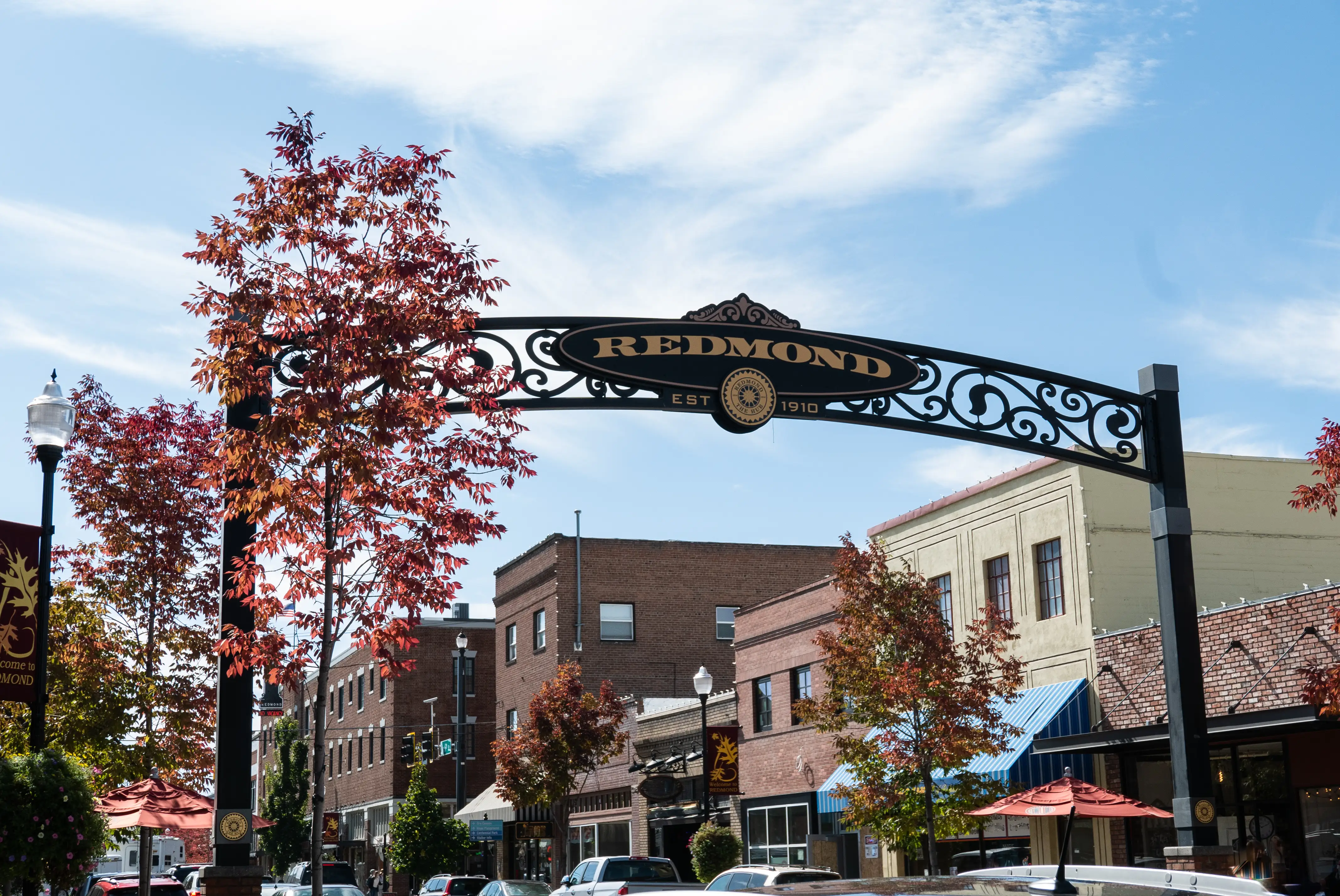
FBI estimates for 2024 place Redmond's total crime rate at roughly 2,563 incidents per 100,000 residents — meaningfully higher than the national figure but about 6% lower than the Oregon statewide average. That context matters. Oregon as a whole carries elevated property crime rates driven by its larger cities, and Redmond consistently comes out better than the state baseline. On the violent crime side specifically, local police data suggests a rate of approximately 2.9 violent incidents per 1,000 residents — well below both the Oregon average and the national average, placing Redmond in roughly the 50th percentile nationally for violent crime safety.
What structurally shapes these numbers is worth understanding before you start neighborhood-shopping. Redmond's commercial corridor along Highway 97 — the stretch that includes big-box retail, fast food, auto services, and the Redmond Airport area — generates a disproportionate share of incident reports. Theft, vehicle break-ins, and retail-related property crimes cluster near high-traffic commercial zones rather than residential neighborhoods. Crime near airports and shopping centers tends to inflate area-level statistics because the visitor and employee population is large while the residential count is low. Buyers who look at city-level crime rates without understanding that concentration often come away with a distorted picture of what living here actually feels like.
The five-year trend line is the number most worth internalizing: both violent crime and property crime have declined in Redmond over the past five years. The 2024 rate rose modestly from 2023, but the longer arc points in a positive direction. The Redmond Police Department, led by Chief Devin Lewis and operating from its headquarters at 111 NW Teak Ave, holds OAA accreditation and is actively investing in leadership — most recently bringing in Captain Stephen Lopez, a 18-year law enforcement veteran and FBI National Academy graduate. The department's stated vision is to make Redmond the safest community in Oregon, which tells you something about both their ambition and the distance still to travel.
Commonly reported around 217 violent incidents per 100,000 residents annually, Redmond's violent crime rate runs roughly 39% below the national figure — a stat that tends to surprise buyers relocating from California or the Pacific coast who assume smaller Oregon cities track closer to national averages. In practical daily life, this means the kind of street-level violent crime that shapes neighborhood character is relatively rare. With roughly 83 violent incidents documented in the most recent reporting year across a population approaching 40,000, the risk is real but not dominant.
Property crime is the honest conversation to have about Redmond. NeighborhoodScout places the rate at approximately 21 per 1,000 residents — running roughly 33% above the national average. The dominant category is theft, followed by vehicle break-ins and burglary. Incidents cluster most visibly along the Highway 97 commercial corridor and near shopping centers in the east part of the city, where retail density and high visitor traffic create the conditions that drive this type of crime. Residential neighborhoods away from that corridor — particularly on the west and northwest sides — experience considerably lower rates.
Canyon Rim sits along the western edge of the Dry Canyon, and its elevated position isn't just scenic — it correlates with lower crime exposure. Residents here are active on community safety platforms, and the neighborhood functions as one of the more connected communities in the city when it comes to monitoring local activity. The canyon itself creates a natural separation from higher-traffic zones to the east, which contributes to the quieter on-the-ground feel that most canyon-area residents describe.
Best for: Buyers who want residential calm with direct trail access and a community that pays attention to its own streets.
With roughly 13,000 residents, Southwest Redmond is the largest quadrant by population and tends to post some of the more favorable residential crime figures in the city. The area is family-oriented, with well-maintained parks and a mix of established and newer homes. Distance from the commercial highway corridor is the key structural factor here — Southwest Redmond's quieter arterials simply don't generate the retail-adjacent incident volume that inflates numbers closer to Highway 97.
Best for: Families with school-age children looking for a settled, low-drama neighborhood with good park access.
Northwest Redmond is where much of the city's new residential construction is landing, and newer development patterns tend to bring lower property crime rates — partly because newer builds have better security features and partly because established community networks develop quickly in newer subdivisions. Residents in the area have noted that vigilance is a shared norm here. For violent crime specifically, the west side of the city consistently appears in local data as among the safer areas within Redmond.
Best for: Buyers who want new construction in a lower-crime corridor with room to grow into the neighborhood.
Northeast Redmond includes the airport environs and sits closer to the commercial activity along Highway 97 than neighborhoods to the west. Crime statistics in this quadrant are meaningfully shaped by the commercial and airport environment, and buyers should read the data with that in mind — a high incident count in this zone reflects the retail and transient traffic patterns more than the residential character. Actual homeowner-focused safety in the residential pockets of northeast Redmond is more nuanced than the raw numbers suggest.
Best for: Buyers prioritizing proximity to employers near Roberts Field and who understand how to filter commercial crime from residential risk.
Eagle Crest operates as a resort community about five miles west of Redmond proper, and its gated, HOA-managed structure produces a notably different safety environment than the city's open residential streets. NeighborhoodScout identifies Eagle Crest as a distinct sub-area in crime analysis, and controlled-access communities of this type consistently generate lower incident rates due to limited through traffic and active HOA oversight. The catch is that you're in a more isolated environment with HOA rules that govern daily life significantly.
Best for: Retirees or remote workers who want maximum residential security and don't mind a structured community environment.
Old Town sits at the center of Redmond's street grid and functions as the civic and social heart of the city. Like any downtown area, it carries modestly higher property crime rates than purely residential neighborhoods — foot traffic, commercial activity, and the proximity to transit routes all contribute. What it doesn't carry is a reputation for the kind of predatory crime that makes people avoid downtowns in larger cities. Most of what happens here is petty property-related, and the visibility of the area — with people around most hours — provides its own informal deterrent.
Best for: Buyers who prioritize walkability and civic energy and accept that downtown always reads differently in crime data than a residential cul-de-sac.

| City | Violent Crime / 1K | Property Crime / 1K | Overall Safety Profile |
|---|---|---|---|
| Redmond | ~2.9 | ~21 | Slightly above national avg; below Oregon avg |
| Bend | ~3.2 | ~28 | Higher property crime; larger commercial footprint |
| Prineville | ~3.8 | ~18 | Higher violent crime; lower property crime |
| Sisters | ~1.1 | ~12 | Among the safest in Central Oregon; small population |
| Terrebonne | ~2.4 | ~16 | Unincorporated; lower density reduces incident volume |
| Crooked River Ranch | ~1.8 | ~11 | Rural community; very low crime overall |
Redmond's position in this table is instructive. It's not the safest option in Central Oregon — Sisters, Terrebonne, and Crooked River Ranch all carry lighter numbers — but those communities offer dramatically less employment access, school infrastructure, and daily convenience. Against Bend, Redmond holds a clear advantage on property crime, which matters for buyers who've been tracking Bend's downtown retail theft issues over the past few years. Prineville's higher violent crime rate reflects a different set of socioeconomic pressures that Redmond doesn't share at the same intensity.
Looking to buy in Redmond? Estimate your payment.
Enter your numbers to see an estimated monthly mortgage payment.
Estimate only. Excludes HOA fees and mortgage insurance.
The part of Redmond that generates the most complaint on neighborhood apps and community forums is the stretch of Highway 97 running through the east side of the city — particularly the area around the commercial centers near 6th Street and the big-box retail corridor. Vehicle break-ins in parking lots are the most commonly reported issue, and locals who park in that area routinely follow the same practical rule: nothing visible in the car, windows up, and keep the visit quick. It's not a frightening situation — it's the same calculus people apply in any commercial strip in any mid-size American city.
What the crime apps consistently miss is that Redmond's residential streets feel substantially calmer than the city-level statistics imply. The north and west parts of the city — areas like Canyon Rim, West Canyon, and the newer developments pushing northwest toward Helmholtz Way — operate with a neighborhood dynamic that doesn't show up in a city-wide percentile ranking. Residents here know their neighbors, use community communication tools actively, and report that the ambient sense of safety is high. The gap between the city's overall score and what you experience walking your dog at 9pm in these neighborhoods is real.
One structural factor that won't resolve itself quickly: the Redmond Police Department currently staffs approximately 1.5 officers per 1,000 residents — meaningfully below the Oregon average and well below the national average. For a growing city that has added thousands of residents over the past decade, that ratio creates real response-time constraints for lower-priority calls. The department is aware of it, new leadership is in place, and budget conversations at the city level have addressed it — but buyers with strong preferences around police presence should factor that into their thinking. It doesn't make Redmond unsafe, but it does mean the community's own informal safety networks carry more weight than they might in a more heavily staffed city.
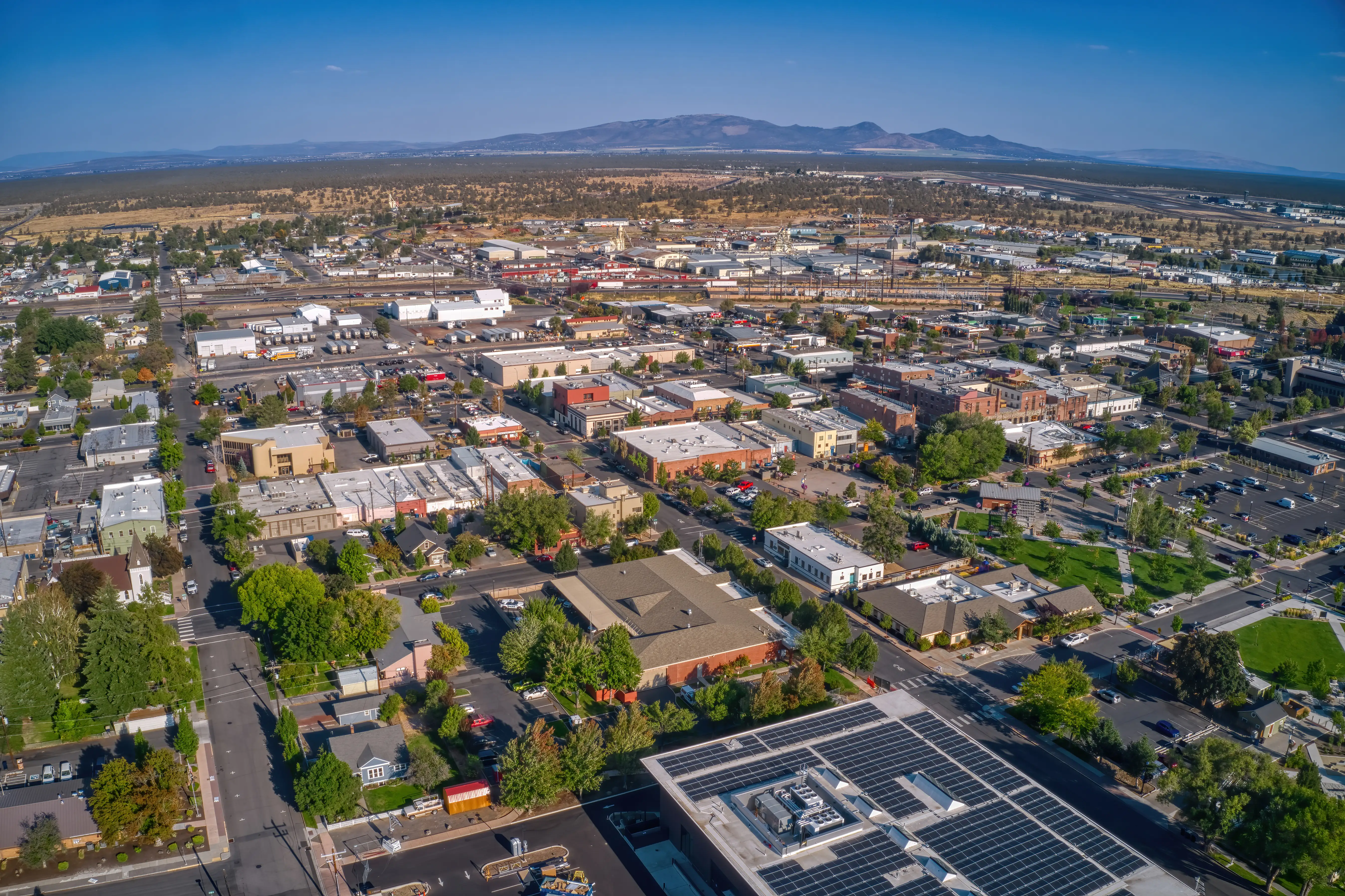
Local Expert Takeaway: If safety is the deciding factor in your Redmond search, prioritize neighborhoods west of Highway 97 — Canyon Rim, West Canyon, Southwest Redmond, and the new construction tracts pushing northwest along Helmholtz Way consistently show up as the most favorable in both directional crime data and resident surveys. Avoid drawing conclusions from city-wide scores without filtering out the commercial corridor effect along Highway 97, where retail-adjacent property crime inflates the overall numbers without reflecting what residential life feels like. For buyers targeting Eagle Crest's resort community or the quieter streets near Sam Johnson Park, the day-to-day reality is considerably calmer than a surface-level safety score would suggest.
✅ Violent crime in Redmond runs below both the Oregon state average and the national average — the city's most important safety distinction for families evaluating a move here.
⚠️ Property crime, particularly vehicle break-ins and retail theft, clusters along the Highway 97 commercial corridor — residential neighborhoods away from that strip post considerably lower numbers.
📍 The north and west parts of the city consistently appear as the safest areas in both directional crime data and community surveys, while the east side carries the most commercial-driven incident volume.
Is Redmond a safe place to raise a family?
For most families, yes — Redmond's violent crime rate is well below both state and national averages, and the established residential neighborhoods on the west and northwest sides of the city report very few serious incidents. The property crime picture requires some awareness, particularly around commercial areas, but the everyday experience in Redmond's family-oriented neighborhoods is calm and community-connected.
What is the biggest crime concern in Redmond?
Property crime, specifically vehicle break-ins and theft in and around commercial parking areas, is the most commonly reported issue among Redmond residents. The Highway 97 corridor and the retail zones along 6th Street generate a disproportionate share of incident reports. Residential neighborhoods — particularly on the west and north sides — experience substantially lower property crime rates than the city-wide figure suggests.
How does Redmond compare to Bend for safety?
Redmond holds a modest advantage over Bend on both violent crime and property crime per 1,000 residents. Bend's larger commercial footprint, higher downtown foot traffic, and greater overall density contribute to a higher property crime rate — commonly cited around 28 per 1,000 compared to Redmond's roughly 21 per 1,000. For buyers who've been priced out of Bend and are evaluating Redmond as the primary alternative, the safety comparison at least doesn't work against the move.
Explore the full Redmond series: The Ultimate Redmond Relocation Guide · Is Redmond Safe? · Cost of Living in Redmond · Best Neighborhoods in Redmond · Redmond Schools & Family Life · Redmond Youth Sports · Redmond Parks & Recreation · Retiring in Redmond · 1031 Tax-Deferred Exchange in Redmond · Redmond First-Time Homebuyers Guide · · Moving to Redmond from California
Tell us what you need help with and we'll connect you with local resources.

About the Author
Todd Davidson is the founder of Living in Oregon and Living in Washington, where he publishes in-depth city guides, neighborhood resources, and local market insights covering more than 180 communities across the Pacific Northwest. While his background is in home financing and real estate, he created these digital platforms to help families research and compare regions before making a move.