Portland Metro · Oregon
Moving to Oregon City? Top 10 Questions Realtors Get About Living in Oregon City, Oregon (2026)

I'm Elizabeth Davidson, a broker with Cascade Hasson Sotheby's International Realty, and I've spent years helping buyers and sellers navigate the Portland metro market. I consistently rank in the top 2% of brokers by volume in the region — not because I'm a salesperson, but because I tell people the truth, even when it's not what they want to hear.
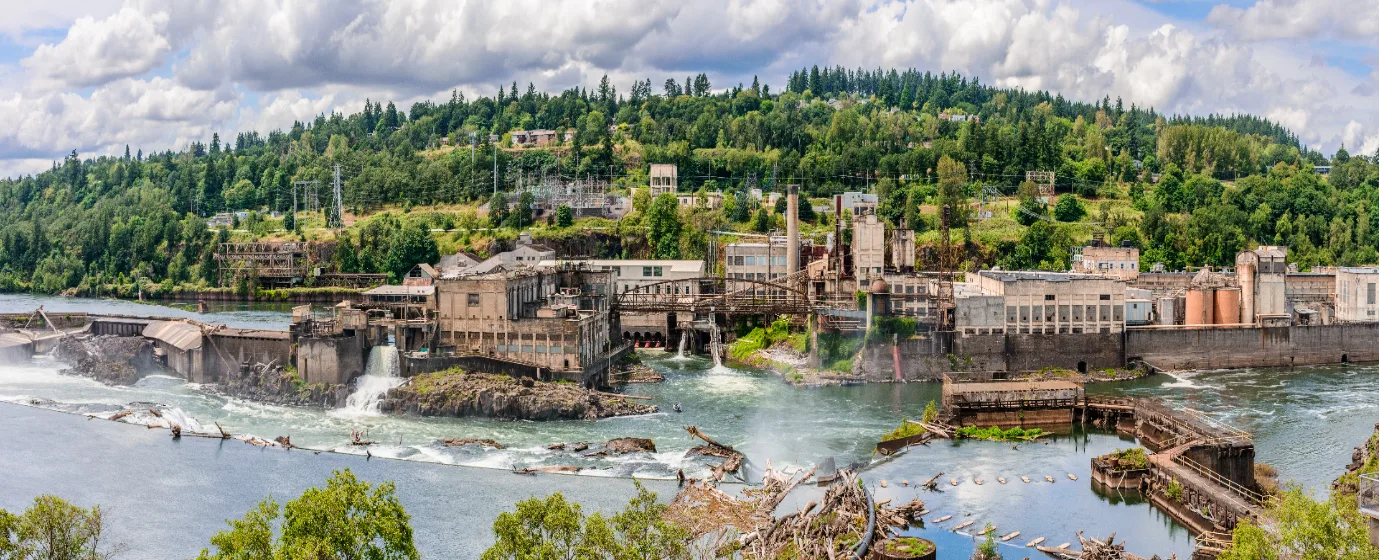
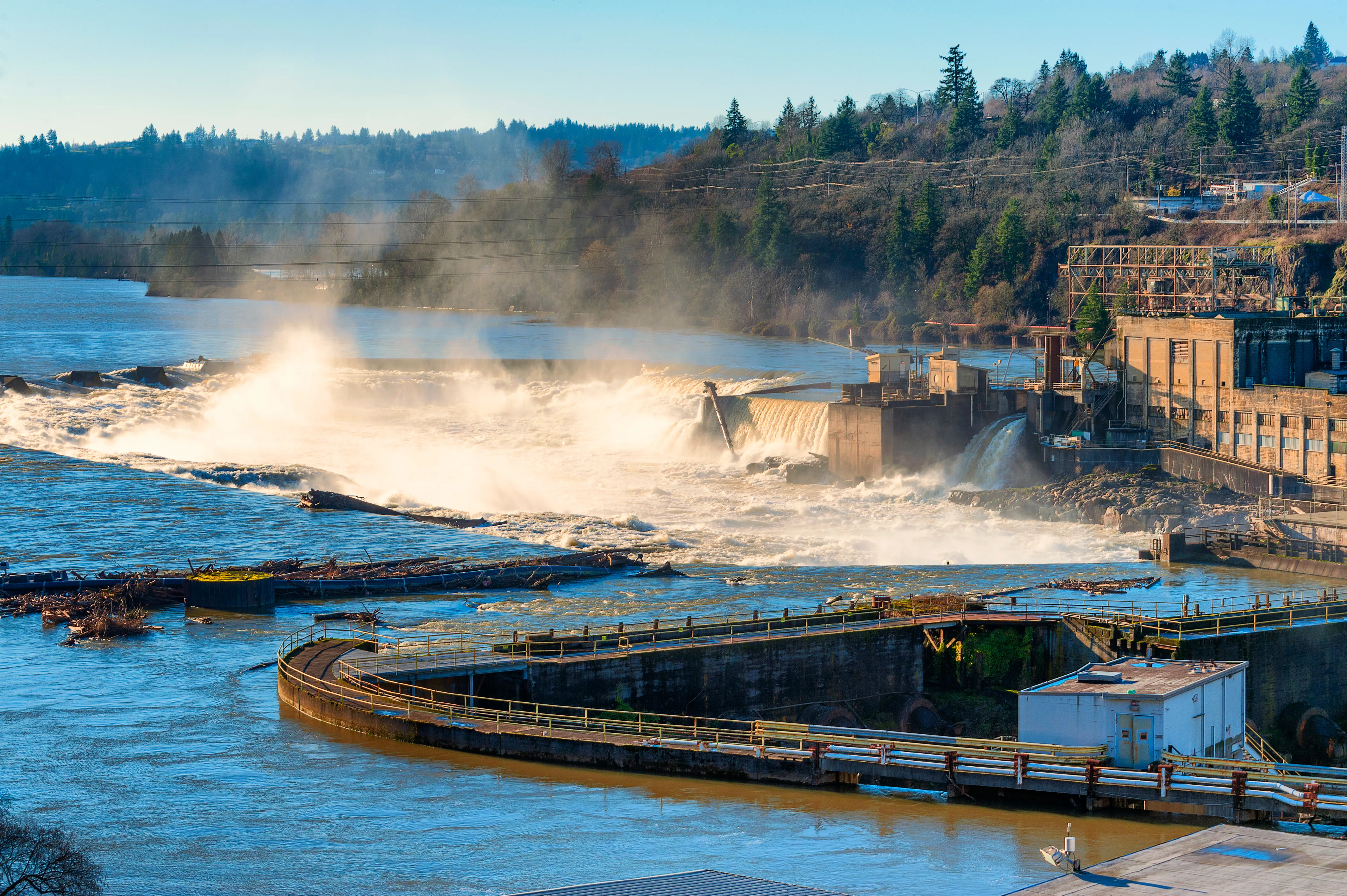
Oregon City holds a particular spot in my practice because it's genuinely unlike anywhere else in the metro area. Where else can you stand on the McLoughlin Promenade and watch North America's second-largest waterfall by volume thunder over ancient basalt? I've shown homes in Canemah where buyers could hear Willamette Falls from their front porch. That's not marketing spin — it's just the reality of this place.
This post answers the questions I actually get asked about Oregon City, drawn from years of showing properties here and helping people figure out if it's the right fit. I'll cover neighborhoods, schools, commute times, property taxes, and a few things most buyers don't think to ask until it's too late. If you're considering Oregon City, this is the honest rundown I'd give you over coffee.
Oregon City works exceptionally well for a specific type of buyer, and it's a frustrating mismatch for others. Let me be direct about both.
If you want a genuine sense of place — historic architecture, bluff-top views, actual waterfalls, and a downtown that isn't a strip mall — Oregon City delivers in ways that Tigard and Tualatin simply can't. The End of the Oregon Trail history isn't just a museum exhibit; it's embedded in the street grid, the Victorian homes in Canemah, and the 1915 Municipal Elevator still operating today. This matters to people who care about character over convenience.
The trade-offs are real, though. The terrain is challenging — Oregon City is essentially built on two levels connected by steep grades. Walkability suffers outside of downtown. The school district rates a B- overall, which is solid but not exceptional. And while you're 25 minutes from Portland in ideal conditions, that commute stretches during rush hour, especially northbound on I-205 or Highway 99E.
For families wanting space, history, and outdoor access without Lake Oswego prices, Oregon City makes sense. For someone who needs a quick commute and doesn't care about their surroundings having any particular identity, there are easier options. For a complete breakdown of expenses and lifestyle factors, our Cost of Living in Oregon City post covers this in detail.
Three neighborhoods consistently rise to the top for families, each with distinct trade-offs.
Rivercrest occupies 330 acres on the northwest corner of the upper terrace, and it's where I most often land families with kids under 12. You'll find 1930s craftsman homes sharing blocks with ranch-styles and split-levels, most on quarter-acre lots with attached garages. Sidewalks are inconsistent, but traffic is minimal enough that kids actually play outside. The community feel here is genuine — neighbors know each other, and it consistently gets praised for being dog-friendly and walkable despite the sidewalk gaps.
Canemah offers something different: historic Victorian homes on the bluff overlooking the Willamette River. It's quieter, more established, and you're paying a premium for the views and the architecture. Access to trails and parks is excellent, but the lots are often smaller and the homes require more maintenance given their age.
Park Place draws families who prioritize outdoor recreation and want proximity to the recreational facilities and open space on the south side. It's less architecturally distinctive than Canemah or Rivercrest, but you get more house for your money and easier access to the green space that defines Oregon City's appeal.
Our Best Neighborhoods in Oregon City guide breaks down all 16 neighborhoods if you want the full picture.
The Oregon City School District earns a B- from Niche, which places it in the solid-but-not-spectacular category for the metro area. Let me translate what that actually means for your kids.
The district serves about 7,300 students across 15 schools. The numbers that matter: 45% of students are proficient in reading, 32% in math. Those figures are below state averages, which is the honest reality. The student-teacher ratio of 20:1 is on the higher side. However, Oregon City High School performs above average compared to other Oregon public schools at the same grade level, with a 90% graduation rate, an average GPA of 3.57, and respectable average SAT scores of 1170.
What the ratings don't capture is the variation between schools. Some of the elementary schools outperform the district average significantly, particularly those in neighborhoods like Rivercrest and the Hillendale area. If schools are your primary driver, I'd recommend researching specific attendance boundaries rather than relying on district-wide numbers.
Families who prioritize academics above all else often look toward Lake Oswego or West Linn, but they'll pay $100K-$200K more for comparable homes. Oregon City schools are adequate for most families, exceptional in specific cases, and a real consideration if your child needs specialized programs. For families weighing these factors, our Oregon City Schools and Family Life post goes deeper.
The marketing answer is "25 minutes to Portland." The real answer depends entirely on when you leave and which route you take.
Without traffic, Oregon City sits about 20 miles from downtown Portland, roughly 30 minutes on a clean run. The fastest route during normal hours is SE McLoughlin Blvd (Highway 99E), which covers about 12 miles in 25 minutes — but that's with dozens of traffic lights that can add unpredictable delays.
Here's what actually happens during commute hours: I-205 northbound backs up significantly between Oregon City and the I-84 interchange, particularly between 7:00-9:00 AM. You're looking at 40-50 minutes on bad days. McLoughlin Blvd becomes the pressure-relief valve, which means it also slows down. The afternoon return trip follows similar patterns, with southbound I-205 congested from about 4:00-6:30 PM.
Your best strategies: leave before 6:45 AM or after 9:15 AM, consider McLoughlin as your primary route if your destination is inner Southeast Portland, and look into remote work arrangements if your employer offers them. Many of my Oregon City buyers work hybrid schedules specifically because the commute math only works at 2-3 days per week in the office.
For a full breakdown of transportation options and commute planning, see our Cost of Living in Oregon City guide.
Oregon City's market in early 2026 is competitive but not frenzied. The median sale price hit $615,000 in January, up 4.5% year-over-year. Homes are going pending in about 14 days on average, though the full sale process takes closer to 43-44 days.
The market scores 70 out of 100 on competitiveness indexes, which means you'll encounter multiple offers on well-priced properties, and some buyers are waiving contingencies to compete. That said, homes are generally selling at or near list price rather than significantly over — a notable shift from the 2021-2022 chaos.
Here's the nuance the data doesn't show: inventory varies dramatically by neighborhood and price point. Homes under $550,000 move fast with competition. Properties above $700,000 sit longer. Rivercrest and Canemah see steady demand year-round, while some of the newer developments on the south end have more negotiating room.
The average home value according to automated estimates is $596,503, down 2% over the past year — but that figure reflects mix changes more than actual depreciation. What you can buy for $615,000 in Oregon City would cost you $750,000+ in Lake Oswego and $700,000+ in West Linn.
For a complete relocation guide including market analysis, see our Ultimate Oregon City Relocation Guide. First-time buyers should also review our Oregon City First-Time Home Buyer resource.
I have to be honest here: Oregon City doesn't have any dedicated large-scale 55+ communities within city limits. The inventory that gets listed as "55+ community" in Oregon City MLS searches typically refers to individual condos or townhomes that happen to be age-restricted rather than purpose-built active adult developments.
If a true 55+ community with amenities, social programming, and maintenance-free living is what you're after, the nearest quality options are in Tigard (Eldorado Villas and Royal Villas, both Cal-Am properties), Wilsonville (Charbonneau Country Club, which welcomes active adults 55+), and King City (which was designed as a 55+ community from the ground up).
That said, many of my 55+ clients choose Oregon City precisely because they don't want a dedicated senior community. They want a single-level home in an established neighborhood with good access to trails and healthcare (Providence Health has significant presence here). Neighborhoods like Rivercrest and Park Place offer single-story options at price points well below comparable West Linn inventory.
If you're exploring retirement options in the area, our Retiring in Oregon City post covers the full landscape of what's available, including senior services and healthcare access.
Oregon City manages 26 park sites, and three stand out as essential to understand before you buy.
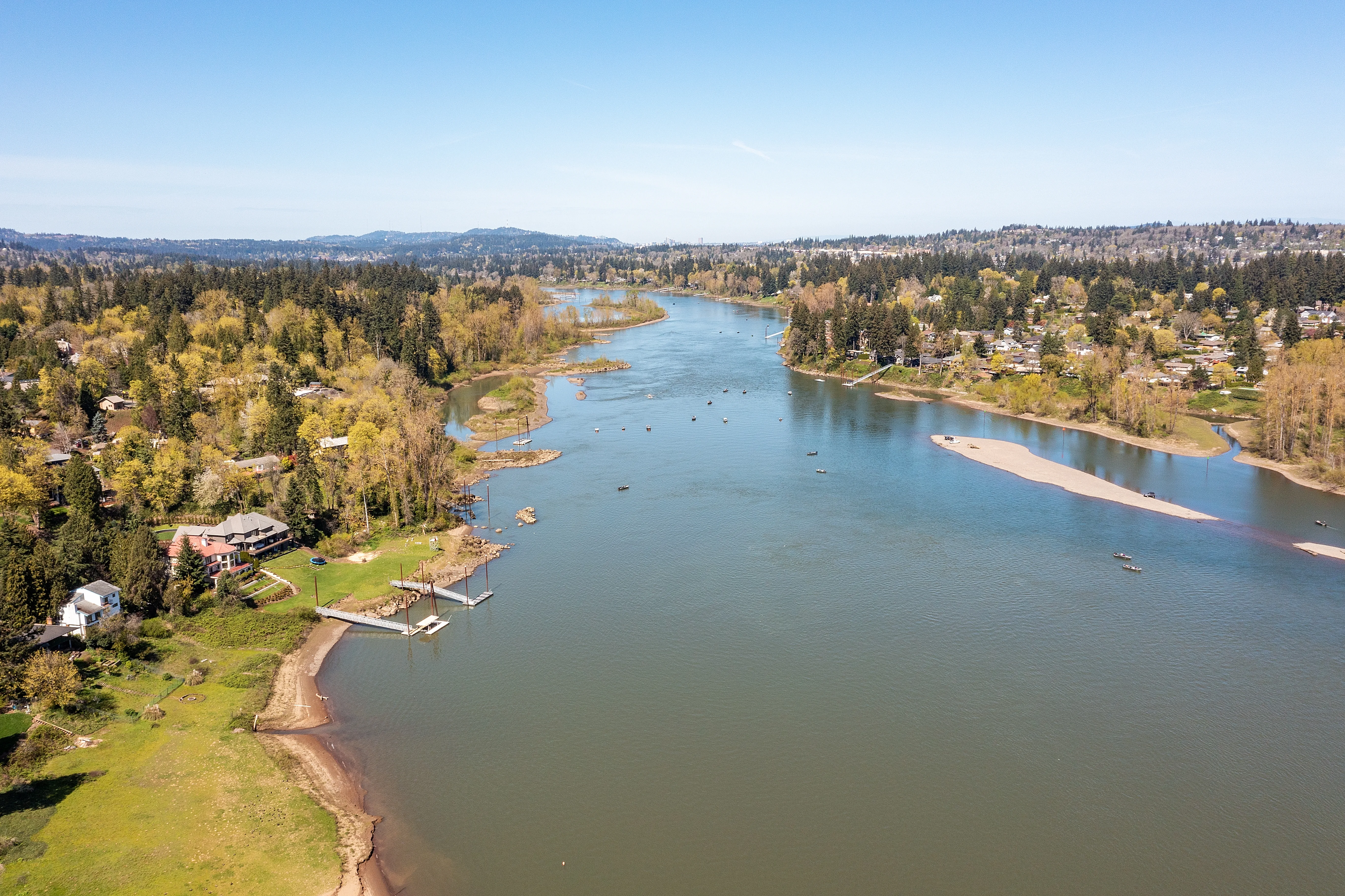
Clackamette Park is the flagship: 25 acres where the Clackamas and Willamette Rivers meet at the north end of town in the Two Rivers neighborhood. It's walkable to downtown, offers river access, hosts community events, and provides the kind of waterfront experience that most suburbs can only dream about. If proximity to Clackamette matters to you, prioritize the Two Rivers and McLoughlin neighborhoods.
Newell Creek Canyon Nature Park delivers four miles of forested trails through a genuine urban canyon. This isn't a manicured park with playground equipment — it's legitimate Pacific Northwest forest within city limits. Residents describe it as one of the most beautiful natural spaces in the metro area, and they're not exaggerating.
McLoughlin Promenade is Oregon City's signature experience: a bluff-top walkway above Willamette Falls that no other Portland suburb can replicate. Standing there watching North America's second-largest waterfall by volume is something you can do on a Tuesday afternoon as a resident. That's not hyperbole — it's geography.
The neighborhoods closest to these spaces (Canemah, Rivercrest, Two Rivers) command premiums specifically because of trail and park access. For the complete inventory of parks and recreation options, our Oregon City Parks and Recreation guide covers all 26 sites.
Three misconceptions trip up buyers consistently, and I'd rather you hear them from me than learn them the hard way.
First, they underestimate the terrain. Oregon City is built on two distinct levels — the lower area near the river and the upper terrace — connected by steep grades and the historic Municipal Elevator. What looks like a short distance on a map might involve significant elevation changes. I've had buyers fall in love with a home in Canemah, then realize their elderly parents couldn't visit comfortably because of the hill. Walk the neighborhoods on foot before committing.
Second, they assume "historic" means "charming without complications." The Canemah Historic District and other older areas contain beautiful Victorian and craftsman homes, but many come with deferred maintenance, outdated electrical systems, foundation challenges, or restrictions on modifications. Get a thorough inspection and budget accordingly — that $450,000 Victorian might need $80,000 in updates that a newer home wouldn't require.
Third, they don't account for the micro-climate. Oregon City sits in a river valley that can collect fog, cold air, and moisture differently than surrounding areas. The bluff-top neighborhoods stay drier; lower areas near the rivers can be noticeably colder and wetter in winter. This matters for your commute, your garden, and your general comfort.
Oregon's property tax system confuses almost everyone, so let me explain how it actually works.
Under Measure 50 (passed in 1997), your assessed value can only increase by a maximum of 3% per year, regardless of what happens to market values. This creates a significant gap between what your home is worth (real market value) and what you're taxed on (assessed value). In Clackamas County, the average taxable value is about 54% of the average real market value — meaning you're taxed on roughly half your home's actual worth.
When you buy a home, however, the assessed value may be reset closer to market value, which is why the seller's tax bill is essentially meaningless for predicting yours. A home with a $3,500 annual tax bill for the current owner might jump to $5,500+ for you after purchase.
Clackamas County's effective property tax rate runs around 0.85-0.96% of assessed value, lower than the national median of 1.02%. The median annual tax bill in Clackamas County is about $5,196, the highest in Oregon — but that's because property values are higher here, not because the rate is punitive.
For a $615,000 Oregon City home, expect your first-year property tax bill to land somewhere between $5,000 and $6,500, depending on how the assessed value resets and the specific tax district.
Never budget based on the seller's current tax bill. Request the assessed value history and assume your taxes will increase 15-40% in the first year after purchase. Build that higher number into your mortgage qualification calculations before you start shopping.
This question matters because Oregon City's geography — sitting at the confluence of two rivers with a major waterfall and numerous creeks — creates genuine flood considerations that most Portland suburbs don't have.
The short answer: yes, parts of Oregon City flood, and atmospheric river events during winter create real risk in specific areas. The lower elevations near the Willamette and Clackamas Rivers, particularly portions of the Two Rivers neighborhood and areas near Clackamette Park, fall within FEMA flood zones. Homes in these zones require flood insurance if you have a federally-backed mortgage, adding $1,500-$3,000+ annually to your housing costs.
Beyond the major river flood zones, Oregon City has numerous creek drainages — Newell Creek, Abernethy Creek, and smaller seasonal streams — that can overflow during heavy winter rains. I've seen properties where the backyard becomes a temporary wetland every January. This isn't necessarily a dealbreaker, but it affects what you can build, how your landscaping performs, and occasionally whether you can access your driveway.
The upper terrace neighborhoods (Rivercrest, Hillendale, Tower Vista) sit well above any flood risk. Canemah, on the bluff, is also protected by elevation. If you're considering a home in the lower areas or near any visible water feature, request the flood zone determination, check for previous insurance claims, and understand the drainage patterns before making an offer.
Ask for the property's flood zone designation (A, AE, X, etc.) and request the seller's disclosure regarding any past water intrusion. If the home sits near a creek or in a lower area, visit during or immediately after a heavy rain to see how the property handles water — something a sunny-day showing won't reveal.
Oregon City works best for buyers who value authenticity over convenience. If you want a place with genuine character — historic neighborhoods, dramatic natural features, and a downtown that isn't interchangeable with every other suburb — this is one of the few options in the metro area that delivers. The trade-off is a more challenging commute, a school district that's good but not exceptional, and terrain that requires you to be deliberate about which neighborhood you choose.
I find myself recommending Oregon City most often to families who work hybrid schedules, outdoor enthusiasts who prioritize trail access, history buffs who appreciate that this was literally the end of the Oregon Trail, and buyers priced out of Lake Oswego or West Linn who don't want to sacrifice character for affordability. It's not for everyone, and that's actually part of what makes it appealing — the people who live here chose it intentionally.
If you're considering Oregon City and want to talk through the specifics — which neighborhoods match your needs, what the current inventory actually looks like, whether the commute math works for your situation — I'm happy to have that conversation. No pressure, no sales pitch, just honest information from someone who knows this market well.
Browse current listings updated daily — filtered for Oregon City buyers by Elizabeth Davidson, your local expert.
Powered by Elizabeth Davidson · Cascade Hasson Sotheby's International Realty · 503-939-2035
Explore the full Oregon City series: Living in Oregon City · Is Oregon City Safe? · Cost of Living in Oregon City · Best Neighborhoods in Oregon City · Oregon City Schools & Family Life · Oregon City Youth Sports · Oregon City Parks & Recreation · Retiring in Oregon City · 1031 Exchange in Oregon City · Oregon City First-Time Buyer Guide · · Moving to Oregon City from California · The Oregon City Realtor's Perspective · Top 10 Questions a Realtor Gets About Oregon City