
Portland Metro · Oregon
Down Payment Assistance in Oregon City (2026)
You've been doing the math for months. Maybe longer. You watched rates shift, watched prices hold stubbornly above what you expected, and kept telling yourself that the moment you had enough saved, you'd be ready. But the savings account doesn't move the way the plan said it would. Groceries are up. Rent is up. The raise came through and somehow the margin stayed flat. That's not a budgeting failure — that's 2026, and it's the same story for a significant portion of would-be buyers in the Portland metro who are qualified in every way except for the lump sum required at closing.
There is a program most Oregon City buyers have never heard of that changes that math in a specific and meaningful way. It's called ONE+ by Rocket Mortgage. The buyer brings 1% of the purchase price. Rocket Mortgage contributes 2% — up to $7,000 — as a grant. Not a second lien. Not a deferred loan that reappears at closing when you sell in eight years. A grant, which means it never gets repaid, by anyone, ever. And critically, this isn't limited to first-time buyers — repeat buyers qualify too, provided household income falls within the ONE+ limit for Clackamas County. The program caps at a $350,000 maximum loan amount, which in Oregon City's current market primarily reaches condos, select manufactured homes, and a handful of attached units at the lower end of the inventory.
This guide focuses on exactly two things: whether ONE+ fits your situation in Oregon City, and what to do if it doesn't. For buyers shopping above the $350K loan ceiling — which describes the majority of the Oregon City market, where the median sold price sits at $615,000 — Oregon has state-level programs through Oregon Housing and Community Services that fill that gap in a different but legitimate way. We'll lay both out clearly, compare them directly, and help you figure out which one belongs in your offer.

Before getting into the mechanics, the most important thing to understand about ONE+ is what it isn't. Every other down payment assistance option available in Oregon — including the well-regarded OHCS programs covered later in this guide — works as a deferred second mortgage. You borrow the assistance money at 0% or low interest, you don't make monthly payments on it, and then it gets repaid when you sell or refinance. That structure genuinely helps buyers get into homes. But it's still debt attached to the property. ONE+ is structurally different: Rocket Mortgage contributes 2% of the purchase price, up to $7,000, and that money simply belongs to the buyer. No strings, no tail, no repayment clause buried in a disclosure.

The mechanics are straightforward. The buyer brings 1% of the purchase price as their down payment. Rocket Mortgage's 2% grant is layered on top, bringing the total down payment to 3% at close — the same equity position as a standard 3%-down conventional loan, but with the buyer having personally contributed only one-third of it. The maximum loan amount is $350,000. The income limit for Clackamas County is $102,640 for a household — this is based on 80% of the Area Median Income for the Portland-Vancouver-Hillsboro MSA, and it applies regardless of household size in the program's qualifying framework. The loan is a 30-year fixed conventional mortgage only. Minimum credit score is 620. PMI applies until the borrower reaches 20% equity, same as any low-down conventional loan. And repeat buyers qualify — there is no first-time buyer requirement anywhere in ONE+'s guidelines.
| ONE+ by Rocket Mortgage | Standard 3% Conventional | |
|---|---|---|
| Buyer's down payment | $3,500 (on $350K home) | $10,500 (on $350K home) |
| Grant from Rocket | $7,000 — never repaid | None |
| Total down at close | $10,500 (3%) | $10,500 (3%) |
| Net cash out of pocket | $3,500 + closing costs | $10,500 + closing costs |
| Upfront savings | $7,000 | — |
| Repayment required | No | N/A |
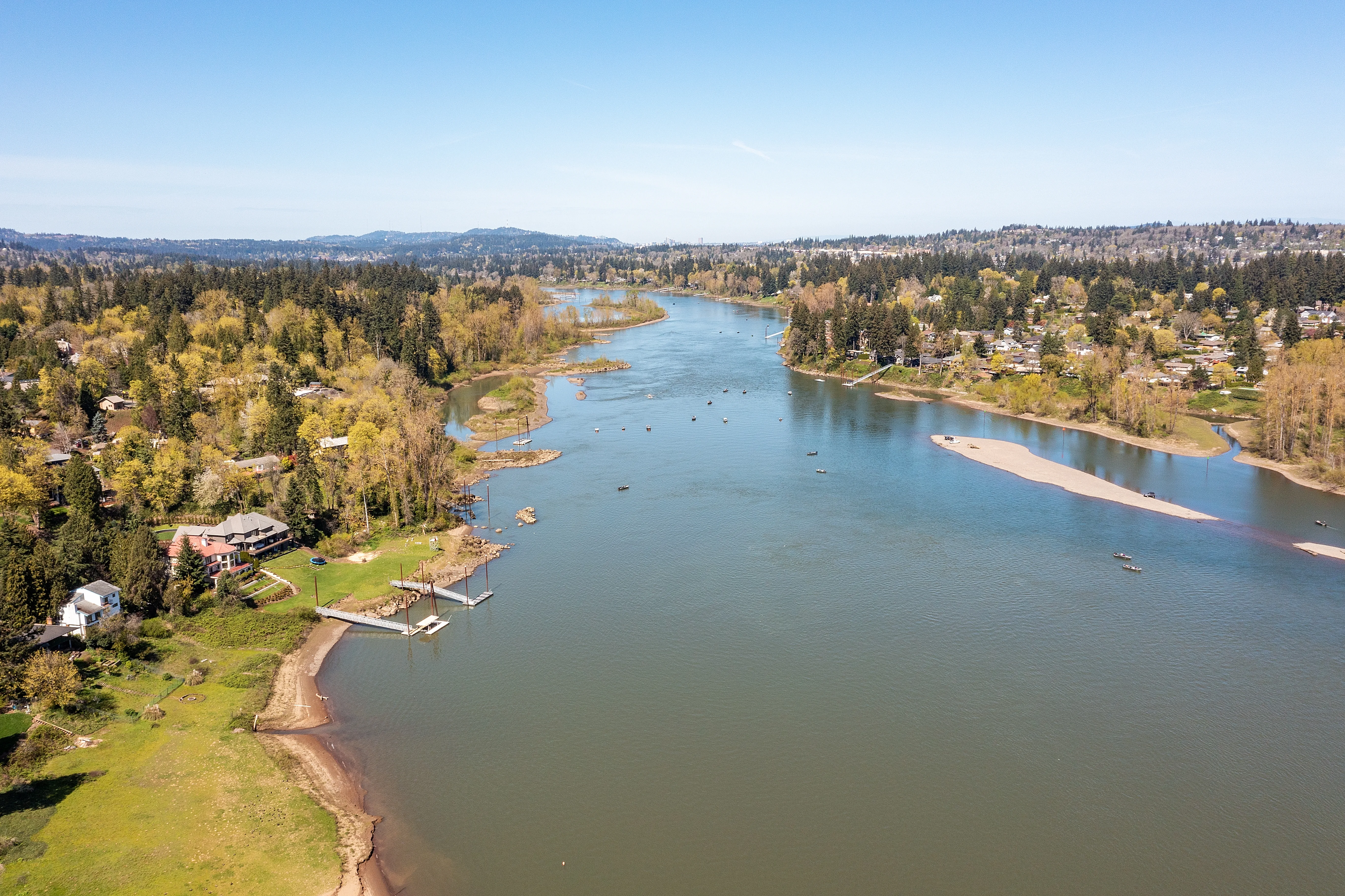
If you're considering Oregon City and want insight into which neighborhoods align with your priorities and budget, I'd welcome the opportunity to share what I've learned from helping hundreds of families make this move successfully.
A $350,000 loan limit is real, and it's worth being direct about what it means in this specific market. Oregon City's median sold price is $615,000, which means a buyer financing at 97% would carry a loan around $596,000 — well above the ONE+ ceiling. The gap between that ceiling and the market's center of gravity is not trivial.
| Price Range | What's Typically Available in Oregon City | ONE+ Eligible? |
|---|---|---|
| Under $320K | Primarily condos, manufactured homes, and select attached units — very limited SFR inventory | ✅ Yes |
| $320K–$350K | A small number of condos and townhomes; occasional older attached units; rare single-family detached | ✅ Yes |
| $350K–$450K | Entry-level single-family detached in older sections, some townhomes with HOAs | ❌ No |
| $450K+ | The majority of Oregon City's single-family inventory, including most established neighborhoods | ❌ No |
If ONE+ puts you in a price range that genuinely works for your household — whether that's a condo in a well-located building or a townhome with low HOA dues — it's a powerful tool. If the $350K ceiling means you're ruling out the neighborhoods and property types you actually want, the programs in the next section deserve serious attention.
Oregon Housing and Community Services runs the state's primary down payment assistance infrastructure, and for buyers above the ONE+ ceiling, these programs are the realistic path to closing. They work differently from ONE+, and understanding the structural distinction matters before you choose a lender or sign a purchase agreement.
The Rate Advantage option under OHCS's Bond program doesn't give buyers cash at closing. Instead, it provides a below-market fixed interest rate on the first mortgage, which lowers the monthly payment and meaningfully improves qualifying power on higher-priced homes. For a buyer stretching to afford a $550,000 property, a rate advantage of even 50 basis points can be the difference between qualifying and not. Income limits vary by county and household size but generally run between roughly $98,000 and $138,000 for Clackamas County, making this accessible to households above the ONE+ threshold. One disclosure worth understanding at the outset: the IRS recapture provision. If the home is sold within nine years, income has risen substantially since purchase, and there's a capital gain on the sale — all three conditions must be true simultaneously — up to 6.25% of the original loan amount may be owed back to the IRS. This situation is genuinely uncommon, but Oregon-approved lenders are required to disclose it at signing, and buyers should understand it before proceeding.
The Cash Advantage option pairs a slightly higher rate than Rate Advantage with a deferred second loan equal to 4–5% of the first mortgage amount. For a $500,000 purchase with a $475,000 first mortgage, that translates to roughly $19,000–$23,750 available toward down payment and closing costs. No monthly payment accrues on the second lien. For borrowers at or below 80% AMI, the OHCS Flex Lending version of this structure offers forgiveness after five years of owner-occupancy — meaning the assistance effectively becomes a grant for buyers who stay. Above 80% AMI, the assistance is repaid at a rate of 1% above the first mortgage rate, triggered at sale or refinance. The program works with FHA, VA, USDA, and conventional loan types, and the NextStep channel has no first-time buyer requirement, which makes it relevant for repeat buyers who've outgrown ONE+'s ceiling.
The essential difference between these two channels and ONE+ comes down to what happens when the buyer eventually sells or refinances. ONE+ is clean — the grant is gone, done, and never appears again. OHCS assistance travels with the property. Both programs solve the cash-to-close problem at the front end, but OHCS assistance is borrowed money that reduces — rather than eliminates — the cost of entry. For buyers in the right income and price range, ONE+ is structurally more favorable. For buyers above the $350K loan ceiling, OHCS is the realistic alternative.
| ONE+ by Rocket | OHCS Rate Advantage | OHCS Cash Advantage | |
|---|---|---|---|
| Assistance type | True grant — no repayment | Rate reduction only (no cash) | Deferred second loan |
| Max loan | $350,000 | Up to county limit | Up to county limit |
| Income limit | ≤$102,640 | ~$98K–$138K by county | ≤$125,000 gross |
| Cash at closing | ✅ Yes — up to $7,000 grant | ❌ No cash benefit | ✅ Yes — 4–5% of loan |
| Repayment required | Never | N/A | Yes — at sale/refi (or forgiven at 5 yrs ≤80% AMI) |
| Recapture tax risk | None | Yes (if all 3 conditions met) | Yes (if all 3 conditions met) |
| First-time required | No | Yes (with exceptions) | No (NextStep channel) |
| Loan types | Conventional only | FHA, VA, USDA, Conv | FHA, VA, USDA, Conv |
| Who processes | Rocket Mortgage directly | OHCS-approved lender only | OHCS-approved lender only |
| Education required | No | Yes | Yes |

As an Executive Loan Officer, I see buyers in Oregon City make sharper decisions when they understand how neighborhood choice connects to long-term value — especially when using down payment assistance. Areas like McLoughlin and Canemah carry strong historical appeal and walkability to the waterfront, which tends to support resale value over time. Park Place attracts families looking for established streets and a quieter pace. In all three neighborhoods, well-priced homes under $500,000 move quickly — sometimes within days — so buyers using assistance programs need to be positioned to act, not still figuring out their financing.
That's exactly why I encourage every buyer to talk with a lender before they ever step inside a home. Down payment assistance sounds straightforward, but your full monthly payment includes property taxes, homeowner's insurance, possible HOA dues, and your specific loan structure — and that complete picture can look very different from the number you saw online. My goal is always to help you find a comfortable budget, not just the maximum you qualify for. When the right home in Canemah or Park Place hits the market, you want to be ready.
| Item | Amount |
|---|---|
| Purchase price | $340,000 (example) |
| Buyer's 1% down | $3,400 |
| Rocket's 2% grant | $6,800 — never repaid |
| Total down payment | $10,200 (3%) |
| Estimated closing costs | $6,500–$8,500 (varies by lender credits, title, county) |
| Buyer's estimated total cash to close | ~$9,900–$11,900 |
Oregon City is not the frenzied seller's market it was in 2021 and 2022. The current pace — homes selling in roughly 55 days on average, typically at about 1% below list price — reflects a market that has cooled into something closer to balance. That's genuinely good news for DPA buyers. Sellers in a balanced market are more willing to work with offers that include financing assistance, particularly when the buyer is pre-approved and the program comes through a major national lender like Rocket Mortgage rather than a smaller state-administered channel.
The honest reality is that ONE+'s $350,000 ceiling fits a narrow slice of Oregon City's available inventory. The neighborhoods where sub-$350K transactions happen — primarily along the 99E corridor and in attached-unit developments — are legitimate, livable parts of the city, but they're not the hillside single-family neighborhoods that draw most buyers to Oregon City in the first place. A buyer using ONE+ to purchase a well-located condo near downtown Oregon City or a townhome with reasonable HOA dues is making a smart financial move, particularly if the grant-funded equity helps them avoid depleting emergency savings at close.
For buyers targeting established neighborhoods like Park Place, Caufield, or the Canemah area — where single-family homes typically start in the $450,000s and climb well above the city median — OHCS Cash Advantage through a qualified local lender is the realistic DPA path. The DevNW program also deserves attention for income-qualifying buyers: it offers $5,000–$10,000 as an interest-free deferred loan for first-time buyers in Clackamas County at 80–100% AMI, with a required homebuying course. Small in dollar terms, but meaningful as a supplement to a larger transaction. The Portland Housing Center's MAP 80 program reaches even further — up to $80,000 in low-interest DPA for buyers at or below 80% AMI — and covers Clackamas County explicitly.

Local Expert Takeaway: For Oregon City buyers earning at or below $102,640 and targeting a property under $350,000 — condos, townhomes, and select attached units near the 99E corridor — ONE+ by Rocket Mortgage is the cleanest and most financially favorable option in the market. There's no deferred obligation, no recapture risk, and no homebuyer education requirement. For the majority of Oregon City buyers targeting single-family homes in the $450,000–$650,000 range, get pre-approved through an OHCS-approved lender and ask specifically about the Cash Advantage option with the Flex Lending structure — and if your household income is below $102,640 and you're at or below 80% AMI, ask whether the 5-year forgiveness provision applies to your loan. The best DPA strategy in this market depends almost entirely on what you're actually buying.
✅ ONE+ by Rocket Mortgage provides a true $7,000 grant — no repayment ever — for Oregon City buyers with household income at or below $102,640 targeting homes priced at or under $350,000.
⚠️ Most Oregon City inventory sits above the ONE+ ceiling. The city's $615,000 median sold price means the majority of buyers will need to evaluate OHCS programs, which provide meaningful cash assistance but as a deferred second lien — not a grant.
📍 Oregon has more DPA layers than most buyers realize. Beyond OHCS, the Portland Housing Center's MAP 80 program offers up to $80,000 for Clackamas County buyers at 80% AMI or below, and DevNW provides $5,000–$10,000 in interest-free deferred assistance for first-time buyers in the county.
Is there down payment assistance available in Oregon City, Oregon?
Yes, Oregon City buyers have access to several programs. ONE+ by Rocket Mortgage provides a grant of up to $7,000 for qualifying income levels on purchases up to $350,000. For higher purchase prices, OHCS offers Cash Advantage and Rate Advantage programs through the Oregon Bond program, and county-level resources including the Portland Housing Center MAP 80 and DevNW programs are available for Clackamas County buyers.
What is the income limit for ONE+ in Clackamas County?
The ONE+ income limit for Clackamas County is based on 80% of the Area Median Income for the Portland-Vancouver-Hillsboro MSA. For 2026, that figure is approximately $102,640. This limit applies regardless of whether the applicant is a first-time or repeat buyer, and it uses the household income for all borrowers on the loan application.
What is the difference between ONE+ and OHCS DPA?
ONE+ is a true grant — Rocket Mortgage contributes 2% of the purchase price, up to $7,000, which is never repaid under any circumstances. OHCS down payment assistance comes as a deferred second mortgage: it provides cash at closing but remains a lien on the property until the home is sold, refinanced, or — for borrowers at or below 80% AMI using the Flex Lending structure — forgiven after five years of owner-occupancy. Both programs solve the cash-to-close problem. ONE+ has no financial tail; OHCS assistance travels with the property until the exit event.
Explore the full Oregon City series: The Ultimate Oregon City Relocation Guide · Is Oregon City Safe? · Cost of Living in Oregon City · Best Neighborhoods in Oregon City · Oregon City Schools & Family Life · Oregon City Youth Sports · Oregon City Parks & Recreation · Retiring in Oregon City · 1031 Tax-Deferred Exchange in Oregon City · Oregon City First-Time Homebuyers Guide · Oregon City Down Payment Assistance Guide · Moving to Oregon City from California