Portland Metro · Oregon
Living in Oregon City: The Ultimate Relocation Guide (2026)
Maybe your company is relocating you to the Portland metro and someone handed you a shortlist of suburbs. Maybe you've watched home prices climb past $800,000 in Lake Oswego and West Linn and a friend said, "Have you looked at Oregon City?" Maybe you drove through on Highway 99E, noticed the historic downtown and the falls, and thought it looked promising but weren't sure what daily life there actually looks like. Whatever brought you here, Oregon City tends to surprise people — and not always in the ways they expect.
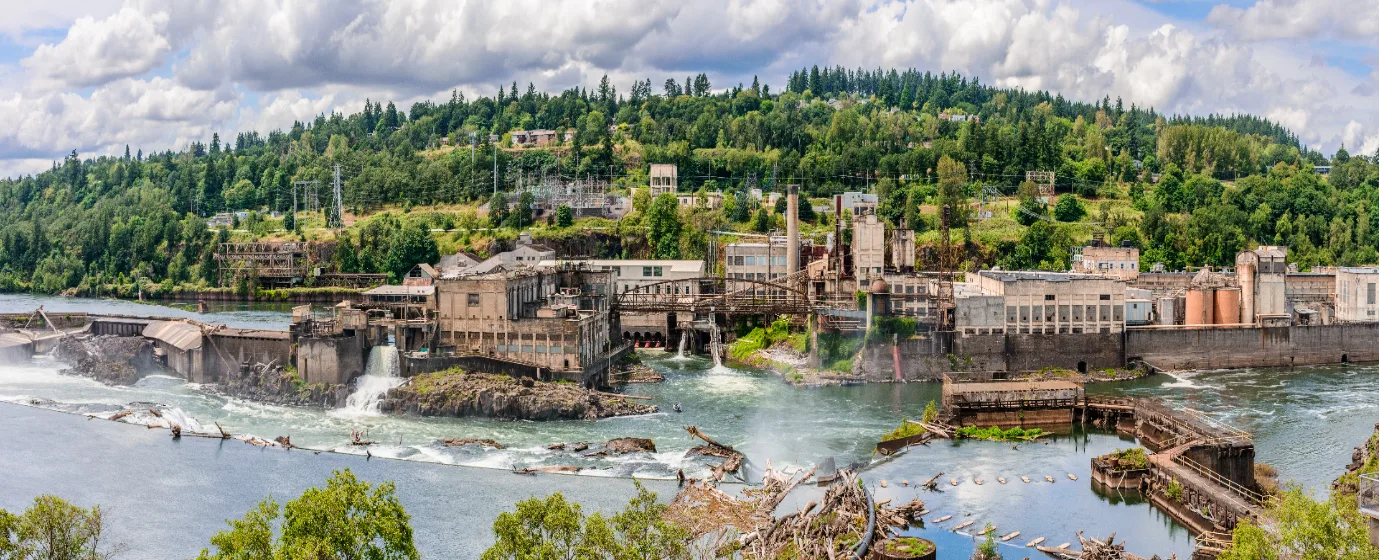
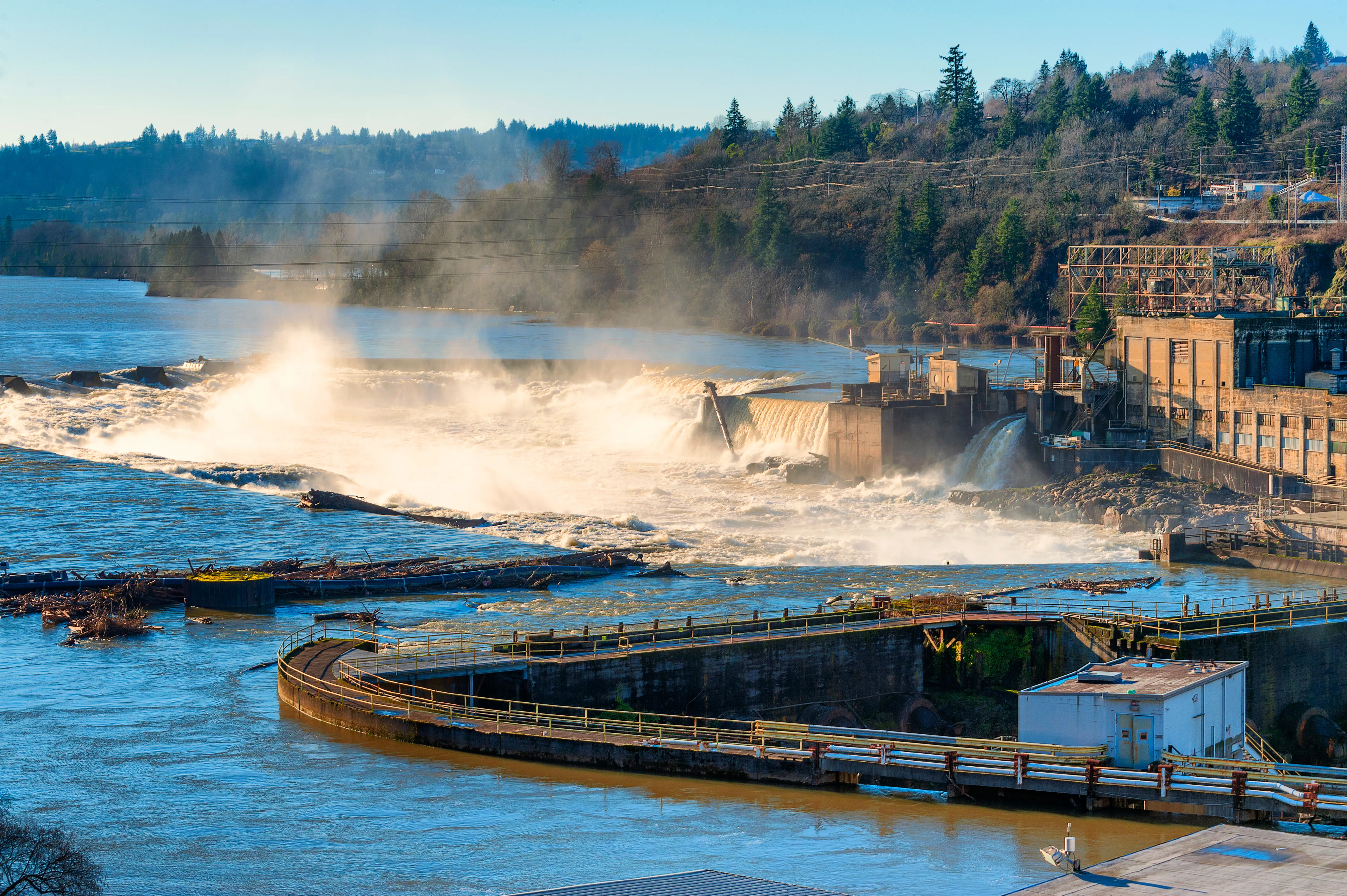
The city sits at the southern end of the Portland metro, perched above the Willamette River at the point where Willamette Falls thunders over basalt rock. It's the oldest incorporated city west of the Rockies, and that history isn't just a tourism tagline — it shapes the texture of the place in ways that newer Portland suburbs simply don't have. The terrain is dramatic: a flat river corridor, a basalt bluff rising sharply above it, and a plateau city on top, all connected by a century-old municipal elevator. The geography creates physical separation between neighborhoods that also translates into distinct price tiers, commute patterns, and community identities. Understanding this before you make an offer matters more than most buyers realize.
This guide is designed to help you figure out whether Oregon City is actually the right fit for your household — not just whether it's affordable. You'll find honest assessments of neighborhood tradeoffs, commute realities, what drives people to stay for decades, and what drives others away after a few years. The median sold price sits at $615,000 as of early 2026, with a spread that runs from the mid-$400,000s in the historic lower neighborhoods to nearly $960,000 in the outlier luxury pockets. There's a version of Oregon City that fits almost every Portland metro buyer profile. The job is finding yours.
Oregon City doesn't serve every buyer equally. The geography, infrastructure, and community culture create a city that genuinely excels for certain households and creates friction for others. Use this table as a quick gut-check before reading deeper.
| Best For | Why |
|---|---|
| Commuters to Portland or Clackamas | 25-minute drive to Portland's core; proximity to Clackamas industrial corridor along I-205 |
| Families with school-age children | Oregon City School District serves the area; smaller-city feel with strong community sports and rec programs |
| History and outdoor enthusiasts | Willamette Falls, Canemah Bluff Nature Park, End of the Oregon Trail Interpretive Center, and the Canemah Historic District |
| First-time buyers priced out of West Linn | Entry-level homes start in the mid-$400,000s in McLoughlin and Canemah — a meaningful gap from West Linn's floor |
| Remote workers wanting space | Roughly 14% of the workforce already works from home; South End and Caufield offer quarter-acre lots without full rural isolation |
| Retirees seeking walkable history | McLoughlin Promenade, the Municipal Elevator, the public library, and historic neighborhoods concentrate amenities in a walkable core |

Oregon City has quietly been one of the most compelling value stories in the Portland metro over the past two years. The median sold price at $615,000 gives buyers meaningful square footage and lot size compared to what that same budget gets you in Lake Oswego or West Linn — and the neighborhoods I watch most closely, Park Place and Caufield, have shown steady demand even as other parts of the metro softened. Homes are moving in about 32 days right now with multiple offers in desirable pockets, which tells you buyers who've done their homework are taking this market seriously.
What I see buyers consistently underestimate is the price stratification here. The Zillow averages you'll find online blend luxury outliers like Savanna Oaks with the entry-level historic core, which makes the city look more uniform than it is. If you're coming in with a $500,000 budget, you have real options in McLoughlin and Canemah. If your ceiling is $700,000, Park Place and Hazel Grove open up beautifully. The mistake is assuming one number tells the whole story — this city rewards buyers who understand its layers. If you're considering Oregon City and want insight into which neighborhoods align with your priorities and budget, I'd welcome the opportunity to share what I've learned from helping hundreds of families make this move successfully.
The geographic reality of Oregon City is the first thing that catches new residents off guard. The city essentially has two physical levels: the lower Willamette corridor, where Canemah and the McLoughlin historic core sit along the riverbank, and the upper plateau, where most modern residential development happens. The Municipal Elevator — a free, city-operated lift that connects the two levels — is genuinely used by residents, not just tourists. If you live downtown near the river, you are oriented differently from a neighbor three blocks up the bluff, and understanding this divide is foundational to choosing where in the city to plant roots.
Daily life on the plateau feels suburban in the way most Portland-adjacent cities do: school drop-offs, Dutch Bros runs, evening walks through neighborhood parks. But the lower historic core has a distinctly different energy — smaller blocks, older buildings, the kind of coffee shop streetscape that takes a generation to develop organically. Singer Hill Cafe anchors this feel in the downtown area, the kind of place where regulars know each other's names and newcomers feel it. This coexistence of working-class suburban expansion and genuine small-city historic character is what gives Oregon City its dual personality.
The commute to Portland runs about 25 minutes in normal conditions via I-205 North or Highway 99E, depending on your destination. The honest friction point is the Abernethy Bridge on I-205, which becomes a legitimate chokepoint during peak hours — southbound in the morning and northbound in the evening, particularly between 7:30 and 9:00 a.m. and 4:30 and 6:30 p.m. Buyers who land jobs in the Clackamas industrial corridor or the suburban employment band along I-205 actually find Oregon City's location a practical advantage rather than a compromise. The city is not a bedroom community tacked onto the edge of the metro — it's a functioning employment hub in its own right, anchored by Clackamas Community College, Providence Health, and Clackamas County government operations.
The community vibe reads as genuinely local in a way that some of the more polished suburbs don't. Oregon City has a farmers market, a deep arts community centered on organizations like Three Rivers Artist Guild, and a historic preservation ethic that shows up at city council meetings. People who stay here long-term tend to cite the sense that the city has an actual identity — not just amenities, but a story it's still living out.
The history is lived-in, not performed. The End of the Oregon Trail Interpretive Center, the McLoughlin House National Historic Site, and the Canemah Historic District aren't museum pieces cordoned off from daily life — they're integrated into neighborhoods where people park their cars, walk their dogs, and send their kids to school. The McLoughlin Promenade runs along the bluff above the Willamette with views of the falls and gardens maintained by longtime residents. This is not a city that manufactured a historic district to attract tourism; the history was always there, and the city grew around it.
Willamette Falls is one of the most underappreciated natural features in the entire metro region. Volume-wise, it ranks as the second-largest waterfall by volume in North America — a fact that surprises almost everyone who hears it. The industrial redevelopment of the area around the falls is an ongoing story, with long-term plans to restore public access to the riverfront that have slowly gathered momentum. Residents today already benefit from river access at Clackamette Park and Jon Storm Park, both of which serve as gathering points for weekend afternoons and community events.
The price-to-space ratio in Oregon City is genuinely competitive within the metro. At the $615,000 median, buyers are typically getting homes with quarter-acre lots, garages, and the kind of square footage that requires real furniture — not the compressed floor plans common closer to Portland. The entry neighborhoods like Barclay Hills, McLoughlin, and Canemah bring that floor down further, to the $465,000–$485,000 range, which opens the door for first-time buyers who've been outbid in every other Clackamas County city they've tried.
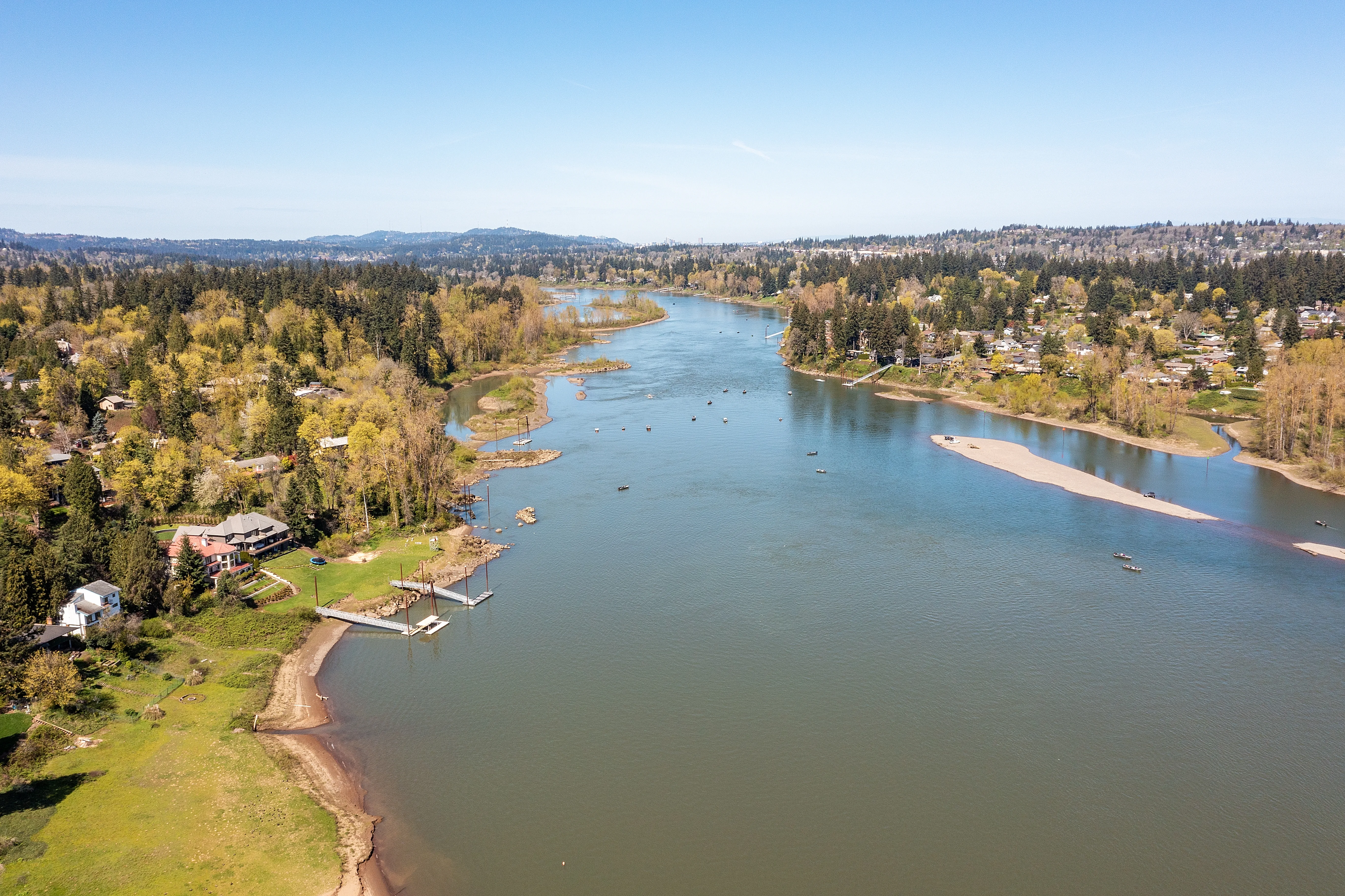
The outdoor access is immediate. Canemah Bluff Nature Park runs through old-growth Douglas fir and Oregon white oak with spring wildflowers and consistent sightings of raptors and warblers. The Willamette River is a practical amenity, not just a scenic backdrop — kayakers, anglers, and trail runners use it weekly. The proximity to the Tualatin Mountains, the Molalla River corridor, and Clackamas River puts legitimate wilderness within a 30-minute drive.
Looking to buy in Oregon City? Estimate your payment.
Enter your numbers to see an estimated monthly mortgage payment.
Estimate only. Excludes HOA fees and mortgage insurance.
Oregon City's downtown is improving, but it's not yet the culinary destination that some buyers moving from Portland's inner eastside might expect. The restaurant and bar scene is modest compared to cities like Lake Oswego or Milwaukie's growing corridor. If dining out several nights a week is central to your quality of life, you'll likely find yourself driving north regularly — or recalibrating expectations. The trajectory is positive, but the gap is real today.
The highway noise and freight rail impact the lower neighborhoods more than the plateau areas. Highway 99E runs along the base of the bluff, and freight trains use the river corridor regularly. Canemah and parts of the McLoughlin riverfront neighborhood absorb this ambient industrial sound in ways that buyers focused on scenic river access sometimes don't anticipate until they've spent a weekend there. It's not a dealbreaker for most people, but it's worth an overnight visit before committing.
Oregon City's schools carry a B- district rating — serviceable, and with individual schools that perform meaningfully better than the district average, but not the draw that West Linn-Wilsonville or Lake Oswego Unified create for families relocating specifically for academic reputation. Families with school-age children should research individual school assignments based on their target neighborhood, since the district covers a geographically varied area with a wide range of building quality and program offerings.
Why some people leave comes down to two things in most conversations: the feeling that the city is still mid-transition — not quite the polished suburb, not quite the urban alternative — and the sense that property crime rates, while not alarming in context, are higher than buyers from quieter exurban markets might accept. The property crime rate of 13.3 per 1,000 residents is worth knowing. It's not a reason to avoid Oregon City, but it's a reason to be specific about which neighborhood you're buying into rather than treating the city as a uniform whole.
The oldest and most recognizable neighborhood in Oregon City, McLoughlin sits at the base of the bluff along the Willamette, concentrated around the historic downtown core and the promenade above it. With 305 historically significant properties and architectural styles ranging from Queen Anne to Carpenter Gothic Revival, it reads more like a Pacific Northwest historic town center than a suburb. The public library, pool, hospital, and Municipal Elevator upper entrance are all within the neighborhood, making it the most walkable pocket in the city. At a Zillow index of approximately $474,743, it's also among the most accessible entry points — which means buyer competition in the better blocks is real.
Best for: First-time buyers and retirees who want walkable amenities, historic character, and downtown proximity without a West Linn price tag.
Canemah occupies a narrow strip of land along the river between the Willamette and the bluff — geographically distinct, historically independent, and unlike anything else in the metro. Founded in 1845 as its own city and later annexed, it sits on the National Register of Historic Places as a full historic district. Canemah Bluff Nature Park runs directly through it, offering old-growth forest trails with hawk and eagle sightings. Homes here index around $484,575, which is remarkable given the setting — the affordable price reflects the trade-off with freight noise and limited through-traffic, not any lack of character.
Best for: Buyers who want genuine historic character, river proximity, and nature access and are comfortable with a quieter, more secluded daily environment.
Park Place sits in the higher-demand southern portion of the city and consistently draws buyers who want established neighborhoods with larger lots and a residential feel removed from the downtown corridor. Homes here index around $658,774, above the citywide median — reflecting its reputation as one of the more desirable addresses in Oregon City proper. It's adjacent to Caufield and positioned within reasonable distance of both Oregon City High School and Clackamas Community College. This is a neighborhood that tends to sell before buyers on the fence are ready.
Best for: Move-up buyers seeking established residential streets, larger lots, and proximity to the city's southern educational corridor.
Caufield represents Oregon City's southward expansion — newer construction, planned communities, and single-family homes that blend suburban subdivision design with the rural edges of Clackamas County. It's where the city transitions toward open land, and buyers get noticeably more square footage for the dollar than in the historic core. Clackamas Community College and Oregon City High School are both located here, making it a practical anchor for families with high schoolers or anyone tied to the college campus. The neighborhood has the feel of an involved community — residents who chose it deliberately rather than landed there by default.
Best for: Families with school-age children who want newer construction, more space, and direct proximity to Oregon City's main educational institutions.
South End offers roughly 50-year-old homes on quarter-acre lots in a setting that gives residents meaningful green space and nature access without pushing them into the rural fringe. Homes here are priced around $537,034, representing solid value for the lot size. The neighborhood's age means buyers should budget for system updates — roofs, HVAC, and kitchens in many homes reflect the original construction era. What South End delivers in return is established trees, mature landscaping, and a residential calm that newer subdivisions simply can't replicate.
Best for: Buyers who want a larger lot and established outdoor feel without the premium of Park Place or Hazel Grove.
Rivercrest sits with Willamette River overlook positioning that gives it scenic appeal, with homes indexing around $508,626. It's a residential neighborhood without the historic designation of Canemah or the downtown proximity of McLoughlin, which keeps prices lower than the view might suggest. The neighborhood is quieter and more insular than the active thoroughfare neighborhoods, which suits buyers seeking a low-traffic residential setting over walkable commercial access.
Best for: Buyers who prioritize river views and a quieter residential setting over walkable amenities.
Hillendale occupies a central position in the city's plateau section, near county government buildings and the infrastructure of civic Oregon City. It indexes around $541,529 and draws buyers who want central location without the price premium of the southward-expanding neighborhoods. The character is practical suburban — not architecturally distinguished, but genuinely convenient. Buyers who work in county government or at Providence Health will find the location reduces daily driving meaningfully.
Best for: Civic employees, county workers, and buyers who want central Oregon City location at a mid-range price point.
Barclay Hills runs along the Molalla Avenue corridor, carrying working-class roots and an entry-level price point that has attracted first-time buyers for years. At approximately $465,654 on the Zillow index, it's the most affordable named neighborhood in the city and reflects that position honestly — older stock, more modest lot sizes, and less of the architectural variety that drives interest in McLoughlin or Canemah. The catch is that buyers get into Oregon City's market at the lowest practical threshold, with room to build equity as the surrounding city continues its long-term growth trajectory.
Best for: First-time buyers with a strict budget ceiling who want an owned home in Oregon City over renting elsewhere in the metro.
| City | Best For | Home Price (Approx.) | Commute to Portland | Vibe |
|---|---|---|---|---|
| Oregon City | Historic character + value | $615,000 | 25 min | Small-city historic with suburban expansion |
| West Linn | Top-ranked schools, polished suburbs | $850,000+ | 25–30 min | Upscale family suburb, wooded neighborhoods |
| Gladstone | Most affordable Clackamas entry point | $490,000–$520,000 | 20 min | Working-class riverfront, transitional |
| Milwaukie | Urban edge access, creative community | $540,000–$580,000 | 15–18 min | Light Rail proximity, growing dining/arts scene |
| Lake Oswego | Premium school district, luxury market | $900,000+ | 20 min | Affluent suburb, tight inventory, high demand |
| Canby | Rural feel, more land per dollar | $480,000–$540,000 | 35–40 min | Agricultural town edge, limited walkability |
| Metric | Detail |
|---|---|
| Population | Approximately 38,327 (2026) |
| Median Sold Price | $615,000 (Redfin, January 2026) |
| Property Tax Rate | Approximately 0.87% |
| Median Household Income | $94,648 |
| Commute to Portland | Approximately 25 minutes |
| Violent Crime per 1,000 | 2.3 |
| Property Crime per 1,000 | 13.3 |
| School District | Oregon City School District (B- rating) |
| Days on Market | Approximately 32 days (January 2026) |
| % Working from Home | Approximately 14% |
The Municipal Elevator is genuinely part of life here. It's not just a tourist attraction — residents on the lower plateau use it to access the upper city, and it connects two physically different worlds within the same zip code. The elevator runs free of charge and has operated in some form since 1915. First-time visitors invariably underestimate how much the bluff-and-river geography structures daily movement in the city.
Canemah Bluff in spring is a community ritual. Long-time residents time their trail walks to coincide with the camas bloom and the arrival of migrating hawks — and if you mention you haven't done it yet, you'll hear about it from neighbors within your first few months of living here. The Canemah Historic District has an active community association that hosts events rooted in the neighborhood's history as an independent river city, and new residents who engage tend to find themselves more rooted in the community faster than they expected.
Oregon City was the official End of the Oregon Trail — and the End of the Oregon Trail Interpretive Center at 1726 Washington Street keeps that history genuinely alive, not as a novelty but as a source of local pride that shapes how residents think about the city's identity. The Pioneer Picnic, held annually since the late 1800s in Canemah Park, is among the longest continuously running community events in Oregon.
What I would not do if moving to Oregon City: I would not buy in the lower Molalla Avenue corridor of Barclay Hills without driving it at multiple times of day. The neighborhood sits at an awkward intersection of through traffic and limited commercial investment, and the ambient conditions — highway proximity, freight noise — are easier to overlook on a weekend afternoon showing than they will be on a Tuesday morning when you're trying to work from home. The neighborhood has genuine value for the right buyer, but the right buyer knows what they're getting into.

Local Expert Takeaway: If you're comparing Oregon City to West Linn on price alone, you're likely underweighting neighborhood character and geographic diversity. The city's two-tier structure — lower historic corridor versus upper suburban plateau — means the right answer for your household depends heavily on which version of Oregon City you're actually buying into. Buyers who come in with a clear sense of that distinction, research individual schools by address rather than district brand, and focus their search on Park Place, Canemah, or McLoughlin based on their lifestyle priorities almost always end up satisfied. Buyers who treat Oregon City as a monolithic "affordable alternative" frequently end up confused about why their block doesn't match what they expected.
✅ Oregon City rewards buyers who understand its geography. The city's two distinct physical levels — historic river corridor and upper plateau — create meaningfully different living experiences within the same zip code. Entry prices start in the mid-$400,000s in Canemah and McLoughlin; premium neighborhoods like Savanna Oaks and Park Place run well above the citywide median.
⚠️ The commute has a real friction point. The 25-minute Portland estimate holds in light traffic, but the Abernethy Bridge on I-205 slows meaningfully during peak commute hours. Buyers should account for this in job location decisions — those with Clackamas corridor employment often find Oregon City genuinely convenient rather than a compromise.
📍 The school district is B-rated, not B+ — and that gap matters to some buyers. Families relocating specifically for school district prestige will likely continue north to West Linn or Lake Oswego. Families comfortable doing neighborhood-level research on individual schools will find options within Oregon City that outperform the district average.
Is Oregon City a good place for families?
Oregon City offers families a genuine small-city experience with immediate outdoor access, a community that runs deep enough to have annual traditions dating back generations, and home sizes that fit growing households without requiring Lake Oswego budgets. The school district carries a B- rating overall, though individual schools vary — families who research specific assignments by address rather than relying on district-wide averages tend to be more satisfied with what they find.
What is the crime rate in Oregon City?
Violent crime runs at approximately 2.3 per 1,000 residents — well below the national average and comparable to other Clackamas County cities. Property crime at 13.3 per 1,000 is higher and worth factoring into neighborhood selection; the lower corridor neighborhoods near Molalla Avenue and Highway 99E see more activity than the upper plateau residential areas. As with any city, neighborhood specificity matters more than the citywide average.
How does Oregon City compare to nearby cities?
Against West Linn, Oregon City is meaningfully more affordable with comparable commute times but a less polished school district. Against Gladstone, it offers more amenities, better walkability in the historic core, and a stronger long-term appreciation story. Against Milwaukie, Oregon City sits farther from Portland but offers more space per dollar and a more established small-city identity. The city sits in a practical middle band of the Clackamas County market — not the entry-level floor, not the luxury ceiling, but a genuine option for buyers who want character and space at a price that still makes Portland metro math work.
Browse current listings updated daily — filtered for Oregon City buyers by Elizabeth Davidson, your local expert.
Powered by Elizabeth Davidson · Cascade Hasson Sotheby's International Realty · 503-939-2035
Explore the full Oregon City series: The Ultimate Oregon City Relocation Guide · Is Oregon City Safe? · Cost of Living in Oregon City · Best Neighborhoods in Oregon City · Oregon City Schools & Family Life · Oregon City Youth Sports · Oregon City Parks & Recreation · Retiring in Oregon City · 1031 Tax-Deferred Exchange in Oregon City · Oregon City First-Time Homebuyers Guide · · Moving to Oregon City from California · The Oregon City Realtor's Perspective · Top 10 Questions a Realtor Gets About Oregon City
Tell us what you need help with and we'll connect you with local resources.

About the Author
Todd Davidson is the founder of Living in Oregon and Living in Washington, where he publishes in-depth city guides, neighborhood resources, and local market insights covering more than 180 communities across the Pacific Northwest. While his background is in home financing and real estate, he created these digital platforms to help families research and compare regions before making a move.