
Portland Metro · Oregon
Best Neighborhoods in Oregon City: Where to Buy or Rent (2026)
Oregon City is small enough that people assume it doesn't matter much where you land. That assumption costs buyers. The difference between a home in Canemah and one in Caufield isn't just aesthetic — it's topography, commute pattern, school access, lot size, and how much you'll interact with your neighbors. Getting the neighborhood right here matters more than in many similarly sized cities, precisely because the variation is sharper than the city's modest footprint would suggest.
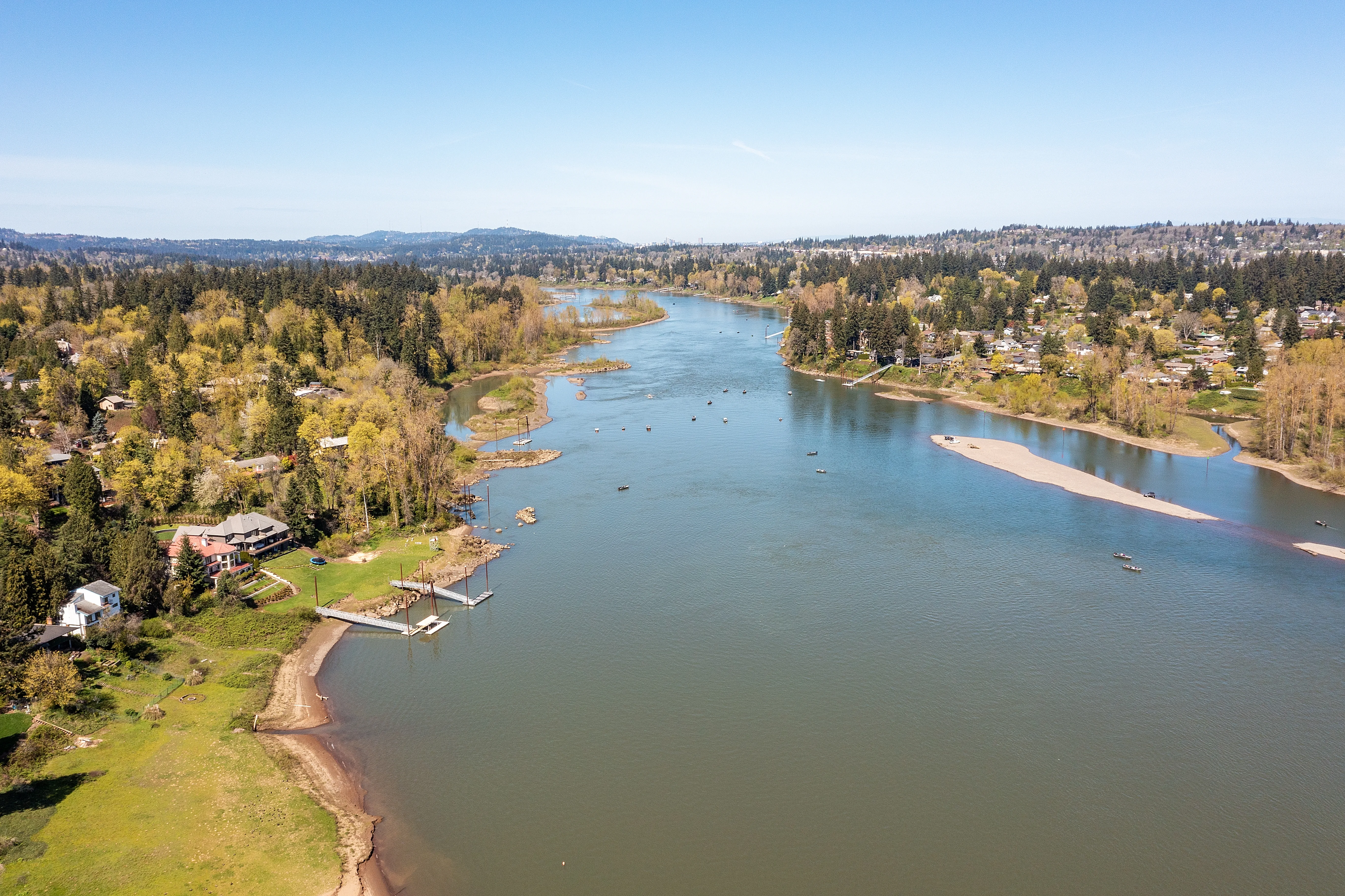
The most important geographic reality to understand before you start touring homes is the divide between Oregon City's upper and lower levels. The lower tier hugs the Willamette River, defined by historic neighborhoods like Canemah and the McLoughlin district's commercial core. The upper level — reached by the famous Municipal Elevator or by road — spreads across basalt bluffs and into suburban terrain where most of the city's newer development has occurred. These two worlds share a zip code but feel almost nothing alike in daily life.
This guide covers where to buy and where to rent across Oregon City's most significant neighborhoods. Whether you're a first-time buyer chasing value, a family prioritizing school proximity, or a renter who wants downtown walkability without the West Linn price tag, the right section of this city can change your experience dramatically.

| Neighborhood | Best For | Price Range | Vibe |
|---|---|---|---|
| McLoughlin | History lovers, walkers | $480K–$620K | Victorian downtown, walkable |
| Canemah | Riverfront living, quiet professionals | $600K–$800K+ | Historic, scenic, intimate |
| Park Place | Families, first-time buyers | $500K–$640K | Transitional, established streets |
| Caufield | Families, college proximity | $520K–$660K | Suburban, community-oriented |
| South End | Large lot seekers, privacy | $540K–$680K | Quiet, established, spacious |
| Rivercrest | Move-up buyers, views | $580K–$720K | Elevated, leafy, residential |
| Hillendale | Commuters, value seekers | $490K–$610K | Practical, family-friendly |
| Barclay Hills | Families, newer construction | $550K–$690K | Suburban, tidy, connected |
| Hazel Grove–Westling Farm | Large lot buyers, rural edge | $560K–$710K | Semi-rural, spacious, quiet |
| Tower Vista | Views, suburban buyers | $570K–$700K | Elevated, panoramic, newer |
| Buyer Type | Best Neighborhood | Why |
|---|---|---|
| First-time buyer | Hillendale | Entry-level pricing, solid bones, practical location |
| Luxury buyer | Canemah or Rivercrest | Riverfront character or elevated views, limited inventory |
| Walkability seeker | McLoughlin | Downtown steps away, Municipal Elevator, coffee and shops on foot |
| Families with kids | Caufield | Oregon City High School, Clackamas Community College nearby, involved community |
| Commuters | Barclay Hills or Caufield | Easy access to OR-213 and I-205 corridors |
| Large lot buyers | Hazel Grove–Westling Farm | Quarter-acre-plus lots, semi-rural feel at the city's edge |
| Renters | McLoughlin / downtown core | Best walkability, highest rental stock density, transit access |

Oregon City is one of the most underpriced historically significant communities in the entire Portland metro — and buyers who understand the upper-lower level geography are consistently landing the best value. The McLoughlin and Canemah neighborhoods offer the kind of character you simply cannot replicate in newer construction, and with the median sold price sitting at $615,000 citywide, you're still getting genuine historic homes in the low-to-mid $500s that would command $800K or more if they were located in Portland's Sellwood neighborhood or Northwest District. That gap is not sustainable long-term.
What buyers consistently underestimate is how dramatically pricing shifts based on whether a home sits on the lower riverfront tier or up on the bluffs. Caufield and Barclay Hills offer newer suburban construction with larger lots and easier driving access to I-205, which appeals to buyers commuting to Clackamas Town Center or into Portland. But the homes that appreciate most consistently here tend to be the older character properties near the downtown core — buyers who passed on them in 2022 and 2023 often wish they hadn't. If you're relocating to Oregon City and want the neighborhood that gives you the city's best long-term story, I'd start your search in McLoughlin or along the Canemah bluff. If you're considering Oregon City and want insight into which neighborhoods align with your priorities and budget, I'd welcome the opportunity to share what I've learned from helping hundreds of families make this move successfully.
The McLoughlin neighborhood is the closest thing Oregon City has to a walkable urban village, built on the second-level bluff where development accelerated after the Oregon and California Railroad arrived in 1869. The streets here are a genuine architectural time capsule — Queen Anne homes share blocks with craftsman bungalows and vernacular Victorian-era structures, some of which were physically relocated into the district for historic preservation. The upper entrance to the Municipal Elevator sits here, connecting residents on foot down to the river level, and the 7th Street corridor puts coffee shops, the Singer Hill Cafe, and local retail within walking distance. The honest trade-off is that historic character comes with historic maintenance costs — older foundations, aging plumbing, and the occasional seismic retrofit question are real considerations before you fall in love with the wraparound porch. Homes in McLoughlin generally trade in the $480K–$620K range, making it one of the more accessible entry points for buyers who want genuine character without the Canemah premium.
Best for: History enthusiasts, walkability seekers, and buyers who want Oregon City's most distinctive address without crossing into the luxury tier.
Canemah occupies a narrow strip of land along OR-99E between the Willamette River and the basalt bluff — a geography that makes it both visually dramatic and physically constrained. The neighborhood traces its origins to 1845 when it was an independent city and a major boat-building center serving as the portage point around Willamette Falls. Today it contains 101 inventoried structures, a third of which predate 1900, and the entire district sits on the National Register of Historic Places. Canemah Bluff Nature Park offers an easy mile of trail through Oregon White oak savannah and past a pioneer cemetery, with Camas blooms in season and river views that remind you why people settled here in the first place. The catch is supply — the district covers roughly 63 acres and rarely turns over more than a handful of homes in any given year, which means buyers need patience and a clear price ceiling. Expect to start conversations around $600K–$800K+ for restored single-family homes, with premium riverfront positioning pushing toward the top of that range and beyond.
Best for: Buyers who want Oregon City's most atmospheric neighborhood, are comfortable with historic restoration realities, and can wait for the right property to become available.
Park Place occupies the upper mid-city area between the McLoughlin district and Caufield, and it represents one of Oregon City's more pragmatic buys — established streets, reasonable lot sizes, and proximity to both downtown and the city's southern school corridors. The housing stock here is transitional in the best sense: older single-family homes on recognizable neighborhood grids, with some more recent infill that signals confidence in the area's trajectory. What Park Place lacks is a distinctive identity — it doesn't have Canemah's drama or McLoughlin's history, which also means it doesn't carry their premiums. Homes generally price in the $500K–$640K range, and families who prioritize school access and practical commute routing over neighborhood character tend to find it quietly satisfying.
Best for: First-time buyers and families who want livable, established streets at a price point that leaves room in the budget for upgrades.
Caufield is where Oregon City's community identity feels most organized and engaged. The neighborhood holds both Oregon City High School and Clackamas Community College within its boundaries, which creates a constant low-level civic energy — youth sports, campus events, and neighborhood association activity that keeps the area feeling alive. The housing stock blends suburban subdivisions with properties that back up to the rural edge of Clackamas County, and lot sizes tend to be more generous than in the older downtown-adjacent neighborhoods. The downside for buyers who want walkability is that Caufield is firmly car-dependent — most errands require driving, and the OR-213 corridor that defines the neighborhood's eastern boundary carries significant truck and commuter traffic. Homes trade in the $520K–$660K range, and buyers moving here often cite school access and a sense of knowing their neighbors as the deciding factors.
Best for: Families with school-age children, buyers who value an involved neighborhood association, and anyone commuting south toward Canby or east into Clackamas County.
The South End represents the quieter, more established version of Oregon City's suburban geography — 50-year-old homes on quarter-acre lots, mature tree canopy, and the kind of settled-in feel that newer developments spend decades trying to manufacture. Compared to the tightly packed newer construction pushing into the city's southern border, the South End reads as spacious and unhurried. The honest limitation is that many of these homes are due for significant system updates — roofs, HVAC, and kitchen layouts that reflect their era — and buyers focused on move-in readiness often find the inspection report more involved than expected. Pricing typically runs $540K–$680K, and the buyers who thrive here tend to be ones who wanted the lot and the trees more than the granite countertops.
Best for: Large lot seekers, buyers who want maturity and privacy, and households comfortable with renovation upside.
Rivercrest earns its name — the neighborhood sits elevated above the Willamette River corridor, and the homes that capture western exposures offer views that don't require a Lake Oswego budget to access. The streets are quiet, the lots are generally substantial, and the neighborhood skews toward buyers who've already owned a home or two and know what they're trading for. What Rivercrest asks you to give up is transit access and walkability — you will need a car for virtually everything, and the drive out to OR-213 or I-205 adds minutes that compound during peak hours. Homes here typically price in the $580K–$720K range, and the upper end of that band captures the properties with the clearest river sightlines.
Best for: Move-up buyers seeking views and quiet residential character at prices meaningfully below comparable West Linn inventory.
Hillendale is among the most practical neighborhoods in Oregon City for buyers working with a budget closer to the low end of the city median. The housing stock is solid and family-oriented, the streets are functional, and the location provides reasonable access to OR-213 without sitting directly on the corridor. What Hillendale trades away is distinction — it's a neighborhood that will serve your family well without generating many dinner party stories. Pricing typically runs $490K–$610K, which in the Portland metro means buyers can sometimes find three-bedroom homes in the lower end of that range that would cost $150K more in Milwaukie or inner Southeast Portland.
Best for: First-time buyers, commuters who want practical access, and families who prioritize square footage and lot size over neighborhood character.
Barclay Hills offers newer construction in a suburban format that appeals to buyers who want Oregon City's relative affordability without the maintenance uncertainty of a Victorian-era home. The neighborhood connects reasonably well to OR-213 and the I-205 interchange, making it one of the stronger options for households commuting into Portland or toward Clackamas Town Center. The compromise buyers notice after move-in is the lack of mature landscaping and the subdivision sameness that comes with newer development — yards that haven't grown into themselves yet, and a neighborhood grid that prioritizes vehicle access over pedestrian comfort. Homes generally price in the $550K–$690K range, and the newest construction on the upper end of that band tends to carry HOA covenants worth reviewing before closing.
Best for: Commuters, families with children who want newer construction, and buyers who prefer low immediate maintenance over historic character.
Looking to buy in Oregon City? Estimate your payment.
Enter your numbers to see an estimated monthly mortgage payment.
Estimate only. Excludes HOA fees and mortgage insurance.
Ignoring the upper-lower level divide when evaluating commute times. The 25-minute commute to Portland is real — but it assumes you're starting from the right part of the city. Buyers who purchase in Canemah or the lower McLoughlin area and need to cross back through the city to reach I-205 during morning rush can add 10 to 15 minutes to that estimate. The OR-99E corridor through the lower level backs up predictably between 7:30 and 8:30 a.m., and buyers who don't test their specific drive before closing often regret it.
Falling in love with historic homes without budgeting for their reality. McLoughlin and Canemah homes are genuinely beautiful, and for the right buyer they are the most rewarding purchases in Oregon City. But homes built between 1880 and 1920 carry real maintenance obligations — original knob-and-tube wiring, foundation styles that require specialized inspection, and single-pane windows that will show up in your heating bill every winter. Buyers who stretch their purchase budget to reach these neighborhoods and leave no room for ongoing maintenance tend to struggle within the first two to three years.
Assuming all of Caufield has the same school access. The southern boundary of Caufield blurs into unincorporated Clackamas County, and not every address that feels like it's "near Oregon City High School" is actually zoned to attend it. School boundary lines in this part of the metro are worth verifying with the Oregon City School District directly before the address becomes emotionally attached to your buying decision.
Overlooking noise and traffic on OR-213 and OR-99E corridors. Both of these state routes carry significant truck traffic alongside commuters, and homes that back up to or front these corridors experience more noise than the listing photos suggest. The OR-213 stretch through Caufield in particular carries through-traffic to Molalla and Canby, which means it doesn't quiet down on weekends the way a purely residential street would. Ask specifically about distance and line-of-sight to these routes before making an offer on anything priced below the neighborhood median.
| Area | Ideal For | Typical Rent Range | Trade-off |
|---|---|---|---|
| Downtown / McLoughlin | Walkers, young professionals | $1,400–$1,900/mo (1BR) | Older units, limited parking |
| Caufield / OR-213 Corridor | Families, students | $1,600–$2,100/mo (2–3BR) | Car-dependent, traffic on main roads |
| Barclay Hills / South End | Families wanting newer units | $1,800–$2,300/mo (2–3BR) | Limited walkability, HOA communities |
| Hillendale | Budget-conscious renters | $1,350–$1,750/mo (1–2BR) | Older stock, fewer amenities |
| Rivercrest / Upper Bluff Area | Quiet living seekers | $1,700–$2,100/mo (2BR) | Limited rental inventory, car required |

Local Expert Takeaway: The single most important thing buyers overlook in Oregon City is how dramatically the character and pricing shift across relatively short distances. A buyer who tours a $520K home in Hillendale and a $620K home in Canemah on the same Saturday is seeing two fundamentally different propositions — different topography, different maintenance profiles, different daily rhythms. Before you rank neighborhoods by price alone, drive the upper level, walk the lower level, and test the specific commute route from each address at 7:45 a.m. on a Tuesday. That exercise will tell you more than any comparison table.
Does Oregon City's bluff geography — with the upper and lower city levels — affect daily life and commute times for residents?
More than most buyers anticipate. Oregon City's topography creates two distinct living tiers: the lower city along the Willamette River, including Historic McLoughlin and Canemah, and the upper plateau where Caufield, Barclay Hills, and most newer residential development sit. The Oregon City Municipal Elevator connects the two levels and is a genuinely useful local landmark, but most daily movement still happens by car. Residents in the upper city access I-205 easily for Portland commutes, while lower-city residents navigate a more constrained street grid. Buyers should test the specific route from any home they're considering to their workplace during actual commute hours — not just map the distance.
Is Oregon City a good place for families?
Yes, Oregon City is a solid choice for families, particularly in neighborhoods like Caufield and Barclay Hills where proximity to Oregon City High School, Clackamas Community College, and established parks gives households with children a functional daily infrastructure. The Oregon City School District serves the area with a range of elementary and middle school options, and the city's lower crime rates relative to Portland make it feel genuinely residential rather than transitional.
What is the median home price in Oregon City?
As of early 2026, the median sold price in Oregon City sits at $615,000 — above Oregon's statewide median but meaningfully below neighboring West Linn and Lake Oswego, which makes it one of the more accessible options for buyers who want a Clackamas County address with Portland metro commute access. Entry-level homes in neighborhoods like Hillendale and Park Place can be found in the upper $400s to low $500s for buyers willing to consider older construction or homes that need cosmetic updating.
How does Oregon City compare to nearby cities like West Linn or Gladstone?
Oregon City sits between two very different neighbors. West Linn trends significantly more expensive, with a more polished suburban feel and higher school ratings. Gladstone sits just north along the Willamette and generally prices below Oregon City, with a smaller commercial core and less historic character. Oregon City itself offers the most diverse range of neighborhood types in the immediate area — from historic riverfront districts that rival anything in the inner metro to practical suburban development on the city's southern edge.
Browse current listings updated daily — filtered for Oregon City buyers by Elizabeth Davidson, your local expert.
Powered by Elizabeth Davidson · Cascade Hasson Sotheby's International Realty · 503-939-2035
Explore the full Oregon City series: The Ultimate Oregon City Relocation Guide · Is Oregon City Safe? · Cost of Living in Oregon City · Best Neighborhoods in Oregon City · Oregon City Schools & Family Life · Oregon City Youth Sports · Oregon City Parks & Recreation · Retiring in Oregon City · 1031 Tax-Deferred Exchange in Oregon City · Oregon City First-Time Homebuyers Guide · · Moving to Oregon City from California · The Oregon City Realtor's Perspective · Top 10 Questions a Realtor Gets About Oregon City
Tell us what you need help with and we'll connect you with local resources.

About the Author
Todd Davidson is the founder of Living in Oregon and Living in Washington, where he publishes in-depth city guides, neighborhood resources, and local market insights covering more than 180 communities across the Pacific Northwest. While his background is in home financing and real estate, he created these digital platforms to help families research and compare regions before making a move.