
Willamette Valley · Oregon
Retiring in Monmouth: Is It the Right Fit for Your Next Chapter? (2026)
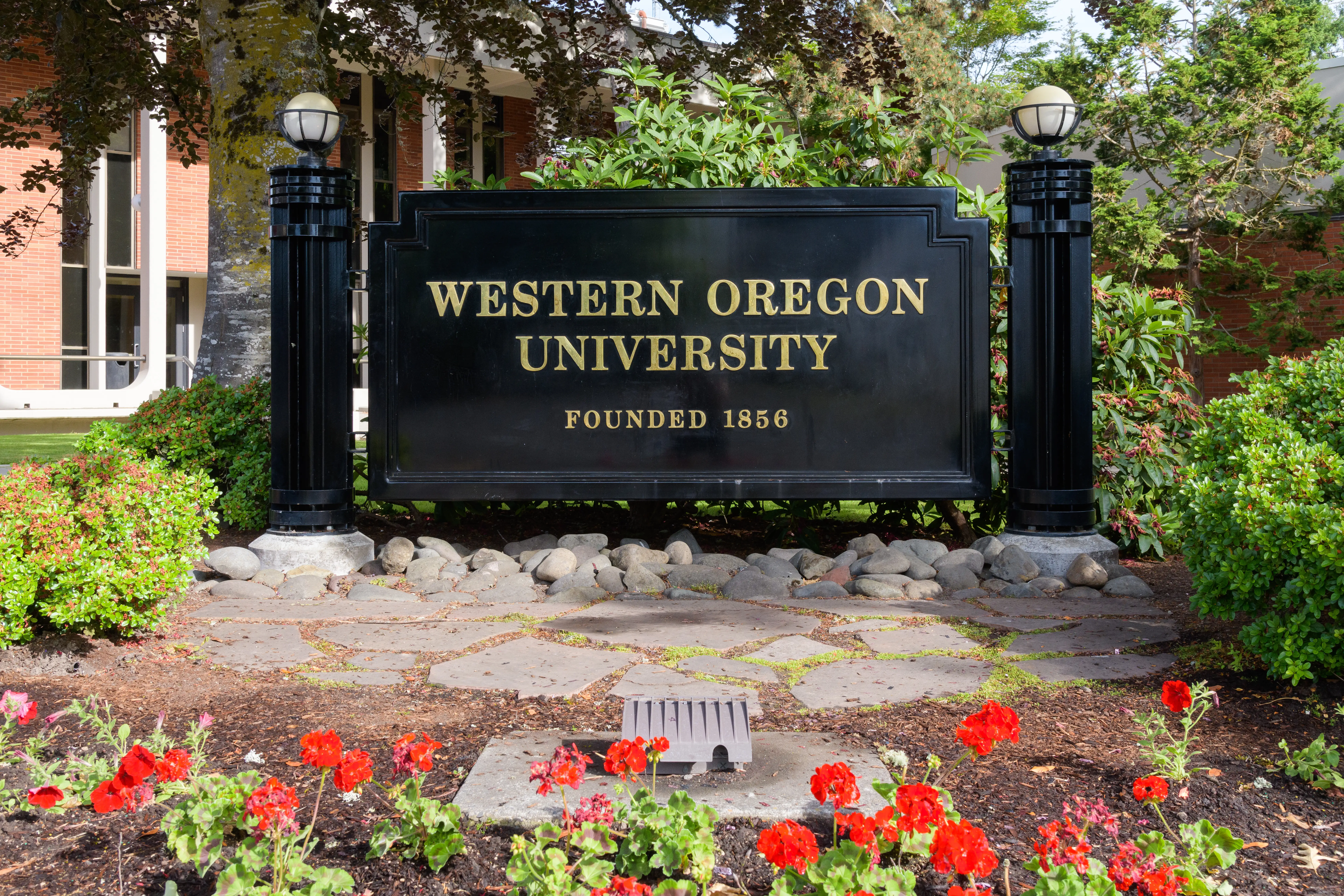
Monmouth isn't the retirement destination that shows up in national listicles alongside Bend or Ashland. It doesn't have a hot spring or a wine trail with boutique hotels. What it does have is a median home price of $466,000, a walkable small-town core anchored by Western Oregon University, and a quiet pace of life that either sounds exactly right or entirely wrong depending on who you are.
Retirees who thrive here tend to fall into a specific type: people who want to stretch their fixed income without sacrificing Pacific Northwest beauty, who don't need a Level I trauma center in their backyard, and who find meaning in community rhythms rather than urban amenities. The university presence keeps the town intellectually alive in ways that pure retirement communities rarely manage. If that combination sounds appealing, Monmouth rewards a closer look.
This guide covers the Oregon tax picture for retirees, healthcare access, senior living options, what daily life actually looks like without a car, and how Monmouth stacks up against nearby retirement alternatives. By the end, you'll know whether this Willamette Valley town deserves a spot on your shortlist — or whether a different zip code fits your next chapter better.

Oregon's retirement tax treatment is genuinely favorable in some categories and quietly aggressive in others. Understanding the full picture before you move is worth an hour of your time.
| Income Type | Oregon Tax Treatment |
|---|---|
| Social Security Benefits | Fully exempt — not taxed at the state level |
| Public/Federal Pension (PERS, military) | Partially taxable; federal pension partially exempt up to limits |
| Private Pension & 401(k) Distributions | Taxed as ordinary income (rates up to 9.9%) |
| IRA Withdrawals | Taxed as ordinary income |
| Capital Gains | Taxed as ordinary income — up to 9.9% |
| Investment Income / Dividends | Taxed as ordinary income |
| Oregon Sales Tax | None — zero state or local sales tax |
| Estate Tax Threshold | Estates over $1 million subject to Oregon estate tax |
The Social Security exemption is the headline benefit for most Oregon retirees, and for anyone living primarily on that income, it's meaningful. The more important number to watch is the 9.9% top marginal rate on ordinary income — if you're drawing heavily from a 401(k) or traditional IRA in retirement, Oregon will take a real bite. Retirees with substantial investment portfolios or large annual distributions should run the numbers carefully, because capital gains are taxed at the same rate as earned income here.
Oregon's Property Tax Deferral program is one of the most underappreciated tools available to Monmouth retirees specifically. Homeowners aged 62 or older with household income at or below $70,000 can have the state pay their county property taxes each year — deferring the balance as a lien against the property until it's sold or the estate settles. At Monmouth's 0.71% property tax rate on a $466,000 home, that works out to roughly $3,309 per year in deferred payments, which for a retiree on a tight fixed income can be the difference between staying put and being forced to sell. The income threshold of $70,000 is particularly well-matched to Monmouth's median household income of $69,170, meaning a significant share of local seniors may qualify. Layered on top of Oregon's Measure 50, which caps assessed value growth at 3% annually regardless of market appreciation, long-tenure homeowners in Monmouth often find their effective tax burden well below what the posted rate suggests.
Monmouth's in-town healthcare anchor is the Salem Health Medical Clinic at 512 Main Street, which handles primary care, family medicine, and physical therapy through a rehabilitation satellite office. For routine health maintenance — annual exams, prescription management, physical therapy following a joint replacement — this clinic covers the basics without requiring a drive. Friday hours are limited to a morning window, so scheduling around that matters.
For anything beyond primary care, Salem Health West Valley Hospital in Dallas is the go-to facility, sitting roughly 8 to 10 miles from Monmouth's downtown. West Valley completed a $25 million expansion in 2023, adding licensed beds in a swing-bed model that allows patients to transition from acute inpatient care directly into rehabilitation — a setup that's particularly well-designed for post-surgical recovery common among retirees. The expansion brought on physical therapists, occupational therapists, speech therapists, and pharmacy staff, and outpatient rehabilitation services are available at a second Salem Health building at 1050 SE Uglow Avenue in Dallas, which also handles wound care, infusion, and anticoagulation management.
What West Valley cannot provide is the specialized interventional cardiology, oncology, or neurosurgery that comes with a major academic medical center. For those services, Salem Health's main campus in Salem — about 30 minutes east on Highway 99W — is the realistic escalation point. Retirees managing complex chronic conditions or expecting surgical intervention beyond general surgery should factor that drive into their planning. It's a manageable distance for most, but it requires a car or a reliable transportation arrangement.
Monmouth's senior living inventory is modest for a town its size, which reflects both the affordability of homeownership here and the relatively recent growth of its 65-plus demographic. The options that do exist cover the most common needs — independent living for active seniors who want to shed maintenance, assisted living for those who need daily support, and a skilled nursing and rehabilitation option in adjacent Independence.
| Community | Type | Location | Est. Monthly Cost |
|---|---|---|---|
| Independence Health and Rehabilitation | Skilled Nursing / Rehab | Independence (adjacent) | $7,500–$10,500 |
| Gentle Woods | Assisted Living | Monmouth | $4,200–$6,800 |
| Market-Rate Senior Rentals (55+) | Independent Living Apartments | Monmouth / Independence corridor | $1,400–$2,200 |
| Single-Family Homeownership | Age-in-Place / Owner-Occupied | Citywide | Varies by home |
The most common retirement path in Monmouth is simply staying in or buying a single-family home and aging in place. The combination of single-story ranch-style homes available in neighborhoods like Edwards Addition and Griffin Estates, paired with the property tax deferral program, makes that approach financially sustainable for longer than it would be in higher-cost Oregon markets.
Looking to buy in Monmouth? Estimate your payment.
Enter your numbers to see an estimated monthly mortgage payment.
Estimate only. Excludes HOA fees and mortgage insurance.
The honest walkability picture in Monmouth is this: if you live within a half-mile of Main Street, you can reach the Monmouth Public Library, Main Street Ice Cream Parlor, a handful of local restaurants, and the Main Street Park on foot. That's a genuinely pleasant walkable core for a town of under 12,000. Outside that radius, a car becomes necessary for most errands. Fred Meyer in Independence handles the bulk grocery run for most Monmouth residents, and the 99W corridor provides fast food and basic retail within a five-minute drive.
Getting around without a car requires some planning. Polk County's public transit system, Polk County Itemizer-Observer Transit (POT), operates routes connecting Monmouth to Independence and Salem, but frequency is limited and schedules are built around commuter patterns more than senior errand timing. For retirees who no longer drive, building a support network — or relying on medical transport for appointments — is a realistic necessity rather than an occasional fallback.
What genuinely distinguishes Monmouth's daily retirement experience is the university calendar. Western Oregon University hosts free and low-cost public lectures, performances at the Rice Auditorium, athletic events, and access to the Hamersly Library system. The Jensen Arctic Museum on campus offers a genuinely unusual cultural touchstone — rotating exhibits on Arctic exploration and indigenous culture that feel unlike anything else in the mid-Willamette Valley. For retirees who value intellectual engagement, the WOU presence functionally expands what a town this size can offer.
The Ash Creek Trail System gives walkers and cyclists a natural corridor that winds through the southern part of the city, connecting residential neighborhoods to parks without requiring road crossings. Madrona Park and Main Street Park provide outdoor gathering space for community events. The pace of Monmouth's social calendar is quiet by urban standards — this is not a city with a festival every weekend — but the connections tend to run deeper precisely because the community is small enough to be navigated on a personal level.
For retirees weighing the Willamette Valley, Monmouth is rarely the first name that surfaces — but it competes well on the metrics that matter most to fixed-income buyers.
| City | Median Home Price | Nearest Hospital | Walkability | Senior Living Depth | Overall Fit |
|---|---|---|---|---|---|
| Monmouth | $466,000 | West Valley Hospital (8–10 mi) | Moderate (downtown core only) | Limited — 1–2 local options | Best for budget-conscious, WOU-adjacent retirees |
| Salem | $385,000–$420,000 | Salem Health Main Campus (in-city) | Good (varies by neighborhood) | Strong — multiple facilities | Best for medical-dependent retirees |
| Independence | $380,000–$410,000 | West Valley Hospital (5–6 mi) | Limited | Moderate | Best for lower-cost, rural-leaning buyers |
| Dallas | $350,000–$390,000 | West Valley Hospital (in-city) | Limited | Moderate | Best for lowest cost of entry in Polk County |
| Corvallis | $495,000–$540,000 | Good Samaritan Regional (in-city) | Strong | Strong | Best for academic-town retirees with larger budgets |
| McMinnville | $430,000–$470,000 | Willamette Valley Medical Center | Moderate | Moderate | Best for wine country lifestyle buyers |
The clearest competitor for Monmouth's specific buyer is Salem's southeast side — where prices run slightly lower and hospital access is dramatically better. Retirees who need frequent specialist care will almost always find Salem's proximity to the main Salem Health campus worth the price premium. Corvallis offers a similar university-town retirement dynamic to Monmouth but at a meaningfully higher price point, and with Oregon State University's hospital research affiliations providing stronger in-city medical depth.
What Monmouth wins on is the combination of price, property tax rate, and social fabric. For a retiree who is broadly healthy, willing to drive 30 minutes for specialist care, and genuinely excited by the idea of a walkable small-town core with university energy — the math here is hard to beat anywhere else in the mid-valley.

Local Expert Takeaway: Monmouth's retirement sweet spot is the active, independent retiree who wants to own a single-story home under $480,000, take advantage of Oregon's property tax deferral program, and walk to a library and coffee on a Tuesday morning without touching a car. Neighborhoods like Edwards Addition and the streets near Ash Creek deliver that lifestyle most reliably. Retirees who need frequent specialist medical care, robust senior living options, or urban walkability beyond a few blocks should look seriously at Salem's south side before committing to Monmouth — the hospital proximity difference is real and matters more as time passes.
Is Monmouth a good place to retire on a fixed income?
For retirees whose primary income is Social Security, Monmouth offers a genuinely favorable environment. Oregon exempts Social Security from state income tax, there's no sales tax, and the 0.71% property tax rate on a $466,000 home produces an annual tax bill that many seniors can further reduce through the state's property tax deferral program. The overall cost of living runs meaningfully below Oregon's state average, which stretches fixed income further than in Salem or Corvallis.
What healthcare options are available to Monmouth retirees?
Monmouth has a Salem Health primary care and physical therapy clinic on Main Street for routine needs. The closest full-service hospital is Salem Health West Valley Hospital in Dallas, roughly 8 to 10 miles away, which completed a major expansion in 2023 and now includes robust inpatient and outpatient rehabilitation services. For specialized cardiac, oncology, or surgical care, Salem's main hospital campus is approximately 30 minutes east — a manageable drive for most active retirees.
How does Monmouth compare to retiring in Salem?
Salem offers stronger hospital access, more senior living options, and a wider range of daily amenities, but home prices run roughly $50,000 to $80,000 lower in Monmouth for comparable square footage, and the small-town pace appeals to a specific type of retiree. Monmouth's Western Oregon University presence adds cultural programming that Salem's suburban neighborhoods don't replicate. The decision typically comes down to how much medical proximity matters — if you're healthy and active, Monmouth's value proposition is hard to argue with; if you have complex ongoing health needs, Salem's in-city hospital access is worth the price difference.
Explore the full Monmouth series: The Ultimate Monmouth Relocation Guide · Is Monmouth Safe? · Cost of Living in Monmouth · Best Neighborhoods in Monmouth · Monmouth Schools & Family Life · Monmouth Youth Sports · Monmouth Parks & Recreation · Retiring in Monmouth · 1031 Tax-Deferred Exchange in Monmouth · Monmouth First-Time Homebuyers Guide · · Moving to Monmouth from California
Tell us what you need help with and we'll connect you with local resources.

About the Author
Todd Davidson is the founder of Living in Oregon and Living in Washington, where he publishes in-depth city guides, neighborhood resources, and local market insights covering more than 180 communities across the Pacific Northwest. While his background is in home financing and real estate, he created these digital platforms to help families research and compare regions before making a move.