
Oregon Coast · Oregon
Living in Lincoln City: The Ultimate Relocation Guide (2026)
Maybe you've been scrolling Zillow at midnight, pricing out the dream of waking up to the sound of the Pacific. Maybe remote work finally gave you permission to leave the valley, and someone mentioned a coastal town with a median home price well under $500,000. Maybe you drove through Lincoln City on a summer weekend, got stuck in Highway 101 traffic, ate a bowl of clam chowder at Mo's, and filed it away as a place worth investigating more seriously. Whatever brought you here, Lincoln City occupies a specific and slightly contradictory position on the Oregon Coast — it is a genuine small town that has spent sixty years trying to be a destination, and the tension between those two identities shapes everything about daily life here.
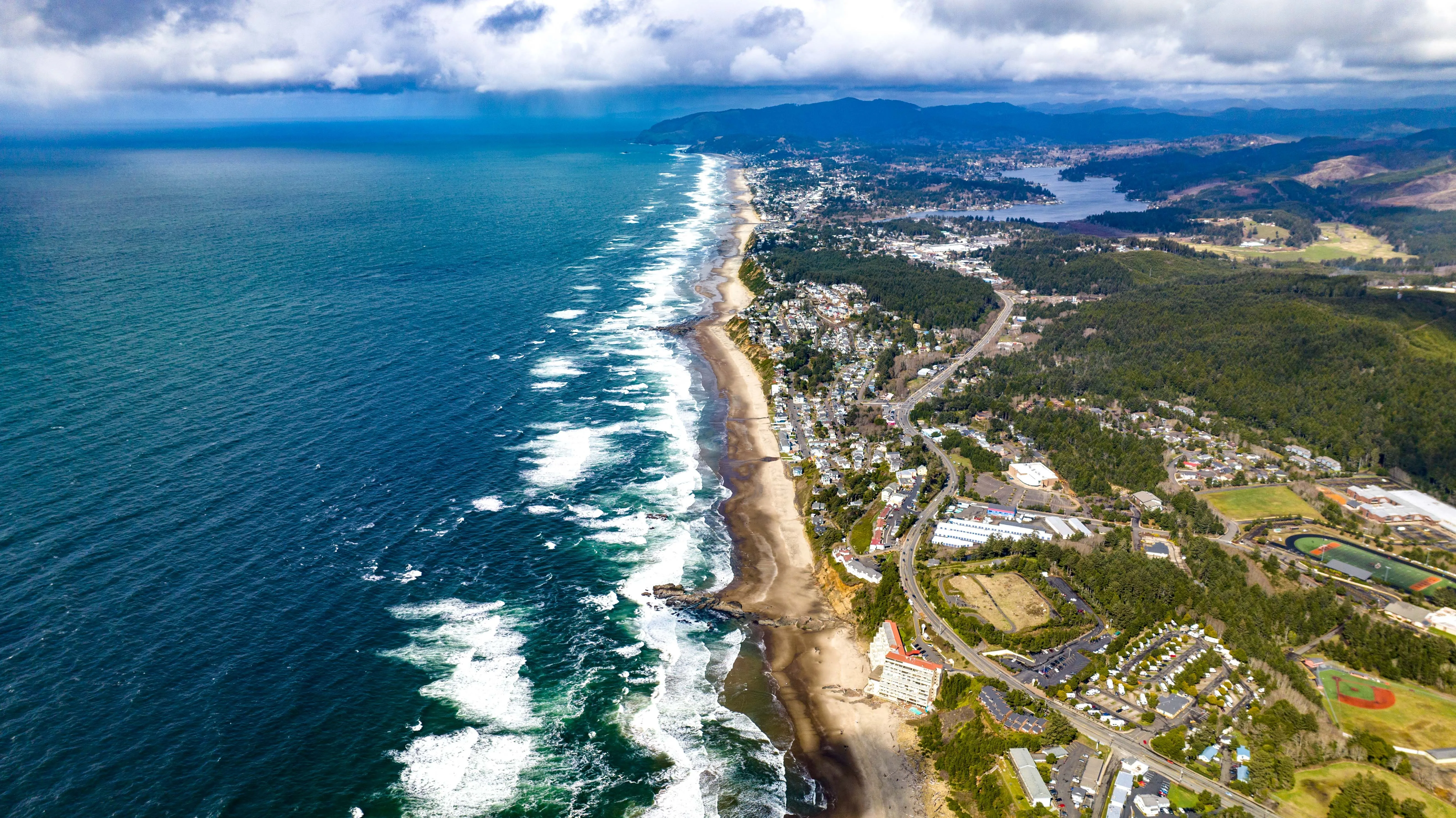
The city sits roughly midway along the Oregon Coast, about 52 miles west of Salem and nearly two hours from Portland, straddling the 45th Parallel with seven miles of uninterrupted sandy beach on one side and 680 acres of freshwater Devils Lake on the other. U.S. Route 101 is literally the main street — not a metaphor, but the actual spine through which every neighborhood in town is connected. Five separate communities (Oceanlake, Taft, Cutler City, Nelscott, and Roads End) were stitched together into a single incorporated city in 1965, and that patchwork origin explains why Lincoln City still feels less like one cohesive place and more like five small towns that agreed to share a zip code.
This guide is built for the buyer or renter who is past the fantasy stage and into the due-diligence phase. You need to know which neighborhoods actually feel livable for full-time residents versus which ones are optimized for weekend renters, what the commute reality looks like if you need to get anywhere significant, where families are planting roots versus where retirees are quietly thriving, and what the honest tradeoffs are for choosing a life that is, genuinely, steps from the ocean.
Lincoln City is not for everyone — and it is most successful for buyers who are clear-eyed about that before signing. The table below is a starting framework, but read the sections that follow for the full context behind each verdict.
| Best For | Why |
|---|---|
| Remote workers seeking coastal lifestyle | Fiber internet available in most areas; home office with ocean views is genuinely achievable at non-California prices |
| Retirees ready to slow down | Median age of 49+ reflects a community already oriented toward a quieter pace; Samaritan North Lincoln Hospital provides local healthcare |
| First-time coastal buyers | Entry point around $460,000 for two- and three-bedroom cottages; significantly more accessible than Newport or Cannon Beach |
| Families prioritizing outdoors over urban amenities | Seven miles of beach, Devils Lake water sports, Drift Creek Falls hiking — lifestyle infrastructure is strong |
| Short-term rental investors | 36% vacancy rate signals an established STR market; zoning and platform demand support the model |
| Buyers priced out of the Portland suburbs | Median sold price of $439,000 is roughly half of many inner Portland neighborhoods; the commute cost is the real math to run |
Living here full-time requires a specific kind of mental adjustment that visitors don't have to make. Highway 101 is always there — it's the only road through town, and on summer weekends and holiday weekends, it backs up from Taft all the way past the outlets. Locals learn very quickly which side streets and parallel routes shave meaningful minutes off errands, and timing grocery runs to avoid the 2–5 PM tourist surge becomes second nature by year one. This is not the picturesque small-town experience where you can stroll Main Street on a Friday afternoon without dodging traffic — it is a working beach town, and the infrastructure shows it.
The community is older than most Oregon cities by demographic, with a median age somewhere around 49, and the social fabric reflects that. The pace is genuinely slower. The regulars at the coffee shop know each other. The Lincoln City Cultural Center draws consistent attendance for local arts programming. Chinook Winds Casino, operated by the Confederated Tribes of Siletz Indians, is both a major employer and a community anchor — its venue hosts national touring acts that otherwise would require a drive to Portland, which matters more than outsiders expect when you live two hours from an arena.
The commute reality is the single most important variable for anyone considering Lincoln City as a primary residence while maintaining valley-side work. The drive to Portland runs approximately 118 minutes in good conditions — which means it's a journey, not a commute. Salem is closer at roughly 75 minutes. Many full-time residents work locally at the casino, the hospital, the school district, or in the retail and hospitality ecosystem that supports the tourist economy. Remote workers are increasingly the third category, and fiber internet access across most of the city has made that workable.
What surprises most people after six months of living here is how quickly the beach becomes furniture rather than a vacation. The awe of "I live near the ocean" normalizes faster than expected, and what takes its place is a genuine appreciation for the specifics — the kite festival crowds in spring, the winter storms that make the coast dramatic in a completely different way, the tide pools at Roads End on a Tuesday morning with no one else around. Those are the moments full-time residents cite when asked why they stay.
The beach access is unmatched at this price point. Seven miles of publicly accessible sandy beach, no private ownership blocking the waterline, and beach access points scattered throughout every neighborhood. Roads End State Recreation Site at the north end offers tide pools and rock formations. D River Wayside near the center of town is one of the shortest rivers in the world, pouring into the ocean at a spot where locals fly kites and families gather without having to drive anywhere. The practical reality of stepping off your porch onto the coast is something that genuinely does not get old for most people.
Devils Lake is the piece of the puzzle that separates Lincoln City from purely wave-watching coastal towns. The 680-acre lake sits directly adjacent to the urban core, with boat ramps, kayak access, swimming, and fishing for bass and rainbow trout. On a calm summer morning, you can paddle Devils Lake, cross 101, and be walking the beach within thirty minutes. That dual-water lifestyle — freshwater and saltwater recreation without a drive between them — is genuinely rare on the Oregon Coast.
Oregon's lack of a state sales tax is felt more acutely in a shopping destination like Lincoln City than almost anywhere else in the state. The Tanger Outlet Mall on the south end of town draws buyers from throughout the region, and locals benefit from that tax-free retail environment on everything from clothing to electronics. The property tax rate of approximately 0.89% is also meaningful — on a $439,000 home, annual taxes run roughly $3,900, which is notably lower than most Willamette Valley suburbs.
The cost of proximity to nature extends well beyond the beach and the lake. Drift Creek Falls, one of the more dramatic hikes on the central coast, sits about 10 miles east of town — a suspension bridge hike through old-growth forest that terminates at a 75-foot waterfall. Siletz Bay National Wildlife Refuge borders the southern edge of the city. The Cascade Head Scenic Research Area sits just north of town. For buyers whose lifestyle is built around outdoor recreation rather than urban amenities, the geographic position of Lincoln City is genuinely hard to beat.
The small-business food and arts scene punches above the city's weight. The Historic Taft District has evolved into a walkable cluster of galleries, restaurants, and shops anchored by Siletz Bay. Mo's Restaurant has been a bayfront institution for decades. The Lincoln City Cultural Center hosts rotating exhibitions and community events that feel authentic rather than manufactured. And the glass float tradition — where hand-blown art glass is hidden along the beach for beachcombers to find — is one of those local quirks that sounds touristy until you experience it and realize it's genuinely beloved by full-time residents.

Looking to buy in Lincoln City? Estimate your payment.
Enter your numbers to see an estimated monthly mortgage payment.
Estimate only. Excludes HOA fees and mortgage insurance.
The isolation is real, and it compounds over time for some buyers. Newport, the nearest city with a broader retail and service footprint, sits about 24 miles south. Portland is nearly two hours away under ideal conditions, which in practice means you're planning overnight trips rather than day runs. Medical specialists, concert venues, major airports, and the full range of services that valley residents take for granted require advance planning rather than spontaneous access. Buyers who thrive here tend to have shifted their consumption patterns before they arrive — those who haven't often find themselves making more valley trips than they expected, which erodes the lifestyle math.
The school district rating is something families need to examine honestly. Lincoln County School District carries a C-grade rating across most education ranking platforms, and the school options within Lincoln City itself reflect a smaller community's constraints. Families relocating from highly-rated suburban districts in the Portland or Salem metro should go in with eyes open about the academic environment difference. That gap is manageable for some families — especially those with strong home support structures or the ability to supplement — but it's not a small variable.
The resort economy creates a housing market that can feel uneven for full-time residents. Roughly 36% of Lincoln City's housing units were vacant at the 2020 Census — a figure that reflects the enormous short-term rental and second-home inventory woven throughout every neighborhood. That means for-sale inventory regularly includes properties that have been optimized for rental revenue rather than comfortable full-time living, and the pricing on those properties can reflect STR income projections rather than pure residential value. Sorting primary-residence options from investor-oriented stock requires more diligence here than in most Oregon cities.
The income-to-housing-cost ratio is a real tension. With a median household income of approximately $56,635 and a median sold price in the $439,000 range, Lincoln City's price-to-income ratio sits around 6.7 — nearly 20% above the Oregon average. Many local jobs in hospitality, retail, and tourism pay wages that don't easily support homeownership at current prices. That gap is navigable for remote workers or retirees bringing outside income, but for buyers relying on local employment, the math requires careful planning.
Roads End anchors the northern tip of Lincoln City with a quieter, more residential character than the tourist-heavy stretch through Oceanlake and Taft. The Roads End State Recreation Site gives the neighborhood a built-in amenity — a beach access point known for tide pools, dramatic rock formations, and beachcombing that stays less crowded than the central beach even on busy weekends. Oceanfront Craftsman homes in this area represent the premium end of the Lincoln City market, with forested cliff settings and Pacific views that push prices well above the city median.
Best for: Buyers who want the full coastal lifestyle without the 101 tourist traffic outside their front door.
Nelscott is one of the more historically interesting pockets of the city — founded in 1926 and named by combining the surnames of its two founders, it still has a coastal cottage character that feels distinct from the corporate-resort framing that defines some Oregon beach towns. The neighborhood's surf reputation (Nelscott Reef has been recognized as one of the Pacific's premier big-wave spots) gives it a slightly younger identity, and the local dining and shop cluster along the 101 corridor keeps it from feeling purely residential. Pricing here spans a wide range, from entry-level cottages to oceanfront compounds with private beach stair access.
Best for: Surf culture buyers, buyers wanting a walkable neighborhood identity, and anyone who prioritizes historic coastal character over new construction.
The Historic Taft District is the piece of Lincoln City most people picture when they imagine a real coastal town. Named for President Taft, it was originally a fishing community, and the Siletz Bay waterfront still anchors its commercial identity. Mo's Restaurant, art galleries, and the oldest bar on the Oregon Coast all operate here. Bayfront condos offer direct views of Siletz Bay, the rock formations at the bay's edge, and the Pacific beyond — at price points that are generally more accessible than oceanfront properties to the north. The catch is that the area's popularity means parking, foot traffic, and noise on busy weekends are genuine factors.
Best for: Buyers who want walkable access to restaurants and galleries and are willing to accept resort-town weekend energy as part of the deal.
Oceanlake is the downtown of Lincoln City — the neighborhood that houses the city's commercial core, including local shops, a classic movie theater, and the concentration of everyday services that full-time residents actually use. Positioned between Devils Lake and the ocean, it benefits from the dual-water geography more directly than any other neighborhood. Housing stock here ranges from modest 1960s homes to more updated properties, making it one of the more accessible entry points into the city for buyers on tighter budgets.
Best for: Full-time residents who want to live in the city's functional center without paying coastal-premium prices.
Wecoma Beach sits in the mid-city stretch, offering beach proximity with a slightly more residential feel than the commercial corridors. The neighborhood has a mix of longer-term rental housing and owner-occupied homes, which means it attracts buyers looking for genuine community rather than a tourism-optimized block. Beach access is close but not always direct, and the 101 presence is more noticeable than in Roads End. Pricing tends to track closer to the city median.
Best for: Buyers who want ocean proximity at or below median pricing and don't need a premium address.
Cutler City is one of the five original communities that formed Lincoln City and occupies a central position in the city's geographic layout. It has a quieter, more inland character compared to the oceanfront neighborhoods, with a housing stock that skews toward single-family homes and longer-term resident ownership. The area doesn't carry the same beachfront premium, which makes it one of the more affordable full-time living options in the city. What buyers trade is the immediate beach access that defines the northern neighborhoods.
Best for: Budget-conscious buyers and families who prioritize residential stability over oceanfront lifestyle.
The Devils Lake neighborhood takes its identity from the 680-acre lake that forms the city's eastern recreational anchor. Properties near the lake — particularly those with direct lake access or views — command meaningful premiums over the city median, but without the full oceanfront pricing of Roads End or Nelscott. The appeal is the dual-water lifestyle: lake-access living with beach access a short drive away. Kayaking, fishing, and swimming from your own neighborhood is the selling point that distinguishes this area from everything else in the city.
Best for: Outdoor recreation buyers and families who want calm-water lake access without giving up coastal proximity.
Salishan sits south of Lincoln City proper in Gleneden Beach, often discussed as part of the broader Lincoln City market. The Salishan Resort has defined the area's identity for decades, and the surrounding residential community carries that upscale resort-adjacent character. Properties here tend to run above the Lincoln City median, with the tradeoff being a quieter, more insulated setting. The famous Salishan Golf Links and the resort's amenities are part of the appeal for retirees and remote workers seeking a specific quality-of-life envelope.
Best for: Retirees and buyers seeking a quieter, resort-community setting with a higher price ceiling.
| City | Best For | Median Home Price | Commute to Portland | Vibe |
|---|---|---|---|---|
| Lincoln City | Full coastal lifestyle at accessible price point | ~$439,000 | ~118 min | Working beach town with resort layer |
| Newport | Buyers wanting more urban services on the coast | ~$499,000 | ~135 min | More established city feel, active waterfront |
| Depoe Bay | Buyers prioritizing boutique small-town charm | ~$525,000+ | ~115 min | Tiny, dramatic whale-watching coastline |
| Gleneden Beach | Resort-adjacent quiet with Salishan access | ~$575,000+ | ~125 min | Upscale, residential, quieter |
| Neskowin | Remote buyers wanting maximum seclusion | ~$600,000+ | ~100 min | Tiny, private, no commercial strip |
| Otis | Rural value with coast proximity | Below $400,000 in range | ~120 min | Inland rural, lower price, less amenity |
| Metric | Data |
|---|---|
| Population | ~10,127 |
| Median Sold Home Price (March 2026) | $439,000 |
| Median Household Income | $56,635 |
| Property Tax Rate | ~0.89% |
| Violent Crime per 1,000 | 4.9 |
| Property Crime per 1,000 | 19.5 |
| School District | Lincoln County School District |
| School District Rating | C |
| Commute to Portland | ~118 minutes |
| Median Age | ~49 years |
| Median Gross Rent | ~$1,376/month |
| Major Employers | Chinook Winds Casino, Samaritan North Lincoln Hospital, Lincoln County School District, Tanger Outlet Mall |
The Glass Float Tradition is one of those things that sounds like marketing until you actually participate. Between November and May, Finders Keepers season runs along Lincoln City's seven miles of beach, with hand-blown art glass floats hidden in the sand by local glassblowers for beachcombers to discover and keep. Full-time residents make a habit of early morning walks during Finders Keepers season — not because they're desperately hunting glass, but because it turns an ordinary morning beach walk into something with a small charge of possibility.
The Kite Festival has given Lincoln City its unofficial identity as the "Kite Capital of the World," and the D River Wayside is the center of that culture year-round. On weekends with decent wind — which on the central Oregon Coast is most weekends — the wayside fills with kite fliers of all skill levels. The spring and fall kite festivals draw visitors from throughout the Pacific Northwest, and for full-time residents, it's one of those community anchors that makes 101 traffic completely worth enduring.
The Winter Storm Season is something newcomers drastically underestimate. October through March, the central coast gets hit with sustained Pacific storms that are genuinely dramatic — king tides, 30-foot swells visible from shore, wind events that close coastal roads. Locals lean into this rather than retreating from it. Storm watching from a protected vantage point at Roads End or Siletz Bay is a winter ritual, and the tourist crowds largely disappear, leaving the town feeling more like itself.
What I Would Not Do: I would not buy a property on the east side of Highway 101 in the Oceanlake district expecting the same beach-access lifestyle as the west-side addresses. The difference between a home that requires crossing 101 — with its summer traffic and seasonal pedestrian chaos — and one with a direct western path to the beach is meaningful in daily quality of life. That distinction doesn't always show up clearly in listing descriptions, and it's worth verifying in person before making an offer.
Local Expert Takeaway: If your budget is under $550,000 and coastal Oregon living is the goal, Lincoln City right now represents the most accessible entry point on the central coast — but the neighborhoods are not interchangeable. Roads End and Nelscott deliver the authentic coastal residential experience; Oceanlake gives you downtown functionality at lower prices; Taft gives you walkable bayfront character. Know which version of Lincoln City fits your actual life before you start making offers, because the differences between these neighborhoods matter far more than the differences between Lincoln City and its neighbors.
✅ Lincoln City offers genuine coastal Oregon living at a median sold price of $439,000 — roughly half the cost of comparable beach access in California and significantly more accessible than most Pacific Northwest coastal towns.
⚠️ The commute to Portland runs approximately 118 minutes, making Lincoln City a practical primary residence only for remote workers, retirees, or those employed locally — not for valley commuters.
📍 The neighborhoods within Lincoln City vary dramatically — Roads End and Nelscott deliver quiet residential coastal character; Taft and Oceanlake carry heavier tourist infrastructure; understanding those differences before buying is the most important due-diligence step.
Is Lincoln City a good place for families?
Lincoln City can work well for families whose lifestyle is outdoor-recreation-focused, with seven miles of beach, Devils Lake water activities, and trails like Drift Creek Falls providing strong everyday lifestyle infrastructure. The honest caveat is the school district — Lincoln County School District carries a C rating, which is a meaningful step down from higher-rated suburban districts in the Portland or Salem metro. Families with strong support structures or the ability to supplement schooling find it manageable; those who consider school quality the primary factor in a relocation decision may find the rating difficult to accept.
What is the crime rate in Lincoln City?
Lincoln City's violent crime rate sits at approximately 4.9 per 1,000 residents, and property crime is around 19.5 per 1,000 — figures that are higher than many quiet suburban Oregon communities and reflect the challenges that come with a resort-economy town with significant transient traffic. Property crime tends to be the more frequent category, and it's worth factoring into decisions about neighborhoods and home security. The full safety picture for Lincoln City is covered in detail in the dedicated safety guide in this series.
How does Lincoln City compare to Newport for relocation?
Newport offers more urban services — a larger commercial core, Oregon Coast Aquarium, more restaurant variety, and a more established city infrastructure — at a median price point that runs slightly above Lincoln City's. Lincoln City has more affordable entry points, a larger beach footprint, and the Devils Lake freshwater recreation advantage. Newport tends to draw buyers who want more city functionality; Lincoln City tends to draw buyers prioritizing beach access and cost. The commute difference between the two is minimal for Portland-area ties, so the decision usually comes down to how much urban amenity access matters relative to price.
Explore the full Lincoln City series: The Ultimate Lincoln City Relocation Guide · Is Lincoln City Safe? · Cost of Living in Lincoln City · Best Neighborhoods in Lincoln City · Lincoln City Schools & Family Life · Lincoln City Youth Sports · Lincoln City Parks & Recreation · Retiring in Lincoln City · 1031 Tax-Deferred Exchange in Lincoln City · Lincoln City First-Time Homebuyers Guide · · Moving to Lincoln City from California
Tell us what you need help with and we'll connect you with local resources.

About the Author
Todd Davidson is the founder of Living in Oregon and Living in Washington, where he publishes in-depth city guides, neighborhood resources, and local market insights covering more than 180 communities across the Pacific Northwest. While his background is in home financing and real estate, he created these digital platforms to help families research and compare regions before making a move.
Check Out the Oregon Coast Rankings: Oregon Coast Cost of Living — All 16 Cities Ranked · Best Places to Retire on the Oregon Coast · Best Oregon Coast Cities for Families · Best Oregon Coast Cities for Remote Workers · Oregon Coast Real Estate Market Report 2026 · Oregon Coast vs. Washington Coast