Willamette Valley · Oregon
Living in Keizer: The Ultimate Relocation Guide (2026)
Maybe you've been priced out of the Portland suburbs and someone told you to look south. Maybe you work in Salem and you're trying to figure out whether to live in the city you work in or the quieter one just north of it. Or maybe you drove through Keizer on I-5, saw the Volcanoes Stadium sign, and thought the place looked more interesting than you expected. Whatever brought you here, Keizer has a way of not quite matching the mental image people bring to it. It isn't a suburb of Salem in the way that Wilsonville is a suburb of Portland — it's a fully incorporated city with its own parks department, its own identity, and its own reasons to stay. The tension at the heart of every Keizer buying decision isn't really about price. It's about whether you want the calm, affordable Willamette Valley lifestyle that Keizer offers — or whether you'll spend the first year quietly wishing you'd bought a little closer to things.
Geographically, Keizer is compact and well-defined. The Willamette River forms its western edge, Interstate 5 runs along its northeastern boundary, Salem presses in from the south, and agricultural fields stretch out to the north. The whole city covers about 7.3 square miles, which means you can drive from one end to the other in about ten minutes. River Road is the main commercial spine running north to south, connecting the Keizer Station retail district near I-5 to the older residential neighborhoods near the Salem border. Proximity to I-5 at Exit 260A makes commuting practical in most directions, and the ten-minute drive into downtown Salem means this is genuinely one of the most convenient mid-size cities in the Willamette Valley for state government workers, hospital employees, and educators.
This guide is designed to help you answer the specific questions that matter most before you make an offer: Which neighborhoods flood? Which ones are closest to the amenities that make suburban life feel less isolating? What does the school situation actually look like? And who is Keizer actually a great fit for — and who tends to leave? By the time you reach the last section, you'll know whether Keizer belongs on your shortlist or whether one of the neighboring cities deserves a harder look.
Not every city works equally well for every buyer profile. Keizer has a clear strengths profile — and being honest about it saves time.
| Best For | Why |
|---|---|
| Salem commuters | A 10-minute drive or quick bus ride to downtown Salem and major employers like Salem Health |
| First-time buyers | Median sold prices around $462,000 — among the more accessible entry points in the Salem metro |
| Families with school-age children | Established neighborhoods near Salem-Keizer schools and parks like Keizer Rapids |
| Retirees downsizing | McNary Estates offers one-level homes, golf access, and a settled community feel |
| Remote workers seeking quiet | Low density, minimal traffic noise except near I-5, and a genuinely uncrowded pace |
| California transplants recalibrating budgets | Buyers from the Bay Area and LA frequently search here — the value-to-lifestyle ratio is real |
Living in Keizer has a particular rhythm to it that's hard to describe without experiencing it. The city feels unhurried in a way that some buyers find immediately appealing and others find quietly unsettling after about six months. There's no real downtown core in the traditional sense — no central plaza, no walkable block of restaurants and coffee shops that serves as the social center of gravity. River Road carries most of the commercial activity, with Keizer Station near Exit 260A doing the heavy lifting for retail: a WinCo Foods, Costco, and an assortment of chain restaurants clustered around the freeway interchange.
What surprises most people after six months of living here is how much they end up in Salem for things that should be local. Dinner options, live music, urgent care, specialty shopping — Salem absorbs a lot of the demand that would otherwise keep Keizer's commercial corridors busier. That's not a criticism, exactly. It's just the geographic and economic reality of a 7-square-mile city sitting directly adjacent to the Marion County seat. The ten-minute commute that makes Salem's employers so accessible also makes Salem's amenities a logical extension of your Keizer life.
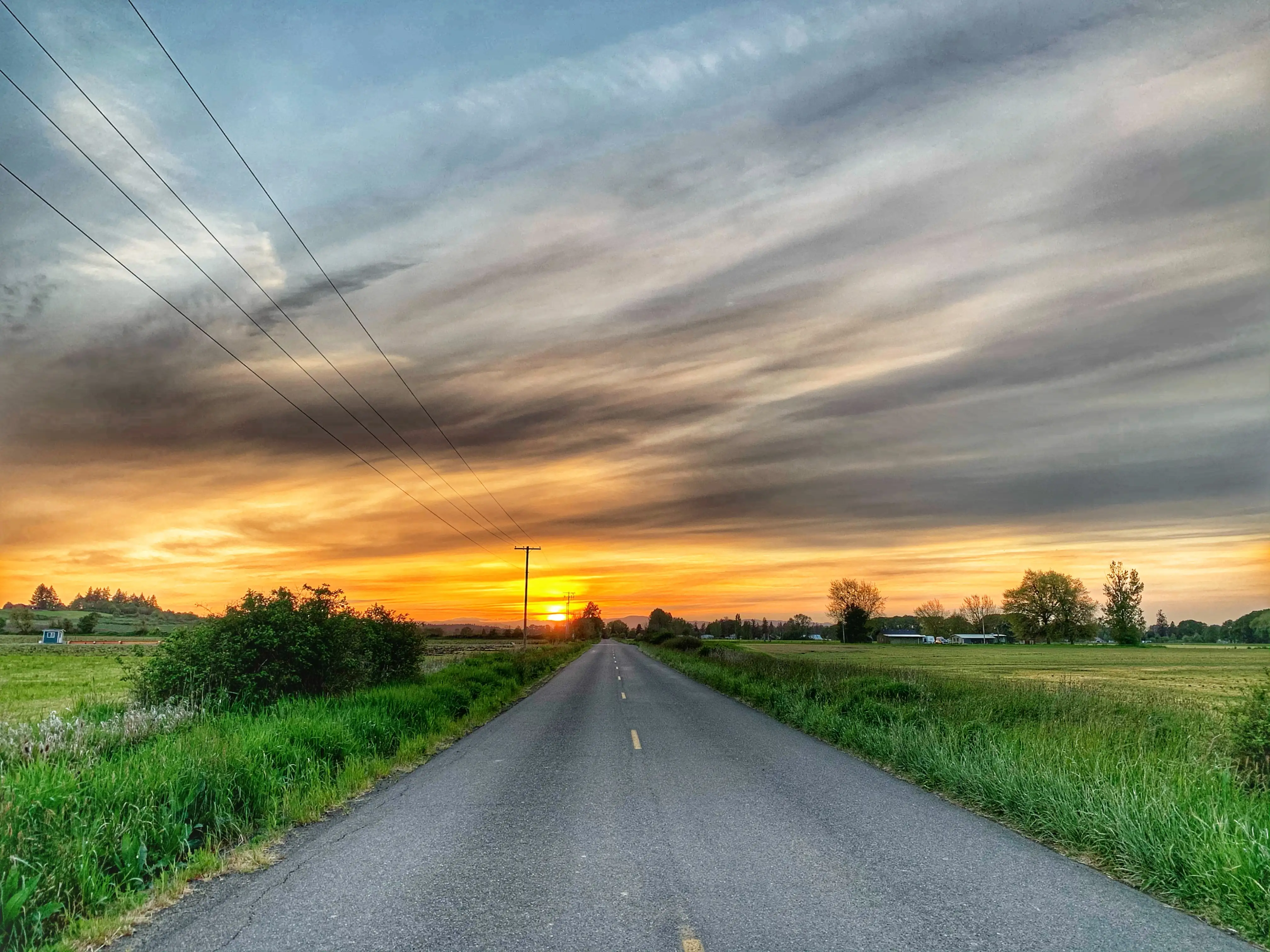
The Willamette River waterfront is the city's most underappreciated asset. Keizer Rapids Park, sitting along the western edge of the city, offers disc golf, a fenced off-leash dog area, playground equipment including the popular Big Dig sand play structure, and river access that feels genuinely removed from suburban life. On summer weekends, this is where Keizer actually gathers — families, dog owners, cyclists, and anyone who discovered that the park is far nicer than the strip-mall approach on River Road suggests.
The city's Walk Score of 35 tells you something important: this is a car-dependent community, and fighting that reality will drain you. Buyers who arrive expecting to walk to coffee or bike to the farmers market tend to recalibrate those expectations within a few months. Buyers who arrive understanding that Keizer is a drive-everywhere suburb that happens to sit next to excellent outdoor recreation — and that the tradeoff is affordability and quiet — tend to stay and become its most vocal advocates.
The price-to-space ratio is hard to beat in this region. With a median sold price around $462,000, Keizer offers significantly more square footage per dollar than comparably convenient suburbs closer to Portland. A three-bedroom, two-bathroom home on a standard lot here often comes with a two-car garage, a mature backyard, and a quiet street — the kind of purchase that would push $600,000 or more in Tualatin or Lake Oswego. For buyers who've been stretching their budgets across the Portland metro, that difference is real and life-changing.
The proximity to Salem's employment base without Salem's urban density is a legitimate quality-of-life advantage. Salem Health is one of the largest employers in the region, and McNary Road and River Road are among the more reliable commute corridors in the Willamette Valley — you're not sitting in I-5 backup for an hour each way. State of Oregon government jobs, the Salem-Keizer School District, and Kaiser Permanente are all accessible within minutes. For dual-income households anchored to Salem employers, living in Keizer means spending less time commuting and more time actually living in your house.
The parks system is genuinely strong for a city this size. Keizer Rapids Park, Claggett Creek Park, and Palma Ciea Park give residents more green space than many comparable Oregon suburbs. Claggett Creek, in particular, offers wetland habitat and trails that feel wilder than you'd expect for a mid-Willamette Valley neighborhood park. The Volcanoes Stadium, home of the Volcanoes baseball team, adds a summer entertainment option that's walkable for some neighborhoods and a short drive for everyone else — minor league baseball evenings are one of Keizer's most reliable community rituals.
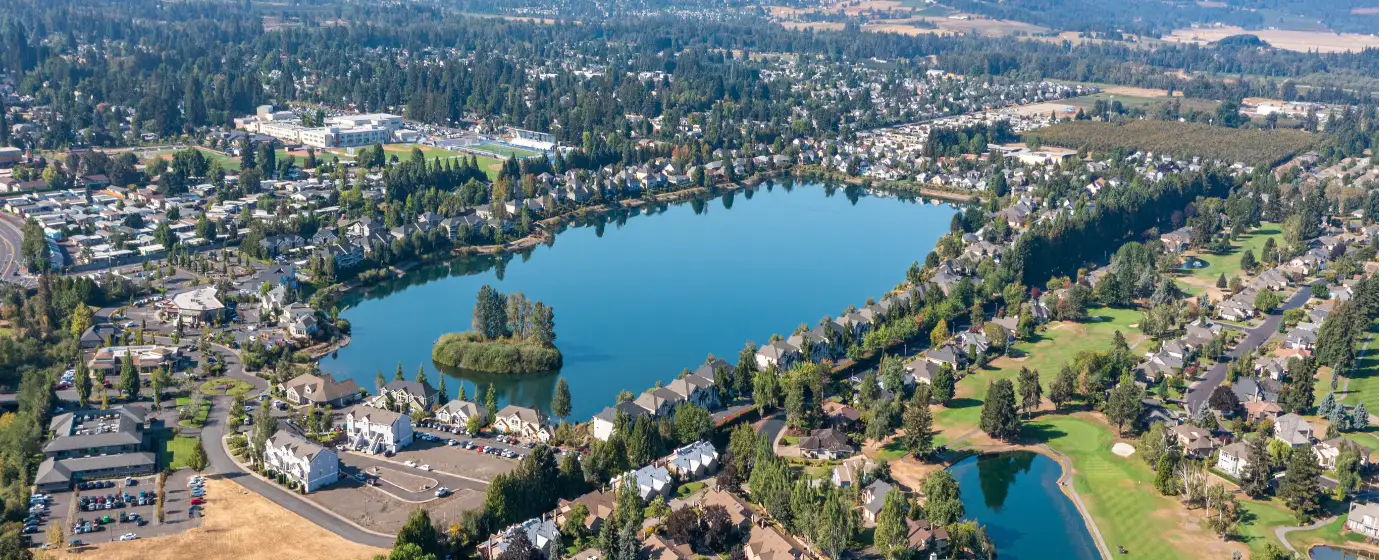
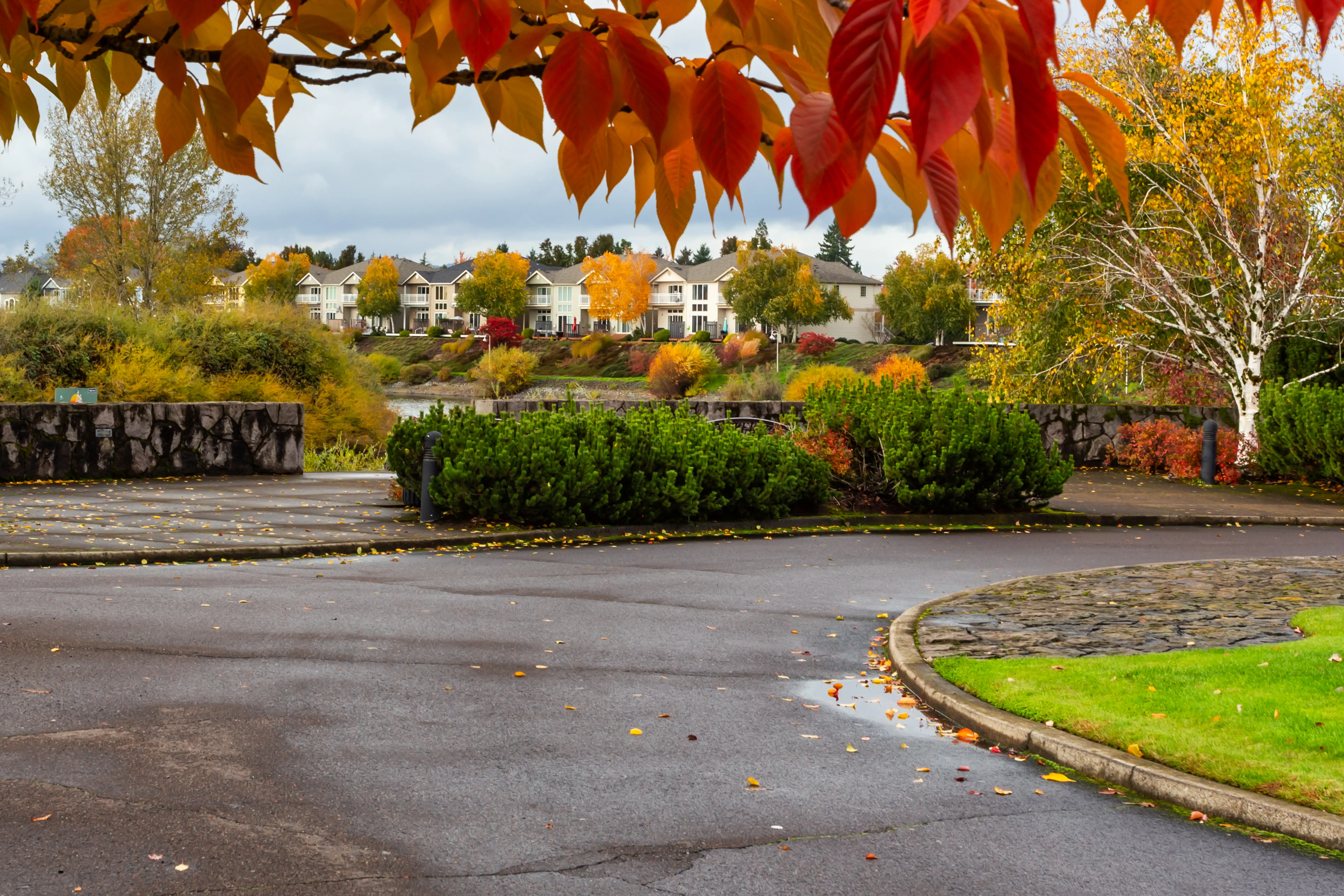
The Inland Shores neighborhood adds something genuinely unusual: a private man-made lake — Staats Lake, formed from a former rock quarry — that residents use for fishing, rowboating, paddleboarding, and swimming. No motorized boats, a scenic walking path encircling the water, and the kind of backyard lake access that in most states would require a price tag three times higher. If you've been looking for a neighborhood that offers an activity anchor beyond the backyard, Inland Shores delivers one that most buyers aren't aware of until they research Keizer specifically.
Looking to buy in Keizer? Estimate your payment.
Enter your numbers to see an estimated monthly mortgage payment.
Estimate only. Excludes HOA fees and mortgage insurance.
Walkability is essentially nonexistent. A Walk Score of 35 isn't a quirk — it's a fundamental feature of the city's layout. Every grocery run, every school drop-off, every coffee trip requires a car. Buyers relocating from denser cities or neighborhoods with walkable streets often find this adjustment harder than they anticipated, particularly if they're downsizing to one vehicle or have teenagers who want independence. Keizer isn't going to change this in the next decade, and pretending otherwise would be doing you a disservice.
The flooding risk deserves serious attention before you fall in love with a specific house or neighborhood. Approximately 46% of properties in Keizer carry some level of severe flood risk over a 30-year horizon — a figure that's unusually high even for a Willamette Valley river community. The western neighborhoods closest to the river carry the heaviest exposure, and West Keizer in particular has roughly 68% of its properties flagged. This doesn't mean you shouldn't buy there — it means flood insurance isn't optional, and you should run a specific flood risk query on any address before making an offer.
Dining and nightlife options are limited within Keizer proper. There are solid casual options along River Road and around Keizer Station, but anyone who places significant weight on restaurant variety, independent coffee shops, or arts venues will find Keizer's commercial offerings thin. Salem fills that gap for most residents, but the gap is real — and on a weeknight when you don't want to drive, it registers.
Why some people leave. Buyers who moved to Keizer primarily for its price point, without fully accounting for its suburban lifestyle constraints, tend to reconsider after two or three years. The most common departure scenarios involve households where one partner wanted more urban energy, or families whose kids aged into high school and started agitating for activities that required constant driving. None of these are fatal flaws — they're predictable friction points for certain buyer profiles. If you value quiet, outdoor access, and short commutes over walkability and restaurant density, Keizer holds up over time. If the balance tips the other way, you may find yourself back on Zillow sooner than you planned.
McNary Estates is the closest thing Keizer has to a planned lifestyle community, built around the McNary Golf Club with most homes backing directly to a fairway or green space. Development started in the 1980s, so the architecture trends toward the single-level ranch and split-level styles that were popular then — practical for retirees and buyers who want to avoid stairs, though some homes carry dated interiors that haven't been updated since original construction. Prices range from roughly $400,000 for entry-level units in the Castle Pines zero-lot-line section to close to $1,000,000 for the larger custom homes on premium fairway lots. Sub-associations like Cambridge Greens, Lakeshore, and The Fountains (a 32-unit condo community) give buyers multiple access points into the neighborhood at different price bands.
Best for: Retirees and empty-nesters who want golf access, single-level living, and a settled HOA community without the price tag of a resort destination.
West Keizer sits along the city's western edge, closest to the Willamette River and carrying the highest flood exposure in the city — roughly 68% of properties here face some level of severe flood risk over the next 30 years. Despite that, it's an active and competitive market, with homes selling after a median of 57 days as of early 2026 and a median sold price around $440,000. The neighborhood draws buyers who prioritize river proximity and larger lots over flood peace-of-mind, and it's the kind of corridor where a thorough insurance conversation before closing is genuinely important.
Best for: Buyers who want Willamette River access and larger lots and understand the flood insurance implications before signing.
Inland Shores is built around Staats Lake, a private man-made lake formed from a former rock quarry that's exclusive to residents and their guests. The community spans several phases — Lake Forest Estates, Westlake Village, and Lakefair Village — and includes both single-family homes and a condo and townhome section with lake views. Most single-family homes in the neighborhood fall in the $450,000–$800,000 range, with condos offering entry points in the $350,000–$400,000 band. Residents use the lake year-round for catch-and-release fishing, paddleboarding, sailing, and swimming, with no motorized boats permitted and a scenic walking path encircling the water.
Best for: Buyers who want a private waterfront lifestyle at a fraction of the cost of coastal Oregon, without giving up proximity to Salem employers.
Clear Lake is one of Keizer's more established residential neighborhoods, offering a mix of mid-century and 1980s construction on standard suburban lots. It sits in the central-to-south part of the city, within comfortable distance of both Keizer Station retail and Salem's northern employment corridors. Pricing here tracks close to the city-wide median, making it a practical target for first-time buyers and households who want a move-in-ready home without the premium of a lake-view community or golf-adjacent address.
Best for: First-time buyers and working households who want a central Keizer location at or near the city's median price point.
Gubser ranks among the most-searched Keizer neighborhoods for a reason: it combines established tree-lined streets, proximity to Gubser Elementary School, and easy access to the Keizer Station retail corridor in a package that suits families with school-age children particularly well. The neighborhood is car-dependent like the rest of Keizer, but the functional proximity to schools and I-5 makes the daily logistics less friction-heavy than in more remote parts of the city. Pricing is competitive and closely aligned with the city-wide median.
Best for: Families with kids who want to be near good schools and the commercial amenities around Keizer Station without stretching the budget.
The Meadows skews toward newer construction and the kind of practical two-story floor plans — three bedrooms, two-and-a-half baths, two-car garage, often with RV parking — that working families tend to prioritize. Homes here are well-suited to households that need functional space over architectural character, and the neighborhood's layout is straightforward and low-drama. It's an active market with relatively quick turnover, which typically signals good neighborhood health and resale confidence.
Best for: Growing families who need functional square footage and move-in condition over older character homes.
Wilark Park is a quieter, more established neighborhood in the southern portion of Keizer, close to the Salem border. The housing stock trends older — many homes here date to the 1960s and 1970s — which means buyers with renovation tolerance can find more square footage per dollar than in the newer northern neighborhoods. The catch is that older mechanical systems and dated layouts require more buyer due diligence at the inspection stage. Proximity to Salem makes it particularly convenient for south-side commuters.
Best for: Value-oriented buyers comfortable with older construction who want to minimize their commute to south Salem employers.
North Keizer represents the city's quieter, more rural-feeling fringe — neighborhoods closer to the agricultural land north of the city where lot sizes are larger and street traffic is minimal. This is Keizer at its most unhurried, and it suits buyers who prioritize space and quiet over commercial convenience. The catch is real: you're adding meaningful drive time to both Keizer Station and downtown Salem, and the lack of nearby retail or services can wear on daily life over time.
Best for: Buyers who value space, privacy, and a semi-rural feel and are willing to drive for everything else.
| City | Best For | Median Home Price | Commute to Salem | Vibe |
|---|---|---|---|---|
| Keizer | Affordable Salem-area living with outdoor access | ~$462,000 | 10 min | Suburban, car-dependent, family-focused |
| Salem | Urban amenities, walkability, employment center | ~$380,000–$420,000 | 0 min | Urban core, denser, more diverse amenity mix |
| Hayesville | Unincorporated semi-rural feel adjacent to Keizer | Below Keizer median | 12–15 min | Rural-suburban, fewer services |
| Woodburn | Affordable alternative, distinct cultural character | ~$350,000–$380,000 | 25–30 min north | Working-class, commuter-oriented |
| Independence | Small-town Oregon, Willamette River access | ~$350,000–$370,000 | 20 min west | Quiet, small-town, growing arts scene |
| Brooks | Semi-rural, racetrack proximity, very limited services | Lowest in region | 20–25 min | Rural, minimal commercial, open land |
| Category | Detail |
|---|---|
| Population | ~39,082 (2026 estimate) |
| Median Sold Home Price | ~$462,000 |
| Property Tax Rate | ~0.88% |
| Median Household Income | ~$84,813 |
| Commute to Salem | ~10 minutes |
| Violent Crime per 1,000 Residents | 3.1 |
| Property Crime per 1,000 Residents | 19 |
| School District | Salem-Keizer School District |
| Walk Score | 35 (car-dependent) |
| Flood Risk Properties | ~46% face severe 30-year risk |
| Owner-Occupied Housing | ~60.6% |
| City Size | ~7.3 square miles |
Volcanoes baseball is a genuine summer institution. The Volcanoes, Keizer's short-season baseball franchise playing out of Volcanoes Stadium on Chemawa Road, draw a loyal local crowd through summer evenings that feel more like community gatherings than professional sporting events. The stadium is small enough that no seat is bad, tickets are inexpensive, and the experience is one of those things locals tend to recommend to newcomers with unexpected enthusiasm. If you move here in June, buy tickets for a Tuesday night game within your first two weeks — it's the fastest way to feel like you belong.
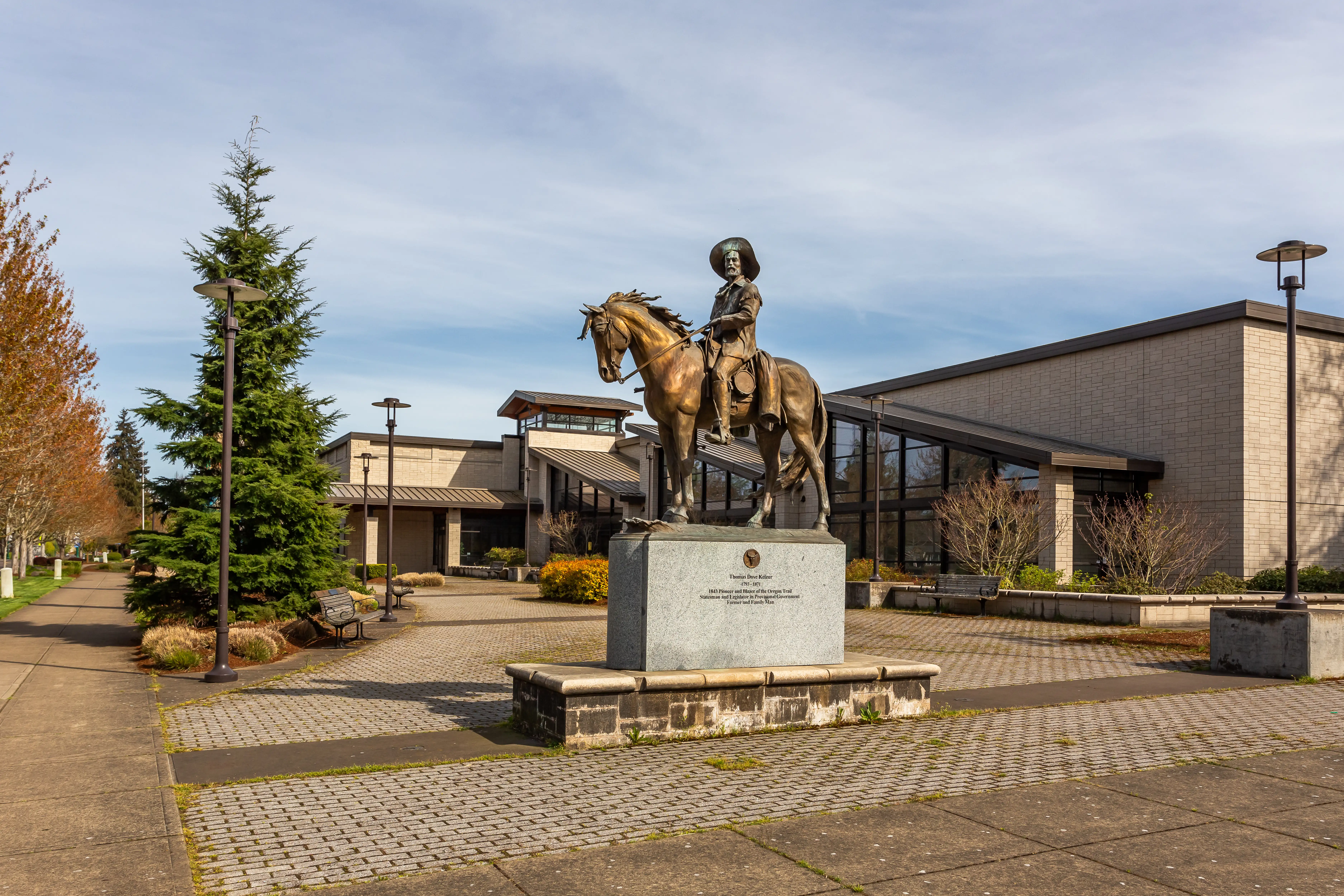
The Keizer Heritage Center keeps the city's independent identity alive. Keizer only incorporated as its own city in 1982, separating from Salem after years of annexation tension. The Heritage Center, located on Chemawa Road, maintains that origin story through exhibits and local history programming. It's a modest facility, but the story it tells — of a community that chose to govern itself rather than be absorbed by its larger neighbor — gives context to why Keizer residents take local politics and city services unusually seriously for a suburb of this size.
The Iris Festival has anchored the community calendar for decades. Each spring, Keizer hosts the Iris Festival, one of the Willamette Valley's longer-running community celebrations, honoring the Dutch iris-growing heritage that shaped the area's agricultural identity. The festival includes a parade, community market, and various events spread across a weekend, and it's consistently cited by longtime residents as one of the events that makes Keizer feel like a real community rather than just a collection of subdivisions.
What I would not do if moving to Keizer: I would not buy in the flood-prone western corridors without first pulling a specific flood zone designation and current insurance quote for the exact address. The aggregate 46% risk figure for the city is striking, but the distribution is uneven — West Keizer bears a disproportionate share. Buyers sometimes fall in love with a home near the river and assume the flood map concern is overstated. It isn't. Get the FEMA flood zone letter before your inspection period ends, not after.
Local Expert Takeaway: If your budget is in the $400,000–$550,000 range and you're working in Salem, Keizer is one of the most practical decisions you can make in this region — but neighborhood selection matters more here than in most Willamette Valley cities. The gap between a flood-exposed lot in West Keizer and a well-situated home in Gubser or Inland Shores is significant, and that distinction won't show up on a basic Zillow search. Prioritize getting a flood zone check and a school boundary confirmation before you fall in love with any specific address.
✅ Keizer offers genuine affordability for the Salem metro, with a median sold price around $462,000 and a ten-minute commute to major employers — a combination that's increasingly rare in the Willamette Valley.
⚠️ Flood risk is real and unevenly distributed. Almost half of Keizer properties carry some degree of 30-year severe flood exposure, with West Keizer neighborhoods particularly affected. Verify any address against the FEMA flood map before closing.
📍 Car dependency is non-negotiable. With a Walk Score of 35, every aspect of daily life requires driving. Buyers who prioritize walkable neighborhoods should seriously evaluate Salem's own residential neighborhoods before committing to Keizer.
Is Keizer a good place for families?
Keizer is generally well-regarded among families with school-age children, particularly those willing to navigate the Salem-Keizer School District's variation in school quality across campuses. Neighborhoods like Gubser and Inland Shores offer proximity to elementary schools, parks, and recreational infrastructure that suits households with kids. The Volcanoes Stadium, Keizer Rapids Park, and the Iris Festival give families consistent community anchors throughout the year.
What is the crime rate in Keizer?
Keizer's violent crime rate runs approximately 3.1 incidents per 1,000 residents, which is considered moderate for an Oregon city of its size. Property crime runs around 19 per 1,000 residents, a figure that's higher than some buyers expect given Keizer's quiet suburban feel — it's worth factoring into your home security planning. Crime levels vary meaningfully by neighborhood, with areas closer to the I-5 corridor generally carrying more property crime exposure than the western residential neighborhoods.
How does Keizer compare to living in Salem directly?
Salem offers more walkability, a broader restaurant and arts scene, and a slightly lower median home price in some segments — but it trades the quieter suburban feel that draws many buyers to Keizer in the first place. Keizer's appeal is specifically the combination of outdoor access, established neighborhoods, and a ten-minute buffer from Salem's denser urban core. Buyers who prioritize amenity density over quiet should spend time in Salem's Grant and South Salem neighborhoods before defaulting to Keizer; buyers who prioritize space, parks, and lower-traffic streets tend to find Keizer the stronger fit.
Explore the full Keizer series: The Ultimate Keizer Relocation Guide · Is Keizer Safe? · Cost of Living in Keizer · Best Neighborhoods in Keizer · Keizer Schools & Family Life · Keizer Youth Sports · Keizer Parks & Recreation · Retiring in Keizer · 1031 Tax-Deferred Exchange in Keizer · Keizer First-Time Homebuyers Guide · · Moving to Keizer from California
Tell us what you need help with and we'll connect you with local resources.

About the Author
Todd Davidson is the founder of Living in Oregon and Living in Washington, where he publishes in-depth city guides, neighborhood resources, and local market insights covering more than 180 communities across the Pacific Northwest. While his background is in home financing and real estate, he created these digital platforms to help families research and compare regions before making a move.