Portland Metro · Oregon
Living in Happy Valley: The Ultimate Relocation Guide (2026)
Maybe your company is relocating you to the Portland metro and someone suggested Happy Valley as the smart alternative to buying inside city limits. Maybe you've watched Portland home prices flatten while this suburb just southeast of the city kept climbing, and now you're wondering if you missed the window — or if there's still a case to be made. Maybe you drove through on Highway 212 and thought it looked like every other Oregon suburb, which is exactly what people who live here once thought, right up until they actually moved in and realized what they'd found.
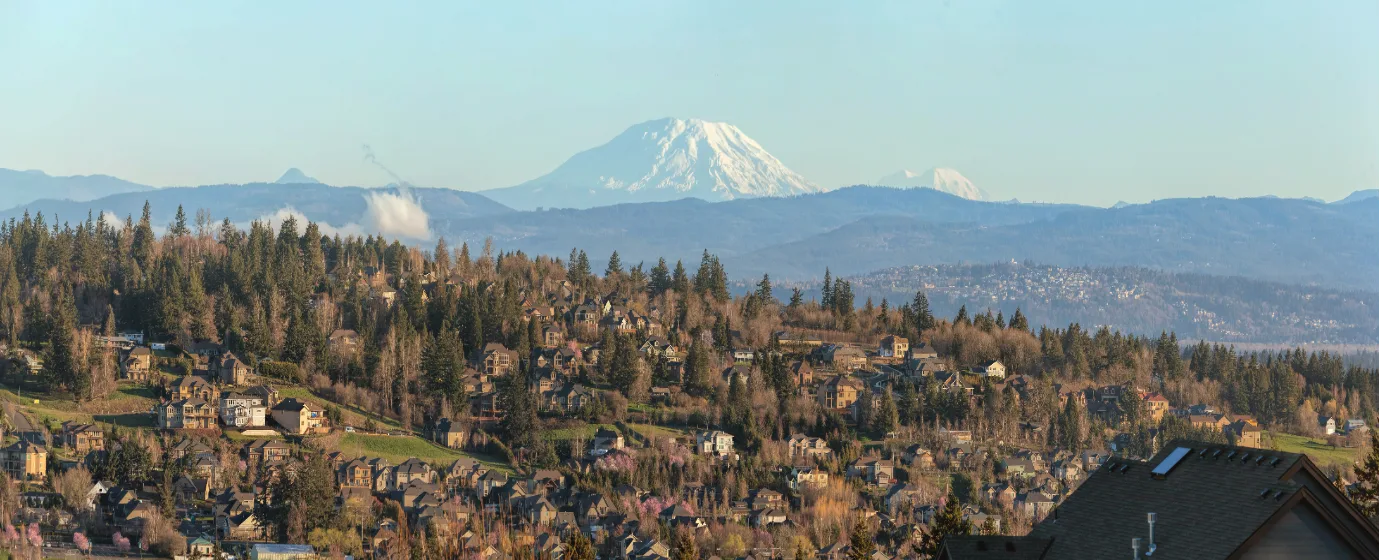
Happy Valley sits roughly 13 miles southeast of downtown Portland, tucked along the northwest edge of Clackamas County in a landscape shaped by volcanic buttes and rapid-growth planning. The city's commercial spine runs along Sunnyside Road and Highway 212, where you'll find the big-box anchors and the Happy Valley Town Center. But the residential fabric — the quiet streets, the trail access, the well-funded schools — sits several levels above what that commercial strip suggests from the car window. The city grew more than 540% since 2000 and is still building, which means you'll find new construction alongside established neighborhoods, and infrastructure that's perpetually one cycle behind demand.
This guide will help you decide whether Happy Valley fits your actual life — not just your spreadsheet. We'll walk through who this city genuinely suits, what the commute reality looks like, which neighborhoods are worth your attention, and what the honest tradeoffs are before you write an offer.
Happy Valley is not a city with one obvious buyer profile. The median household income here is approximately $122,000, the schools test well above state averages, and nearly 79% of residents own their homes — so the population skews toward stability and intention. But who is it actually right for?
| Best For | Why |
|---|---|
| Families with school-age children | North Clackamas School District consistently outperforms Oregon state averages in graduation rates, and Scouters Mountain Elementary ranks among the top elementary schools in the state |
| Portland commuters earning mid-to-upper incomes | At roughly 25 minutes to downtown Portland via I-205 (off-peak), the commute is genuinely manageable — and $658K buys significantly more house than comparable Portland neighborhoods |
| Remote workers who want space | Larger lots, newer construction, and fast-expanding infrastructure make this one of the more livable work-from-home suburbs in the metro |
| Healthcare and education workers | Legacy Health, Kaiser Permanente, Providence Health, and the North Clackamas School District all have major local presences — short commutes for a large slice of the workforce |
| Buyers who want trail access without a rural commute | Mount Talbert Nature Park and Scouters Mountain Nature Park are inside city limits — 4+ miles of trails on a volcanic butte, ten minutes from your front door |
| Move-up buyers from inner Portland | The price-per-square-foot is competitive, inventory is expanding, and the neighborhood quality is significantly higher than what equivalent dollars buy in Portland's east side |

Happy Valley is one of the market stories I enjoy telling buyers right now — and not just because prices are still moving. The real opportunity is in what $658,000 actually buys here compared to Portland proper. In Laurelhurst or Sellwood, that number gets you a 1960s ranch on a small lot with deferred maintenance. In Happy Valley's Sunnyside or Jackson Hills neighborhoods, the same budget puts you in a 2,400-square-foot home on a quiet street with mountain views and a garage. That's not a small distinction when you're raising kids or running a home office.
What buyers consistently underestimate is the resale trajectory in this market. Happy Valley saw 2.2% price appreciation year-over-year into early 2026, even as parts of the Portland metro softened. Homes are sitting a bit longer than they were in the 2021–2022 frenzy, which is good news for buyers who want time to be thoughtful. The neighborhoods near the Town Center and along the Sunnyside corridor tend to move faster because of school proximity and daily convenience — if you find something in Rock Creek or Northview in your range, I'd move decisively. If you're considering Happy Valley and want insight into which neighborhoods align with your priorities and budget, I'd welcome the opportunity to share what I've learned from helping hundreds of families make this move successfully.
The first thing most new residents notice is how quiet the residential streets are relative to how close everything feels. Happy Valley isn't a walkable city by urban planner standards — you'll need a car to get groceries — but the catch is that the neighborhoods themselves feel genuinely insulated. There's no through-traffic problem on most residential streets, the parks are designed into the urban fabric rather than bolted on as afterthoughts, and the Town Center functions as a genuine gathering point rather than just a strip mall with a fountain.
Commute reality is where Happy Valley earns points and loses them simultaneously. On a Tuesday morning at 7:00 a.m., I-205 northbound will add 10 to 15 minutes to your estimated drive time near the Sunnyside Road interchange. The 25-minute figure to Portland is accurate off-peak and generous during peak hours. Buyers who anchor their decision on that number and then discover the reality of I-205 at 8:15 a.m. are commonly the first to express frustration. The good news is that SE Johnson Creek Boulevard and SE Flavel Street offer legitimate alternatives to the freeway for eastside Portland destinations, and TriMet's Route 155-Sunnyside connects to the MAX Green Line at Clackamas Town Center if you're serious about transit.
The community vibe here reads as genuinely family-oriented without being exclusionary. The Happy Valley Farmers Market draws residents from surrounding neighborhoods through the growing season, and the city's parks system — 11 parks built into the original planning grid — gives the place a greenness that surprises people who only saw the Highway 212 commercial strip on their drive-through. The median age sits around 39, the homeownership rate is close to 80%, and roughly 18% of residents were born outside the U.S. — Happy Valley is more diverse than its suburban reputation suggests.
What surprises most people after six months of living here is how often they find themselves at Mount Talbert Nature Park on a Tuesday evening. It doesn't feel like a significant nature experience from the parking lot on SE Mather Road, but the butte rises 750 feet and the spring songbird migration — warblers, vireos, tanagers moving through the canopy — is something Portland birders drive to Happy Valley specifically for. Most new residents didn't know it existed until a neighbor mentioned it.
The schools are the most frequently cited reason people don't leave. The North Clackamas School District posted a four-year graduation rate of 86.8% against an Oregon state average of 81.8% — and the five-year rate climbs to 90.4%. Scouters Mountain Elementary ranks in the top 9% of Oregon elementary schools. The district also runs Clackamas Middle College, a public charter high school where graduates routinely leave with both a diploma and an average of 67 college credits already completed. For families running numbers on the long-term cost of higher education, that last detail alone is worth serious attention.
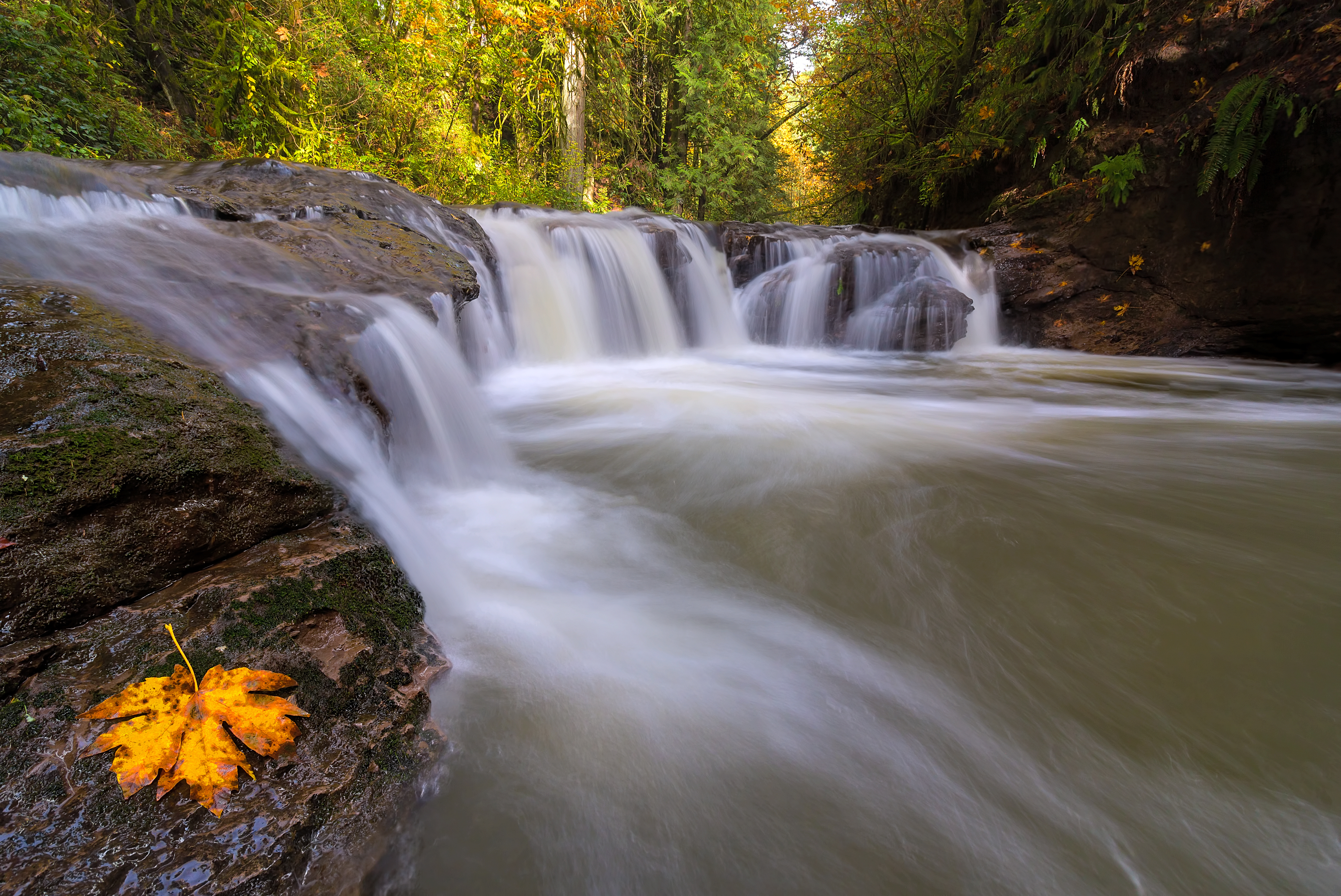
The outdoor access is built into the city's DNA, not added on. Mount Talbert Nature Park is inside city limits — a volcanic butte with four-plus miles of trails, free parking, and open sunrise to sunset. Scouters Mountain Nature Park offers a different elevation and perspective on the same landscape. These aren't weekend drive destinations; they're places residents use on weekday evenings, which fundamentally changes the quality-of-life calculation.
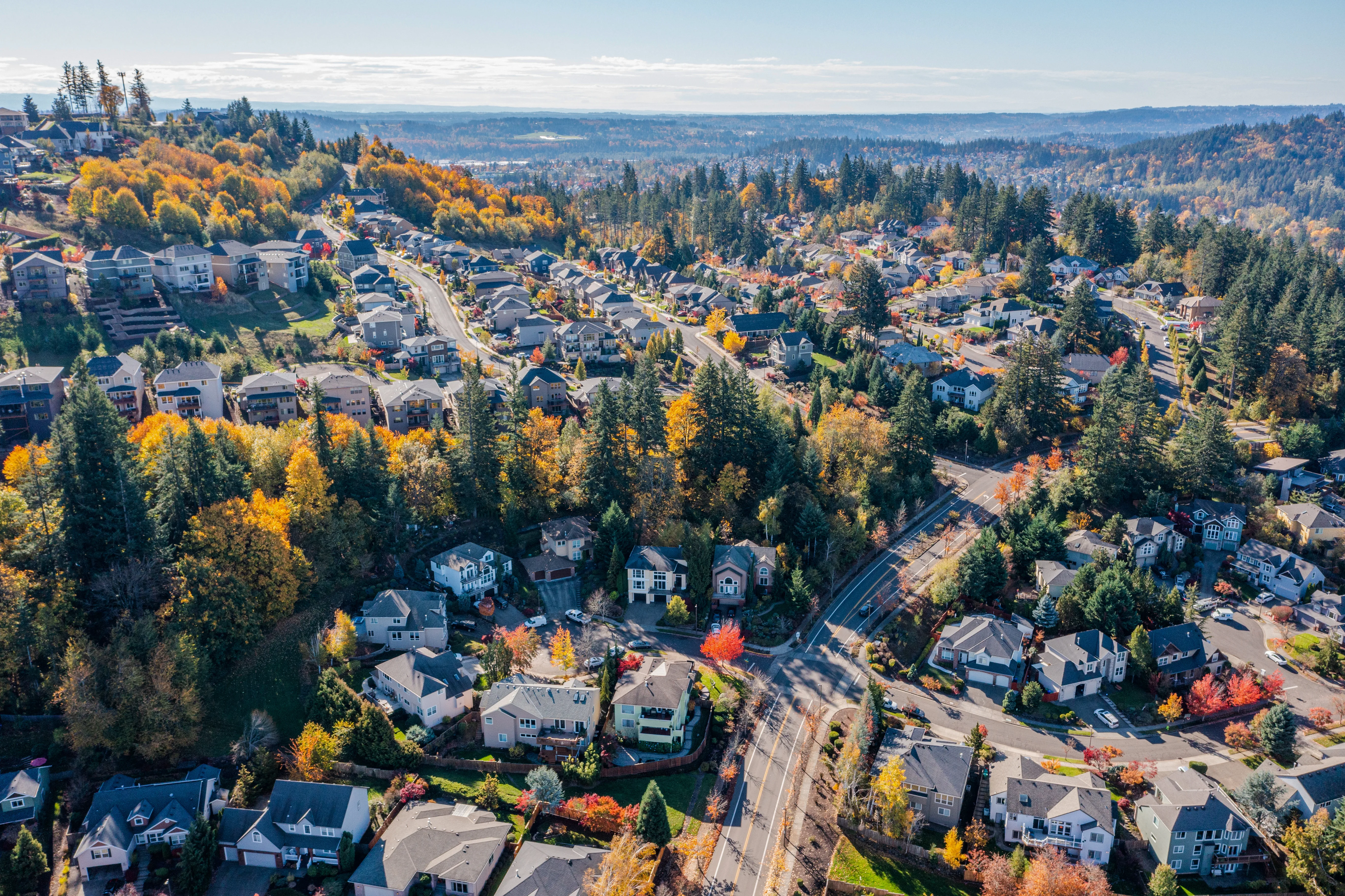
The housing stock is newer than most of the Portland metro. Happy Valley's explosive growth — more than 540% since 2000 — means a significant share of the housing inventory was built in the 2000s and 2010s. Buyers get open floor plans, attached garages, energy-efficient systems, and minimal deferred maintenance relative to what the same budget buys in inner Portland's older neighborhoods.
The income base supports the community amenities. A median household income of roughly $122,000 means the property tax base funds parks, road maintenance, and school programs at a level that less affluent suburbs can't match. The 1.09% property tax rate on a $658,000 home generates about $7,170 annually — and those dollars stay close to home in terms of what gets funded locally.
Looking to buy in Happy Valley? Estimate your payment.
Enter your numbers to see an estimated monthly mortgage payment.
Estimate only. Excludes HOA fees and mortgage insurance.
Happy Valley has a car dependency problem that isn't going away soon. Walk Score data consistently puts the city in the low-to-moderate range, and that's being generous. Daily errands — groceries, pharmacy, coffee — require a car from virtually every residential neighborhood. If you're moving from a Portland neighborhood where you can walk to dinner or bike to a coffee shop, the adjustment is real and, for some buyers, ultimately a dealbreaker.
The I-205 commute can feel like a tax you pay twice a day. The Sunnyside Road interchange bottlenecks reliably during morning and afternoon peaks, and there's no realistic fix on the near-term horizon as the city continues to grow. Residents who work flexible hours manage this reasonably well. Those locked into 8-to-5 schedules in downtown Portland or the westside often find the commute grinds on them more than they expected at the time of purchase.
The commercial landscape still lags the residential growth. Happy Valley Town Center has made genuine progress, and the Sunnyside Road corridor is functional, but the city lacks the independent restaurant scene, walkable retail, and evening culture that Portland neighborhoods offer. Most residents solve this by treating Portland as their entertainment infrastructure and Happy Valley as their home base — which works fine as long as the commute doesn't degrade further.
Why some people leave. The most common reasons Happy Valley residents ultimately move on are, in rough order: the car dependency wears them down as they get older, their kids leave for college and the school-quality premium no longer applies to their life stage, or they find themselves spending enough time in Portland that they'd rather just live there and own less house. None of these are surprises — they're the natural lifecycle of a suburb built around a specific phase of family life.
Happy Valley is not a city with dramatically different neighborhood characters — it's more of a continuum of newer suburban development in various price tiers. That said, there are meaningful distinctions worth understanding before you start touring.
Sunnyside anchors the most commercially accessible part of Happy Valley, running along the Sunnyside Road corridor close to Clackamas Town Center and the transit connection to the MAX Green Line. The homes here tend toward the more affordable end of the Happy Valley range — roughly $580,000 to $680,000 — and the convenience factor is genuinely high. The catch is traffic: proximity to Highway 212 and the Town Center means Sunnyside residents feel the commute congestion more directly than those tucked deeper into the hills.
Best for: Commuters who prioritize transit access and daily convenience over quiet streets.
Jackson Hills sits in the higher-elevation eastern portion of Happy Valley and delivers the kind of views and spacious lots that the city's marketing materials were written about. Homes here typically run from the mid-$600,000s into the $800,000s, with larger square footage and newer construction than much of the corridor. The downside is a longer drive to Highway 212 from the deeper streets — peak-hour timing matters more here.
Best for: Families who want the full Happy Valley package — views, space, newer construction — and are willing to pay for it.
Pleasant Valley occupies the western edge of the Happy Valley area and has a slightly more rural character than the planned subdivisions to the east, with some larger lots and older tree cover. Prices here run roughly $580,000 to $720,000 depending on lot size and vintage. It's one of the more interesting pockets for buyers who want proximity to Portland without a full suburban-development feel.
Best for: Buyers who want a quieter edge of Happy Valley with slightly more land and older character.
Rock Creek is a mid-tier residential neighborhood with solid school access and a straightforward suburban layout. Home prices in this pocket generally fall in the $620,000 to $750,000 range, and the neighborhood tends to attract households with school-age children who want proximity to North Clackamas District schools without stretching to the higher-elevation premiums. It's not a flashy neighborhood, but it's consistently well-regarded by residents who prioritize pragmatism.
Best for: Families with school-age children who want good value and school proximity without the premium of the hilltop neighborhoods.
West Mount Scott sits between the Mount Scott natural area and the established residential grid, giving residents a sense of natural edge that the deeper-development neighborhoods don't offer. Prices here span a wide range — roughly $560,000 to $780,000 — reflecting both older ranches and newer infill. The access to Mount Talbert Nature Park is among the best in the city from this location.
Best for: Outdoor-oriented buyers who want trail access as a daily reality, not a weekend excursion.
Northview is one of the more established planned communities in Happy Valley, with consistent architecture, maintained HOA common areas, and strong resale velocity. Home prices here typically land in the $650,000 to $820,000 range. Buyers who prioritize neighborhood appearance, community management, and a sense of physical order in their environment tend to settle here and stay.
Best for: Buyers who want a well-managed HOA community with consistent aesthetics and strong resale history.
Mount Scott Highlands occupies some of the higher ground in the city and delivers the elevation premium — views, quiet, and a sense of separation from the commercial corridor. Expect prices from the mid-$600,000s to well over $900,000 for the best-positioned homes. The commute from this neighborhood is meaningfully longer than from the valley floor, which is the primary friction point for buyers considering it.
Best for: Buyers for whom the view and the quiet matter more than a short commute window.
Southgate is a newer master-planned section of Happy Valley with clean streetscapes, modern construction, and HOA management baked in from the start. Prices typically run $660,000 to $850,000, and the homes feel noticeably newer than the city's earlier subdivisions. What buyers give up here is character and mature landscaping — the neighborhood is still growing into itself.
Best for: Buyers who want new construction quality and a turnkey experience without a custom-build timeline.
| City | Best For | Home Price | Commute to Portland | Vibe |
|---|---|---|---|---|
| Happy Valley | Families, school quality, newer construction | ~$658K | ~25 min (off-peak) | Planned suburban, trails integrated |
| Clackamas | Value buyers, retail access | ~$530K | ~20 min | Less polished, more affordable |
| Milwaukie | Inner-ring buyers, light rail access | ~$480K | ~15 min | Transitional, more urban character |
| Oregon City | Historic character, more land | ~$480K | ~30–35 min | Older suburban, slower-paced |
| Damascus | Rural feel, large lots | ~$560K | ~30 min | Unincorporated, limited services |
| Gresham | Affordability, eastside access | ~$420K | ~25 min | Diverse, more working-class |
The most common comparison decision is Happy Valley versus Milwaukie or Oregon City. Milwaukie wins on price and light rail access — it's genuinely more walkable and urban for buyers who want that trade-off. Oregon City wins on character and land. Happy Valley wins on school quality, housing newness, and the sense of a community that has invested in its own infrastructure.
| Category | Detail |
|---|---|
| Population | ~30,129 (one of Oregon's fastest-growing cities) |
| Median Home Price | $658,000 |
| Property Tax Rate | 1.09% |
| Median Household Income | ~$122,151 |
| School District | North Clackamas School District (B+) |
| 4-Year Graduation Rate | 86.8% (Oregon avg: 81.8%) |
| Commute to Downtown Portland | ~25 minutes (off-peak via I-205) |
| Violent Crime per 1,000 | 2.7 |
| Property Crime per 1,000 | 28.3 |
| Homeownership Rate | ~78.9% |
| Oregon Sales Tax | None |
Happy Valley's name has a stranger history than most residents know. Before it was a planned-growth suburb, this valley went by Deardorff Settlement, then Christilla Valley, then Happy Hollow — a progression of names that reflects both the settlement patterns of the 1800s and the eventual real estate optimism that shaped its modern identity. The "Happy Valley" branding won out, and there's a local tradition of mild irony about it among longtime residents who've watched the city's population multiply more than fivefold in two decades.
The Happy Valley Farmers Market is one of those community anchors that genuinely brings people together rather than just existing on a city website. It draws consistently through the growing season, and if you ask long-term residents where they actually see their neighbors, this is one of the first places they'll name — alongside the trailheads at Mount Talbert on weekend mornings.
One thing that catches transplants off guard: Happy Valley has no traditional downtown. The Town Center is the functional substitute — a planned mixed-use development that works well as a commercial hub but doesn't generate the spontaneous street life of an organic downtown. Residents who expected a walkable main street and discovered a town center parking lot instead are among the most common sources of that "I didn't realize" feedback you hear from people in month three.
What I would not do if moving to Happy Valley: I would not buy in the northernmost stretches of the Sunnyside corridor assuming the traffic situation will improve on its own timeline. The Highway 212 interchange improvements have been discussed, delayed, and discussed again for years. Buyers who purchase specifically for convenience on that corridor and then find the peak-hour backup has grown should not be surprised. If daily traffic is a serious quality-of-life factor for you, prioritize a neighborhood where your morning route doesn't require navigating that interchange during school drop-off.
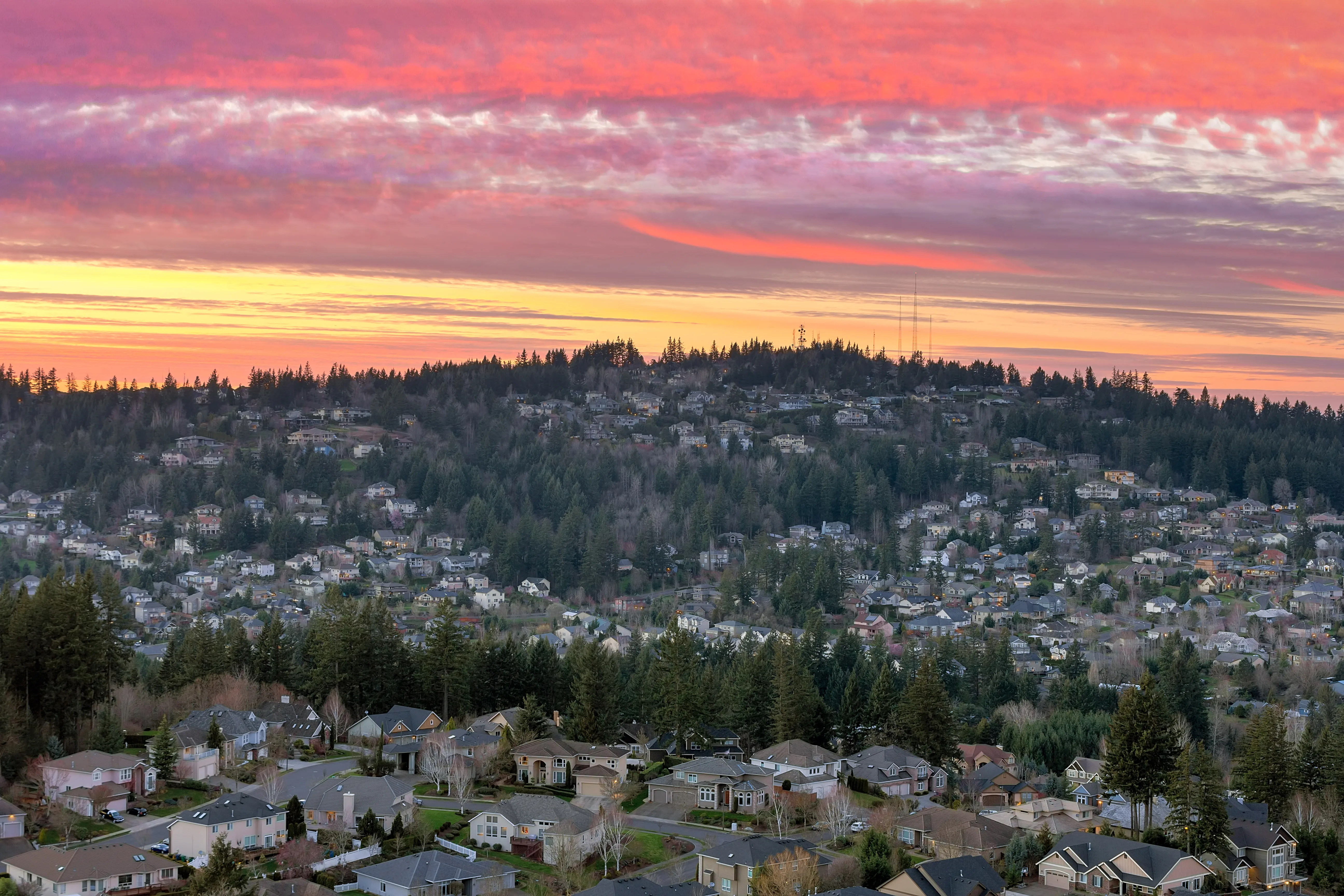
Local Expert Takeaway: If you're narrowing down between Happy Valley and the inner eastside Portland neighborhoods in the same price range, the decision usually comes down to one honest question: how much of your identity is tied to urban proximity versus quality-of-life infrastructure. Happy Valley's schools, parks, and newer housing stock are not casual advantages — they're structurally built in. Buyers who anchor on the Town Center area or the Rock Creek and Northview neighborhoods tend to find the balance between convenience and residential quality genuinely works for them. The buyers who eventually move back toward Portland are usually the ones who never fully let go of walkability as a requirement — so be honest with yourself about that before you write an offer.
✅ Happy Valley delivers real value at the $658,000 median — newer construction, above-average schools, and integrated trail access within city limits put it ahead of most comparable-price options in the Portland metro.
⚠️ The I-205 commute is the city's most persistent friction point — the Sunnyside Road interchange congests reliably at peak hours, and buyers who underestimate this tend to be the most vocal about it six months in.
📍 Mount Talbert Nature Park and Scouters Mountain are the neighborhood amenities most buyers discover after moving in — they're not visible from Highway 212, but they're consistently cited as one of the main reasons people stay.
Is Happy Valley a good place to raise a family?
Yes — Happy Valley ranks among the top suburbs in Oregon for families, sitting at roughly #18 statewide on most family-quality metrics. The North Clackamas School District's graduation rates outperform the state average, Scouters Mountain Elementary consistently ranks in the top tier of Oregon elementary schools, and the city's integrated parks system and low violent crime rate of 2.7 per 1,000 residents add to the family-friendly case.
What is the crime rate in Happy Valley?
Happy Valley's violent crime rate of 2.7 per 1,000 residents is meaningfully below Oregon and national averages for cities of comparable size. Property crime at 28.3 per 1,000 is the more relevant concern — car break-ins and package theft are the most commonly reported issues, concentrated near the commercial corridors along Sunnyside Road and Highway 212 rather than in the residential neighborhoods.
How does Happy Valley compare to other Portland suburbs?
Happy Valley sits at the higher end of the price spectrum for Clackamas County suburbs, but the premium buys meaningfully better schools and newer housing than comparably-priced options in Gresham, Oregon City, or Damascus. If walkability and urban access matter most to you, Milwaukie and inner Southeast Portland offer more of that at lower price points. If school quality, space, and newer construction are the priorities, Happy Valley makes a strong case relative to almost anything in the metro at that price range.
Browse current listings updated daily — filtered for Happy Valley buyers by Elizabeth Davidson, your local expert.
Powered by Elizabeth Davidson · Cascade Hasson Sotheby's International Realty · 503-939-2035
Explore the full Happy Valley series: The Ultimate Happy Valley Relocation Guide · Is Happy Valley Safe? · Cost of Living in Happy Valley · Best Neighborhoods in Happy Valley · Happy Valley Schools & Family Life · Happy Valley Youth Sports · Happy Valley Parks & Recreation · Retiring in Happy Valley · 1031 Tax-Deferred Exchange in Happy Valley · Happy Valley First-Time Homebuyers Guide · · Moving to Happy Valley from California · The Happy Valley Realtor's Perspective · Top 10 Questions a Realtor Gets About Happy Valley
Tell us what you need help with and we'll connect you with local resources.

About the Author
Todd Davidson is the founder of Living in Oregon and Living in Washington, where he publishes in-depth city guides, neighborhood resources, and local market insights covering more than 180 communities across the Pacific Northwest. While his background is in home financing and real estate, he created these digital platforms to help families research and compare regions before making a move.