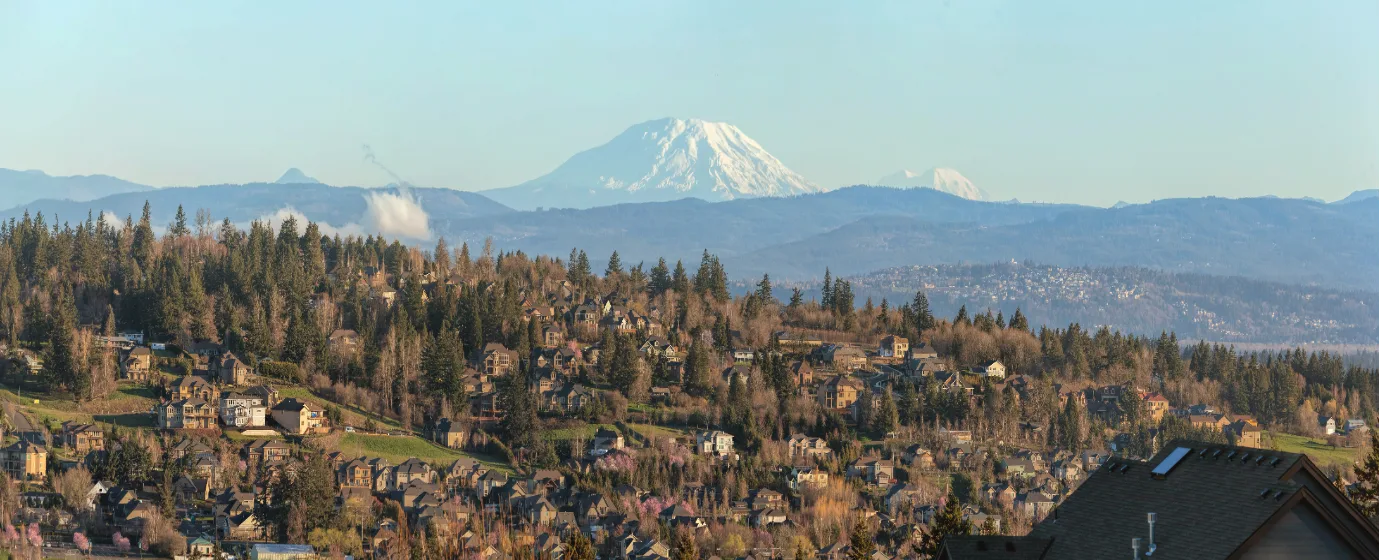
Portland Metro · Oregon
Moving to Happy Valley from California: The Honest Comparison (2026)
The Bay Area software engineer who finally got a home office with a yard. The San Diego family who stopped dreading a $400 utility bill every August. The Sacramento couple who sold their 1,400-square-foot townhome, banked the equity, and bought a 2,600-square-foot home with a three-car garage and change to spare. These are the people moving to Happy Valley, Oregon — and the financial math isn't subtle. With a median sold price near $658,000 and property taxes capped at growth rates most Californians would consider a fantasy, Happy Valley is drawing equity-rich buyers from every corner of the state who are done waiting for California to become affordable.
The honest part comes next. Happy Valley is not a California suburb that happens to be in Oregon. The winters are genuinely gray — not San Francisco overcast, but a relentless cloud cover that runs from October through May with roughly 172 rain days per year. The summers, starting in late June, are extraordinary. But that's only about 90 days. The food scene doesn't have the depth of the Bay Area or coastal Southern California. The pace is quieter, and for some buyers that's exactly the point — for others, it's the thing they didn't anticipate missing.
This guide covers what California buyers actually need to know: a real cost comparison by region, what your California equity buys at each price point, the full tax picture (including what Oregon income tax does to a $150K salary), and a tool to compare your specific California city. No soft-pedaling, no tourism-brochure framing.
| Happy Valley, Oregon | Bay Area | Southern CA | Sacramento Metro | Central Valley | |
|---|---|---|---|---|---|
| Median Home Price (approx. 2026) | $658,000 | $1,300,000+ | $800,000–$950,000 | $500,000–$580,000 | $340,000–$420,000 |
| Effective Property Tax Rate | 1.09% | 1.05–1.25% | 1.05–1.25% | 1.10–1.25% | 1.10–1.30% |
| State Income Tax (top bracket) | 9.9% | 13.3% | 13.3% | 13.3% | 13.3% |
| State Sales Tax | 0% | 7.25–10.25% | 7.25–10.75% | 7.25–8.75% | 7.25–8.75% |
| Avg Utilities (monthly est.) | $140–$175 | $200–$260 | $220–$300 | $180–$240 | $180–$250 |
| Avg 1BR Rent | $1,600–$1,900 | $2,800–$3,500 | $2,200–$2,800 | $1,500–$1,900 | $1,100–$1,500 |
A buyer leaving Walnut Creek with a $1.4 million home and a small remaining mortgage can arrive in Happy Valley entirely debt-free and still have $700,000 in their pocket. That's not a theoretical win — it's a fundamental life restructuring. Even buyers coming from Elk Grove or Roseville, where equity is more modest, typically find they can step up from a tight three-bedroom to a four- or five-bedroom home with a real yard without stretching their budget to the edge.
The savings on sales tax alone register quickly once you're here. A California household spending $60,000 annually on taxable goods and services pays $4,350 to $6,450 in state and local sales tax. Oregon charges zero. Over five years, that's a meaningful number — one that doesn't show up on any mortgage comparison spreadsheet but lands very clearly in your monthly cash flow.
Oregon has a state income tax, and every California buyer should know this before making any financial assumptions. The top marginal rate reaches 9.9%, which applies to income over $250,000 for single filers and $500,000 for married filers. For most household incomes in the $120,000–$200,000 range, the effective rate typically lands between 7% and 8.5%.
| Tax Item | California | Oregon | Net Impact |
|---|---|---|---|
| State Income Tax (top rate) | 13.3% | 9.9% | Oregon saves ~3.4 pts at top bracket |
| State Income Tax ($150K earner, est. effective) | ~8–9% | ~7–8% | Modest Oregon advantage |
| State Sales Tax | 7.25–10.75% | 0% | Oregon saves $4,000–$6,000+/yr |
| Property Tax Rate (effective) | 1.05–1.25% | 1.09% | Comparable |
| Property Tax Growth Cap | Prop 13 (2% cap) | Measure 50 (3% cap) | Both favor long-term owners |
| Capital Gains Tax (state) | Up to 13.3% | Up to 9.9% | Oregon advantage |
| Estate/Inheritance Tax | None | Oregon estate tax (above $1M threshold) | Mild Oregon disadvantage for high estates |
A California software engineer earning $150,000 filing jointly in the Bay Area might pay an effective state income tax rate near 8–8.5%. In Oregon on the same income, they're typically in the 7–7.5% effective range. The direct income tax savings are real but not dramatic — the bigger swing is on the sales tax side, where a California family accustomed to paying 9.5% on everything from lumber to appliances pays nothing in Oregon. On a year of major purchases — furnishing a new home, buying vehicles, outfitting a kitchen — that zero percent rate produces savings that compound meaningfully.
Oregon's Measure 50, passed in 1997, caps the growth of a property's assessed value at 3% per year after purchase. This is structurally similar to California's Proposition 13, and it means long-term Happy Valley owners see predictable, moderated property tax bills regardless of what happens to market values. A buyer who purchases at $658,000 today will see their assessed value grow at a regulated pace — not the uncapped reassessment exposure that exists in most other states.

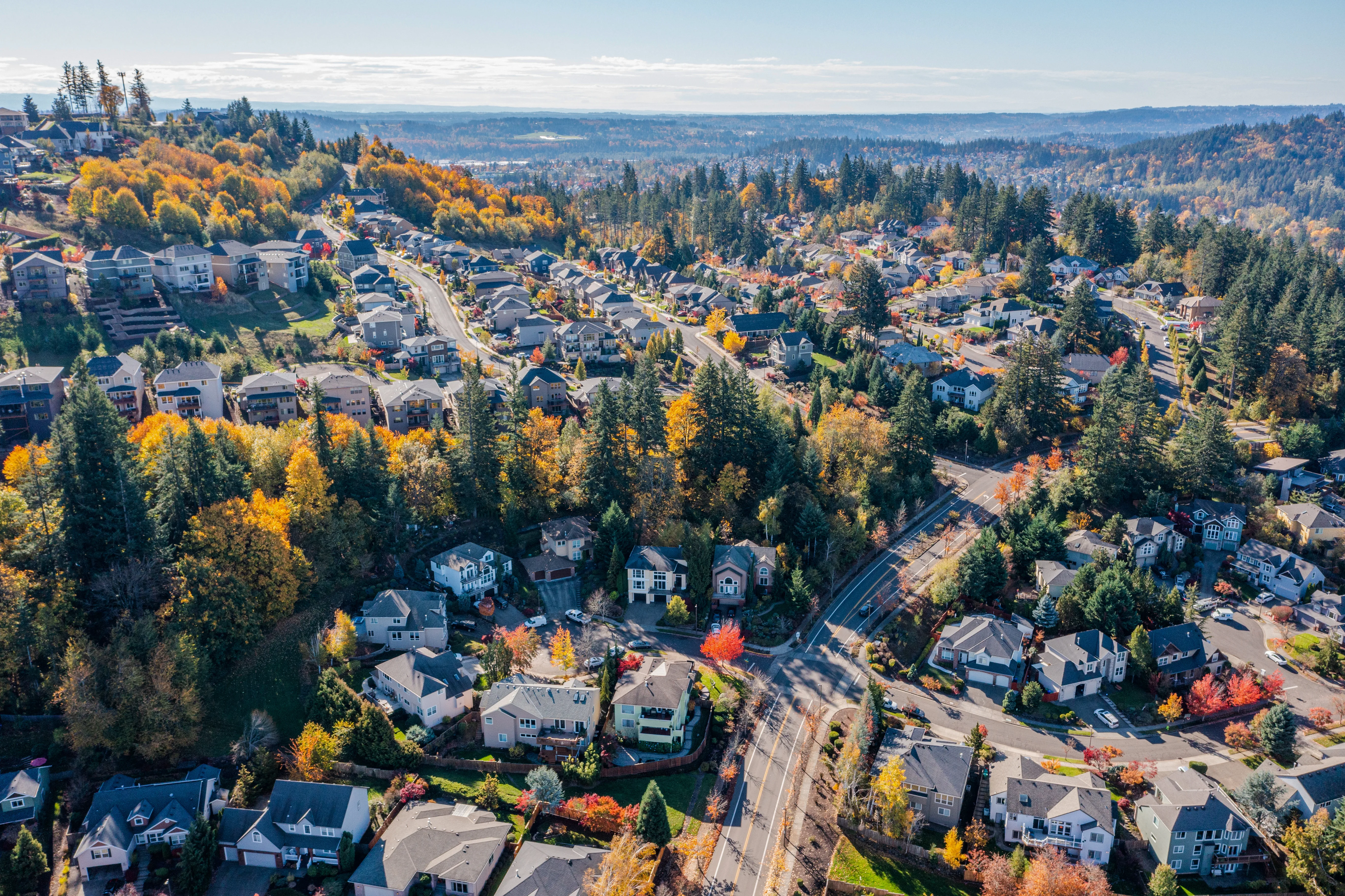
When California buyers walk through Happy Valley for the first time, the most common thing I hear is surprise at the quality of the construction. These aren't the 1970s ranchers they expected — Happy Valley has a substantial inventory of homes built from 2000 onward, with stone accents, open floor plans, and the kind of square footage that genuinely would cost $1.8 million to replicate in San Jose or Palo Alto. The $658,000 median buys a legitimately nice home here, not a compromise. Buyers from Pleasanton or Danville often tell me they feel like they're getting away with something.
What California buyers consistently underestimate is how competitive the upper segments move. Jackson Hills and Lincoln Heights — where homes run from $750,000 to well over $1 million — can see multiple offers in the spring market, and buyers who arrive expecting the patient, deliberate pace they experienced in California's cooling markets sometimes lose homes they were serious about. I recommend California buyers get fully pre-approved, not just pre-qualified, before they land for their first in-person tour. In the $700,000–$900,000 range, the best homes don't wait for a second showing. If you're considering Happy Valley and want insight into which neighborhoods align with your priorities and budget, I'd welcome the opportunity to share what I've learned from helping hundreds of families make this move successfully.
A buyer leaving San Jose, Fremont, or the Peninsula with $1.4 million in equity and buying in Happy Valley at $658,000 cash has roughly $742,000 left over after the transaction closes. That's not a hypothetical — it's the actual arithmetic for a significant number of buyers making this move. At the $800,000–$900,000 tier in Jackson Hills or Lincoln Heights, these buyers are still likely purchasing free and clear, or with a note so small it barely registers as debt.
For buyers who want to deploy some of that equity into a luxury purchase, Happy Valley's upper tier tops out around $1 million to $1.2 million for the best hillside properties with views. Bay Area buyers at this equity level often find the market here feels wide open — they can afford the best the city offers and still retain meaningful savings. Jackson Hills and Lincoln Heights represent the clearest value relative to what that money would purchase anywhere in the Bay.
A buyer leaving Irvine, San Diego, or the Conejo Valley with $900,000 in equity lands near the top of Happy Valley's market with room to spare. At the $658,000 median, they're likely putting down 40–50% and carrying a mortgage under $400,000 — a structural comfort that most Southern California buyers haven't experienced in a decade. The hillside neighborhoods of West Mount Scott and Mount Scott Highlands offer solid value in the $620,000–$800,000 range, with views and newer construction that resonate with buyers coming from Orange County's architecture.
Buyers from Long Beach, Burbank, or the San Fernando Valley with equity closer to $700,000 still arrive with enough to make a strong conventional offer. Most Happy Valley price points fall below the conforming loan limit, which means no jumbo financing required — a meaningful simplification for buyers who've been navigating California's jumbo-heavy market for years.
The relative gain for Sacramento and Inland Empire buyers is smaller but still real. A buyer from Elk Grove or Rancho Cucamonga selling at $550,000 and moving to Happy Valley isn't doubling their space — but they're trading a market that's still expensive by most national standards for one with better long-term stability, no sales tax, and access to North Clackamas School District's B+ rated schools. At the $550,000–$620,000 range, neighborhoods like Rock Creek and Heritage Heights offer genuine entry into Happy Valley without requiring equity the buyer doesn't have.
The lifestyle case for Sacramento-to-Happy Valley is less about arbitrage and more about trajectory. Happy Valley's population has grown over 60% since 2010, and buyers who arrived in 2018 from Elk Grove didn't necessarily save a fortune on day one — but they're sitting on meaningful appreciation in a market that continues to attract inbound buyers from the same California metro they left.
The Central Valley buyer faces the most constrained financial picture in this comparison. At $350,000–$450,000 in equity, they can make a strong down payment at the entry tier of Happy Valley's market — around $550,000 in Rock Creek or Heritage Heights — without necessarily eliminating the mortgage. The math still works, but it requires realistic planning about monthly payment versus the all-cash freedom that Bay Area equity provides.
What Central Valley buyers do gain immediately is meaningful: Oregon's zero sales tax, a top-rated school district, significantly lower crime than most San Joaquin Valley metros, and a city where a 3% unemployment rate is considered normal. For a Fresno or Stockton family making a move primarily for school quality and safety rather than equity arbitrage, Happy Valley still delivers.
Looking to buy in Happy Valley? Estimate your payment.
Enter your numbers to see an estimated monthly mortgage payment.
Estimate only. Excludes HOA fees and mortgage insurance.
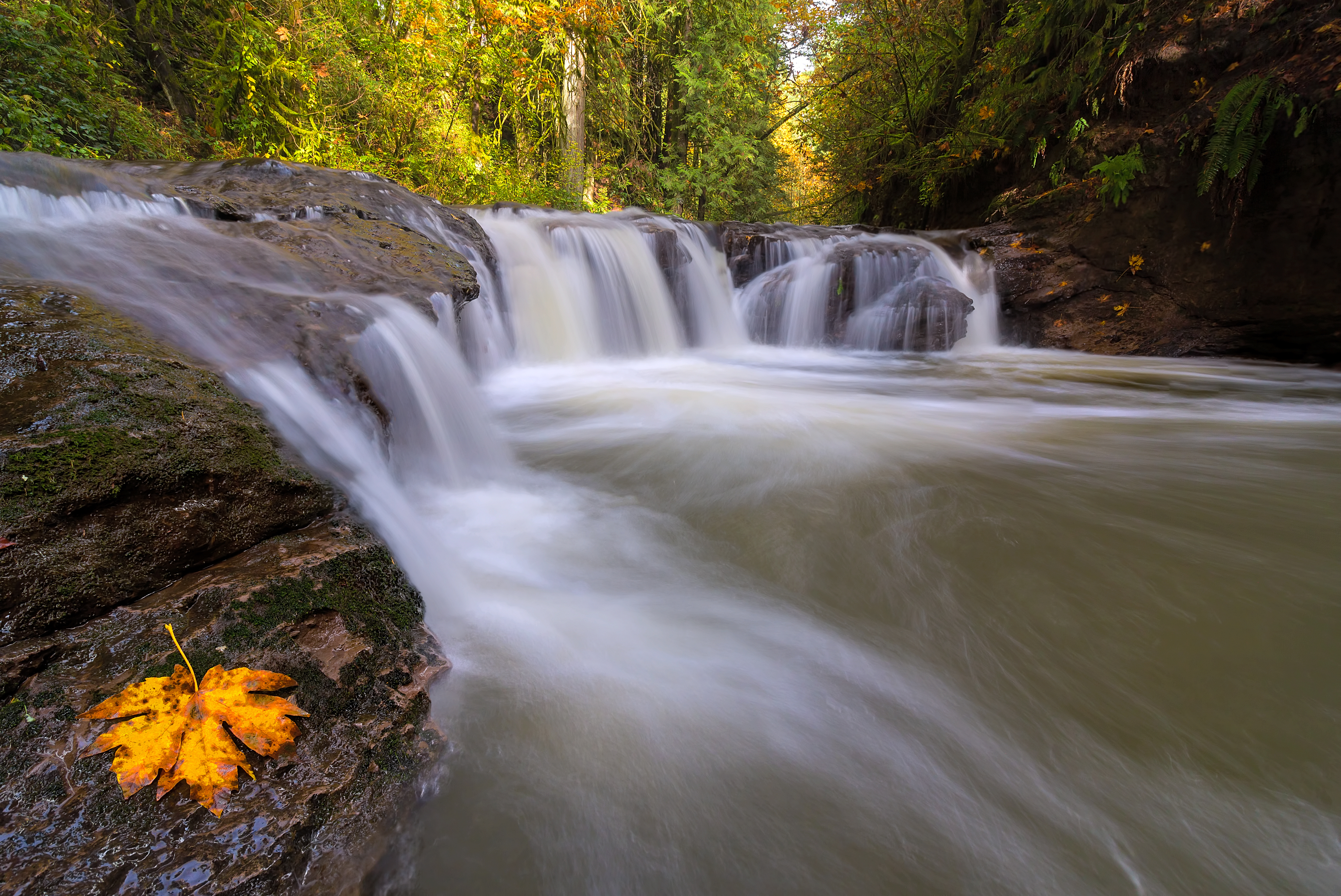
The California transplants who thrive in Happy Valley tend to be the ones who moved here knowing exactly what they were signing up for — and they'll tell you the same thing around month four: the Oregon summer is legitimately one of the best things they've ever experienced. From late June through September, Happy Valley averages nearly 11 hours of sunshine per day in August, with low humidity, temperatures in the low-to-mid 80s, and trails at Scouters Mountain and Mount Talbert that put California's suburban parks to shame. The outdoor culture in summer is genuinely comparable to the best of California's interior highlands.
October changes the equation. By November, Happy Valley is running on roughly 4.2 average sunshine hours per day, and it stays that way through February. The 172 annual rainfall days aren't torrential Pacific storms — they're persistent, low-level gray that wears on people who grew up in San Diego or Santa Barbara. Transplants who came from Northern California or the Central Valley often adapt more easily than those from coastal Southern California, where overcast days feel like an anomaly rather than a season. The people who struggle aren't the ones who didn't research — they're the ones who thought "I can handle rain" without fully internalizing what nine gray months feels like as an extended experience.
What California transplants consistently say they love after a full year: the traffic. The commute from Happy Valley to downtown Portland runs about 25 minutes under normal conditions — a number that genuinely staggers buyers who spent an hour each way on I-680 or the 405. They love the Happy Valley Farmers Market in summer, the community pace, the fact that neighbors actually wave at each other. What they miss is honest too: year-round beach access, the specific energy of their California city on a Friday night, and for many, the diversity and density of California's restaurant culture. Happy Valley's dining scene is suburban and comfortable. It is not Palo Alto's University Avenue or San Diego's Little Italy.
If you want to see how Happy Valley compares directly to the city you're leaving, use the tool below — it covers the 120 largest California cities with current housing and tax data.
Home prices: Redfin median sale data, Q1–Q2 2026. Select your city to compare.
Ready to talk through what your specific California equity could do in Happy Valley? Todd can model your exact scenario in a single call.
Assuming the whole city is financially uniform. Happy Valley spans an enormous price range — from $550,000 entry-level in Rock Creek to $1 million-plus in Jackson Hills — and buyers who base their search on the median often get surprised when they tour the neighborhoods at either end. A California buyer who heard "around $660K" and toured Jackson Hills for the first time will quickly realize that the $750,000–$950,000 starting range there is a different conversation than what the median implies.
Not testing for radon. Oregon sits in a moderate-to-elevated radon zone, and Happy Valley's hillside geology means radon mitigation is a real consideration — not a theoretical one. California buyers who've never included radon in a home inspection sometimes skip it here. Don't. Mitigation systems are inexpensive when installed proactively; discovering elevated levels after closing without having negotiated remediation is an avoidable headache. Make it a standard line item in every offer.
Underestimating winter commuting. Happy Valley sits on elevated terrain south and east of Portland, and the roads that feel easy in October — the stretch along SE Sunnyside Road, the hillside streets in West Mount Scott — become meaningfully different in December and January when ice and freezing fog appear. Oregon doesn't salt roads the way Midwest states do. California buyers accustomed to year-round traction without much thought should budget for all-season or dedicated winter tires before their first December here.
Expecting California's year-round outdoor lifestyle on the same schedule. Mount Talbert Nature Park and Scouters Mountain are legitimately excellent. But a Californian who runs trail miles every weekend year-round should understand that January trail runs in Happy Valley involve mud, limited daylight, and water-resistant layers as non-negotiables — not a quick outfit change from the gym bag. The outdoor culture here is real; it just has a winter version that requires different gear and different expectations.
Bay Area sellers with large equity often arrive at the closing table asking a different question than most buyers: not "what can I qualify for" but "what structure makes the most sense given my income." For a remote-working couple selling in Cupertino and arriving with $1.3 million liquid, carrying a $200,000 note at a competitive rate may actually be smarter than going all-cash — particularly if they have investment accounts performing above the mortgage rate. All-cash offers do accelerate closings and strengthen negotiating position, which has value in competitive segments. If the California property was an investment or rental, a 1031 tax-deferred exchange deserves a conversation before escrow closes on the sale side.
Southern California sellers in the $700K–$1.1M equity range typically move into Happy Valley with a strong conventional down payment — often 30–40% — and a loan amount that stays comfortably within conforming limits. No jumbo financing, no portfolio loan complexity. This is a meaningful simplification for buyers who've been navigating SoCal's jumbo landscape for years and had grown accustomed to the extra scrutiny and rate premium.
Sacramento and Inland buyers at the lower equity tiers are typically financing a meaningful portion of Happy Valley's $550,000–$600,000 entry tier, which stays comfortably within conventional conforming limits. Standard low-down-payment conventional options — sometimes as little as 3–5% down for qualifying buyers — can make sense here for those who'd rather keep more of their California proceeds liquid than put 20% or more down on a first Oregon purchase.
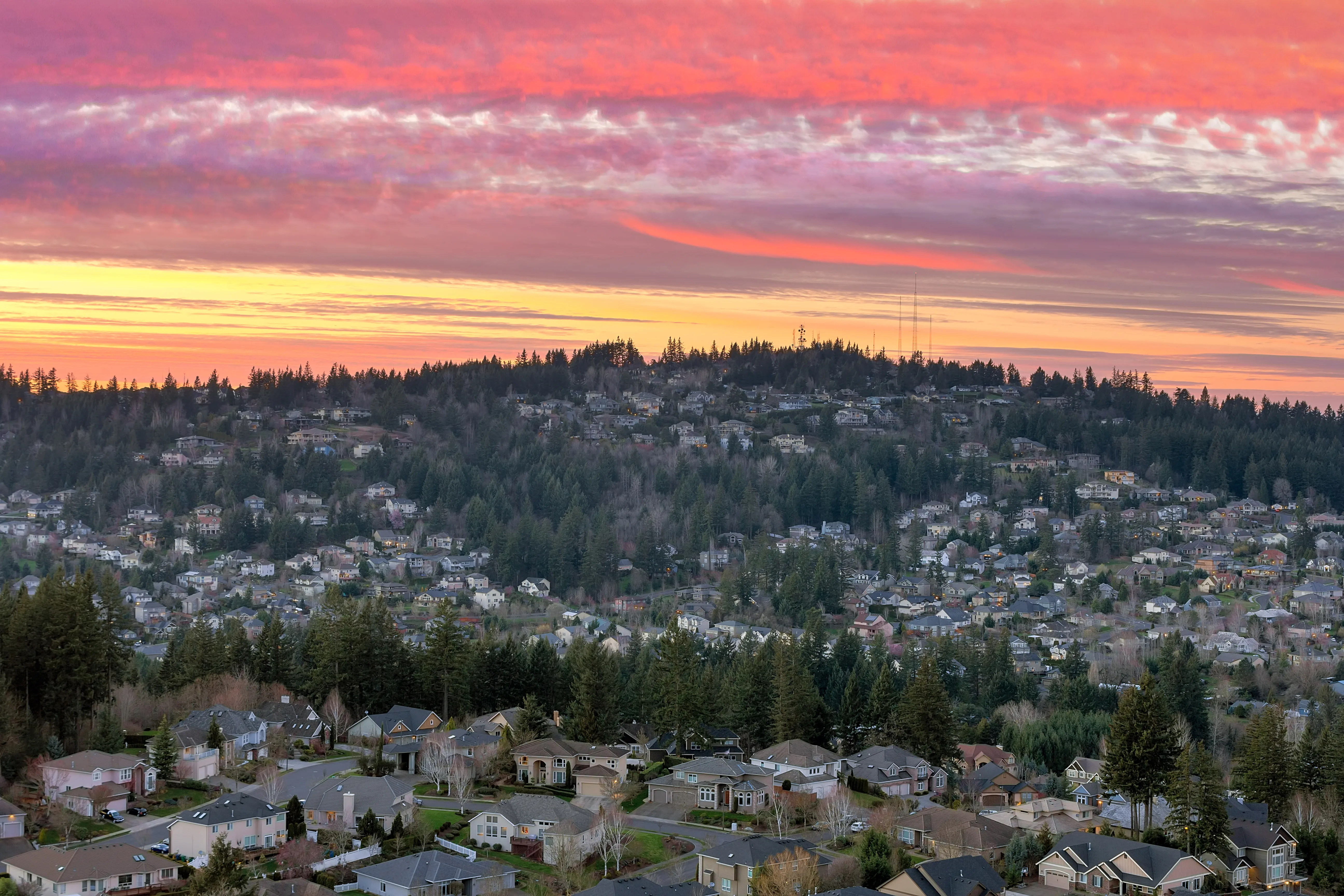
Local Expert Takeaway: The single thing California buyers most consistently underestimate about Happy Valley is how quickly the best homes at $700,000–$850,000 move in the spring market. Buyers who arrive in March expecting to spend two months casually comparing options often watch three or four serious contenders go under contract while they're still getting their pre-approval together. Get fully underwritten before your first in-person tour, understand which neighborhoods match your equity level specifically — Rock Creek and Heritage Heights for entry tier, West Mount Scott and Mount Scott Highlands for mid-market, Jackson Hills and Lincoln Heights for upper tier — and be ready to move within 48–72 hours of finding the right property.
✅ The financial case is real and immediate. Bay Area and Southern California buyers typically arrive with enough equity to eliminate their mortgage entirely or carry a note that's a fraction of what they left behind. Oregon's zero sales tax and a 9.9% top income tax rate (versus California's 13.3%) compound the monthly cash flow advantage.
⚠️ The weather requires genuine mental preparation. Happy Valley averages 172 rainfall days per year. October through May is gray in a way that genuinely affects some transplants who underestimated it. The summers are spectacular — but they're roughly 90 days long.
📍 Neighborhood choice matters more than city average. At $658,000, you're at the median — but Happy Valley runs from $550,000 entry-level to $1 million-plus, and the character of Rock Creek versus Jackson Hills versus Sunnyside is meaningfully different. Match your equity to the right neighborhood before you start touring.
Is moving from California to Happy Valley worth it?
For most buyers who've built meaningful California equity, the financial answer is yes — particularly if the move is paired with a lifestyle preference for lower density, strong schools, and access to the Pacific Northwest outdoors. The North Clackamas School District draws families consistently, the commute to Portland runs about 25 minutes, and the trade-off in housing size-for-dollar is dramatic compared to virtually any California coastal market. The honest caveat is the weather — buyers who make the move purely for financial reasons without accounting for nine gray months tend to struggle in year two.
How much cheaper is housing in Happy Valley vs. California?
At the $658,000 median sold price, Happy Valley is roughly half the cost of a comparable home in San Jose or the Peninsula, 30–40% below median in most of Southern California's desirable suburbs, and slightly above Sacramento's current median. The per-square-foot comparison sharpens the picture — Happy Valley's $295 per square foot buys a 2,300-square-foot home for what gets you 900 square feet in Palo Alto. The structural advantage is most dramatic for Bay Area sellers; it's still meaningful but more modest for Sacramento and Inland buyers.
What do I need to know about moving from California to Oregon?
Oregon has a state income tax — the idea that moving here eliminates income tax is a common misconception worth correcting immediately. What Oregon does eliminate is sales tax, which is zero statewide. Oregon also has its own estate tax with a $1 million threshold, which matters for high-net-worth buyers doing estate planning. Practically speaking: get a radon test in every home you're serious about, budget for all-season tires before your first winter, and understand that the driving culture, the grocery landscape, and the social pace will feel genuinely different from California — in ways most transplants end up appreciating, but on a longer timeline than they expected.
Browse current listings updated daily — filtered for Happy Valley buyers by Elizabeth Davidson, your local expert.
Powered by Elizabeth Davidson · Cascade Hasson Sotheby's International Realty · 503-939-2035
Explore the full Happy Valley series: The Ultimate Happy Valley Relocation Guide · Is Happy Valley Safe? · Cost of Living in Happy Valley · Best Neighborhoods in Happy Valley · Happy Valley Schools & Family Life · Happy Valley Youth Sports · Happy Valley Parks & Recreation · Retiring in Happy Valley · 1031 Tax-Deferred Exchange in Happy Valley · Happy Valley First-Time Homebuyers Guide · · Moving to Happy Valley from California · The Happy Valley Realtor's Perspective · Top 10 Questions a Realtor Gets About Happy Valley
Tell us what you need help with and we'll connect you with local resources.

About the Author
Todd Davidson is the founder of Living in Oregon and Living in Washington, where he publishes in-depth city guides, neighborhood resources, and local market insights covering more than 180 communities across the Pacific Northwest. While his background is in home financing and real estate, he created these digital platforms to help families research and compare regions before making a move.