
Oregon Coast · Oregon
First-Time Home Buyer Guide for Brookings (2026)
There's a specific moment most first-time buyers experience somewhere between getting pre-approved and making their first offer — a quiet realization that the process is more layered than the YouTube videos suggested. In Brookings, that moment tends to arrive with an extra edge. You're not just buying a house; you're buying into one of the most geographically isolated, scenically remarkable, and emotionally compelling small cities on the Oregon Coast. The Pacific is minutes away. The Chetco River runs through the southern edge of town. Winters are mild enough that locals call this stretch of coast the "Banana Belt." For a first-time buyer willing to do the work, Brookings offers something genuinely rare: ownership at a price point that's still within reach on a moderate income, in a place people actually want to live.
The median home price in Brookings sits at $483,000 — a figure that tells part of the story. At that price, you're typically looking at a 2-to-3-bedroom detached home in an inland neighborhood, 1,200 to 1,600 square feet, in average condition. Oceanfront and river-view properties push well above that number. The gap between renting here and owning here is real but manageable: a buyer who's been paying $1,400–$1,800 a month in rent will find that a mortgage on a $450,000 home, factoring in taxes and insurance, runs in a comparable range depending on their down payment and rate. Ownership starts to make financial sense faster than most first-timers expect.
This guide walks you through the entire buying process as it actually unfolds in Brookings — what each step requires, what first-timers consistently get wrong in this specific market, and what makes Curry County feel different from the Portland metro real estate playbook most Oregon buyers have read about.
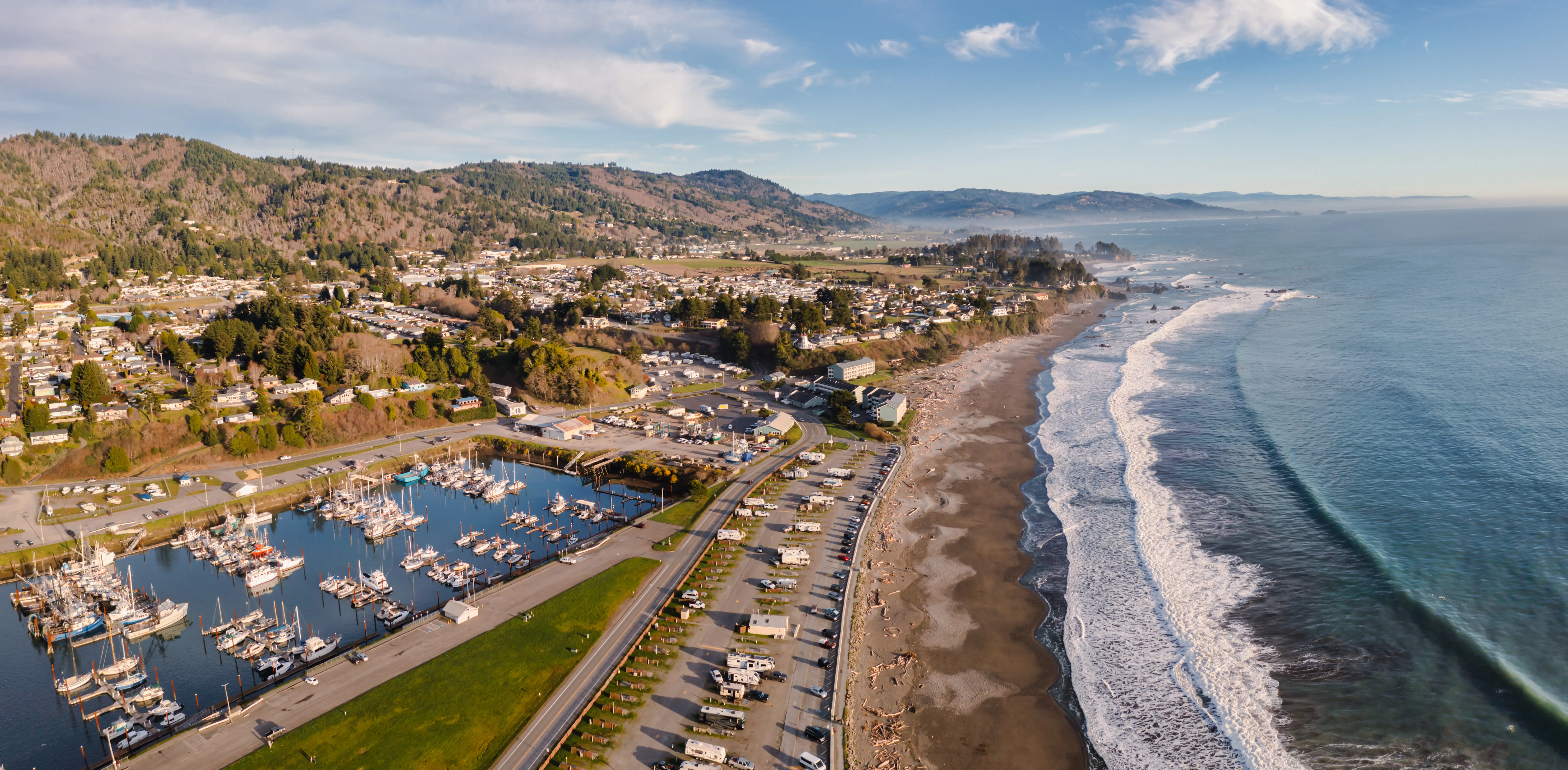
Brookings works for first-time buyers in ways that most Oregon coastal towns don't. The entry-level price floor is lower than coastal markets like Newport or Lincoln City, competition is measured rather than frenzied, and the lifestyle return on that purchase — beaches, trails, harbor access — is immediate. The honest challenge is that the school district carries a C- rating from most evaluators, which matters if you're buying with school-age children and matters again when you eventually sell to buyers who are. That doesn't disqualify Brookings, but it belongs in the decision.
For buyers focused on realistic entry points, neighborhoods like Brookings Central and Harbor offer the most accessible price ranges below $500,000, with walkable access to daily services. Spyglass and Pacific Heights tend to run higher due to views and newer construction. If your budget is firm below $430,000, you're working with a thinner slice of the market — primarily older homes, manufactured housing on land, or properties needing cosmetic updates — but those properties exist and move, particularly for buyers who act quickly when they appear.

The comparison above — Brookings' lower entry price floor against markets like Newport or Lincoln City, plus a school district that's honestly rated C- — is exactly the kind of tradeoff I walk first-time buyers through regularly. I've been in real estate on this coast since 1994, and the neighborhoods called out above, Brookings Central and Harbor, are consistently where I point first-time buyers who need to stay under $500,000 and still want walkable access to daily life.
Buyers with a firm budget under $430,000 are working with a thinner slice of inventory, as the guide notes — but I've spent three decades learning which of those older homes and manufactured properties on owned land are structurally sound investments versus which need more work than they're worth. If you're weighing your first home purchase in Brookings, I'd welcome the opportunity to share what nearly thirty years of renovation experience has taught me about spotting the difference.
| Price Range | What You Typically Find | Neighborhood Examples | Competition Level |
|---|---|---|---|
| Under $350K | Manufactured homes on land, fixer-uppers, vacant parcels, small older cottages needing significant work | Outer Harbor, Brookings East edges | Low |
| $350K–$450K | 2–3 bed entry-level detached homes, 1,000–1,500 sq ft, dated interiors, occasional well/septic | Brookings Central, Harbor, Brookings East | Moderate |
| $450K–$550K | Move-in-ready 2–3 bed homes, 1,200–1,800 sq ft, standard finishes, some updated kitchens | Brookings North, Azalea Park area, Harbor | Moderate |
| $550K–$650K | Updated homes, better lot sizes, partial views, newer construction in some cases | Pacific Heights, Seacrest Estates, Spyglass lower tier | Moderate–High |
| $650K+ | Ocean or river view properties, newer builds, larger square footage, premium finishes | Spyglass Ridge, Chetco River frontage, Marina Heights | Competitive |
The best value entry point right now is the $420,000–$470,000 range in Brookings Central and Harbor. These properties are priced below the regional median, close to services, and have enough comparable sales that appraisals tend to come in cleanly. Buyers who stretch to Spyglass or Pacific Heights for the views can find themselves in a thinner comp environment that creates appraisal risk — a real issue when you're putting 3–5% down.
| Step | What Happens | Typical Timeline | What First-Timers Get Wrong |
|---|---|---|---|
| Get finances in order | Pull credit, pay down revolving balances, document income | 30–90 days before searching | Waiting until they find a house they love |
| Pre-approval | Lender reviews income, assets, credit; issues letter | 1–3 business days | Treating this as informal — sellers require it |
| Find an agent | Interview agents with Curry County experience | Before active search | Using out-of-area agents unfamiliar with the local market |
| Active search | Browse MLS, attend showings, evaluate neighborhoods | Ongoing; 2–6 months average in this market | Waiting for "the perfect one" while good values sit |
| Making offers | Submit offer with earnest money, terms, contingencies | Within 24–48 hrs of interest | Coming in at list price on a home that's been sitting |
| Under contract | Seller accepts; timelines and contingencies begin | Days 1–3 post-acceptance | Assuming the hard part is over |
| Inspection | Licensed inspector evaluates property condition | Days 5–15 | Waiving inspection on older homes to be competitive |
| Appraisal | Lender orders appraisal to confirm value supports loan | Days 10–25 | Not understanding how thin comps can affect value |
| Final walkthrough | Confirm property is in agreed-upon condition | 24–48 hrs before closing | Skipping it |
| Closing | Sign documents, wire funds, receive keys | Days 30–45 from acceptance | Being surprised by cash-to-close total |
Earnest money in Curry County typically runs 1–2% of purchase price — so $5,000 to $10,000 on a $480,000 offer. Inspections are standard practice here and strongly advisable given the age of the housing stock; many homes in Brookings were built in the 1960s through 1980s and can carry deferred maintenance issues that aren't visible on a walkthrough. Closings typically run 30 to 45 days, though rural properties with well and septic systems sometimes take longer due to inspections required by lenders.

Looking to buy in Brookings? Estimate your payment.
Enter your numbers to see an estimated monthly mortgage payment.
Estimate only. Excludes HOA fees and mortgage insurance.
Conventional loans require a minimum 620 credit score, but there's a meaningful rate difference between qualifying at 650 and qualifying at 740. On a $420,000 loan, the payment gap between those two credit profiles can run $150–$200 per month depending on current market rates — money that adds up over the life of the loan and affects how much home you can realistically afford. If your score is in the 650–670 range, spending three to six months improving it before applying often pays off directly in your monthly payment.
FHA loans are available with a 580 minimum score and 3.5% down — on a $460,000 purchase, that's roughly $16,100 at the entry threshold. Scores between 500 and 579 require 10% down, which substantially changes the cash-to-close picture. FHA loans carry mortgage insurance for the life of the loan on most terms, which adds to your monthly cost but makes homeownership accessible earlier than a conventional loan might allow.
On the income side, lenders typically use a 28% front-end debt-to-income (DTI) ratio as the guideline for your housing payment relative to gross monthly income. To comfortably qualify for a $400,000 purchase, you generally need gross household income around $75,000–$80,000 annually. For a $450,000 home, that number rises to roughly $85,000–$90,000. DTI is the ratio of your monthly debts — car payment, student loans, credit cards, plus your new mortgage — to your gross monthly income. Lenders want that total number below 43% for most loan types, with front-end housing costs ideally below 28–31%. Buyers who arrive at pre-approval with existing car payments or student loan balances are often surprised by how significantly those obligations shrink their buying power.
Mistake 1: Using list price as the anchor. In Brookings, the average home closes 3–4% below list price, and some properties that have sat for 90-plus days have real negotiating room. Buyers who treat list price as the ceiling — rather than the starting point — consistently leave money on the table. Research what comparable homes have actually sold for in Harbor and Brookings Central before you write your offer.
Mistake 2: Skipping the inspection on older homes. A significant portion of Brookings housing stock dates to the 1960s and 1970s. Homes in Brookings East and parts of Harbor often have original electrical panels, aging roofs, and in some cases mixed plumbing materials from successive renovations. Waiving inspection to seem competitive on a house that's been sitting for 80 days is a poor trade. The inspection contingency exists precisely for this inventory profile.
Mistake 3: Ignoring the school district boundary in resale planning. The Brookings-Harbor School District carries a C- rating, which already affects buyer psychology for families. Properties that fall at the edge of district boundaries — or in pockets where the elementary school assignment is unclear — face additional friction at resale. Know your exact school assignment before you make an offer if this matters for your future buyers.
Mistake 4: Shopping at the top of your qualification. Getting pre-approved for $520,000 doesn't mean buying at $520,000 feels comfortable. In Brookings, property taxes, homeowners insurance (coastal properties often carry wind and water coverage), and the occasional well or septic maintenance expense add meaningful annual costs that don't show up on the pre-approval letter. Most buyers find their comfort zone runs $40,000–$60,000 below their qualification ceiling.
Mistake 5: Waiting for prices to fall. Brookings has seen modest price softening — down roughly 1–2% on automated valuation models over the past year — but the coastal lifestyle premium and limited buildable land create a structural floor on values here. Buyers who've been waiting for a 15–20% correction are more likely to encounter rising rates that offset any price gains while sitting on the sidelines.
Brookings Central is the most practical entry point for buyers on a first-home budget. Located near Highway 101 and downtown services, homes here tend to sit in the $400,000–$480,000 range for detached single-family properties — within reach of the city median and supported by enough comparable sales to keep appraisals clean. The catch is that this area offers neighborhood convenience over views or prestige, which actually works in a first-time buyer's favor: lower competition and a stronger negotiating position.
Harbor sits just south of the Chetco River and feels slightly more relaxed than Brookings proper. The marina presence and proximity to Brookings Harbor give the neighborhood a distinct character, and prices in the $380,000–$460,000 range make it one of the more accessible pockets in the city. There's no elementary school on the Harbor side of the river — kids cross the Chetco to attend Kalmiopsis Elementary, the district's only elementary school. First-timers who want a genuine coastal-community feel without paying view premiums often land here.
Brookings East and Brookings North are primarily residential neighborhoods built from the 1970s through the 1990s. Homes run slightly below the city median in some sections — you'll find 3-bedroom properties in the $420,000–$490,000 range with reasonable lot sizes. These neighborhoods lack the walkability of Brookings Central but offer good value for buyers prioritizing square footage and a quieter residential setting.
Azalea Park and the surrounding area, given its proximity to the park itself and the established neighborhood character, tends to attract buyers who value community feel and access to Brookings' recreational core. Prices here run close to the city median. It's a solid resale neighborhood — name recognition among buyers helps — but entry-level inventory is limited and turns over less frequently than Brookings Central or Harbor.
✅ The $420,000–$470,000 range in Brookings Central and Harbor represents the most accessible first-time buyer entry point — real detached homes with clean appraisals and genuine negotiating room.
⚠️ Older housing stock in Brookings East and parts of Harbor carries real inspection risk — never waive that contingency on a 1970s-era home, regardless of competitive pressure.
📍 Brookings' slow average days-on-market reflects thin volume, not distress — well-priced homes in the right neighborhoods move quickly, so act decisively when you find one.
Can I buy a home in Brookings as a first-time buyer?
Yes — and Brookings is one of the more accessible coastal Oregon markets for first-time buyers. The median home price sits at $483,000, competition is moderate rather than intense, and programs like ONE+ can reduce the cash-to-close burden significantly for income-eligible buyers. The key is getting pre-approved before you start searching and working with an agent who knows Curry County inventory.
How much do I need to buy my first home in Brookings?
At the $450,000 price point with a 3% down FHA loan, you're looking at roughly $13,500 in down payment plus closing costs typically running 2–3% of the loan amount. All-in, most buyers at this price range need $22,000–$28,000 in verified funds to close, though down payment assistance programs can reduce the out-of-pocket portion significantly. Having reserves — 2–3 months of mortgage payments in savings — also strengthens your offer and your lender file.
What credit score do I need to buy a house in Oregon?
FHA loans allow a minimum 580 score with 3.5% down. Conventional loans start at 620, but you'll access meaningfully better rates at 680 and above. In practical terms, most first-time buyers in Oregon get approved somewhere between 620 and 720 — but if your score is below 680, it's worth spending a few months improving it before applying, since the monthly payment difference on a $450,000 loan can be substantial.
Explore the Brookings mortgage series: Brookings First-Time Homebuyers Guide · · 1031 Tax-Deferred Exchange in Brookings · Moving to Brookings from California
Explore the full Brookings series: The Ultimate Brookings Relocation Guide · Is Brookings Safe? · Cost of Living in Brookings · Best Neighborhoods in Brookings · Brookings Schools & Family Life · Brookings Youth Sports · Brookings Parks & Recreation · Retiring in Brookings · 1031 Tax-Deferred Exchange in Brookings · Brookings First-Time Homebuyers Guide · · Moving to Brookings from California · Brookings Realtor's Perspective · Top 10 Questions a Realtor Gets About Brookings
Tell us what you need help with and we'll connect you with local resources.

About the Author
Todd Davidson is the founder of Living in Oregon and Living in Washington, where he publishes in-depth city guides, neighborhood resources, and local market insights covering more than 180 communities across the Pacific Northwest. While his background is in home financing and real estate, he created these digital platforms to help families research and compare regions before making a move.
Check Out the Oregon Coast Rankings: Oregon Coast Cost of Living — All 16 Cities Ranked · Best Places to Retire on the Oregon Coast · Best Oregon Coast Cities for Families · Best Oregon Coast Cities for Remote Workers · Oregon Coast Real Estate Market Report 2026 · Oregon Coast vs. Washington Coast