
Oregon Coast · Oregon
1031 Exchange & Investment Real Estate in Brookings (2026)
Not everyone doing a 1031 exchange is a professional investor with a portfolio spreadsheet. A significant share of the California homeowners flooding Southern Oregon's coastal markets right now are ordinary people who sold a house in the Bay Area or San Diego, cleared a substantial taxable gain, and are now scrambling to find a replacement property before the IRS clock runs out. Brookings deserves a serious look in that conversation. With a median sold price in the $535,000–$550,000 range, a rental vacancy rate that is effectively zero, and a property tax rate of 0.42% — one of the lowest in Oregon — it offers a margin structure that's nearly impossible to replicate in any California coastal market.
The Brookings rental market draws from a narrow but durable tenant base. Healthcare workers at Curry Health Network and Siskiyou Community Health Center, employees of Curry County government, and school district staff all need long-term housing in a town where inventory is perpetually thin. The types of investment property that trade most often here are single-family homes in the $450,000–$650,000 range, the occasional duplex or small multifamily unit, and increasingly, short-term rental-eligible properties near Harris Beach and the Harbor. Manufactured homes also circulate in the market but trade at significantly lower price points and carry different financing constraints.
This guide covers 1031 exchange mechanics in plain English, the current state of Brookings investment property pricing and cap rates, why California investors keep redirecting capital to the Pacific Northwest, Oregon's tax structure for landlords, and the property management realities that out-of-state owners consistently underestimate. If you're on a 45-day identification clock or simply building a replacement property shortlist, this is where to start.
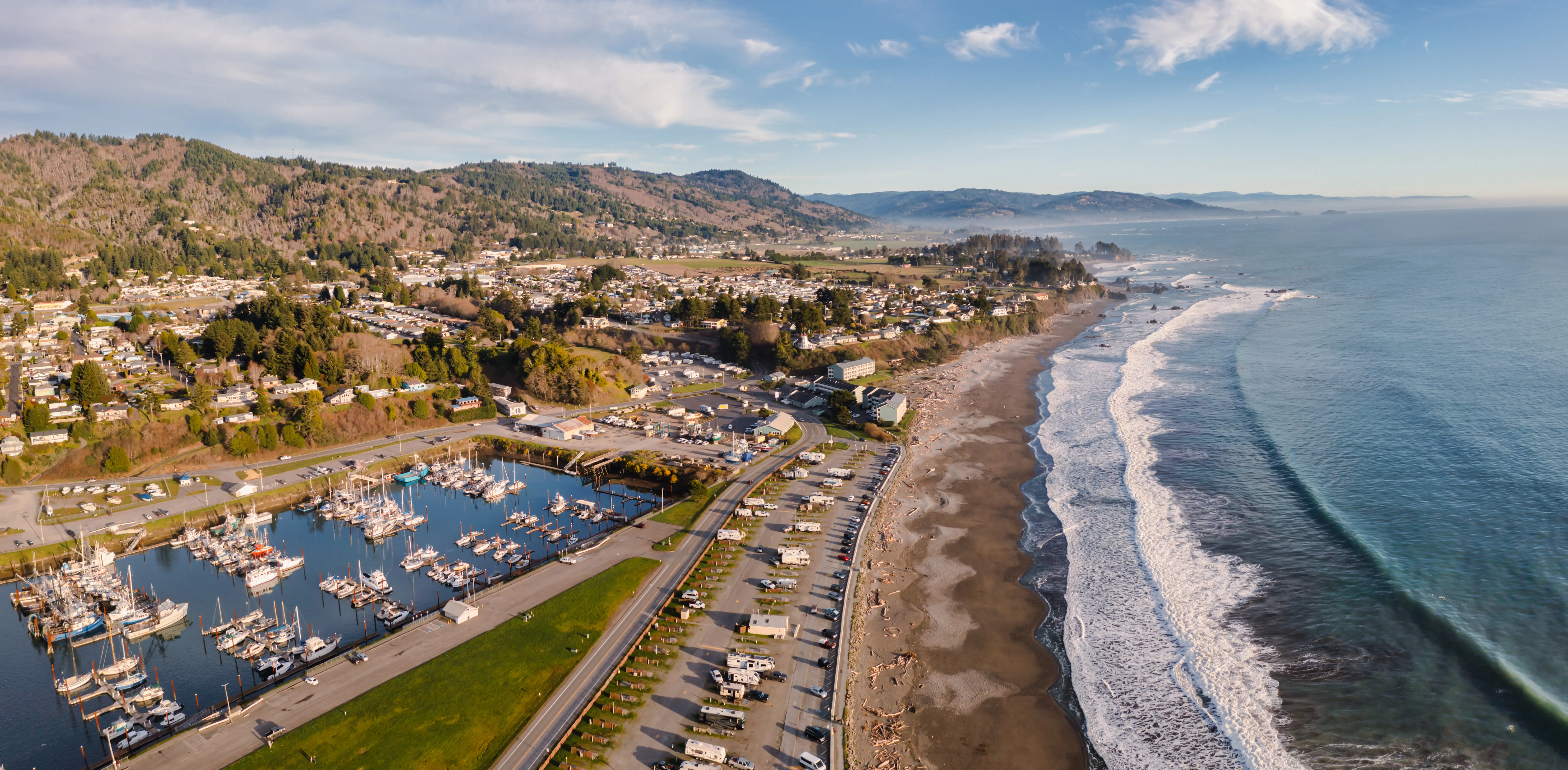
The core mechanic of a 1031 exchange is straightforward: sell a qualifying investment property, route the proceeds through a qualified intermediary (QI) — never touching the cash yourself — and use those proceeds to acquire a like-kind replacement property. "Like-kind" is broader than most people assume. Any real property held for investment or business use qualifies to exchange into any other real property held for the same purpose. A California apartment building can exchange into an Oregon vacation rental, a duplex, or bare land. The asset class doesn't need to match; the investment intent does.
The timing rules are where buyers get into trouble. You have 45 calendar days from the closing of your relinquished property to formally identify your replacement properties in writing to your QI — weekends and holidays included. You can identify up to three properties without restriction, or more if you stay within certain valuation limits. The 180-day closing deadline runs concurrently from the same relinquished property closing date, not from the 45-day identification deadline. Miss either deadline and the entire gain becomes immediately taxable. The "boot trap" is the other common mistake: if your replacement property costs less than the full sale price of the property you sold, or if you receive any cash back at closing, that difference — the boot — is taxable in the year of the exchange.
One detail that surprises leveraged buyers: your depreciation basis does not reset in a 1031. The IRS carries over the adjusted basis from your relinquished property, which means accumulated depreciation deductions follow you into the new asset. This is a meaningful long-term consideration for investors who've owned California property for decades at a low basis — the exchange defers the gain but doesn't eliminate it until death or a non-qualifying sale.

The 45-day identification and 180-day closing rules above are the two deadlines I watch most closely with clients running a 1031 into Brookings, since missing either one turns the whole exchange taxable overnight. I've spent thirty years working investment and development property on this coast, and a meaningful share of that work has involved helping out-of-state investors — often from California — move equity out of one property and into something here without triggering the gain.
The "boot trap" point above is one I flag early with every exchange client, because Brookings' price points can make it tempting to under-buy relative to what was sold, which creates an unexpected tax bill nobody wants at closing. If you're weighing a 1031 exchange into Brookings investment property, I'd welcome the opportunity to point you toward replacement properties that actually satisfy the exchange cleanly, based on what I've learned running these deals since 1994.
The Brookings investment market is defined by one central tension: extremely limited supply against durable rental demand in a town of roughly 6,500 people. That combination keeps vacancy near zero — closer to an indicator of structural undersupply than a temporary market condition — but it also means 1031 buyers can't afford to be slow. Properties appropriate for exchange buyers trade in a price range that works well for California sellers deploying significant proceeds, but the selection at any given moment is small.
Cap rates in Brookings reflect the reality of a coastal lifestyle market, not a pure cash-flow play. Single-family rentals at the current median sold price, with gross monthly rents running in the $1,700–$2,300 range, pencil at roughly 4.0%–5.0% cap rates after realistic expense assumptions. Small multifamily — duplexes and triplexes, which are scarce — can deliver 5.5%–7.5% depending on condition and rent roll, which is broadly consistent with Southern Oregon rural market comparables. Short-term rental-eligible properties near Harris Beach perform differently: average annual revenue around $40,000–$41,000 with seasonal occupancy patterns that reward summer months heavily.
| Property Type | Typical Price Range | Est. Cap Rate | Avg Days to Close |
|---|---|---|---|
| Single-Family Rental (SFR) | $450,000–$650,000 | 4.0%–5.0% | 45–60 days |
| Duplex / Small Multifamily | $550,000–$850,000 | 5.5%–7.5% | 50–70 days |
| Short-Term Rental (STR) | $500,000–$900,000 | 5.0%–7.0% (stabilized) | 40–60 days |
| Commercial / Mixed-Use | $400,000–$1,200,000 | 6.0%–8.0% | 60–90 days |

The math that drives California capital into Brookings is simple: proceed sizes from California residential sales routinely exceed replacement property prices in Southern Oregon's coastal markets, often by enough to acquire multiple assets — or to buy without leverage entirely.
A Bay Area homeowner selling a property at $1.4 million can realistically acquire both a duplex and a standalone SFR in Brookings debt-free with proceeds left over. That scenario — transitioning from one leveraged California asset to two unencumbered Oregon properties — dramatically changes the monthly cash-flow picture and eliminates lender risk. The price-to-rent ratio in Brookings runs around 21:1, which is not a cash-flow-dominant market, but for a debt-free Bay Area buyer it produces meaningful positive cash flow from day one.
Southern California sellers typically arrive with proceed sizes of $900,000–$1.3 million after transaction costs, enough to acquire one quality coastal SFR or STR-eligible property in Brookings with significant cash reserves. The lifestyle appeal of Oregon's southern coast also factors into these decisions — many Southern California buyers are researching Brookings simultaneously as a retirement destination and an investment market, making the purchase dual-purpose in a way that further justifies the move.
Sacramento and Inland Empire sellers tend to be working with more modest proceed sizes — often $600,000–$900,000 — but those figures still clear the Brookings market comfortably. These buyers are most often targeting a single solid SFR in a tenant-strong corridor near the Harbor or Brookings Central, and they tend to be more focused on long-term appreciation and landlord simplicity than on squeezing maximum cap rate.
Looking to buy in Brookings? Estimate your payment.
Enter your numbers to see an estimated monthly mortgage payment.
Estimate only. Excludes HOA fees and mortgage insurance.
Oregon's tax structure creates several meaningful advantages for real estate investors that California buyers don't immediately see in the headline numbers.
| Tax Item | California | Oregon |
|---|---|---|
| State income tax on rental income | Up to 13.3% | Up to 9.9% |
| Property tax rate (new purchase) | ~1.0%–1.2% (post-Prop 13 reassessment) | ~0.42% (Brookings / Curry County) |
| State sales tax | 7.25%–10.75% | 0% |
| Capital gains treatment | Taxed as ordinary income at state rate | Taxed as ordinary income at state rate |
| Depreciation basis (1031) | Carries over (no step-up) | Carries over (no step-up) |
Oregon's income tax on rental income — up to 9.9% — is higher than states like Nevada or Washington, but depreciation and operating expense deductions offset the bulk of net rental income for leveraged investors. Brookings's 0.42% property tax rate is where the long-term advantage becomes most visible: a property purchased at $550,000 generates an annual tax bill of approximately $2,310, compared to the $5,500–$6,600 annual obligation a California buyer would face on a similarly priced newly purchased property at Prop 13's effective reassessed rate.
For investors seeking truly passive exposure — no tenants, no toilets, no property management — Delaware Statutory Trusts (DSTs) allow 1031 proceeds to be placed into institutional-grade real estate structures that satisfy exchange requirements. DSTs are worth understanding if the Brookings inventory clock runs out or if the investor simply doesn't want the operational burden of direct ownership.
Oregon's landlord-tenant law is among the more tenant-protective frameworks in the western United States, and out-of-state investors frequently underestimate what that means operationally. No-cause eviction protections apply in most circumstances, and rent increase restrictions apply to some property categories — research the current 2026 status carefully for any specific property before acquisition, as the legislative landscape has shifted several times in recent years. The practical implication for a California investor: plan for longer tenant relationships and a more deliberate screening process upfront, because removing a problem tenant is slower and more expensive than in most Sun Belt markets.
Professional property management in Brookings is available — local operators affiliated with Curry County's real estate community handle both long-term and short-term rental properties — and typical management fees run 8%–10% of gross monthly rent for long-term rentals, with STR management fees running 20%–30% of revenue. For a property renting at $2,000 per month, that's $160–$200 monthly off the top, which should be underwritten into any purchase analysis. Vacancy in Brookings has been near zero historically, but smart owners budget for 1–2 months of vacancy annually regardless.
The most common mistake out-of-state owners make is underestimating the maintenance burden of coastal Oregon property. Salt air, persistent moisture, and the marine climate degrade exterior materials faster than investors from inland markets expect. A thorough pre-purchase inspection by a local inspector — not a remote desk review — is non-negotiable.
| Item | What to Verify | Local Resource |
|---|---|---|
| Title Search | Clear title, no liens, easements, or encroachments | Curry County title company or ALTA policy |
| Sewer vs. Septic | City sewer connection or septic condition/location | City of Brookings Public Works |
| Radon Testing | Oregon has elevated radon zones — test before closing | Oregon DEQ radon map; local inspector |
| Flood Zone Status | FEMA flood map designation; flood insurance requirement | FEMA Flood Map Service Center |
| Rental Permit Requirements | City or county short-term or long-term rental registration | City of Brookings Planning Dept. |
| HOA Restrictions | STR restrictions, rental caps, owner-occupancy rules | HOA CC&Rs; title report |
| ADU/Zoning Potential | R-1 vs. R-2 zoning; ADU overlay eligibility | City of Brookings Zoning Code |
| School District Assignment | Affects long-term tenant pool; verify Brookings-Harbor SD boundary | Brookings-Harbor School District |
| Current Lease Status | Month-to-month vs. fixed term; rent level vs. market | Seller disclosure; current lease documents |
| Deferred Maintenance | Roof, HVAC, siding, windows — coastal climate accelerates wear | Licensed local home inspector |
| Property Management Referral | Verified local PM with experience in long-term or STR management | Local REALTOR® referral |
| Title Company Recommendation | 1031-experienced title officer familiar with QI coordination | Curry County closing attorneys |
| Environmental/Slope Issues | Coastal bluff stability, erosion risk for hillside properties | Oregon Department of Geology |
| Rental Income Documentation | 12–24 months of actual rent rolls, not pro forma | Seller's CPA or property manager records |
| 1031 Timeline Coordination | Confirm closing timeline fits 180-day window from relinquished sale | Your qualified intermediary |

Local Expert Takeaway: The single most common mistake California 1031 buyers make in Brookings is treating it like an Airbnb cash-flow market first and a long-term investment second. Short-term rental revenue here is real and seasonal, but the regulatory environment can change quickly and STR-dependent underwriting leaves no margin for a slow winter. The strongest replacement properties in this market are those that pencil as long-term rentals at current rents and simply perform better as STRs when the season allows — not the other way around. Before you identify a property on day 30 of your 45-day window, know the long-term rent number cold.
If you're entering a 1031 exchange with California proceeds and Brookings is on your replacement property list, getting your financing structure sorted before the 45-day window opens is the move that separates buyers who close from buyers who scramble. DSCR loans — which qualify the property on its rental income rather than your personal income — are a strong option for investors who want to preserve personal DTI capacity or hold multiple properties without stacking W-2 documentation. Reach out to Todd before your relinquished property closes to map out the financing timeline alongside your exchange window.
✅ Brookings offers one of the lowest property tax rates in Oregon at approximately 0.42% — a durable advantage for investors holding appreciating coastal assets long-term.
⚠️ Inventory is extremely thin. Qualified investment properties move fast, and 1031 buyers who wait until day 35 of their identification window frequently find themselves choosing between overpriced assets and an incomplete exchange.
📍 The strongest long-term rental demand corridors are near the Harbor, Brookings Central, and the north end of town near healthcare and government employers — not outlying hillside or rural parcels.
Does a 1031 exchange work for out-of-state property?
Yes, a 1031 exchange works across state lines without restriction. You can sell a California property and exchange into an Oregon replacement property — the like-kind rule applies nationally, not within a single state. The Oregon replacement property simply needs to be held for investment or business use, the same requirement that governed the California property you sold.
What is the cap rate on rental property in Brookings?
Single-family rentals in Brookings currently pencil at roughly 4.0%–5.0% cap rates based on current median sold prices and market rents. Small multifamily — duplexes and triplexes — can reach 5.5%–7.5% depending on condition and occupancy. Short-term rental-eligible coastal properties can perform comparably to small multifamily when well-managed, though they carry more revenue variability between peak summer months and slow winter periods.
Do I need a local property manager for a 1031 investment in Oregon?
Out-of-state owners are not legally required to use a local property manager, but it is strongly advisable for anyone more than a few hours from the property. Oregon landlord-tenant law is complex, no-cause eviction protections limit a landlord's options, and the coastal climate creates maintenance demands that require fast local response. A qualified local property manager typically costs 8%–10% of gross monthly rent and is one of the most effective tools for protecting NOI over a long hold period.
Explore the full Brookings series: The Ultimate Brookings Relocation Guide · Is Brookings Safe? · Cost of Living in Brookings · Best Neighborhoods in Brookings · Brookings Schools & Family Life · Brookings Youth Sports · Brookings Parks & Recreation · Retiring in Brookings · 1031 Tax-Deferred Exchange in Brookings · Brookings First-Time Homebuyers Guide · · Moving to Brookings from California · Brookings Realtor's Perspective · Top 10 Questions a Realtor Gets About Brookings
Tell us what you need help with and we'll connect you with local resources.

About the Author
Todd Davidson is the founder of Living in Oregon and Living in Washington, where he publishes in-depth city guides, neighborhood resources, and local market insights covering more than 180 communities across the Pacific Northwest. While his background is in home financing and real estate, he created these digital platforms to help families research and compare regions before making a move.
Check Out the Oregon Coast Rankings: Oregon Coast Cost of Living — All 16 Cities Ranked · Best Places to Retire on the Oregon Coast · Best Oregon Coast Cities for Families · Best Oregon Coast Cities for Remote Workers · Oregon Coast Real Estate Market Report 2026 · Oregon Coast vs. Washington Coast