Portland Metro · Oregon
Living in Bethany, Oregon: The Ultimate Relocation Guide (2026)
Maybe your company just offered you a position at Nike or Intel and you've been scrolling through Portland Metro neighborhoods trying to figure out where people like you actually live. Maybe you've been looking at homes in Portland proper and realized your budget gets you something very different twelve miles to the northwest. Maybe you drove through Bethany once, noticed the newer construction and the well-kept subdivisions, and thought it looked almost too polished — like a suburb that hadn't quite figured out what it wanted to be yet. That last instinct is worth examining, because Bethany's central tension is real: this is one of Oregon's wealthiest communities, built largely over the last two decades, still actively developing its northern edge, and yet genuinely struggling with the question of what makes it a place rather than just a collection of very nice houses near the highway.
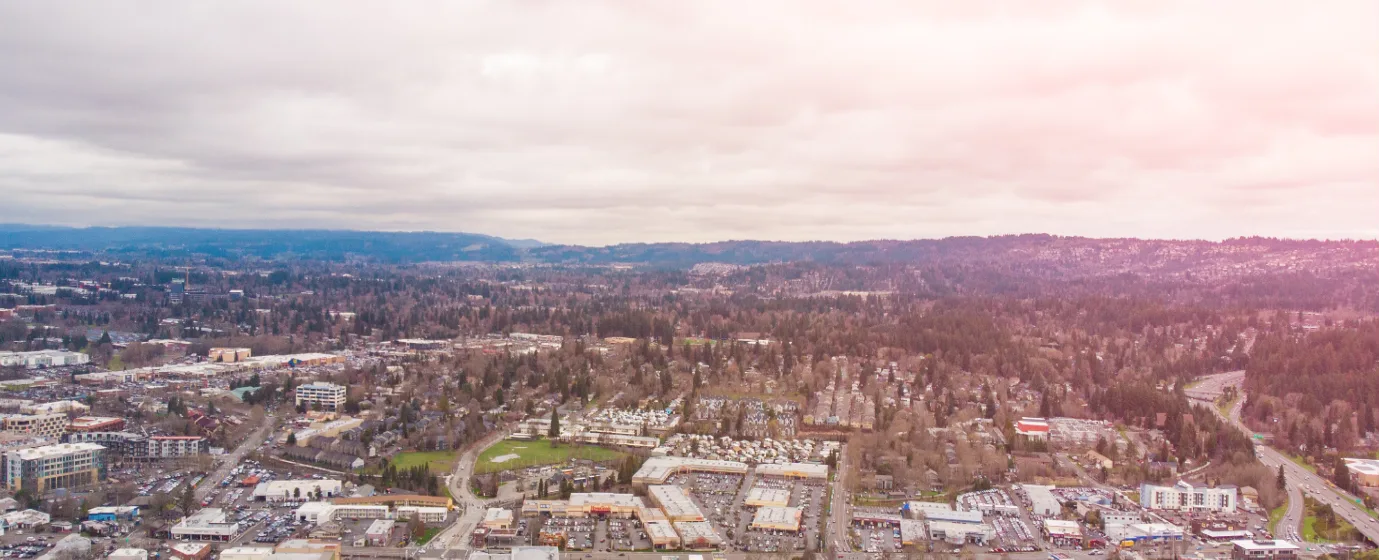
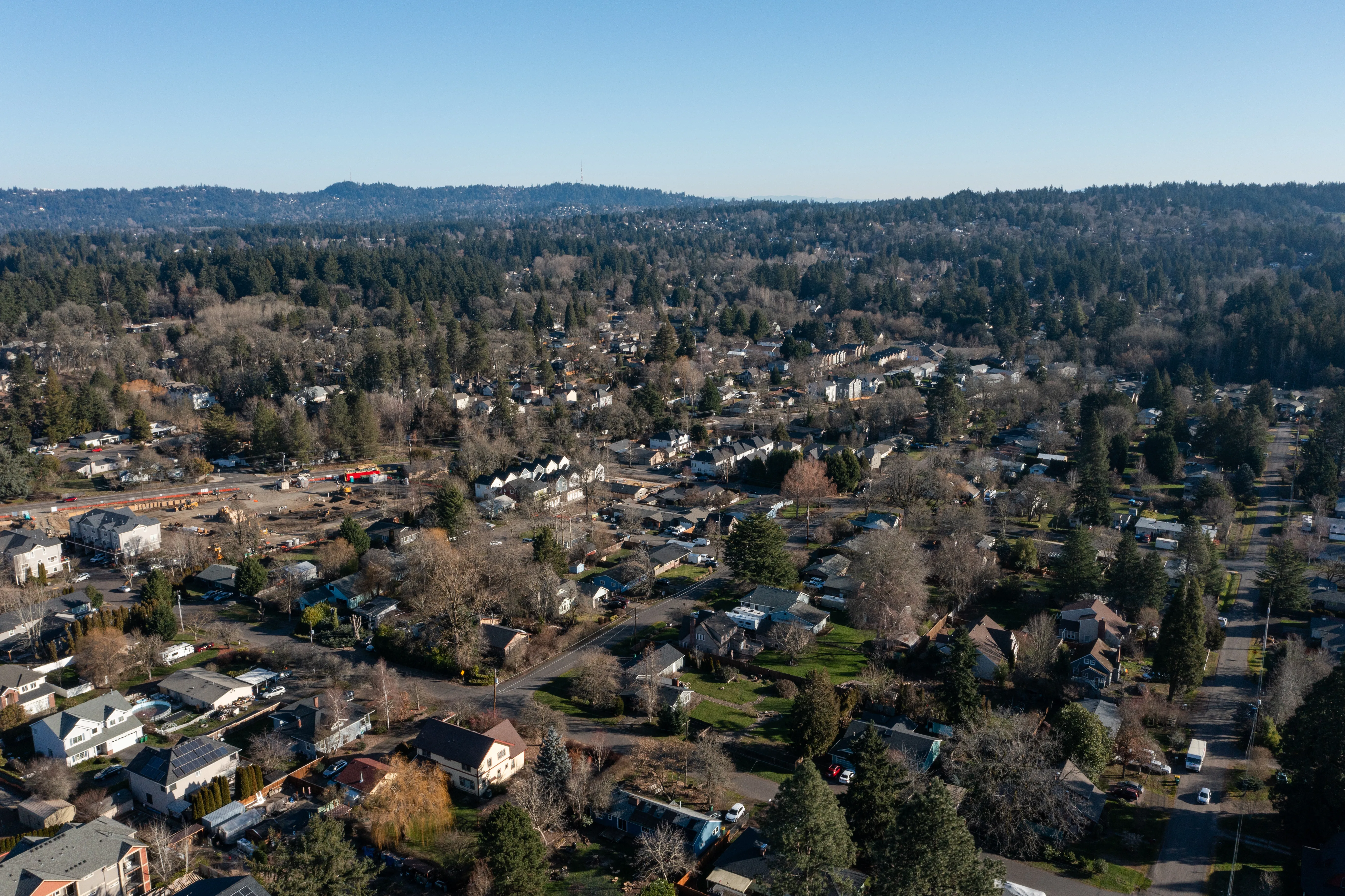
Geographically, Bethany occupies the northwest quadrant of the Portland Metro, tucked between Beaverton to the south, Cedar Mill to the southeast, and the urban growth boundary to the north and west. It sits in Washington County as an unincorporated census-designated place — meaning there's no Bethany City Hall, no Bethany mayor, and no Bethany Police Department. Washington County Sheriff's Office patrols the streets, Tualatin Valley Fire and Rescue handles emergencies, and the Beaverton School District runs the schools. That structure matters more than most people realize when they're shopping for homes here, because it shapes everything from road maintenance timelines to how development decisions get made. NW West Union Road functions as an unofficial economic spine of the community, dividing older, slightly more affordable housing to the south from the newer, higher-priced development pushing northward.
This guide will help you work through the decision with real information rather than promotional language. You'll find out who Bethany genuinely suits, which neighborhoods offer what, what the commute actually looks like at 7:45 on a Tuesday morning, and what the honest tradeoffs are for one of Oregon's fastest-appreciating suburban communities. By the end, you should know whether Bethany belongs on your shortlist — or whether a nearby alternative fits your life better.
Not everyone who can afford Bethany should buy in Bethany. The community has a distinct profile that suits certain lifestyles extremely well and leaves others quietly disappointed after year one.
| Best For | Why |
|---|---|
| Tech and corporate commuters | Nike, Intel, Columbia Sportswear, and Tektronix are all within a 15–25 minute drive; Portland is roughly 24 minutes without traffic |
| Families with school-age children | Beaverton School District earns an A- rating, with multiple highly-ranked elementaries serving the area |
| High-income professionals seeking space | Median household income of approximately $167,735 — reportedly the highest in Oregon — means neighbors share similar priorities around maintenance, schools, and community investment |
| Remote workers who want suburban infrastructure | Fast Comcast/Xfinity infrastructure, newer home construction with dedicated office space, and quiet neighborhoods with minimal through traffic |
| Move-up buyers from Portland or Beaverton | The step up to $750K+ here buys significantly more square footage than comparable Portland listings |
| Buyers who want new construction options | North Bethany's ongoing development from Toll Brothers, Pulte, and Taylor Morrison offers ground-up builds with warranties and modern floor plans |

Bethany is one of those markets where buyers keep telling themselves they'll "wait and see" — and then watch a home they passed on go pending in six days. What makes this community genuinely exciting right now is that you're getting two very different buying opportunities in one ZIP code. The established neighborhoods south of West Union Road offer mature landscaping, larger lots, and homes that have already absorbed most of their appreciation. Meanwhile, North Bethany's active development corridor is where I'm seeing the most interesting plays: builders like Toll Brothers at Hosford Farms are offering four to five percent in seller concessions right now, which on an $850,000 home is a real number that can permanently reduce your rate or cover closing costs entirely.
What buyers consistently underestimate is how quickly Bethany's vacancy rate reflects demand. At roughly 1.8%, there's almost nothing sitting empty here — which tells you something about how residents feel about staying once they've arrived. The northeast quadrant tends to move fastest and draws the most competitive offers because those custom and semi-custom builds rarely sit more than a week or two. If you're relocating from out of state and still in the research phase, I'd encourage you to get pre-underwritten rather than just pre-approved — Bethany sellers respond differently to offers that can close in 21 days versus 45. If you're considering Bethany and want insight into which neighborhoods align with your priorities and budget, I'd welcome the opportunity to share what I've learned from helping hundreds of families make this move successfully.
On a weekday morning, Bethany operates with the quiet efficiency of a community that has largely optimized its routines. Kids are walking or biking to school along the Ben Graf Greenway, the Bethany Lake trail loop has its regular walkers out before 7 a.m., and NW Springville Road is moving steadily toward US-26. The stress of Portland proper — the homeless encampments, the pothole-studded streets, the parking negotiations — simply isn't present here. That absence is real, and it's a meaningful part of what people are paying for.
The town center, such as it is, anchors around Bethany Village — a thoughtfully designed commercial hub with a central fountain, an amphitheater, and a walkable mix of restaurants, bakeries, and boutiques that punches well above what you'd expect from a suburban shopping center. Community gatherings happen here organically: summer concerts draw families out on warm evenings, and the holiday tree lighting pulls in residents from across the CDP each December. It's the closest thing Bethany has to a genuine downtown, and most longtime residents will tell you it functions better than it has any right to given that Bethany technically lacks a municipal government to champion it.
The commute reality is more nuanced than the 24-minute headline suggests. Getting to Portland's west side or the Nike campus in Beaverton is genuinely easy — US-26 access from NW Bethany Boulevard or NW Kaiser Road makes those drives manageable. But reaching downtown Portland during peak hours requires patience, because US-26 eastbound between 7:30 and 8:45 a.m. can stretch that 24 minutes to 40 or more. The NW Cornell Road corridor offers a back-road alternative that locals use to skip the worst of the Sunset Highway backup, though it adds distance. Residents who work in Hillsboro rather than Portland are arguably better positioned — Intel's campuses are a straight shot down NW West Union Road with no freeway required.
What surprises most people after six months of living here is how self-contained daily life actually becomes. Bethany's retail density along NW 185th Avenue handles groceries, restaurants, fitness, and most errands without requiring a trip to Beaverton or Portland. The first few months feel like you're constantly driving "out" for things. By month six, many residents realize they've stopped leaving the immediate area for anything except work.
The school system is the headline reason most families choose Bethany over comparable Washington County communities. The Beaverton School District's A- rating translates into practical daily life in ways that matter — well-resourced classrooms, robust extracurricular programs, and a competitive college-prep culture that parents in the 97229 ZIP code take seriously. Roughly 50% of Bethany households include children under 18, which means the school community is deeply woven into neighborhood social life in a way that's difficult to replicate elsewhere at this price point.
The natural infrastructure is genuinely impressive for a suburban CDP. Kaiser Woods Natural Area provides old-growth tree canopy and trail access that feels nothing like a managed park — it's the kind of green space that gets people outside in October when the moss is thick and the trails are damp. Bethany Wetlands Park and Abbey Creek Park offer more groomed trail systems, while Bethany Lake functions as a year-round community gathering point with its loop trail and open water views. The Ben Graf Greenway threads through central Bethany connecting neighborhoods to retail and schools in a way that actually works for pedestrians and cyclists. On a dry Saturday morning in spring, the trail network makes Bethany feel like a very intentional place.
Income diversity within the community creates a high baseline of civic investment. At roughly $167,735 in median household income — reportedly the highest of any Oregon community — Bethany's residents tend to maintain properties rigorously, support local school levies, and invest in the kinds of neighborhood upgrades that maintain property values over time. The low poverty rate of approximately 4% and the 1.8% housing vacancy rate together tell a story about stability: people who get here tend to stay.
The demographic mix is worth naming directly. Approximately 31.7% of Bethany residents identify as Asian, and the community has become one of the more genuinely diverse high-income suburbs in the Pacific Northwest. That diversity shows up in the restaurant landscape, in the school community, and in neighborhood social fabric in ways that feel organic rather than aspirational. Families relocating from California's Bay Area or from Seattle's Eastside frequently describe Bethany as culturally familiar in a way that other Portland suburbs are not.
New construction availability at the north end of the CDP gives Bethany something most comparable-income suburbs have lost: the ability to buy a brand-new home with a builder warranty, modern energy efficiency, and a floor plan designed for contemporary living. That option — at prices from roughly $829,000 to $1.3 million in the Toll Brothers Hosford Farms community — is increasingly rare this close to Portland.
Bethany has almost no transit infrastructure. There is no MAX light rail within practical distance, bus routes are limited, and the community was built around the assumption of car ownership. If you're imagining a future where one car handles a two-adult household, or where teenagers can get around independently, you'll find Bethany more limiting than the marketing materials suggest. This is a two-car-minimum community for most households, and that's unlikely to change meaningfully in the near term despite North Bethany's planning documents gesturing toward future connectivity.
The sense of community is genuinely present but unevenly distributed. Residents who plug into Bethany Village events, school volunteer networks, or the Claremont Golf Club find rich social lives. Those who don't find organic touchpoints can feel like they're living in a well-maintained collection of cul-de-sacs rather than a cohesive neighborhood. The absence of a municipal government means there's no natural civic gathering point — no city council meetings to attend, no local ballot measures to rally around, no Bethany mayor's State of the City address. Some people find that refreshingly quiet. Others, after a few years, miss it.
The price point creates its own pressure. At a $752,000 median, Bethany is positioned for a specific income band — and the market doesn't offer much of a soft landing for buyers who stretch to get in. Homes at the entry-level end of the Bethany market are typically townhomes or smaller single-family units in the Bethany Crossing area, and the jump to a traditional four-bedroom single-family home often means crossing $850,000 or higher. Buyers coming from out of state should also understand that Washington County property tax at 1.02% translates to roughly $7,100 annually on a median-priced home — a number worth building into the monthly budget model before falling in love with a listing.
Why some people leave: The most common reason residents eventually depart is what might be called lifestyle misalignment at the one-to-three-year mark. Bethany draws buyers who want excellent schools, safety, and space — and it delivers all three. But residents who also wanted urban energy, walkable restaurants, cultural programming, or a sense of civic identity sometimes find that the suburb's placid efficiency leaves them wanting. Portland's Alphabet District and the Pearl are 30 minutes away on a good day, and after a winter or two of making that drive for dinner and a show, some residents quietly start browsing listings closer in. Bethany is not the wrong choice for those people — it's just a misread of their own priorities.
North Bethany is the community's most active growth frontier, with builders including Toll Brothers, Pulte Homes, Taylor Morrison, and Noyes Development continuing to fill in subdivisions north of NW Springville Road. The planned North Bethany Main Street — a roughly 13-acre mixed-use center near the new community gathering area — is intended to give this part of the CDP its own walkable commercial core, though it remains partially built out as of 2026. Buyers here get newer construction, builder concessions, and proximity to the planned infrastructure, with the tradeoff being that amenities are still catching up to the housing density.
Best for: Buyers who want new construction, builder incentives, and don't mind living in a community that's still taking shape.
Among Bethany's most consistently high-priced neighborhoods, Arbor Heights features spacious single-family homes typically entering the market in the $800,000s, with larger or more premium lots pushing well above that. The community has an established feel despite its relatively recent construction — mature street trees, well-maintained HOA common areas, and the kind of curb appeal that holds value through market cycles. The downside is that entry-level options simply don't exist here; this is not a neighborhood for buyers working near the bottom of Bethany's price range.
Best for: Established professionals or families seeking prestige, space, and long-term value retention in a turnkey community.
Arbor Oaks sits within the central-south corridor of Bethany and offers single-family homes on generous lots with reasonable access to the Ben Graf Greenway trail system and several neighborhood parks. The housing stock trends toward late-1990s and early-2000s construction, which means more established landscaping and slightly lower price points than newer communities — typically in the mid-to-upper $700,000s depending on condition and lot size. The catch is that homes here require more attention to deferred maintenance than buyers will find in new construction to the north.
Best for: Families who want space, trail access, and established neighborhood character without paying new-construction premiums.
Bethany Terrace sits within easy reach of Bethany Lake and the trail loop that circles it, making it one of the more recreation-oriented pockets of the CDP for residents who want a park-adjacent lifestyle without moving to the outer edges of the community. The housing stock is primarily 1990s single-family builds, and price points land in the $720,000–$800,000 range for most four-bedroom configurations. Buyers choosing Bethany Terrace are typically trading some of the interior finish modernity of newer builds for the mature neighborhood feel and water-adjacent green space.
Best for: Outdoor-oriented buyers who want Bethany Lake access and a quieter residential pocket.
Centrally located near Bethany's primary retail corridors, Bethany Crossing offers some of the most accessible entry points into the broader 97229 market, including a mix of townhomes and smaller single-family homes that tend to price below the CDP median. The walkability to everyday retail is genuine here — the Bethany Village shopping area and adjacent grocery and dining options are close enough to reach on foot or by short bike ride. The tradeoff is proximity to commercial traffic, which means more ambient noise and less of the quiet cul-de-sac feel that defines the deeper residential parts of Bethany.
Best for: First-time buyers in the Bethany market or households that prioritize retail access and lower price points over square footage.
Marketed in MLS listings as Oakridge Estates, this neighborhood occupies a sought-after pocket of central Bethany with homes that typically run in the 2,500–3,000 square foot range featuring four bedrooms, dens, and 2.5-bath configurations. The neighborhood includes a private park with tennis courts and walking trails, and it sits within the Findley-Tumwater-Sunset school feeder pattern — consistently one of the stronger academic pipelines in the district. Homes here are rarely discounted; when they come to market, they move quickly because the combination of school access and neighborhood amenities is well understood by local buyers.
Best for: Families prioritizing school feeder patterns and a tight-knit neighborhood with private amenities.
The neighborhood built immediately around the Bethany Village commercial center is one of the few parts of the CDP where something approaching true walkability exists. Single-family homes, townhomes, and apartments all coexist here, making it more tenure-diverse than most of Bethany's heavily owner-occupied subdivisions. The fountain plaza and amphitheater at the commercial center function as a genuine community gathering space — summer concerts and the annual holiday tree lighting draw residents from across the CDP, but it's Bethany Village residents who can walk out their front door for the evening. The relative density means lot sizes are smaller than in surrounding neighborhoods.
Best for: Buyers who want Bethany's school access and safety profile with the closest thing the CDP offers to a walkable neighborhood center.
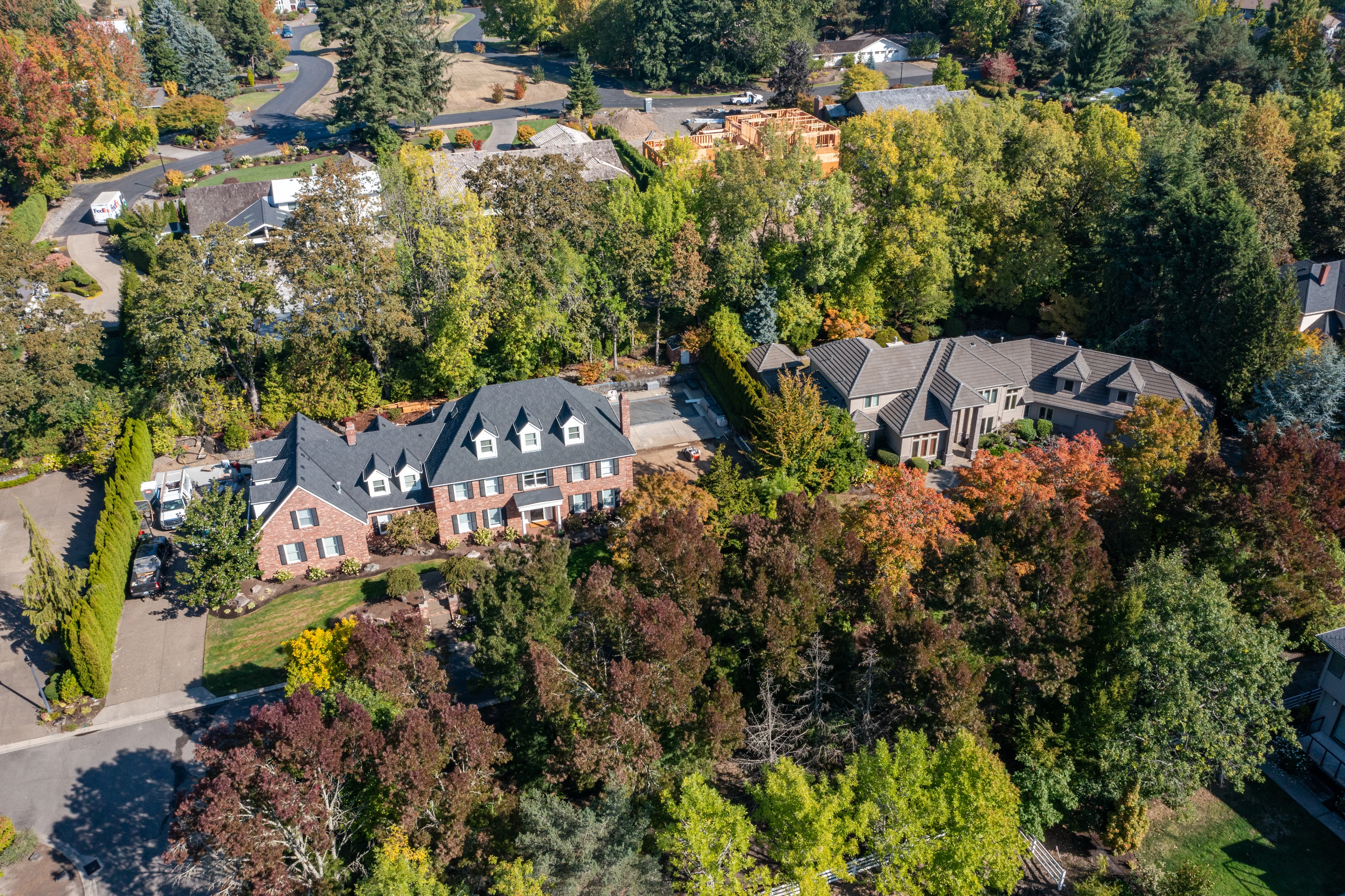
The northeast quadrant of the CDP holds the highest concentration of Bethany's luxury custom and semi-custom homes, with prices regularly clearing $1 million and some properties reaching well above that. These are not tract developments — the homes here tend to reflect individual architectural choices, larger lots, and a level of finish that distinguishes them from even the premium new construction in North Bethany. This is also the most competitive sub-market within the CDP; homes in Bethany Northeast tend to move faster than the overall 35-day average and generate more frequent multiple-offer situations.
Best for: High-income buyers seeking Bethany's most exclusive address tier with custom-home character.

Bethany's location within the Portland metro gives it strong long-term value, and where you land within the community can make a real difference. Neighborhoods like North Bethany and Arbor Heights tend to draw significant buyer interest because of their newer construction, walkability, and access to quality schools — well-priced homes there can move within days, sometimes before buyers who aren't prepared even get a showing scheduled. Areas like Bethany Crossing offer a nice balance of convenience and value, with many homes available under $750,000 depending on size and condition. Knowing which pocket fits your lifestyle before you start looking saves a lot of frustration.
Before you tour a single home, talk to a lender. Your true monthly payment includes more than principal and interest — property taxes, homeowner's insurance, any HOA dues, and how your loan is structured all factor in, and together they can shift your comfort level significantly. There's a real difference between what you're approved for and what actually fits your life. Getting pre-approved early means when the right home in Oakridge or Bethany Terrace hits the market, you're ready to move with confidence.
| City | Best For | Median Home Price | Commute to Portland | Vibe |
|---|---|---|---|---|
| Bethany | Families, tech commuters, new construction | $752,000 | ~24 min | Affluent suburban, actively developing |
| Beaverton | Value-oriented buyers, Nike campus access | ~$560,000 | ~20 min | Diverse, established, more urban density |
| Cedar Mill | Buyers who want Bethany-adjacent at a discount | ~$620,000 | ~22 min | Quieter, more established, fewer amenities |
| Hillsboro | Intel workers, new construction at lower price | ~$530,000 | ~30 min | Tech suburb, fastest-growing in region |
| Oak Hills | Older buyers, established neighborhoods | ~$590,000 | ~22 min | Mature, quieter, less development activity |
| Portland (NW/Slabtown) | Urban lifestyle, walkability, cultural access | ~$680,000 | 0–10 min | Dense, walkable, higher crime rate, older stock |
| Category | Detail |
|---|---|
| Population | Approximately 31,350 |
| County | Washington County (unincorporated CDP) |
| Median Home Price | $752,000 |
| Property Tax Rate | 1.02% (~$7,100/year on median home) |
| Median Household Income | ~$167,735 (reportedly highest in Oregon) |
| School District | Beaverton School District (rated A-) |
| Commute to Portland | ~24 minutes (off-peak); 35–45 minutes peak |
| Violent Crime Rate | 1.7 per 1,000 residents |
| Property Crime Rate | 10.3 per 1,000 residents |
| Governance | Washington County (no city government) |
Relocating with Nike? Bethany is one of the closest livable communities to Nike's World Headquarters, and it's an easy choice for employees who want new construction and top-rated schools without the tradeoffs of living right in Beaverton. The commute is short — most of Bethany sits within about 10-15 minutes of the Nike campus off-peak, though NW 185th Avenue and West Union can stretch that to 20-25 minutes during morning rush hour — and the Beaverton School District (rated A-) is a major draw for relocating families enrolling kids. Bethany's housing stock skews newer than most of the surrounding area, which appeals to incoming employees who want a move-in-ready home rather than a renovation project, and neighborhoods like North Bethany and Arbor Heights are actively building out to meet that demand. The Bethany Village amphitheater concerts, the holiday tree lighting, and the trail network give new arrivals an easy way to meet neighbors quickly, which matters for families relocating without an existing network in the area.
The Bethany Village holiday tree lighting draws a surprisingly large crowd each December for a community of this size. It's one of the cleaner examples of a suburban CDP creating tradition from scratch — the fountain plaza fills up, local businesses stay open late, and for a few hours the commercial center feels like the town square it was designed to be. Residents who've been here more than two or three years treat it as a genuine annual anchor, not just a retail promotion.
Summer concerts at the Bethany Village amphitheater run through the warmer months and function as the primary weekly community gathering for families who don't have a school event on the calendar. The format is informal — bring a blanket, food from the surrounding restaurants, kids — and it's the social hub where neighbors who don't otherwise run into each other actually see each other. If you're relocating here and want to understand how community functions in a CDP without a city hall, this is the easiest entry point.
The North Bethany vs. South Bethany price divide is a quirk of the market that catches out-of-state buyers off guard. NW West Union Road is not just a street — it's a psychological and financial boundary. Homes north of it are generally newer, often pricier at the upper end, and part of the ongoing development buildout. Homes south of it are more established, sometimes more affordable, and benefit from more mature landscaping and settled neighborhood character. Buying without understanding which side of that line you're on is one of the most common mistakes relocation buyers make in the 97229 ZIP code.
What I would not do if moving to Bethany: Buy on the western edge of North Bethany without confirming the school feeder pattern and the infrastructure timeline. North Bethany is a planned community that will be excellent when it's finished — but "finished" is still years away in some sections, and buying on a street where two lots remain undeveloped and the promised neighborhood park is still a grading plan means living in a construction zone longer than most buyers anticipate. Confirm the plat map, ask the builder specifically what's going in adjacent to your lot, and don't assume the amenity map reflects current conditions.
Local Expert Takeaway: If you're choosing between Bethany and Beaverton at a $700,000–$800,000 budget, the decision comes down to what you value more: school feeder patterns and neighborhood prestige, or a slightly lower price point with more established urban infrastructure around you. Bethany wins on the school front and on new construction quality, but Beaverton gives you MAX Light Rail access and a more connected street grid. Buyers who ultimately choose Bethany and feel settled here within a year are almost always the ones who anchored their neighborhood choice around the school pipeline and the trail network — not just the listing photos.
✅ Bethany delivers Oregon's strongest combination of school quality, income stability, and suburban safety — the trifecta that drives relocation decisions for families with children from California, Seattle, and out of state.
⚠️ The price point is real and so is the transit gap. At $752,000 median with virtually no light rail or bus infrastructure, Bethany requires financial commitment and car dependence that not every buyer fully internalizes before making an offer.
📍 North Bethany's active construction corridor offers some of the best builder incentive opportunities in the Portland Metro right now — but buyers should do careful due diligence on what's planned for adjacent parcels before signing a purchase agreement.
Is Bethany a good place for families?
Bethany is genuinely one of the stronger family destinations in the Portland Metro, with roughly half of all households including children under 18 and the Beaverton School District's A- rated system serving the community. The trail network, low crime rate, and community events at Bethany Village create a family-friendly environment that holds up beyond the initial impression. The main limitation is financial — the median home price means families typically need two strong incomes to enter the market comfortably.
What is the crime rate in Bethany?
Bethany's violent crime rate sits at 1.7 incidents per 1,000 residents, which is well below both Oregon and national averages for communities of comparable size. Property crime runs at 10.3 per 1,000 — a figure that's relatively modest for a suburban area adjacent to a major metro, though as in any community, car break-ins and package theft are the most commonly reported incidents. Washington County Sheriff's Office patrols the CDP, and response times are generally strong given the area's density and relatively contained geography.
How does Bethany compare to nearby Beaverton and Cedar Mill?
Bethany typically commands a price premium over both neighbors — roughly $130,000–$190,000 above Beaverton's median and about $130,000 above Cedar Mill's — in exchange for newer housing stock, stronger school name recognition within the district, and a higher-income neighbor profile. Cedar Mill shares the Beaverton School District and some of Bethany's residential character at a lower price point but has fewer community amenities and less new construction activity. Beaverton offers more transit connectivity, denser retail, and a more diverse urban experience, but the housing stock skews older and the neighborhood character is less consistent across the city.
Browse current listings updated daily — filtered for Bethany buyers by Elizabeth Davidson, your local expert.
Powered by Elizabeth Davidson · Cascade Hasson Sotheby's International Realty · 503-939-2035
Explore the full Bethany series: The Ultimate Bethany Relocation Guide · Is Bethany Safe? · Cost of Living in Bethany · Best Neighborhoods in Bethany · Bethany Schools & Family Life · Bethany Youth Sports · Bethany Parks & Recreation · Retiring in Bethany · 1031 Tax-Deferred Exchange in Bethany · Bethany First-Time Homebuyers Guide · Bethany Down Payment Assistance Guide · Moving to Bethany from California · Bethany Realtor's Perspective · Top 10 Questions a Realtor Gets About Bethany