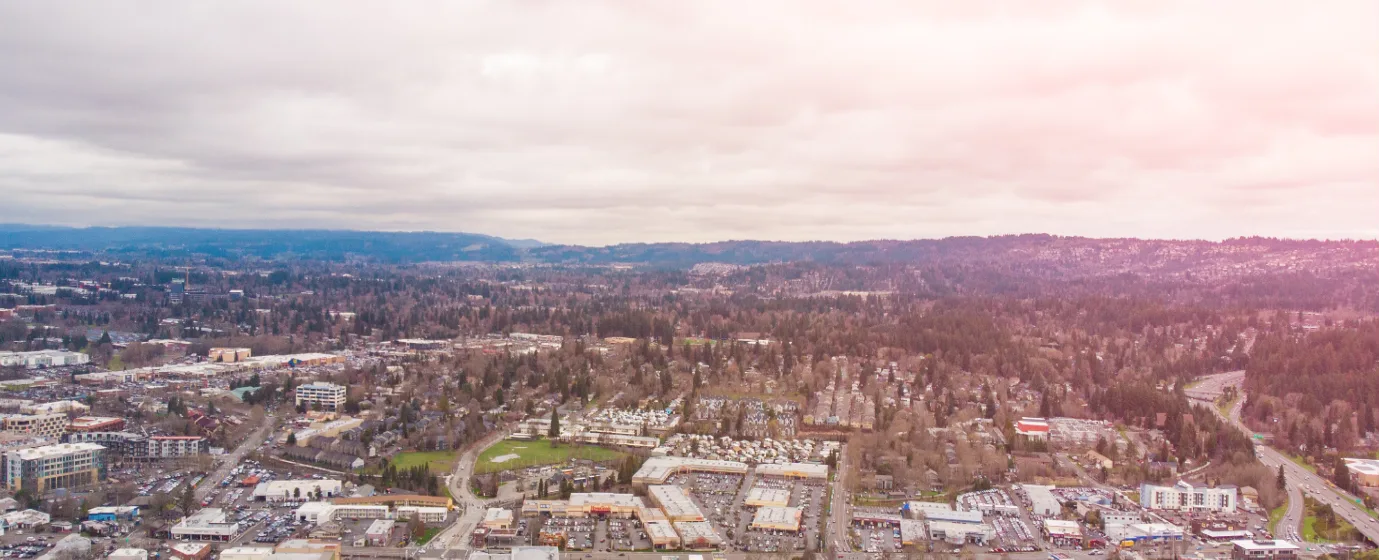
Portland Metro · Oregon
Moving to Bethany, Oregon from California: The Honest Comparison (2026)
The Bay Area software engineer who finally got tired of watching his San Jose townhome appreciate while his backyard stayed theoretical. The San Diego family who stopped dreading June utility bills and the annual wildfire air quality alerts. The Sacramento buyer who did the math and realized she could sell her 1,400-square-foot ranch house, buy a 2,600-square-foot home in Bethany, and still have six figures left over. These are the real stories behind California-to-Oregon migration, and Bethany keeps appearing in the destination column because it offers something specific: Washington County's highest-rated schools, a Portland-metro location close enough to Intel, Nike, and Columbia Sportswear to make the commute real, and a neighborhood feel that genuinely delivers the yard, the trees, and the quiet that California prices made impossible.
The hard part is that Bethany is not California, and no amount of enthusiasm about property tax rates changes that. Oregon's winters are long, gray, and genuinely different from anything most Californians have lived through. The food scene is not Los Angeles. The social energy is not San Francisco. Rainy-season traffic on U.S. 26 will test the patience of anyone who moved here thinking the commute situation was solved. This guide exists because the California transplants who thrive in Bethany are the ones who arrived with accurate expectations — not the ones who were sold a Pacific Northwest fantasy.
What follows is a genuine cost comparison broken down by California region, a clear picture of what your California equity actually buys in Bethany at today's prices, an honest tax analysis, a weather reality check with real numbers, and an interactive tool where you can look up your specific California city side by side with Bethany.
| Bethany, Oregon | Bay Area | Southern CA | Sacramento Metro | Central Valley | |
|---|---|---|---|---|---|
| Median Home Price (approx. 2026) | $752,000 | $1,450,000+ | $870,000+ | $480,000 | $340,000 |
| Property Tax Rate (effective) | 1.02% | 1.1%–1.25% | 1.1%–1.25% | 1.1%–1.2% | 1.0%–1.15% |
| State Income Tax (top bracket) | 9.9% | 13.3% | 13.3% | 13.3% | 13.3% |
| State Sales Tax | 0% | 7.25%–10.25% | 7.25%–10.5% | 7.25%–8.75% | 7.25%–9.0% |
| Avg Utilities (monthly est.) | $140–$180 | $200–$280 | $220–$320 | $170–$240 | $160–$220 |
| Avg 1BR Rent | $1,800–$2,100 | $2,900–$3,800 | $2,200–$3,200 | $1,500–$1,900 | $1,100–$1,500 |
A buyer leaving Walnut Creek with $1.4 million in equity and buying in Bethany at $752,000 is not just downsizing their mortgage — they're potentially eliminating it entirely and banking the difference. Even after accounting for Oregon's state income tax (which does exist, unlike what some California transplants assume), the monthly cash flow shift is substantial. The sales tax elimination alone — California's baseline runs 7.25% and climbs past 10% in many counties — saves a household spending $60,000 annually on taxable goods and services somewhere between $4,300 and $6,000 per year in taxes that simply disappear.
For Sacramento and Inland Empire buyers, the comparison is closer but still meaningful. Selling a Sacramento median-priced home and buying in Bethany puts you near price parity, but you gain significantly more square footage, access to top-tier Washington County schools, and proximity to Portland-area employers that Sacramento's job market doesn't replicate. The financial case isn't always about a dramatic equity windfall — sometimes it's about getting a fundamentally better home in a better-resourced community at a comparable price.
Oregon's income tax is real, graduated, and tops out at 9.9% on income over $125,000 — a detail that surprises California transplants who confuse Oregon with Washington State, which has no income tax. If you're earning $150,000 and moving from California, your state income tax burden doesn't disappear; it shifts from California's 9.3% bracket (on income above $66,295) plus 13.3% top bracket to Oregon's comparable 9.9% top rate. The difference for most earners is modest. What changes dramatically is everything else.
| Tax Item | California | Oregon | Net Impact |
|---|---|---|---|
| State Sales Tax | 7.25%–10.75% | 0% | Major savings for most households |
| State Income Tax (top bracket) | 13.3% | 9.9% | Oregon wins by ~3–4 points at top income |
| Property Tax Rate (effective) | 1.1%–1.25% | 1.02% | Oregon slightly lower |
| Assessment Cap | Prop 13 (2% annual cap) | Measure 50 (3% annual cap) | Both protect long-term owners |
| Capital Gains Tax | Up to 13.3% (same as income) | Up to 9.9% (same as income) | Oregon wins slightly |
| Senior Property Tax Deferral | Varies by county | Age 62+, income-qualified | Oregon program is robust |
| Estate/Inheritance Tax | None | Oregon estate tax starts at $1M | California wins here |
Oregon's Measure 50 is one of the most underappreciated advantages for buyers planning to stay long term. Once you purchase in Bethany, the assessed value on which your property tax is calculated can only increase 3% per year regardless of market appreciation. A buyer who purchases today at $752,000 and holds for ten years in a market that appreciates 5% annually will see their market value approach $1.2 million — but their taxable assessed value will trail that significantly. The long-term tax protection is structurally similar to California's Proposition 13, and it rewards buyers who commit to the community.
The income tax comparison deserves one more note. California residents earning above $1 million face a 13.3% marginal rate. Oregon's 9.9% cap means high earners moving from California to Bethany often see a meaningful top-line reduction even before accounting for the elimination of sales tax. For dual-income households earning a combined $250,000-plus — common in Bethany given the Intel, Nike, and Columbia Sportswear employment base — the annual tax picture in Oregon is genuinely favorable compared to staying in California.

California buyers in the Bethany market follow a consistent pattern, and it's worth naming directly. Buyers from the Bay Area almost always underestimate how competitive Bethany is at the $700,000–$850,000 price point. They arrive thinking they have unlimited leverage because they're bringing cash or a large down payment from their California sale, and the equity does give them real options — but they're wrong if they think sellers here are desperate. North Bethany and Arbor Heights properties in good condition are moving, and a California buyer who tries to negotiate like it's a 2023 buyer's market will lose homes to buyers who've done their homework on local pricing.
What I tell California clients before they arrive is that this market rewards preparation, not just capital. I've worked with clients from Palo Alto who could genuinely pay cash for anything in Bethany's inventory and still lost a home in the first week because they wanted to take time to think it over. The better-positioned California buyers are the ones who arrive already knowing which neighborhoods match their lifestyle, have their financial documentation ready to move quickly, and understand that Bethany's strong school district creates sustained demand that doesn't soften the way outer-suburban markets do. The equity advantage is real — use it strategically, not passively. If you're considering Bethany and want insight into which neighborhoods align with your priorities and budget, I'd welcome the opportunity to share what I've learned from helping hundreds of families make this move successfully.
A buyer selling a Palo Alto or San Francisco property with $1.5 million in equity arrives in Bethany with options that don't exist in their home market. At the $752,000 median, an all-cash purchase is straightforward, leaving $700,000 or more in liquid capital after closing. For buyers who want to stay invested in real estate, the North Bethany and Bethany Ridge corridors offer newer construction and larger lots in the $850,000–$1.1 million range — numbers that represent a fraction of what the same buyer could access in Marin County or the South Bay. Bethany Ridge specifically features newer luxury builds approaching $1.4 million, which is where Bay Area equity buyers who want the premium tier end up exploring.
The more common outcome for Bay Area sellers is a low-LTV purchase in Arbor Heights or North Bethany in the $800,000–$950,000 range with a meaningful cash reserve retained. This is a fundamentally different financial position than anything their California market could offer — owning a 2,800-square-foot home outright while maintaining investment capital is not a realistic scenario for most Bay Area households. The lifestyle math is straightforward; the emotional adjustment to Oregon winters takes longer.
A buyer coming out of Irvine, Pasadena, or coastal San Diego with $900,000 in equity can purchase at or above Bethany's median price with a substantial down payment and manageable conventional financing for any remainder. At this equity level, Arbor Heights and Bethany Village offer well-established neighborhoods with mature landscaping, proximity to Bethany Lake, and access to the Beaverton School District's top elementary schools — all within budget without stretching. Buyers at the top of this range who want newer construction should look at North Bethany, where the streetscape feels more intentional and the homes are generally post-2005 builds.
Southern California transplants at this equity level frequently end up in the $720,000–$850,000 price range, buying significantly more home than their Los Angeles or San Diego sale produced. The adjustment that surprises them most isn't the price — it's the property tax calculation. At 1.02% on a $780,000 purchase, annual property taxes run approximately $7,956. After years of California's Proposition 13 keeping longtime owners' assessed values artificially low, recent SoCal buyers accustomed to higher effective rates often find Oregon's structure straightforward.
Sacramento and Riverside County buyers face the most nuanced financial picture. Selling a Sacramento median-priced home and buying at Bethany's $752,000 median means carrying a mortgage — typically in the $200,000–$350,000 range depending on equity — but in a market with meaningfully better school ratings, higher median household incomes, and stronger long-term appreciation history. The Beaverton School District's A-rated performance is a consistent draw for Sacramento families who've been navigating district assignment challenges.
For Sacramento buyers with $500,000–$600,000 in equity, the Cedar Mill adjacent areas and Bethany West neighborhoods offer entry-level single-family options in the $580,000–$680,000 range where the down payment covers a substantial portion of the purchase. The financial case here is less about an immediate windfall and more about what Bethany's employment corridor offers: Intel's Hillsboro campuses, Nike's Beaverton headquarters, and Providence Health's regional presence create a job market that Sacramento's economy doesn't replicate for tech and healthcare earners.
Central Valley buyers — Fresno, Bakersfield, Stockton — arrive with the smallest relative equity advantage, but the comparison still favors Oregon in meaningful ways. A $380,000 equity position doesn't eliminate a mortgage at Bethany's median, but it funds a 50% down payment on a townhome or older single-family home in the $560,000–$650,000 range. The elimination of California's sales tax alone changes monthly cash flow in ways that matter at this income level, and Oregon's income tax, while real, typically comes in below California's rate for middle-income earners.
Central Valley buyers who stretch toward Bethany proper often find that the Bethany Terrace and Bethany Crossing areas — where older single-family homes in the $580,000–$680,000 range appear — represent the most realistic entry point. The lifestyle upgrade in schools, air quality, and neighborhood safety relative to many Central Valley communities is significant even if the headline financial win is more modest.
Looking to buy in Bethany? Estimate your payment.
Enter your numbers to see an estimated monthly mortgage payment.
Estimate only. Excludes HOA fees and mortgage insurance.
Here is what a friend who moved from San Jose three years ago would actually tell you: Bethany gets approximately 155 days per year with measurable precipitation, compared to around 62 in San Jose. It sees roughly 142 sunny days annually against San Jose's 257. Those aren't editorial choices — they're the numbers, and they represent a genuine psychological adjustment that California transplants consistently underestimate. The gray season runs from October through April, with overcast skies the norm rather than the exception. Outdoor culture doesn't disappear in winter, but it transforms. Running trails around Bethany Lake stay active year-round among committed locals, but the spontaneous "let's go to the park" energy of a Southern California winter simply does not exist here in January.
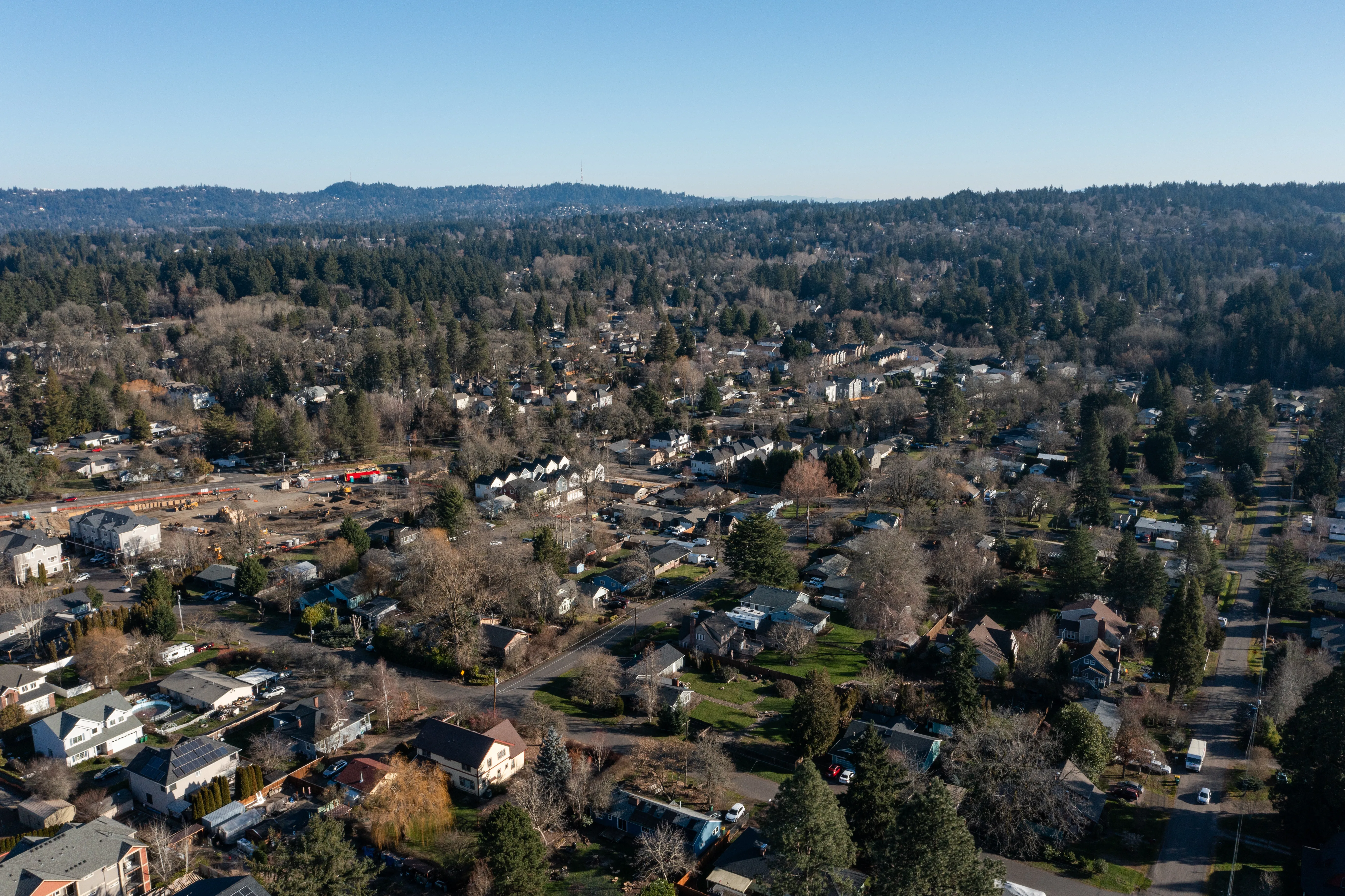
What California transplants genuinely love after twelve months in Bethany is almost universally the summer. June through September delivers long, warm days with temperatures in the low-to-mid 80s, low humidity, and the kind of outdoor access — hiking, cycling, weekend drives to Mount Hood or the coast — that California's crowds and distances make harder to enjoy. The pace of daily life in Bethany is genuinely quieter and less performative than what most California transplants left behind. Neighbors wave. Traffic, while real on U.S. 26, doesn't involve the existential daily calculation of Los Angeles freeway timing. The housing space — actual yards, mature trees, rooms that exist — produces a specific kind of decompression that people who've lived in 900-square-foot California apartments describe as transformative.
What they miss, and they will miss it: the food scene. Los Angeles transplants feel this acutely. The diversity of cuisines, the density of restaurant options, the year-round farmers markets operating in actual sun — Portland's food culture is strong, but it is not Los Angeles, and Bethany itself is a suburban community where dinner options require a drive. San Diego transplants miss the beach in a way that no amount of Pacific Northwest coast access fully addresses — the Oregon coast is dramatic and beautiful, but it is cold, windswept, and not a casual Tuesday afternoon destination from Bethany. The social energy of densely populated California metros, particularly the Bay Area's startup-culture density, is also simply different from what a 31,000-person unincorporated Washington County suburb provides.
If you want to see how Bethany compares directly to the city you're leaving, use the tool below — it covers the 120 largest California cities with current housing and tax data.
Home prices: Redfin median sale data, Q1–Q2 2026. Select your city to compare.
Ready to talk through what your specific California equity could do in Bethany? Todd can model your exact scenario in a single call.
Assuming Bethany is uniform. The difference between North Bethany's newer planned development and the older, more modestly priced areas near the southern edges of zip code 97229 is significant — in construction vintage, lot size, HOA structure, and neighborhood feel. A buyer who tours one part of Bethany and assumes the whole community reads the same way will either overpay or miss the neighborhood that actually matches their lifestyle. North Bethany near Kaiser Woods feels fundamentally different from the Rock Creek corridor near the Bethany-Beaverton boundary. Doing the geographic homework before arriving matters.
Skipping radon testing. Oregon has elevated radon zones, and Washington County properties are not exempt. California buyers who've purchased multiple homes without ever thinking about radon — because California's geology doesn't produce the same risk profile — consistently skip this step or don't know to ask for it. In Bethany's market, radon testing during the inspection period is standard practice among experienced local buyers. Skipping it on a $750,000 purchase because it wasn't part of your California homebuying experience is a mistake with potentially significant long-term health and remediation cost implications.
Underestimating U.S. 26 during winter commutes. The 24-minute Portland commute from Bethany is real — in fair weather, at reasonable hours. U.S. 26 westbound in the morning and eastbound in the evening is a different experience in November through February, when rain, occasional ice on the West Hills grades, and accident-prone conditions can turn a 24-minute drive into an hour or more. California buyers who moved here for the commute relief relative to I-405 or the 405 South Bay loop need to experience a wet-season rush hour on 26 before deciding which part of Bethany to buy in. Living closer to the Beaverton employer corridor, or choosing neighborhoods with TriMet access, is a meaningful hedge.
Expecting California-style year-round outdoor living without adjustment. The patio furniture that lived outdoors twelve months a year in Scottsdale or Irvine needs cover storage from October onward in Bethany. The habit of spontaneous weekend hiking in shorts and a t-shirt becomes a gear investment conversation by November. California transplants who arrive in August, fall in love with the Pacific Northwest summer, and purchase quickly sometimes find that the November-through-March stretch — particularly the flat gray light of February — hits harder than they anticipated. Bethany's outdoor culture rewards preparation and the right gear, not the spontaneous California approach to outdoor living.
For Bay Area sellers arriving with $1.2 million or more in equity, the mortgage conversation often centers on whether to carry any financing at all. An all-cash offer at $752,000 eliminates appraisal contingencies, speeds closing timelines, and removes lender conditions — meaningful advantages in Bethany's competitive sub-$850,000 range. Buyers in this equity tier who do choose to finance often opt for very low LTV loans (20–30% of purchase price) where the rate matters less than the terms and the lender's ability to close quickly. If the California property being sold was an investment or rental, a 1031 exchange into Bethany real estate is worth a conversation with a qualified intermediary — the Bethany 1031 Exchange guide covers the mechanics in detail.
Southern California sellers in the $700,000–$1.2 million equity range will typically find that Bethany's $752,000 median keeps them in conventional loan territory — the jumbo threshold starts at $832,750 in Washington County for 2026, meaning most Bethany purchases fall below the jumbo line. A buyer putting 30–40% down from California equity is a straightforward conventional borrower and can move quickly when the right property appears. Sacramento and Inland Empire buyers who end up with a purchase price below $500,000 after maximizing their down payment should ask their lender about Oregon Housing and Community Services programs — qualification depends on income and purchase price, but for buyers at the lower end of Bethany's price range, DPA options occasionally come into play. The covers current program availability.
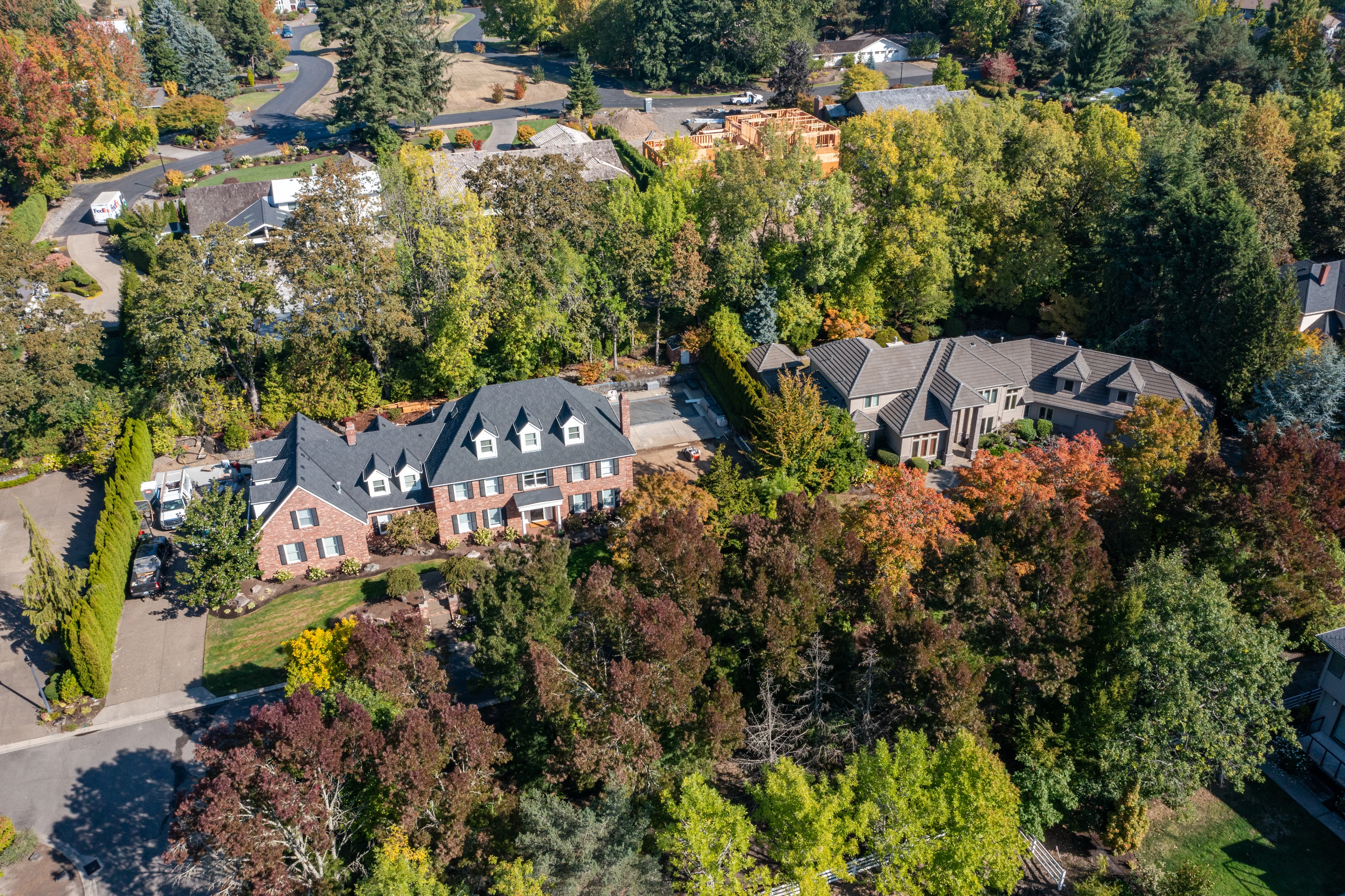
Local Expert Takeaway: The single thing most California buyers underestimate about Bethany is the speed of the well-priced inventory. A 4-bedroom home in North Bethany or Arbor Heights that's priced accurately and shows well will have offers within the first weekend — even in a market where median days on market has stretched toward 89 days on slower properties. California buyers who want to take two weeks to deliberate will consistently lose to local buyers who've already toured the neighborhood, know the schools, and are ready to move. Arrive with your pre-approval or proof of funds already in hand, know your top two or three target neighborhoods before you land, and have a clear ceiling on what you'll pay before emotion enters the equation.
✅ The financial case is real. Bay Area and Southern California sellers typically arrive in Bethany with enough equity to buy at or above the $752,000 median, eliminate or dramatically reduce their mortgage, and retain meaningful cash — a position that simply isn't achievable by staying in their origin market.
⚠️ Oregon's winters require genuine adjustment. With 155 precipitation days per year and only 142 sunny days compared to 257–284 in most California metros, the weather shift is the most consistent source of culture shock among California transplants in their first year.
📍 Location within Bethany matters significantly. North Bethany, Arbor Heights, and Bethany Ridge represent distinct price tiers and neighborhood characters from the Bethany-Beaverton boundary areas. Understanding the geography before making an offer is as important as understanding the price.
Is moving from California to Bethany worth it?
For most California buyers — particularly those coming from Bay Area or Southern California price points — the financial case is straightforward. The equity gain, combined with Oregon's zero sales tax, a lower top income tax rate than California, and Measure 50's long-term property tax protection, produces a meaningfully different monthly financial picture. The lifestyle adjustment, particularly around weather and pace, is real and worth honest preparation.
How much cheaper is housing in Bethany vs California?
Bethany's $752,000 median sits roughly 48% below the Bay Area median and approximately 14% below the California statewide median. For a buyer leaving San Jose, San Francisco, or Los Angeles, the same dollar amount purchases substantially more square footage, land, and neighborhood quality in Bethany. Sacramento and Inland Empire buyers will find pricing closer to parity, with the advantage shifting more toward school quality and employment access than raw price difference.
What do I need to know about moving from California to Oregon?
Oregon has no state sales tax but does have a state income tax that tops out at 9.9% — the key distinction from Washington State. Oregon homes require radon testing, which isn't standard practice in most California markets. The Beaverton School District operates Bethany's schools under an A-rated system that frequently ranks among Oregon's best. And U.S. 26 is the primary commute artery — understanding its behavior during the wet season is essential before choosing which part of Bethany to buy in.
Browse current listings updated daily — filtered for Bethany buyers by Elizabeth Davidson, your local expert.
Powered by Elizabeth Davidson · Cascade Hasson Sotheby's International Realty · 503-939-2035
Explore the full Bethany series: The Ultimate Bethany Relocation Guide · Is Bethany Safe? · Cost of Living in Bethany · Best Neighborhoods in Bethany · Bethany Schools & Family Life · Bethany Youth Sports · Bethany Parks & Recreation · Retiring in Bethany · 1031 Tax-Deferred Exchange in Bethany · Bethany First-Time Homebuyers Guide · · Moving to Bethany from California · Bethany Realtor's Perspective · Top 10 Questions a Realtor Gets About Bethany
Tell us what you need help with and we'll connect you with local resources.

About the Author
Todd Davidson is the founder of Living in Oregon and Living in Washington, where he publishes in-depth city guides, neighborhood resources, and local market insights covering more than 180 communities across the Pacific Northwest. While his background is in home financing and real estate, he created these digital platforms to help families research and compare regions before making a move.