
Eastern Oregon · Oregon
Retiring in Baker City, Oregon: Is It the Right Fit for Your Next Chapter? (2026)
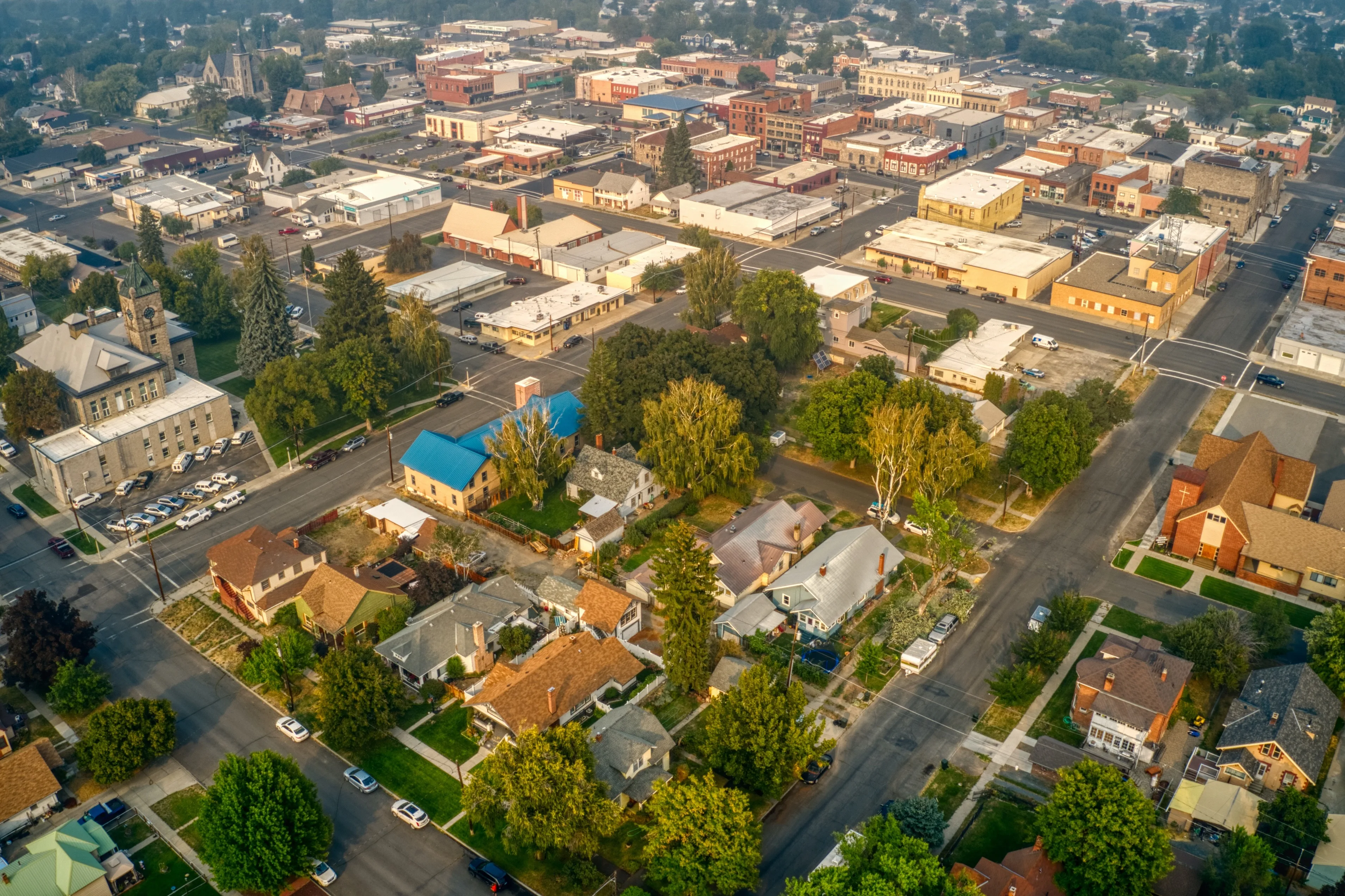
Baker City doesn't try to sell you on retirement. It just exists — 10,000 people tucked between the Elkhorn Mountains and the high desert of Eastern Oregon, with a median home price of $275,000, a senior population that runs nearly 27% of residents, and a pace of life that either feels like relief or exile depending on who you are. The honest answer about whether Baker City fits your retirement is this: if you've been dreaming of trading traffic and noise for something genuinely quieter, more affordable, and more physically beautiful, this city delivers. If you need a major medical center within 20 minutes, a robust arts scene, or urban amenities, it won't.
The retirees who thrive here tend to share a few traits. They're drawn to outdoor access — trail riding, hiking into the Elkhorns, fishing the Powder River — and they actually use it. They value owning their home outright or carrying a small mortgage that doesn't eat their Social Security. And they're comfortable with a certain self-sufficiency that rural Eastern Oregon demands.
This guide covers what retirement actually looks like in Baker City day to day: the healthcare picture, senior living options, Oregon's tax treatment of retirement income, how the city compares to nearby alternatives, and which type of retiree will feel at home here versus which will be packing up within two years.

Oregon taxes retirement income, and that's worth understanding before you commit to a zip code. The state does not have a sales tax, which helps offset costs on everyday purchases, but income from pensions, 401(k) distributions, and IRAs is taxed as ordinary income at rates ranging from 4.75% to 9.9%. Social Security benefits, however, are fully exempt from Oregon state income tax — a meaningful advantage for retirees whose primary income is Social Security.
| Income Type | Oregon Tax Treatment |
|---|---|
| Social Security | Fully exempt |
| Federal pension (FERS/CSRS) | Partially exempt up to $6,250; remainder taxed |
| Military retirement pay | Exempt for most veterans under SB 1522 |
| Private pension / 401(k) / IRA | Taxed as ordinary income (4.75%–9.9%) |
| Investment income / capital gains | Taxed as ordinary income |
| Roth IRA distributions | Generally not taxed (basis already taxed) |
| Property tax (on $275K home) | Approximately $1,870/year at 0.68% |
For a retiree drawing primarily from Social Security with modest IRA distributions, Oregon's tax bite is manageable. A couple bringing in $60,000 total — with $40,000 from Social Security and $20,000 from retirement accounts — would owe state income tax only on the $20,000 in distributions, landing them in the lower brackets. Property taxes on a median Baker City home run around $1,870 per year, which is among the lowest effective rates in Oregon for homeowners.
Oregon also offers a Property Tax Deferral program through the Department of Revenue, allowing qualifying seniors aged 62 or older to defer property taxes on their primary residence — the deferred amount becomes a lien on the property, paid when it's sold or transferred. For retirees on fixed incomes, this can meaningfully reduce monthly cash flow pressure without giving up the home. Compared to Washington, which has no income tax but does tax capital gains and carries higher property tax rates in most metro areas, Oregon's structure favors retirees who are Social Security-heavy and own modest homes — exactly the profile Baker City attracts.
Saint Alphonsus Medical Center at 3325 Pocahontas Road is the city's healthcare anchor. It's a 25-bed, Medicare-certified hospital with a dedicated Emergency Department, Intensive Care Unit, and a full suite of outpatient and surgical services including physical therapy, occupational therapy, and rehabilitation. For a town of 10,000, the service list is genuinely impressive: coronary care, respiratory care, nuclear medicine, inpatient surgery, and diagnostic radiology are all on-site.
What sets Saint Alphonsus Baker City apart regionally is its Joint Commission certification in Advanced Total Hip and Total Knee Replacement — the only program in Eastern Oregon to hold this designation. For retirees whose most likely major procedures involve orthopedic repair, that's not a small thing. The hospital has operated in this community for over a century and carries Level IV Trauma designation, meaning it can stabilize and transfer but is not equipped to handle the most severe trauma cases without transport.
The realistic limitation is what any rural hospital faces: complex cardiac surgery, neurosurgery, advanced oncology, and high-acuity trauma require transport to a larger facility. The nearest Level II trauma center and academic medical system is St. Alphonsus Regional Medical Center in Boise, approximately 115 miles away — about a 90-minute drive. Retirees managing serious chronic conditions or those who anticipate complex procedures should weigh that distance carefully. For the majority of retirees in reasonably good health, the local hospital plus telehealth options and planned specialist visits to Boise represents a workable model.
The Baker City Family Medicine Clinic, also at the Pocahontas Road campus, handles preventive care, chronic disease management, and routine screenings. The practice serves patients regardless of ability to pay, with a sliding-scale discount structure based on income.
Six senior living communities operate within Baker City, spanning assisted living, memory care, and independent-style residential options. The range of care levels and the geographic concentration means most residents can age in place within a few miles of where they've lived.
| Community | Type | Address | Est. Monthly Cost |
|---|---|---|---|
| Settler's Park Assisted Living | Assisted Living | 2895 17th St. | ~$4,630 avg. |
| Settler's Park Memory Care | Memory Care | 2895 17th St. | ~$4,630 avg. |
| Meadowbrook Place | Assisted Living | 4000 Cedar St. | From $3,945 |
| Bee Hive Homes of Baker City | Assisted Living / Memory Care | 3078 Resort St. | Call for pricing |
| Ashley Manor – Lund Lane | Assisted Living / Memory Care | 228 SW Meadow Lakes Dr. | Call for pricing |
Meadowbrook Place is the largest purpose-built facility, accommodating up to 60 residents with floor plan variety and full amenity support. Settler's Park operates two separate campuses — assisted living and memory care — at the same address on 17th Street, with a combined capacity of 86 residents and Medicaid and Medicare acceptance. Bee Hive Homes is the smallest and most residential in character, with 15 units, pet-friendly policies, on-site physician visits, and 24/7 staffing. Ashley Manor rounds out the options with a similarly small, home-style setting on Meadow Lakes Drive.
For seniors who aren't yet ready for assisted living, Community Connection of Baker County at 2810 Cedar Street functions as the central hub for independent senior services: a senior center, daily lunch program, Meals on Wheels, transportation assistance, housing support, and energy assistance programs. The Monday-through-Friday lunch program in particular draws a regular crowd and serves as an informal social anchor for older residents who live alone.
Looking to buy in Baker City? Estimate your payment.
Enter your numbers to see an estimated monthly mortgage payment.
Estimate only. Excludes HOA fees and mortgage insurance.
Baker City is walkable in pockets but not systematically walkable in the way coastal or Willamette Valley cities are. The historic Downtown core along Main Street and Resort Street is genuinely pleasant on foot — coffee shops, local restaurants, the Geiser Grand Hotel, and the Baker Heritage Museum are all within a few blocks of each other. The Leo Adler Memorial Parkway along the Powder River offers a flat, scenic walking and cycling path that retirees use heavily on weekday mornings.
Getting around without a car is possible but requires planning. The Community Connection transit service provides dial-a-ride and scheduled transportation for seniors, connecting residents to medical appointments, the senior center, and essential errands. For any significant shopping beyond local groceries, a vehicle is practically necessary — the nearest Costco and larger retail are in Ontario or La Grande, each about 45 minutes away.
The cultural calendar is anchored by events with genuine staying power. The Oregon Trail Days celebration each summer draws regional crowds to the area around the National Historic Oregon Trail Interpretive Center, where living history demonstrations and community events fill a long weekend. The Miners Jubilee in July is a downtown street fair with vendors, live music, and a decidedly local character. First Friday gallery walks in Downtown Baker City attract a steady crowd through the warmer months, and the Oregon Trail Regional Museum offers rotating exhibits that regulars can return to through the year.
What surprises most retirees after six months is how much the outdoor access shapes their actual daily routine. The Elkhorn Mountains are not just a backdrop — the Anthony Lakes Mountain Resort and surrounding forest provide year-round recreation, from summer hiking to winter cross-country skiing. Retirees who came for the affordability often stay for the mountains.
Why people leave Baker City after retirement is usually one of two things: a health event that makes the distance to Boise feel too risky, or a winter that proved harsher than expected. Eastern Oregon gets real snow and sustained cold from November through March. Retirees who've spent decades in Portland's mild grey winters sometimes find that adjustment harder than they anticipated.
| City | Median Home Price | Hospital Access | Walkability | Senior Living Depth | Overall Retirement Fit |
|---|---|---|---|---|---|
| Baker City | $275,000 | Level IV on-site | Moderate (core only) | Strong for size | ★★★★☆ |
| La Grande | ~$280,000 | Level IV + Grande Ronde Hospital | Moderate | Moderate | ★★★★☆ |
| Pendleton | ~$260,000 | Level IV + CHI Mercy | Moderate | Moderate | ★★★☆☆ |
| Bend | ~$650,000 | Level II + St. Charles | High | Excellent | ★★★★★ |
| Ontario | ~$195,000 | Level IV + Snake River | Low | Limited | ★★★☆☆ |
| Hood River | ~$550,000 | Critical Access | High | Moderate | ★★★☆☆ |

Local Expert Takeaway: Baker City works best for retirees who are in reasonably good health, own or plan to own their home outright, and want genuine outdoor access without paying Bend prices. Grandview and Sunridge Estates are the two neighborhoods most often mentioned by buyers who want a quieter setting close to services. If you're managing complex chronic conditions that require regular specialist care, the 90-minute drive to Boise deserves serious consideration before you commit — not because Baker City's hospital is inadequate for routine needs, but because the math of specialist travel adds up over years.
Is Baker City a good place to retire?
For the right retiree, yes — it's one of the more compelling affordable retirement options in Oregon. The combination of low home prices, Social Security tax exemption, a well-established senior community representing nearly 27% of the population, and genuine outdoor access is difficult to match elsewhere in the state. The primary trade-off is distance to advanced medical care and the isolation that comes with any rural community.
What healthcare is available for seniors in Baker City?
Saint Alphonsus Medical Center provides emergency care, orthopedic surgery, physical and occupational therapy, and a full family medicine clinic — all on the Pocahontas Road campus. It holds the only Joint Commission Advanced Orthopedic certification in Eastern Oregon. Complex cardiac, neurosurgical, or advanced oncology care requires transport to St. Alphonsus Regional in Boise, roughly 90 minutes away.
How does Baker City compare to Bend for retirement?
Bend offers superior healthcare access, more walkable amenities, and a deeper senior living market — but median home prices are more than double Baker City's. Retirees who prioritize financial security and outdoor access over urban convenience consistently find Baker City the stronger value. Bend suits retirees who want a larger city feel and can absorb the higher cost of entry.
Explore the full Baker City series: The Ultimate Baker City Relocation Guide · Is Baker City Safe? · Cost of Living in Baker City · Best Neighborhoods in Baker City · Baker City Schools & Family Life · Baker City Youth Sports · Baker City Parks & Recreation · Retiring in Baker City · 1031 Tax-Deferred Exchange in Baker City · Baker City First-Time Homebuyers Guide · · Moving to Baker City from California
Tell us what you need help with and we'll connect you with local resources.

About the Author
Todd Davidson is the founder of Living in Oregon and Living in Washington, where he publishes in-depth city guides, neighborhood resources, and local market insights covering more than 180 communities across the Pacific Northwest. While his background is in home financing and real estate, he created these digital platforms to help families research and compare regions before making a move.