Eastern Oregon · Oregon
Moving to Baker City, Oregon from California: The Honest Comparison (2026)
The people leaving California for Baker City aren't running from something — they're doing math. A software engineer from Walnut Creek who went fully remote in 2022 and spent three years paying $4,200 a month for a two-bedroom apartment eventually runs the numbers and realizes that same income, redirected, could mean owning a 2,500-square-foot house with a yard and a garage for less than $300,000. A San Diego family tired of watching their utility bill climb every August starts wondering what summer looks like somewhere that doesn't feel like a punishment. A Sacramento buyer who sold their townhouse for $490,000 and walked away with $300,000 in equity starts looking at what that buys east of the Cascades. Baker City keeps showing up in those searches — and for good reason.
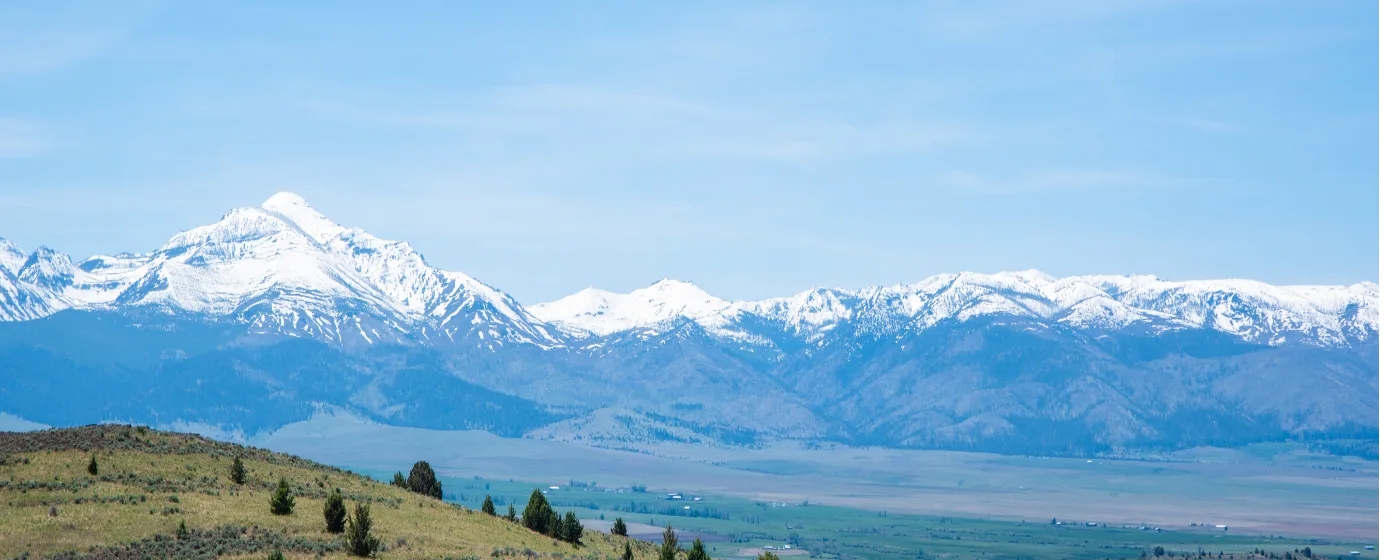
The honest part comes next. Baker City is a small high-desert city in eastern Oregon, population just over 10,000, sitting at 3,451 feet elevation between the Elkhorn Mountains and the Powder River. It is not a suburb of Portland. It is not Bend. There is no Whole Foods, no weekend brunch rotation, no Silicon Valley social orbit to plug into. Winters mean real snow — averaging over 44 inches annually — and temperatures that drop into the teens. The pace of daily life here is genuinely different from anything most Californians have experienced, and the people who struggle hardest after the move are usually the ones who expected Oregon to be California with cheaper housing.
This guide covers what the move actually looks like from a financial standpoint — broken down by which California region you're leaving — along with an honest look at the tax picture, what your equity buys in Baker City's specific market, the weather reality by season, and the four most common mistakes California transplants make before they've lived here a full year.

| Baker City, Oregon | Bay Area | Southern CA | Sacramento Metro | Central Valley | |
|---|---|---|---|---|---|
| Median Home Price (approx. 2026) | $275,000 | $1.3M+ | $780,000–$1.1M | $490,000 | $350,000–$420,000 |
| Property Tax Rate (effective) | 0.68% | 1.1–1.2% | 1.1–1.3% | 1.0–1.15% | 1.0–1.2% |
| State Income Tax (top bracket) | 9.9% | 13.3% | 13.3% | 13.3% | 13.3% |
| State Sales Tax | 0% | 7.25–10.75% | 7.25–10.75% | 7.25–9.0% | 7.25–8.75% |
| Avg Utilities (monthly est.) | $150–$180 | $250–$350 | $200–$320 | $180–$260 | $170–$240 |
| Avg 1BR Rent | $800–$950 | $2,800–$3,500 | $2,000–$2,800 | $1,500–$1,900 | $1,100–$1,400 |
A buyer leaving the Bay Area and selling a $1.4 million house to buy in Baker City at $275,000 is not just cutting their mortgage — they are very likely eliminating it entirely and banking the difference. Even accounting for Oregon's state income tax, the monthly cash flow shift for a remote worker making $120,000 a year is substantial: no sales tax on everyday purchases, a property tax bill that runs roughly $1,870 annually on the median Baker City home, and utility costs that run well below what most California metros produce.
Sacramento and Central Valley buyers see a narrower but still meaningful spread. The buyer leaving Elk Grove with $380,000 in equity isn't walking into Baker City debt-free, but they're buying a four-bedroom house with a yard and likely carrying a mortgage under $600 a month — a figure that would be unrecognizable to their neighbors back home.
One of the more persistent myths in the California-to-Oregon conversation is the assumption that Oregon means no state income tax. That is Nevada and Washington. Oregon has a graduated income tax that tops out at 9.9% — lower than California's 13.3% top bracket, but not zero. A California transplant earning $150,000 in Oregon will pay roughly $11,500–$12,500 in state income tax, compared to approximately $15,000–$16,000 in California at the same income level. The savings are real; they're just not as dramatic as some buyers expect going in.
What Oregon does deliver cleanly is the absence of a state sales tax. California's baseline is 7.25%, and in cities like Los Angeles and San Francisco, it climbs past 10%. On a household that spends $60,000 per year on taxable goods and services, eliminating that sales tax effectively returns $4,300–$6,000 annually. For a family buying appliances, a vehicle, building materials for that new house — the savings compound quickly in year one.
| Tax Item | California | Oregon | Net Impact |
|---|---|---|---|
| State Income Tax (top bracket) | 13.3% | 9.9% | Save ~$3,400 on $150K income |
| State Sales Tax | 7.25–10.75% | 0% | Save $4,300–$6,000/yr on typical spending |
| Property Tax (effective rate) | 1.1–1.2% | 0.68% (Baker City) | Save ~$1,430/yr on $275K home vs. equiv. CA |
| Property Tax Assessment Caps | Prop 13 (CA only) | Measure 50 (3%/yr cap) | Similar long-term protection |
| Senior Property Tax Deferral | Limited programs | Available at 62+ | Meaningful for retirees |
| Capital Gains (state) | Up to 13.3% | Up to 9.9% | Meaningful on CA home sale proceeds |
Oregon's Measure 50 mirrors California's Proposition 13 in one important way: once you own property in Baker City, the assessed value for tax purposes can only increase 3% per year, regardless of market appreciation. That means a long-term Baker City homeowner who bought at $275,000 won't see their tax bill explode if the market appreciates over the next decade — a structural advantage that becomes more valuable the longer you stay.
A buyer walking away from a San Jose or Berkeley sale with $1.4 million in equity can purchase outright in Baker City — the entire median-priced home, free and clear, with $1.1 million to invest, pay off other debt, or park in rental property. Baker City's upper market has genuine options for this buyer: the Sunridge Estates area and properties along the Elkhorn foothills represent Baker City's premium tier, where newer construction and larger parcels push prices into the $350,000–$450,000 range — figures that remain surreal to someone accustomed to Bay Area comparables. A Bay Area seller at this equity level has a rare opportunity to completely restructure their financial life, not just relocate.
The question for this buyer isn't whether they can afford Baker City — it's whether Baker City fits the life they want. The luxury offering here is space, landscape, and quiet, not rooftop restaurants and high-end retail. Buyers who arrive understanding that distinction consistently report satisfaction. Those who arrive expecting a smaller version of Marin tend to leave within two years.
A buyer leaving Irvine or Rancho Palos Verdes with $850,000 in equity is, by Baker City's market standards, extraordinarily well-capitalized. The entire market — including the most desirable homes in the Grandview area and West End — fits comfortably within a fraction of what they're bringing. A cash purchase here clears $600,000 in remaining equity that can fund everything from home renovations to investment properties. The Southern California buyer at this level is also among the most common profiles in Baker City's small luxury segment: they know what they're leaving, they've made peace with the lifestyle trade, and they arrive with the financial cushion to make the transition gradually rather than all at once.
This buyer's math is slightly tighter but still compelling. A Roseville couple selling at $530,000 with $400,000 in equity can buy the median Baker City home outright and pocket $125,000 — eliminating their mortgage entirely. What shifts is the lifestyle conversation: Sacramento buyers are often closer in temperament to what Baker City actually is (a mid-sized Western town with outdoor access) and adapt faster than coastal Californians. No state sales tax plus a property tax bill under $1,900 per year creates a genuinely different monthly budget within six months of arrival, and buyers in this equity range consistently cite the land-per-dollar ratio as the thing that surprised them most. You are not buying a townhouse here — you are buying a house with a yard, a garage, and room for a garden.
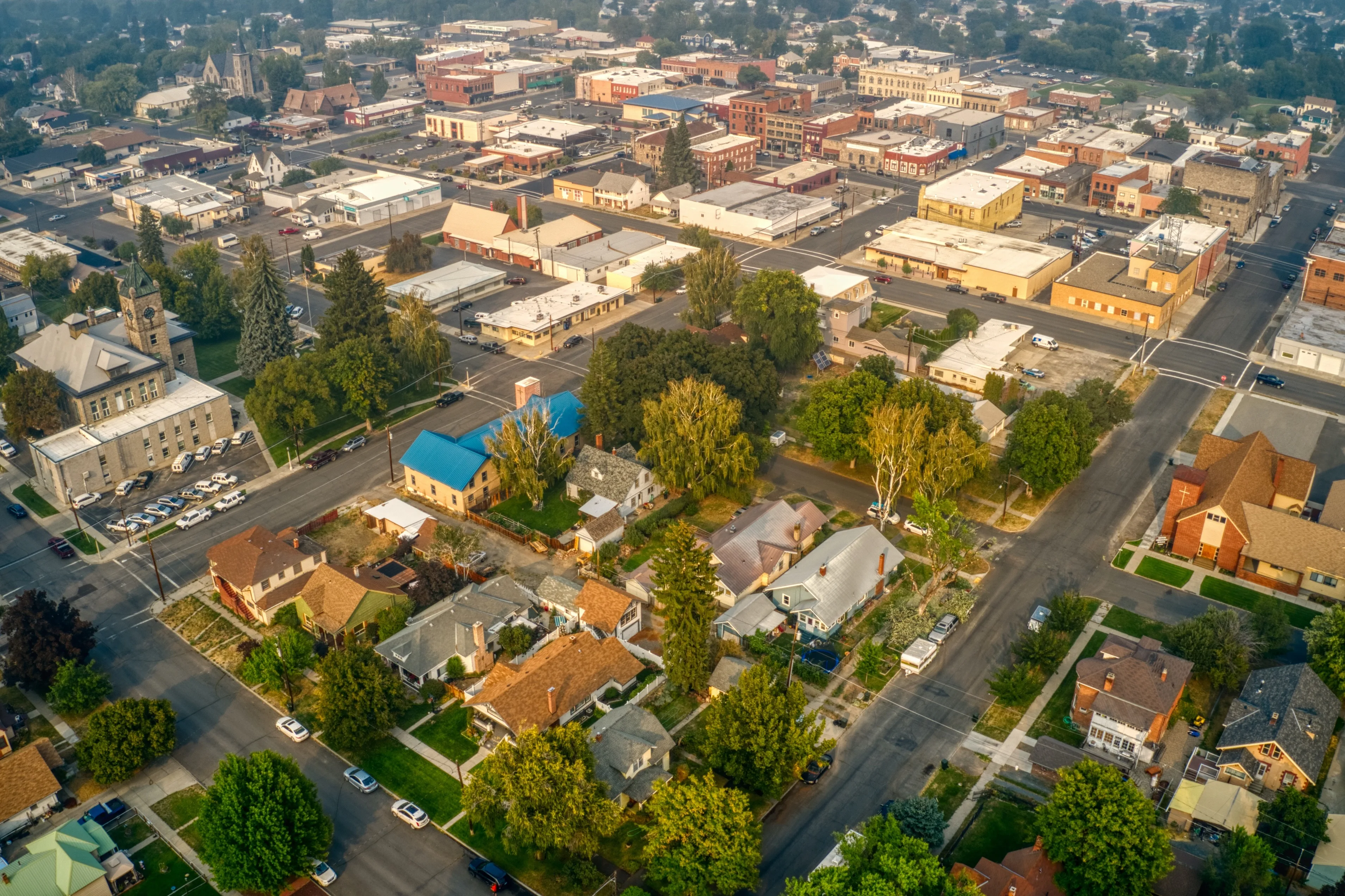
The Fresno or Stockton buyer with $340,000 in equity is the closest relative-gain scenario in this guide, but it's still meaningful. Baker City's entry market starts around $159,000 for a 2-bedroom and runs through the mid-$200s for a move-in ready 3-bedroom. A Central Valley buyer in this equity range can buy outright at the entry to mid tier and arrive mortgage-free — a structural change that matters even if the relative percentage gain feels smaller on paper. The City Center and Central Neighborhood areas offer the most options in this price range, typically older homes with good bones and proximity to downtown Baker City's walkable core.
Looking to buy in Baker City? Estimate your payment.
Enter your numbers to see an estimated monthly mortgage payment.
Estimate only. Excludes HOA fees and mortgage insurance.
Here is what a friend who made this move three years ago would actually tell you: Baker City summers are genuinely spectacular. From late June through early September, you get bright blue skies, temperatures in the high 70s to mid-80s, and almost no humidity. The 196 sunny days per year are concentrated heavily in the warm months — August averages barely two rainy days and relative humidity sits around 40%. If you're arriving from Sacramento or the Central Valley, the summer climate will feel familiar in the best possible way. Los Angeles gets more total sunshine hours annually, but Baker City's summer intensity is comparable, and the nights cool down into the 50s regardless of how hot the day got.
Winters are where the honest conversation starts. Baker City averages over 44 inches of snow per year and sees December lows drop to around 18°F. That is not metaphorical Pacific Northwest mist — it's a real continental winter, the kind that requires a snow-capable vehicle, proper footwear, and a willingness to change how you move through the world for four months. San Diego transplants struggle the most here. People who grew up in the Inland Empire or the Sierra foothills tend to adapt faster. What surprises most people after their first winter isn't the snow itself — it's how fast life returns to normal once it arrives. Baker City residents don't panic over winter; they plan for it, and the city keeps functioning.
What California transplants consistently love after a year: the traffic — or rather, the total absence of it. The ability to actually know their neighbors. The proximity to genuinely wild landscape, including the Elkhorn Mountains and the National Historic Oregon Trail Interpretive Center, which is more compelling as a local landmark than most people expect. The cost of weekend activities — hiking, fishing, and camping in the Wallowas — is effectively free in a way that the Orange County outdoor experience never is. What they genuinely miss is harder to sugarcoat: year-round fresh produce variety, a deep restaurant scene, the specific social energy of a California city, and — for many — the sunshine volume in winter, when Baker City's January averages only three hours of daylight sun per day.
If you want to see how Baker City compares directly to the city you're leaving, use the tool below — it covers the 120 largest California cities with current housing and tax data.
Home prices: Redfin median sale data, Q1–Q2 2026. Select your city to compare.
Ready to talk through what your specific California equity could do in Baker City? Todd can model your exact scenario in a single call.
Assuming the whole city is the same. Baker City has genuine character variation between its neighborhoods, and buying without understanding it leads to surprises. The Grandview area on the elevated north side feels fundamentally different from the City Center's historic walkable core, and neither feels like the West End's quieter residential streets. The downtown historic district around the Geiser Grand Hotel is genuinely walkable and culturally alive — but a home three miles out near Baker County's edge is a different daily experience entirely. Walk each area before committing.
Skipping radon testing. Oregon has documented elevated radon zones, and eastern Oregon is among the areas where testing matters. California buyers who've never had to think about radon in their home purchase process sometimes treat this as optional. In Baker City, a radon test during inspection is not optional — it's a basic step that takes two days and costs under $30, and it gives you specific information you need before closing on any home with a basement or slab foundation.
Underestimating winter mobility. Californians consistently arrive planning to drive their current vehicle through Baker City winters. A rear-wheel-drive sedan on snow-packed streets near the Elkhorn foothills in January is not a reasonable plan. AWD or 4WD with proper winter tires is the operational standard here, not an upgrade. Budget for it before you move, not after your first black ice incident on Campbell Street.
Expecting California outdoor culture to transfer directly. Californians are generally active, outdoors-oriented people — and Baker City has extraordinary landscape access. But year-round cycling commutes, weekend trail runs in shorts, and Saturday farmer's markets in February are California constructs. Baker City's outdoor culture is real and deep, but it's seasonal in a way that requires recalibration. The people who thrive here embrace the winters rather than waiting them out; the ones who move back to California are usually the ones who spent four months indoors resenting the snow.
Bay Area sellers with significant equity often arrive in Baker City as cash buyers or near-cash buyers, which changes the transaction entirely. In a small market where the average days on market runs around 34–63 days and hot homes move close to list price, a cash offer from a well-capitalized California seller can shorten the process and eliminate appraisal contingency concerns. If the California property being sold was an investment property rather than a primary residence, a 1031 exchange deserves a conversation before close — Baker City has investment-grade rental and small commercial properties that qualify, and the tax deferral on a $1.4M California sale is meaningful. The Baker City 1031 Exchange guide covers that path in detail.
Southern California and Sacramento sellers arriving with strong but not unlimited equity will typically find they don't need a jumbo loan in Baker City — the market operates well below conforming loan limits, so conventional financing is the standard path. A 20–30% down payment from California proceeds is common and positions the buyer well in any competitive situation. Sacramento and Inland Empire buyers whose purchase price falls under $350,000 should also ask about Oregon Housing and Community Services (OHCS) programs, including Oregon Bond Residential Loan programs that can offer below-market rates for qualifying buyers — even those with California proceeds don't automatically disqualify on income if Baker County's AMI thresholds apply.
Local Expert Takeaway: The single thing most California buyers underestimate about Baker City is how small the active inventory actually is — Baker City typically has under 100 homes listed at any given time, and the best-priced, best-condition homes in Grandview and the West End can move in under three weeks when correctly priced. California buyers who've been conditioned to take 90 days to make a decision in a slow market sometimes lose the right home while they're still "thinking about it." Come with your financing already structured and a clear sense of your neighborhood priorities before you land.
✅ Baker City's median sold price of approximately $275,000 represents a genuine, significant cost advantage against every California metro — most Bay Area and Southern California buyers can eliminate their mortgage entirely using home sale proceeds.
⚠️ Oregon has a state income tax that tops out at 9.9% — the "no income tax" assumption costs some California transplants money if they fail to adjust withholding before their first Oregon filing season.
📍 Winter here is real. Baker City averages 44+ inches of snow annually and January temperatures in the high teens. The people who thrive here plan for the winter — the people who struggle are the ones who didn't.
Is moving from California to Baker City worth it?
For remote workers and equity-rich sellers, the financial case is hard to argue against — a Bay Area buyer can eliminate their mortgage entirely and still have six figures remaining from their sale proceeds. The lifestyle trade is real: Baker City is a small high-desert city with genuine outdoor access and a quiet community pace, not a California suburb with lower prices. Buyers who research that honestly before arriving report high satisfaction after the first year.
How much cheaper is housing in Baker City vs. California?
Baker City's median sold price runs around $275,000, compared to California's statewide median of approximately $780,000 in early 2026 — and considerably lower than the Bay Area's $1.3M+ median. That's a 65–80% discount depending on which California market you're leaving. Entry-level homes in Baker City start around $159,000, and the upper market rarely exceeds $500,000 for residential properties within city limits.
What do I need to know about moving from California to Oregon?
Oregon has no state sales tax (a genuine daily savings from California's 7.25–10.75% rate), but it does have a state income tax up to 9.9%. Property taxes are capped under Measure 50 at 3% annual assessment increases — structurally similar to California's Proposition 13 for long-term owners. You'll need a snow-capable vehicle for Baker City winters, and radon testing during home inspection is strongly recommended in eastern Oregon. The county is rural and services are smaller-town scale — plan your infrastructure expectations before you arrive.
Explore the full Baker City series: The Ultimate Baker City Relocation Guide · Is Baker City Safe? · Cost of Living in Baker City · Best Neighborhoods in Baker City · Baker City Schools & Family Life · Baker City Youth Sports · Baker City Parks & Recreation · Retiring in Baker City · 1031 Tax-Deferred Exchange in Baker City · Baker City First-Time Homebuyers Guide · · Moving to Baker City from California
Tell us what you need help with and we'll connect you with local resources.

About the Author
Todd Davidson is the founder of Living in Oregon and Living in Washington, where he publishes in-depth city guides, neighborhood resources, and local market insights covering more than 180 communities across the Pacific Northwest. While his background is in home financing and real estate, he created these digital platforms to help families research and compare regions before making a move.