Eastern Oregon · Oregon
Living in Baker City, Oregon: The Ultimate Relocation Guide (2026)
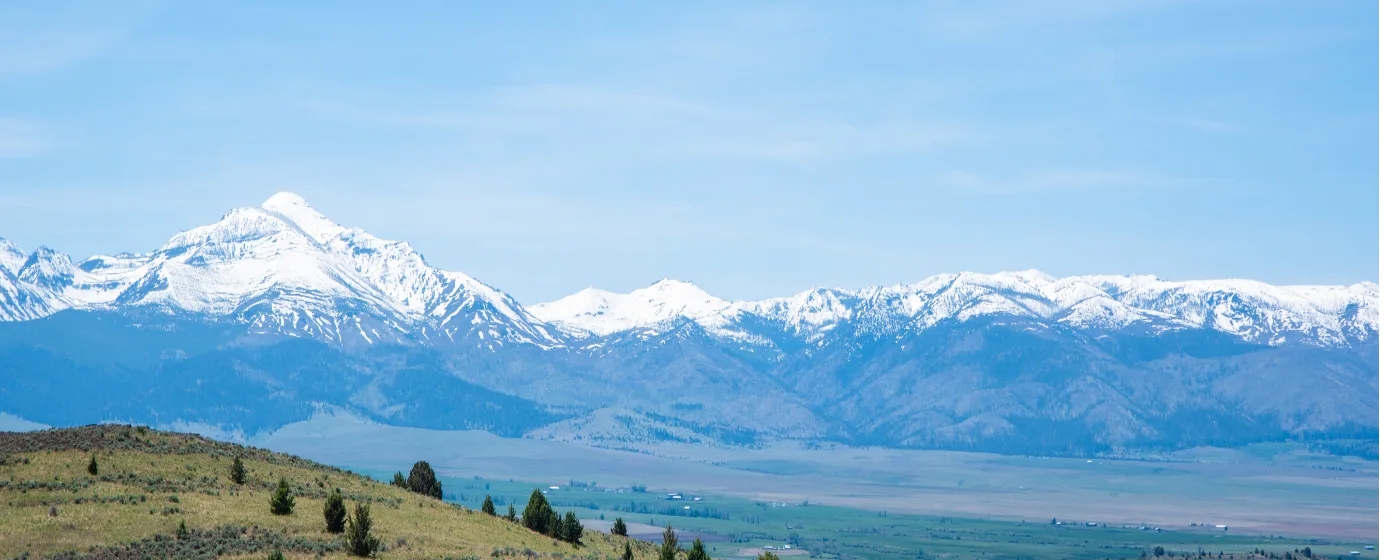
Maybe your company sent you a remote work offer and you started looking at places where a single income actually stretches. Maybe you've spent years in Portland or Boise watching your homebuying window close one refinance cycle at a time, and someone mentioned Baker City as the place where that window is still wide open. Maybe you just drove through on I-84, caught the silhouette of the Elkhorn Mountains against an impossible blue sky, and pulled off the highway to look around longer than you planned.
Baker City sits at 3,440 feet in a high desert valley framed by two mountain ranges — the Wallowas to the east and the Elkhorns to the west — with the Powder River threading through the heart of downtown. It's the county seat of Baker County, home to roughly 10,100 people, and the kind of small city where the median home price hovers around $275,000 while the streets are wide, the pace is slow, and the nearest traffic jam is a concept rather than a daily experience. That geographic reality shapes everything: commuting, healthcare access, shopping, and the particular rhythm of life that either draws people in deeply or sends them back toward the Willamette Valley within two years.
This guide is designed to help you figure out which camp you'll fall into. It covers the neighborhoods, the tradeoffs, the things that surprise newcomers after six months, and the specific decisions — location, timing, expectations — that separate people who thrive here from those who don't.
Before diving into the details, here's an honest intent-based read on who tends to land well in Baker City and who tends to struggle.
| Best For | Why |
|---|---|
| Remote workers | Median home prices around $275,000 and a cost of living index of 86 (15% below the national average) make salaries stretch significantly further |
| Retirees | Peaceful pace, affordable homeownership, outdoor recreation access, and a tight-knit community with a notable veteran population |
| First-time buyers | Entry-level homes exist here in a way they simply don't in most Oregon cities — realistic ownership on modest incomes |
| Outdoor enthusiasts | Elkhorn Mountains, Wallowa-Whitman National Forest, Powder River trails, and proximity to Hells Canyon all within an hour |
| Families seeking stability | Baker School District posts strong graduation rates, the community is grounded, and housing costs leave room in the budget |
| People leaving expensive metros | Direct value arbitrage — comparable square footage at roughly a third of Portland pricing |
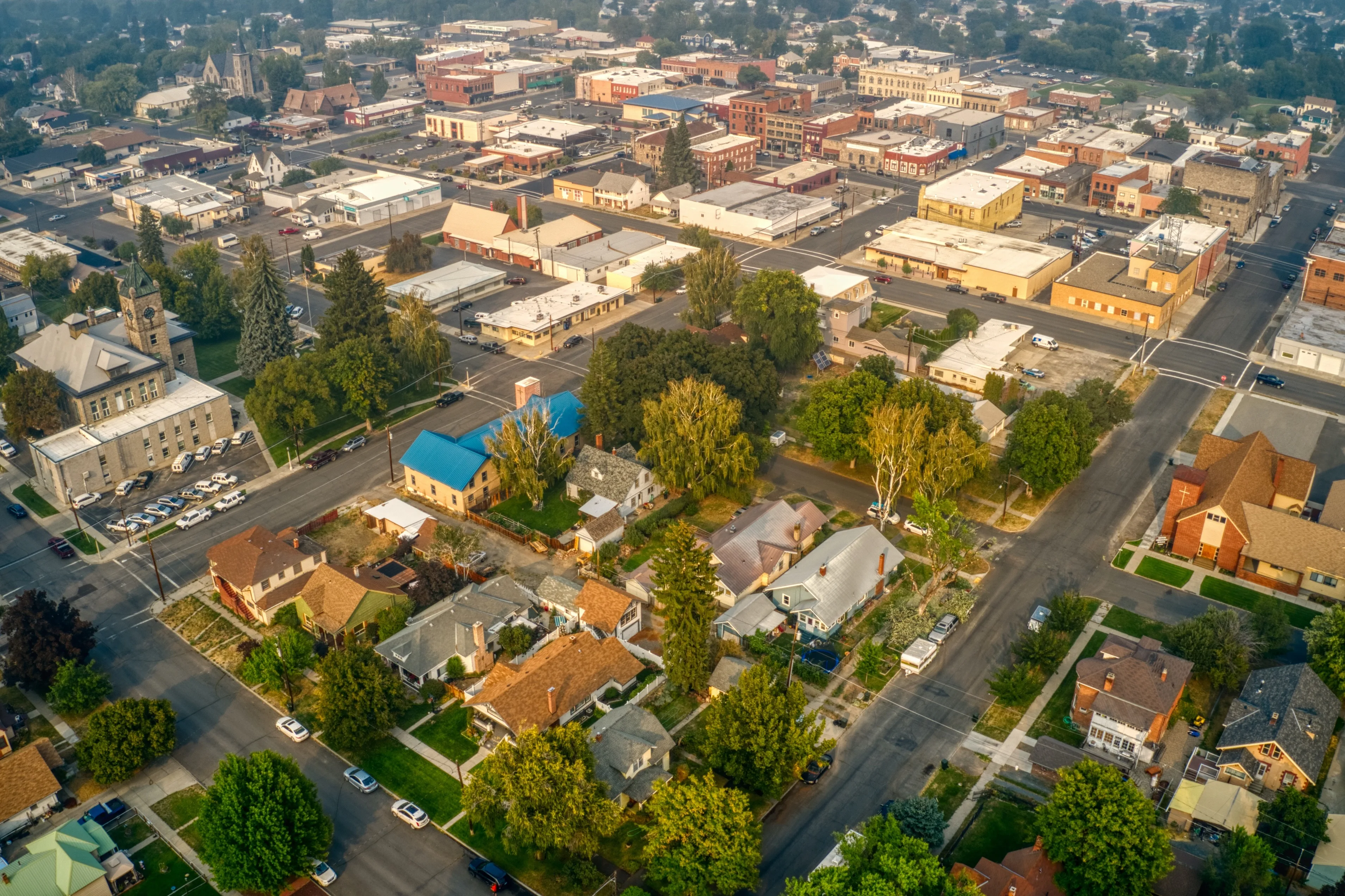
The most accurate single-word description of Baker City is grounded. It doesn't have the aspirational energy of Bend or the college-town restlessness of Ashland. What it has is a settled, functional, genuinely livable small city where people know their neighbors, where the Geiser Grand Hotel anchors a Main Street that still has actual foot traffic, and where the mountains in every direction remind you that you chose this on purpose.
Daily life runs through a compact downtown that spans the stretch of Main Street between the Baker Tower and the historic commercial district. The National Historic Oregon Trail Interpretive Center sits just northeast of town on Highway 86 — a landmark that draws visitors but also functions as part of the local identity in a way that residents take real pride in. The Leo Adler Memorial Parkway follows the Powder River through the center of the city and gives the downtown a green corridor that most small cities its size don't have. On weekend mornings, that parkway trail sees a consistent mix of dog walkers, joggers, and retirees who've made it part of their routine.
Commute reality deserves a frank conversation. Baker City is approximately 40 minutes southeast of La Grande on I-84, which is the nearest city with a broader commercial and healthcare base. Portland is roughly five hours. Boise is about two and a half hours east. If your work requires in-person presence in a major metropolitan area, Baker City is not a commuter town — it's a relocation destination. The employers that anchor the local economy are here in Baker City: Saint Alphonsus Medical Center, Baker County government, the Bureau of Land Management and U.S. Forest Service offices, Marvin Wood Products, and the Baker School District. Remote workers and people employed locally thrive here. People who need to be in Portland twice a week do not.
One thing that surprises most newcomers after six months: the way the seasons actually drive social life. Baker City gets real winter — snow, cold, the full high-desert version — and that winter creates an indoor-community culture that people from milder climates don't anticipate. The Geiser Grand Hotel becomes a gathering point. Local restaurants along Main Street fill up in ways they don't in summer. There's a social tightening that either feels warm and connective or slightly claustrophobic, depending on your personality.
The cost picture is genuinely different here. A cost of living index of 86 against the national average of 100 means that a $61,580 household income goes further in Baker City than it would in most American cities. Housing is the most significant driver — the $275,000 median puts homeownership within reach for buyers who earn moderate incomes, and Oregon's lack of a state sales tax extends the savings further. Renters typically find options in the range of $833 to $938 per month, which is a number that sounds almost fictional to anyone who has recently apartment-hunted in Portland or Eugene.
The outdoor access is not a marketing claim — it's a daily reality. The Elkhorn Mountains are visible from downtown and accessible in under an hour. The Wallowa-Whitman National Forest covers nearly 2.4 million acres of surrounding terrain. Hells Canyon, the deepest river gorge in North America, is within reach for a day trip. Powder River access for fishing runs right through the city. For buyers who moved here because a spreadsheet made sense, the outdoor environment is often what makes them decide to stay permanently.
The school district performs at a level that surprises people. Baker High School's four-year graduation rate most recently tracked at 91.4%, a figure that clears the Oregon statewide average of 81.8% by a significant margin. For a small-town district in a rural county, that's meaningful — it reflects a community that invests in its schools and a student population with real support structures. The district runs from elementary through Baker High School (an OSAA 4A classification school) in a compact system where teachers tend to know their students.
The community's veteran population — roughly 11% of residents, nearly double the national rate — contributes to a particular kind of civic stability. Veterans' organizations are active here, community events are well-attended, and there's a culture of showing up that defines how the city functions. The Miners Jubilee each July draws the whole region. The Baker City Cycling Classic brings competitive riders. These aren't peripheral events — they're the social anchors that Baker City's calendar revolves around.
Looking to buy in Baker City? Estimate your payment.
Enter your numbers to see an estimated monthly mortgage payment.
Estimate only. Excludes HOA fees and mortgage insurance.
Baker City requires a genuine recalibration of expectations around access. The nearest major medical center beyond Saint Alphonsus is in La Grande, and for specialized care, residents are realistically looking at trips to Boise or Portland. Healthcare costs, despite the lower overall cost of living, are actually less affordable here than the national average — a specific exception in an otherwise favorable cost picture that matters significantly for families with health needs or older residents managing chronic conditions.
Shopping and services run thin compared to any metro. There's no Target, no Costco, no major shopping mall. Grocery options are local and functional but limited in the way that small Eastern Oregon cities typically are. Residents who moved from Portland report that the adjustment to Amazon Prime dependency and quarterly Costco runs to La Grande or Boise is real — and for some households, genuinely inconvenient. Restaurant variety is narrow. Baker City has good local spots, but the dining diversity of even a mid-size Oregon city simply isn't here.
Why some people leave comes down to a short list of practical realities. Young professionals who want career mobility, a dating pool, or proximity to cultural events tend to find Baker City isolating within two to three years. The population has been essentially flat since the 2020 census — a clear signal that the city retains the people it suits and releases the ones it doesn't. Weather is a factor too: the high-desert winters are cold, and while that's part of the charm for many, it catches newcomers from coastal Oregon genuinely off guard. The mountains that look gorgeous in October look very different in February when you're dealing with a frozen driveway and a two-hour drive to the nearest airport.
The limited job market is perhaps the clearest honest tradeoff. If you lose your position at one of the major local employers, your options within Baker City are narrow. The economy here is government, healthcare, education, and some manufacturing — it doesn't have the startup culture or corporate diversity that creates reemployment safety nets in larger cities.
Downtown is the historic core — the stretch of Main Street and its surrounding blocks that still has Victorian-era architecture, the Geiser Grand Hotel anchoring the social scene, and an honest-to-goodness walkable commercial district. Homes in this area tend toward older craftsman and Victorian styles, many of which have been maintained or restored with genuine care. Prices here stay broadly in line with the city median, though updated historic homes can push toward the upper end of the range.
Best for: Buyers who want walkability, history, and the ability to walk to dinner without getting in a car.
City Center sits close to civic services, the library, and several of the district's schools, making it a practical choice for families who want proximity to daily infrastructure. The housing mix is varied — single-family homes alongside some multi-unit buildings — and pricing tends to track near or slightly below the city median. It's not the most visually dramatic neighborhood, but it functions efficiently.
Best for: Families with school-age children who prioritize proximity to services over neighborhood character.
Grandview offers established residential streets with the kind of settled, tree-shaded character that takes decades to develop. Homes here are primarily single-family, and the elevated positioning gives many properties genuine views of the surrounding mountain ranges. It's one of the neighborhoods local residents mention as desirable, with pricing that tends to reflect that — expect to be at or slightly above the city median for updated properties.
Best for: Buyers seeking an established neighborhood feel with mountain views and space between homes.
The north end of Baker City has seen some of the more recent residential development, and it attracts buyers who want newer construction without the rural land management questions that come with buying outside city limits. Streets are wider, lots are more open, and the housing stock skews newer. It's a quieter part of the city with a more suburban feel than the downtown core.
Best for: Buyers who want newer homes and a quieter, more suburban environment.
The Riverfront District benefits from direct access to the Leo Adler Memorial Parkway and the Powder River corridor — one of Baker City's most underrated daily amenities. Living here means the trail is walkable from your front door, and the green space along the river provides a buffer that most neighborhoods don't have. Inventory in this area moves, and the combination of park access and proximity to downtown makes it genuinely desirable.
Best for: Outdoor-oriented buyers who want trail access built into daily life without leaving city limits.
The Central Neighborhood is dense by Baker City standards — a residential grid close to schools and community parks that serves families well. The housing stock is mixed in age and condition, which means opportunities exist for buyers willing to do some updating. Pricing can come in below the city median on the older end, which makes it accessible for first-time buyers.
Best for: First-time buyers and families who want central location and don't need the newest construction.
West End tends to carry some of the most affordable pricing in the city, which reflects an older housing stock and a quieter, more removed position from downtown activity. For buyers whose priority is square footage and lot size at the lowest possible price point, this is a realistic entry. The neighborhood is calm, residential, and unpretentious.
Best for: Budget-focused buyers and investors looking for the lowest entry point inside city limits.
Buying outside city limits into unincorporated Baker County unlocks acreage properties, ranch-style lots, and rural living at prices that reflect the land's functional rather than aesthetic premium. The catch is that rural services — internet speeds, road maintenance, emergency response times — vary considerably and require verification before committing. The county-wide median has tracked around $305,000, slightly above city-proper figures, driven by larger land parcels.
Best for: Buyers seeking land, privacy, and rural lifestyle who have reliable remote income and don't need walkable amenities.
| City | Best For | Median Home Price | Commute to Baker City | Vibe |
|---|---|---|---|---|
| Baker City | Affordability + outdoor access + stability | ~$275,000 | — | Small-city, grounded, historic |
| La Grande | Slightly larger services, Eastern Oregon University presence | ~$285,000 | ~40 min | College town edge, more dining variety |
| Haines | Rural quiet at lowest price point | Below $250,000 | ~15 min | Very small, minimal services |
| North Powder | True rural lifestyle, agricultural | Below $250,000 | ~25 min | Tiny town, land-focused |
| Sumpter | Recreation-oriented, weekend/seasonal | Highly variable | ~35 min | Mountain town, limited year-round services |
| Halfway | Remote beauty, very limited services | Below $275,000 | ~75 min | Extremely small, maximum rural |
| Category | Data |
|---|---|
| Population | ~10,134 |
| Median Home Price | ~$275,000 (city proper, mid-2026) |
| Median Household Income | $61,580 |
| Cost of Living Index | 86 (U.S. average = 100) |
| Property Tax Rate | 0.68% |
| Violent Crime per 1,000 | 1.5 |
| Property Crime per 1,000 | 12 |
| School District | Baker School District 5J |
| Baker High Graduation Rate | ~91.4% (2023–24) |
| Median Gross Rent | ~$938/month |
| Elevation | 3,440 feet |
| Nearest City (La Grande) | ~40 minutes via I-84 |
The Miners Jubilee is not optional social participation if you live here. Held every July in Geiser Pollman Park, this four-day festival draws the whole county for live music, carnival rides, a parade, and a community energy that Baker City essentially organizes its summer around. It's been running since the 1960s, and for longtime residents it's the annual proof that Baker City is still alive and kicking. New residents who skip it in their first year tend to report they feel like they missed something important.
Oregon Trail identity runs deeper than the Interpretive Center. The National Historic Oregon Trail Interpretive Center on Highway 86 is a legitimate world-class facility, but the trail's presence here isn't just a museum exhibit — it shapes how residents understand the city's purpose and character. Baker City was a resupply and rest point on the historic trail, and that identity as a crossroads and base camp for the region persists in how locals talk about the place. "Base camp for Eastern Oregon" is the local shorthand, and it's accurate.
The Baker City Cycling Classic brings competitive road cycling through the area each summer, drawing teams from across the Pacific Northwest and turning Baker City's main corridors into a race course for a weekend. It's one of those events that genuinely changes the energy of downtown for a few days and gives residents a reason to feel connected to something larger than the day-to-day.
What I would not do if relocating here: Buy on the rural edges of Baker County without first verifying internet speeds at the specific address. Remote workers who assumed that any Eastern Oregon property with a broadband listing would deliver reliable connectivity have learned the hard way that "available" and "functional for video calls" are different things in this region. Identify your specific address, run a speed test if possible, and confirm fiber or fixed wireless availability before closing — not after.
Local Expert Takeaway: If you're relocating to Baker City with remote income, focus your search on the Riverfront District and Grandview first — these neighborhoods offer the best combination of daily quality of life and resale stability, and they're where buyers with options tend to land. If you're a first-time buyer working with a tighter budget, the Central Neighborhood and West End still have genuine opportunity below the city median. The biggest mistake I see is buyers assuming they have unlimited time — when a well-priced, updated home hits the market in Baker City, it doesn't sit for months the way it once did.
✅ Baker City offers one of the most accessible homeownership markets in Oregon — a $275,000 median in a state where most cities have long since priced out moderate-income buyers is a real and meaningful advantage.
⚠️ Isolation is the honest challenge — limited dining, shopping, healthcare specialization, and job market diversity mean Baker City works best for buyers who have made peace with that tradeoff before they move, not after.
📍 The outdoor access and community stability are the retention factors — buyers who come for the price and stay for the mountains, the trails, and the Miners Jubilee are the ones who put down roots here for the long term.
Is Baker City a good place to live?
Baker City is an excellent fit for remote workers, retirees, outdoor enthusiasts, and first-time buyers who want genuine homeownership on a realistic income. The combination of affordable housing, low cost of living, strong school graduation rates, and extraordinary outdoor access is difficult to match anywhere in Oregon. It works best for buyers who genuinely want small-city life rather than those treating it as a fallback.
What is the crime rate in Baker City?
Baker City reports a violent crime rate of approximately 1.5 per 1,000 residents — a low figure by any Oregon standard. Property crime runs around 12 per 1,000, which is moderate and broadly typical for a small regional city in Eastern Oregon. Neither figure should be a primary concern for buyers evaluating the city.
How does Baker City compare to La Grande?
La Grande is about 40 minutes northwest on I-84 and offers slightly more commercial variety, the presence of Eastern Oregon University, and a few more dining and service options. Baker City's median home price tracks comparably, but its historic downtown character and outdoor recreation positioning give it a distinct identity. Buyers choosing between the two typically decide based on whether they want a college-town feel or a quieter historic-city atmosphere.
Explore the full Baker City series: The Ultimate Baker City Relocation Guide · Is Baker City Safe? · Cost of Living in Baker City · Best Neighborhoods in Baker City · Baker City Schools & Family Life · Baker City Youth Sports · Baker City Parks & Recreation · Retiring in Baker City · 1031 Tax-Deferred Exchange in Baker City · Baker City First-Time Homebuyers Guide · · Moving to Baker City from California
Tell us what you need help with and we'll connect you with local resources.

About the Author
Todd Davidson is the founder of Living in Oregon and Living in Washington, where he publishes in-depth city guides, neighborhood resources, and local market insights covering more than 180 communities across the Pacific Northwest. While his background is in home financing and real estate, he created these digital platforms to help families research and compare regions before making a move.