Eastern Oregon · Oregon
Best Neighborhoods in Baker City, Oregon: Where to Buy or Rent (2026)
Baker City is small enough that most people assume neighborhood doesn't matter — that the whole city is basically the same and you just pick whatever house has the right square footage. That assumption costs buyers. The difference between a home on the quiet west side backing toward the Elkhorn foothills and a downtown condo overlooking Main Street isn't just aesthetic; it's a fundamentally different way of living in this city, and what works for one buyer can be the wrong choice for another entirely.
The geographic divide that shapes Baker City most is the one between the historic core and the residential edges. Downtown and the areas immediately surrounding it offer walkability, architecture, and a connection to the city's gold-rush-era bones. The outer neighborhoods — North Baker City, the West End, Grandview — trade that for quiet streets, larger lots, and a slower pace that feels closer to rural Eastern Oregon than to small-city living. The Powder River corridor threads through both worlds.
This guide walks you through every significant neighborhood in Baker City, tells you who belongs where, and flags the mistakes buyers commonly make when they relocate without understanding how the city is actually organized.

| Neighborhood | Best For | Price Range | Vibe |
|---|---|---|---|
| Downtown Baker City | Walkability seekers, history lovers | $220,000–$310,000 | Historic, walkable, active |
| Grandview | Families, established homeowners | $260,000–$310,000 | Quiet, mid-century residential |
| Riverfront District | Outdoor access, trail lifestyle | $250,000–$300,000 | Scenic, close to downtown |
| Central Neighborhood | First-time buyers, entry-level | $200,000–$265,000 | Mixed, transitional, affordable |
| Baker City North | Families with school-age kids | $220,000–$270,000 | Suburban, quiet, functional |
| West End | Large-lot buyers, retirees | $240,000–$320,000 | Spacious, foothills-adjacent |
| City Center | Renters, condo buyers, investors | $200,000–$290,000 | Urban core, historic district |
| Sunridge Estates | Move-up buyers, newer construction | $290,000–$360,000 | Newer builds, open streets |
| Geiser Pollman Park | Outdoor enthusiasts, retirees | $240,000–$295,000 | Park-adjacent, relaxed |
| Baker County (outlying) | Acreage buyers, rural lifestyle | $180,000–$500,000+ | Ranch land, rural, spread out |
| Buyer Type | Best Neighborhood | Why |
|---|---|---|
| First-time buyer | Central Neighborhood | Most affordable entry-level stock; classic bungalows under $265K |
| Luxury buyer | Sunridge Estates | Newest construction, largest homes, best finishes in the city |
| Walkability seeker | Downtown Baker City | Third Thursday, Taste of Baker, Geiser Grand all within walking distance |
| Families with kids | Baker City North | Close to schools, quiet streets, below-median pricing |
| Commuters (regional) | West End | Quick access to Campbell Street and Highway 30 corridors |
| Large lot buyers | West End / Baker County outlying | Acreage available; ranch-style homes on 1–2+ acres |
| Renters | City Center / Central Neighborhood | Most rental inventory concentrates here; best price-to-space ratio |
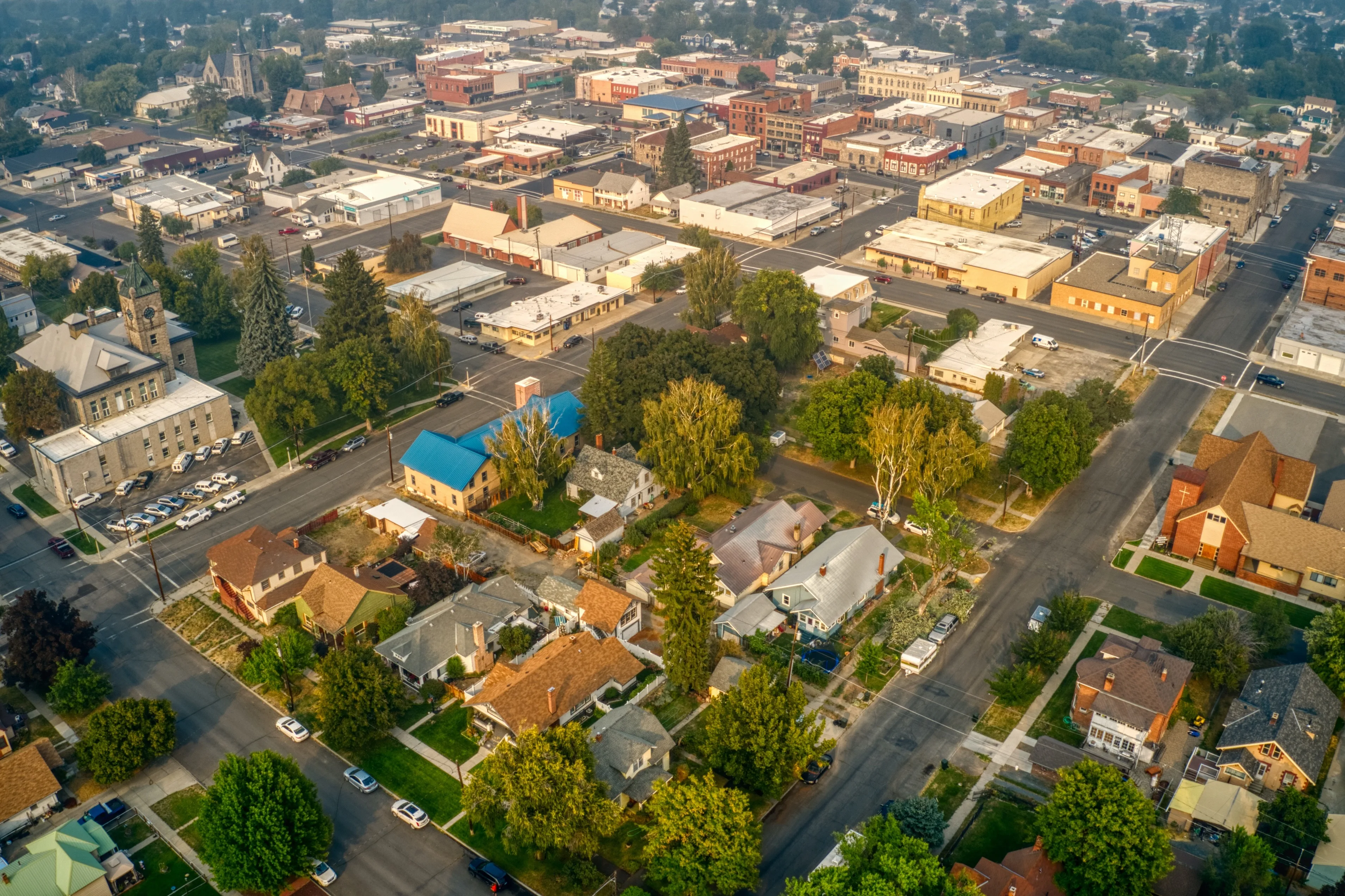
Downtown Baker City is the city's most architecturally significant address, anchored by the Baker Historic District — roughly 42 acres of Main Street-centered development with more than 130 properties, the majority built between the late 1880s and around 1915. The Geiser Grand Hotel and the Baker City Tower (the tallest structure east of the Cascades in Oregon) form the visual backbone of a walkable core that hosts regular events including Third Thursday wine strolls from March through December and the Taste of Baker street festival each October. Housing here runs from converted upper-floor condos to Victorian-influenced single-family homes priced between $220,000 and $310,000, making it surprisingly accessible for buyers who want a genuinely walkable life. The honest trade-off: older homes mean older systems, and buyers expecting turnkey finishes will often need to budget for updates that newer suburban stock doesn't require.
Best for: Buyers who want walkable urban life, historic architecture, and proximity to downtown events — and who are comfortable with a renovation project.
Grandview consistently shows up in local listing descriptions as one of Baker City's most desirable residential addresses, and the reputation is earned. The neighborhood sits within easy reach of the Leo Adler Memorial Parkway trail and historic downtown, with a streetscape dominated by mid-century ranch-style homes that typically feature original hardwood floors and wood-burning fireplaces. Prices here run $260,000–$310,000, placing Grandview at the upper end of Baker City's typical range. The downside is limited turnover — when a Grandview home hits the market, it tends to move, and buyers who aren't pre-approved and ready often lose out to faster-moving competition.
Best for: Established buyers looking for a desirable, quiet neighborhood with character homes and easy access to the trail corridor.
The Riverfront District's appeal is built around the 3-mile Leo Adler Memorial Parkway, which carries cyclists and walkers alongside the Powder River in a green corridor that connects the neighborhood to downtown within minutes. Homes here sit just two to four blocks from both the trail and Main Street, which is a rare combination in a city of Baker City's size. Prices in the $250,000–$300,000 range reflect that dual proximity. What buyers sometimes miss: the river corridor is beautiful, but Powder River does flood in high-snowmelt years, and homes closest to the bank warrant a close look at flood zone designation before committing.
Best for: Outdoor-oriented buyers who want trail access, Powder River views, and a short walk to downtown without paying downtown-condo prices.
The Central Neighborhood occupies the interior residential streets between downtown and the city's outer edges, and it functions as Baker City's most accessible entry point for buyers on tighter budgets. The housing stock here is a genuine mix — early-1900s bungalows and cottages sit alongside mid-century ranches and the occasional split-level, and prices in the $200,000–$265,000 range reflect that variety. It's the part of Baker City where a first-time buyer can still find something structurally sound for under $230,000 if they're willing to do some cosmetic work. The trade-off is consistency: block quality varies noticeably, and buyers should walk the specific streets they're considering rather than assuming the neighborhood is uniform.
Best for: First-time buyers and budget-conscious relocators who need the most affordable path into Baker City homeownership.
Baker City North reads as the city's most family-functional residential zone — established streets, post-war and mid-century single-family homes, and proximity to schools that makes the morning routine manageable. Listing descriptions routinely flag the neighborhood as walkable to schools, which matters for families with elementary-age children. Pricing generally lands at or below the citywide median, typically $220,000–$270,000, giving households with kids a budget-friendly option that doesn't require sacrificing space. The honest knock: it's a quiet, utilitarian neighborhood without much architectural flair or walkable retail, so buyers who want to feel connected to the city's character may find it a bit isolated.
Best for: Families with school-age children who prioritize proximity to schools and quiet streets over walkability to downtown.
The West End sits on Baker City's quieter western flank, where the terrain begins its gradual climb toward the Elkhorn Mountain foothills and the lots get meaningfully larger. Active listings in this corridor include single-level ranches on 2-acre parcels — the kind of property that simply doesn't exist in the city's central neighborhoods. Prices vary widely, from below-median on modest homes to above $300,000 for properties with genuine acreage and mountain views. The practical downside is distance: running errands or getting to downtown takes longer from the West End, and buyers who don't own vehicles or who are used to walkable environments commonly find the isolation more pronounced than they expected.
Best for: Large-lot buyers, retirees seeking space and views, and remote workers who don't need to commute and want a quieter setting with room to breathe.
City Center is a slightly broader zone than Downtown Baker City proper, covering the densest residential and mixed-use blocks around the historic core. St. Elizabeth Towers near Broadway Street offers remodeled condo units that attract buyers looking for low-maintenance living close to Main Street amenities. The ongoing Baker Loan & Trust building conversion — funded by the 2025 Oregon Main Street revitalization grant — will add new long-term residential units to this corridor over the next two years. Prices range from $200,000 for smaller units to $290,000 for renovated larger condos, making it Baker City's most varied close-in buying option. The trade-off for condo buyers specifically is HOA costs and the reality of shared walls in buildings that weren't originally designed as residential.
Best for: Low-maintenance buyers, investors, and renters who want proximity to everything Baker City's downtown offers without the upkeep of a single-family home.
Sunridge Estates represents the closest thing Baker City has to a conventional suburban subdivision — newer construction, open street layouts, and homes that trend larger and more recently updated than the city's historic stock. Prices here run $290,000–$360,000, placing Sunridge at the top of the Baker City market, but buyers are getting newer mechanicals, modern floor plans, and finishes that don't require immediate investment. For buyers relocating from larger Oregon cities, the neighborhood will feel the most familiar. The honest critique: Sunridge lacks the character and street life that makes the downtown neighborhoods memorable, and buyers who buy here primarily for the new-build feel sometimes find themselves underengaged with the broader city.
Best for: Buyers upgrading from starter homes who want newer construction and modern finishes at prices well below comparable new builds west of the Cascades.
Looking to buy in Baker City? Estimate your payment.
Enter your numbers to see an estimated monthly mortgage payment.
Estimate only. Excludes HOA fees and mortgage insurance.
Assuming the whole city is equally affordable. Baker City's $275,000 median is real, but it's a citywide average that flattens meaningful variation. A Sunridge Estates home at $340,000 and a Central Neighborhood bungalow at $220,000 are both within the Baker City market — and buyers who don't look at neighborhood-level pricing before setting their budget often end up either overpaying for their target area or undershooting and landing in a part of town they didn't research.
Ignoring flood zone status near the Powder River. The Riverfront District and the blocks immediately adjacent to the Leo Adler Memorial Parkway are some of the most appealing addresses in Baker City — and some of them carry flood zone designations that affect insurance costs in ways buyers from drier climates aren't used to calculating. The trail is three miles of beautiful recreation, but homes within a block or two of the river warrant a specific flood map check before an offer.
Buying a historic home without a specialist inspection. The Baker Historic District is genuinely stunning, and it's one of the most compelling reasons to move to Baker City in the first place. But homes built between 1885 and 1915 have plumbing, electrical, and structural realities that a standard general inspection can underrepresent. Buyers who fall in love with the Geiser Grand-era architecture on Main Street and the surrounding residential blocks should budget for both a thorough specialist inspection and a realistic cost estimate on the systems they're inheriting.
Underestimating the impact of the Campbell Street and Highway 30 corridors. Baker City is small, but it still has traffic patterns that matter for daily quality of life. Buyers who assume they can commute to work, run errands, and get kids to school without thinking about east-west corridor timing often find that the morning crunch on Campbell Street or the Highway 30 approach to the north side is more disruptive than a city of 10,000 people has any right to produce. If your daily route crosses these corridors at peak times, drive it before you buy.
| Area | Ideal For | Typical Rent Range | Trade-off |
|---|---|---|---|
| Downtown / City Center | Young professionals, walkability seekers | $850–$1,200/mo | Older buildings, parking limited |
| Central Neighborhood | Budget renters, first-time renters | $750–$1,050/mo | Variable block quality |
| Baker City North | Families, longer-term renters | $900–$1,200/mo | Limited availability, low turnover |
| West End | Retirees, remote workers | $1,000–$1,400/mo | Car-dependent, fewer rental units |
| Riverfront District | Outdoor-oriented renters | $950–$1,300/mo | Flood zone considerations |
Baker City's rental market is genuinely tight by small-city standards — the income threshold to rent here runs roughly $40,000 per year, and inventory turns slowly because ownership is so accessible at these price points. The best rental selection concentrates around the City Center and Central Neighborhood corridors, where older multi-family stock and converted single-family homes make up most of what's available. Prospective renters who are moving to Baker City without a job lined up should plan to arrive with several months of financial runway, because desirable units at reasonable rents move quickly and the market doesn't reward waiting.

Local Expert Takeaway: If you're serious about finding the best places to live in Baker City, the single most important thing you can do is walk the Leo Adler Memorial Parkway from end to end before making any offers. The trail connects the Riverfront District to Downtown and threads past several of the neighborhoods in this guide — and standing in each corridor gives you a feel for lot sizes, street character, and proximity to downtown that no Zillow map replicates. Grandview and the Riverfront District are the two neighborhoods where Baker City OR real estate has held the most consistent appeal across buyer types; if your budget reaches $285,000 or above, start there before looking elsewhere.
Is Baker City a good place for families?
Baker City offers families solid value — affordable single-family homes in Baker City North and Grandview, a highly rated Baker School District, and a safe, walkable environment in most residential corridors. The violent crime rate of 1.5 per 1,000 residents is low, and the city's small size means kids have genuine freedom to move around independently in a way that larger metro suburbs don't offer.
What are the best neighborhoods in Baker City for first-time buyers?
The Central Neighborhood is the most accessible entry point, with homes in the $200,000–$265,000 range and a mix of bungalows and mid-century stock that gives buyers options at multiple price points. Baker City North is a close second for buyers who prioritize proximity to schools and quiet residential streets over walkability to downtown.
How does living in Baker City Oregon compare to nearby cities like La Grande?
Baker City and La Grande are the two largest cities in Eastern Oregon's interior, and they attract similar buyer profiles — people leaving the coast or the Willamette Valley in search of affordability and space. Baker City tends to draw buyers more interested in historic character and the Oregon Trail heritage corridor, while La Grande's Eastern Oregon University creates a slightly more college-town energy. Both markets are affordable by Oregon standards, but Baker City's historic district and the Geiser Grand Hotel give it a distinctly different aesthetic identity.
Explore the full Baker City series: The Ultimate Baker City Relocation Guide · Is Baker City Safe? · Cost of Living in Baker City · Best Neighborhoods in Baker City · Baker City Schools & Family Life · Baker City Youth Sports · Baker City Parks & Recreation · Retiring in Baker City · 1031 Tax-Deferred Exchange in Baker City · Baker City First-Time Homebuyers Guide · · Moving to Baker City from California
Tell us what you need help with and we'll connect you with local resources.

About the Author
Todd Davidson is the founder of Living in Oregon and Living in Washington, where he publishes in-depth city guides, neighborhood resources, and local market insights covering more than 180 communities across the Pacific Northwest. While his background is in home financing and real estate, he created these digital platforms to help families research and compare regions before making a move.