
Eastern Oregon · Oregon
1031 Exchange & Investment Real Estate in Baker City, Oregon (2026)
Not everyone doing a 1031 exchange is a professional investor managing a portfolio. Many of the buyers looking at Baker City right now are California homeowners — people who sold a long-held primary residence or rental in the Bay Area, Sacramento, or Southern California and suddenly find themselves holding $400,000 to $1.2 million in proceeds with 180 days to reinvest. Baker City, Oregon deserves a serious look from that group. With a median sold price around $275,000, a property tax rate of approximately 0.68%, and a rental market Zillow classifies as "warm," the math for replacing a California investment with an Eastern Oregon portfolio is more compelling than most out-of-state buyers expect.
The Baker City rental market is driven by something durable: a stable, government and healthcare-anchored workforce. Saint Alphonsus Medical Center, Baker County, the Bureau of Land Management, and the U.S. Forest Service collectively create a tenant base that doesn't evaporate with a tech layoff cycle. Roughly 30% of Baker City's approximately 4,531 housing units are rentals, and the most active investment vehicles trading here are single-family homes, the occasional duplex, and small commercial properties near the downtown corridor. Small multifamily — duplexes and two-to-four-unit buildings — makes up only about 5.6% of housing stock, which creates both scarcity and opportunity for investors willing to move quickly.
This guide covers the mechanics of a 1031 exchange, what Baker City's investment property market actually looks like in 2026, the tax advantages Oregon offers compared to California, the management reality for out-of-state owners, and a due diligence checklist built specifically for investors on a 45-day identification clock.

The core of a 1031 exchange is straightforward: sell a qualifying investment property, hold the proceeds with a Qualified Intermediary — never touching the cash yourself — and identify replacement property within 45 days of closing. You then close on the replacement property within 180 days. Miss either deadline by a single day and the deferral disappears, triggering a full capital gains and depreciation recapture event.
The like-kind rule is broader than most people assume. "Like-kind" means real property exchanged for real property — a rental house qualifies to become a duplex, a commercial building, raw land, or a small apartment complex. You do not need to replace a house with another house. What you must replace is value: the total purchase price of your replacement property must equal or exceed your relinquished property's net sales price. Any proceeds you take out — called "boot" — become taxable in the year of the exchange, proportionally. If you sold for $800,000 and only deployed $700,000, that $100,000 in boot triggers gain recognition.
One practical note for investors targeting Baker City specifically: because the median price here runs around $275,000, a California seller with $600,000 or more in proceeds may need to identify two or three properties to fully deploy capital. The IRS allows you to name up to three replacement properties during the 45-day window regardless of value, or more than three if the total value stays within 200% of the relinquished property's sale price. Working with an experienced Qualified Intermediary before you list your relinquished property — not after — is the move that separates clean exchanges from last-minute scrambles.
Baker City's 97814 zip code ranks among the top residential real estate investment markets in Oregon, driven primarily by low acquisition cost, a stable rental demand base, and limited competing inventory. Homes in Baker City currently average around 63 days to go pending, with well-priced properties moving in roughly 21 days. About 47% of homes sold below asking price in mid-2025, giving buyers real negotiating leverage — a meaningful advantage when you're trying to hit specific return targets under a 1031 deadline.
The gap between formal apartment rents and market-rate SFR rents matters here. Apartment-specific platforms track rents as low as $543 per month for one-bedroom units, but those numbers reflect subsidized or lower-income housing stock. Market-rate three-bedroom single-family homes rent between $1,250 and $2,750 per month, with the realistic midpoint for a well-maintained house landing around $1,400 to $1,600 per month. That distinction shapes your underwriting significantly depending on which product type you're acquiring.
| Property Type | Typical Price Range | Est. Cap Rate | Avg Days to Close |
|---|---|---|---|
| SFR (3BR, market rate) | $220,000–$310,000 | 4.0%–5.5% | 30–45 days |
| SFR (under $200K, older stock) | $130,000–$195,000 | 6.0%–8.0% | 30–45 days |
| Duplex / 2-unit | $260,000–$360,000 | 5.0%–6.5% | 45–60 days |
| Small commercial / mixed-use | $300,000–$600,000 | 5.5%–7.5% | 45–75 days |
| Short-term rental (STR) | $220,000–$320,000 | 6.0%–9.0% (seasonal) | 30–45 days |
The STR market deserves particular attention. Baker City generates an average annual STR revenue around $27,000 to $41,000 depending on management quality, with roughly 60% average occupancy and strong seasonal peaks in May and July tied to Oregon Trail tourism and outdoor recreation. With 89 active Airbnb listings and active listings growing 113% year-over-year, the market is heating up — but it's not yet saturated. Single-family homes and commercial inventory move fastest; duplexes, when they appear at all, attract multiple investors quickly.
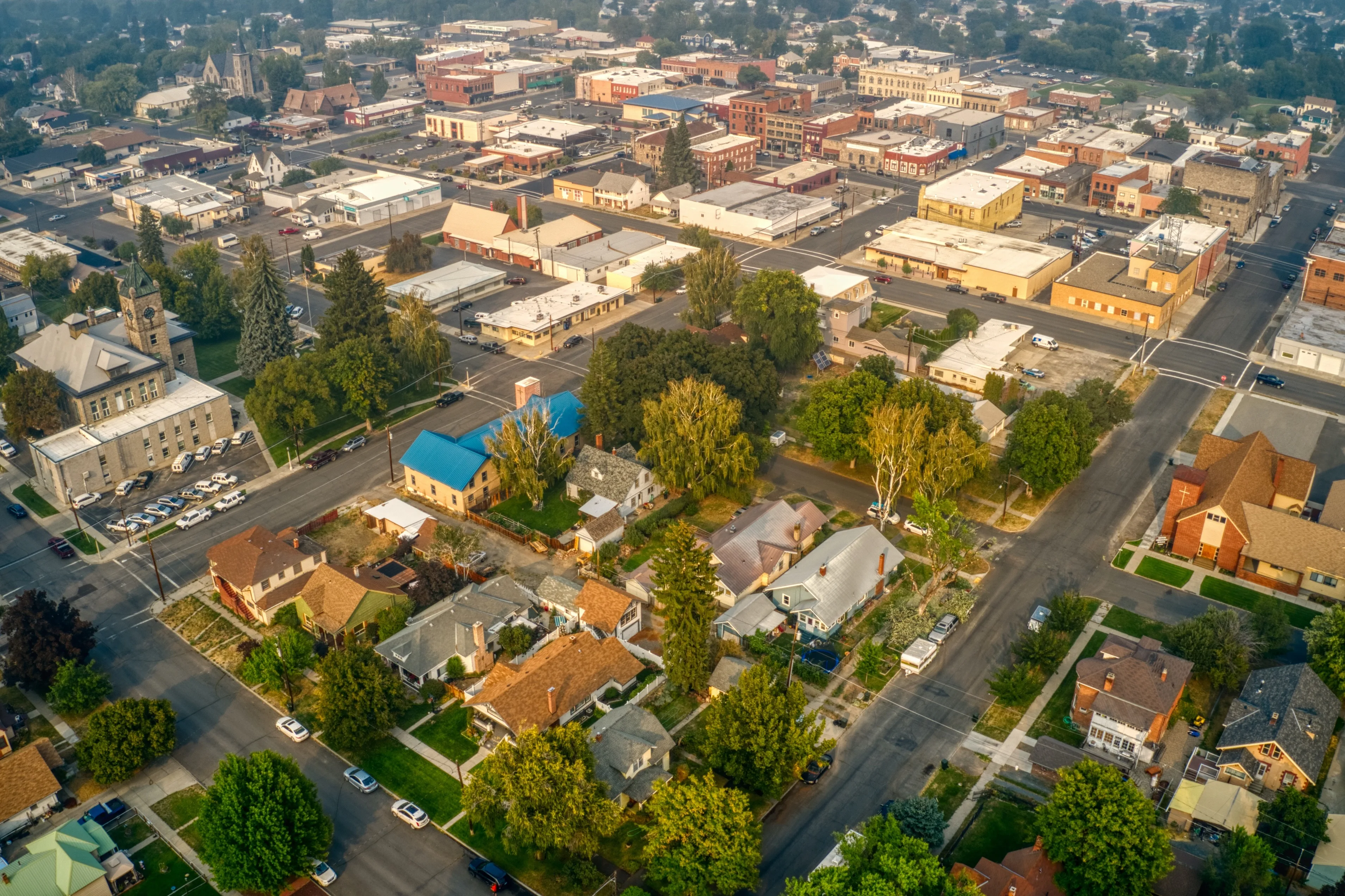
California's capital gains environment, combined with a decades-long run-up in property values, has produced a wave of sellers who have deferred as long as they can and are now seriously evaluating replacement markets. Baker City offers something California hasn't since the 1990s: the ability to buy multiple income-producing properties without debt.
A Bay Area investor who sold a rental property for $1.4 million can purchase a market-rate duplex near downtown Baker City for roughly $300,000 to $360,000 and still have capital remaining for a second SFR acquisition — both debt-free. The psychological shift from managing a leveraged San Jose fourplex at a 3.2% cap rate to owning two Eastern Oregon properties free and clear with combined gross rents around $3,000 per month is significant, especially for investors approaching retirement age.
Southern California sellers — particularly those liquidating long-held Inland Empire or San Diego rentals — arrive with proceeds that often range from $500,000 to $900,000. At Baker City's median price point, that range covers two to three replacement properties depending on condition and type. The investor who replaces a single Riverside County SFR with two Baker City rentals more than doubles their unit count while eliminating or dramatically reducing debt service.
Sacramento-area sellers are perhaps the most natural fit for Baker City. The drive from Sacramento to Baker City runs about seven hours — close enough for occasional property visits, far enough to require a property manager. That investor profile knows Eastern Oregon, often has recreational ties to the region, and is more likely to underwrite correctly than a buyer relocating sight-unseen from coastal California. Median prices in Sacramento's better neighborhoods now exceed $500,000, making Baker City's $275,000 median feel like a time machine.
Looking to buy in Baker City? Estimate your payment.
Enter your numbers to see an estimated monthly mortgage payment.
Estimate only. Excludes HOA fees and mortgage insurance.
Oregon has no state sales tax. For an investor rehabbing a rental — replacing appliances, flooring, fixtures — that means every dollar spent on materials stays in the budget rather than flowing to the state. On a $40,000 renovation budget, the absence of sales tax represents real money.
| Tax Item | California | Oregon |
|---|---|---|
| State income tax on rental net income | Up to 13.3% | Up to 9.9% |
| Property tax rate (new purchase) | Varies; typically 1.1%–1.3% effective | ~0.68% (Baker County) |
| State sales tax | 7.25%–10.75% | 0% |
| Capital gains treatment (state) | Taxed as ordinary income (up to 13.3%) | Taxed as ordinary income (up to 9.9%) |
| Transfer tax / documentary stamp | Varies by county | None statewide |
Oregon's income tax on rental income runs up to 9.9%, which sounds steep until you account for depreciation. A $275,000 residential rental property — assuming 80% allocated to the building — generates roughly $8,000 per year in depreciation deductions. On a modestly cash-flowing property, that depreciation typically offsets most or all taxable net income in the early years of ownership. Investors structured correctly often show paper losses even on properties generating positive cash flow.
One technical note on 1031 depreciation: when you exchange into a replacement property, your depreciation basis does not reset to the new acquisition price. The depreciation schedule from your relinquished property carries forward, which affects your long-term tax picture. A Delaware Statutory Trust — or DST — is worth mentioning for investors who want 1031 deferral without active management: DSTs qualify as like-kind replacement property under IRS guidelines and allow passive fractional ownership in institutional-grade assets.
Baker County's approximately 0.68% effective property tax rate compares favorably to a California investor's likely experience. A newly purchased $600,000 California rental property generates roughly $7,800 in annual property taxes at a 1.3% effective rate. The same capital deployed across two Baker City properties at $275,000 each produces a combined annual property tax bill around $3,740 — a $4,000-per-year structural advantage before a single rent check clears.
Oregon has among the stronger tenant protection frameworks in the western United States. As of 2026, no-cause evictions are significantly restricted for month-to-month tenants — landlords generally must provide cause or use specific qualifying reasons tied to the property. Rent increase caps apply in some Oregon jurisdictions under the state's rent control framework, though the applicability depends on building age and type. Properties built within the last 15 years are typically exempt; older stock is not.
The practical implication for an out-of-state 1031 buyer: you need a local property manager before you close, not after. Typical management fees in Baker City run 8% to 10% of gross monthly rent, with leasing fees on top. That cost is real but manageable — at $1,400 per month gross rent, a 10% management fee costs $140 per month, which is still well below what the same level of service would cost in Portland or Bend. Local property management companies operating in Baker City include Eastern Oregon Property Management and several regional firms serving the Baker and Union County area.
What out-of-state owners consistently underestimate is the maintenance latency created by distance. A tenant reporting a water heater issue at a Portland rental can be addressed within hours. The same issue in Baker City may require scheduling a contractor a week out if you're managing remotely without established vendor relationships. The investors who do well here long-term either hire a local manager from day one or have an existing relationship with a local handyman before the first tenant moves in.
| Item | What to Verify | Local Resource |
|---|---|---|
| Title search | Clear title, no liens, prior 1031 chain | Baker County Title / local title company |
| Sewer vs. septic | City sewer connection or septic system status | City of Baker City Public Works |
| Radon testing | Oregon has elevated radon zones — test before closing | Certified radon inspector; Oregon DEQ |
| Flood zone status | FEMA zone designation near Powder River corridor | FEMA Flood Map Service Center |
| Rental permit requirements | Any city or county rental registration/licensing required | City of Baker City Building Dept. |
| HOA restrictions | CC&Rs prohibiting short-term or long-term rentals | HOA documents (if applicable) |
| Zoning / ADU potential | R-1/R-2 zoning; ADU allowance for added income unit | Baker City Planning Dept. |
| School district assignment | Baker School District boundary for tenant marketing | Baker School District website |
| Current lease status | Month-to-month vs. fixed term; rent amount; tenant history | Seller disclosure + lease docs |
| Deferred maintenance inspection | Roof, HVAC, foundation, plumbing age | Licensed Oregon home inspector |
| Property management referral | Pre-close agreement with local manager | Eastern Oregon Property Management |
| Title company recommendation | QI-compatible title company for 1031 closing coordination | Baker County-based title company |
| 45-day ID deadline tracking | Calendar confirmation with QI before relinquished property closes | Your Qualified Intermediary |
| Insurance quote | Landlord policy (not homeowner) covering rental use | Oregon-licensed property/casualty broker |

Local Expert Takeaway: The single most common mistake California investors make when targeting Baker City is underwriting to apartment-market rents — the $500–$600 figures that show up on aggregate rent platforms — rather than to actual market-rate SFR rents, which run $1,200 to $1,600 per month for three-bedroom homes in good condition. If you're buying a $260,000 house and penciling $600 in monthly rent, your cap rate is fictional. Pull active rental listings on Zillow and Facebook Marketplace for Baker City before you finalize your 45-day ID list, and make sure your property manager confirms current achievable rent before you identify, not after.
✅ Baker City's median home price of $275,000 allows California 1031 proceeds to acquire multiple replacement properties, often debt-free — a structural portfolio advantage most West Coast markets can no longer offer.
⚠️ Oregon's landlord-tenant framework is tenant-protective. No-cause eviction restrictions and rent stabilization rules for older properties require a property manager who knows Oregon law, not just general rental practice.
📍 The STR market here is growing but not yet oversaturated — 89 active listings, 60% average occupancy, and $27,000–$41,000 in average annual revenue make short-term rental a viable 1031 deployment strategy, particularly for properties near the National Historic Oregon Trail Interpretive Center and the historic downtown.
Does a 1031 exchange work for out-of-state replacement property?
Yes, absolutely. The IRS like-kind exchange rules have no geographic restriction within the United States — you can sell a rental in California and replace it with property in Oregon, Idaho, or any other state. The same 45-day identification and 180-day closing deadlines apply regardless of where the replacement property is located.
What is the cap rate on rental property in Baker City?
Cap rates in Baker City vary significantly by property type and acquisition price. Well-priced single-family homes acquired under $200,000 can yield estimated cap rates in the 6%–8% range. Market-rate SFR purchases in the $250,000–$310,000 range typically produce cap rates in the 4%–5.5% range depending on actual achievable rent. Duplexes and small commercial properties, when available, tend to run 5%–6.5%.
Do I need a local property manager for a 1031 investment in Oregon?
You're not legally required to hire a property manager, but for out-of-state owners, it's the difference between a passive income stream and a second job. Oregon's landlord-tenant law is specific about notice requirements, allowable lease terms, and eviction procedures — getting any of those wrong creates liability that erases months of cash flow. A local manager at 8%–10% of gross rent is an underwriting line item that protects the investment.
Explore the full Baker City series: The Ultimate Baker City Relocation Guide · Is Baker City Safe? · Cost of Living in Baker City · Best Neighborhoods in Baker City · Baker City Schools & Family Life · Baker City Youth Sports · Baker City Parks & Recreation · Retiring in Baker City · 1031 Tax-Deferred Exchange in Baker City · Baker City First-Time Homebuyers Guide · · Moving to Baker City from California
Tell us what you need help with and we'll connect you with local resources.

About the Author
Todd Davidson is the founder of Living in Oregon and Living in Washington, where he publishes in-depth city guides, neighborhood resources, and local market insights covering more than 180 communities across the Pacific Northwest. While his background is in home financing and real estate, he created these digital platforms to help families research and compare regions before making a move.