
Portland Metro · Oregon
Living in Wilsonville: The Ultimate Relocation Guide (2026)
Maybe your company just announced it's moving operations to the southern edge of the Portland metro. Maybe you've been watching home prices climb in Tualatin and someone mentioned Wilsonville as the next logical step south. Maybe you drove through on I-5 and noticed what looked like a planned community materializing out of the farmland and wondered what it actually was. Whatever brought you here, Wilsonville tends to catch people off guard — because it doesn't look or feel like a typical Portland suburb, and that's precisely the tension at the center of every relocation decision here.
Geographically, Wilsonville sits where I-5 crosses the Willamette River, about 17 miles south of downtown Portland and 40 miles north of Salem. The freeway doesn't just pass through — it bisects the city, creating genuinely different living experiences on either side. The Chehalem Mountain foothills frame the western edge, the river defines the south, and a network of creeks and wetlands winds through neighborhoods that range from golf course estates to a nationally award-winning European-style urban village. More than 18,000 people commute into Wilsonville for work each day, but only about 28,000 actually live here — which means the city punches well above its residential weight in terms of infrastructure, transit, and employment base.
This guide is built for the person who needs to move beyond the Zillow scroll and understand what daily life actually looks like here. You'll find honest assessments of the neighborhoods, the commute reality, the school district, the tradeoffs that send some buyers back north, and the specific things that make longtime residents reluctant to leave. By the end, you'll know whether Wilsonville is the right fit — or whether one of its neighbors is a better match for where you are in life right now.
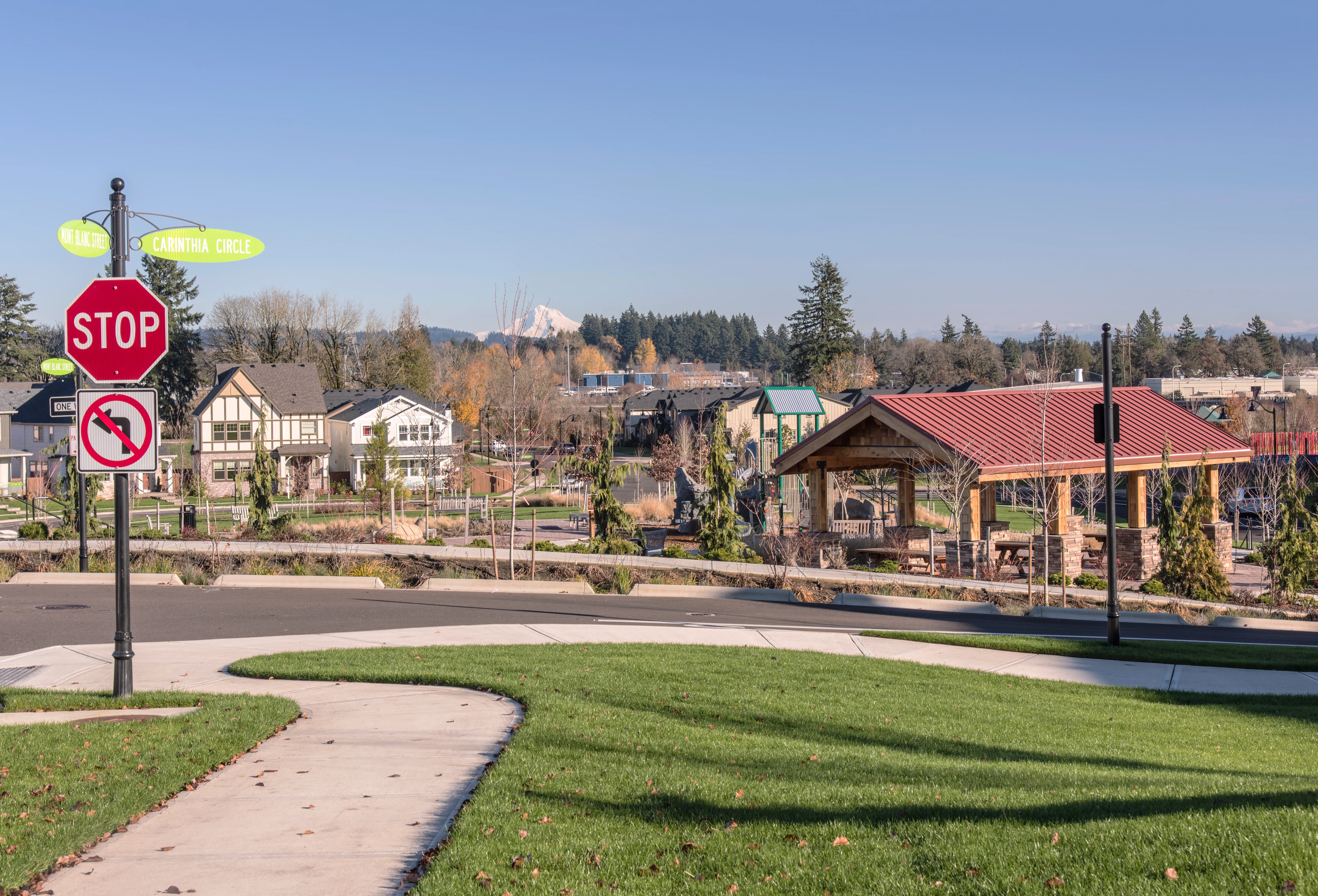
Not every city works for every buyer, and Wilsonville has a distinct profile. The table below cuts through the noise.
| Best For | Why |
|---|---|
| Commuters to Portland or Salem | I-5 access and WES commuter rail make both cities reachable; 26-minute average drive to Portland |
| Families with school-age children | West Linn-Wilsonville School District ranks among the top 10 in Oregon, with a 96.6% district graduation rate |
| Remote workers | Quiet residential neighborhoods, local transit loops, and a growing town center provide structure without noise |
| Retirees seeking amenities | Charbonneau golf community, free SMART bus service, and low violent crime make for a comfortable later chapter |
| First-time buyers | Frog Pond and Wilsonville Meadows offer entry points below the city's median in a strong school district |
| Tech and industrial professionals | Mentor Graphics, Xerox, Rockwell Collins, and Tyco Electronics all maintain significant Wilsonville campuses |

I've worked the southern metro corridor for years, and Wilsonville is one of the markets I watch most closely right now. The $648,559 median doesn't tell the full story — what it buys you here versus comparable money in Tualatin or Sherwood is genuinely different. Villebois in particular has been a consistent performer: walkable streets, design-forward architecture, and a community structure that holds value even when the broader market softens. Buyers who get into Villebois at the right price point tend to stay, and the ones who hesitate usually wish they hadn't.
What buyers most commonly underestimate about Wilsonville is the employment ecosystem right here in town. If one or both partners work for a company in the Wilsonville industrial corridor — Mentor Graphics, Xerox, Sysco, Rockwell Collins — the math on buying here changes dramatically. You're not just buying a home with a 26-minute Portland commute; you're potentially buying a five-minute bike ride to your office. That's a quality-of-life calculation most buyers don't run until after they've moved somewhere else. If you're considering Wilsonville and want insight into which neighborhoods align with your priorities and budget, I'd welcome the opportunity to share what I've learned from helping hundreds of families make this move successfully.
Day-to-day Wilsonville has a quality that surprises people who moved here expecting a generic freeway suburb. The town center area around Town Center Loop feels genuinely walkable, with a grid of shops, restaurants, and the Wilsonville Library anchoring a central plaza. Murase Plaza — a Japanese-inspired public garden near the town center — is one of those local details that signals intentional city planning rather than developer afterthought. On weekday mornings, the coffee shop crowd around Town Center Drive tilts heavily toward remote workers and commuters timing their WES departures.
The WES Commuter Rail is one of the most underrated features of life here. The train runs between Wilsonville and Beaverton in 27 minutes during morning and afternoon rush hours, connecting at Beaverton Transit Center to MAX lines serving downtown Portland, Hillsboro, and the airport. The catch — and it's worth knowing before you plan your commute around it — is that WES runs weekdays only, with trains every 45 minutes. If your schedule doesn't align with those windows, you're on I-5. The SMART bus system fills some gaps and operates free within city limits, serving about 300,000 passenger trips annually, but most residents still consider a car essential.
I-5 is both the city's greatest asset and its most persistent friction point. The northbound merge at the Boone Bridge during the 7:30–8:30 a.m. window is genuinely slow, especially when Portland traffic backs up through Tualatin. Residents who leave by 7:00 a.m. generally report clean runs into the city; those who leave at 8:15 are often looking at 40-plus minutes. The Elligsen Road interchange on the north end of town and the Wilsonville Road interchange at the south are the two main entry and exit points — knowing which one serves your neighborhood can shave meaningful time off a daily commute.
What surprises most people after six months here is how self-contained the city feels. You can go weeks without leaving Wilsonville for anything essential — grocery stores, hardware, medical appointments, youth sports facilities, and restaurants are all within a compact footprint. The flip side is that the dining and nightlife scene is limited by Portland standards; anyone used to a dense urban restaurant corridor will notice the gap quickly.
The school district is the single strongest selling point for families. West Linn-Wilsonville School District 3J is routinely ranked among the top handful of districts in Oregon — SchoolDigger places it sixth out of 140 statewide, with a five-star rating. Wilsonville High School's Class of 2025 posted a 95.9% graduation rate, above the state average by a significant margin and evidence that the district performs for Wilsonville students specifically, not just the West Linn side of the boundary. Every teacher in the district is licensed, and per-student spending of roughly $13,567 reflects a district that invests in its classrooms.
The employment base directly inside city limits is unusually strong for a city of this size. Over half of Wilsonville's jobs are in family-wage industries — software engineering, high-tech manufacturing, and wholesale distribution. Mentor Graphics, Xerox, Sysco, Rockwell Collins, and Tyco Electronics give the local economy a diversified spine that most suburbs this small simply don't have. For dual-income households where one or both partners work locally, the financial calculus of buying here at the median home price shifts considerably.
Graham Oaks Nature Park is the kind of park that makes residents evangelical about the city's outdoor access. The 250-acre park off Elligsen Road connects to the Tonquin Trail and offers miles of hiking through oak savanna — a habitat type increasingly rare in the Willamette Valley. Memorial Park and Boones Ferry Park round out the city's green space, with the Willamette River accessible for kayaking and fishing near the south end of town. Families with kids tend to discover these parks within weeks of moving and treat them as permanent weekend fixtures.
The cost of living relative to inner Portland is substantial. The median household income here runs approximately $96,236, and the property tax rate sits at 1.03% — moderate by Oregon standards and predictable year over year. For buyers cross-shopping with inner Southeast Portland or the Pearl District, the same dollar amount buys meaningfully more square footage and usually a newer home on a larger lot.
Looking to buy in Wilsonville? Estimate your payment.
Enter your numbers to see an estimated monthly mortgage payment.
Estimate only. Excludes HOA fees and mortgage insurance.
The most common complaint from people who leave Wilsonville — and some do — is the sense of insularity that can settle in after a year or two. Wilsonville is genuinely well-planned and safe and convenient, but it doesn't have the cultural density or restaurant depth of a city like Lake Oswego or a close-in Portland neighborhood. People who moved from urban environments and expected suburban calm sometimes find they got more quiet than they bargained for. The dining rotation becomes familiar fast, and a trip to Portland for something specific starts to feel like a bigger production than it should.
I-5 congestion is the other consistent source of friction, and it's not getting better. The Boone Bridge crossing is a known bottleneck, and any incident on the freeway north of Wilsonville creates ripple delays through both interchanges. Residents without access to WES or SMART routes are fully car-dependent, and the city's street grid, while functional, doesn't offer meaningful back-road alternatives to I-5 for north-south travel. If your commute is to downtown Portland and you can't use WES, budget time accordingly — the advertised 26-minute average reflects good conditions, not typical commute-hour reality.
Renter households face genuine affordability pressure. Multifamily rents increased roughly 58% between 2013 and 2023, and an estimated 27% of renters in 2024 were spending more than half their income on housing. The city is adding affordable units — the Vuela development at the Wilsonville Transit Center will bring income-restricted apartments online — but the gap between the rental market and median incomes remains real. Buyers are better positioned here than renters in the current market.
The north-south split created by I-5 also means that neighborhoods on the west side of the freeway feel noticeably quieter and more residential, while the east side — closer to the industrial corridor — carries more truck and commercial traffic. Buyers who prioritize silence over walkability to employment centers sometimes learn this distinction after closing rather than before.
Villebois is the neighborhood most likely to appear in national planning publications, and for good reason — it was designed as a walkable, mixed-use urban village with a distinctly European sensibility and won a national award for community design. Homes here range from attached townhomes to detached single-family houses, generally priced in the $550,000–$750,000 range, with a network of parks, trails, and a small commercial node built into the plan. The tradeoff is that HOA governance is active and architectural standards are enforced — buyers who want to paint their front door a non-approved color will find that freedom costs them elsewhere.
Best for: Buyers who want walkability, design quality, and community events built into the neighborhood's DNA.
Charbonneau is the city's established golf course community, situated south of the Willamette River and operating almost as a self-contained enclave. Homes vary from compact golf villas to larger single-family residences, broadly ranging from the low $400,000s to over $700,000 depending on course proximity and condition. The community feels quieter and more insular than the rest of Wilsonville — residents tend to cluster around the clubhouse and course social calendar, and newer buyers from outside the community sometimes take a season to feel integrated.
Best for: Retirees and empty nesters who want a social golf lifestyle with lower-maintenance housing and distance from freeway noise.
Frog Pond is one of Wilsonville's newer residential build-outs, occupying land on the west side of town that was master-planned with families in mind. Homes here are newer construction, typically priced in the $550,000–$680,000 range, with larger lots than Villebois and direct proximity to Wilsonville's school feeders. The neighborhood lacks the commercial walkability of Villebois or Town Center, but its quiet streets and access to Graham Oaks and the Tonquin Trail make it popular with households that prioritize outdoor access over evening walkability.
Best for: Families with children who want newer construction and outdoor access without paying Villebois premiums.
Old Town is Wilsonville's original residential core — the neighborhood that predates the master-planned era. Homes here are older, with more character variation than anywhere else in the city, and prices typically run in the $450,000–$620,000 range. The neighborhood sits close to the Willamette River and the Stein-Boozier Barn historic property. Buyers who want proximity to Boones Ferry Park and a neighborhood that feels less "developed" will find Old Town more organic, though the older housing stock means more maintenance unpredictability.
Best for: Buyers who prefer established neighborhoods with mature landscaping and some architectural variety over master-planned uniformity.
Canyon Creek North is a mid-sized residential area on Wilsonville's north end, well-positioned for commuters using the Elligsen Road interchange and within practical distance of the major employer corridor on the east side. Homes are typically single-family and priced in the $580,000–$700,000 range. The neighborhood is quieter than the town center area and lacks dedicated walking retail, but the commute positioning is among the most efficient in the city for I-5 users heading north.
Best for: Dual-income commuter households who prioritize freeway access and don't need walkability built into the neighborhood.
Wilsonville Meadows offers some of the more accessible price points in the city, with homes commonly in the $500,000–$640,000 range — making it one of the more approachable neighborhoods for buyers entering the Wilsonville market. The area is primarily single-family residential with a neighborhood-park feel. It lacks the design distinction of Villebois or the golf-course identity of Charbonneau, but for buyers primarily focused on school district access at a lower entry price, it delivers without unnecessary compromise.
Best for: First-time buyers and households with children who want to stretch their budget further while staying in the school district.
RiverGreen sits on Wilsonville's south end near the Willamette River and offers some of the city's more scenic positioning. Homes here are primarily detached single-family, priced roughly in the $600,000–$780,000 range, with larger lots and a quieter atmosphere than the town center corridor. River proximity is the draw — some homes back to greenway land or have easy trail access. The downside is distance from the commercial core and the need to cross under or around I-5 for most daily errands.
Best for: Buyers who prioritize natural scenery and river access over urban convenience, and don't mind the longer errand loop.
Town Center is the densest, most walkable part of Wilsonville — the area around Town Center Loop where the library, restaurants, shops, and Murase Plaza create the city's closest approximation of an urban core. Condos and townhomes are more prevalent here than anywhere else in the city, typically priced in the $380,000–$580,000 range. The WES station and SMART Transit Center are steps away, making this the single best neighborhood for car-optional living. Noise from nearby commercial activity and the freeway corridor is the main drawback.
Best for: Remote workers, transit commuters, and buyers who want walkable daily life without a single-family home price tag.
| City | Best For | Median Home Price | Portland Commute | Vibe |
|---|---|---|---|---|
| Wilsonville | Families, tech workers, commuters | $648,559 | ~26 min | Planned, self-contained, quiet |
| Tualatin | Commuters, first-time buyers | ~$580,000 | ~20 min | Suburban, retail-forward, active |
| Sherwood | Families, newer construction | ~$620,000 | ~30 min | Small-town feel, fast-growing |
| West Linn | Established families, higher budgets | ~$780,000 | ~25 min | Hillside, wooded, affluent |
| Canby | Rural-adjacent buyers, lower prices | ~$490,000 | ~40 min | Agricultural, slower pace |
| Oregon City | Budget-conscious families, history buffs | ~$510,000 | ~30 min | Historic, eclectic, improving |
| Metric | Detail |
|---|---|
| Population | Approximately 28,481 |
| Median Home Price | $648,559 |
| Median Household Income | $96,236 |
| Property Tax Rate | 1.03% |
| Commute to Portland | ~26 minutes via I-5 |
| School District | West Linn-Wilsonville SD (A-rated, top 10 statewide) |
| Violent Crime per 1,000 | 2 |
| Property Crime per 1,000 | 15 |
| Transit Options | WES Commuter Rail, SMART Bus (free within city) |
| County | Clackamas (primarily); northern section in Washington County |
Wilsonville has a few traditions and details that don't show up in any relocation spreadsheet. The Oregon Korean War Memorial in Memorial Park is a quiet point of civic pride — it's one of the more thoughtfully designed memorials in the metro area and draws visitors from well outside city limits. Locals treat the park around it as a genuine gathering space, not just a transit point between parking and sports fields.
The Stein-Boozier Barn near the Old Town area is a remnant of the agricultural history that predates the city's incorporation. The barn and surrounding land are preserved as a public space, and the contrast between this weathered structure and the planned neighborhoods surrounding it says something honest about what Wilsonville is — a city that grew fast but made deliberate choices about what to keep.
The free SMART bus service is one of Wilsonville's genuine civic achievements and something new residents often discover only after they've been here a few months. The buses loop through the major residential neighborhoods and connect to the transit center, and because they're free within city limits, elderly residents, teenagers, and households with one car use them in ways that would be unusual in comparable suburbs.
What I would not do if moving to Wilsonville: I would not buy on the east side of I-5 near the industrial corridor without driving through at 6:30 a.m. on a Tuesday. Truck traffic serving the Sysco, Coca-Cola, and manufacturing facilities begins early and is heavier than most buyers expect when they tour on a weekend afternoon. The homes near Elligsen Road east of the freeway are well-priced for a reason, and the commute access is excellent — but the morning soundscape is genuinely different from the west side residential neighborhoods.
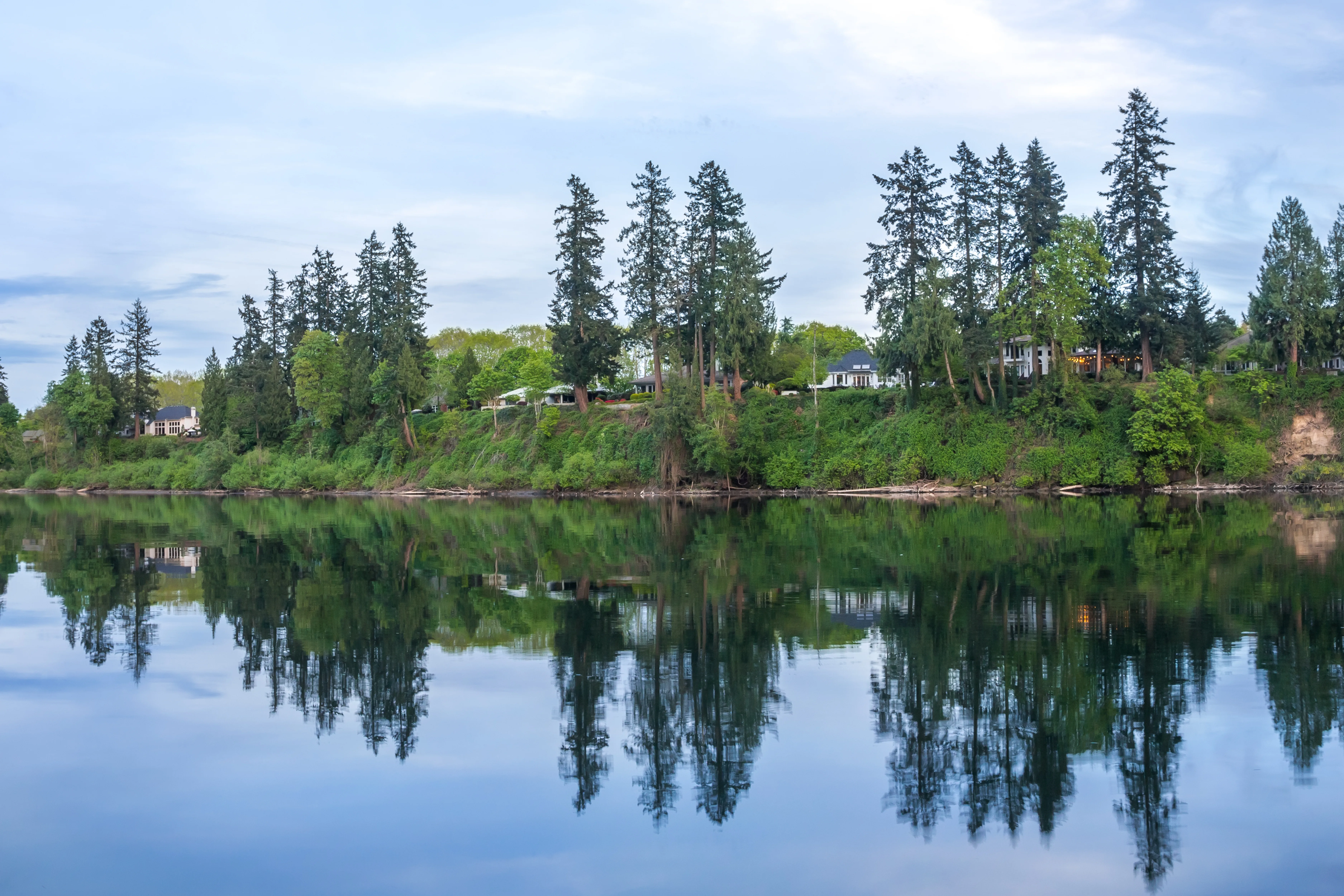
Local Expert Takeaway: If you're deciding between Wilsonville and Tualatin, the school district is the tiebreaker — West Linn-Wilsonville is consistently ranked higher, and that gap matters more as your children approach middle and high school. Within Wilsonville, Villebois and Frog Pond are the two neighborhoods I'd spend the most time in before deciding: Villebois if walkability and community design matter to you, Frog Pond if you want newer construction and quieter streets without the HOA intensity. In either case, buy as close to the Town Center or WES station as your budget allows — that access compounds in value over time in ways that pure square footage does not.
✅ Wilsonville's school district, employer base, and transit access make it one of the most complete suburban packages in the southern Portland metro — particularly for families and tech-sector workers who value all three simultaneously.
⚠️ I-5 congestion is real and worsening — the Boone Bridge corridor during peak morning hours regularly exceeds the advertised commute time, and buyers who can't use WES should factor that into their daily routine before committing to the commute.
📍 The city has genuine neighborhood diversity — from the golf-course insularity of Charbonneau to the urban-village design of Villebois — and choosing the wrong fit for your lifestyle is easier here than in cities with more uniform housing stock. Visit on a weekday, not a Saturday.
Is Wilsonville a good place to raise a family?
Yes, Wilsonville is consistently among the stronger options for families in the Portland metro. The West Linn-Wilsonville School District ranks in the top 10 statewide, Wilsonville High School posts a graduation rate near 96%, and the city's low violent crime rate of 2 per 1,000 residents gives parents a level of comfort that's harder to find closer to Portland. Graham Oaks Nature Park, Memorial Park, and the city's youth sports infrastructure add practical daily-life value for households with children.
What is the crime rate in Wilsonville?
Wilsonville's violent crime rate sits at approximately 2 per 1,000 residents — well below Oregon and national averages. Property crime runs at roughly 15 per 1,000, which is moderate and consistent with other growing suburban cities in the metro. The east-side industrial corridor near the I-5 interchanges sees the majority of property crime incidents; established residential neighborhoods on the west side report lower rates.
How does Wilsonville compare to Tualatin and Sherwood?
Wilsonville sits between the two in most categories. Tualatin is closer to Portland, typically less expensive, and more retail-dense along the Highway 99W corridor. Sherwood has a more small-town feel with newer construction and is growing quickly, but its commute times and school district ratings trail Wilsonville modestly. Wilsonville's strongest advantages are its school district ranking, the presence of major employers within city limits, and the WES commuter rail option — none of which Tualatin or Sherwood can fully match.
Browse current listings updated daily — filtered for Wilsonville buyers by Elizabeth Davidson, your local expert.
Powered by Elizabeth Davidson · Cascade Hasson Sotheby's International Realty · 503-939-2035
Explore the full Wilsonville series: The Ultimate Wilsonville Relocation Guide · Is Wilsonville Safe? · Cost of Living in Wilsonville · Best Neighborhoods in Wilsonville · Wilsonville Schools & Family Life · Wilsonville Youth Sports · Wilsonville Parks & Recreation · Retiring in Wilsonville · 1031 Tax-Deferred Exchange in Wilsonville · Wilsonville First-Time Homebuyers Guide · · Moving to Wilsonville from California · The Wilsonville Realtor's Perspective · Top 10 Questions a Realtor Gets About Wilsonville
Tell us what you need help with and we'll connect you with local resources.

About the Author
Todd Davidson is the founder of Living in Oregon and Living in Washington, where he publishes in-depth city guides, neighborhood resources, and local market insights covering more than 180 communities across the Pacific Northwest. While his background is in home financing and real estate, he created these digital platforms to help families research and compare regions before making a move.