
Portland Metro · Oregon
Is Wilsonville Safe? Crime Rates, Safest Neighborhoods & Local Reality (2026)
Wilsonville doesn't fit neatly into the suburban safety narrative you'll find on aggregator sites. Depending on which platform you check, you'll see everything from an "A-" to a "D+" — and both can be technically true, which tells you more about methodology than it does about daily life in this city. The honest picture is more nuanced: Wilsonville is a mid-size suburb with a declining crime trend, a meaningfully lower rate than Oregon as a whole, and pockets of genuine concern concentrated in specific corridors rather than spread evenly across the city.
What shapes the on-the-ground reality here is geography and traffic. Interstate 5 runs straight through the middle of Wilsonville, and the commercial corridor along Boones Ferry Road and the industrial areas near the highway draw a steady stream of non-resident traffic. Local police data suggests a significant portion of crime involves people who don't live here — passing through on I-5 or working at the industrial sites along the edges of town. That matters when you're evaluating where to buy, because the risks are much more spatially concentrated than city-wide averages imply.
This guide breaks down what the numbers actually mean for someone deciding whether to plant roots in Wilsonville in 2026 — which neighborhoods track safer, where the property crime clusters, and what practical habits locals have adopted without much drama.
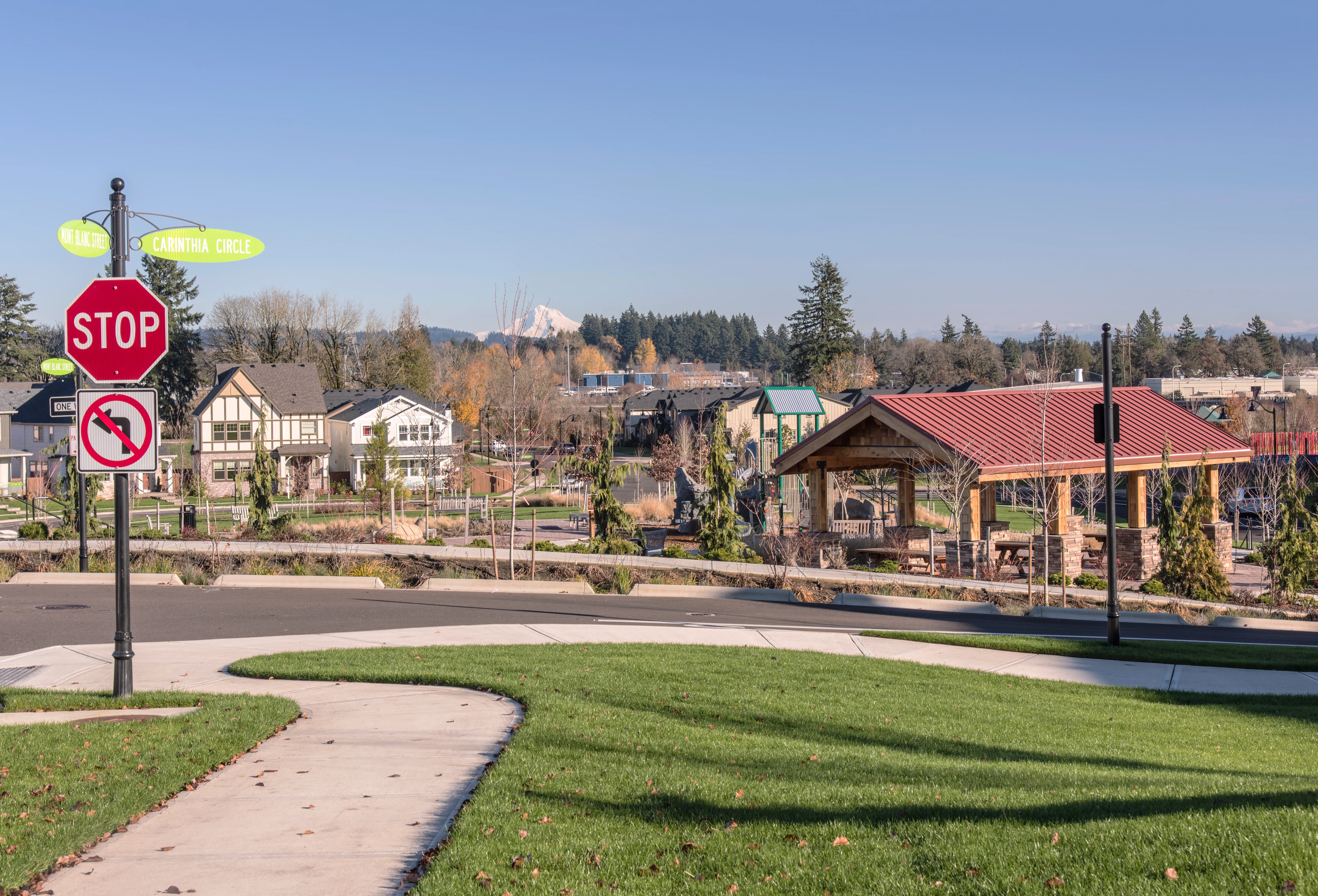
Based on local police data presented to City Council in early 2025, Wilsonville's overall crime rate came in at roughly 35.8 per 1,000 residents in 2024 — down from 41.1 the year before, and a notable improvement from 51.3 in 2022. That downward trajectory over 15 years of data is the most meaningful signal here. Third-party aggregators like NeighborhoodScout commonly report around 17 per 1,000, while CrimeGrade estimates closer to 33 per 1,000 — the gap reflects how different platforms weight commercial incidents, seasonal traffic, and methodology for small cities. What they agree on: Wilsonville sits below Oregon's state crime rate, which is commonly cited around 43 to 44 per 1,000 residents.
The structural factors driving this are worth understanding. Wilsonville has a relatively high homeownership rate, an older and established housing stock in its mature neighborhoods, and employment anchors like Mentor Graphics, Sysco, and Xerox that generate daytime worker traffic rather than after-hours activity. The commercial density along the I-5 corridor — fast food, gas stations, the Costco-anchored retail strip — creates the kind of environment where opportunistic property crime concentrates. Newer residential areas like Villebois, developed with walkable design and active HOA oversight, tend to track considerably better.
New Police Chief Jed Wilson, who took over in early 2026 following the retirement of Chief Robert Wurpes, has publicly emphasized maintaining the downward trend. Wilson brings a decade of community policing experience from the City of Albany alongside his time with Clackamas County Sheriff's Office, and the department's model — a contract with CCSO providing 22 sworn officers including a dedicated Behavioral Health clinician — gives Wilsonville services that most cities its size can't staff independently.
Person crimes — assaults, robbery, and related offenses — ran at roughly 6.4 per 1,000 in 2024, a slight uptick from 5.6 the previous year, though both figures remain well below national averages. NeighborhoodScout's data places the violent crime rate at approximately 2 per 1,000, suggesting a 1-in-526 chance of victimization — meaningfully lower than the national figure of around 22.7 on BestPlaces' index scale. For daily life, this translates to a city where most residents go years without a personal safety incident. Families with children at Graham Oaks Nature Park or Town Center Park on a weekend afternoon aren't operating with any heightened awareness — it simply isn't that kind of city.
Property crime — primarily vehicle break-ins, retail theft, and package theft — accounts for the bulk of Wilsonville's crime picture, running at approximately 15 per 1,000 based on available data. It clusters predictably: the commercial strip near I-5 Exit 286, the Boones Ferry Road retail corridor, and parking areas serving big-box retail see the most incidents. Residential neighborhoods away from these zones, particularly in the southwest portion of the city, see materially lower rates. The practical implication is that where you park and shop matters more than where you sleep in Wilsonville's safety calculus.

The question I get most from buyers relocating from California or the eastside of Portland is whether Wilsonville's crime numbers should give them pause. My honest answer is no — not if they're buying in the right part of the city. Villebois, Frog Pond, and Canyon Creek North have tracked with some of the cleanest safety profiles in the entire Portland metro south suburbs. Homes in those corridors rarely sit more than a few weeks, partly because the buyer pool already knows this. The Villebois Village Center in particular has an A- crime grade from major tracking platforms, which is exceptional for a neighborhood of its density and commercial activity.
What buyers consistently underestimate is how much the I-5 corridor acts as a crime absorber for the rest of the city. The incidents that inflate Wilsonville's aggregated numbers tend to happen within a half-mile of the highway — not in the residential neighborhoods where most families are actually putting down roots. If you're comparing a home in Wilsonville Meadows or RiverGreen to something in Tualatin at the same price point, the day-to-day safety experience is remarkably similar. I encourage every client considering Wilsonville to look at the neighborhood-level data, not the city-wide average — the difference is significant. If you're considering Wilsonville and want insight into which neighborhoods align with your priorities and budget, I'd welcome the opportunity to share what I've learned from helping hundreds of families make this move successfully.
Situated in the southwest corner of Wilsonville, Villebois is the city's largest and newest master-planned community — and it consistently earns the strongest safety grades in town. CrimeGrade assigns the Village Center and surrounding sub-neighborhoods an A- rating, reflecting both low incident density and the neighborhood's design: 160 acres of open space, pedestrian plazas, and continuous activation through foot traffic make this a difficult environment for opportunistic crime. The 30-acre oak tree greenway connecting to a 19-mile regional path network means there are always eyes on the landscape. Villebois is the neighborhood most relocation buyers land on when safety is a primary filter.
Best for: Families and professionals who want walkability, strong design, and the most verified safety data in Wilsonville.
Charbonneau sits south of the main Wilsonville grid, a semi-enclosed golf community of roughly 3,500 residents on the Willamette River. Its geographic separation — accessed primarily through a limited number of entry points — functions as a natural barrier to transient crime, and the community has historically tracked quiet. One important distinction worth knowing before buying here: students in the Charbonneau area attend the Canby School District, not West Linn-Wilsonville. That's a meaningful difference for families evaluating the school ecosystem, and it catches buyers off guard regularly. Crime-wise, the primary concern is vehicle break-ins in the golf course parking areas during off-hours — common to most recreational facilities in the region.
Best for: Retirees and empty-nesters who want privacy, river access, and a low-density environment.
Frog Pond occupies the southeast quadrant, a newer development area that has grown considerably in the last decade. Its distance from the I-5 commercial strip keeps it out of the property crime clusters that affect the city's northern and central zones. The neighborhood is largely single-family residential with limited retail, which means less foot traffic from non-residents and a quieter day-to-day profile. Locals here tend to use the South Wilsonville Road and Stafford Road corridors for daily routines rather than the busier northern commercial areas.
Best for: Families with school-age children who want newer construction in a quieter residential setting.
Old Town is Wilsonville's original commercial and civic core, running along Wilsonville Road near the Willamette River. It has more foot traffic, more mixed use, and more activity density than the newer residential neighborhoods — which shows up in crime data as a higher incident rate relative to the southwest. That said, the incidents here tend toward minor property crime and disorderly conduct rather than serious violent offenses. The Oregon Korean War Memorial, Stein-Boozier Barn, and access to the Willamette River make this a gathering point for the broader community, and that visibility generally keeps it active and reasonably well-lit.
Best for: Buyers who want historic character, civic connectivity, and don't mind trading some of the safety buffer of newer residential neighborhoods.
Canyon Creek North is one of the established residential corridors in Wilsonville's interior, sitting north of the I-205/I-5 junction area but buffered by residential density from the commercial strip. It's been a consistently quiet neighborhood — homeowners here have long tenure, which correlates with lower property crime rates citywide. The safety profile is solidly middle-of-the-road for Wilsonville, with no notable clustering of incidents in recent police reports.
Best for: Established families looking for a mature neighborhood with stable ownership and good school access.
Town Center is the commercial and civic heart of modern Wilsonville — Murase Plaza, Town Center Park, and Memorial Park are all here, alongside restaurants, services, and the Wilsonville Transit Center. Because this area generates the highest pedestrian and vehicle traffic in the city, it also accounts for a disproportionate share of the crime statistics that drag down citywide averages. Retail theft and vehicle break-ins in parking areas are the primary concerns, not personal safety incidents. Buyers purchasing condos or mixed-use properties adjacent to Town Center are choosing convenience over the quietest possible safety profile — a trade most find reasonable.
Best for: Buyers who prioritize walkable amenities and can accept a slightly more active environment.
| City | Violent Crime / 1K | Property Crime / 1K | Overall Safety Profile |
|---|---|---|---|
| Wilsonville | ~2 | ~15 | Below Oregon avg; above national median |
| Tualatin | ~2.5 | ~18 | Similar profile; more commercial density |
| Sherwood | ~1.5 | ~11 | Among the lower-crime suburbs in the metro |
| West Linn | ~1.2 | ~8 | One of the safest cities in Oregon |
| Canby | ~2.8 | ~17 | Comparable to Wilsonville with more rural character |
| Oregon City | ~4.5 | ~22 | Higher than Wilsonville; more urban challenges |
| Aurora | ~1.0 | ~7 | Very small city; limited commercial exposure |
Looking to buy in Wilsonville? Estimate your payment.
Enter your numbers to see an estimated monthly mortgage payment.
Estimate only. Excludes HOA fees and mortgage insurance.
Residents who've lived in Wilsonville for more than a few years develop a clear mental map of where to be thoughtful. The stretch of Boones Ferry Road from the I-5 overpass down to the Tualatin River crossing sees the most vehicle break-in activity — specifically in the retail parking lots anchored by big-box stores. The advice you'll hear from locals: don't leave anything visible in your car, especially near the Exit 286 commercial cluster. It's not dramatic, and it's not unique to Wilsonville, but it's the habit that separates residents who've had incidents from those who haven't.
The northeast corner of the city — roughly the industrial and distribution areas near the highway — accounts for a disproportionate share of annual incidents based on available police data. That's largely driven by the workforce transiting through Sysco, Coca-Cola Bottling, and other commercial operations in that zone rather than any residential concern. Most Wilsonville buyers aren't purchasing in those areas anyway, but it's why the city-wide averages look worse than the residential reality. The southwest — Villebois and the newer developments along Tooze Road — represents a genuinely different experience.
One thing apps like Citizen or Nextdoor won't fully capture: Wilsonville's behavioral health integration. The Police Department embeds a licensed clinician from Clackamas County's Behavioral Health Division directly in patrol response — a relatively unusual arrangement for a city this size. It means calls that might escalate in other jurisdictions get de-escalated here. Locals who've watched this model in action since its rollout tend to view it as one of the more meaningful quality-of-life decisions the city has made in recent years.

Local Expert Takeaway: If safety is your primary filter, focus your search in the southwest — Villebois, Frog Pond, and the Tooze Road corridor consistently post the city's strongest numbers. Avoid buying adjacent to the I-5 commercial strip between Exit 282 and Exit 286 if minimizing property crime exposure matters to you, and treat the city-wide aggregated statistics with appropriate skepticism — the neighborhood-level spread in Wilsonville is wider than most buyers realize before they dig in.
✅ Wilsonville's overall crime rate has declined steadily over the past several years and sits below Oregon's state average — the trajectory matters more than the snapshot.
⚠️ Property crime clusters along the I-5 commercial corridor and retail parking areas, not in residential neighborhoods — where you shop and park carries more practical risk than where you live.
📍 The southwest portion of the city, anchored by Villebois, tracks as the safest residential zone with documented A- crime grades from major platforms.
Is Wilsonville a safe city to raise a family?
For most families, yes — particularly in the residential neighborhoods away from the I-5 corridor. The violent crime rate runs at roughly 2 per 1,000, well below the national average, and the downward crime trend over the past several years reflects both demographic stability and an embedded law enforcement model that includes behavioral health response. Neighborhoods like Villebois, Frog Pond, and Canyon Creek North consistently post the strongest profiles.
What type of crime is most common in Wilsonville?
Property crime — primarily vehicle break-ins and retail theft — makes up the dominant share of incidents, typically running around 15 per 1,000 residents. These incidents concentrate in commercial parking areas near the freeway exits and big-box retail corridors, not in established residential neighborhoods. Violent crime rates remain low and have generally trended downward over the past decade.
How does Wilsonville's safety compare to nearby Tualatin and Sherwood?
Wilsonville sits in a comparable range to Tualatin on most crime metrics, with both cities shaped by significant commercial and freeway traffic. Sherwood runs somewhat cleaner, with lower property crime rates reflecting its more residential character and less highway exposure. West Linn — the city most Wilsonville buyers consider as an alternative — consistently posts lower crime across both categories, though at a median home price considerably above Wilsonville's $648,559.
Browse current listings updated daily — filtered for Wilsonville buyers by Elizabeth Davidson, your local expert.
Powered by Elizabeth Davidson · Cascade Hasson Sotheby's International Realty · 503-939-2035
Explore the full Wilsonville series: The Ultimate Wilsonville Relocation Guide · Is Wilsonville Safe? · Cost of Living in Wilsonville · Best Neighborhoods in Wilsonville · Wilsonville Schools & Family Life · Wilsonville Youth Sports · Wilsonville Parks & Recreation · Retiring in Wilsonville · 1031 Tax-Deferred Exchange in Wilsonville · Wilsonville First-Time Homebuyers Guide · · Moving to Wilsonville from California · The Wilsonville Realtor's Perspective · Top 10 Questions a Realtor Gets About Wilsonville
Tell us what you need help with and we'll connect you with local resources.

About the Author
Todd Davidson is the founder of Living in Oregon and Living in Washington, where he publishes in-depth city guides, neighborhood resources, and local market insights covering more than 180 communities across the Pacific Northwest. While his background is in home financing and real estate, he created these digital platforms to help families research and compare regions before making a move.