
Portland Metro · Oregon
Wilsonville Schools & Family Life: Top Districts, Academics & Community (2026)
You're standing in a Wilsonville open house, kids waiting in the car, and someone just told you this is one of the top three school districts in Oregon. That's not a pitch — it's the kind of thing that turns a house tour into a real estate decision. The West Linn-Wilsonville School District carries an A rating on Niche, ranks among the top 5% of Oregon districts by academic proficiency, and posts a districtwide graduation rate of roughly 96.6% for the Class of 2025. For families relocating from out of state, that kind of data can feel almost too good to verify.
What shapes that quality isn't magic. The district benefits from a relatively low share of economically disadvantaged students — under 15% districtwide — and a parent community where involvement is genuinely high. Per-pupil spending runs a bit below the state median, which surprises people, but the test score outcomes suggest the money is working efficiently. Wilsonville's portion of the district draws from a concentrated, newer housing stock, which means most of the schools you'll be considering were built within the last 25 years with modern infrastructure.
This guide is built for the parent who needs more than a letter grade. You'll find specific school profiles, what the graduation rate actually means for a 14-year-old entering ninth grade, where the district falls short, and what family life looks like on the other side of the school day.
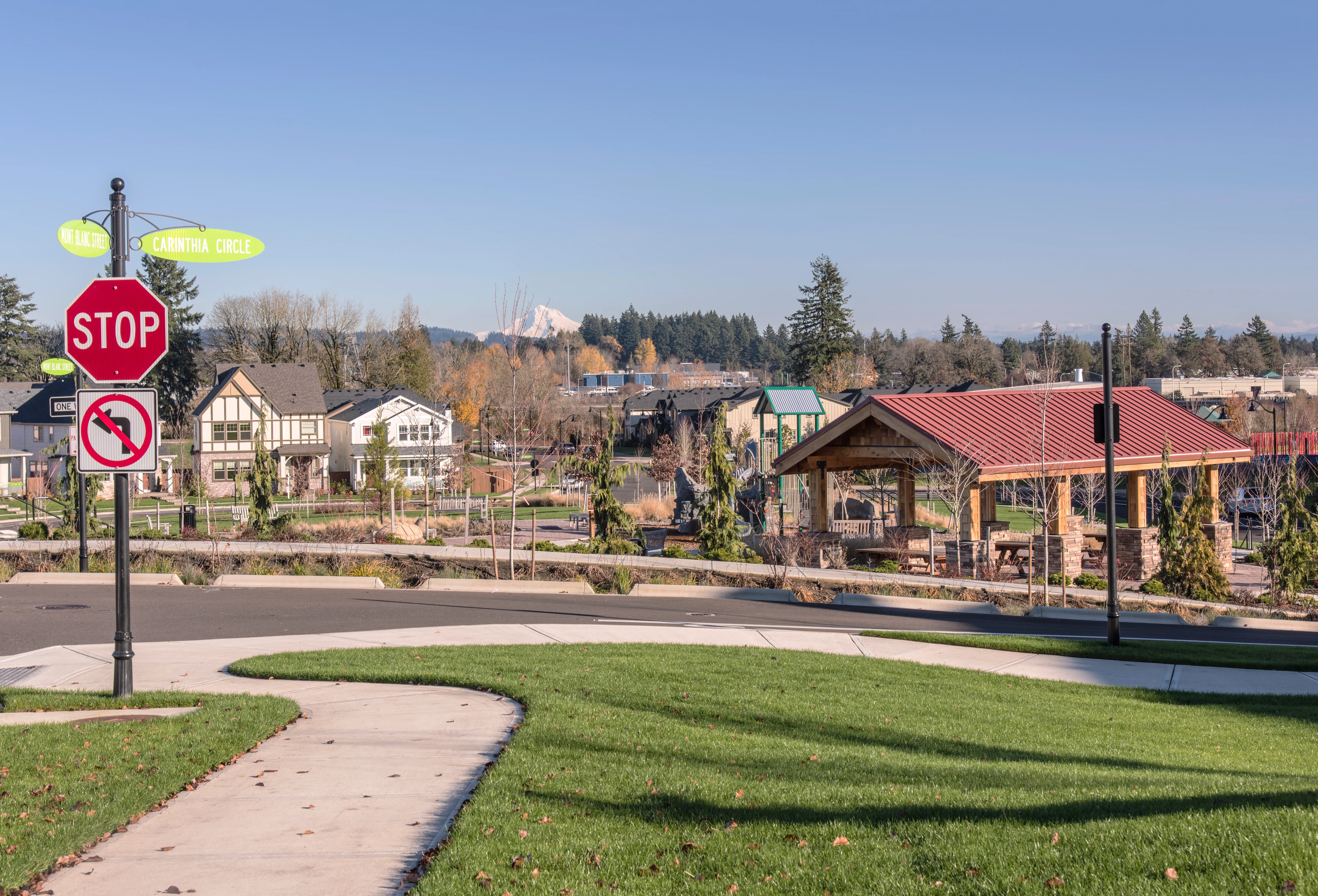
The West Linn-Wilsonville School District posts a districtwide graduation rate of roughly 96.6% for the Class of 2025, well above the Oregon state average. Per-pupil spending runs a bit below the state median, which surprises people given the district's reputation — the results here come from a relatively low share of economically disadvantaged students (under 15% districtwide) and a parent community where involvement is genuinely high, not from outsized per-student budgets.
At the high school level, Wilsonville High School carries a U.S. News ranking of #13 in Oregon, putting it well ahead of most comparable suburban high schools in the metro area. Its OSAA 5A classification means athletics are competitive without being overwhelming, and its AP participation rate is among the higher figures for a school of its size in the state. For families relocating, the takeaway is straightforward: this is a district where the academic outcomes are real and well-documented, not just a reputation built on a single ranking.

I've been placing families in Wilsonville for over a decade, and the school district conversation comes up in nearly every transaction. What I find exciting about buying in Wilsonville right now is that families are getting into a legitimately top-tier district at a price point that's still significantly below what you'd pay for comparable school access in parts of Lake Oswego or the Tualatin Hills corridor.
A home near Boeckman Creek Primary in the Villebois neighborhood is sitting in the mid-$500s to high $600s — and you're feeding directly into a district that Niche ranked third in the entire state. That math is hard to argue with, and I don't think the gap between school quality and home price will stay this wide for much longer. If you're considering Wilsonville and want insight into which neighborhoods align with your priorities and budget, I'd welcome the opportunity to share what I've learned from helping hundreds of families make this move successfully.
Three public elementary schools serve Wilsonville's city limits, all within the West Linn-Wilsonville District. They share a common curriculum framework and testing culture, but each has a distinct personality worth understanding before you choose a neighborhood.
Boones Ferry Primary opened in 2001 and sits on SW Wilsonville Road surrounded by wetlands — the kind of campus that makes environmental education feel less like a program and more like a field trip that never ends. The school runs grades PK–5 with roughly 477 students and a 17:1 student-teacher ratio, which keeps classroom sizes manageable. Its Niche grade is a B, lower than the district average would suggest, partly because its demographics skew slightly more diverse than the district norm — with a free and reduced lunch rate hovering around 20%. Parents in the Charbonneau and older Wilsonville neighborhoods tend to land here, and the school has a reputation for strong community ties and a welcoming front office. The honest limitation is that its academic test scores trail Lowrie slightly, so families with children who are working above grade level may notice a ceiling on enrichment offerings.
Lowrie Primary on SW Brown Road is the school families researching the district tend to find first. Its enrollment of roughly 482 students and student-teacher ratio near 16.6:1 are typical for the district, but its academic outcomes stand out — typically around 53% math proficiency and 58% reading proficiency, both well above state averages. U.S. News ranks it in the top quarter of Oregon elementary schools, and SchoolDigger gives it four stars with consistent placement in the top 20-25% statewide. The demographic profile here skews toward middle- and upper-middle-income families, with a free and reduced lunch rate well below the state average of roughly 58%. Students here feed through Inza R. Wood Middle School on their way to Wilsonville High School. The limitation families mention most is that the school's popularity creates waitlist pressure if you're trying to transfer outside your attendance zone.
Boeckman Creek Primary serves the newer western neighborhoods — Villebois and its surrounding growth areas — and benefits from the modern build quality and infrastructure that defines that part of the city. The school feeds directly into Meridian Creek Middle School, making it the primary feeder path into Wilsonville High School for families in the city's largest master-planned development. Parent involvement here is consistently high, reflecting the demographic composition of the Villebois community it serves. Test scores and program offerings are comparable to the district average, and the campus facilities are among the newest in the district. Families who want to be embedded in the tightest school-community connection in Wilsonville tend to find it here.
Meridian Creek Middle School is the primary middle school serving Wilsonville students, positioned half a mile from Wilsonville High School on the same general corridor. It runs grades 6–8, feeding the majority of Wilsonville's elementary graduates before they continue to the high school. Parents consistently describe the transition from elementary to Meridian Creek as smooth — partly because the feeder pipeline from Boeckman Creek is so direct. The school maintains the district's broader academic profile, with strong math and science programs and a student population that mirrors the district's relatively low economically disadvantaged rate. One honest observation from parents: middle school is where the district's gifted programming starts to feel less individually tailored, and students who need significant academic acceleration sometimes run out of ceiling before eighth grade ends.
Inza R. Wood Middle School sits slightly outside the Wilsonville urban core and serves students from the Lowrie Primary feeder area. It carries a solid academic reputation consistent with the district average and shares the same curriculum framework as Meridian Creek. Families whose elementary school experience included Lowrie will find the transition to Wood familiar in structure and expectations. The school offers a range of electives and activity programs, though the performing arts offerings — particularly theatrical production space — have historically been constrained by facility size.
Wilsonville High School at 6800 SW Wilsonville Road is the only high school serving the city, and it has become one of the more recognized secondary schools in the Pacific Northwest without most people outside the district realizing it. U.S. News ranked it #13 in Oregon in 2025, up from 24th the prior year — a jump that reflects genuine academic momentum rather than a statistical anomaly. The graduation rate for the Class of 2025 came in at roughly 95.9%, slightly above the prior year's figure, and substantially higher than the statewide Oregon average. That rate matters because it tells you something real: students are finishing, not drifting out.
The school competes in OSAA 5A, which means it's in the larger-school bracket for Oregon athletics — the 5A-1 Northwest Oregon Conference. That classification shapes everything from the depth of the sports rosters to the caliber of weekend competition. Roughly 56% of students participate in AP coursework, and the average ACT score typically runs around 30, which puts graduating seniors in a competitive position for four-year university admissions. The student-teacher ratio at the high school runs closer to 19:1, slightly higher than the district average, which is worth factoring in if your student needs more individualized attention.
Who thrives here: Students who are self-motivated, comfortable in a structured academic environment, and interested in AP or college-prep pathways tend to do very well. The school's culture supports high achievement without the pressure-cooker intensity of some private institutions. Athletes who are competitive but not Division I prospects will find the 5A conference appropriately challenging.
Who may struggle: Students who need significant academic acceleration beyond AP — dual enrollment, IB, or specialized STEM tracks — will find the options limited compared to larger 6A schools in the metro area. Students who thrive in very small, advisory-style high school environments may feel like Wilsonville High's size (around 1,269 students) is large enough to get lost in without strong self-advocacy skills.

👨👩👧👦 Portland Metro: Best Places for Families
Wondering how Wilsonville stacks up against all 15 Portland Metro suburbs for families? Our complete rankings guide covers every suburb — schools, safety, parks, youth programs, and family amenities side by side.
See the Full Portland Metro Best Places for Families Rankings →Looking to buy in Wilsonville? Estimate your payment.
Enter your numbers to see an estimated monthly mortgage payment.
Estimate only. Excludes HOA fees and mortgage insurance.
The most common thing parents say after their first full year in the district is that the ratings held up — not that they were overhyped. That's rarer than you'd think. Families who moved from districts with lower proficiency rates tend to notice the difference in homework expectations and in the pace of classroom instruction within the first semester.
Access isn't perfectly equal across neighborhoods. Families in Villebois and the newer Canyon Creek developments are feeding into schools with newer facilities and high parent engagement. Families in older sections of Wilsonville near the Town Center or the Charbonneau area may find the school culture slightly different in tone, though the academic framework is the same districtwide. The gap isn't dramatic, but it's real enough that parents who care about the social texture of their child's school community should visit all three elementary campuses rather than just checking district ratings.
One thing that consistently surprises people: the district doesn't lean heavily on tutoring culture. In higher-pressure suburban districts, the after-school tutoring economy can feel like an unofficial arm of the school system. In Wilsonville, parents report that kids performing at or above grade level generally don't need supplemental instruction to keep up. That's a quality-of-life observation as much as an academic one.
The West Linn-Wilsonville District is genuinely strong, but honesty requires naming the gaps. Families seeking a full International Baccalaureate program won't find it here — the closest IB options in the metro area sit in Portland Public Schools and at Sunset High School in Beaverton. If that credential matters for your student's college plans, the commute trade-off is worth calculating early.
Gifted students who've outpaced grade-level AP coursework by eighth grade may find the district's acceleration ceiling modest. The Talented and Gifted program exists at the elementary level, but families of highly gifted students in math or sciences sometimes find the district's offerings less individualized than they'd hoped by the time high school starts. Portland's magnet options or online dual-enrollment programs through Oregon community colleges are worth exploring as supplements.
Families with students who have significant special education needs should request a detailed meeting with the district's special services team before finalizing a home purchase. The district's resources are solid for mild-to-moderate learning differences, but intensive support programs of the kind available in larger Portland metro districts are less developed here. That's not a condemnation — it's a practical consideration worth front-loading.
For competitive performing arts students, Wilsonville High's historical lack of a dedicated performance facility has been a real limitation. Until relatively recently, theatrical productions happened in a space that parents described as undersized and technically limited — something that shapes the quality and ambition of productions in ways that matter to serious drama and music students.
| School | Type | Grades | Location |
|---|---|---|---|
| Inshallah Academy | Private Islamic | K–8 | Wilsonville area |
| The Montessori School of Wilsonville | Private Montessori | PK–K | Wilsonville |
| Bridges Learning Center | Private/Therapeutic | Various | Wilsonville area |
| Horizon Christian School | Private Christian | K–12 | Tualatin (nearby) |
For preschool and early childcare, Wilsonville has expanded its options meaningfully as the Villebois community has grown. KinderCare operates a Wilsonville location serving infants through pre-K, and Children's Creative Learning Center has been a locally recognized name for structured early childhood programming in the area. The West Linn-Wilsonville School District Head Start program serves income-qualifying families with preschool-age children and feeds directly into the elementary school system.
Families in Charbonneau and the southern parts of the city often look toward Canby for supplemental childcare options given the proximity, while Villebois residents tend to have shorter drives to the cluster of childcare centers that have opened along the SW Boeckman Road corridor as the neighborhood has filled in. Waitlists for infant care are the most common frustration parents name — starting the search 6–9 months before your move date is the practical advice you'll hear from every parent who's done it.
The Wilsonville Public Library, located near the Town Center, serves as the informal community living room for families with school-age kids. Its programming includes a robust summer reading challenge that's become a Wilsonville tradition in its own right — the kind of thing where parents coordinate drop-offs the way other towns coordinate youth sports schedules. Story times, STEM activity nights, and homework help sessions run year-round and draw families from across the city's neighborhoods.
The Wilsonville Recreation Center anchors the community's after-school activity infrastructure, offering youth swim lessons, gym classes, and seasonal sports leagues that operate independent of the school district. For families who want organized activity without the full commitment of a travel sports team, the Rec Center fills a real gap. The center's proximity to Town Center Park makes it a practical stop on the way home from school pickup for kids who need to run off energy before dinner.
Community events that families name as genuine traditions include the Wilsonville July 4th Celebration at Memorial Park — one of the larger community gatherings in Clackamas County — and the annual Holiday Tree Lighting near Murase Plaza, which draws multi-generational crowds and has the kind of small-town energy that surprises people who expected a bedroom suburb. Graham Oaks Nature Park, with its restored prairie habitat and miles of trails, is where parents with elementary-age kids tend to end up on Saturday mornings when the weather cooperates — and in the Pacific Northwest, that's a significant portion of the year.
The Boones Ferry Road corridor has become the practical hub for after-school errands, with a cluster of family-oriented services — orthodontists, tutoring centers, youth dance studios — that reflects how deliberately the city has grown its family-serving infrastructure. Parents new to Wilsonville often say the first six months feel surprisingly self-contained, in the best way.

Local Expert Takeaway: Families choosing between Villebois and the Canyon Creek corridor should map their assigned elementary school before they map their commute. The Boeckman Creek feeder path into Meridian Creek and then Wilsonville High creates the tightest community loop in the city — and for families who want their kids moving through school with the same peer group from kindergarten through graduation, that pipeline is a genuine advantage. If your student has specialized academic needs beyond AP coursework, have that conversation with the district's curriculum office before you're under contract, not after.
👨👩👧👦 Portland Metro: Best Places for Families
Wondering how Wilsonville stacks up against all 15 Portland Metro suburbs for families? Our complete rankings guide covers every suburb — schools, safety, parks, youth programs, and family amenities side by side.
See the Full Portland Metro Best Places for Families Rankings →Is the West Linn-Wilsonville School District worth moving to Wilsonville for?
For most families, yes — and the district's reputation tends to hold up once people are actually enrolled. The combination of strong academic proficiency, high graduation rates, and low economically disadvantaged enrollment creates a classroom environment that's measurably different from Oregon's average public school experience. The district ranks among the top five percent statewide by testing outcomes, which is a consistent finding across multiple ranking sources and not a one-year anomaly.
What elementary school will my child attend in Wilsonville?
That depends almost entirely on your home's address. The three elementary schools inside city limits — Boones Ferry Primary, Lowrie Primary, and Boeckman Creek Primary — each serve distinct attendance zones, and the boundaries matter because they determine your child's feeder path all the way through high school. Families in Villebois and newer west-side developments typically land at Boeckman Creek; families in older central and southern Wilsonville tend to feed into Boones Ferry or Lowrie. The district's website publishes boundary maps, and verifying your specific address before making an offer is genuinely worth the 15 minutes.
How does Wilsonville High School compare to nearby high schools?
Wilsonville High School's U.S. News ranking of #13 in Oregon puts it well ahead of most comparable suburban high schools in the metro area. Its OSAA 5A classification means competitive but not overwhelming athletics, and its AP participation rate is among the higher figures for a school of its size in Oregon. Families comparing it to Tualatin High School in the Tigard-Tualatin District will find Wilsonville's academic outcomes generally stronger; families comparing it to programs at Westview or Jesuit High School in the Beaverton area may find the IB and specialized track offerings thinner, but the standard college-prep pathway is genuinely strong.
Browse current listings updated daily — filtered for Wilsonville buyers by Elizabeth Davidson, your local expert.
Powered by Elizabeth Davidson · Cascade Hasson Sotheby's International Realty · 503-939-2035
Explore the full Wilsonville series: The Ultimate Wilsonville Relocation Guide · Is Wilsonville Safe? · Cost of Living in Wilsonville · Best Neighborhoods in Wilsonville · Wilsonville Schools & Family Life · Wilsonville Youth Sports · Wilsonville Parks & Recreation · Retiring in Wilsonville · 1031 Tax-Deferred Exchange in Wilsonville · Wilsonville First-Time Homebuyers Guide · · Moving to Wilsonville from California · The Wilsonville Realtor's Perspective · Top 10 Questions a Realtor Gets About Wilsonville
Tell us what you need help with and we'll connect you with local resources.

About the Author
Todd Davidson is the founder of Living in Oregon and Living in Washington, where he publishes in-depth city guides, neighborhood resources, and local market insights covering more than 180 communities across the Pacific Northwest. While his background is in home financing and real estate, he created these digital platforms to help families research and compare regions before making a move.