
Portland Metro · Oregon
Cost of Living in Wilsonville: Housing, Taxes, Utilities & Lifestyle (2026)
Wilsonville doesn't advertise itself as affordable — and it isn't, by national standards. The city's cost of living runs roughly 14–34% above the U.S. average depending on how you measure it, and the median home price of $648,559 will disabuse anyone of the notion that moving south of Portland means moving somewhere cheap. But the more useful comparison isn't Wilsonville vs. Omaha — it's Wilsonville vs. the rest of the Portland metro, where the math starts to look considerably more interesting.
What shapes the cost picture here is a combination of things that don't show up in any index: top-rated schools in the West Linn-Wilsonville School District, a genuine planned-community infrastructure that saves money on private memberships and long commutes, and Oregon's complete absence of a sales tax. Add in Portland General Electric's rates — some of the lowest in the country thanks to Pacific Northwest hydropower — and the monthly cost of actually living in Wilsonville can come in below what you'd pay in Beaverton or Lake Oswego for a comparable house.
This guide breaks down every major cost category — buying, renting, taxes, utilities, daily spending — and puts it into a real monthly budget so you can see whether Wilsonville makes financial sense for your household before you start scheduling showings.
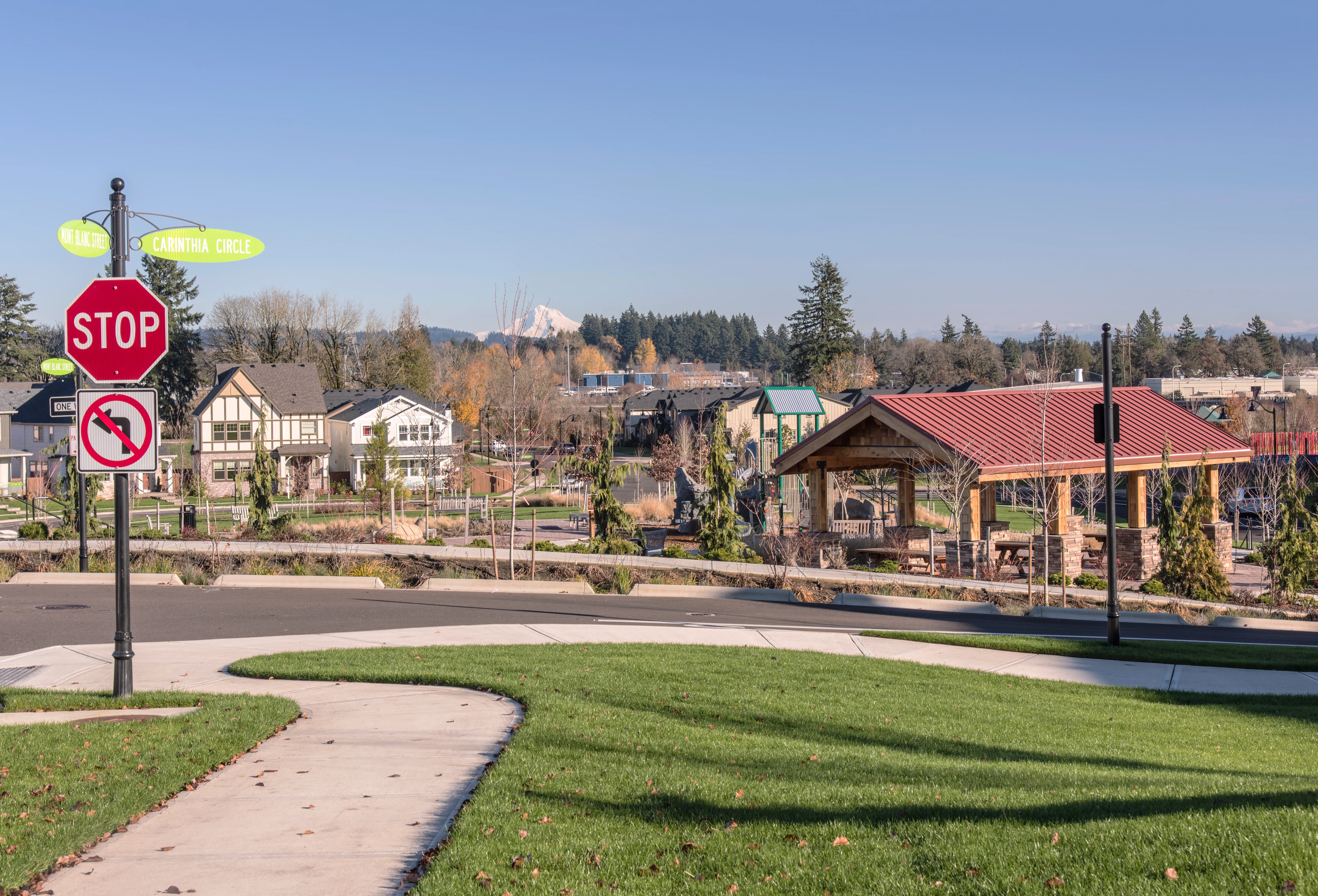
The median home price in Wilsonville sits at $648,559, which puts it well above the Oregon state average of roughly $472,000 but meaningfully below what you'd pay in Lake Oswego or West Linn for a comparable property. What that figure buys you in practice varies considerably by neighborhood. In Villebois, it typically lands you a 3-bedroom craftsman-style attached home in the high $500s, while the same budget in Canyon Creek North or Frog Pond can stretch to a 4-bedroom detached home on a standard lot. Charbonneau sits at a different price logic altogether — you're often paying a premium for the golf community lifestyle, and homes here can range from the high $400s in older sections to well over $800,000 in updated waterfront properties.
Market tempo has softened noticeably from the frenzied pace of 2021–2022. Homes were sitting an average of 76 days on market as of early 2026, a significant shift from the 39-day pace seen in late 2025 — indicating that buyers currently have room to negotiate. The Redfin Compete Score puts Wilsonville at a 46 out of 100, or "somewhat competitive," which in practical terms means you can usually get an inspection, may have time to think, and aren't necessarily competing with five other offers. The housing stock is split almost evenly between owned and rented units, with a meaningful share of large apartment complexes that keep the rental market reasonably liquid.
Most purchase-ready inventory clusters between $540,000 and $850,000, with price-per-square-foot hovering around $300–$325. That consistency makes Wilsonville relatively easy to underwrite as a buyer — you're not navigating the wild swings you'd see in parts of inner Portland.
| Budget Range | What It Typically Buys in Wilsonville |
|---|---|
| Under $450,000 | Older condo or townhome; limited inventory; mostly resale |
| $450,000–$599,000 | 2–3 BR attached home or older single-family; Charbonneau or smaller footprints in Villebois |
| $600,000–$749,000 | 3–4 BR single-family detached; most Frog Pond, Canyon Creek North, RiverGreen listings |
| $750,000–$900,000 | Larger 4–5 BR homes; updated Charbonneau properties; premium Villebois lots |
| $900,000+ | Custom or estate-level; limited supply; Charbonneau waterfront or large acreage adjacent to city |
Clackamas County's effective property tax rate in Wilsonville runs approximately 1.03%, which translates to roughly $6,680 per year — or about $557 per month — on the median-priced home. Oregon's Measure 50, passed in 1997, caps assessed value increases at 3% annually regardless of market appreciation, which means longtime homeowners often pay taxes on an assessed value far below their home's actual market price. New buyers get assessed closer to purchase price, so if you're buying at $648,559, budget for the full amount from day one rather than assuming your neighbor's lower bill reflects what you'll owe.

Wilsonville is one of those markets where buyers consistently underestimate how much runway they have right now. With days on market stretched to 76 days and price-per-square-foot down slightly year-over-year, this is genuinely one of the better negotiating environments I've seen here in several years. The neighborhoods getting the most attention from buyers relocating from California are Villebois and Frog Pond — both offer that master-planned feel with strong HOA maintenance, and both are priced more accessibly than the Lake Oswego alternatives most out-of-state buyers initially target.
The thing buyers consistently get wrong is ignoring HOA fees in their monthly budget math. In communities like Villebois and Charbonneau, those fees run $200–$400 per month and need to be part of every offer-price calculation. A home priced at $620,000 with a $350/month HOA is a materially different monthly commitment than a $650,000 home in a neighborhood with no HOA. I always walk clients through the fully-loaded monthly number before we start writing offers — that's where the real comparison happens. If you're considering Wilsonville and want insight into which neighborhoods align with your priorities and budget, I'd welcome the opportunity to share what I've learned from helping hundreds of families make this move successfully.
Wilsonville's rental market has softened considerably over the past year, with median rents down roughly 11% from a year ago and vacancy rates giving tenants more leverage than they've had in recent memory. For a city where nearly half of all housing units are renter-occupied, that's a meaningful shift. The sweet spot in the market is the 2-bedroom apartment, which makes up roughly half of available rental inventory — reflecting the city's strong draw for working couples, small families, and single professionals who want suburban stability without a mortgage.
| Unit Type | Approximate Monthly Rent |
|---|---|
| Studio | $1,350–$1,500 |
| 1 Bedroom | $1,500–$1,650 |
| 2 Bedroom (apartment) | $1,700–$2,100 |
| 2 Bedroom (townhome) | $1,900–$2,300 |
| 3 Bedroom (townhome/SFR) | $2,200–$2,800 |
Oregon's statewide rent control law caps annual increases at 7% plus CPI — running approximately 9.9% maximum for 2025–2026 lease renewals — which provides a meaningful ceiling for long-term renters. For someone not yet ready to buy, Wilsonville's rental market offers a reasonably stable entry point into one of the Portland metro's most livable suburban communities. The average apartment runs about 943 square feet, and the majority of rentals fall in the $1,500–$2,000 per month band.
Portland General Electric handles electricity for Wilsonville, and Pacific Northwest hydropower keeps rates well below national norms — roughly 14.66 cents per kilowatt-hour, compared to a national average that runs considerably higher. Monthly electricity bills for a typical household fall in the $90–$120 range, with electricity accounting for roughly 40–50% of the total utility bill. NW Natural supplies natural gas for heating, and monthly heating costs generally run $50–$150 depending on the season and home size. On balance, Wilsonville households spend approximately $180–$250 per month on combined utilities — about 2–4% below the national average.
Water, sewer, stormwater, and road maintenance are billed directly by the City of Wilsonville. The base water rate starts at $19.84 per month for minimal usage, with per-unit charges above that threshold. Average household water use runs about 5 units in winter and climbs to 12 units in summer during irrigation season, which means summer utility bills are typically $40–$60 higher than winter months. One genuine advantage of living inside Wilsonville's city limits is the direct billing relationship — there's no third-party utility district adding layers of fees.
Wilsonville is fundamentally car-dependent. There is no practical way to navigate daily life here — grocery runs, school pickups, employer campuses — without a vehicle for most residents. The city sits at the junction of I-5 and Boones Ferry Road, and the 26-minute average commute to Portland is genuinely achievable during off-peak hours in the morning. What that figure obscures is the I-5 squeeze between the Wilsonville Road interchange and the Tualatin River bridges, which can push commute times to 40–50 minutes during the 7–8:30 AM window. The workaround many locals use is leaving before 6:45 AM or after 9:00 AM — a hack that works well for remote-hybrid workers but less so for fixed 8 AM starts.
SMART transit operates bus service connecting Wilsonville to Tualatin and the Wilsonville Transit Center, which links to the WES Commuter Rail line running north to Beaverton — and from there to MAX light rail. It's a viable option for downtown Portland commuters who can tolerate a 60–75 minute total transit time, but most Wilsonville residents drive. Gas costs, insurance, and parking should be factored into any monthly budget calculation. Budget approximately $250–$400 per month for vehicle-related costs depending on mileage and vehicle type.
Wilsonville has solid grocery infrastructure. Safeway and Fred Meyer are both located conveniently near Town Center, and a Costco — operating in its standard warehouse format — serves bulk shopping needs on the Wilsonville Road corridor. Dining costs run roughly in line with suburban Portland: a sit-down dinner for two at a mid-range restaurant typically runs $55–$80, and coffee shop visits average $5–$7 per drink. Residents frequently cross into Tualatin on Nyberg Road or south toward Canby for broader retail variety, but the core shopping needs are well-covered without leaving the city.

💰 Portland Metro Cost of Living Rankings
Wondering how Wilsonville stacks up against all 15 Portland Metro suburbs at once? Our complete rankings guide covers every suburb — home prices, monthly PITI, income needed to buy or rent, and property tax rates by county.
See the Full Portland Metro Cost of Living Rankings →Looking to buy in Wilsonville? Estimate your payment.
Enter your numbers to see an estimated monthly mortgage payment.
Estimate only. Excludes HOA fees and mortgage insurance.
| City | Median Home Price | Property Tax Rate | Commute to Portland | School Rating | Sales Tax |
|---|---|---|---|---|---|
| Wilsonville | $648,559 | 1.03% | ~26 min | A | None |
| Tualatin | ~$575,000 | ~1.12% | ~22 min | B+ | None |
| Sherwood | ~$615,000 | ~1.08% | ~30 min | A- | None |
| West Linn | ~$730,000 | ~1.05% | ~28 min | A | None |
| Lake Oswego | ~$825,000 | ~1.06% | ~20 min | A | None |
| Canby | ~$480,000 | ~1.10% | ~38 min | B | None |
| Oregon City | ~$495,000 | ~1.11% | ~30 min | B | None |
The clearest cost case for Wilsonville over its neighbors is the pairing of school quality and price. West Linn delivers comparable school ratings at a roughly $80,000 premium on the median home. Lake Oswego commands an even larger gap with similar or marginally stronger schools. Canby and Oregon City bring notably lower prices but longer commutes and lower school ratings. For households prioritizing the West Linn-Wilsonville School District's A-rated programs at the most accessible price point in that district, Wilsonville typically wins the comparison.
This budget assumes purchase of a median-priced $648,559 home with 10% down, a 30-year fixed mortgage at approximately 6.8% interest, and a dual-income household near the city's median income of $96,236.
| Category | Estimated Monthly Cost |
|---|---|
| Mortgage (principal + interest) | ~$3,810 |
| Property Tax | ~$557 |
| HOA (if applicable — estimated average) | ~$275 |
| Homeowner's Insurance | ~$130 |
| Electricity | ~$110 |
| Natural Gas | ~$85 |
| Water/Sewer/Stormwater | ~$80 |
| Internet & Phone | ~$150 |
| Groceries (2-person household) | ~$650 |
| Transportation (1–2 vehicles) | ~$800 |
| Dining & Entertainment | ~$400 |
| Healthcare (out-of-pocket avg) | ~$300 |
| Total Estimated Monthly | ~$7,347 |
A household earning $96,236 per year takes home roughly $6,400–$6,800 per month after Oregon income taxes. That math makes ownership at the median price a genuine stretch for a single-income household at the city's median earnings. Dual-income households or buyers bringing significant equity from a prior home sale are better positioned. First-time buyers often find more financial breathing room in Frog Pond or the Canyon Creek area, where homes priced in the $580,000–$620,000 range shave meaningful dollars off the monthly obligation.
Oregon runs a state income tax ranging from 4.75% to 9.9% across income brackets, which is among the higher state income tax structures in the western U.S. A household earning $96,236 typically lands in the 8.75% marginal bracket for income above roughly $17,400, making effective state tax rates for middle-income earners something to plan around. The offset — and it's a meaningful one — is Oregon's complete absence of a sales tax. No sales tax on groceries, clothing, vehicles, appliances, or home improvement purchases. For a household spending $40,000–$50,000 annually on taxable goods and services, this saves $3,500–$5,000 per year compared to living in a state with a 7–9% sales tax.
Oregon also offers a Senior Deferral Program that allows qualifying homeowners over 62 to defer property taxes until the home is sold, which can be a significant benefit for retirees on fixed incomes. The program doesn't eliminate the tax obligation, but it removes it from monthly cash flow — a meaningful distinction for someone managing retirement distributions. Wilsonville's proximity to the Washington state border (roughly 40 minutes north) occasionally prompts buyers to consider whether a Vancouver, WA address would be more tax-efficient, but the loss of the West Linn-Wilsonville school system and the longer commute geometry typically make that calculation unfavorable for families.

Local Expert Takeaway: Buyers who focus exclusively on the mortgage number miss the full picture in Wilsonville. The communities where the monthly math actually pencils best are Frog Pond and Canyon Creek North — both offer detached single-family homes in the $580,000–$650,000 range with modest HOA fees, and neither requires the premium you'd pay in Villebois or Charbonneau for comparable square footage. If you're coming from California and accustomed to HOA-heavy communities, Villebois is an easy fit — just build the $300/month HOA into your offer price ceiling from the start. And if you're a dual-income household sitting close to that $96,000 median, don't sleep on the Senior Deferral Program as a future planning tool even if retirement feels distant — Oregon's property tax structure rewards long-term ownership significantly.
💰 Portland Metro Cost of Living Rankings
Ready to compare all 15 Portland Metro suburbs side by side — home prices, monthly PITI, and income needed to buy? Our complete rankings guide covers every suburb — home prices, monthly PITI, income needed to buy or rent, and property tax rates by county.
Portland Metro Suburbs Cost of Living: Top 15 Ranked →Is Wilsonville expensive compared to the rest of Oregon?
Yes, but context matters. Wilsonville's cost of living runs roughly 14–33% above the national average, and its median home price exceeds Oregon's state average by nearly $175,000. Within the Portland metro, though, it's priced more accessibly than Lake Oswego, West Linn, and most of inner Portland while offering top-tier schools and a 26-minute commute corridor.
What is the property tax rate in Wilsonville?
The effective property tax rate in Wilsonville is approximately 1.03%, applied to assessed value. On the median-priced home, that works out to roughly $6,680 per year. Oregon's Measure 50 limits assessed value growth to 3% annually, which tends to benefit long-term owners more than new buyers who get assessed near their purchase price.
Is it cheaper to rent or buy in Wilsonville right now?
For most households, renting pencils out at a lower monthly cost in the short term — median rents for a 2-bedroom run $1,700–$2,100 versus a mortgage payment plus taxes and insurance well above $4,400 on a median-priced purchase. The long-term ownership calculus shifts significantly once you factor in Oregon's assessed value cap, potential equity growth, and the absence of rent increases. Buyers who plan to stay five or more years in Wilsonville generally find ownership favorable; shorter timelines typically favor renting.
Browse current listings updated daily — filtered for Wilsonville buyers by Elizabeth Davidson, your local expert.
Powered by Elizabeth Davidson · Cascade Hasson Sotheby's International Realty · 503-939-2035
Explore the full Wilsonville series: The Ultimate Wilsonville Relocation Guide · Is Wilsonville Safe? · Cost of Living in Wilsonville · Best Neighborhoods in Wilsonville · Wilsonville Schools & Family Life · Wilsonville Youth Sports · Wilsonville Parks & Recreation · Retiring in Wilsonville · 1031 Tax-Deferred Exchange in Wilsonville · Wilsonville First-Time Homebuyers Guide · · Moving to Wilsonville from California · The Wilsonville Realtor's Perspective · Top 10 Questions a Realtor Gets About Wilsonville
Tell us what you need help with and we'll connect you with local resources.

About the Author
Todd Davidson is the founder of Living in Oregon and Living in Washington, where he publishes in-depth city guides, neighborhood resources, and local market insights covering more than 180 communities across the Pacific Northwest. While his background is in home financing and real estate, he created these digital platforms to help families research and compare regions before making a move.