
Willamette Valley · Oregon
There's a specific moment every first-time buyer describes — somewhere between the mortgage pre-approval and the first weekend of open houses — when the whole thing gets real. The number on the page stops being abstract. You realize you're not shopping for a lifestyle, you're making the biggest financial decision of your life, probably with less than 20% down, competing against people who've done this before. For buyers looking at Turner, that moment usually comes with a second realization: this small Willamette Valley town, tucked just south of Salem along I-5, offers something genuinely rare in the current Oregon market — a real community feel, a strong school district, and a price point that still has some room for a first-time buyer to find a foothold.
The median home price in Turner sits at $552,000 — but that number deserves context. Recent sold data shows homes actually changing hands in the $435,000–$480,000 range more commonly, a gap created partly by premium rural and acreage listings that inflate the city-wide average. For a typical first-time buyer, this means a realistic entry budget lands somewhere in the $400,000–$520,000 range for a move-in-ready single-family home. The difference between renting a two-bedroom near Salem and owning in Turner can be narrower than buyers expect once you factor in down payment assistance programs and Turner's notably low property tax rate of 0.65%.
This guide walks you through the entire first-time buying process as it actually unfolds in Turner — from credit score reality to what specific neighborhoods look like at different price points, where buyers commonly trip up, and how to approach a market that's slightly softer than it was two years ago but still rewards buyers who show up prepared.
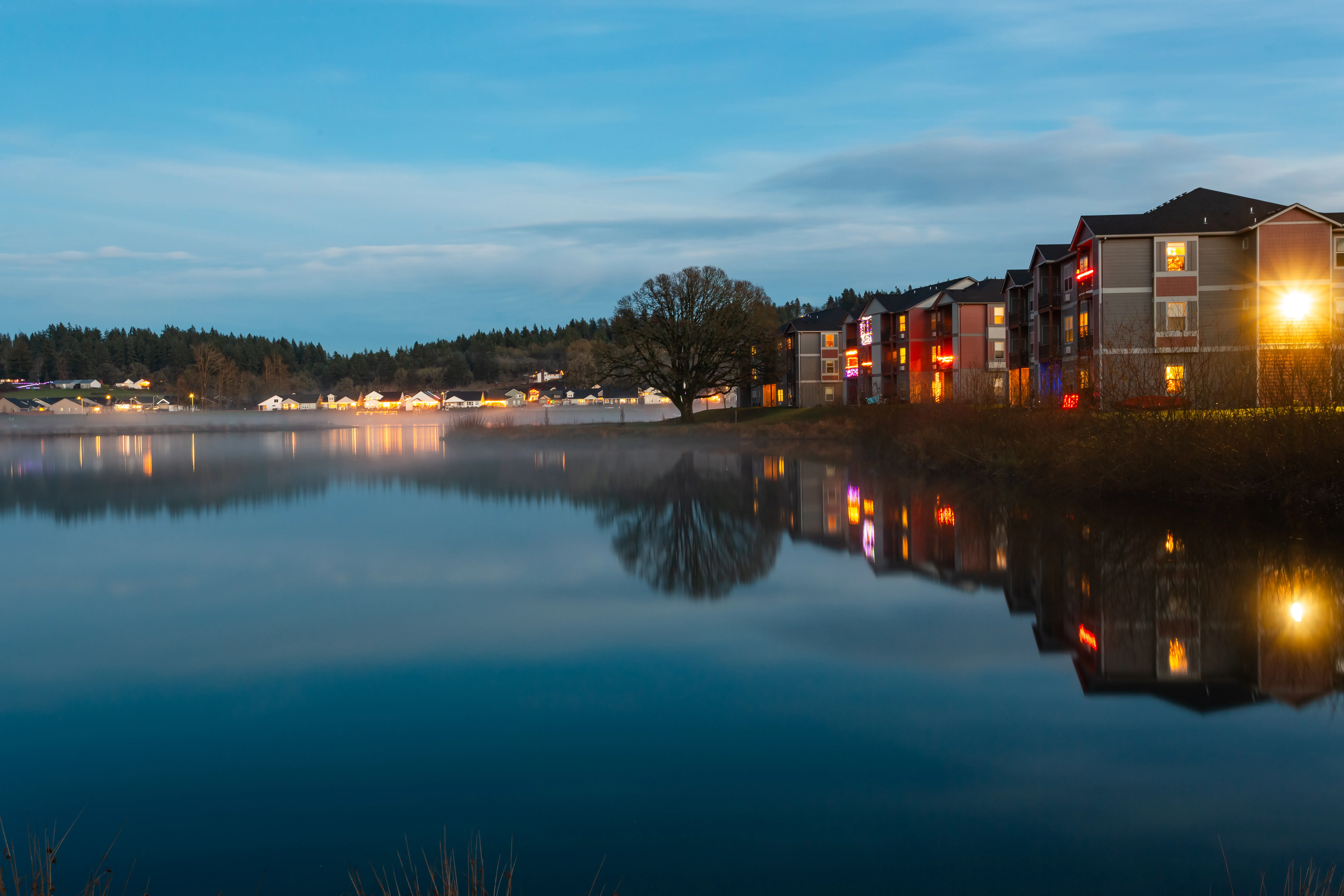
Turner's case for first-time buyers rests on a few genuinely compelling pillars. Compared to Salem proper, where comparable homes often push $50,000–$80,000 higher for similar square footage, Turner offers more space — sometimes on larger lots with shops or outbuildings — within the well-regarded Cascade School District. The commute to Salem runs about 26 minutes under normal conditions, and proximity to I-5 keeps Portland and the broader Willamette Valley accessible. For families with school-age children, the district's consistent B+ performance is a real draw that shows up in resale conversations.
The honest counterpoint: Turner's housing inventory is small. With fewer than 50 active listings at any given time, buyers can't afford to spend three months getting comfortable with the process before making an offer. And while the market has softened from its 2022 peak — homes are sitting an average of 60 or more days — well-priced move-in-ready homes in the $400,000–$500,000 range still generate interest quickly. Entry-level properties under $400,000 do exist here, but they're typically older homes that need work, and a first-time buyer needs to go in with eyes open about renovation costs.
| Price Range | What You Typically Find | Neighborhood Examples | Competition Level |
|---|---|---|---|
| Under $350K | Older fixer-uppers, 3BR/1BA, ~1,000 sq ft, may need significant work; some USDA-eligible properties | Rural outskirts, older platted lots | Low — mostly patient buyers or investors |
| $350K–$450K | 3BR/2BA, 1,050–1,400 sq ft, some on larger lots with outbuildings; some move-in ready; some needing cosmetic updates | Near Turner Lake Park, older subdivisions | Moderate |
| $450K–$550K | Updated 3BR/2BA or entry 4BR; LVP flooring, newer roofs, functional kitchens; lot sizes often 0.2–0.5 acres | Established residential streets, Cascade District access | Moderate to competitive |
| $550K–$650K | Larger 4BR, newer construction or fully remodeled; garages, covered patios, clean mechanicals | Newer platted areas south and west of downtown core | Competitive for priced-right listings |
| $650K+ | Rural acreage, vineyard-adjacent properties, custom homes with significant land; not a typical first-time buyer entry point | Rural Turner / Willamette Valley edge | Low volume, longer days on market |
The $450,000–$550,000 band is where the value proposition sharpens. Updated homes in this range move faster than the market average, and buyers who stretch slightly from a $400,000 comfort zone often find the difference in monthly payment is offset by avoiding the repair costs lurking in lower-priced inventory. Turner's property tax rate of 0.65% keeps carrying costs meaningfully lower than comparable homes in Salem, which softens the sting of a higher purchase price.
| Step | What Happens | Typical Timeline | What First-Timers Get Wrong |
|---|---|---|---|
| Get finances in order | Pull credit reports, pay down revolving debt, stop opening new accounts | 1–3 months before searching | Waiting until they find a home to start |
| Pre-approval | Lender reviews income, assets, credit; issues a written pre-approval letter | 1–5 business days | Confusing pre-qualification with pre-approval |
| Find an agent | Interview agents who know Marion County and Turner specifically | Before active searching | Using a friend's cousin who "does real estate" part-time |
| Active search | Browse WVMLS and RMLS listings; attend showings | 4–12 weeks | Setting alerts but not acting fast on new listings |
| Making offers | Submit with pre-approval, earnest money, and cover letter if allowed | 24–72 hours after finding the home | Lowballing in a market where sellers still have leverage |
| Under contract | Seller accepts; you enter due diligence period | Day 1 of transaction | Not understanding the contingency timeline |
| Inspection | Licensed inspector evaluates the home; you negotiate repairs | Days 5–10 | Waiving inspection to be competitive — unnecessary in Turner |
| Appraisal | Lender orders appraisal to confirm value matches loan | Days 10–20 | Not knowing what happens if the home appraises low |
| Final walkthrough | Confirm agreed repairs were made; home is in expected condition | 24 hours before closing | Skipping it — this is your last protection |
| Closing | Sign documents, wire funds, receive keys | Day 30–45 | Not having closing funds wired early enough |

Looking to buy in Turner? Estimate your payment.
Enter your numbers to see an estimated monthly mortgage payment.
Estimate only. Excludes HOA fees and mortgage insurance.
Conventional loans require a minimum 620 score, but the rate you get at 650 versus 740 can be dramatically different. On a $420,000 loan, the rate gap between a 650 and a 740 score often translates to $150–$200 more per month — that's real money over 30 years. If your score is in the 650s, spending three to six months paying down credit card balances before applying can return thousands of dollars in interest savings over the life of your loan.
FHA loans drop the entry threshold to 580 for a 3.5% down payment, or 500–579 with 10% down. The tradeoff is mortgage insurance — PMI stays on an FHA loan for the life of the loan unless you refinance, which is a cost most buyers underestimate. On the income side, lenders use a 28% front-end debt-to-income ratio as a rule of thumb. To comfortably qualify for a $400,000 home with a standard down payment, you'd want gross monthly income around $4,800–$5,200 per month ($57,600–$62,400 annually). A $450,000 home pushes that to roughly $65,000–$70,000 annually, and a $500,000 home to $72,000–$78,000.
DTI — your debt-to-income ratio — is the number that quietly disqualifies more buyers than credit scores. Lenders look at your total monthly debt obligations (car payment, student loans, minimum credit card payments, future mortgage) as a percentage of your gross income. Most conventional lenders cap total DTI at 43–45%. A buyer earning $80,000 a year with a $500/month car payment and $300/month in student loans has significantly less mortgage purchasing power than a buyer with the same income and no recurring debt.
Confusing list price with what homes actually close at. Recent Turner data shows homes selling roughly 1% below list — but that average includes homes that sat for months and eventually took steep reductions. A well-priced, updated home near Turner Lake Park at $480,000 is a different conversation than an estate-sale fixer at $380,000 that's been sitting for 90 days. Understanding why a home is priced where it is matters more than the number itself.
Skipping inspection on older homes. A meaningful portion of Turner's housing stock was built in the 1970s and 1980s. These homes can be great values, but they carry specific risks: aluminum wiring in some vintages, aging HVAC systems, and older roofs. The inspection cost — typically $350–$500 in Oregon — is not the place to save money. In Turner's current market, sellers are generally willing to negotiate repairs, which makes the inspection one of your most powerful tools.
Shopping at the absolute top of their qualification. The bank may approve you for $520,000, but that number doesn't include homeowner's insurance, utilities on a house three times the size of your apartment, or the new roof the inspector flagged as "5–7 years remaining." Build a buffer of at least $30,000–$50,000 below your maximum approval when setting your search ceiling.
Misunderstanding how school district boundaries affect value. Cascade School District is a selling point throughout Turner, but district boundary lines matter for resale. Homes that fall clearly within the district's core boundaries — particularly those feeding into Cascade High School — tend to hold value more consistently than fringe addresses where the district assignment might shift.
Waiting for prices to drop significantly before buying. Turner's market has softened from its peak, but prices have stabilized rather than collapsed. Buyers who've been waiting since 2023 expecting a 20% correction have largely been disappointed. If you can qualify now, the combination of reduced competition and a low property tax rate means the monthly cost of ownership in Turner is more favorable than it's been in years — and that window doesn't stay open indefinitely.
Turner is a small city — roughly 2,400 people — which means "neighborhood" is relative. But there are distinct pockets that matter for first-time buyers. The area around Turner Lake Park offers some of the most appealing entry-level inventory: homes near the park tend to be on slightly larger lots, within easy walking distance of the trail network, and priced in the $380,000–$480,000 range for updated 3-bedroom stock. The fourth of July fireworks tradition at the lake is the kind of community anchor that drives long-term attachment to a neighborhood — and attachment is what fuels stable resale demand.
The older residential streets south of Main Street near the Turner Memorial Tabernacle and the historical core offer the most affordable access points in the city, generally in the $350,000–$430,000 range. Homes here are older, and buyers should price in cosmetic and mechanical updates. The upside is larger lots, established landscaping, and quiet streets that feel authentically small-town.
Newer residential development on the western and southern edges of the city brings more recently built homes — sometimes 10–15 years old — in the $490,000–$580,000 range. These properties tend to have cleaner mechanicals, attached garages, and more open floor plans. For a first-time buyer at the upper edge of their budget, the reduction in near-term repair costs can make the higher purchase price pencil out more favorably than it first appears.
✅ Turner's recent sold prices run $435,000–$480,000 for typical first-time buyer inventory — meaningfully below the Zillow model value and worth knowing before you set your search filters.
⚠️ The property tax rate of 0.65% is notably low by Oregon standards, but buyers who stretch to the top of their qualification often discover the real monthly cost of ownership — insurance, maintenance, utilities — wasn't in the original math.
📍 Do not waive inspection in Turner. The market doesn't require it, the older housing stock makes it worth having, and sellers in the current environment are generally willing to negotiate repairs.
Can I buy a home in Turner as a first-time buyer?
Yes — and Turner is genuinely one of the more accessible entry markets in the Salem MSA right now. Homes are taking longer to sell, sellers are negotiating, and the property tax rate keeps monthly carrying costs lower than comparable purchases in Salem proper. You'll need a solid pre-approval, realistic expectations about the condition of homes under $450,000, and the ability to move quickly when a well-priced listing appears.
How much do I need to buy my first home in Turner?
With a conventional loan at 5% down on a $460,000 purchase, you'd need approximately $23,000 for the down payment plus $8,000–$12,000 in closing costs — call it $31,000–$35,000 total cash to close. FHA at 3.5% down reduces the down payment but adds mortgage insurance. The ONE+ program can reduce your out-of-pocket down payment to 1% on loans up to $350,000 if you meet the income threshold for Marion County.
What are closing costs for a first-time buyer in Turner?
Closing costs in Oregon typically run 2–3% of the loan amount, covering lender fees, title insurance, escrow, prepaid homeowner's insurance, and property tax reserves. On a $460,000 purchase, expect $9,000–$14,000 in total closing costs. Some of these can be negotiated into seller concessions — particularly in Turner's current buyer-friendly market — which effectively rolls a portion of your upfront cash need into the transaction.
Explore the full Turner series: The Ultimate Turner Relocation Guide · Is Turner Safe? · Cost of Living in Turner · Best Neighborhoods in Turner · Turner Schools & Family Life · Turner Youth Sports · Turner Parks & Recreation · Retiring in Turner · 1031 Tax-Deferred Exchange in Turner · Turner First-Time Homebuyers Guide · · Moving to Turner from California
Tell us what you need help with and we'll connect you with local resources.

About the Author
Todd Davidson is the founder of Living in Oregon and Living in Washington, where he publishes in-depth city guides, neighborhood resources, and local market insights covering more than 180 communities across the Pacific Northwest. While his background is in home financing and real estate, he created these digital platforms to help families research and compare regions before making a move.