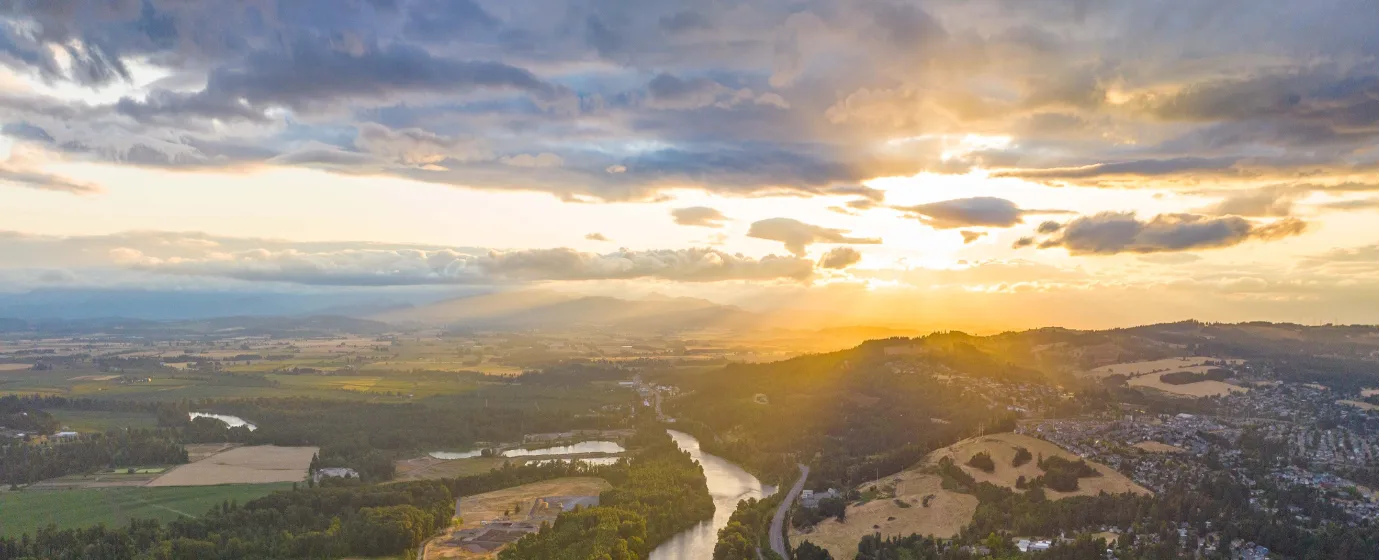
Willamette Valley · Oregon
Moving to Turner from California: The Honest Comparison (2026)
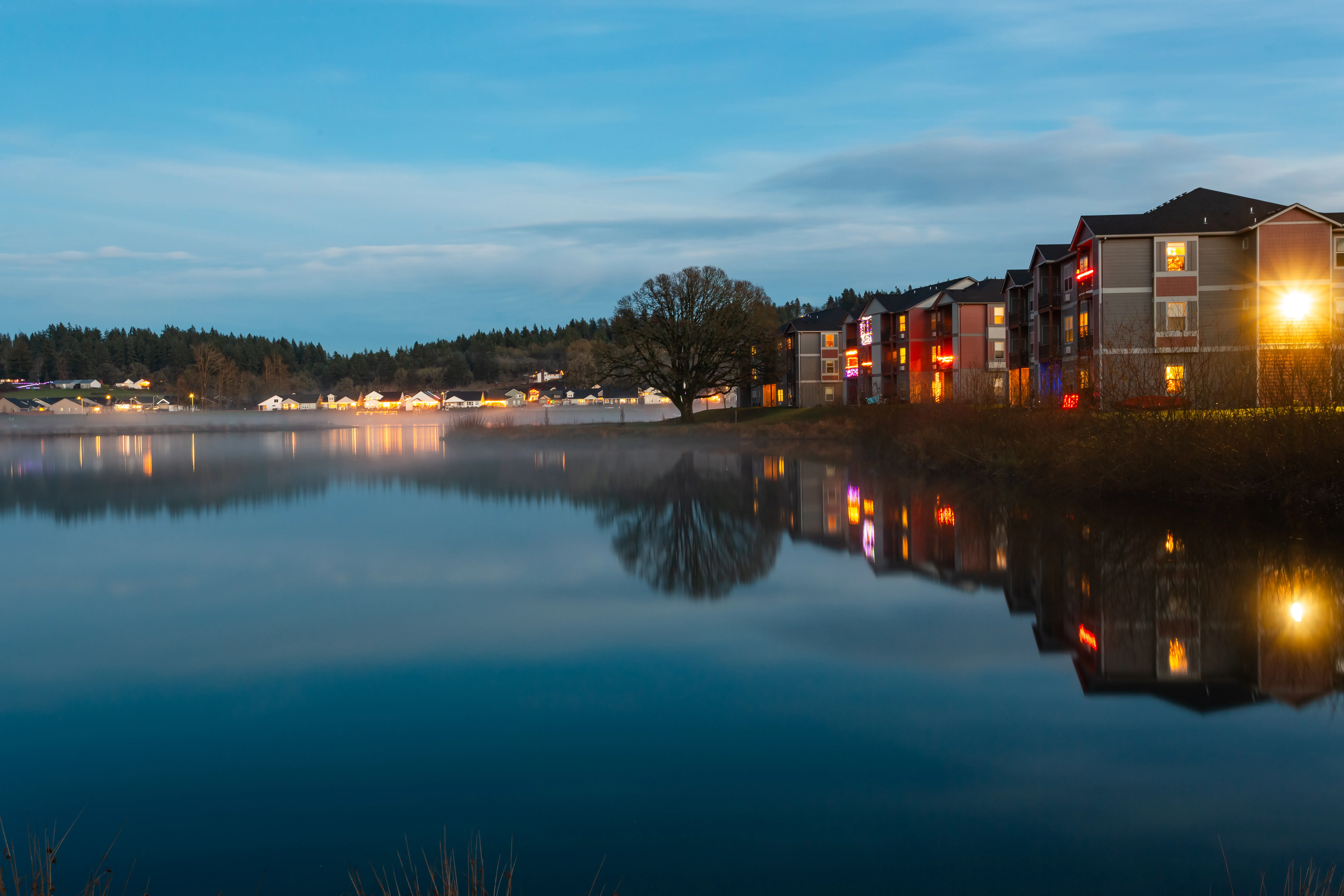
The California-to-Oregon move has never been purely about housing math, though the math is impossible to ignore. The Bay Area software engineer who finally went remote and spent three years watching their Sunnyvale townhome appreciate past $1.4 million while their backyard remained a six-by-ten concrete slab — that person isn't just moving to Turner for the numbers. They're moving for the yard, the quiet Sunday morning, the ability to own something that actually feels like a home. The Sacramento family who sold their 1,800-square-foot subdivision house and bought twice the property for less money will tell you the same thing. Turner, sitting six miles south of Salem on I-5 in the heart of the Willamette Valley, is drawing this wave of equity-rich transplants precisely because it offers what California stopped being able to provide: land, space, and a pace that doesn't cost everything you earn.
The hard part deserves equal airtime. Turner is a small city of roughly 2,400 people, and the cultural gap between it and the Bay Area, Los Angeles, or even Sacramento is significant in ways that go beyond geography. The winters here are long, gray, and wet — not Oregon-coast dramatic, but relentlessly overcast from November through March in a way that catches Californians genuinely off guard. The restaurant scene that you could walk to in your San Jose neighborhood doesn't exist here. The energy of a dense urban social scene doesn't exist here. Turner is quiet in a way that some people find deeply restorative and others find isolating by spring. The guide that prepares you for that reality is worth more than one that only talks about what you'll save.
This post breaks down the full picture: cost-of-living comparisons by California region, what different equity levels actually buy in Turner's current market, the real tax story (including the income tax that Oregon absolutely does have), the honest weather comparison, and the specific mistakes California buyers tend to make that locals can see coming a mile away. There's also an interactive tool in Section 6 where you can look up your specific California city side-by-side with Turner.
| Turner, Oregon | Bay Area | Southern CA | Sacramento Metro | Central Valley | |
|---|---|---|---|---|---|
| Median Home Price (approx. 2026) | $435K–$552K | $1.3M–$1.5M | $750K–$950K | $475K–$550K | $320K–$400K |
| Property Tax Rate (effective) | ~0.65% | ~1.1–1.2% | ~1.1–1.2% | ~1.1–1.2% | ~1.0–1.15% |
| State Income Tax (top bracket) | 9.9% | 13.3% | 13.3% | 13.3% | 13.3% |
| State Sales Tax | None | 7.25–10.75% | 7.25–10.75% | 7.25–8.75% | 7.25–8.25% |
| Avg Utilities (monthly est.) | $160–$200 | $250–$350 | $220–$320 | $200–$280 | $200–$270 |
| Avg 1BR Rent | $1,200–$1,500 | $2,800–$3,800 | $2,200–$2,900 | $1,600–$2,000 | $1,100–$1,500 |
The comparison against Sacramento is more nuanced, because the price gap is narrower. Turner's Redfin-tracked sold median of approximately $435,000 in early 2026 sits close to where Sacramento metro homes were transacting. The compelling case for this cohort isn't the raw purchase price — it's the combination of no sales tax, Oregon's moderated property tax structure, significantly more land per dollar, and a school district that outperforms most Sacramento-area options academically. Those buyers are trading lateral on price and winning on everything else.
| Tax Item | California | Oregon | Net Impact |
|---|---|---|---|
| State Income Tax (top bracket) | 13.3% | 9.9% | Oregon saves ~3.4 points at the top |
| State Sales Tax | 7.25–10.75% | None | Oregon saves $3,000–$6,000+/year depending on spending |
| Property Tax Rate (effective) | ~1.1–1.2% | ~0.65% | Oregon saves ~$2,700–$4,800/year on a $552K home |
| Property Tax Cap | Prop 13 (2% max annual increase) | Measure 50 (3% max annual increase) | Comparable long-term protection |
| Capital Gains Tax | State rate applies | State rate applies | Oregon rate lower but not zero |
| Senior Property Tax Deferral | Limited programs | Available at 62+ | Oregon advantage for retirees |
What Oregon does eliminate entirely is the sales tax. California's 7.25% baseline climbs to 10.75% in counties like Los Angeles and Santa Clara. A household running typical suburban expenses — groceries (partially exempt in CA), clothing, electronics, home goods, vehicles, restaurants — easily accumulates $4,000 to $7,000 in annual sales tax liability in a high-cost California county. That amount simply vanishes in Oregon, every year, permanently. Oregon's property tax picture adds further relief: at approximately 0.65% effective rate on a $552,000 home, the annual bill runs roughly $3,600 — compared to $6,000–$6,600 at California's effective rate on a comparable value. Measure 50's 3% annual cap on assessed value increases mirrors the long-term protection California's Prop 13 provides, so long-term owners in Turner are insulated from runaway reassessments the same way seasoned California homeowners have been.
A buyer leaving Palo Alto, Cupertino, or Saratoga with $1.5 million in net equity can purchase the best property Turner's market has to offer and write a check. The gated Enchanted Ridge community — featuring 4-bedroom, 3.5-bath homes on approximately 1.79 acres with 3-car garages and high-end kitchen finishes — lists in the $500,000 to $650,000 range. Rural acreage properties with 2,500 to 3,400 square feet on 2-plus acres trade in the $650,000 to $800,000 corridor. Buying all-cash at Turner's price points leaves this cohort with $700,000 to $1.1 million in residual capital to invest, fund retirement, or hold in income-generating assets. The mortgage simply ceases to exist — along with the $6,000-plus monthly payment that defined life in the Bay Area.
Even buyers who prefer to carry some financing can put down 50 to 60 percent and borrow at low loan-to-value ratios that attract favorable pricing from portfolio lenders. The practical ceiling of Turner's current market — roughly $800,000 for a top-tier rural property — means Bay Area equity levels reach a saturation point quickly. These buyers get everything Turner offers and still have meaningful capital remaining.
A buyer leaving Irvine, Temecula, or Long Beach with $900,000 in home equity lands squarely at the top of Turner's market with significant flexibility. At Turner's Redfin-tracked sold median near $435,000, this cohort is looking at paying cash and keeping $400,000 to $500,000 in reserve — or buying the premium acreage product in the $650,000 to $800,000 range with a very modest mortgage. The Willamette Valley estate-style listings that occasionally appear in the $700,000 to $800,000 bracket — larger rural parcels with vineyard proximity and acreage — are within reach for the SoCal buyer in a way they simply would not be if that equity stayed in California.
What this group gains beyond the property itself is tax relief that compounds annually. No sales tax, a significantly lower effective property rate, and a state income tax that comes in below California's top bracket by more than 3 percentage points — the combination adds $8,000 to $15,000 back to annual household cash flow depending on income and spending patterns.
This cohort's financial case requires the clearest explanation because the headline price difference is the narrowest. A buyer leaving Elk Grove, Rancho Cordova, or Fontana with $500,000 in equity is not making a dramatic savings move on purchase price alone — Turner's market and Sacramento's have converged over the past several years. What changes materially is the ongoing cost structure: no sales tax, lower effective property taxes, and acreage that simply doesn't pencil out in California's Inland Empire at equivalent prices.
In Turner, $450,000 to $550,000 buys a 3-to-4-bedroom home on a proper lot, often with garage space and room for a garden or outbuilding. The Cascade School District's academic performance — with Cascade Senior High ranking in the top third of Oregon high schools and posting ELA proficiency rates well above the state average — is a consistent draw for Sacramento-area families who've been watching their local district metrics flatline. That's the real calculation for this group: not just what they save on day one, but what they gain in school quality, space, and long-term cost trajectory.
The relative financial advantage for a buyer leaving Fresno, Bakersfield, or Stockton is the most modest in raw dollar terms, but the lifestyle gain is often the sharpest. Many Central Valley transplants are escaping summer heat that regularly exceeds 105°F, air quality challenges, and housing markets that haven't delivered the appreciation Bay Area and coastal regions saw. Turner's summers — with July averaging a high near 85°F and producing nearly 29 sunshine days — feel genuinely comfortable by Central Valley standards without the extreme heat.
In this equity range, Turner's entry-level market delivers 3-bed, 2-bath homes with proper yards in the $400,000 to $480,000 range. The buyer with $350,000 to $400,000 in equity puts 70 to 80 percent down and carries a small, manageable mortgage. That's not a dramatic wealth leap — it's a meaningful quality-of-life reset combined with a cost structure that doesn't punish every purchase with a sales tax surcharge.

Looking to buy in Turner? Estimate your payment.
Enter your numbers to see an estimated monthly mortgage payment.
Estimate only. Excludes HOA fees and mortgage insurance.
No section of a California-to-Oregon guide causes more post-move resentment than the one that glosses over the winters. Turner logs approximately 157 sunny days per year — about 48 fewer than the U.S. average and roughly 100 fewer than Los Angeles. Precipitation falls on roughly 160 days annually, which doesn't mean 160 hard rains — much of it is the Pacific Northwest drizzle that locals barely register — but it does mean that from November through March, the sky is a consistent gray with brief interruptions. A buyer arriving from San Diego, where 262-plus sunny days are the baseline expectation, is encountering a fundamentally different psychological climate. It's not dramatic. It's just persistent, and it catches people.
What most California transplants genuinely didn't expect — and report loving after their first full year — is the summer. Turner's July and August average more than 11 hours of sunshine per day, temperatures hold comfortably in the low-to-mid 80s, and the Willamette Valley stays dry. The outdoor culture in summer here is legitimately excellent: the Willamette River access near Salem, the proximity to Silver Falls State Park (about 30 minutes east), the ability to grow a serious garden, the farmers markets, the early evening light that lingers past 9 p.m. in June. The pace of community life in a town of 2,400 is slower, but people who came from Pleasanton or Sacramento neighborhoods where they barely knew their neighbors often find Turner's scale surprisingly connecting.
What they miss most honestly: year-round beach access, the density of restaurant and food culture in their California city, the social energy of a population center, and — for Bay Area transplants particularly — the professional peer network that California tech corridors generate. Turner doesn't have a coffee culture block or a weekend brunch scene. Salem is 26 minutes away and provides those amenities at a lower California-adjusted price point, but it requires a drive. People who prioritize walkable dining and nightlife and find their identity closely tied to urban density tend to feel the friction of Turner's scale within their first winter. People who want a yard, quiet mornings, and a community where they're not anonymous tend to report the opposite.
If you want to see how Turner compares directly to the city you're leaving, use the tool below — it covers the 120 largest California cities with current housing and tax data.
Home prices: Redfin median sale data, Q1–Q2 2026. Select your city to compare.
Ready to talk through what your specific California equity could do in Turner? Todd can model your exact scenario in a single call.
Mistake 1: Treating Turner like a Salem suburb with a different zip code. Turner has its own city character, its own school district, and its own property market that behaves independently from Salem's. Buyers who research "Salem Oregon real estate" and assume it translates to Turner are missing a distinct dynamic — including acreage product, rural-lot zoning, and a market that currently has more days-on-market than Salem's tighter inventory suggests.
Mistake 2: Skipping radon testing. Oregon, and Marion County specifically, sits in an elevated radon zone — a detail that almost never comes up in California real estate transactions because California's geology creates different risk profiles. Radon is colorless and odorless, and long-term exposure at elevated levels carries documented health risks. Turner homes — particularly those with basements or slab-on-grade construction with limited sub-slab ventilation — should be tested as a standard part of the inspection process. California buyers who've done dozens of home transactions often haven't encountered this step and need a local agent to flag it.
Mistake 3: Underestimating how different winter access feels. A buyer from San Diego who hikes year-round, bikes to work in January, or runs outdoor errands in flip-flops in February is about to meet a different reality. Outdoor recreation in the Willamette Valley from November to March requires deliberate adjustment — waterproof gear, a tolerance for mud, and a recalibration of which activities translate to wet conditions. The commute to Salem on I-5 is typically straightforward, but the occasional ice event on rural Marion County roads and the simple psychological weight of gray-season driving catches people who've never experienced it.
Mistake 4: Anchoring to California list-price psychology. Turner's current market has a wide spread between list prices and sold prices — the listing median runs around $653,000 while actual sold transactions in early 2026 tracked near $435,000. California buyers conditioned to overbid in competitive coastal markets sometimes arrive in Turner and bid at or above list on properties that have been sitting for 90 to 116 days and have room to negotiate. Coming in with a Bay Area bidding-war mentality on a Turner property that's been on the market for four months is leaving money on the table.
Bay Area seller with $1.2M+ in equity: The rate conversation becomes almost secondary for this group. Paying all-cash in Turner eliminates rate risk entirely and gives a buyer the kind of clean, no-contingency offer that sellers respond to even in a slow market. For buyers who previously owned investment property in California, a 1031 exchange into a Turner rental or multi-acre property is worth modeling before the California escrow closes — the Turner 1031 Exchange guide walks through the timeline and property identification requirements specific to this market. Even at a 40-to-50-percent down payment, the loan amount in Turner rarely reaches jumbo territory, which opens conventional pricing to buyers who were operating in jumbo products throughout their California homeownership.
Southern California seller with $700K–$1.2M in equity: This group typically has no jumbo exposure at Turner's price points and qualifies for conventional financing with strong loan-to-value ratios. A 30 to 40 percent down payment lands them in a range where private mortgage insurance is irrelevant and lender competition works in their favor. The practical focus here is bridge financing if the California close and Turner purchase don't align on timing — Oregon lenders familiar with out-of-state equity situations can structure this without forcing a double move.
Sacramento or Inland Empire seller with $400K–$650K in equity: Buyers in this range purchasing under approximately $350,000 can typically pay cash outright, sidestepping financing questions entirely, though the more relevant play for most of this cohort is the large conventional down payment their equity enables even at Turner's higher price points.
Local Expert Takeaway: The single thing California buyers most consistently underestimate about Turner is the negotiating position the current market creates for them. With homes sitting 90 to 116 days and a wide gap between list and sold prices, a cash offer or a strong conventional offer at 80 to 85 percent of list is legitimate strategy — not lowballing. Before you arrive with a Bay Area mindset prepared to compete aggressively, get a local agent to pull the actual sold comps for the past 90 days in Turner specifically, not the Marion County or Salem-wide averages. The micro-market data tells a very different story than the regional headline numbers.
✅ Turner's market is genuinely soft right now — cash buyers and equity-rich California sellers are in a stronger negotiating position than at any point in the past several years, with days-on-market stretching past 90 days on many listings.
⚠️ Oregon has a state income tax — 9.9% at the top bracket. The tax relief vs. California is real but comes primarily from the elimination of sales tax and lower effective property rates, not income tax elimination.
📍 The weather gap is real and concentrated in winter — Turner gets roughly 157 sunny days per year versus 262-plus in Los Angeles. Summers here are legitimately excellent. November through March requires honest mental preparation.
Is moving from California to Turner worth it?
For buyers with meaningful California equity, the financial case is strong in nearly every scenario — lower purchase prices, no sales tax, lower effective property taxes, and more land per dollar. Whether it's personally worth it depends heavily on how you weigh outdoor lifestyle, community scale, and access to urban amenities. Turner's best fit is the buyer who wants space, quiet, and a small-town community structure over walkable density — and who goes in with clear eyes about Oregon winters.
How does Oregon property tax compare to California?
Oregon's effective property tax rate in Turner runs approximately 0.65%, compared to California's typical effective rate of 1.1 to 1.2 percent. On a $552,000 home, that difference saves roughly $2,500 to $3,000 annually. Both states cap annual assessed value increases — California at 2% under Prop 13, Oregon at 3% under Measure 50 — so long-term owners in both states benefit from similar inflation protection on their tax base.
How competitive is the Turner real estate market for cash buyers from California?
Very favorable right now. Turner's market is classified as "somewhat competitive" at best, with homes averaging well over 90 days on market in early 2026 and a meaningful gap between listing prices and actual sold prices. Cash buyers from California — particularly those exiting Bay Area or Southern California properties — have significant leverage to negotiate below list, skip financing contingencies, and close on flexible timelines that sellers in a slow market genuinely value.
Explore the full Turner series: The Ultimate Turner Relocation Guide · Is Turner Safe? · Cost of Living in Turner · Best Neighborhoods in Turner · Turner Schools & Family Life · Turner Youth Sports · Turner Parks & Recreation · Retiring in Turner · 1031 Tax-Deferred Exchange in Turner · Turner First-Time Homebuyers Guide · · Moving to Turner from California
Tell us what you need help with and we'll connect you with local resources.

About the Author
Todd Davidson is the founder of Living in Oregon and Living in Washington, where he publishes in-depth city guides, neighborhood resources, and local market insights covering more than 180 communities across the Pacific Northwest. While his background is in home financing and real estate, he created these digital platforms to help families research and compare regions before making a move.