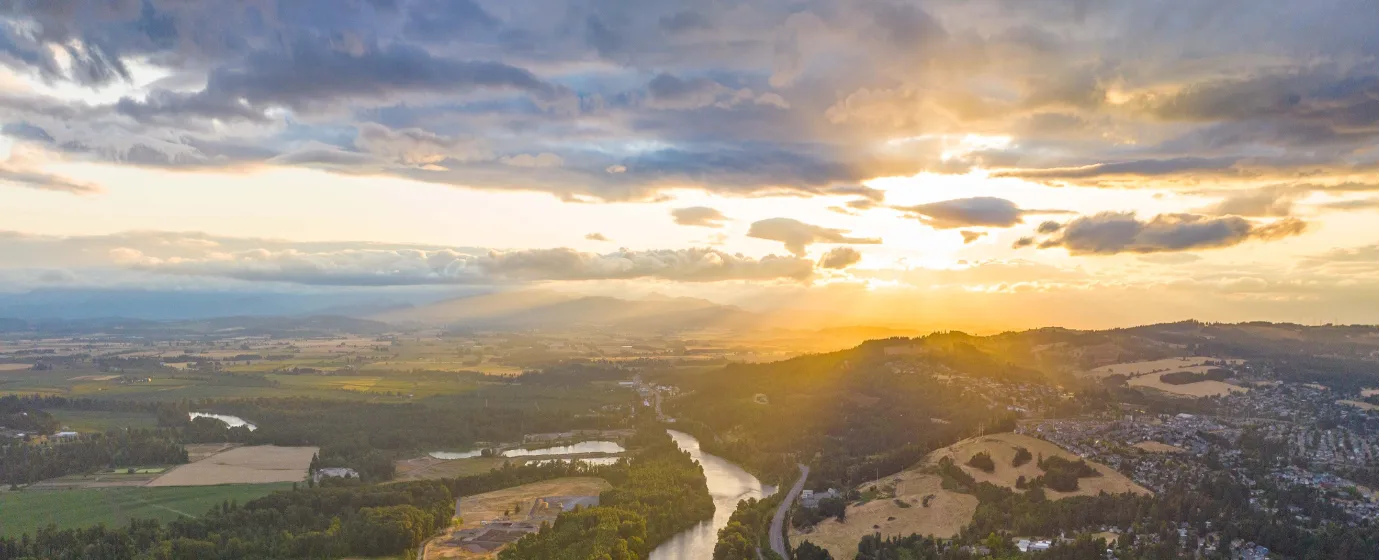
Willamette Valley · Oregon
Living in Turner: The Ultimate Relocation Guide (2026)
Maybe your company is relocating you to the Salem metro and someone handed you a list of nearby small towns. Maybe you've been burned by Salem's traffic and downtown congestion and you're looking for something quieter — somewhere you can actually hear yourself think between the commute and the evening run. Maybe you drove through Turner on Highway 22 and thought, this doesn't look like much, and then later saw what homes are actually selling for and got curious. Turner is exactly the kind of city that doesn't advertise itself. Its central tension is simple: it sits less than a mile from the Salem city limits, offers median home values around $552,000, and yet operates like a genuine small town of roughly 2,400 people — where 77% of residents own their homes and the median age skews toward settled, intentional adults.
Geographically, Turner is compact and easy to underestimate. The city covers just 1.43 square miles in Marion County's western pocket, with Mill Creek running through the center and farmland pressing in from the east. Interstate 5 and Highway 22 make the connection to Salem straightforward — the average commute runs about 26 minutes — and the drive to Portland is under 90 minutes. What shapes daily life here is not a downtown restaurant scene or a walkable main street. It's the combination of single-family neighborhoods built mostly after 2000, low-traffic residential streets, proximity to Salem's full urban infrastructure, and a quiet rhythm that appeals to people who have deliberately chosen less.
This guide will help you decide whether Turner is the right fit — and more importantly, where the right fit might be if it isn't. You'll get an honest read on who thrives here, which trade-offs tend to surprise buyers after move-in, how Turner stacks up against Aumsville, Sublimity, and Salem proper, and what the housing market actually looks like on the ground in 2026.
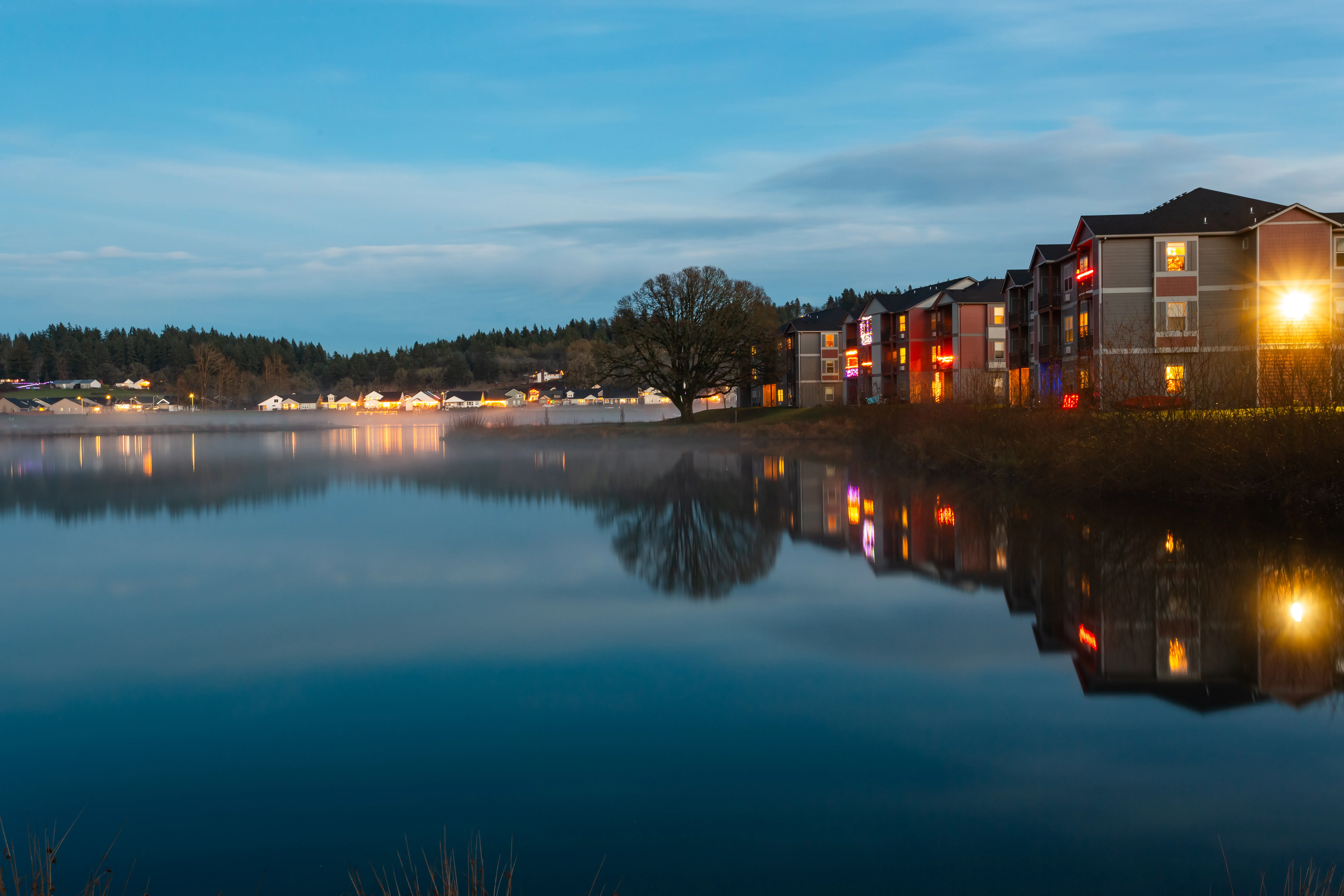
Turner isn't a city that works for everyone, but for the right buyer it's surprisingly close to ideal. The table below gives you a fast read before the detail.
| Best For | Why |
|---|---|
| Salem commuters | 26-minute average drive; I-5 access keeps the commute predictable on most days |
| Families with school-age children | Cascade School District earns a B+ rating; low crime rates; strong owner-occupied neighborhood feel |
| Retirees seeking quiet | One of the top 6.5% of family-friendly neighborhoods in Oregon; low density, high ownership, peaceful pace |
| First-time buyers | Entry point below most Salem-adjacent markets; newer construction stock available |
| Remote workers | High homeownership, quiet streets, and decent internet access to Salem's infrastructure without urban noise |
| Government employees | Remarkably high share of government workers — Turner sits inside a community built around Salem's state workforce |
Living in Turner means accepting that nearly everything you need on a daily basis requires a short drive. There's no coffee shop to walk to on a Sunday morning, no farmers market two blocks from your front door. What there is — and this matters more than it sounds — is an uncrowded neighborhood atmosphere where you'll recognize your neighbors, where children ride bikes in the street with some frequency, and where the background noise of urban Oregon never quite reaches you. Mill Creek runs through the center of town and provides a natural orientation point; the parks along its corridor are where you'll see most of the informal community life on weekday evenings.
The town center exists in spirit more than in infrastructure. Turner's Urban Renewal Agency, active since 2017, has directed funds toward small business development and downtown revitalization, and there are signs of incremental progress. But don't arrive expecting a curated main street. What you'll find is a functional, quiet small-town grid where the amenities that matter — Turner City Park, Turner Lake Park, the elementary school — are reasonably walkable from most residential neighborhoods, and Salem's full urban services are 15 minutes away by car.
The commute reality is important to understand before you make an offer. The 26-minute average to Salem holds reasonably well most mornings, but the stretch of Highway 22 and the I-5 interchange near downtown Salem can tighten during the peak of state government hours. One practical tip locals share: heading north on I-5 toward Salem before 7:15 a.m. avoids most of the congestion that builds between 7:30 and 8:30. In the opposite direction, the drive from Salem back to Turner rarely presents the same friction — evenings flow smoothly in most conditions.
What surprises most people after six months of living here is how quickly the trade-off starts to feel like the whole point. Buyers who moved from Portland or from Salem's busier neighborhoods describe the quiet not as absence but as texture — the kind of evening stillness that makes you realize how ambient urban noise had been compressing your days. The community is predominantly families and retirees, the median age is in the mid-40s, and the social fabric is stable. It's not a party city, and it's not trying to be.
The price-to-space ratio remains genuinely attractive. At a median home value of approximately $552,000, Turner delivers detached single-family homes — 80.5% of the housing stock — on real lots, often with garages and yards that would cost $100,000 to $150,000 more for equivalent square footage in South Salem or close-in Silverton. For households earning near the $101,979 median income, that delta matters when running mortgage numbers.
The school district is a meaningful draw. Cascade School District 5 holds a B+ rating, and the schools serving Turner families have developed a reputation for consistency rather than flash — steady graduation rates, manageable class sizes, and the kind of community investment in public education that comes when a high proportion of residents are homeowners with skin in the game. For families with school-age children, this combination of affordable housing and solid schools is the core pitch.
The crime environment is one of Turner's quiet strengths. Violent crime runs approximately 1.7 incidents per 1,000 residents — well below Oregon's statewide averages — and property crime sits near 9 per 1,000. These aren't numbers that require much hedging: Turner is among the safer small cities in Marion County, and residents feel that in the day-to-day texture of leaving a bike on the porch or letting kids walk to the park without significant concern.
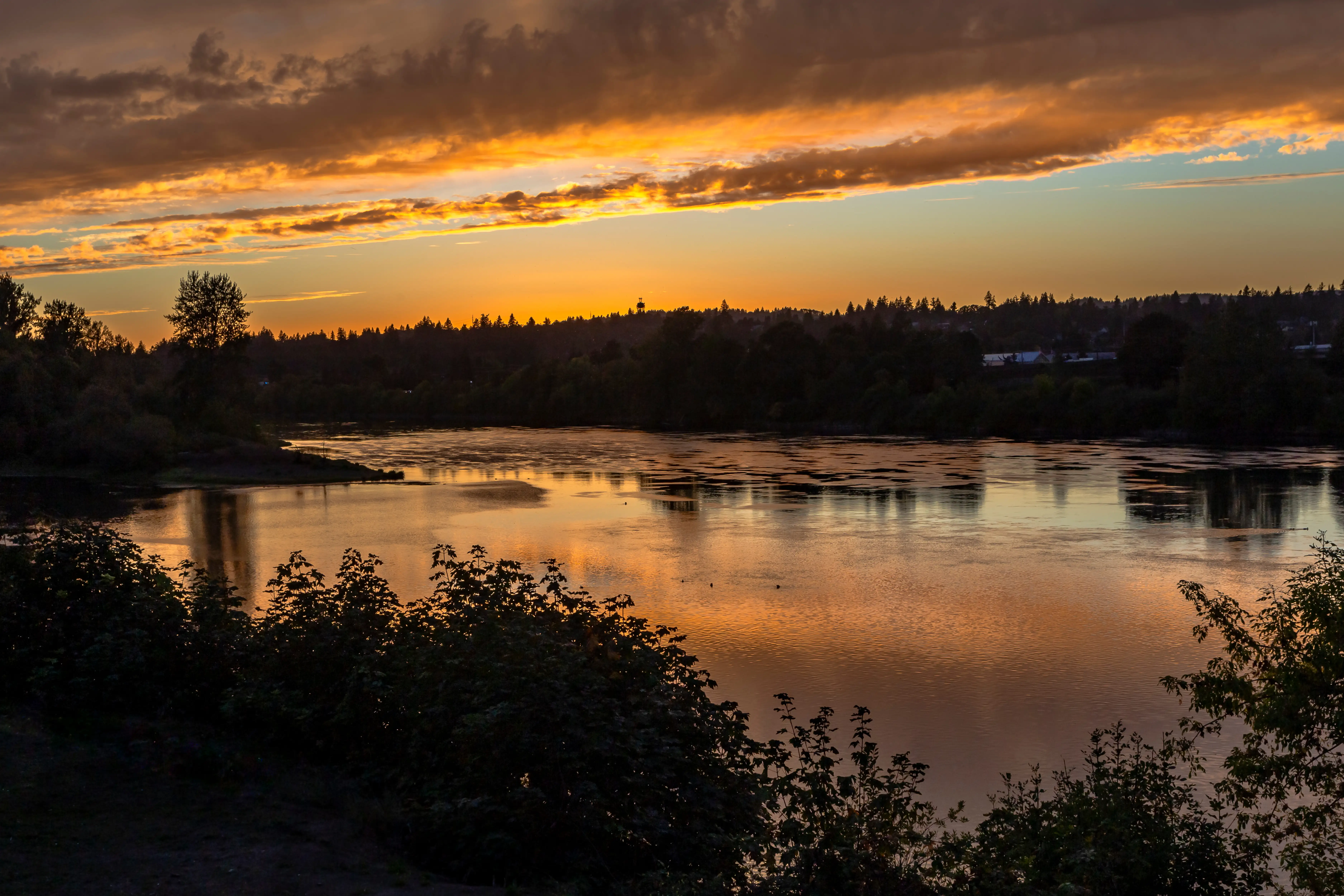
The physical setting provides a quality of life that doesn't show up in spreadsheets. Mill Creek offers a natural corridor through town that gives Turner something most comparably priced Marion County cities don't have — a genuine sense of place. The proximity to the Willamette Valley's agricultural beauty means you're 20 minutes from u-pick berry farms, lavender fields, and the kind of Oregon countryside that draws people from other states in the first place. And with the coast accessible in roughly 90 minutes, Turner residents often describe the geographic position as quietly ideal — not buried in the mountains, not suburban sprawl, just placed well.
The homeownership culture shapes everything from neighborhood maintenance to civic participation. With 76.8% of residents owning their homes — nearly 12 points above the national average — Turner has the social stability that comes with people who have long-term stakes in the outcome of the city. The poverty rate sits at approximately 2%, household incomes are solidly middle class, and the cost of living index of 96.2 keeps the overall financial picture manageable relative to the national baseline.
Looking to buy in Turner? Estimate your payment.
Enter your numbers to see an estimated monthly mortgage payment.
Estimate only. Excludes HOA fees and mortgage insurance.
The walkability gap is real and shouldn't be minimized. Turner has no functioning walkable commercial core, no coffee shop within walking distance of most residential streets, and no transit service of consequence. If you don't drive, or if you've come from a city where you relied on walking for errands or social life, Turner will feel isolating faster than you'd expect. The Urban Renewal investments are promising but incremental — this is a multi-year trajectory, not something happening in 2026.
The housing market's volatility deserves honest attention. Turner has fewer than 50 homes sold in a typical 12-month period, which means individual transactions can swing the median significantly. Redfin's January 2026 data showed a sold price median notably below the longer-term index value, while listing prices average closer to $640,000. In a thin market, you're not just competing with other buyers — you're navigating pricing that can feel inconsistent compared to the deeper liquidity of Salem or Keizer. Work with a broker who tracks Turner specifically, not someone who treats it as an extension of the Salem market.
The amenity dependency on Salem is both a practical and a psychological reality. Turner has no hospital, no major grocery store within city limits, and limited dining beyond a handful of local options. Every significant errand runs through Salem, Aumsville, or Stayton. For buyers who value self-contained community living, this is a genuine friction point that doesn't diminish with time — it simply becomes part of the routine.
Why some people leave Turner: The most common reason is that the trade-off calculation shifts. Remote work arrangements change, requiring more frequent travel to Portland or beyond. Kids graduate and parents downsize, often back into Salem for walkability and medical proximity. Some buyers discover that the quiet they sought starts to feel like limited social infrastructure — Turner doesn't have the critical mass for a robust local restaurant scene, evening entertainment, or the kind of spontaneous community activity that emerges in denser small cities like Silverton or McMinnville.
Turner's small footprint — just 1.43 square miles — means the neighborhood distinctions are subtle rather than dramatic. But they exist, and understanding them helps you target the right streets.
The streets closest to Mill Creek benefit from the greenway access and the natural screening it provides. These are typically among the more established properties in Turner, with mature landscaping and slightly larger lots. The creek corridor gives a sense of privacy that newer subdivisions farther from the water can't replicate.
Best for: Buyers prioritizing outdoor access and a settled, established neighborhood feel over brand-new construction.
The blocks closest to Turner's developing downtown core sit within easy walking distance of Turner City Park and the elementary school. These properties tend toward older housing stock — some dating to the mid-20th century — at price points that can come in below the city median. The upside potential here is tied directly to the Urban Renewal Agency's progress.
Best for: First-time buyers or investors comfortable with older homes and willing to bet on incremental downtown development.
The bulk of Turner's housing stock was built between 2000 and 2019, and these subdivisions make up the heart of the residential market. Homes here are typically 3-4 bedrooms, attached garages, and standard Pacific Northwest residential construction. This is where most buyers shopping at the $552,000 median will land — clean, functional, and priced accurately for the market.
Best for: Families who want move-in ready homes with modern floor plans and don't need historic character.
Properties near Turner Lake Park sit at the edge of town and benefit from direct park access and slightly more open sightlines. This pocket tends to attract families with young children for the obvious proximity to recreational space.
Best for: Households with kids who want park access built into the daily routine.
The recently annexed 6.74 acres of R-2 and R-11 zoned land represents Turner's forward-looking residential development. New construction here will include single-family homes, duplexes, and potentially townhomes — offering Turner's first meaningful attached-housing inventory and entry points that may come in below the existing single-family median.
Best for: Buyers who want new construction or investors watching Turner's long-term growth trajectory.
| City | Best For | Median Home Price | Commute to Salem | Vibe |
|---|---|---|---|---|
| Turner | Quiet suburban living, government workers, families | ~$552,000 | 26 min | Small-town residential, stable |
| Salem | Urban amenities, walkability, transit access | ~$375,000–$420,000 | 0 min | State capital, full urban services |
| Aumsville | Rural feel, lower price floor | ~$420,000–$460,000 | 20 min | Smaller, more rural, limited services |
| Sublimity | Agricultural setting, privacy, space | ~$480,000–$530,000 | 30 min | Rural community, Cascade foothills |
| Stayton | Small-town amenities, local services | ~$420,000–$480,000 | 35 min | Self-contained, established commercial strip |
| Silverton | Arts community, walkable downtown | ~$500,000–$560,000 | 35 min | Artsy, community-driven, more walkable |
| Category | Detail |
|---|---|
| Population | Approximately 2,400–2,800 residents (2026 estimates vary by source) |
| Median Home Value | ~$552,000 (Zillow index / ACS-aligned, mid-2026) |
| Property Tax Rate | Approximately 0.65% (assessed value basis) |
| Median Household Income | $101,979 (2024 ACS) |
| Homeownership Rate | 76.8% |
| School District | Cascade School District 5 — rated B+ |
| Commute to Salem | 26 minutes average |
| Violent Crime per 1,000 | 1.7 |
| Cost of Living Index | 96.2 (U.S. average = 100) |
Turner carries some distinctive community characteristics that take most newcomers a few months to fully appreciate.
The Christian conference campus presence. The Aldersgate Conference Center and the Oregon Christian Convention Grounds are both located in or immediately adjacent to Turner, and they give the community a particular social texture. Weekend gatherings, summer camps, and regional religious events draw visitors through Turner in patterns that locals navigate automatically — knowing that certain summer weekends will see unusual traffic on otherwise quiet streets, and that the community has a historical and ongoing connection to faith-based institutions.
The railroad town identity. Turner was built around timber and the railroad beginning in 1905, and that founding identity still shapes how longtime residents understand the city. The Turner Memorial Tabernacle, one of the city's historic landmarks, is a physical reminder of the community's roots. Long-term residents carry a pride of place that newcomers sometimes mistake for insularity — it's less closed and more simply settled.
The government worker concentration. Turner's proportion of government workers is higher than 96% of American neighborhoods — a direct function of its proximity to Salem's state government employment base. This creates a community of people who often share not just commute patterns but professional schedules, union membership familiarity, and a specific kind of financial stability that shapes neighborhood norms. State hiring cycles and legislative sessions are background facts of life here in ways that don't register until you've lived through one.
What I would not do if moving to Turner: I would not buy on the eastern edge of town expecting rural quiet and then discover you're closer to Aumsville's Highway 214 corridor than to the park-side streets. The geographic range is small, but the difference between the western residential blocks near Mill Creek and the highway-adjacent parcels is meaningful in terms of daily noise and street activity. Before making an offer, drive the street at 7 a.m. on a weekday — not just Saturday afternoon.
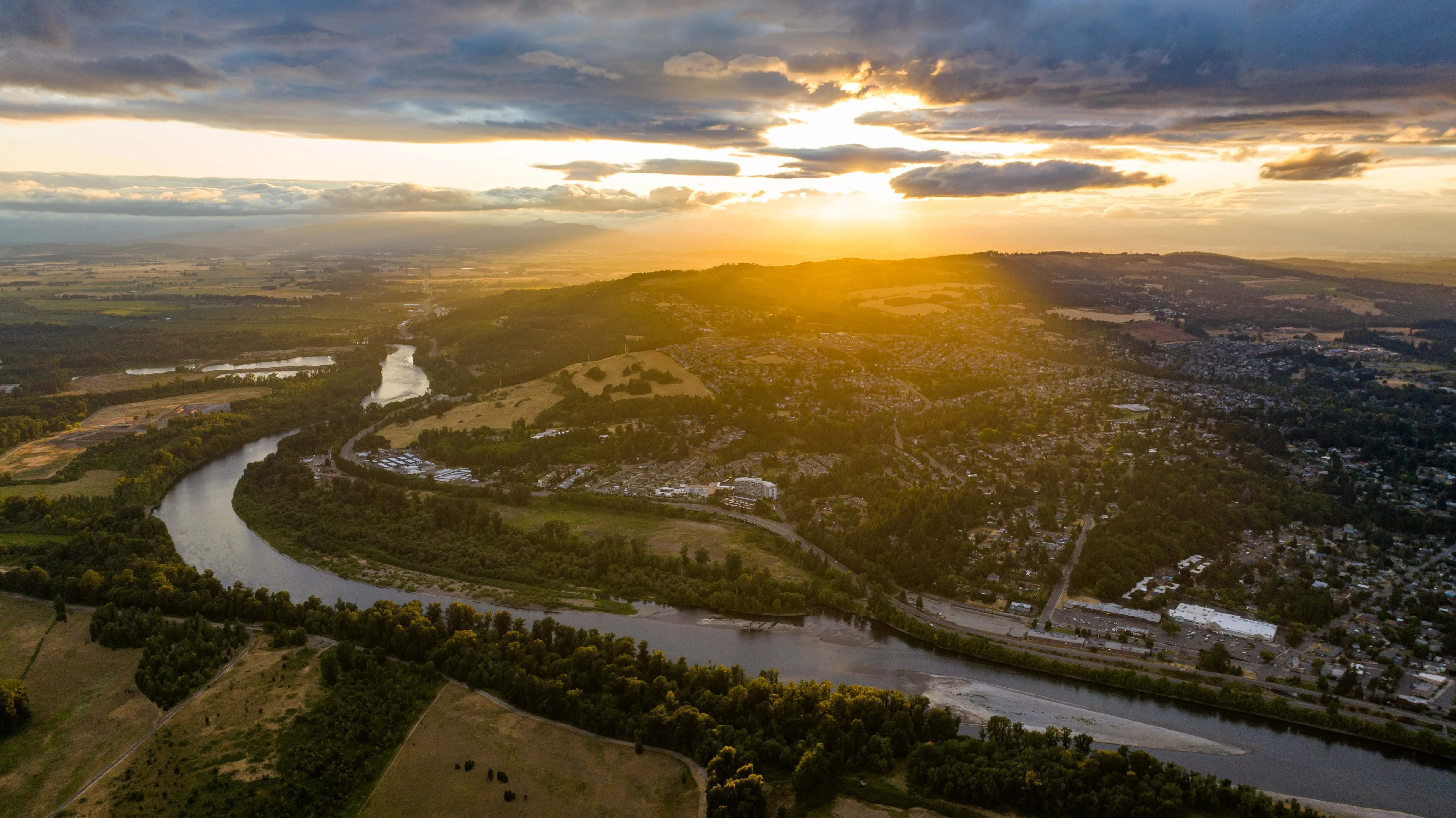
Local Expert Takeaway: Turner's value proposition in 2026 is specific: you're buying a newer home in a low-crime neighborhood for roughly $552,000, with a 26-minute commute to Salem's state government employment base, and trading a walkable downtown for a yard and quiet evenings. If that exchange matches your lifestyle, Turner is one of the most straightforward decisions in the Salem metro. Focus your search on the Mill Creek corridor and the post-2000 subdivisions in the city's western half — avoid the highway-adjacent parcels east of town if noise sensitivity matters to you, and get to open houses early, because Turner's low transaction volume means good properties generate disproportionate attention when they do hit the market.
✅ Turner offers genuine small-town stability — high homeownership, low crime, solid schools, and a 26-minute Salem commute at a median home value of $552,000.
⚠️ The thin market cuts both ways — fewer than 50 homes sell annually, which means pricing can feel inconsistent and good properties move quickly. Come prepared.
📍 Daily life runs through Salem — no major grocery, no hospital, and limited dining within Turner itself. Factor in the Salem dependency before committing.
Is Turner a good place for families?
Turner consistently ranks among the top 6.5% of family-friendly neighborhoods in Oregon, driven by its low crime rates, high homeownership, Cascade School District's B+ rating, and the kind of stable residential environment that comes from a community where most people own their homes long-term. Families with school-age children typically find the combination of newer housing stock and quiet streets well-suited to their priorities.
What is the crime rate in Turner?
Turner's violent crime rate runs approximately 1.7 incidents per 1,000 residents, which is meaningfully below Oregon's statewide average. Property crime sits near 9 per 1,000 — low enough that most residents describe feeling genuinely safe in day-to-day life. The low-density, high-ownership character of the community contributes significantly to these outcomes.
How does Turner compare to Salem for homebuyers?
Salem's median home prices run noticeably lower than Turner's — roughly $375,000 to $420,000 depending on neighborhood — but Salem also carries higher crime rates in many areas, greater urban density, and a more variable housing stock. Turner's premium over Salem buys newer construction, lower crime, and a quieter environment. The decision typically comes down to whether you need urban walkability and services within steps of your front door, or whether you're comfortable driving 26 minutes to access them.
Explore the full Turner series: The Ultimate Turner Relocation Guide · Is Turner Safe? · Cost of Living in Turner · Best Neighborhoods in Turner · Turner Schools & Family Life · Turner Youth Sports · Turner Parks & Recreation · Retiring in Turner · 1031 Tax-Deferred Exchange in Turner · Turner First-Time Homebuyers Guide · · Moving to Turner from California
Tell us what you need help with and we'll connect you with local resources.

About the Author
Todd Davidson is the founder of Living in Oregon and Living in Washington, where he publishes in-depth city guides, neighborhood resources, and local market insights covering more than 180 communities across the Pacific Northwest. While his background is in home financing and real estate, he created these digital platforms to help families research and compare regions before making a move.