
Portland Metro · Oregon
Living in Milwaukie: The Ultimate Relocation Guide (2026)
Maybe your company is relocating you to the Portland metro and you've been told Milwaukie is "basically Portland but cheaper." Maybe you've been priced out of Lake Oswego and a colleague mentioned that Milwaukie has the same McLoughlin Boulevard access without the six-figure premium. Or maybe you just drove through on a Sunday afternoon and couldn't quite figure out what kind of city it is — too urban to feel suburban, too small to feel like a real city, with a MAX light rail station sitting next to a bait shop and a century-old brick storefront. That's not an accident. Milwaukie is genuinely hard to categorize, and whether that turns out to be a feature or a frustration depends almost entirely on what you want your daily life to look like.
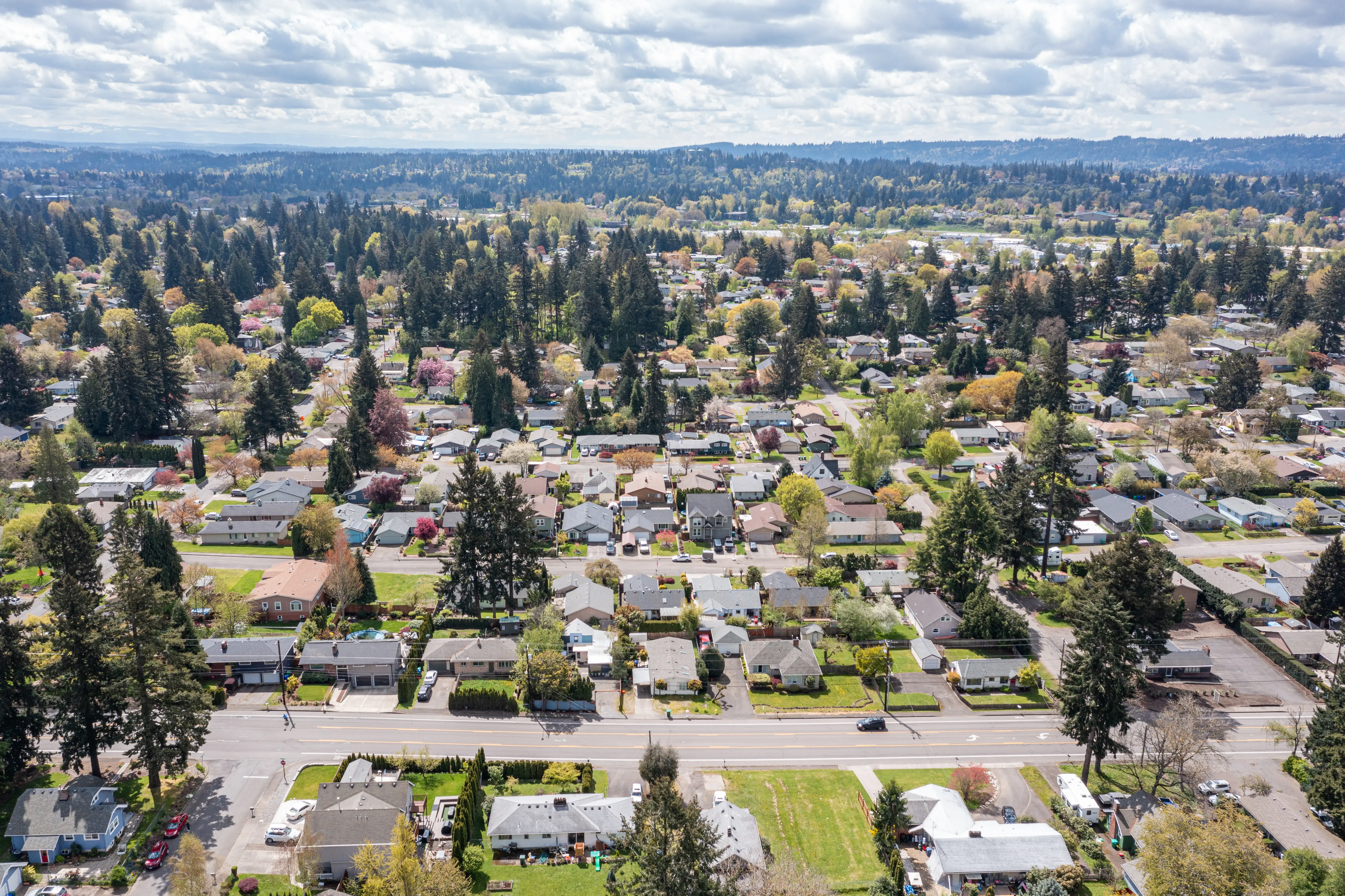
The city sits just four miles south of downtown Portland in Clackamas County, covering 4.8 compact square miles along the east bank of the Willamette River. McLoughlin Boulevard — the perpetually congested US-99E — serves as the city's commercial spine, connecting everything from Providence Milwaukie Hospital in the north to the older bungalow streets near the Gladstone border to the south. The Orange Line MAX connects riders to the South Park Blocks in about 30 minutes without touching a freeway. But daily life here is shaped less by transit than by the mix of 1950s and 1960s ranch homes, neighborhood coffee shops, and a housing market where the median sold price sits at $520,000 — a figure that still draws buyers who've been watching Portland's inner eastside push past $650,000.
This guide is built for the buyer who needs specifics, not reassurance. You'll find honest takes on Milwaukie's neighborhoods, the traffic realities on McLoughlin, the school district's actual performance numbers, where the flood risk is concentrated, and which parts of town tend to disappoint buyers six months after move-in. By the end, you should know whether Milwaukie is genuinely the right fit — or whether the neighboring cities on McLoughlin deserve a second look.
Not every city fits every buyer, and Milwaukie is no exception. The table below cuts through the marketing and gives you an honest read on who tends to thrive here — and why.
| Best For | Why |
|---|---|
| Portland commuters | Orange Line MAX and 26-minute average drive to downtown; no freeway required for many residents |
| First-time buyers | Median sold price of $520,000 sits well below inner Portland; older housing stock means more entry-level inventory |
| Families with school-age children | North Clackamas SD posts an 86.8% graduation rate, above the Oregon average, with multiple program options |
| Remote workers | Over 22% of residents work from home; walkable neighborhood coffee shops and a compact, livable scale |
| Retirees seeking convenience | Providence Milwaukie Hospital nearby, established neighborhood feel, 16% of residents already 65+ |
| Buyers priced out of Lake Oswego | Similar proximity to Portland, Willamette River access, without the premium price tag |

Milwaukie is one of those markets I've watched quietly outperform expectations for the past three years. Buyers who locked in during 2023 and early 2024 have already seen meaningful appreciation — Redfin's March 2026 sold data shows year-over-year gains of over 13%, and homes are going pending in around 8 to 10 days in desirable pockets like Ardenwald and the Lake Road corridor. What I find most interesting is that this market is still attracting serious buyers relocating from Seattle and, increasingly, from Los Angeles — people who've done the math and realized Milwaukie gives them genuine urban access at a price that Portland's inner eastside can no longer match.
The one thing buyers consistently underestimate is how tight the good inventory moves. The homes that are priced correctly in the $480,000 to $560,000 range in Ardenwald or Linwood don't sit. I've seen multiple-offer situations on well-maintained bungalows and mid-century ranches within 72 hours of listing. If you're relocating and planning to take your time, build your pre-approval before you start touring — because the window between "I like this one" and "it's already under contract" can be measured in days, not weeks. If you're considering Milwaukie and want insight into which neighborhoods align with your priorities and budget, I'd welcome the opportunity to share what I've learned from helping hundreds of families make this move successfully.
The honest answer is that living in Milwaukie feels like living at the intersection of two different Portlands. The neighborhoods closest to the Orange Line MAX — especially around the Milwaukie/Main Street and Lake Road stations — have the walkable, coffee-shop-and-brunch energy of inner Southeast Portland. A few blocks east of McLoughlin, the vibe shifts: quieter residential streets lined with mature firs, mid-century ranch houses, and neighbors who've lived in the same home for twenty years. Both versions exist here, sometimes within a half-mile of each other.
McLoughlin Boulevard is the daily reality that shapes everything. During morning rush — roughly 7:30 to 9:00 a.m. — northbound traffic from the Lake Road and Harmony Road intersections can stack up badly, and the signal timing near Providence Milwaukie Hospital is a known chokepoint. Buyers who plan to drive to Portland every morning should time that commute at 8:15 a.m. before making an offer, not after. The Orange Line, on the other hand, runs reliably and deposits commuters at the Portland State University transit mall in under 30 minutes — a genuine commute asset that not enough out-of-state buyers factor in when comparing cities.
The community vibe skews unpretentious in the best way. The median resident age is 41, homeownership is at 60%, and the city draws a mix of longtime working-class families and younger professional households priced out of Sellwood or Eastmoreland. The Milwaukie Farmers Market runs seasonally at the Scott Park area, and the Ledding Library — one of the more beloved neighborhood libraries in the county — functions as something of a community living room. What surprises most people after six months here is how neighborhood-specific the social fabric is: your block in Ardenwald-Johnson Creek will feel like a distinct community in a way that a comparable street in a larger suburb rarely does.
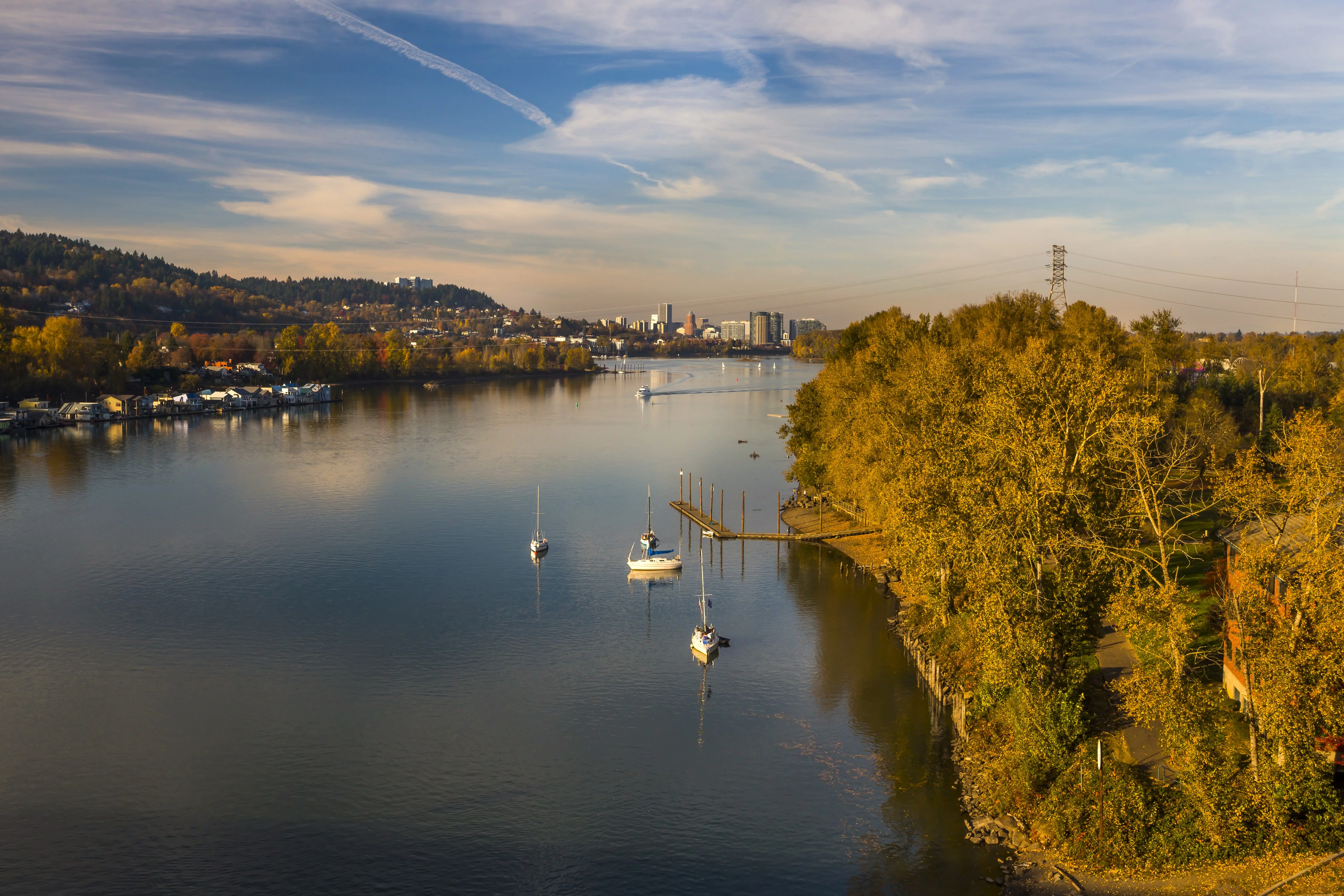
The waterfront is genuinely underused by newcomers. Milwaukie Bay Park sits at the foot of the city along the Willamette, and Elk Rock Island — accessible by foot during lower water periods — offers one of the more unusual urban nature experiences in the metro. Residents who discover these spots within the first month tend to stay. The ones who evaluate the city purely by what's visible from McLoughlin often don't.
The price point is real, and so is the access. At a $520,000 median sold price, Milwaukie sits roughly $130,000 to $200,000 below comparable homes in Lake Oswego or inner Portland neighborhoods like Sellwood. That gap represents real purchasing power — a larger lot, a garage, or the ability to stay within budget without stretching to a 30-year payment that occupies your entire financial life.
The Orange Line MAX is a genuine quality-of-life asset that functions far better than most buyers expect from light rail. The Lake Road and Main Street stations put downtown Portland within 25 to 30 minutes without touching I-5 or the Marquam Bridge. For households with one or two Portland-based jobs, the ability to skip the McLoughlin commute entirely on most days changes the texture of daily life meaningfully.
The school district performs above state averages in a way that matters at the family decision level. North Clackamas School District's four-year graduation rate of 86.8% clears the Oregon state average of 81.8%, and the five-year rate reaches 90.4%. The district also runs a Career Technical Education center with two campuses, offering pathways that not every metro-area district can match. Families choosing between Milwaukie and higher-priced suburbs should factor that performance into the cost-benefit calculation.
Bob's Red Mill — headquartered and operating its manufacturing in Milwaukie — means the city has a genuine local employer identity that most suburbs of this size lack. Providence Milwaukie Hospital anchors the healthcare employment base and gives the city medical infrastructure that residents actually use. For buyers weighing job stability or local employment options, the employer base here is more substantive than the city's size would suggest.
Looking to buy in Milwaukie? Estimate your payment.
Enter your numbers to see an estimated monthly mortgage payment.
Estimate only. Excludes HOA fees and mortgage insurance.
McLoughlin Boulevard is a four-lane arterial running through the heart of the city, and it functions more like a state highway than a main street. Trying to walk across it from the residential east side to Milwaukie Bay Park or the Orange Line stations is genuinely unpleasant at several crossing points. The city has invested in some pedestrian improvements near the transit stations, but buyers who envision a walkable, car-optional lifestyle should pressure-test that assumption by actually walking the routes they'd use daily before committing.
Flood risk is concentrated and real. Approximately 17% of Milwaukie properties face severe flooding risk over the next 30 years, and Historic Milwaukie — the most affordable submarket — has 46% of its properties flagged for that risk. Buyers attracted to the $440,000 median in Historic Milwaukie specifically should pull FEMA flood maps for any property and factor flood insurance premiums into their monthly carrying cost before comparing that neighborhood against higher-ground alternatives.
The retail and dining scene is thinner than what buyers moving from inner Portland typically expect. Milwaukie's commercial strips along McLoughlin and Main Street have cafes, a handful of independent restaurants, and solid access to a Fred Meyer and other grocery options nearby — but the density of dining and nightlife that characterizes Southeast Portland proper isn't replicated here. Buyers who rely on walkable restaurant variety as part of their lifestyle tend to find the gap noticeable.
Why some people leave: The buyers who move out of Milwaukie after two or three years most commonly cite one of two things — either they wanted the income and school district advantages of a more affluent suburb and eventually stretched to Lake Oswego, or they wanted denser urban walkability and found themselves spending most of their free time in Portland anyway. The city rewards residents who lean into its specific strengths — the river access, the neighborhood scale, the transit connectivity. Buyers who buy here hoping it will feel like somewhere else eventually find it doesn't.
Milwaukie's neighborhoods are meaningfully distinct even within its 4.8 square miles. The eight below represent the most relevant choices for buyers and renters approaching the market for the first time.
Ardenwald sits in the southeast corner of Milwaukie where Johnson Creek runs through a natural greenway, and it's the neighborhood most buyers describe as "the one that surprised me." The housing stock is predominantly mid-century ranches and bungalows on larger lots than you'd find in comparable Portland neighborhoods, and the median sale price runs around $490,000 — though well-updated homes push well above that. The Johnson Creek trail access and mature tree canopy give Ardenwald a distinctly residential, settled feel that attracts buyers specifically looking for that version of Milwaukie. The honest catch: Johnson Creek itself has a flood history, and low-lying parcels near the creek corridor warrant flood map review.
Best for: Buyers who want neighborhood character, outdoor access, and mid-century housing stock at a price that doesn't require sacrificing the rest of their financial life.
This is the oldest part of the city — the blocks closest to the original downtown core near Main Street and Monroe Street — and it's where Milwaukie's local identity is most visible. The Milwaukie Museum, the Statue of Liberty replica, and the city's original commercial blocks are all here. The March 2026 sold median was $440,000, making it the most affordable submarket in the city and a genuine entry point. That price comes with two realities: the housing stock is older and often needs updating, and 46% of properties in this zone carry severe flood risk over the next 30 years. Buyers should go in clear-eyed on both.
Best for: First-time buyers, investors, and buyers who want the most affordable foot in the door in the Milwaukie market and are prepared to do due diligence on flood exposure.
Island Station is a quieter residential pocket between the Willamette River and the Orange Line corridor, offering some of the best proximity to Milwaukie Bay Park and the waterfront of any neighborhood in the city. The housing mix includes older single-family homes alongside some newer infill development, and the MAX access from this part of town is genuinely excellent — a practical advantage for households commuting to Portland. Pricing here tends to track just below the citywide median, and the neighborhood draws buyers who've specifically prioritized river access and transit in their criteria.
Best for: Commuters and outdoor-oriented buyers who want walkable access to the Willamette waterfront and a short walk to the Orange Line.
The Lake Road corridor runs along the northern edge of Milwaukie toward the Lake Oswego border, and the neighborhood's character reflects that proximity — larger lots, more established landscaping, and a housing stock that skews slightly newer than the city's 1967 median construction year. The Lake Road MAX station makes this one of the most transit-accessible neighborhoods in the city for Portland commuters. Prices in the Lake Road corridor tend to run above the citywide median, reflecting both the transit premium and the larger lot sizes.
Best for: Families and commuters who want the best of Milwaukie's transit access in a quieter, more established residential setting.
Lewelling is one of Milwaukie's pricier subareas, with a sold median that runs around $535,000 — reflecting the neighborhood's reputation for well-maintained housing stock and good street connectivity. It attracts buyers who want the Milwaukie price advantage over Lake Oswego but prefer a neighborhood that feels put-together and settled rather than transitional. The catch is that inventory moves fast here and buyers hoping to negotiate below asking price tend to find limited leverage.
Best for: Buyers seeking above-average housing condition and neighborhood stability at a price that still undercuts comparable Lake Oswego inventory.
Linwood occupies the eastern side of Milwaukie and borders Oak Grove to the south, giving it a slightly more suburban scale than neighborhoods closer to the McLoughlin corridor. The housing is primarily mid-century single-family homes on modest lots, and the neighborhood has historically attracted first-time buyers and families with school-age children who want more space without committing to the longer drives that come with exurban Clackamas County options. Pricing here clusters near or slightly below the citywide median, and the inventory tends to be a bit more patient than in Ardenwald or Lewelling.
Best for: Families with kids who want a quiet residential setting, solid school access, and pricing at or slightly below the $520,000 citywide median.
Hector Campbell is a smaller residential area in the southeast quadrant of Milwaukie, named for the elementary school that anchors it. The neighborhood is characterized by modest single-family homes, a relatively stable long-term resident base, and proximity to the Johnson Creek natural corridor. It doesn't generate the same buyer enthusiasm as Ardenwald or Lake Road, but it consistently offers some of the city's better value per square foot for buyers who prioritize space over neighborhood cachet.
Best for: Value-focused buyers who want more square footage for their dollar and aren't primarily motivated by walkability or transit proximity.
Milwaukie Heights sits on the elevated ground in the western part of the city above McLoughlin, offering a geographic advantage that many buyers underappreciate: it sits above the flood plain that affects lower-lying neighborhoods. Homes here tend to have better views in some cases, reduced flood risk, and a hillside residential character that feels distinct from the flatter streets east of McLoughlin. The downside is that the elevation requires driving for most errands — the walkability that the transit stations enable in other parts of the city is less accessible from the Heights.
Best for: Buyers who prioritize flood risk reduction and prefer a hillside residential setting over transit-walkable convenience.
| City | Best For | Median Home Price | Commute to Portland | Vibe |
|---|---|---|---|---|
| Milwaukie | Value-focused buyers wanting Portland access | $520,000 | ~26 min | Urban-adjacent, neighborhood-scale |
| Lake Oswego | Top-tier schools, lake access, prestige | $850,000+ | ~25 min | Affluent suburban, polished |
| Oak Grove | Budget buyers, unincorporated feel | $450,000–$480,000 | ~30 min | Quiet, unincorporated, limited services |
| Oregon City | Space, history, larger lots | $480,000–$530,000 | ~35 min | Historic, exurban, independent feel |
| Gladstone | Affordability, small-town scale | $420,000–$460,000 | ~35 min | Small-town, low-density |
| Portland (SE) | Urban walkability, density, culture | $580,000–$670,000 | 0–15 min | Dense urban, highly walkable |
| Metric | Detail |
|---|---|
| Population | ~21,844 (2026) |
| Median Sold Home Price | $520,000 (trailing 12-month SOLD median) |
| Median Household Income | ~$86,892 |
| Property Tax Rate | ~0.98% effective rate |
| Commute to Downtown Portland | ~26 minutes (drive); ~28–30 min (Orange Line MAX) |
| School District | North Clackamas School District (4-year grad rate: 86.8%) |
| Violent Crime per 1,000 | 3.9 |
| Property Crime per 1,000 | 15 |
| Work-from-Home Share | ~22% of workforce |
| City Area | 4.8 square miles |
The Statue of Liberty replica is not a joke. A smaller-scale replica of Lady Liberty stands in Historic Milwaukie near the downtown core — it's been there since 1949, installed by a local Boy Scout troop, and it's one of several dozen such replicas placed around the country during the postwar era. Longtime residents treat it as a matter-of-fact landmark; newcomers tend to stop mid-drive and stare. It sits near Monroe Street and makes a practical orientation marker when navigating the older downtown blocks.
Bob's Red Mill is more embedded in the city than most employer-city relationships. The whole-grain milling company runs its main manufacturing operation and company store in Milwaukie, and the Bob's Red Mill Natural Foods store on International Way is a genuine destination for food-oriented residents and visitors alike. The founder, Bob Moore, built a grain mill and an employee ownership model that became a point of local civic pride in a way that, say, a regional call center doesn't. Residents reference it with a familiarity that tells you it's part of the city's self-image.
The Milwaukie Farmers Market operates seasonally — typically from late spring through fall — and draws a devoted neighborhood crowd to the Scott Park area. It's small by metro-area standards but well-attended by residents who treat it as the social anchor of the Saturday morning routine, not just a produce run.
What I would not do: I would not buy in the Historic Milwaukie neighborhood without first pulling the FEMA flood map for the specific parcel and getting a flood insurance quote as part of the offer due diligence. The $440,000 median price looks compelling against the citywide figure, but the 46% severe flood risk rate in that submarket is not a minor footnote — it's a financial reality that changes the monthly cost calculation and the long-term resale profile of properties that sit in the mapped flood zones. The neighborhood has real character and legitimate value, but this is the one area in Milwaukie where skipping the flood research most commonly leads to buyer regret.
Local Expert Takeaway: If you're choosing between Milwaukie and somewhere that costs $150,000 more, pull the specific flood map before you let price be the deciding factor — particularly in Historic Milwaukie. For most buyers, the sweet spot is the Ardenwald-Johnson Creek or Linwood corridor: you get mid-century housing with room to update, solid school district access, and the Orange Line MAX within a reasonable drive or bike ride. Buy in that price band, plan to stay at least five years, and you'll likely find the appreciation story justifies the decision. The buyers who struggle here are the ones who buy on price alone without road-testing the McLoughlin commute at 8:15 a.m. on a Tuesday.
✅ Milwaukie's $520,000 median sold price gives Portland-area buyers real purchasing power — expect more square footage and lot size than comparable money buys in Sellwood or inner Southeast Portland, with genuine Orange Line MAX access to downtown.
⚠️ Flood risk is concentrated and significant in lower-lying neighborhoods, particularly Historic Milwaukie, where 46% of properties face severe flood risk over 30 years. Factor flood insurance into your carrying cost calculation before comparing those prices against higher-ground alternatives.
📍 The Orange Line MAX is Milwaukie's most underrated asset for commuters. The Lake Road and Main Street stations connect riders to central Portland in under 30 minutes — a meaningful quality-of-life factor that pure drive-time comparisons don't capture.
Is Milwaukie a good place for families?
Yes, Milwaukie offers a strong foundation for families with school-age children. North Clackamas School District posts an above-state-average graduation rate of 86.8%, with solid program offerings including a Career Technical Education center. The city's neighborhood scale, mid-century housing stock with larger lots, and Orange Line transit access make it a practical and livable choice for households at the $520,000 price point who want Portland access without Portland prices.
What is the crime rate in Milwaukie?
Milwaukie reports approximately 3.9 violent crimes per 1,000 residents and 15 property crimes per 1,000 — figures that place it in moderate territory for the Portland metro area. Property crime, primarily vehicle break-ins and theft, is more common in commercial corridors near McLoughlin Boulevard than in quieter residential streets to the east. As with most cities its size, crime patterns vary meaningfully by neighborhood.
How does Milwaukie compare to nearby cities?
Milwaukie occupies a genuinely useful middle position in the metro: more affordable than Lake Oswego and inner Portland, better transit-connected than Oak Grove or Gladstone, and with a more established community identity than newer exurban Clackamas County cities. Buyers choosing between Milwaukie and Lake Oswego are primarily trading school district prestige and neighborhood polish for roughly $330,000 in purchase price. Buyers choosing between Milwaukie and inner Southeast Portland are trading walkability and urban density for a $100,000 to $150,000 price advantage and more private outdoor space.
Browse current listings updated daily — filtered for Milwaukie buyers by Elizabeth Davidson, your local expert.
Powered by Elizabeth Davidson · Cascade Hasson Sotheby's International Realty · 503-939-2035
Explore the full Milwaukie series: The Ultimate Milwaukie Relocation Guide · Is Milwaukie Safe? · Cost of Living in Milwaukie · Best Neighborhoods in Milwaukie · Milwaukie Schools & Family Life · Milwaukie Youth Sports · Milwaukie Parks & Recreation · Retiring in Milwaukie · 1031 Tax-Deferred Exchange in Milwaukie · Milwaukie First-Time Homebuyers Guide · · Moving to Milwaukie from California · The Milwaukie Realtor's Perspective · Top 10 Questions a Realtor Gets About Milwaukie
Tell us what you need help with and we'll connect you with local resources.

About the Author
Todd Davidson is the founder of Living in Oregon and Living in Washington, where he publishes in-depth city guides, neighborhood resources, and local market insights covering more than 180 communities across the Pacific Northwest. While his background is in home financing and real estate, he created these digital platforms to help families research and compare regions before making a move.