
Portland Metro · Oregon
1031 Exchange & Investment Real Estate in Milwaukie (2026)
Not every investor reading this spent thirty years building an institutional portfolio. Many of the sharpest 1031 buyers entering the Portland metro right now are California homeowners — people who sold a Bay Area bungalow for $1.4 million or a Pasadena fourplex they'd held since 2003, and are now sitting on a capital gains exposure that would ruin an otherwise excellent year. Milwaukie keeps appearing on their shortlists for a reason. At a median sold price near $520,000, it offers replacement property values that make the math work in ways that Portland's inner eastside simply can't deliver anymore.
Rental demand here is structural, not cyclical. Milwaukie sits at 21,844 people across 5 square miles, with about 39% of residents renting — a figure that reflects the city's working-professional and service-industry demographic rather than any transient instability. The MAX Orange Line runs through the city, pulling renters who work in Portland but can't afford Portland's rents. Over half of rental households are cost-burdened, which sounds like a problem until you realize it means they're staying put. Vacancy runs around 4–5%, and the dominant rental stock — older 2-bedroom units built in the 1970s — creates immediate depreciation opportunity for incoming investors.
This guide covers 1031 exchange mechanics, Milwaukie's investment property market by type, why California capital is flowing here specifically, Oregon's tax landscape for landlords, the management reality no one warns you about, and a due diligence checklist sized for an out-of-state buyer on a 45-day clock.
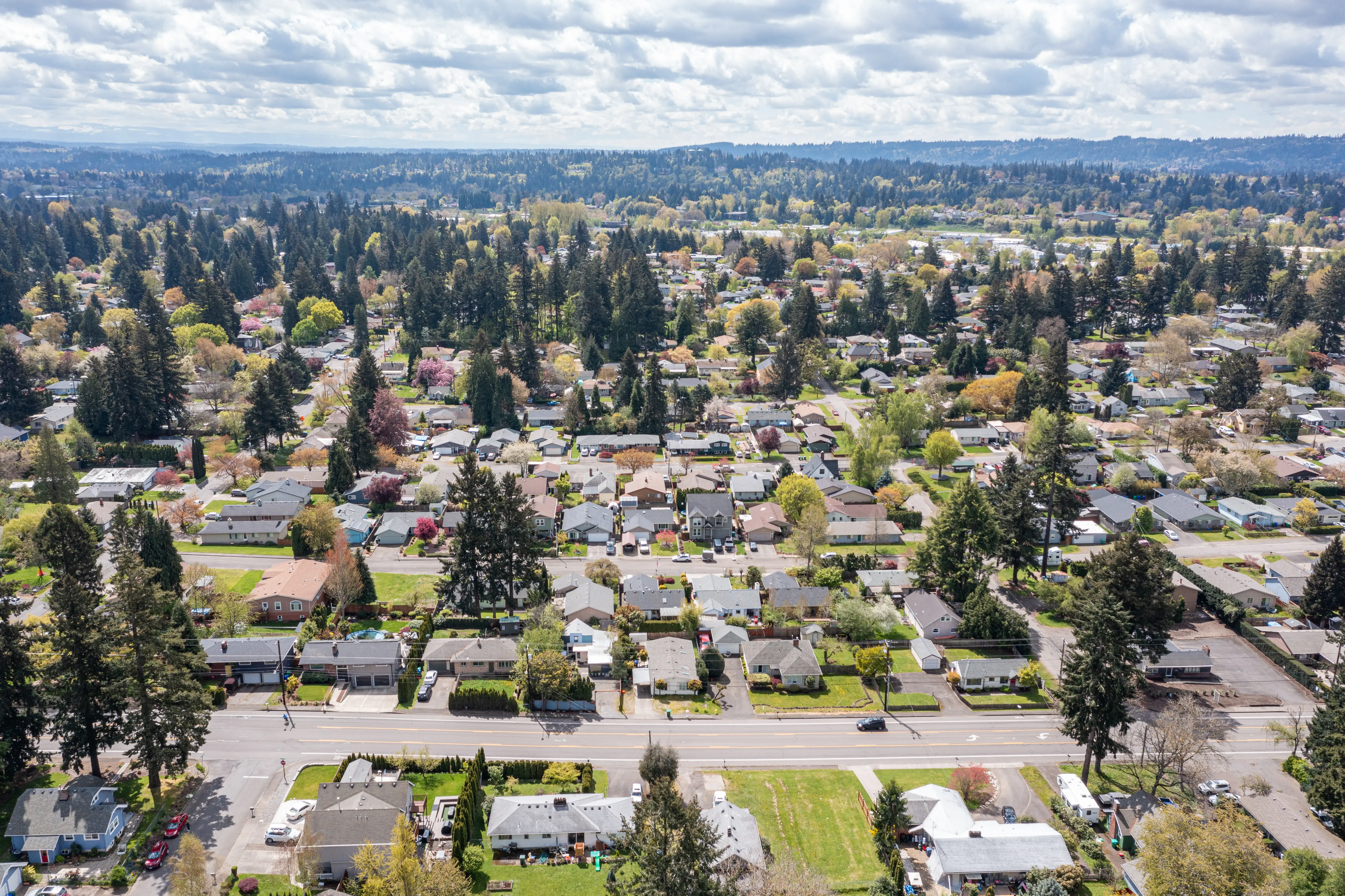
The exchange clock starts the moment escrow closes on your relinquished property — not when you think about it, not when you call your CPA. From that date, you have 45 calendar days to formally identify your replacement property in writing to your Qualified Intermediary (QI). That identification must be specific: address, legal description, or enough detail to distinguish it from any other property. You can identify up to three properties regardless of value, or more under the 200% rule, but most investors stay disciplined and name two or three real targets.
The second deadline is 180 days from the sale of your relinquished property to close escrow on the replacement. These two windows run concurrently, not sequentially. Your QI holds the proceeds in a segregated account — you cannot touch the money, transfer it, or pledge it as collateral during the exchange period. A QI is not optional; receiving funds personally, even briefly, disqualifies the exchange entirely.
The like-kind rule is broader than most people realize. Any U.S. real property can exchange for any other U.S. real property — a vacant lot in Sacramento can become a duplex in Milwaukie, a commercial building in Los Angeles can become a small multifamily on McLoughlin Boulevard. What triggers taxes is "boot" — cash or non-like-kind property you receive, or mortgage debt relief that isn't offset by new debt. To fully defer all capital gains, you need to reinvest all net proceeds and carry equal or greater debt on the replacement property, or pay cash above the relinquished property's value.

What out-of-state investors consistently underestimate about Milwaukie is how quickly investment-grade inventory disappears. A well-priced duplex or small multifamily in Ardenwald-Johnson Creek or near the McLoughlin corridor can go pending in under two weeks — sometimes in under a week — because local investors know the rental demand there is real and durable. A 1031 buyer who arrives at the 30-day mark of their identification window without relationships in place is already behind. I work with California investors who've done everything right on paper but couldn't close because they hadn't done a single walk-through before identifying the property. That's fixable with the right team.
The price-to-rent ratios in Milwaukie are genuinely compelling compared to what these buyers are leaving behind. A duplex trading at $650,000–$750,000 in this market, generating $3,100–$3,500 in combined monthly rents, produces a gross rent multiplier that a Bay Area investor hasn't seen since 2014. I specifically watch the Lake Road and Linwood corridors for value-add duplexes where rents are under-market — properties where a modest rehab and proper lease-up can move the cap rate meaningfully in year one. That's where the opportunity is in 2026. If you're considering Milwaukie and want insight into which neighborhoods align with your priorities and budget, I'd welcome the opportunity to share what I've learned from helping hundreds of families make this move successfully.
The dominant investment vehicle in Milwaukie is the single-family rental. Of the city's 9,876 housing units, 67.7% are detached single-family homes, and the median construction year of 1967 means there's a substantial base of older stock that trades well below replacement cost. For 1031 buyers, that age profile also means immediate depreciation capture on a 27.5-year schedule. Small multifamily properties — duplexes, triplexes, and the occasional older fourplex — are less common on the MLS but trade steadily off-market, particularly along the McLoughlin Boulevard corridor and in older pockets of Linwood and Ardenwald.
Commercial and light industrial properties along the North Milwaukie Industrial Area and the McLoughlin Industrial corridor represent a different investment thesis — longer leases, triple-net potential, and tenant bases tied to Portland metro logistics. Cap rates on industrial product run higher than residential here, though inventory is thin and deal flow is relationship-driven rather than MLS-listed.
| Property Type | Typical Price Range | Est. Cap Rate | Avg Days to Close |
|---|---|---|---|
| Single-family rental (SFR) | $420,000–$580,000 | 4.5%–6.0% | 21–35 days |
| Duplex / small multifamily | $600,000–$850,000 | 5.0%–6.5% | 25–45 days |
| Small apartment (5–12 units) | $950,000–$1.8M | 5.5%–7.0% | 30–60 days |
| Light industrial / commercial | $800,000–$2.5M+ | 6.0%–8.0% | 45–75 days |
SFRs and duplexes move fastest — often within the first two weeks on market for well-priced properties. Small apartment buildings and commercial product sit longer, which actually benefits a 1031 buyer who needs negotiating room and closing flexibility.

The shift isn't complicated. California property values have inflated to the point where cap rates on newly purchased investment properties are often sub-4% even in secondary markets. A 1031 buyer with $800,000 in proceeds stepping into Milwaukie doesn't just find better yield — they find a functioning rental market with genuine demand drivers, a light-rail connection to a major employment center, and a price point where their capital actually controls meaningful real estate.
A Bay Area homeowner who sold a 1,200-square-foot bungalow in Oakland or San Jose for $1.4 million can realistically purchase a duplex and a stand-alone SFR in Milwaukie — debt-free — and still have exchange proceeds remaining. That same capital, redeployed in the Bay Area, would buy half a rental property. The Willamette River views off Milwaukie Bay Park don't hurt the pitch either.
Los Angeles and Orange County investors leaving behind small residential rentals at 3–4% cap rates find that Milwaukie's duplex inventory trades at yields they haven't seen locally in a decade. The cost-burdened renter profile here — over half of rental households paying 30%+ of income on housing — means tenant stability is high. People don't move when moving means paying more.
Sacramento and Inland Empire investors often come in with proceeds in the $550,000–$900,000 range from fourplexes and small commercial properties. That band hits Milwaukie's sweet spot perfectly. A well-located duplex near Linwood, fully leased at current market rents, can be acquired in that range with no financing required — keeping the transaction clean and the 180-day window comfortably achievable.
Looking to buy in Milwaukie? Estimate your payment.
Enter your numbers to see an estimated monthly mortgage payment.
Estimate only. Excludes HOA fees and mortgage insurance.
Oregon charges no state sales tax, which has a direct and immediate benefit for investors taking a value-add approach to a rental rehab. Every dollar spent on appliances, flooring, fixtures, and building materials in Oregon is exactly what it costs — no 7.25–10.25% added at the register as it would be across most of California. For a $40,000 renovation budget, that's a meaningful difference.
| Tax Item | California | Oregon |
|---|---|---|
| Income tax on rental income | 9.3%–13.3% | 8.75%–9.9% |
| Property tax rate (new purchase) | ~1.1%–1.25% (uncapped) | ~0.98% (Clackamas County) |
| State sales tax | 7.25%–10.25% | None |
| Capital gains treatment | Taxed as ordinary income | Taxed as ordinary income |
| Prop 13 equivalent | Yes — limits increases | No — but lower base rate |
Oregon does tax rental income at rates up to 9.9%, but a leveraged property with standard depreciation deductions typically reduces net taxable income significantly in the early years. The depreciation basis from a 1031 exchange carries over rather than resetting — meaning a California investor with a heavily depreciated relinquished property starts the Oregon investment with a lower basis and a smaller annual deduction. That's worth a conversation with a CPA before closing, not after.
For investors who want genuine passivity, a Delaware Statutory Trust (DST) qualifies as like-kind replacement property under IRS rules. DSTs allow 1031 proceeds to flow into institutional-grade real estate — often multifamily or commercial portfolios — with no management responsibility. The trade-off is illiquidity and loss of individual ownership control, but for a 75-year-old investor who wants to defer taxes without becoming a landlord, it's a legitimate path.
Oregon operates under some of the strongest tenant protection statutes in the country, and Milwaukie landlords operate within that framework. No-cause evictions require substantial advance notice — 90 days for month-to-month tenancies of one year or longer — and Portland's metro-area rent increase caps have historically influenced how Milwaukie landlords approach annual adjustments, even in years when state law permits larger increases. In 2026, Oregon's statewide rent stabilization formula caps increases for covered units at a percentage tied to the prior year's consumer price index; checking the current Oregon Housing and Community Services rate before acquiring a tenant-occupied property is essential.
Out-of-state investors consistently underestimate two things: the timeline and cost of a formal eviction process if it becomes necessary, and the degree to which tenant communication expectations differ from California. Oregon tenants are well-informed about their rights, and a self-managing out-of-state landlord who doesn't respond quickly to habitability issues is creating legal exposure, not just tenant friction. Hiring professional management isn't optional for most absentee owners — it's risk management. Local property management firms operating in the Milwaukie market typically charge 8–10% of monthly gross rents, with leasing fees ranging from half to a full month's rent.
Vacancy in Milwaukie runs roughly 4–5% — meaningfully better than many comparable Portland-adjacent suburbs — and 2-bedroom units are the most liquid segment, comprising 47% of the rental pool. An investor acquiring a duplex with two 2-bedroom units is buying the most in-demand configuration in the market.
| Item | What to Verify | Local Resource |
|---|---|---|
| Title search | Clear title, no undisclosed liens or encumbrances | Clackamas County title company |
| Sewer / septic status | City sewer connection vs. private septic; age of lateral | City of Milwaukie Public Works |
| Radon testing | Oregon has elevated radon zones; test pre-close | Oregon Health Authority radon map |
| Flood zone status | 17% of Milwaukie properties carry major flood risk | FEMA Flood Map Service Center |
| Rental permit requirements | City of Milwaukie rental registration status | City of Milwaukie Code Compliance |
| HOA restrictions on rentals | Any CC&Rs limiting lease terms or short-term rentals | HOA documents or Clackamas County records |
| ADU zoning potential | R1/R2 zoning + ORS HB 2001 compatibility for ADU | Milwaukie Planning Department |
| School district verification | North Clackamas SD boundaries affect tenant pool quality | North Clackamas School District |
| Current lease status | Tenants in place, lease terms, last rent increase date | Seller disclosure + estoppel letters |
| Deferred maintenance inspection | Roof, foundation, electrical panel age (older 1960s–70s stock) | Licensed Oregon home inspector |
| Property management referral | Establish management relationship before close | Local PM companies: e.g., Rental Housing Group, Oregon Rental Pros |
| QI coordination | Confirm wire instructions and timeline alignment | Your Qualified Intermediary |
| Environmental / underground tanks | Older properties may have decommissioned oil tanks | Oregon DEQ records search |
| Comparable rent analysis | Verify rents against current market, not seller's claim | Current active listings + PM market survey |

Local Expert Takeaway: The single most common mistake California investors make when entering the Milwaukie market is over-relying on the seller's rent roll. Milwaukie's older rental stock — median construction year 1967 — often has long-term tenants whose rents are 15–25% below current market, but turning over a tenanted unit in Oregon takes 90 days of notice minimum and a transition cost that can run $5,000–$10,000 per unit. Model your acquisition on current rents, not the day-one pro forma, and your first year will look exactly like you expected it to.
If you're within 60 days of closing on your relinquished property, now is the right time to get pre-approved for an investment property purchase — before your 45-day identification window opens, not after. DSCR (Debt Service Coverage Ratio) loans let you qualify based on the rental income of the property itself rather than your personal income, keeping your residential debt-to-income ratio clean. Todd can connect you with the right lenders and help you move fast when the right property hits the market.
✅ Milwaukie's median sold price near $520,000 and 4–5% vacancy rate make it one of the most accessible replacement property markets in the Portland metro for California 1031 investors.
⚠️ Oregon's tenant protection laws are serious — no-cause eviction timelines and rent stabilization caps apply, and out-of-state self-management is a high-risk approach in this regulatory environment.
📍 The 45-day identification clock waits for no one. Building relationships with a local agent and property manager before your relinquished property closes is not optional — it's what separates investors who get the property they want from those who settle.
Does a 1031 exchange work for out-of-state property?
Yes — a 1031 exchange can absolutely be used to sell property in California (or any other state) and acquire replacement property in Oregon. The like-kind requirement applies to the property classification, not the location. Both properties must be held for investment or business use; the exchange proceeds flow through your Qualified Intermediary regardless of which states are involved.
What is the cap rate on rental property in Milwaukie?
Cap rates in Milwaukie's residential investment market typically run 4.5%–6.5% depending on property type, condition, and current lease status. Single-family rentals at the lower end of that range reflect tighter price-to-rent ratios, while duplexes and small multifamily properties in value-add condition can push into the 6%–6.5% range once stabilized at current market rents. Light industrial product in the McLoughlin corridor can exceed 7%.
Do I need a local property manager for a 1031 investment in Oregon?
For out-of-state investors, local professional management is strongly advisable rather than optional. Oregon's landlord-tenant statutes — including required notice periods, habitability standards, and rent increase procedures — create meaningful legal exposure for absentee owners who aren't current on state law. A local property manager at 8–10% of gross rents is the most cost-effective risk mitigation tool available in this market.
Browse current listings updated daily — filtered for Milwaukie buyers by Elizabeth Davidson, your local expert.
Powered by Elizabeth Davidson · Cascade Hasson Sotheby's International Realty · 503-939-2035
Explore the full Milwaukie series: The Ultimate Milwaukie Relocation Guide · Is Milwaukie Safe? · Cost of Living in Milwaukie · Best Neighborhoods in Milwaukie · Milwaukie Schools & Family Life · Milwaukie Youth Sports · Milwaukie Parks & Recreation · Retiring in Milwaukie · 1031 Tax-Deferred Exchange in Milwaukie · Milwaukie First-Time Homebuyers Guide · · Moving to Milwaukie from California · The Milwaukie Realtor's Perspective · Top 10 Questions a Realtor Gets About Milwaukie
Tell us what you need help with and we'll connect you with local resources.

About the Author
Todd Davidson is the founder of Living in Oregon and Living in Washington, where he publishes in-depth city guides, neighborhood resources, and local market insights covering more than 180 communities across the Pacific Northwest. While his background is in home financing and real estate, he created these digital platforms to help families research and compare regions before making a move.