Portland Metro · Oregon
Parks & Recreation in Milwaukie: Trails, Facilities & Outdoor Life (2026)
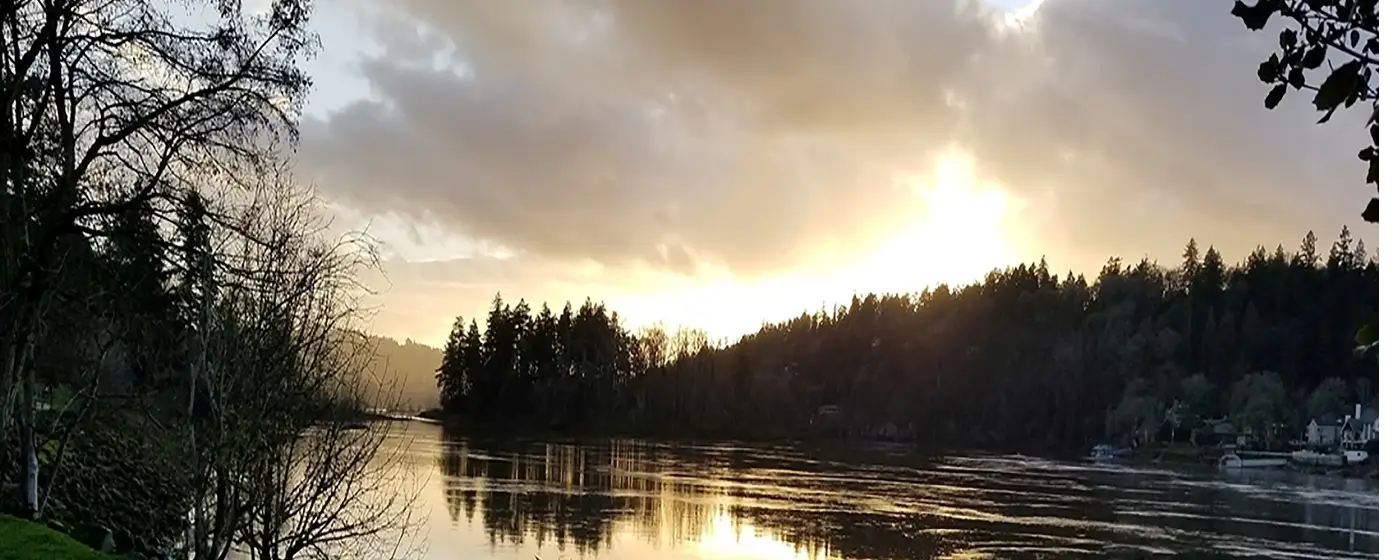
Most people expecting a modest Portland suburb discover something unexpected in Milwaukie: a city sitting directly on the Willamette River with a volcanic island you can walk to at low tide. That's not a feature you find in most mid-size metro suburbs, and it shapes the outdoor experience here in ways that don't show up on standard park system rankings.
What defines Milwaukie's parks landscape is the partnership between the city and the North Clackamas Parks & Recreation District, an intergovernmental agreement that's been in place since 1990. The city owns the land; NCPRD operates, maintains, and programs it. That arrangement gives residents access to a regional district's staffing and expertise without losing local control — a structure that paid off when NCPRD secured more than $2 million in grant funding for Milwaukie Bay Park improvements and a $2.25 million grant to develop three neighborhood parks.
This guide covers the parks you'll actually use — the ones worth seeking out on a Saturday, the aquatic center that draws a quarter million visitors a year, the trail that stitches the city together, and the regional destinations worth a short drive. If you're relocating to Milwaukie or just trying to understand what outdoor life here looks like day to day, you're in the right place.
| Park | Highlights | Best For |
|---|---|---|
| Milwaukie Bay Park | Willamette River frontage, boat ramp, Trolley Trail access | River views, kayak launch, evening walks |
| North Clackamas Park | 45 acres, dog park, softball fields, rose garden | Sports leagues, dog owners, birdwatching |
| Spring Park Natural Area | Wetland boardwalk, trail to Elk Rock Island | Nature immersion, quiet hiking |
| Elk Rock Island | 13.6 acres, 7 habitats, volcanic basalt, 50+ rare plant species | Naturalists, seasonal exploration |
| Scott Park | Downtown location, next to Ledding Library | Families, casual gatherings |
| Kronberg Park | Multi-use path, Kellogg Creek bridge, Trolley Trail link | Cyclists, commuters |
| Sara Hite Memorial Rose Garden | 1-acre formal rose garden, picnic shelter rental | Weddings, garden walks |
| Ball-Michel Park | Lewelling neighborhood, neighborhood-scale greenspace | Local families |
| Water Tower Park | Ardenwald-Lewelling border | Kids, neighborhood use |
| Furnberg Avenue Park | Picnic area, playground, soccer field | Youth sports, picnics |
| Balfour Park | Completed 2025, community-funded | New residents, families |
| Bowman-Brae Park | Completed 2024, one of the city's newest parks | Families with young children |
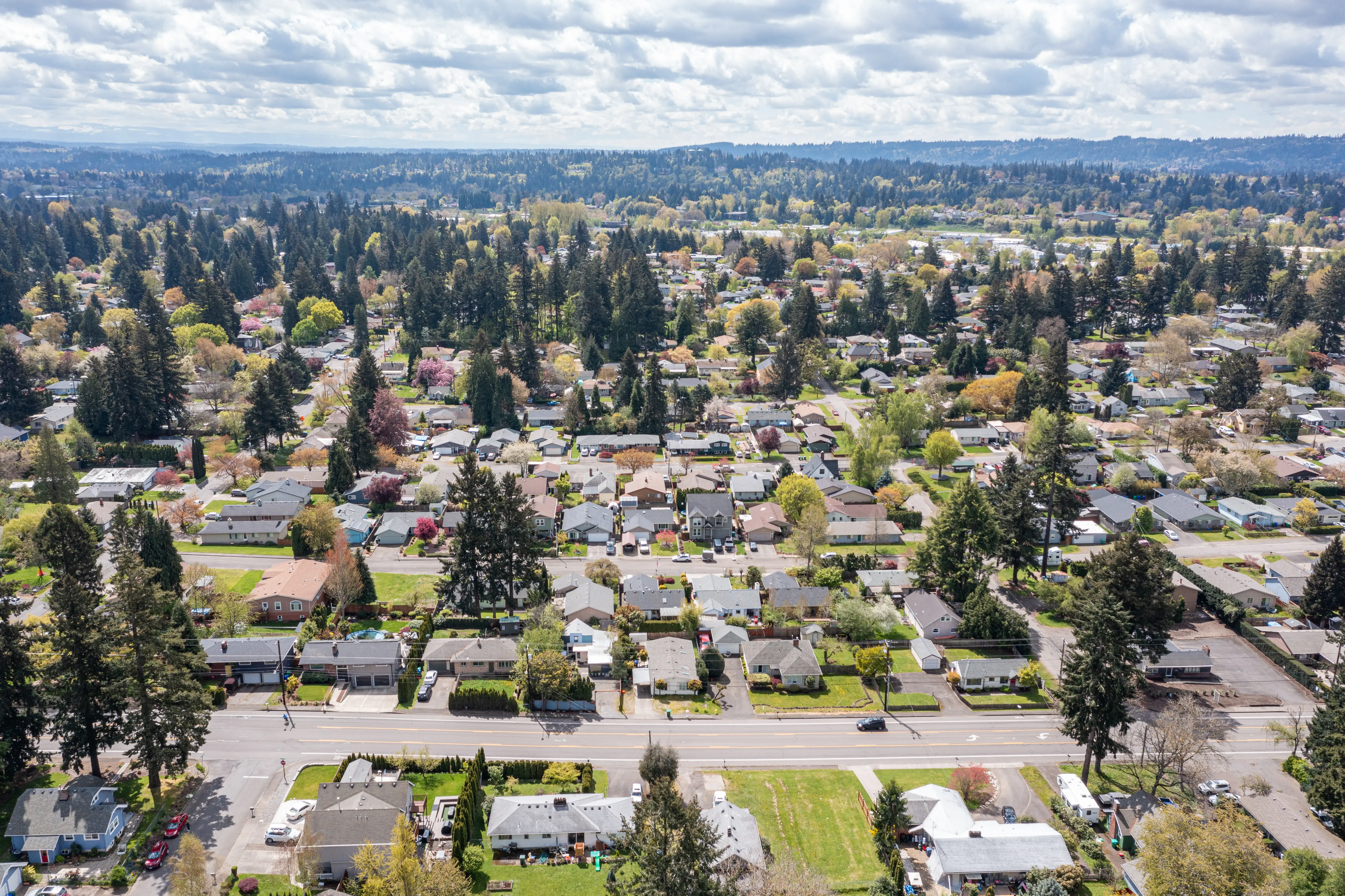
Milwaukie's park system punches above its weight for a city of roughly 22,000, anchored by exceptional river access and a genuinely rare natural area in Elk Rock Island. What's missing is indoor community recreation space — the city leans heavily on NCPRD's aquatic center for that role.

Milwaukie is one of the Portland metro markets I watch most closely right now, and the parks infrastructure is a big part of why. With a median sold price around $520,000, buyers are getting direct Willamette River access — Milwaukie Bay Park is literally at the end of downtown streets — at a price point that's $100,000 to $200,000 below comparable river-adjacent markets. That combination is genuinely rare in this region.
What buyers consistently underestimate is how much NCPRD programming elevates daily life here. The aquatic park alone draws more than 225,000 visitors a year and runs year-round swim lessons, fitness classes, and competitive swim programs — that's infrastructure you'd expect in a city twice Milwaukie's size. When I show buyers the Spring Park trail access to Elk Rock Island on a low-tide morning, it closes deals. Most people didn't know you could walk to a volcanic island in a Portland suburb. If you're considering Milwaukie and want insight into which neighborhoods align with your priorities and budget, I'd welcome the opportunity to share what I've learned from helping hundreds of families make this move successfully.
Location: Along McLoughlin Boulevard adjacent to downtown Milwaukie
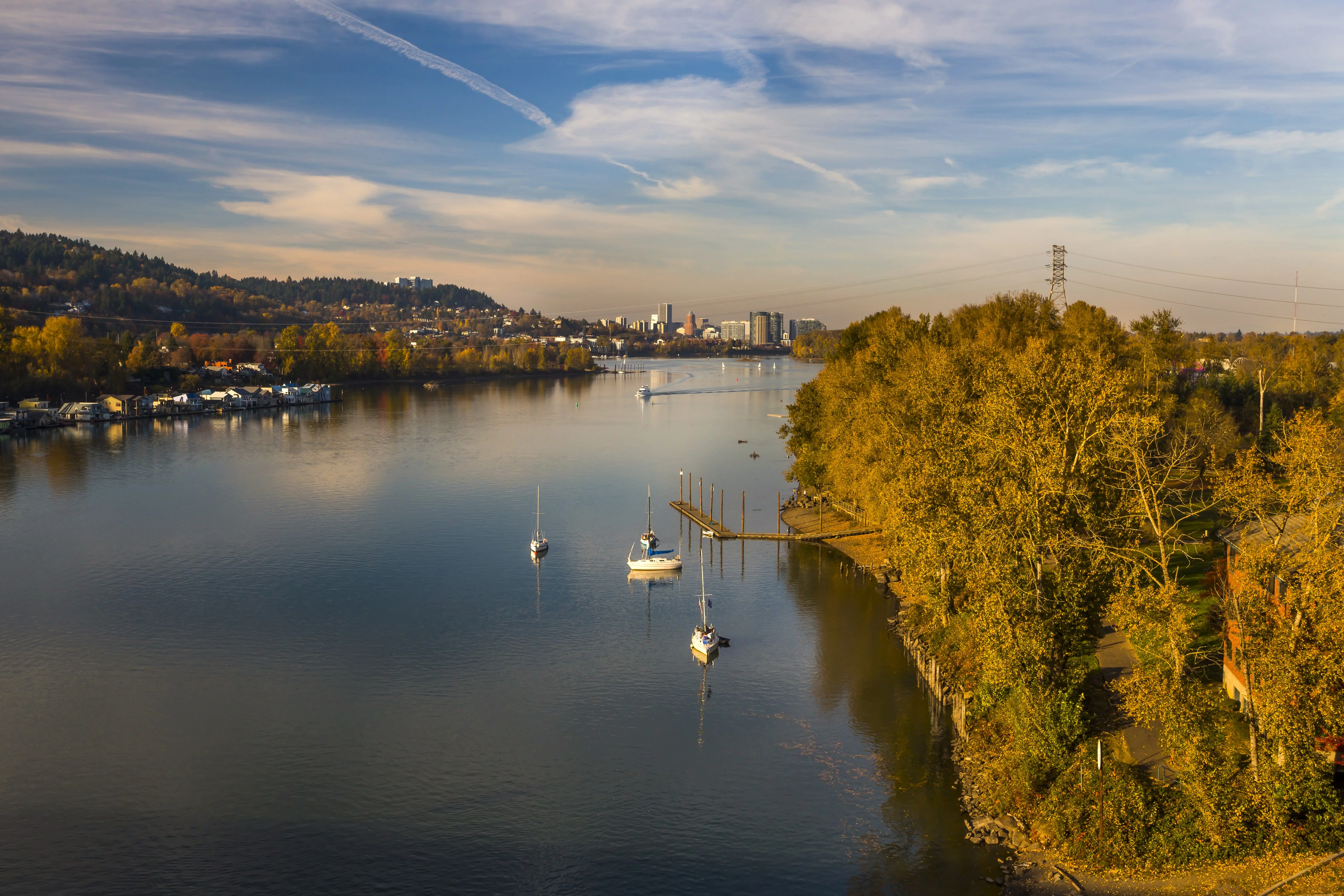
This 8.5-acre riverfront park functions as the city's public living room — benches facing the Willamette, a boat ramp with dedicated trailer parking, and the northern trailhead for the Trolley Trail all concentrated in one accessible stretch. Phases 1 and 2 of a major redevelopment were completed in 2012 and 2015; Phase 3, which would add a splash pad, amphitheater, and expanded playground, has been on hold since 2022 while the city and NCPRD work through a funding and governance agreement. Even without those additions, the park remains one of the most-used green spaces in the city.
Best for: Boat launches, evening river walks, Trolley Trail access
Location: 5440 SE Kellogg Creek Dr., Milwaukie, OR 97222
At 45 acres, this is the largest park in the system — spread across the northern edge of the Oatfield community near the Milwaukie-Gladstone border — with four natural grass softball and baseball fields, a volleyball court, horseshoe pits, and two playgrounds. The 1.5-acre off-leash dog area is double-gated with plenty of owner seating, and a network of footpaths winds through Oregon White Oak forest and riparian wetlands with dedicated birdwatching overlooks. The Sara Hite Memorial Rose Garden sits just inside the park entrance near the Milwaukie Community Center, and its picnic shelter is available to rent for events.
Best for: Dog owners, sports leagues, birdwatching, family gatherings
Location: SE Sparrow Street and SE 19th Ave, Island Station Neighborhood
This park, opened in 2015 after nearly two decades of planning, offers something most suburban parks simply don't: a winding trail through wetlands on a surface of compacted crushed rock and boardwalk, designed to give visitors habitat access without disturbing sensitive ecosystems. At the trail's end, a seasonal land bridge appears during low river levels — typically late spring through fall — leading directly to Elk Rock Island. There are no restrooms or drinking water, so plan accordingly.
Best for: Nature walks, wetland habitat, seasonal island access
Location: Access via Spring Park trailhead, SE 19th Ave and Sparrow St
Milwaukie took ownership of this 13.6-acre volcanic island from the City of Portland in 2016, and it remains one of the most unusual natural features anywhere in the Portland metro. The basalt bedrock dates back roughly 40 million years, the island supports seven distinct habitats including vernal pools, and more than 50 rare plant species have been documented here. Active restoration work — ongoing since the 2020 wildfire damaged significant portions of the island — is led by the Milwaukie Parks Foundation and Friends of Elk Rock Island, with a focus on native ecosystems and fish habitat for salmon, steelhead, and lamprey.
Best for: Naturalists, native plant enthusiasts, quiet exploration during low water
Location: 11220 SE McLoughlin Blvd, Milwaukie, OR 97222
Kronberg is more of a connector than a destination — a linear park whose most important feature is the Kellogg Creek bike and pedestrian bridge linking downtown Milwaukie's MAX light rail station to the Trolley Trail at the park's southern edge. The multi-use path runs continuously from downtown, across the bridge, and south toward the regional trail network. Incoming grant funding will complete development of the undeveloped park sections that currently end at a dirt path on the far side of the bridge.
Best for: Cyclists, commuters, Trolley Trail through-traffic
The Trolley Trail follows a former interurban rail corridor for approximately 3.5 miles through the heart of Milwaukie, running parallel to SE McLoughlin Boulevard from the Milwaukie Bay Park waterfront in the north to the Gladstone city limits in the south. The surface is paved and relatively flat, making it approachable for all fitness levels — casual walkers and regular bike commuters use the same path. Access points are spread throughout the corridor, with Milwaukie Bay Park and Kronberg Park serving as the most common anchor points. The trail connects directly to the regional Trolley Trail network that extends further into Clackamas County, and on clear days the tree-lined sections near Kellogg Creek offer a genuine sense of separation from the McLoughlin traffic running just west.
Looking to buy in Milwaukie? Estimate your payment.
Enter your numbers to see an estimated monthly mortgage payment.
Estimate only. Excludes HOA fees and mortgage insurance.
North Clackamas Aquatic Park (7300 SE Harmony Road, Milwaukie, OR 97222) is the anchor of the city's indoor recreation infrastructure — and frankly, one of the most impressive public aquatic facilities in the Portland metro for a city this size. The 45,400-square-foot indoor water park opened in 1994 and features the only wave pool in the Portland metro, three water slides taller than 48 feet, a lap pool, dive well, splash-down pool, kiddie pool, and an adults-only hot tub, all maintained at 86 degrees year-round. Programming runs the full spectrum: group and private swim lessons, water exercise classes, lap swimming, a competitive Piranhas swim team, open swim, and private after-hours facility rentals. A sand volleyball court, on-site café, and outdoor picnic area round out the complex. More than 225,000 visitors use the facility annually.
The Milwaukie Community Center, located adjacent to North Clackamas Park near the Sara Hite Rose Garden, serves as the district's community gathering space and adds meeting room and event capacity to the park complex.
| Destination | Distance | Highlights |
|---|---|---|
| Oaks Bottom Wildlife Refuge (Portland) | ~5 miles north | 163-acre riparian refuge, blue heron nesting colony, trail loops |
| Sellwood Riverfront Park (Portland) | ~4 miles north | Willamette River beach access, swimming holes, picnic areas |
| Powell Butte Nature Park (Portland) | ~7 miles northwest | 611 acres, summit meadow views, equestrian and mountain bike trails |
| Milo McIver State Park (Estacada) | ~22 miles southeast | Clackamas River rafting, fishing, disc golf, campgrounds |
| Molalla River State Park | ~20 miles south | Willamette-Molalla confluence, wildlife viewing, primitive trails |
| Mount Talbert Nature Park (Happy Valley) | ~7 miles southeast | Extinct volcanic butte, 5 miles of forested trails, native oak habitat |
| Clackamas River Trail | ~18 miles southeast | Multi-mile river corridor trail, swimming holes, old-growth forest |
| George Rogers Park (Lake Oswego) | ~6 miles southwest | Willamette River frontage, historic iron furnace ruins, playground |
Local Expert Takeaway: The most underrated outdoor asset in Milwaukie isn't the aquatic center — it's the Spring Park to Elk Rock Island corridor. Buyers who discover that combination of wetland trail, seasonal island access, and active salmon habitat restoration often recalibrate their entire sense of what suburban outdoor life can look like. If you're weighing Milwaukie against similar-priced options in the metro, walk that trail before you decide.
Does Milwaukie have good parks for kids?
Milwaukie offers a solid range of family-oriented parks, from the large-scale sports fields and dog park at North Clackamas Park to smaller neighborhood playgrounds throughout the city. The North Clackamas Aquatic Park runs year-round swim lessons and open swim, making it a weekly destination for many families with young children.
What is the best trail in Milwaukie?
The Trolley Trail is the city's most-used recreational corridor — a paved, roughly 3.5-mile path connecting Milwaukie Bay Park to the south end of the city and onward into Clackamas County. For a more immersive natural experience, the Spring Park wetland boardwalk and seasonal trail to Elk Rock Island is the more distinctive option.
How does Milwaukie compare to nearby cities for outdoor recreation?
For a city of its size and price point, Milwaukie holds up well. The river access, volcanic island, and regional-quality aquatic center are advantages most comparable suburbs — including many communities priced well above Milwaukie's $520,000 median — simply don't offer. The gap is in indoor community recreation space beyond the aquatic park, where larger cities like Lake Oswego have more diversified facilities.
Browse current listings updated daily — filtered for Milwaukie buyers by Elizabeth Davidson, your local expert.
Powered by Elizabeth Davidson · Cascade Hasson Sotheby's International Realty · 503-939-2035
Explore the full Milwaukie series: The Ultimate Milwaukie Relocation Guide · Is Milwaukie Safe? · Cost of Living in Milwaukie · Best Neighborhoods in Milwaukie · Milwaukie Schools & Family Life · Milwaukie Youth Sports · Milwaukie Parks & Recreation · Retiring in Milwaukie · 1031 Tax-Deferred Exchange in Milwaukie · Milwaukie First-Time Homebuyers Guide · · Moving to Milwaukie from California · The Milwaukie Realtor's Perspective · Top 10 Questions a Realtor Gets About Milwaukie
Tell us what you need help with and we'll connect you with local resources.

About the Author
Todd Davidson is the founder of Living in Oregon and Living in Washington, where he publishes in-depth city guides, neighborhood resources, and local market insights covering more than 180 communities across the Pacific Northwest. While his background is in home financing and real estate, he created these digital platforms to help families research and compare regions before making a move.