
Portland Metro · Oregon
Moving to Milwaukie? Top 10 Questions Realtors Get About Living in Milwaukie, Oregon (2026)

I've been selling real estate in the Portland Metro for over fifteen years, and Milwaukie has been a consistent part of my practice since the beginning. As a Top 2% broker by volume with Cascade Hasson Sotheby's International Realty, I've helped hundreds of buyers navigate this market — including plenty who started looking in Portland proper and ended up falling for Milwaukie's combination of accessibility and authentic small-town character.
Milwaukie is one of those places that surprises people. They come expecting a generic suburb and find a walkable downtown with actual personality, a farmers market that's been running for decades, and that quirky Statue of Liberty replica on Main Street that somehow makes perfect sense once you've spent time here. I've watched this city evolve significantly since the Orange Line opened, and I've guided buyers through both the opportunities and the pitfalls that come with that kind of change.
This post covers the questions I hear most often from buyers considering Milwaukie — everything from school quality and commute realities to property taxes and flood zones. I'm going to give you the same answers I'd give a friend, including the parts that might make you reconsider. That's how I operate. Let's get into it.
Milwaukie is genuinely good for the right buyer — but "right" matters here. If you want urban energy with constant nightlife options, this isn't it. If you want a place where you can walk to a solid coffee shop, access Portland in under 20 minutes, and actually afford a house with a yard, Milwaukie delivers.
The city has changed substantially since the MAX Orange Line opened in 2015. Downtown Milwaukie now has a brewery scene, better restaurants, and a revitalized waterfront at Milwaukie Bay Park. Property values have climbed accordingly — you're not getting the "hidden gem" pricing of a decade ago. Current median sits around $520,000, which is still roughly $100K below comparable inner Portland neighborhoods.
The honest downsides: McLoughlin Boulevard (Highway 99E) cuts through town and brings traffic noise plus some dated commercial stretches. Certain pockets near industrial areas aren't pretty. The city has a blue-collar history that's reflected in the housing stock — you'll find more mid-century ranches than Victorian charmers. And while crime is generally low, property crime ticks up near the MAX stations, as it does everywhere along the line.
For young families, professionals who work hybrid schedules, and anyone priced out of inner Southeast Portland, Milwaukie often hits the sweet spot. For buyers wanting prestigious addresses or brand-new construction communities, look elsewhere.
I consistently point families toward three neighborhoods, each with distinct advantages.
Lake Road sits in the eastern part of the city and offers some of Milwaukie's most spacious lots and best-maintained homes. Streets here feel established and quiet, with mature landscaping and sidewalks that actually connect. Proximity to Rowe Middle School and strong elementary options makes this the default choice for families prioritizing academics. Homes here tend to list slightly above the city median.
Ardenwald-Johnson Creek appeals to families who want green space integrated into daily life. The neighborhood borders Johnson Creek and includes access to Tideman Johnson Nature Park — genuine urban nature, not a token patch of grass. You'll find a mix of single-family homes, townhomes, and some newer infill. The vibe is younger and more diverse than Lake Road.
Island Station works for families wanting something quieter and closer to the river. Bounded by the Willamette, this neighborhood offers that "tucked away" feeling while still being minutes from downtown Milwaukie. Kids can grow up with actual river access for fishing and kayaking.
For a deeper dive into each area's housing stock and price ranges, our Best Neighborhoods in Milwaukie guide covers the specifics. I'd also suggest driving these neighborhoods on a weekday afternoon — you'll see who's actually walking around and get a feel for the community.
North Clackamas School District serves Milwaukie and earns a B rating overall from Niche, ranking #3 among Clackamas County districts. That's solid but not exceptional. Here's what the numbers actually mean for your kids.
The district enrolls roughly 17,000 students across 31 schools with a 19:1 student-teacher ratio. State test scores show 30% of students proficient in math and 41% in reading — below state averages but consistent with districts serving economically diverse populations. North Clackamas doesn't cherry-pick its demographics; it serves everyone.
What parents need to know: school quality varies significantly within the district. Some elementaries consistently outperform, while others struggle. I always tell buyers to research the specific school their address feeds into, not just the district aggregate. Boundary maps matter.
The district offers strong programs that don't show up in basic ratings — solid special education services, career-technical education at the high school level, and the International Baccalaureate program at Rex Putnam High School. If your child thrives in standard academic environments, they'll do fine here. If they need advanced acceleration, you'll likely supplement.
For families where schools are the top priority, our Milwaukie Schools and Family Life post breaks down individual school performance and which neighborhoods feed where. Private and charter alternatives in the broader area also exist if public schools don't fit.
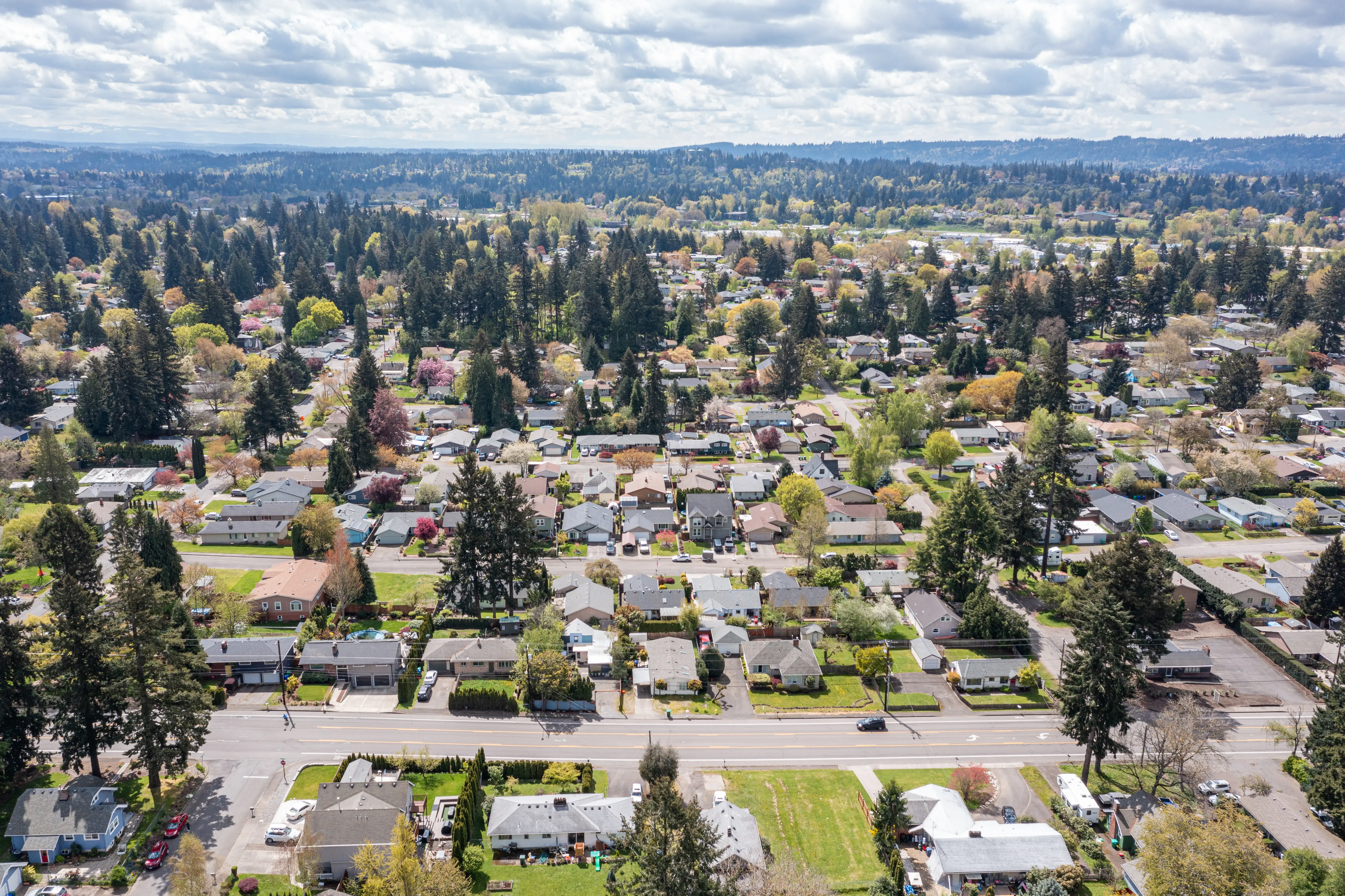
The commute question is where I see the most unrealistic expectations. Here's the truth: Milwaukie to downtown Portland takes 10-16 minutes by car — when traffic cooperates. During rush hour on McLoughlin Boulevard, that can stretch to 25-35 minutes. I always tell buyers to test-drive their actual commute during their actual commute hours before making an offer.
The MAX Orange Line changed the equation for many commuters. The 31-minute ride from Milwaukie to downtown Portland is predictable, climate-controlled, and lets you actually read or work instead of staring at brake lights. Park-and-ride fills up early at the downtown Milwaukie station, so if you're driving to catch the train, arrive before 8 AM or consider biking to the station instead.
Your main corridors are McLoughlin Boulevard (Highway 99E) running north-south through town, the Milwaukie Expressway connecting to I-205, and I-205 itself for eastside commutes to places like Clackamas Town Center employers or the airport. Southbound commuters heading to Oregon City or Wilsonville have relatively easy reverse-commute access.
For detailed cost-of-living analysis including transportation costs, see our Cost of Living in Milwaukie breakdown. The short version: if you can use transit even part-time, Milwaukie's location pencils out well. If you're driving solo to the west side daily, factor in the bridge traffic reality.
Milwaukie's market in early 2026 is competitive — not frenzied, but definitely not slow. The median home price sits around $520,000-$523,000, up roughly 13% year-over-year according to recent data. Homes sell in an average of 39 days, well below the national 58-day average.
The competitiveness score sits at 87 out of 100. In practical terms: well-priced homes in desirable neighborhoods receive multiple offers and typically sell 2% above list price. Truly hot properties — updated kitchens, good school zones, move-in ready — can go 6% over list and close in under a week.
What's actually available? Milwaukie's housing stock skews toward mid-century ranches, 1970s-80s split-levels, and some newer townhome developments. You'll find fewer Craftsman bungalows than inner Portland and fewer cookie-cutter subdivisions than Clackamas or Happy Valley. The architectural variety appeals to some buyers and frustrates others looking for a specific style.
Inventory remains tight, particularly for single-family homes under $500,000. Townhomes and condos offer entry points in the mid-$300,000s to low $400,000s. For anyone navigating this market for the first time, our Milwaukie First-Time Home Buyer guide walks through the process, and our post covers programs that can help with upfront costs.
I'll be direct: dedicated 55+ communities are limited in Milwaukie proper. The city has roughly one designated 55+ manufactured home community and a handful of senior-oriented apartment complexes. If you're specifically seeking a large active-adult development with golf courses and clubhouses, Milwaukie isn't the right fit.
What Milwaukie does offer is aging-in-place potential. Many longtime residents stay because the scale works — essential services within walking distance, MAX access for those who stop driving, and healthcare proximity with Providence Milwaukie Hospital right in town. The housing stock includes plenty of single-level ranches that accommodate mobility changes without requiring major renovation.
For those needing more support, independent living options like Bonaventure of Milwaukie, Deerfield Village, and Royalton Place serve the area. Expect independent living costs around $4,400 monthly, roughly consistent with the broader Portland Metro.
My honest advice for retirees: if community amenities and built-in social programming matter to you, look at the larger 55+ developments in the Wilsonville or Bethany areas. If you'd rather stay in a real neighborhood with mixed-age neighbors and genuine walkability to cafes and shops, Milwaukie works well — especially the Historic Milwaukie and downtown-adjacent areas. Our Retiring in Milwaukie post covers this decision in more depth.
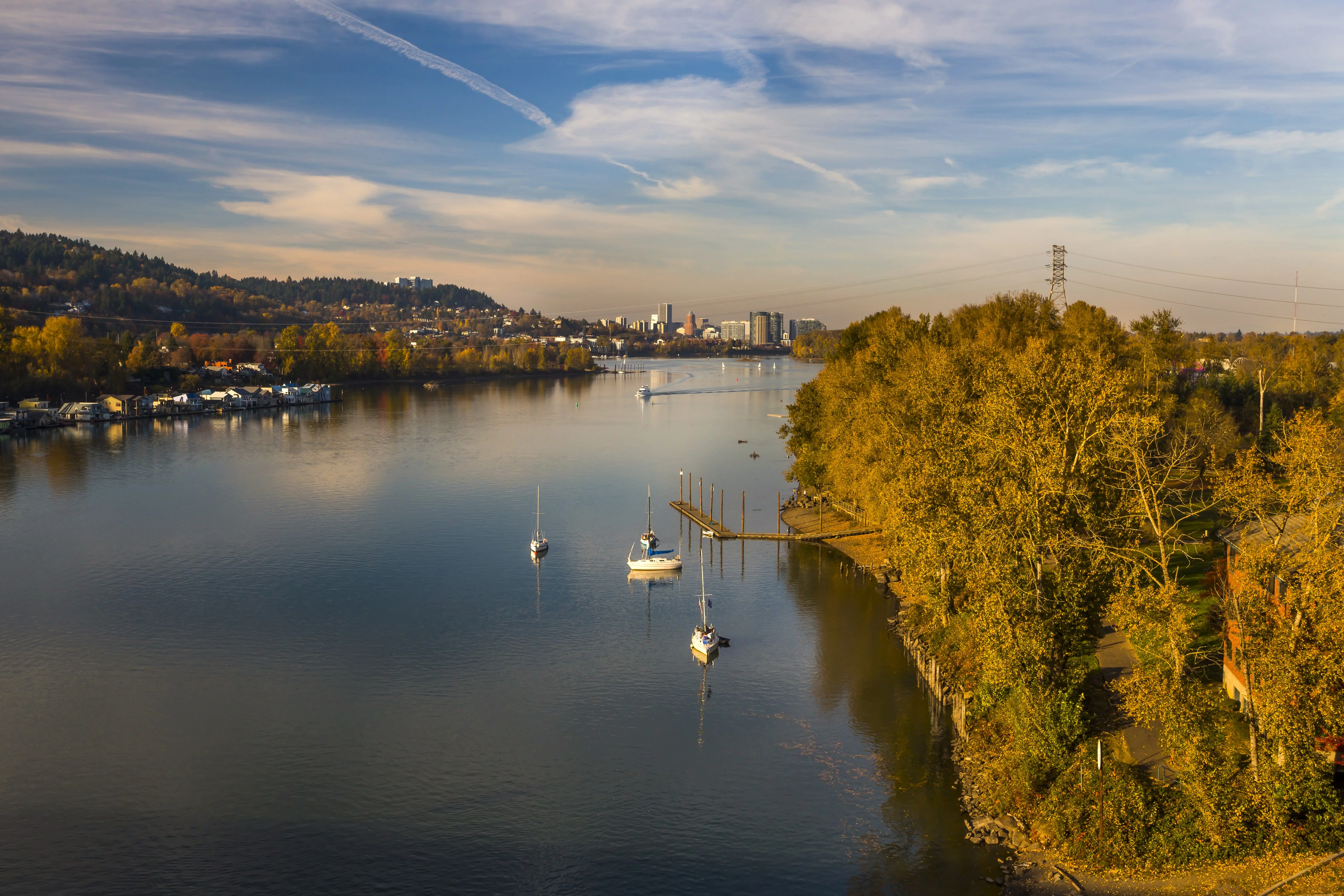
Milwaukie's park system punches above its weight for a city this size. Three spots consistently top my list when buyers ask about outdoor access.
Milwaukie Bay Park is the crown jewel — 8.5 acres of riverfront where Kellogg Creek and Johnson Creek meet the Willamette. This isn't a token waterfront; it's an actual destination with a boat launch, walking trails, and genuine views. The park connects to downtown, so you can grab coffee and stroll along the water. Weekend mornings here feel surprisingly peaceful given how close you are to the city.
North Clackamas Park offers 45 acres of active recreation — four softball/baseball fields, volleyball courts, horseshoe pits, playgrounds, and an off-leash dog area. This is where youth sports happen and where families spend entire Saturday afternoons. It's utilitarian rather than scenic, but it serves its purpose extremely well.
Spring Park Natural Area is the insider pick. Opened in 2015, this park includes playground equipment and picnic areas but its real draw is access to Elk Rock Island — a 13-acre nature preserve you can walk to during low water. Kids love the adventure of it; adults appreciate the unexpected wilderness minutes from suburbia.
The North Clackamas Aquatic Center deserves mention too: the only wave pool in Portland Metro, water slides, lap pool, and year-round indoor swimming. For families with kids, it's a genuine amenity. Our Milwaukie Parks and Recreation guide covers additional options including trails and natural areas.
Three misconceptions come up constantly, and all three cost buyers either money or satisfaction.
First: assuming all of Milwaukie looks like downtown. The revitalized downtown core with the MAX station, Milwaukie Bay Park, and walkable restaurants represents maybe 10% of the city's geography. Large swaths of Milwaukie consist of standard suburban residential streets, industrial zones along McLoughlin, and pockets that haven't seen significant investment in decades. Drive the entire city before deciding if the overall feel matches what you want.
Second: underestimating the MAX premium. Properties within walking distance of Orange Line stations command noticeably higher prices than similar homes a mile away. Some buyers don't actually need or want transit access but end up overpaying for proximity they won't use. Others assume they can find "transit-adjacent deals" that don't exist. Be realistic about whether you'll actually ride the train.
Third: conflating Milwaukie with "cheap Portland." This was true in 2015. It's not true now. At a $520,000 median, Milwaukie costs real money. Buyers who approach it as a fallback because they couldn't afford Portland proper often end up frustrated that they're still stretching their budget for a house that needs work. If Milwaukie is right for you, it should be right because you actually want what Milwaukie offers — not because you're settling.
For the full picture of what you're actually getting, our Ultimate Milwaukie Relocation Guide covers housing, lifestyle, and the real tradeoffs.
Oregon's property tax system confuses almost every out-of-state buyer I work with, so let me explain how it actually functions.
Under Measure 50 (passed in 1997), your assessed value is capped at 3% annual growth — regardless of how much market value increases. This creates a gap: a home might have a market value of $520,000 but an assessed value of $350,000 or less. When you purchase that home, the county doesn't automatically reassess to market value. You inherit the seller's assessed value.
However — and this is crucial — if the property sells for significantly above its maximum assessed value, the county can adjust. Oregon uses a "changed property ratio" calculation that varies by county. In Clackamas County, where Milwaukie sits, effective property tax rates run approximately 0.95% to 1.1% of assessed value, not market value.
What does this mean practically? The seller's tax bill tells you almost nothing about what you'll pay. A longtime owner might pay $3,500 annually on a home you're buying for $520,000, but your first-year bill could be $4,800 or higher depending on the reassessment calculation. I always recommend buyers request the property's current assessed value and calculate their likely tax bill before finalizing their budget.
When budgeting for a Milwaukie home, don't rely on the seller's tax bill. Request the current assessed value from Clackamas County, then multiply by 1.1% for a conservative tax estimate. Build in a 10-15% buffer above that for your first year while assessment adjustments settle.
This question comes up for good reason: Milwaukie sits at the confluence of Johnson Creek, Kellogg Creek, and the Willamette River. During heavy winter rains — particularly atmospheric river events — certain areas flood. Buyers need to understand where and how.
Johnson Creek has historically been the primary flood concern. The creek runs through the northern part of the city, and homes in the Ardenwald-Johnson Creek area can be affected during major rain events. The Johnson Creek floodplain is well-documented; FEMA maps show exactly which properties fall within flood zones. If a home requires flood insurance, that's a mandatory disclosure, and your lender will require coverage.
The good news: significant investment in flood mitigation over the past two decades has improved the situation. Restored wetlands, improved culverts, and the Tideman Johnson Natural Area all serve flood management purposes. Major flooding events still occur, but they're less frequent and less severe than they were in the 1990s.
What buyers should do: for any property in the northern half of Milwaukie, pull the FEMA flood map. Ask specifically about flood history on the property disclosure. Check whether flood insurance is required or recommended. Homes outside flood zones typically don't need coverage, but if you're within even the 500-year floodplain, price out what insurance would cost annually.
Before making an offer on any property near Johnson Creek or Kellogg Creek, request the elevation certificate if one exists and get a flood insurance quote — even if it's not technically required. A $2,000 annual flood insurance premium changes your effective housing cost significantly, and sellers won't always volunteer this information upfront.
Milwaukie works best for buyers who want access without chaos — people who value being 15 minutes from downtown Portland but don't need to live there. It's ideal for families who prioritize yard space and community parks over urban density, for commuters who can leverage the Orange Line, and for anyone who appreciates a city with actual character rather than manufactured charm.
What I tell every buyer considering Milwaukie: spend real time here before committing. Walk downtown on a Saturday morning. Drive McLoughlin during rush hour. Visit the neighborhood you're considering after dark. Milwaukie reveals itself honestly if you give it the chance — both the genuine appeal and the unglamorous parts that brochures skip.
If you're weighing Milwaukie against other options or have questions I didn't cover here, I'm always happy to talk through specifics. This is exactly the kind of conversation I enjoy — no sales pitch, just real information to help you make a good decision for your situation. Reach out anytime.
Browse current listings updated daily — filtered for Milwaukie buyers by Elizabeth Davidson, your local expert.
Powered by Elizabeth Davidson · Cascade Hasson Sotheby's International Realty · 503-939-2035
Explore the full Milwaukie series: Living in Milwaukie · Is Milwaukie Safe? · Cost of Living in Milwaukie · Best Neighborhoods in Milwaukie · Milwaukie Schools & Family Life · Milwaukie Youth Sports · Milwaukie Parks & Recreation · Retiring in Milwaukie · 1031 Exchange in Milwaukie · Milwaukie First-Time Buyer Guide · · Moving to Milwaukie from California · The Milwaukie Realtor's Perspective · Top 10 Questions a Realtor Gets About Milwaukie