
Portland Metro · Oregon
Best Neighborhoods in Milwaukie: Where to Buy or Rent (2026)
Milwaukie is small enough to feel manageable on a map and diverse enough to confuse buyers who assume every block looks the same. The city spans roughly five square miles, but the difference between a home in Historic Milwaukie near the Willamette floodplain and one in Lewelling a mile inland isn't just a matter of aesthetics — it's about flood risk, school access, commute patterns, and long-term resale dynamics. Pick the wrong pocket and you'll feel it in your insurance premiums and your daily routine.
The fundamental divide here runs between the river-adjacent west side and the quieter residential corridors heading east and south. Neighborhoods like Island Station and Historic Milwaukie carry the romance of the Willamette — waterfront parks, Craftsman architecture, historic character — but that proximity comes with genuine flood exposure that the city-wide median home price of $520,000 doesn't automatically account for. The eastern neighborhoods, from Ardenwald-Johnson Creek up to Linwood and Lewelling, trade the river views for drier ground, better transit access, and in some cases faster commutes via MAX light rail.
This guide breaks down every major neighborhood so you can match your lifestyle, budget, and risk tolerance to the right part of Milwaukie — whether you're buying your first home, relocating a family, or looking for a rental while you figure out the city.
| Neighborhood | Best For | Price Range | Vibe |
|---|---|---|---|
| Ardenwald-Johnson Creek | First-time buyers, trail access | $350K–$500K | Wooded, active, Portland-adjacent |
| Historic Milwaukie | Walkability seekers, downtowners | $420K–$500K | Riverside, artsy, small-town core |
| Island Station | Waterfront lifestyle buyers | $480K–$560K | Secluded, historic, Willamette-front |
| Lake Road | Families, mid-budget buyers | $500K–$800K | Suburban, tree-lined, mixed stock |
| Lewelling | Families, quiet residential | $490K–$580K | Midcentury, tight-knit, well-kept |
| Linwood | Commuters, practical buyers | $470K–$560K | Functional, transit-connected, stable |
| Hector Campbell | Value buyers, large lots | $460K–$550K | Residential, lower-density, overlooked |
| Milwaukie Heights | Move-up buyers, views | $500K–$600K | Elevated, established, family-oriented |
| Jennings Lodge | Budget buyers, renters | $400K–$490K | Transitional, suburban, improving |
| North Milwaukie | Investors, entry-level buyers | $380K–$480K | Mixed-use edge, light industrial nearby |

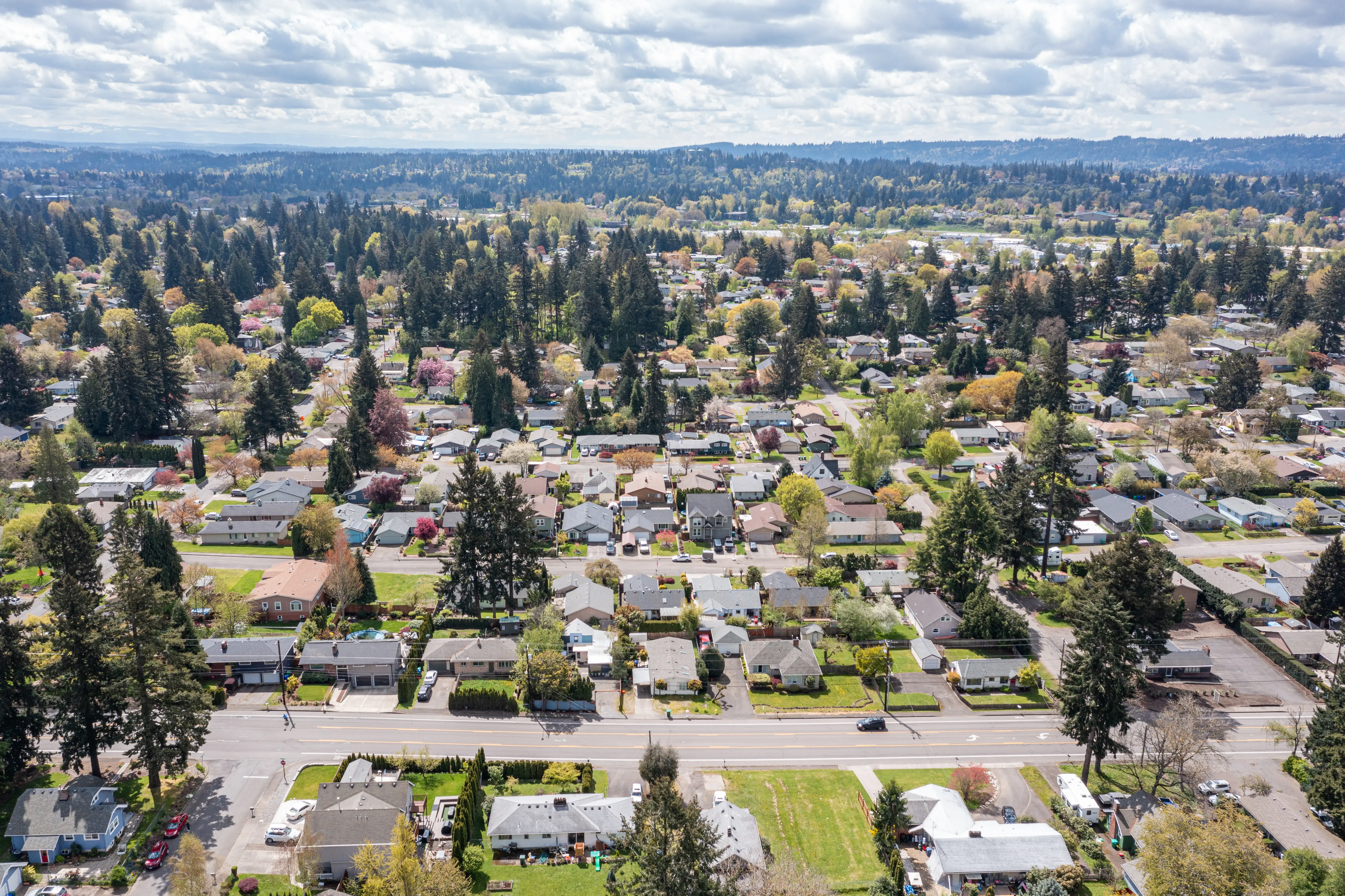
What surprises most buyers coming from Portland proper is how much Milwaukie rewards those who dig a layer deeper than the city-wide median. The $520,000 median tells one story, but Ardenwald-Johnson Creek regularly produces sales under $450,000 on bungalows with solid bones and direct Springwater Corridor access — and those homes are moving in under a week. Meanwhile, Lake Road and Milwaukie Heights are quietly attracting buyers who got outbid in Lake Oswego and discovered they could land a well-maintained four-bedroom on a tree-lined street for $150,000 less. That gap is real and it's closing.
The one thing I see buyers consistently underestimate is the flood exposure in the western neighborhoods. Island Station and Historic Milwaukie are genuinely beautiful — the river access, the architecture, the walkable downtown. But nearly half the properties in Historic Milwaukie carry elevated flood risk over a 30-year horizon, and that shows up in your insurance quote after you've already fallen in love with the house. My advice: get the flood zone map in front of you before your second showing, not after your third. If you're considering Milwaukie and want insight into which neighborhoods align with your priorities and budget, I'd welcome the opportunity to share what I've learned from helping hundreds of families make this move successfully.
| Buyer Type | Best Neighborhood | Why |
|---|---|---|
| First-time buyer | Ardenwald-Johnson Creek | Lowest entry prices in the city, trail access, close to Portland |
| Walkability seeker | Historic Milwaukie | Downtown core, coffee shops, farmers market, MAX stop |
| Families with kids | Lewelling | Quiet streets, parks, good school access, stable neighborhood |
| Commuter (Portland) | Linwood | Direct MAX Orange Line access, 26-minute drive alternative |
| Large lot buyer | Hector Campbell | More residential space per dollar than core neighborhoods |
| Move-up buyer | Milwaukie Heights | Elevated lots, larger homes, longer-term equity play |
| Renter | Historic Milwaukie / Linwood | Walkable amenities or transit access depending on priority |
Ardenwald-Johnson Creek sits at Milwaukie's northern edge, close enough to Portland that some buyers genuinely debate which city feels like home. The neighborhood runs along Johnson Creek and connects directly to the Springwater Corridor Trail, a paved multi-use path that links riders and walkers to downtown Portland on one end and Gresham on the other. Homes here are among the most competitively priced in the city, with sales regularly happening within a week and multiple-offer situations on anything well-priced — but the entry point below $500,000 remains one of the more accessible in the Portland metro area. The catch is a mix of housing stock quality that varies significantly block by block, and buyers who skip a thorough inspection in the rush to compete often inherit deferred maintenance issues in older bungalows.
Best for: First-time buyers and Portland transplants who want trail access, TriMet connectivity, and a lower buy-in price without fully leaving the city's orbit.
The city's downtown core runs through Historic Milwaukie, where the Milwaukie Bay Park meets local coffee shops, the indie 99W Drive-In's legacy, and a walkable commercial strip that hosts the Milwaukie Sunday Farmers Market and the beloved annual Umbrella Parade. Homes in this neighborhood have appreciated noticeably year-over-year, with a March 2026 median sold price of around $440,000 — lower than the citywide figure primarily because slower-moving inventory and longer days on market reflect the reality that riverfront appeal doesn't always translate to quick sales. The downside that too many buyers skip past: nearly half of Historic Milwaukie properties carry elevated flood risk over the next 30 years, a number that makes homeowners insurance conversations far more complicated than in drier parts of the city.
Best for: Buyers who prioritize walkability, downtown character, and river proximity — and who've done the flood zone homework before falling in love.
Island Station is one of Milwaukie's genuinely distinctive pockets — a secluded stretch of 1920s-era properties along the Willamette River that feels like it exists slightly outside of normal suburban time. Craftsman and Alpine-style homes share space with more modern constructions, and the neighborhood's access to waterfront parks and MAX light rail makes it genuinely appealing for buyers who want river living without the full premium of Lake Oswego. The median sold price around $505,000 reflects both the character and the complexity here: low sales volume creates year-to-year price swings that make Island Station harder to underwrite for risk-averse buyers, and the river proximity compounds the flood exposure considerations that show up across Milwaukie's west side.
Best for: Buyers drawn to historic character, Willamette views, and a quieter pace who understand that low inventory means limited comparables and more price uncertainty.
Lake Road functions as one of Milwaukie's more versatile mid-range corridors, with a housing mix that spans ranch homes, condos, townhomes, and larger single-family properties ranging from roughly $500,000 to close to $800,000. The presence of Bob's Red Mill nearby and MAX light rail access give this area practical infrastructure that families and commuters both value. The challenge in Lake Road is that the price spread is wide, meaning buyers need to be clear on whether they're purchasing older ranch stock or newer construction before making comparisons — a 1,400-square-foot original home and a 3,500-square-foot new build both technically live in "Lake Road," but they're targeting completely different buyers at completely different price points.
Best for: Families seeking flexibility across housing types, buyers who want suburban stability with light-rail convenience, and anyone within commuting distance of Bob's Red Mill or North Clackamas School District facilities.
Lewelling is the neighborhood that frequently appears when local agents are asked where they'd point a buyer who wants a stable, established residential feel without paying a premium for marketing cachet. Midcentury homes line tree-shaded streets near Lewelling Park and Ball-Michel Park, and the neighborhood's 24-day average days on market suggests a less frenzied pace than the city's more competitive northern pockets. The 13.3% year-over-year price appreciation that showed up in early 2025 data signals real demand, but the flip side is that the housing stock tends toward smaller square footage and 1950s-era infrastructure that may require updated electrical, plumbing, or insulation work — factors that first-time buyers on tight renovation budgets should price in carefully.
Best for: Households with children who value quiet streets, park proximity, and a tight-knit residential character at prices that still sit within reach of the citywide median.
Linwood occupies Milwaukie's eastern corridor and functions as one of the city's most practical neighborhoods for buyers who prioritize commute efficiency over neighborhood identity. The MAX Orange Line is the defining asset here — direct light-rail service to downtown Portland makes the stated 26-minute average commute achievable without touching SE McLoughlin Boulevard during peak hours. The trade-off is straightforward: Linwood doesn't carry the riverside character of Historic Milwaukie or the trail-adjacent appeal of Ardenwald-Johnson Creek, and the neighborhood's functional, transit-oriented layout means streetscapes that are tidy but not particularly memorable. Buyers who need to be in Portland proper several days a week and want to own rather than rent typically find this neighborhood delivers better value per commute dollar than many comparable Portland options.
Best for: Commuters who value MAX access above neighborhood character, buyers who need a practical, stable base without the flood risk of western Milwaukie.
Hector Campbell is one of the city's more quietly residential neighborhoods — lower density, larger lots relative to the city average, and price points that still dip below $550,000 for single-family homes with meaningful yard space. The neighborhood doesn't generate the buzz of Historic Milwaukie or the competition metrics of Ardenwald-Johnson Creek, which is precisely its appeal for buyers who've been outmaneuvered in faster-moving pockets. The honest drawback is limited walkability — this is firmly a drive-or-bike-to-everything area, and buyers who assume Milwaukie's overall moderate Walk Score applies uniformly across the city will be disappointed when daily errands require a car regardless of weather.
Best for: Buyers seeking more outdoor and lot space per dollar, households who don't depend on walking access to amenities, and value-oriented purchasers who want stability over prestige.
Milwaukie Heights sits at one of the higher elevations in the city, which delivers two things most Milwaukie neighborhoods can't offer: views and drainage. Homes here are generally larger, lots are more established, and the neighborhood skews toward buyers who want something above the entry price band without crossing into Lake Oswego territory. The price range of $500,000 to $600,000 reflects a genuine step up in finished quality and lot character compared to Milwaukie's baseline stock, though the neighborhood's hillside positioning means some properties have access roads that become genuinely challenging during winter ice events — a detail Portland-area newcomers from flat terrain consistently underestimate.
Best for: Move-up buyers, households prioritizing lot quality and elevation over walkability, and anyone drawn to Milwaukie's value relative to Lake Oswego who wants the best the city can offer.
Looking to buy in Milwaukie? Estimate your payment.
Enter your numbers to see an estimated monthly mortgage payment.
Estimate only. Excludes HOA fees and mortgage insurance.
Assuming flood risk is someone else's problem. The Willamette River is Milwaukie's most beautiful asset and its most consequential liability for western neighborhood buyers. Seventeen percent of all Milwaukie properties carry elevated flood risk over a 30-year horizon, but that average obscures the concentration in Historic Milwaukie and Island Station, where nearly half of homes face significant exposure. Buyers who fall in love with riverfront views and move quickly without reviewing FEMA flood maps often discover their insurance quote in escrow is $150 to $300 per month higher than they budgeted — a number that quietly reshapes affordability.
Treating SE McLoughlin Boulevard as a consistent commute. McLoughlin is the spine of Milwaukie's Portland connection, but it's a notoriously variable road. During peak morning hours, the northbound stretch between Milwaukie and the Ross Island Bridge can easily turn a 20-minute drive into 40. Buyers in Linwood and Ardenwald-Johnson Creek who plan to use MAX light rail avoid this entirely; buyers in Hector Campbell or Lake Road who assume a drive to Portland will be the same on Tuesday as it was on a Saturday afternoon are often unpleasantly surprised by month two.
Conflating Historic Milwaukie's character with uniform pricing. The neighborhood's downtown appeal and slower average days on market (around 99 days in early 2026) lead some buyers to assume they have negotiating leverage across the board. That's true for some properties — particularly those with flood exposure or deferred maintenance — but turn-key homes in walkable blocks near the farmers market still move competitively. Buyers who assume everything in this neighborhood is slow and discounted will lose the clean houses and overpay for the complicated ones.
Skipping the county boundary check. Most of Milwaukie sits in Clackamas County, but a small portion crosses into Multnomah County. This matters for property tax calculation, school boundary assignment, and access to certain services. Buyers purchasing near the northern edge of the city — particularly in Ardenwald-Johnson Creek — should verify county placement before assuming either the Clackamas County property tax structure or any Multnomah-specific programs apply to their specific parcel.
| Area | Ideal For | Typical Rent Range | Trade-off |
|---|---|---|---|
| Historic Milwaukie / Downtown | Walkability seekers, young professionals | $1,400–$1,900/mo (1BR) | Flood zone exposure, limited large-unit inventory |
| Linwood Corridor | Commuters, MAX users | $1,500–$2,000/mo (2BR) | Fewer walkable amenities outside transit stops |
| Ardenwald-Johnson Creek | Active renters, Portland edge | $1,300–$1,800/mo (1BR) | Older rental stock, quality varies by building |
| Lake Road Area | Families, mid-term renters | $1,700–$2,200/mo (2–3BR) | Requires car for most daily errands |
| Jennings Lodge | Budget renters, longer commutes | $1,200–$1,600/mo (1–2BR) | Transitional area, less established retail access |
Milwaukie's rental market reflects a city where 39% of housing is renter-occupied, but supply leans heavily toward smaller complexes and single-family rentals rather than large apartment buildings. About 58% of rental units are in buildings with fewer than 50 units, and 28% of the rental stock is single-family homes — which means renters who want a yard and some privacy often find better options here than in Portland proper, but those renting for the first time from out of state may struggle to find the kind of amenity-heavy apartment complex they're used to in larger metros. Budget-oriented renters doing shorter stays tend to find Jennings Lodge offers the most room for negotiation, while commuters who need MAX access consistently gravitate toward Linwood despite its quieter commercial scene.

Local Expert Takeaway: If I had one piece of advice for buyers new to Milwaukie, it's this: run the flood zone map and the school boundary check before you run the comps. Two homes priced at $520,000 in this city can have completely different 10-year cost profiles depending on whether one sits in a moderate flood zone near the Willamette and the other sits on stable ground in Lewelling or Linwood. The neighborhoods that consistently deliver the best combination of price stability, school access, and manageable insurance costs are Lewelling, Linwood, and Milwaukie Heights — and none of those three make the Instagram highlight reel. That's usually how value works.
Does the MAX Orange Line make Milwaukie genuinely car-optional for downtown Portland commuters?
For commuters living in Historic Milwaukie or Ardenwald-Johnson Creek — the neighborhoods closest to the Park Avenue MAX Orange Line station — the answer is a qualified yes. The Orange Line runs directly to downtown Portland and connects to the broader TriMet network, making car-free commuting practical for riders headed to the South Park Blocks, the Lloyd District, or the transit mall. The honest caveat is that Milwaukie is a city of distinct neighborhoods, and transit access falls off quickly as you move away from the McLoughlin Boulevard corridor. Lewelling, Lake Road, and Milwaukie Heights residents are functionally car-dependent for most trips, regardless of the Orange Line's presence in the city.
What are the best places to live in Milwaukie for families?
Lewelling and Lake Road consistently rank as strong choices for households with children, offering park access, quiet residential streets, and proximity to North Clackamas School District schools. Milwaukie Heights is worth considering for families who want a bit more space and elevation without significantly exceeding the city's median price.
Is Milwaukie a good place to buy a home in 2026?
Yes, for buyers priced out of Lake Oswego or inner Southeast Portland, Milwaukie offers real value at a $520,000 median sold price in a very competitive market where homes are moving in about 10 days. The key is matching your neighborhood choice to your flood risk tolerance, commute method, and school boundary priorities — the city rewards research more than most Portland-area suburbs its size.
How does living in Milwaukie Oregon compare to living in Portland?
Milwaukie typically runs 15 to 20 percent below comparable Portland neighborhoods on home prices while offering MAX light rail access, established parks, and a quieter residential character. What buyers give up is Portland's density of dining and retail; what they gain is more space per dollar, a slightly calmer streetscape, and Clackamas County's property tax structure, which can be marginally advantageous compared to inner Portland.
Browse current listings updated daily — filtered for Milwaukie buyers by Elizabeth Davidson, your local expert.
Powered by Elizabeth Davidson · Cascade Hasson Sotheby's International Realty · 503-939-2035
Explore the full Milwaukie series: The Ultimate Milwaukie Relocation Guide · Is Milwaukie Safe? · Cost of Living in Milwaukie · Best Neighborhoods in Milwaukie · Milwaukie Schools & Family Life · Milwaukie Youth Sports · Milwaukie Parks & Recreation · Retiring in Milwaukie · 1031 Tax-Deferred Exchange in Milwaukie · Milwaukie First-Time Homebuyers Guide · · Moving to Milwaukie from California · The Milwaukie Realtor's Perspective · Top 10 Questions a Realtor Gets About Milwaukie
Tell us what you need help with and we'll connect you with local resources.

About the Author
Todd Davidson is the founder of Living in Oregon and Living in Washington, where he publishes in-depth city guides, neighborhood resources, and local market insights covering more than 180 communities across the Pacific Northwest. While his background is in home financing and real estate, he created these digital platforms to help families research and compare regions before making a move.