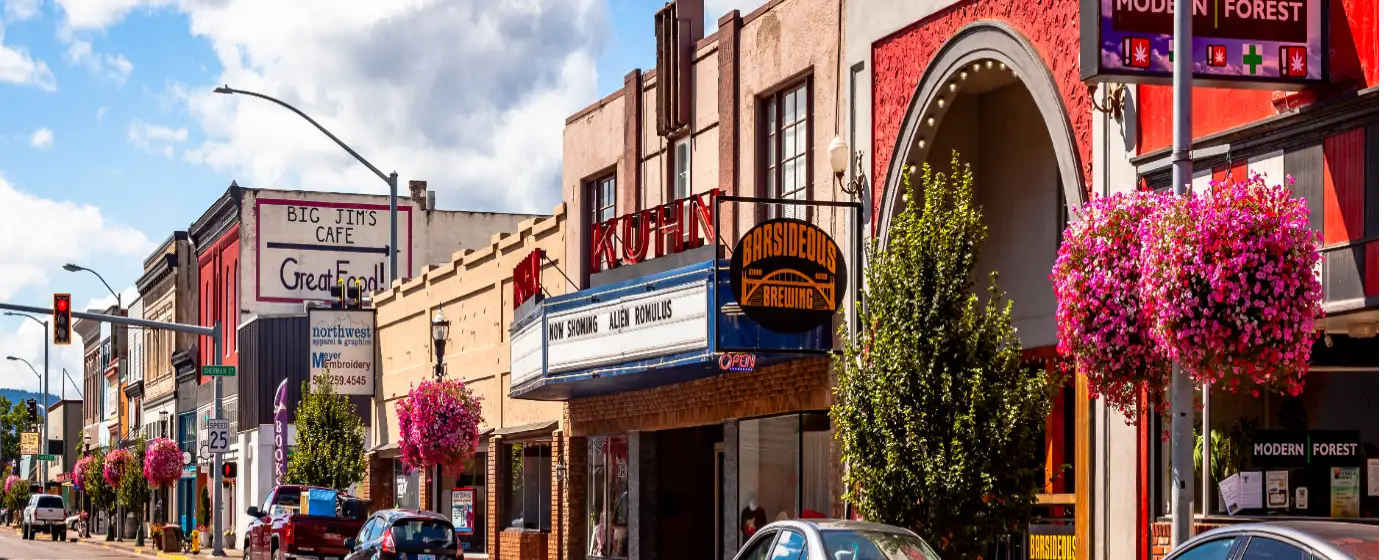
Willamette Valley · Oregon
Cost of Living in Lebanon: Housing, Taxes, Utilities & Lifestyle (2026)
You've probably heard Lebanon mentioned as "the affordable alternative" to Corvallis or Albany. That framing is partly true and partly misleading. Lebanon's housing costs are genuinely lower than the statewide median, and the $394,000 median sold price puts homeownership within reach for households that would be completely priced out of neighboring Corvallis. But the overall cost picture is more nuanced — Lebanon sits roughly 10% above the national average on total living costs, driven by Oregon's income tax, car-dependent daily life, and utility expenses that exceed what you'd find in cheaper Sun Belt metros.
What shapes the cost equation here is a mix of geography, local infrastructure, and Oregon-specific tax policy. Lebanon runs its own municipal electric utility, which affects how residents budget for power. There's no sales tax anywhere in Oregon, which provides meaningful savings on major purchases. And property taxes, anchored by Linn County's 0.77% effective rate, land well below the national median — a genuine advantage for buyers coming from California, Washington, or the Midwest where rates routinely exceed 1.5%.
This guide breaks down every major cost category — buying, renting, property taxes, utilities, daily expenses — and compares Lebanon directly against Sweet Home, Albany, Corvallis, and other nearby cities. By the end, you'll have a realistic monthly budget number and a clear sense of whether Lebanon's affordability story holds up for your specific situation.
The median sold price in Lebanon sits at approximately $394,000 — a figure that genuinely surprises buyers arriving from the Portland metro or the Bay Area. At that price point, you're typically looking at a three-bedroom, two-bath home on a standard city lot, often with a garage and a backyard. Older ranch-style homes from the 1970s and 1980s represent a large portion of the inventory in this range, though newer construction in South Lebanon and Cascade Estates pushes into the $420,000–$500,000 range. The lower end of the market starts around $270,000 for smaller homes or properties needing work, while the top of the market reaches $1.5 million for acreage and custom builds on the rural fringe.
Market tempo in Lebanon is measured, not frantic. Homes are sitting on the market for roughly 60–78 days, and most listings receive around two offers on average — a significant contrast from the bidding-war environment many buyers fled in 2021 and 2022. The market scored a 49 out of 100 on competitiveness indexes, meaning you generally have time to do a proper inspection and negotiate. Zillow's one-year price forecast projects modest appreciation of about 1.5%, which signals stability rather than speculative growth.
Spring 2026 list prices have trended toward $450,000 as sellers test higher ground, but closed sales remain anchored closer to the low-to-mid $390s. The gap between list and sold price gives buyers real negotiating room — something worth understanding before you decide how to structure an offer.
| Budget | What to Expect in Lebanon |
|---|---|
| Under $300,000 | Fixer-uppers, older mobile homes, smaller lots near City Center |
| $300,000–$394,000 | Entry-level 2–3 BR homes, older construction, established neighborhoods |
| $394,000–$480,000 | Updated 3–4 BR homes, newer construction in South Lebanon and Cascade Estates |
| $480,000–$650,000 | Newer builds, larger lots, Hamilton Creek and rural-edge properties |
| $650,000+ | Custom builds, acreage, rural Lebanon with mountain views |
At Lebanon's 0.77% effective rate, a home purchased at the $394,000 median generates an annual property tax bill of approximately $3,034 — about $253 per month. That rate runs meaningfully below the national median of 1.02%, and well below what buyers pay in California, Washington, or the Midwest. Oregon's Measure 50, passed in 1997, caps assessed value growth at 3% annually regardless of market appreciation, which means long-term homeowners often pay taxes on an assessed value far below current market value. New buyers get assessed at a percentage of their purchase price, but future increases are capped — a genuine long-term financial advantage. The city charges a separate $18-per-month City Services Fee that covers general fund services and is billed separately from your property tax.
Lebanon's rental market leans heavily toward two- and three-bedroom units, which make up the bulk of available inventory. Average rents have settled into a range that feels affordable by Oregon standards, though they've climbed meaningfully over the past two years.
| Unit Type | Average Monthly Rent |
|---|---|
| Studio | $995–$1,250 |
| 1-Bedroom | $1,230–$1,400 |
| 2-Bedroom | $1,430–$1,610 |
| 3-Bedroom | $1,760–$2,160 |
| 4-Bedroom | $2,630+ |
Roughly 44% of Lebanon households rent rather than own, which means demand for rental units is consistent. The majority of available rentals — about 53% of the stock — fall between $1,500 and $2,000 per month, making the two-bedroom segment the practical sweet spot for most renters. Inventory is limited compared to Albany or Corvallis, so well-priced units in good condition tend to move within a week or two of hitting the market. Renters with flexibility on neighborhood who can act quickly will find the best options.
Lebanon operates its own municipal electric utility — Lebanon Utilities — rather than using Pacific Power or PGE. Municipal utilities often maintain competitive rates compared to investor-owned providers, though exact monthly costs vary by home size and season. The city provides water and wastewater service to more than 5,600 customers, and stormwater is billed separately. A realistic monthly utility budget for a typical three-bedroom home in Lebanon runs in the range of $175–$220 for electricity, water, sewer, and stormwater combined — though larger homes or electric heat will push that figure higher. Oregon's mild Willamette Valley climate reduces extreme heating and cooling costs compared to inland or coastal markets.
Car dependency is the daily reality in Lebanon. There is no meaningful public transit connecting Lebanon to Albany, Corvallis, or the broader Willamette Valley. If you're commuting 15 minutes to Albany for work, you're driving it, five days a week. Corvallis, about 30 minutes west, adds up fast in fuel and vehicle wear. Budget for a reliable vehicle, regular maintenance, and fuel costs that reflect a rural driving pattern — most Lebanon residents log 12,000–18,000 miles per year. The upside is that gas stations are plentiful and local, and the absence of Portland-style traffic keeps commute stress low.
Grocery access in Lebanon is solid for a city its size. A full Walmart Supercenter handles daily staples, and there are several smaller grocery options in town. What Lebanon lacks is a natural foods co-op or specialty grocery comparable to what Corvallis residents take for granted. For organic produce, specialty dietary items, or restaurant-quality variety, many residents make a trip to Albany or Corvallis once a week. Dining out locally is affordable — independent restaurants and familiar chains line the Highway 20 corridor, and a sit-down meal for two runs $40–$65 at most places. The absence of Oregon sales tax means every purchase, from groceries to clothing to appliances, costs less than in Washington or California.

Looking to buy in Lebanon? Estimate your payment.
Enter your numbers to see an estimated monthly mortgage payment.
Estimate only. Excludes HOA fees and mortgage insurance.
| City | Median Home Price | Property Tax Rate | Avg 2BR Rent | Commute to Albany | Overall COL vs. National |
|---|---|---|---|---|---|
| Lebanon | $394,000 | 0.77% | $1,430–$1,610 | 15 min | ~10% above |
| Albany | $390,000–$420,000 | ~0.90% | $1,500–$1,750 | — | ~8% above |
| Corvallis | $490,000–$540,000 | ~0.92% | $1,700–$2,000 | 30 min | ~18% above |
| Sweet Home | $290,000–$330,000 | ~0.77% | $1,100–$1,350 | 30 min | ~4% above |
| Brownsville | $310,000–$360,000 | ~0.77% | Limited inventory | 20 min | ~5% above |
| Harrisburg | $340,000–$380,000 | ~0.77% | Limited inventory | 25 min | ~6% above |
| Scio | $320,000–$360,000 | ~0.77% | Very limited | 25 min | ~5% above |
The comparison makes Lebanon's positioning clear. It's more affordable than Corvallis by a meaningful margin and offers more services and employment than Sweet Home or Brownsville, which have lower prices but also far less infrastructure. Albany sits at a similar price point to Lebanon but comes with a slightly higher tax rate and more urban amenities. For buyers who want Corvallis access without Corvallis prices, Lebanon is the practical answer — as long as you're comfortable with the 30-minute drive west.
This budget reflects a household purchasing at the $394,000 median with 10% down ($39,400), financing $354,600 at a 30-year rate in the 6.5–7% range.
| Expense Category | Monthly Estimate |
|---|---|
| Mortgage (principal + interest) | $2,250–$2,375 |
| Property tax (0.77%) | $253 |
| Homeowner's insurance | $90–$120 |
| City Services Fee | $18 |
| Utilities (electric, water, sewer, stormwater) | $175–$220 |
| Internet/phone | $80–$110 |
| Groceries (household of 2) | $550–$700 |
| Transportation (2 vehicles, fuel + maintenance) | $600–$800 |
| Dining out / entertainment | $200–$350 |
| Healthcare (employer-sponsored est. contribution) | $300–$500 |
| Childcare or school expenses (if applicable) | $400–$900 |
| Total (household of 2, no childcare) | $4,516–$5,196 |
At the Lebanon median household income of $63,176 — roughly $5,265 per month gross — this budget is tight but achievable, particularly if both household members are employed. The math works most comfortably for dual-income households or buyers bringing equity from a prior sale. The low property tax rate is one of the genuine structural advantages in this budget; buyers coming from high-tax states will feel that $253/month figure acutely when comparing to what they were paying before.
Oregon's tax structure is a mixed bag for Lebanon residents, and understanding it upfront prevents budget surprises. The state has no sales tax, which is a genuine everyday advantage — every dollar you spend at Walmart, at the hardware store, or on a major appliance purchase goes further than it would across the river in Washington. For a family spending $50,000 a year on taxable goods, the absence of even a 6–8% sales tax represents thousands of dollars in annual savings.
The trade-off is Oregon's income tax, which is among the highest in the nation. Oregon taxes income at graduated rates that reach 9.9% at the top bracket. For a household earning the Lebanon median of $63,176, the effective state income tax rate lands in the 7–8% range after deductions. Oregon does not tax Social Security income, which provides meaningful relief for retirees, and there is no estate tax on estates under $1 million. Seniors facing financial hardship may qualify for Oregon's property tax deferral program, which allows eligible homeowners to defer property taxes until the home is sold — a significant tool for fixed-income retirees.
For remote workers relocating from California, the income tax calculation changes significantly. California's top rate reaches 13.3%, so even Oregon's 9.9% top rate represents a reduction. Buyers moving from Washington, however, are stepping into a state income tax they didn't have before — and that shift needs to factor into any monthly budget comparison.
Local Expert Takeaway: The buyers who find Lebanon genuinely affordable are typically those who have already run the Corvallis comparison and walked away from the $540,000+ price tags. At $394,000 median sold, Lebanon delivers the Willamette Valley lifestyle — proximity to outdoor recreation, a real community feel, honest seasons — without requiring dual incomes at $80,000+ each just to service the mortgage. The move that surprises people is buying in South Lebanon or Cascade Estates in the $420,000–$460,000 range, where newer construction and larger lots deliver quality that feels underpriced relative to anything in Benton County. If you're working in Albany or Samaritan Lebanon Community Hospital and don't need Corvallis daily, the financial case for Lebanon is straightforward.
Is Lebanon, Oregon an affordable place to live?
Lebanon is affordable by Oregon standards, particularly for housing. The $394,000 median sold price is meaningfully below Portland, Bend, and Corvallis, and the 0.77% property tax rate keeps monthly ownership costs manageable. Total cost of living runs about 10% above the national average, driven primarily by Oregon income taxes and car-dependent transportation costs rather than housing.
How much does it cost to buy a home in Lebanon, Oregon in 2026?
The median sold price in Lebanon sits at approximately $394,000 as of mid-2026. Entry-level homes start around $270,000 for older or smaller properties, while newer construction in South Lebanon and Cascade Estates typically runs $420,000–$500,000. Homes are spending 60–78 days on the market on average, giving buyers genuine negotiating room.
How does Lebanon's cost of living compare to Albany and Corvallis?
Lebanon and Albany sit at comparable home price medians, though Albany offers more urban amenities and slightly higher property taxes. Corvallis carries a median home price $100,000–$150,000 higher than Lebanon, with proportionally higher rents and overall living costs. Lebanon's primary advantage over both is the lower entry price for homeownership combined with a short 15-minute commute to Albany's employment base.
Explore the full Lebanon series: The Ultimate Lebanon Relocation Guide · Is Lebanon Safe? · Cost of Living in Lebanon · Best Neighborhoods in Lebanon · Lebanon Schools & Family Life · Lebanon Youth Sports · Lebanon Parks & Recreation · Retiring in Lebanon · 1031 Tax-Deferred Exchange in Lebanon · Lebanon First-Time Homebuyers Guide · · Moving to Lebanon from California
Tell us what you need help with and we'll connect you with local resources.

About the Author
Todd Davidson is the founder of Living in Oregon and Living in Washington, where he publishes in-depth city guides, neighborhood resources, and local market insights covering more than 180 communities across the Pacific Northwest. While his background is in home financing and real estate, he created these digital platforms to help families research and compare regions before making a move.