Willamette Valley · Oregon
Living in Lebanon: The Ultimate Relocation Guide (2026)
Maybe you've been priced out of Corvallis and someone at work mentioned Lebanon as the affordable alternative. Maybe your company has a facility near Albany and you're scanning a 20-mile radius for a place that feels like home rather than just a commute. Maybe you drove through on Highway 20, noticed the South Santiam River running alongside town, and thought it looked more interesting than you'd expected from a city of 19,000. Whatever brought you here, Lebanon has a story that doesn't fit neatly into the typical Willamette Valley real estate narrative — and that's precisely why buyers who discover it tend to either fall for it immediately or walk away puzzled.
The city sits along the South Santiam River on the eastern edge of the Willamette Valley, roughly 15 minutes from Albany and 20 minutes from Corvallis. That geography matters. Lebanon is close enough to both cities to access their amenities, employment, and medical facilities, yet far enough removed to maintain a pace and a price point that's genuinely distinct. With a median sold price holding steady around $394,000 and a cost of living index only about 5% above the national average, this is one of the more affordable entry points remaining in the mid-valley.
This guide exists to answer the questions a listing photo can't. What does it actually feel like to live here day to day? Which neighborhoods are worth your attention and which come with tradeoffs? What do people love after six months — and what drives some of them back to Albany or Corvallis? By the end, you'll know whether Lebanon belongs on your short list or whether a nearby city is a better fit for your specific situation.
Lebanon isn't a city that works for everyone, and it doesn't try to be. Understanding which buyer profiles it genuinely serves well — and which it doesn't — is the fastest way to know whether to keep reading or pivot to another guide.
| Best For | Why |
|---|---|
| First-time buyers | $394,000 median with entry-level homes starting around $300K — one of the most accessible price points in the Willamette Valley |
| Albany/Corvallis commuters | 15 minutes to Albany, 20 minutes to Corvallis via Highway 20 — manageable daily drive without metro-area prices |
| Families with kids | Affordable larger homes, outdoor recreation on the Santiam River, and a district with improving graduation rates |
| Remote workers | Lower cost of living, quiet residential neighborhoods, and broadband increasingly available in newer developments |
| Retirees on a fixed income | Property tax rate of 0.77% is well below the national median; hospital and veterans' services are local |
| Manufacturing and trades workers | Major employers like Entek International, Linn Gear, and Weyerhaeuser draw skilled trades residents who prefer living where they work |
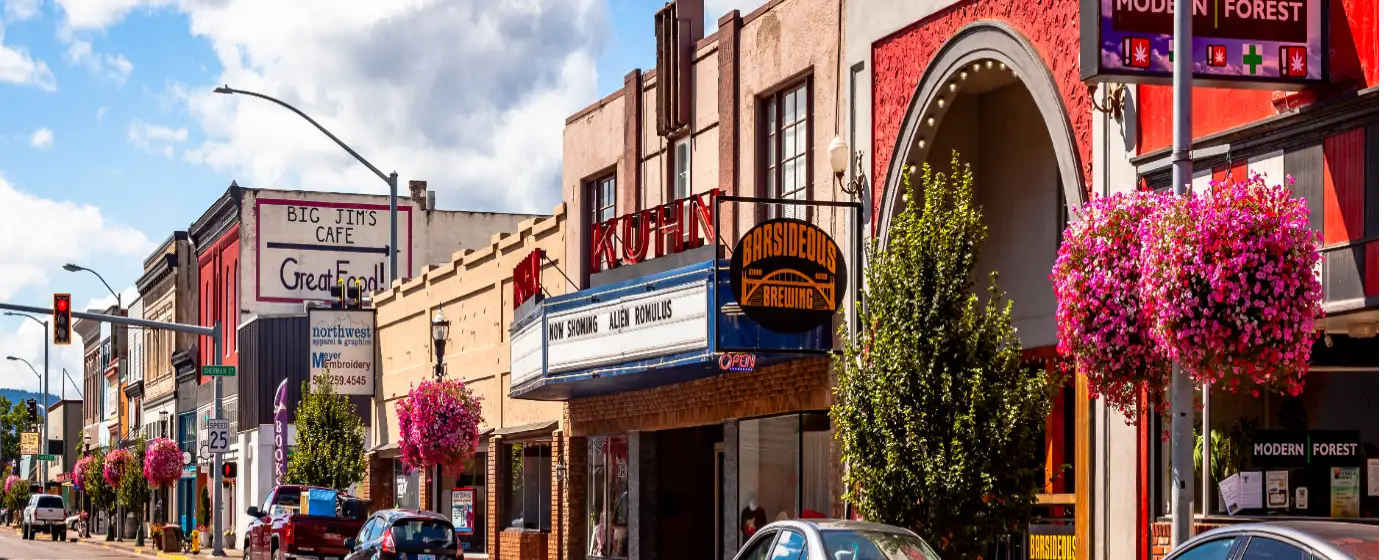
Lebanon is a town shaped by its river and its highway. U.S. Highway 20 runs straight through the center as Main Street — historically a trade route going back to the Santiam Wagon Road of the 1850s — which means commerce, traffic, and daily life all converge on a single corridor. That gives the downtown a genuine small-city pulse: local businesses mixed with the occasional chain, foot traffic on weekend mornings, and a sense that the core of the city is actually used rather than just passed through.
Day-to-day life here is fundamentally practical in a way that suits working households. Walmart, a Lowe's Regional Distribution Center, Samaritan Lebanon Community Hospital, and local manufacturing plants mean that a significant portion of residents both live and work within the city limits. That self-contained quality reduces the pressure to commute — and for households where one partner works locally while another commutes to Albany or Corvallis, Lebanon's geography makes the logistics work.
What surprises most people after six months of living here is how much the river anchors daily life. Cheadle Lake Park and River Park give residents genuine outdoor access within minutes of most neighborhoods, and the proximity to the Cascades means HooDoo Ski Resort and the McKenzie River corridor are less than an hour away. It doesn't feel like a suburb searching for an identity; it feels like a small Oregon town that happens to be very well located.
The friction point most newcomers hit is Highway 20 itself. During peak commute windows — particularly morning and late afternoon — traffic through the Main Street corridor slows noticeably, especially near the downtown intersections. It's not Portland-level congestion, but buyers used to low-traffic small towns occasionally find it catches them off guard.
The price-to-space ratio is hard to beat in the mid-valley. Homes in Lebanon's quieter residential neighborhoods offer three and four bedrooms, larger lots, and actual backyards at prices that have largely stalled out in Corvallis and Albany. The $394,000 median represents a functional family home — not a compromise starter unit — and buyers who enter the market here and hold for several years have generally seen modest but steady appreciation.
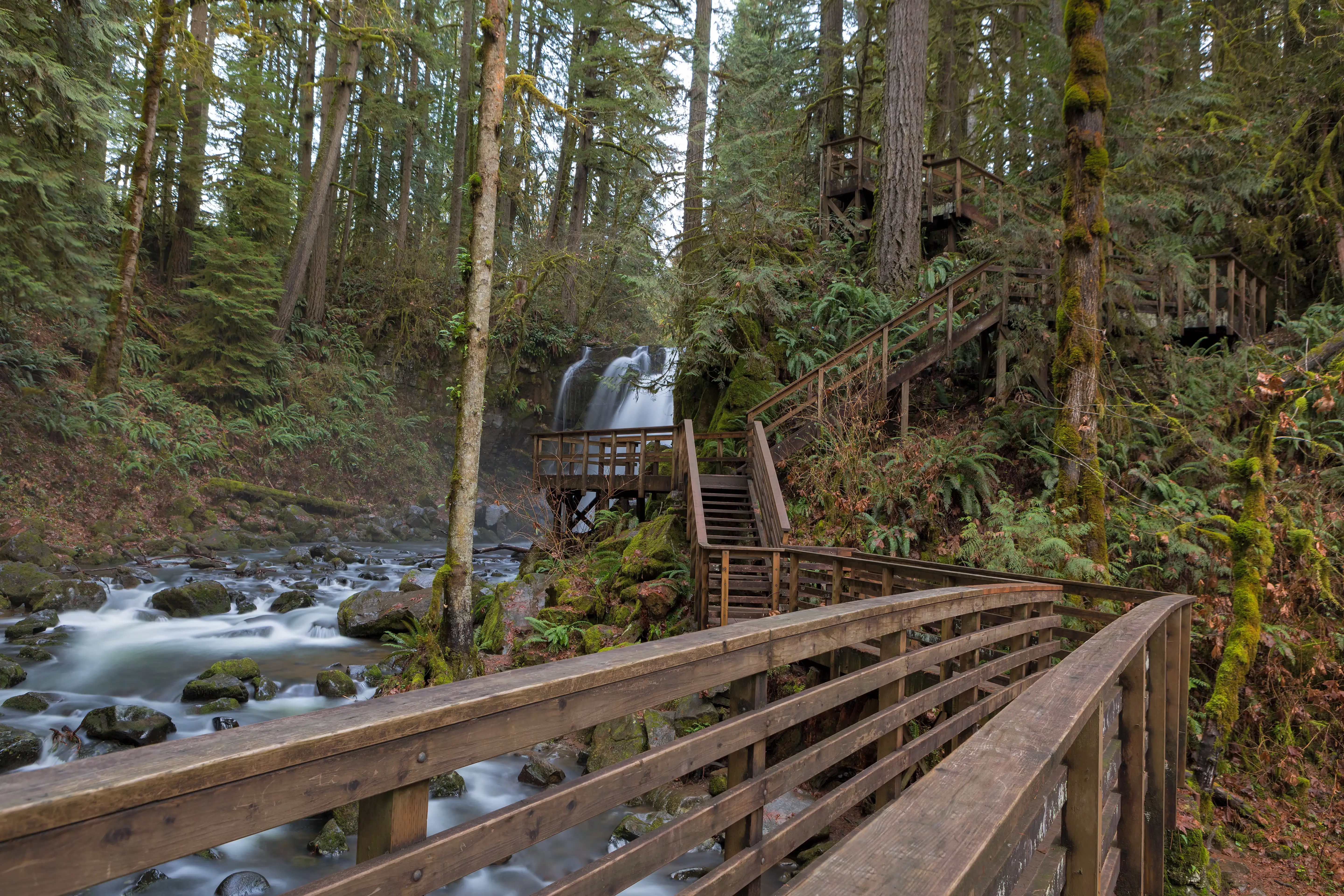
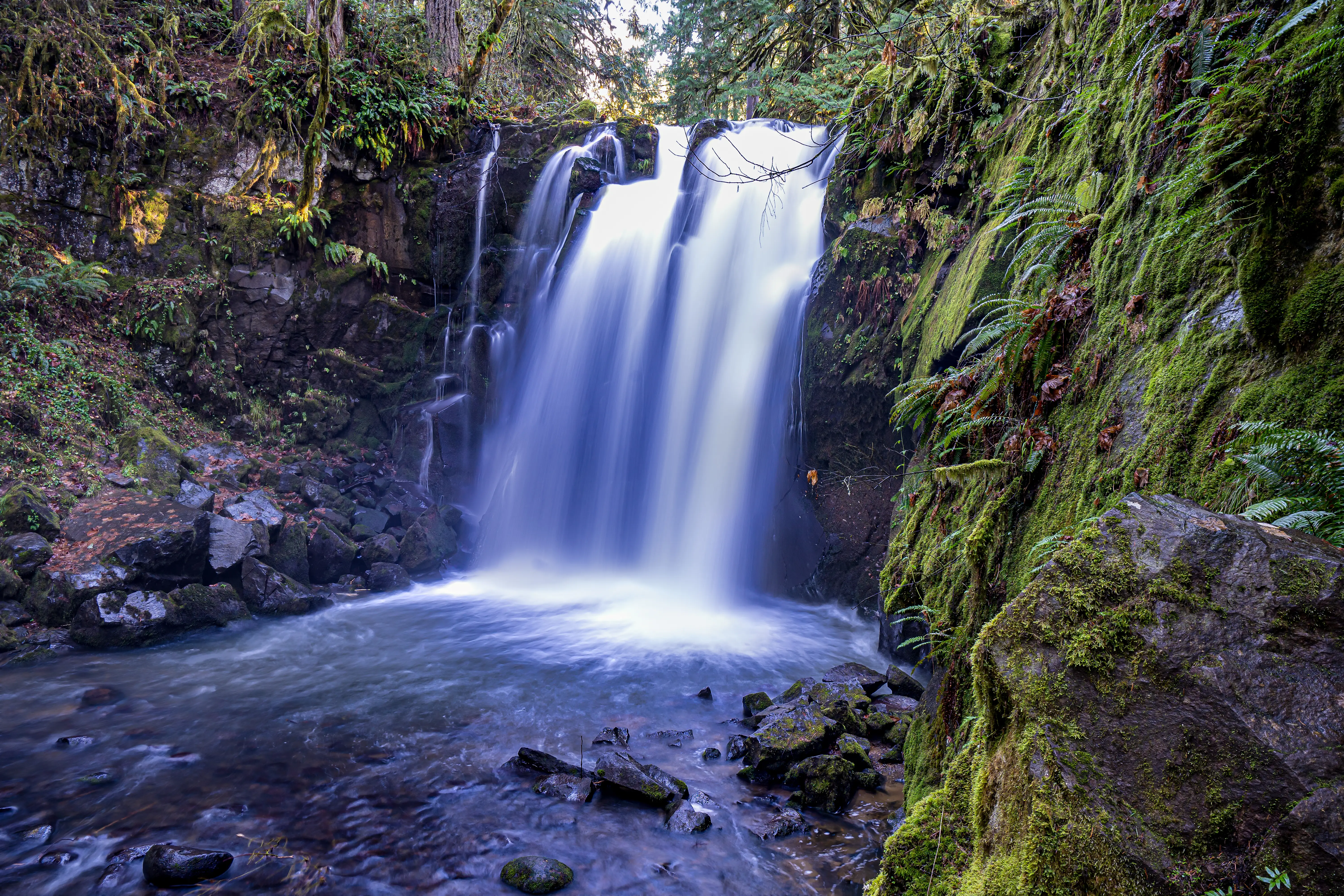
The outdoor access is real and immediate. Cheadle Lake Park, River Park along the Santiam, and the trail network woven through the city provide everyday recreation that doesn't require a drive. Santiam Excursions offers local river access for tubing and kayaking, and the surrounding Linn County landscape — with its agricultural fields, forested hills, and river corridors — makes Lebanon feel embedded in the natural landscape rather than just built near it.
The local economy has diversified meaningfully over the past decade. Samaritan Lebanon Community Hospital has grown into the city's largest employer, and institutions like the College of Osteopathic Medicine of the Pacific Northwest (established 2011) and the Edward C. Allworth Veterans' Home (2017) have added a professional and healthcare workforce that has raised median household incomes and stabilized the local economy. Lebanon no longer relies as heavily on a single industry as it once did.
The property tax structure is genuinely favorable for long-term ownership. At approximately 0.77%, the effective rate sits well below the national median of about 1.02% — and only $0.29 of each tax dollar goes to city services, with the remainder distributed across Linn County, Lebanon Fire, Lebanon Public Schools, Linn-Benton Community College, and other agencies. For buyers comparing monthly carrying costs, that difference compounds meaningfully over time.
Looking to buy in Lebanon? Estimate your payment.
Enter your numbers to see an estimated monthly mortgage payment.
Estimate only. Excludes HOA fees and mortgage insurance.
Lebanon's school district carries a C rating, and that context matters for families doing side-by-side comparisons with Corvallis or Albany. Lebanon High School's 87.8% graduation rate — which does surpass the Oregon state average — and the district's documented improvement in 9th-grade on-track metrics show genuine momentum. But SchoolDigger's 3-star, 47th-out-of-140 ranking for the Lebanon Community School District means buyers with children who are specifically optimizing for schools may find the comparison with Corvallis School District unfavorable. The tradeoff is stark: better schools often mean a $100,000 to $150,000 premium in Corvallis.
The local unemployment rate runs around 6.8% — meaningfully higher than Corvallis or the statewide average. For buyers relocating with remote jobs or transferring into one of Lebanon's major employers, this is less relevant. But for households where a partner needs to find local work quickly after a move, the job market depth isn't as robust as the broader mid-valley.
Why some people leave comes down to a specific pattern: buyers move to Lebanon for the price, then find that the lifestyle mismatch with what they imagined outweighs the savings. If your vision of daily life involves a walkable downtown with independent restaurants on every block, boutique fitness studios, and the cultural amenities of a college town, Corvallis will feel dramatically richer — even at the higher price point. Lebanon's Main Street is genuinely improving, but it's a town in transition, not a finished product.
The city's fiscal position is also worth noting. Lebanon's General Fund is projected to end the 2025–26 fiscal year with a negative balance, reflecting municipal budget pressures that are common in growing small cities but not insignificant. Buyers should pay attention to how that fiscal strain might affect city services, infrastructure maintenance, and future utility rates over a five-to-ten-year ownership horizon.
South Lebanon is the fastest-growing section of the city, concentrated around Cheadle Lake, Russell Drive, and Crowfoot Road. Median listing prices here run higher than the citywide median — closer to $484,000 — reflecting newer construction, larger lots, and the proximity to Cheadle Lake Park. Homes in this corridor tend to sit on the market around 31 days, which suggests active demand without the frenzy of a competitive metro market. The catch is that South Lebanon's growth means some areas feel still in process — roads, retail access, and neighborhood polish vary by block.
Best for: Families who want newer construction, park access, and room to grow without committing to an older in-town home.
The City Center neighborhood puts you on Main Street and within walking distance of Lebanon's brewpubs, cafes, thrift shops, and locally owned restaurants that have anchored the city's recent revival. Homes here tend to be older stock — Craftsman-era and mid-century builds — at prices that generally fall below the city median, often in the $280,000–$360,000 range for maintained homes. Walkability is the primary draw; the main challenge is that Main Street traffic noise and the mixed-use nature of the corridor mean this isn't a quiet residential enclave.
Best for: First-time buyers or remote workers who want to walk to coffee and dinner and don't need a large yard.
Lebanon Southwest offers a middle-ground residential character — quieter than the City Center, more established than South Lebanon, and priced in a range that suits buyers looking for move-in-ready homes without paying a South Lebanon premium. The neighborhood sits near Weldwood Park, providing local green space without a long drive. Infrastructure is stable and the residential character is consistent, which appeals to buyers who want predictability over project potential.
Best for: Buyers seeking a quiet, established residential setting at or below the city median price.
Cheadle Lake as a defined residential pocket takes its identity from the park and lake that anchor it. Cheadle Lake Park — one of Lebanon's signature outdoor spaces — is genuinely walkable from most homes in this cluster, and the natural setting creates a neighborhood character that feels distinct from the surrounding grid. Prices in this pocket trend toward the upper end of the city range given the amenity proximity. Buyers should note that some portions of the Cheadle Lake area fall within South Lebanon and share its newer-construction character.
Best for: Outdoor-oriented buyers who want daily park and trail access as part of their morning routine.
The Santiam River corridor neighborhood runs along the South Santiam at the eastern edge of Lebanon, anchored by River Park and the access points used by Santiam Excursions for tubing and kayaking. Homes near this corridor offer the direct river experience that buyers from western Oregon specifically seek out, and the proximity to Had Irvine Park adds additional green space. Flood zone considerations are real in some parcels — buyers should verify FEMA flood maps before making an offer near the river's edge.
Best for: Nature-first buyers who want a river-adjacent address and don't mind doing due diligence on flood risk.
Cascade Estates represents one of Lebanon's more planned residential developments, with a neighborhood layout that offers cul-de-sacs, consistent lot sizes, and the HOA-adjacent character of a subdivided community. Pricing generally runs at or slightly above the city median. The neighborhood draws households who want a predictable suburban streetscape — consistent landscaping, low crime, and neighbors who tend to stay put — rather than the organic variety of in-town historic blocks.
Best for: Households relocating from larger metro areas who want a familiar suburban feel at Oregon small-town prices.
Hamilton Creek sits on the quieter eastern side of Lebanon's residential grid, with a character shaped by proximity to the creek drainage and the lower-density feel that comes with being slightly removed from the Main Street commercial corridor. Homes here tend to be priced at or below the city median, and the neighborhood appeals to buyers who value buffer from commercial traffic. The tradeoff is fewer walkable amenities compared to City Center, and buyers should confirm broadband availability before committing if remote work is central to their lifestyle.
Best for: Buyers prioritizing quiet, lower price points, and distance from commercial corridors.
Whitaker offers some of Lebanon's more affordable entry points, with homes frequently found in the $280,000–$340,000 range for buyers willing to take on some cosmetic updating. The neighborhood has a long-established residential character and is positioned for buyers who are more interested in maximizing square footage and lot size per dollar than in walkability or new construction. Lebanon's overall crime profile is relatively contained, but buyers entering any older, lower-priced neighborhood should conduct a thorough home inspection given the age of some housing stock.
Best for: First-time buyers or investors looking for the lowest entry point in Lebanon with the most upside potential.
| City | Best For | Median Home Price | Commute to Albany | Vibe |
|---|---|---|---|---|
| Lebanon | Affordability + outdoor access | $394,000 | 15 min | Small-town with industrial base, improving downtown |
| Albany | Jobs + services + variety | ~$390,000–$415,000 | 0 min (local) | Mid-size city, more retail, less scenic |
| Corvallis | Schools + culture + walkability | ~$520,000–$560,000 | 25 min | University town, significantly higher prices |
| Sweet Home | Maximum affordability | ~$290,000–$330,000 | 30 min | Rural, remote feel, limited amenities |
| Brownsville | Rural quiet near the valley | ~$350,000–$380,000 | 20 min | Historic small town, very limited services |
| Harrisburg | Farming community, low density | ~$310,000–$360,000 | 20 min | Rural, newer subdivisions emerging |
| Metric | Detail |
|---|---|
| Population | ~19,344 (2026 estimates suggest 20,400–20,600) |
| Median Sold Home Price | $394,000 (mid-2026) |
| Property Tax Rate | ~0.77% effective rate |
| Median Household Income | $63,176 |
| Cost of Living Index | ~105 (national average = 100) |
| Commute to Albany | ~15 minutes via Highway 20 |
| Commute to Corvallis | ~20 minutes via Highway 20 |
| School District Rating | C (Lebanon Community School District) |
| Violent Crime per 1,000 | 2 |
| Property Crime per 1,000 | 13.5 |
| Median Age | 37.2 years |
| ZIP Code | 97355 |
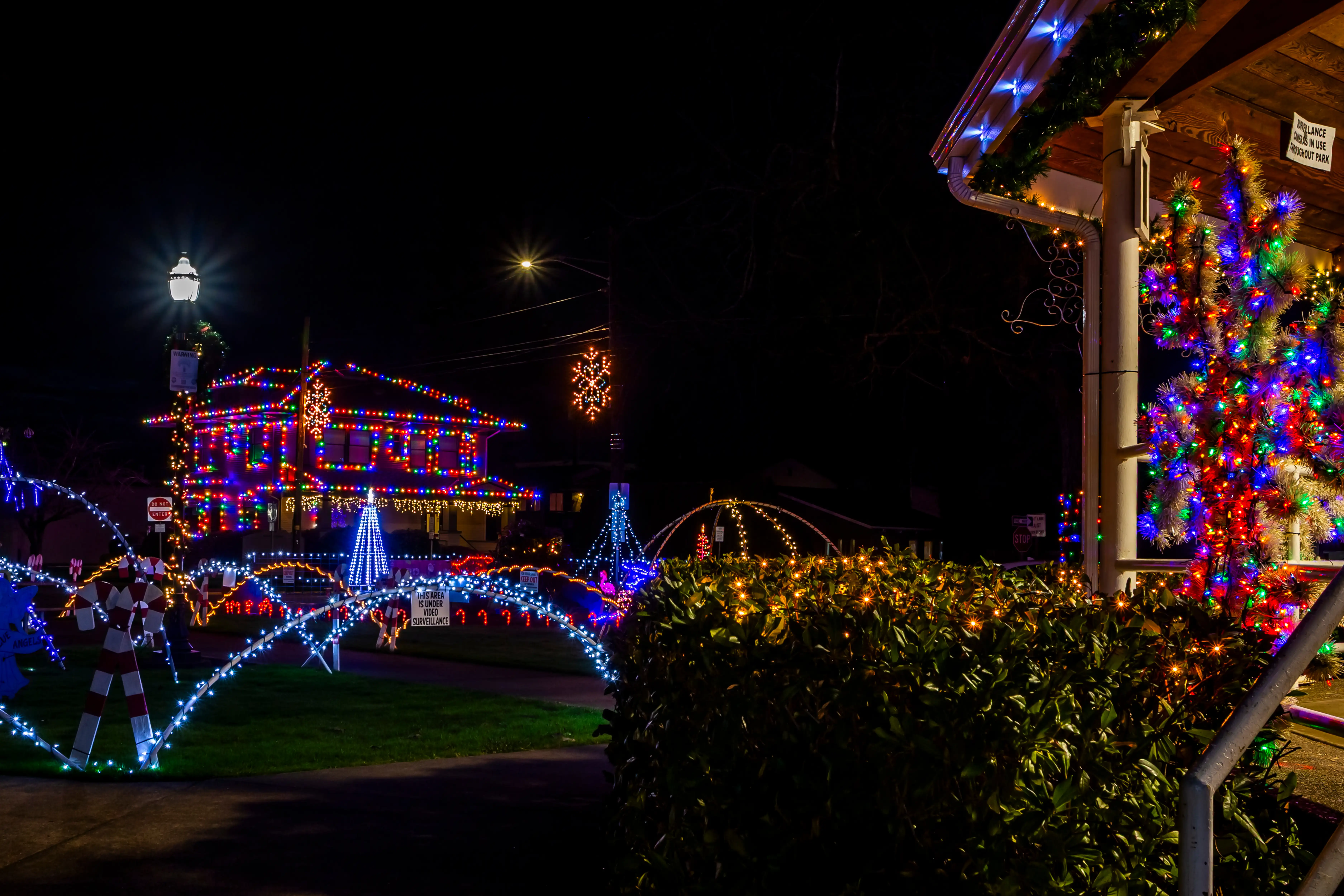
Lebanon's Main Street identity is inseparable from the Strawberry Festival, which has anchored the city's community calendar for over a century and draws visitors from across Linn County each June. It's the kind of event that locals plan around, parking patience required — and it gives newcomers an immediate entry point into the town's social fabric in a way that more generic community events rarely do.
The Mallard Creek Golf Course provides a genuinely local recreational anchor that surprises transplants from metro areas who expect small-city golf to feel utilitarian. It functions as a community gathering point in a way that parks alone don't, drawing a broad cross-section of Lebanon residents rather than a specific demographic.
Santiam Excursions on the South Santiam has become a signature summer tradition in the way that river outfitters do in small Oregon towns — it's how many Lebanon households spend July and August weekends, and it's one of the specific things residents name when asked what they'd miss if they left.
What I would not do if moving to Lebanon: Purchase a home along the Main Street commercial corridor between the downtown core and the Highway 20 interchange without spending multiple weekday mornings in the neighborhood first. The traffic pattern during the 7–8:30 a.m. and 4:30–6 p.m. windows on that stretch is noticeably heavier than anywhere else in town, and the commercial noise from adjacent retail doesn't disappear when you close the windows. Several buyers have ended up dissatisfied with homes in this specific stretch that looked perfectly reasonable on a quiet Sunday afternoon showing.
Local Expert Takeaway: Lebanon's best buying opportunity in mid-2026 sits in the South Lebanon corridor — specifically near Cheadle Lake and Russell Drive — where newer construction at or just above the city median gives buyers a home they won't outgrow quickly, with park access and a growth trajectory that supports appreciation over a five-to-ten-year hold. If schools are your primary concern, be honest about that before you make an offer: the district is improving but still a genuine tradeoff versus Corvallis. If affordability and outdoor lifestyle are your primary concerns, Lebanon is one of the strongest value plays remaining in the Willamette Valley.
✅ Lebanon offers genuine affordability at a $394,000 median — one of the lowest entry points in the Willamette Valley for a city with full services, a hospital, and good highway access.
⚠️ The school district requires honest evaluation. Lebanon Community School District carries a C rating and a 47th-out-of-140 state ranking. The graduation rate surpasses Oregon's average and trajectory is improving, but buyers prioritizing school quality above all else should compare carefully with Corvallis.
📍 Location is Lebanon's strongest card. Fifteen minutes to Albany, 20 to Corvallis, 45 minutes to Eugene Airport, and under an hour to HooDoo Ski Resort — the geographic position gives residents access to a wide range of services and recreation without paying for any of them in their property tax or home price.
Is Lebanon a good place to live for families?
Lebanon works well for families with kids who prioritize space, outdoor access, and affordability over school district prestige. Cheadle Lake Park, River Park, and the trail network give children genuine outdoor spaces within daily reach, and newer South Lebanon neighborhoods offer the room and lot size that families outgrow quickly in denser cities. Parents who are specifically optimizing for school performance metrics may find the Lebanon Community School District a meaningful downgrade from Corvallis, and that comparison is worth doing explicitly before committing.
What is the crime rate in Lebanon?
Lebanon's violent crime rate runs approximately 2 per 1,000 residents — a figure that places it on the lower end of mid-size Oregon city comparisons. Property crime is more elevated, at roughly 13.5 per 1,000, which is consistent with towns that have active commercial corridors and some economic stress. Residential neighborhoods away from the Highway 20 commercial strip, particularly South Lebanon and Cascade Estates, tend to show lower property crime activity than the city-wide aggregate suggests.
How does Lebanon compare to Albany and Corvallis?
Albany and Lebanon share a similar home price range — within $20,000 to $25,000 of each other at the median — but Albany offers a broader job market, more retail variety, and a larger city infrastructure. Corvallis is a 20-minute drive but commands a $130,000 to $165,000 premium at the median, driven primarily by Oregon State University's presence, school district quality, and walkable downtown. Lebanon occupies a distinct middle position: more affordable than both, smaller than both, and increasingly worth considering on its own terms rather than simply as a cheaper version of either.
Explore the full Lebanon series: The Ultimate Lebanon Relocation Guide · Is Lebanon Safe? · Cost of Living in Lebanon · Best Neighborhoods in Lebanon · Lebanon Schools & Family Life · Lebanon Youth Sports · Lebanon Parks & Recreation · Retiring in Lebanon · 1031 Tax-Deferred Exchange in Lebanon · Lebanon First-Time Homebuyers Guide · · Moving to Lebanon from California
Tell us what you need help with and we'll connect you with local resources.

About the Author
Todd Davidson is the founder of Living in Oregon and Living in Washington, where he publishes in-depth city guides, neighborhood resources, and local market insights covering more than 180 communities across the Pacific Northwest. While his background is in home financing and real estate, he created these digital platforms to help families research and compare regions before making a move.