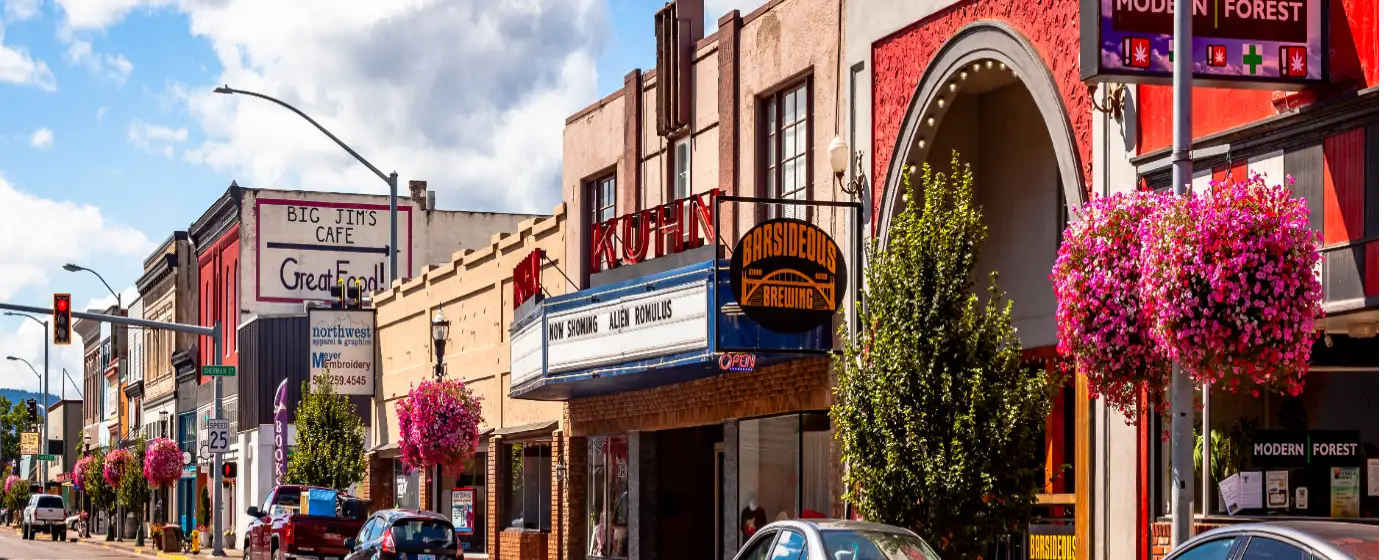
Willamette Valley · Oregon
There's a specific moment that catches first-time buyers off guard — not when they see the asking price, but when they sit down with a lender and realize how many moving pieces are actually involved. The down payment is only one of them. There's the inspection, the earnest money, the closing costs, the appraisal gap, and the quiet anxiety of making the largest financial decision of your life on a 10-day inspection window. Lebanon is worth that anxiety. At a median sold price around $394,000, it's one of the few places left in the Willamette Valley where a working household can still buy a real house — not a condo, not a fixer-upper on a busy arterial — with a reasonable income and a disciplined savings plan.
The math here is different from what you'll find 20 miles west in Corvallis, where median prices push well past $500,000 and first-time buyers are often competing against cash offers from university faculty. In Lebanon, a $394,000 median buys you approximately 1,550 square feet based on current per-square-foot pricing — typically a three-bedroom, two-bath ranch or newer construction on a modest lot. The gap between renting a two-bedroom apartment in Lebanon (roughly $1,200–$1,500/month) and owning a comparable home is narrowing in ways that make ownership the financially smarter move for households planning to stay five or more years.
This guide walks you through the full buying process as it actually unfolds in Lebanon's market — not the idealized version. You'll learn what credit scores and income levels actually qualify for, which neighborhoods offer the best first-time buyer value, the five mistakes that consistently cost buyers in this specific market, and what assistance programs exist right now. By the end, you'll know whether Lebanon makes sense for your situation and exactly what steps to take next.
Lebanon's case for first-time buyers starts with price point and ends with patience. For buyers who've been outpriced in Albany or Corvallis, the $394,000 median here represents something meaningful: an achievable number. With a 3.5% FHA down payment, you're looking at roughly $13,790 down — a figure that's within reach for households earning near Lebanon's median income, especially with assistance programs layered on top. The school district carries a C rating from most independent grading systems, which is worth knowing upfront, but for buyers prioritizing homeownership over school district prestige, Lebanon offers real value that comparable Oregon cities at this price point can't match.
The inventory picture is actually working in buyers' favor right now. With over 120 active listings in mid-2026 and homes averaging 65–78 days on market, this is not a frenzied multiple-offer environment. First-time buyers here typically have time to get a second opinion, order a full inspection, and negotiate repair credits — luxuries that don't exist in tighter metro markets. Entry-point neighborhoods like South Lebanon and Whitaker consistently show homes under $380,000, while newer construction in Cascade Estates and Hamilton Creek pushes into the $420,000–$480,000 range.
The most useful way to understand Lebanon's market is through tiers — because what $300,000 buys versus what $450,000 buys represents meaningfully different property types and neighborhood quality.
| Price Range | What You Typically Find | Neighborhood Examples | Competition Level |
|---|---|---|---|
| Under $350K | Older ranch homes (1960s–1980s), some deferred maintenance, smaller lots, 900–1,200 sq ft | Whitaker, City Center fringes | Low — patient buyers can negotiate |
| $350K–$450K | 3BR/2BA newer construction or well-maintained mid-century, 1,200–1,600 sq ft | South Lebanon, Lebanon Southwest, Hamilton Creek | Moderate — 1–2 offers common |
| $450K–$550K | Newer builds, upgraded finishes, 1,500–1,900 sq ft, cleaner lots | Cascade Estates, Cheadle Lake area | Moderate |
| $550K–$650K | Larger newer construction, premium lots, some custom features | Santiam River corridor, Cascade Estates upper tier | Low — limited buyer pool at this range |
| $650K+ | Custom homes, acreage, rural-adjacent parcels | Southeast Lebanon outskirts | Very low |
The realistic first-time buyer in Lebanon is shopping between $330,000 and $460,000, and the $350,000–$450,000 tier represents the best value intersection of move-in readiness and neighborhood stability. Homes in this range in South Lebanon and Lebanon Southwest tend to be either newer construction from the 2010s or well-maintained 1990s builds that don't carry the deferred maintenance risk of older city-center stock.
For buyers with flexible timelines, the under-$350,000 tier occasionally yields genuine finds — particularly in Whitaker, where an older home on a quiet street can be purchased with inspection contingencies intact and room to negotiate. The catch is that you'll need to budget for updates, and the resale ceiling in some of these pockets is lower than in newer subdivisions.
| Step | What Happens | Typical Timeline | What First-Timers Get Wrong |
|---|---|---|---|
| Get finances in order | Pull credit, pay down revolving debt, document income sources | 1–3 months before searching | Waiting until they find a house they love |
| Pre-approval | Lender reviews income, assets, credit; issues a letter | 1–3 business days | Confusing pre-qualification with pre-approval |
| Find an agent | Interview agents with Linn County experience | Before active searching | Using a Portland-based agent unfamiliar with Lebanon's neighborhoods |
| Active search | Tour homes, assess neighborhoods and condition | 2–8 weeks | Shopping at the top of qualification, not comfort |
| Making offers | Submit with earnest money, contingencies, and timeline | 1–3 days after finding target home | Offering list price on a home that's been sitting 60+ days |
| Under contract | Seller accepts; escrow opens | Days 1–3 post-acceptance | Not having earnest money ready to wire immediately |
| Inspection | Licensed inspector assesses property condition | Days 3–10 | Waiving it to compete — unnecessary in Lebanon's current market |
| Appraisal | Lender orders appraisal to confirm value | Days 10–21 | Not understanding what happens if appraisal comes in low |
| Final walkthrough | Confirm property condition before closing | Day before or morning of closing | Skipping it entirely |
| Closing | Sign documents, fund loan, receive keys | Typically 30–45 days from acceptance | Not budgeting for closing costs (typically 2–3% of purchase price) |
Lebanon's market tempo right now gives first-time buyers something that's genuinely rare in Oregon: the ability to use their contingencies. Homes are sitting on market long enough that buyers can request a full inspection, negotiate repair credits, and still close on schedule. Earnest money in Linn County typically runs 1% of the purchase price — so roughly $3,900–$4,500 on a median-priced home — and that's the number you should have liquid and ready before submitting any offer.
One thing specific to Lebanon: don't assume a home that's been listed for 70 days has a problem. Buyer pool here is smaller than in Albany, and longer days on market often reflect limited local demand rather than a structural defect. That's actually a negotiating advantage — a patient buyer can often come in at 2–4% below list on stale inventory and get accepted without drama.

Looking to buy in Lebanon? Estimate your payment.
Enter your numbers to see an estimated monthly mortgage payment.
Estimate only. Excludes HOA fees and mortgage insurance.
Conventional loans require a minimum 620 credit score, but the real interest rate savings kick in above 680 — and the difference matters. On a $420,000 loan, a buyer at 650 might be quoted a rate that produces a monthly principal and interest payment roughly $80–$120 higher than a buyer at 740. That delta over 30 years is real money. If you're sitting between 650 and 680, taking 3–6 months to pay down a credit card or two before applying can meaningfully change your total loan cost.
FHA loans accept scores as low as 580 with 3.5% down, and 500–579 with 10% down — though few lenders in practice approve the lower tier. FHA's big trade-off is mortgage insurance: you pay an upfront premium at closing plus a monthly premium for the life of the loan unless you refinance out. For buyers buying below $400,000 with a score in the 580–620 range, FHA is often the only practical path, and that's perfectly fine — it's what the program is designed for.
On income qualification, the rough rule is that your total monthly housing payment (principal, interest, taxes, insurance) shouldn't exceed 28% of your gross monthly income. To buy a $400,000 home with 3.5% down, you're financing roughly $386,000. At current rates, that produces a monthly payment in the range of $2,600–$2,900 all-in — which means you'd ideally be earning at least $9,300–$10,400 per month gross, or roughly $112,000–$125,000 annually for a comfortable qualifying picture. At $450,000 and $500,000, those figures scale upward proportionally. DTI — your total monthly debt payments divided by gross monthly income — is the number lenders actually use to approve or decline you, and student loans, car payments, and credit card minimums all count against it.
Offering list price on a home that's been sitting. With median days on market now in the 65–78 day range, a significant share of Lebanon's active inventory has price room. Buyers who walk in and offer asking price on a home that's been listed for 60-plus days are leaving money on the table. Your agent should pull the original list price and the list history before you submit anything.
Skipping inspection on older homes. A large portion of Lebanon's sub-$370,000 inventory consists of homes built in the 1960s and 1970s — the era of aluminum wiring, galvanized pipes, and original composition roofing. These aren't automatic deal-breakers, but they require a full inspection and often a sewer scope. Unlike tighter markets, Lebanon buyers don't need to waive inspection to win. Use it every time.
Confusing school district boundaries with city limits. The Lebanon Community School District serves a broader geographic area, and homes near the district's edges — particularly in rural-adjacent southeast Lebanon — can fall into boundary situations that affect which elementary school your kids attend. If schools matter to your decision, verify the actual attendance boundary for any specific address before making an offer.
Shopping at the top of their qualification. A lender approving you for $480,000 doesn't mean $480,000 is a comfortable payment. Lebanon's median household income is $63,176, and buyers who stretch to their full qualification limit often find the monthly payment exhausting when you add property taxes (approximately 0.77% of assessed value annually), insurance, and utilities. Build a budget that starts with your monthly comfort number, not the lender's ceiling.
Waiting for prices to drop meaningfully. Lebanon's median sold price has moved slowly — up about 1–4% year-over-year depending on the quarter — but it hasn't corrected downward. Buyers who've been waiting for a 10–15% price drop have watched instead as inventory tightened and rents continued rising. In a market this stable and this slow-moving, timing the bottom is less productive than simply buying when your finances are ready.
South Lebanon is consistently where first-time buyers find the best combination of newer construction and manageable price points. Homes here from the 2000s and 2010s tend to fall in the $360,000–$440,000 range, with updated kitchens, open floor plans, and fewer deferred maintenance concerns than older city-center stock. The commute to Samaritan Lebanon Community Hospital or the Lowe's distribution center is under 10 minutes from most South Lebanon streets.
Whitaker works for buyers who want to maximize square footage for their dollar and are comfortable with an older home. Sub-$350,000 inventory appears here more consistently than anywhere else in Lebanon, but buyers should approach with realistic expectations about updating costs. The neighborhood is quiet and residential, and for buyers with renovation skills or budget, the value ceiling is higher than the entry price suggests.
Lebanon Southwest offers a middle path — a mix of 1990s and 2000s construction with a calmer suburban feel and proximity to Cheadle Lake Park. Homes in the $380,000–$460,000 range here tend to be well-maintained and sit on reasonable lots. This corridor tends to attract families with school-age children who value nearby green space and manageable neighborhood walkability.
Hamilton Creek is a newer development area where buyers at $420,000–$480,000 find cleaner finishes, better insulation, and lower initial maintenance costs. The catch is that some streets here feel unfinished as the area continues developing, and the sense of established neighborhood character takes time to build. For buyers prioritizing condition over character, it's worth a serious look.
✅ Lebanon's $394,000 median price and slow-moving market give first-time buyers real leverage — use your contingencies, negotiate on stale listings, and don't rush.
⚠️ Pre-approval is not the same as pre-qualification — lenders in this market move quickly, and a full pre-approval letter is required before most sellers will accept an offer.
📍 South Lebanon and Lebanon Southwest offer the most first-time buyer-friendly combination of newer construction, manageable price points, and reasonable commute access to major employers.
Should I get pre-approved before looking at homes in Lebanon?
Yes — and not just as a formality. Lebanon's inventory may be slower-moving than Portland suburbs, but when a well-priced home in South Lebanon or Hamilton Creek hits the market in the $380,000–$420,000 range, it can attract multiple offers within the first two weeks. A pre-approval letter shows sellers you're a credible buyer and lets you move quickly without losing a home while paperwork catches up. Pre-approval also gives you an honest picture of your actual purchasing power before you fall in love with a house you can't finance.
What are closing costs for a first-time buyer in Lebanon?
Closing costs in Oregon typically run 2–3% of the purchase price, which on a $394,000 home works out to roughly $7,900–$11,800. These costs cover lender fees, title insurance, escrow fees, prepaid homeowners insurance, and property tax reserves. First-time buyers are often surprised that this amount is in addition to their down payment — meaning your total cash to close on an FHA purchase is closer to $22,000–$25,000 before any assistance. Negotiating a seller concession to cover part of closing costs is common in Lebanon's current market and worth including in your offer strategy.
How long does it take to buy a home in Lebanon from start to close?
From the day you start actively touring homes to the day you get keys, most first-time buyers in Lebanon complete the process in 60–120 days. Pre-approval typically takes a few business days. Active searching runs 2–8 weeks. Once under contract, the inspection, appraisal, and loan underwriting process runs 30–45 days. The variable is how long it takes to find the right home — in a market with 120+ active listings, buyers with clear criteria and pre-approval in hand can move faster than that timeline suggests.
Explore the full Lebanon series: The Ultimate Lebanon Relocation Guide · Is Lebanon Safe? · Cost of Living in Lebanon · Best Neighborhoods in Lebanon · Lebanon Schools & Family Life · Lebanon Youth Sports · Lebanon Parks & Recreation · Retiring in Lebanon · 1031 Tax-Deferred Exchange in Lebanon · Lebanon First-Time Homebuyers Guide · · Moving to Lebanon from California
Tell us what you need help with and we'll connect you with local resources.

About the Author
Todd Davidson is the founder of Living in Oregon and Living in Washington, where he publishes in-depth city guides, neighborhood resources, and local market insights covering more than 180 communities across the Pacific Northwest. While his background is in home financing and real estate, he created these digital platforms to help families research and compare regions before making a move.