Willamette Valley · Oregon
Is Lebanon Safe? Crime Rates, Safest Neighborhoods & Local Reality (2026)
Lebanon doesn't have a reputation problem so much as a context problem. Ask someone from Corvallis whether Lebanon is safe, and they'll often hesitate — not because they've experienced anything there, but because they're comparing it to a college town with a very different demographic and economic profile. The reality is that Lebanon sits well below national averages for violent crime, has seen property crime declining for four consecutive years, and is statistically safer than a majority of Oregon cities. That doesn't mean every block feels the same, and it doesn't mean the city is without challenges. It means you need better information than a generic neighborhood safety app can give you.
The numbers that shape daily life here are less alarming than the grades on crime-scoring websites suggest. With a violent crime rate of roughly 2 per 1,000 residents — a figure that runs well below the Oregon average — the realistic concern for most Lebanon households is property crime, not personal safety. Auto theft, vehicle break-ins, and shoplifting dominate the incident reports, and they cluster predictably near commercial corridors rather than spreading evenly across residential streets. A family settling into a quiet neighborhood east of town faces a fundamentally different risk profile than the citywide averages imply.
This guide breaks down what the crime data actually means for someone considering a move to Lebanon — which neighborhoods carry more exposure, which carry less, where the numbers are inflated by retail traffic rather than residential risk, and what practical habits locals have adopted to live comfortably here. If you're choosing between Lebanon and a neighboring city on safety grounds alone, you deserve a clearer picture than a letter grade provides.
Lebanon's overall crime rate, based on FBI data compiled through 2024, runs lower than the national average by a meaningful margin — roughly 43% lower by some commonly cited estimates. That's not the story you'd piece together from aggregate safety scores, which tend to penalize mid-sized Oregon cities for property crime rates that look high compared to rural towns but are actually modest compared to urban cores. Lebanon's total crime figure hovers around 28 incidents per 1,000 residents annually, which puts it in a range comparable to many similarly sized Pacific Northwest cities.
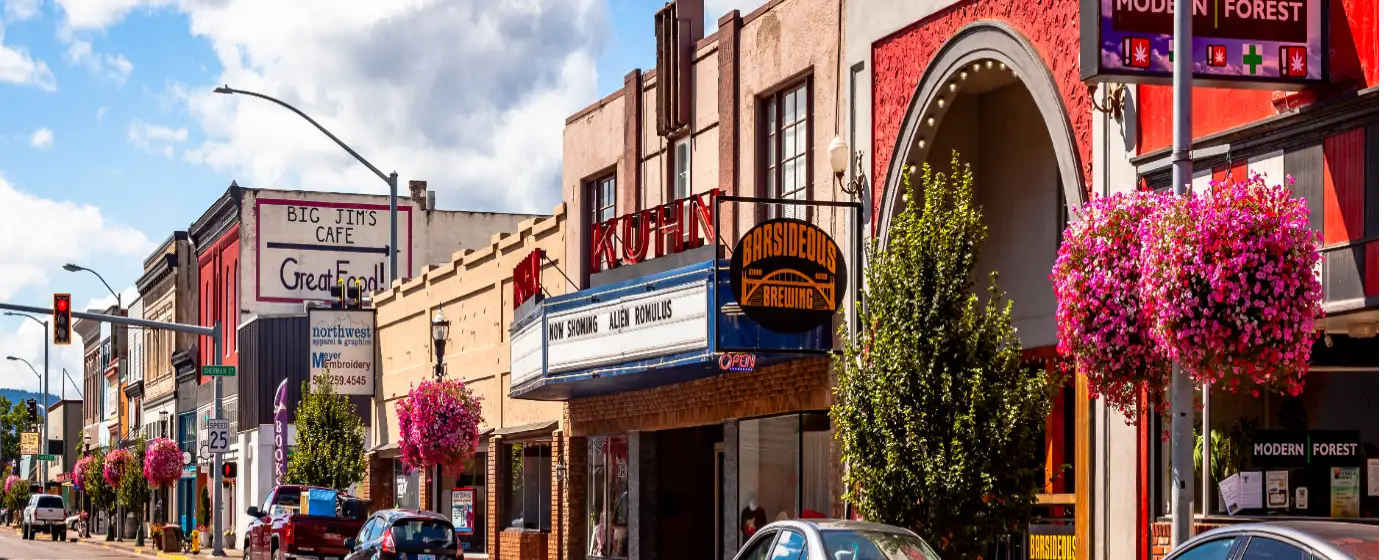
The geographic and structural factors driving Lebanon's numbers are worth understanding. The city's commercial spine — anchored by Highway 20 and Santiam Highway — concentrates retail activity, which means auto break-ins and theft incidents cluster along those corridors. The Walmart on S. Santiam Highway and surrounding retail areas generate a disproportionate share of property crime reports simply because that's where vehicles and foot traffic converge. That same dynamic inflates the downtown core's raw incident count without reflecting the experience of someone living in a residential neighborhood several blocks away.
Encouragingly, the trend line is moving in the right direction. Property crime in Lebanon has declined for four straight years through 2024, and violent crime has dropped for two consecutive years. That trajectory matters as much as any single-year snapshot — a city improving on its baseline is a different proposition than one where crime is static or rising.
Violent crime in Lebanon is, by the data available, genuinely low for a city of its size. Local police data suggests roughly 29 violent incidents were reported in 2024 — a rate commonly cited around 144 per 100,000 residents, which runs approximately 60% below the national average. In practical daily terms, this means most Lebanon residents go years without any firsthand exposure to violent crime. The odds of becoming a violent crime victim here fall somewhere around 1 in 695, and the city reported zero murders in the most recent full data year.
Property crime is the category that earns Lebanon its middling safety grades, and it's worth being specific about what dominates. Vehicle break-ins, auto theft, and retail-adjacent theft account for the bulk of incidents, with the west side of the city — particularly the commercial zones near Santiam Highway — seeing the highest concentration. The east side of town, by contrast, typically logs fewer than 20 property crime incidents annually in available estimates. That variance between the city's commercial west and its quieter residential east is the most practically useful safety fact a prospective buyer can carry into a home search.
South Lebanon covers the residential areas south of downtown along and near S. 5th Street and Russell Drive, and it generally represents a moderate safety profile — not the city's quietest pocket, but meaningfully calmer than the commercial corridors to the north and west. The area benefits from a mix of owner-occupied single-family homes that tend to correlate with lower property crime activity, and the proximity to Cheadle Lake Park brings consistent foot traffic that keeps the neighborhood feeling lived-in rather than isolated. Families commonly settle here for the access to Cheadle Lake without paying a premium, and the day-to-day feel is quiet residential rather than retail-adjacent.
Best for: Buyers who want proximity to Cheadle Lake Park and a residential feel at Lebanon's median price point.
Downtown Lebanon and the blocks immediately surrounding Strawberry Plaza carry the city's highest raw incident counts, and buyers should understand why before writing off the area entirely. The concentration of retail, foot traffic, and surface parking lots creates conditions where vehicle break-ins and retail theft inflate the numbers in ways that don't necessarily reflect residential risk for someone who lives here. Locals who live in the historic blocks just off Main Street generally report a normal neighborhood experience — the incidents that spike the statistics are happening in parking lots and commercial spaces, not on front porches.
Best for: Buyers comfortable with an urban neighborhood dynamic who want walkable access to local businesses and don't leave valuables visible in their vehicle.
The southwest quadrant, west of S. 5th Street and running toward the industrial edges of town, carries the heaviest property crime exposure of any residential zone in Lebanon. This part of the city is closest to the commercial and light industrial activity along Santiam Highway, and the concentration of transient foot traffic near those corridors elevates the risk profile compared to Lebanon's eastern neighborhoods. That said, many long-term residents here experience no issues — the risk is elevated relative to other Lebanon neighborhoods, not relative to the region as a whole.
Best for: Buyers primarily focused on price rather than safety profile, who are comfortable with standard urban precautions.
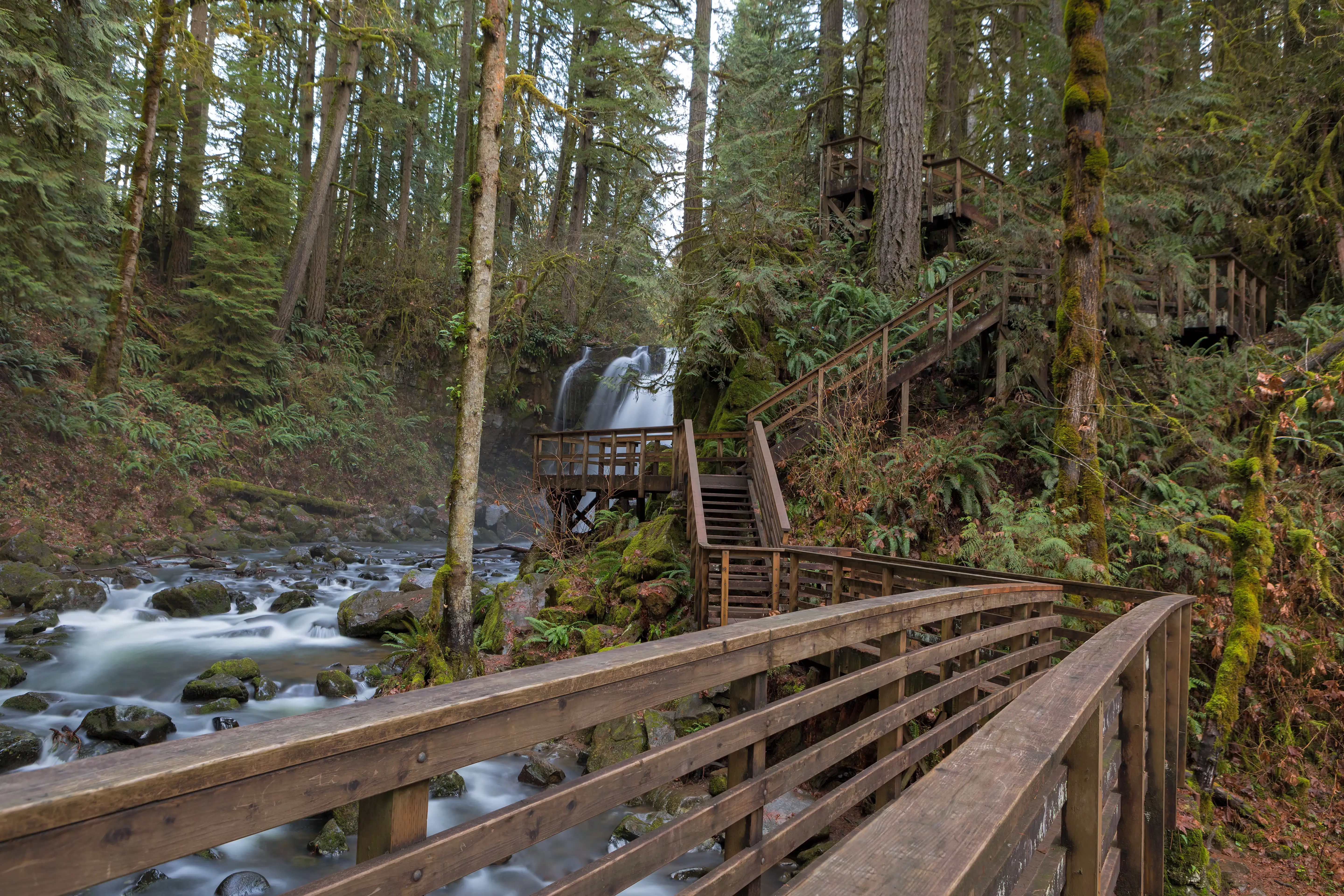
The Cheadle Lake neighborhood — organized around Cheadle Lake Park and the adjacent green corridors — consistently comes up as one of the more desirable residential pockets in Lebanon. The park itself draws families and walkers throughout the day, creating the kind of natural surveillance that tends to suppress opportunistic property crime. Incident counts in this area run well below the citywide average, and the combination of park access, owner-occupied housing, and relatively low turnover gives the neighborhood a stability that shows up in both the feel of the streets and in the data.
Best for: Families with children who want outdoor access built into the neighborhood, not just nearby.
Hamilton Creek sits on Lebanon's eastern edge, and the east side of the city consistently shows the lowest crime counts available in neighborhood-level estimates — roughly 30 total incidents annually across the entire eastern quadrant. That figure is dramatically lower than what the central or west sides generate, and Hamilton Creek benefits from that broader geographic advantage. The area tends toward newer construction, which also correlates with lower property crime rates due to better exterior lighting, attached garages, and fewer older vehicles parked on the street as targets.
Best for: Buyers prioritizing the city's safest residential exposure, particularly those coming from lower-crime suburban environments.
Cascade Estates occupies the eastern part of Lebanon alongside Hamilton Creek and shares the east side's favorable crime profile. Newer subdivisions in this corridor tend to have HOA oversight and consistent property maintenance, both of which contribute to lower opportunistic crime. Residents here are generally commuting professionals working in Albany or at Samaritan Lebanon Community Hospital, and the neighborhood has the feel of a community where people know their neighbors well enough that an unfamiliar car on the block gets noticed.
Best for: Households with children looking for a quiet, newer-construction neighborhood with Lebanon's most favorable safety profile.

| City | Violent Crime / 1K | Property Crime / 1K | Overall Safety Profile |
|---|---|---|---|
| Lebanon | ~2.0 | ~13.5 | Below national average; improving trend |
| Albany | ~4.2 | ~38.0 | Higher property crime; larger city dynamics |
| Corvallis | ~2.5 | ~25.0 | University city; moderate property crime |
| Sweet Home | ~3.1 | ~16.0 | Small-town crime mix; limited data granularity |
| Brownsville | ~1.2 | ~8.0 | Very small; low raw numbers |
| Harrisburg | ~1.5 | ~10.0 | Small community; quieter overall |
Lebanon's comparison against Albany is the most useful for buyers choosing between the two. Albany runs significantly higher property crime — roughly three times Lebanon's rate on some estimates — largely due to its larger commercial base and higher transient population along the I-5 corridor. Corvallis's numbers are shaped by the OSU campus population, which inflates certain incident categories. For buyers whose primary concern is property crime exposure, Lebanon compares favorably to both of its larger neighbors.
Looking to buy in Lebanon? Estimate your payment.
Enter your numbers to see an estimated monthly mortgage payment.
Estimate only. Excludes HOA fees and mortgage insurance.
The safety divide within Lebanon that crime apps can't show you runs roughly along a north-south and east-west axis. The S. Santiam Highway corridor — from the Walmart north toward the downtown core — is where the overwhelming majority of property crime incidents occur, and it's the stretch locals know to treat like any commercial arterial: don't leave anything in your car, lock up, don't assume the parking lot feels the same at 11pm as it does at noon. That's not alarmist advice; it's just the same common sense that applies to the commercial corridors of any Oregon city this size.
What surprises most people after six months of living in Lebanon is how little the crime statistics translate into a felt sense of threat in residential areas. The east side neighborhoods — Cascade Estates, Hamilton Creek, and the Cheadle Lake corridor — simply don't feel like places with elevated crime exposure, because structurally they aren't. People leave bikes on their porches, kids play in front yards, neighbors wave at each other. The statistical reality is that incidents cluster tightly in specific commercial zones, and the residential east operates as a genuinely calm community.
The one practical habit worth adopting citywide, regardless of neighborhood, is securing your vehicle. Auto-related property crime is the single most common category of incident in Lebanon, and it's almost entirely preventable. Locals who have been here a while know not to leave bags, change, electronics, or anything that looks like a valuables container in a parked car — not because Lebanon is particularly dangerous, but because that habit eliminates the most common vector for becoming a statistic here.
Local Expert Takeaway: If you're evaluating Lebanon specifically on safety, focus your search east of N. 5th Street, particularly in Cascade Estates and Hamilton Creek, where incident counts run a fraction of the citywide average. The Cheadle Lake corridor in South Lebanon is a close second and offers better park access. Avoid drawing conclusions from the citywide crime grade without accounting for how heavily the S. Santiam Highway commercial zone inflates those numbers — residential Lebanon and commercial Lebanon are telling two very different stories in the data.
✅ Lebanon's violent crime rate is well below the national and Oregon state averages, with approximately 2 incidents per 1,000 residents — making personal safety concerns manageable for most households.
⚠️ Property crime is the primary concern, concentrated near the Santiam Highway commercial corridor — auto break-ins and retail-adjacent theft drive the majority of incidents, not residential burglary.
📍 The east side consistently shows the lowest crime counts in the city — neighborhoods like Cascade Estates, Hamilton Creek, and the Cheadle Lake area offer Lebanon's most favorable residential safety profile.
Is Lebanon, Oregon a safe place to live?
Lebanon is safer than most aggregator grades imply. Violent crime runs roughly 60% below the national average, and both violent and property crime have been declining over the past several years. The city's moderate overall rating stems primarily from property crime concentrated in commercial corridors — residential neighborhoods, particularly on the east side, offer a quieter and lower-risk environment.
What part of Lebanon has the lowest crime?
The eastern side of Lebanon — including Cascade Estates, Hamilton Creek, and the Cheadle Lake neighborhood — consistently shows the lowest incident counts in available neighborhood-level estimates. The east quadrant is commonly reported to generate around 30 total crimes per year across the entire area, compared to well over 100 in the central commercial zones.
How does Lebanon compare to Albany and Corvallis for safety?
Lebanon compares favorably to both. Albany carries significantly higher property crime rates — by some estimates three times Lebanon's per-capita figure — driven by its larger size and commercial activity along I-5. Corvallis's numbers are influenced by its university population, which elevates certain incident categories. For buyers weighing these three cities on crime data alone, Lebanon typically comes out ahead on property crime exposure.
Explore the full Lebanon series: The Ultimate Lebanon Relocation Guide · Is Lebanon Safe? · Cost of Living in Lebanon · Best Neighborhoods in Lebanon · Lebanon Schools & Family Life · Lebanon Youth Sports · Lebanon Parks & Recreation · Retiring in Lebanon · 1031 Tax-Deferred Exchange in Lebanon · Lebanon First-Time Homebuyers Guide · · Moving to Lebanon from California
Tell us what you need help with and we'll connect you with local resources.

About the Author
Todd Davidson is the founder of Living in Oregon and Living in Washington, where he publishes in-depth city guides, neighborhood resources, and local market insights covering more than 180 communities across the Pacific Northwest. While his background is in home financing and real estate, he created these digital platforms to help families research and compare regions before making a move.