
Oregon Coast · Oregon
1031 Exchange & Investment Real Estate in Gold Beach (2026)
Not everyone doing a 1031 exchange is a professional investor with a portfolio spreadsheet and a 1031 attorney on retainer. Many of the most active buyers in markets like Gold Beach are California homeowners — people who sold a long-held primary residence or a rental in the Bay Area or Southern California, found themselves sitting on significant capital gains, and started looking for replacement property in markets where their equity buys far more. Gold Beach is increasingly on that radar. With a median home price of $440,000 for in-town single-family homes and a coastal short-term rental market posting average daily rates approaching $290, the math starts to look interesting fast.
The rental market here is shaped by a few durable forces. Long-term rentals face near-zero vacancy — the rental supply in Gold Beach is thin enough that for every renter household, roughly one rental unit exists in the market. Healthcare workers at Curry Health Network, employees at Shore Pines Senior Living Community, and seasonal hospitality staff at properties like Tu Tu' Tun Lodge and Pacific Reef Hotel all generate consistent tenant demand in a town with almost no new multifamily construction coming online. The properties that trade most often as investment vehicles are single-family homes, ocean-view duplexes, and the occasional small multifamily — a rare 8-unit near the Port of Gold Beach made news recently precisely because nothing like it ever hits the market.
This guide covers 1031 exchange mechanics in plain English, the local investment property market by type and cap rate, why California capital is finding its way to the Southern Oregon Coast, Oregon's tax landscape for rental property owners, and the property management reality that catches out-of-state buyers off guard. If you're on a 45-day identification clock or planning ahead for a sale closing in the next six months, here's what you need to know.

The structure is straightforward even if the execution is time-pressured. When you sell investment property, the IRS gives you a mechanism to defer capital gains taxes by rolling proceeds directly into a "like-kind" replacement property. "Like-kind" is broader than most buyers realize — real property for real property, regardless of type. A California apartment building can become an Oregon oceanfront SFR or a small commercial building in Gold Beach. The critical constraint is timing: you have 45 days from the closing of your relinquished property to formally identify up to three potential replacement properties, and 180 days total to close on one of them. Miss either window and the deferred taxes become immediately due.
The qualified intermediary requirement is where deals fall apart for unprepared sellers. You cannot touch the sale proceeds — they must flow directly from escrow to a licensed QI (also called an exchange accommodator) and sit there until your replacement closing funds. Your personal attorney or real estate agent cannot serve as your QI. Identify one before your sale closes, not after. The boot trap catches buyers who don't close at full exchange value: if you buy a cheaper replacement property or walk away with any cash from the exchange, that "boot" is taxable in the year of the exchange even if the rest of the gain is deferred.
One piece of mechanics specific to 1031 buyers in smaller markets like Gold Beach: your depreciation basis does not reset. The adjusted basis from your relinquished property carries over to the replacement asset, which means your depreciation schedule on the new property reflects the original purchase history — something to review with your CPA before assuming the new property's full value is depreciable from day one.

I've been on the investment property side of this coast since 1994, so the 1031 mechanics described above are familiar territory — the 45-day identification window and 180-day close deadline are unforgiving, and I've seen deals fall apart because a seller waited too long to line up a qualified intermediary. One detail worth repeating: your agent can't serve as your QI, so that needs to be lined up before your relinquished property even closes.
The basis carryover point is one buyers often miss until their CPA flags it — your depreciation schedule on a Gold Beach replacement property inherits the history from whatever you sold, not a fresh start. If you're weighing a 1031 exchange into Gold Beach investment property, I'd welcome the opportunity to point you toward replacement properties that actually pencil out on a compressed timeline, based on decades of watching these deals close and occasionally fall apart.
The inventory story here is the most important thing a 1031 buyer needs to understand before starting the clock. With homes averaging 106 days on market and only a handful of properties trading in any given month, a buyer with a rigid 45-day identification window needs to have target properties scoped before their relinquished property closes. The market is not competitive in the traditional sense — multiple offers are rare, and most homes sell around 6% below list price — but the selection is thin, and investment-grade properties (duplex, multifamily, anything with existing rental income) are scarce enough that they often get quietly absorbed before hitting major portals.
Long-term rental SFRs at the $440,000 median produce estimated cap rates around 2.6%, assuming market-rate rents of roughly $1,600 per month for a well-maintained unit and a 40% expense load. That number is not a buy-and-hold cash-flow story on its own. The more compelling scenario is short-term rental: Gold Beach STRs on platforms like Airbnb and Vrbo are averaging 50% occupancy with average daily rates near $289, which pushes estimated annual gross revenue toward $52,000 on a single SFR — an estimated STR cap rate in the range of 7%. The STR regulatory environment in Gold Beach is currently low-friction compared to markets like Bend or Cannon Beach, though licensing requirements with the City should be confirmed before purchase.
| Property Type | Typical Price Range | Est. Cap Rate | Avg Days to Close |
|---|---|---|---|
| SFR (long-term rental) | $380,000 – $565,000 | ~2.5–3% | 90–120 days |
| SFR (short-term rental enabled) | $400,000 – $650,000 | ~6–8% | 75–110 days |
| Ocean-view duplex | $500,000 – $750,000 | ~4–6% | 90–130 days |
| Small multifamily (3–8 units) | $650,000 – $1,100,000 | ~5–7% | 120–180 days |
| Commercial / mixed-use | $350,000 – $900,000 | ~5–8% | 120–180+ days |
SFR properties configured for short-term rental move fastest when priced right — ocean proximity and views are the primary value driver, and well-positioned listings can go pending in 60 days. Small multifamily units, when they appear at all, tend to sit longer simply because the buyer pool is narrower.
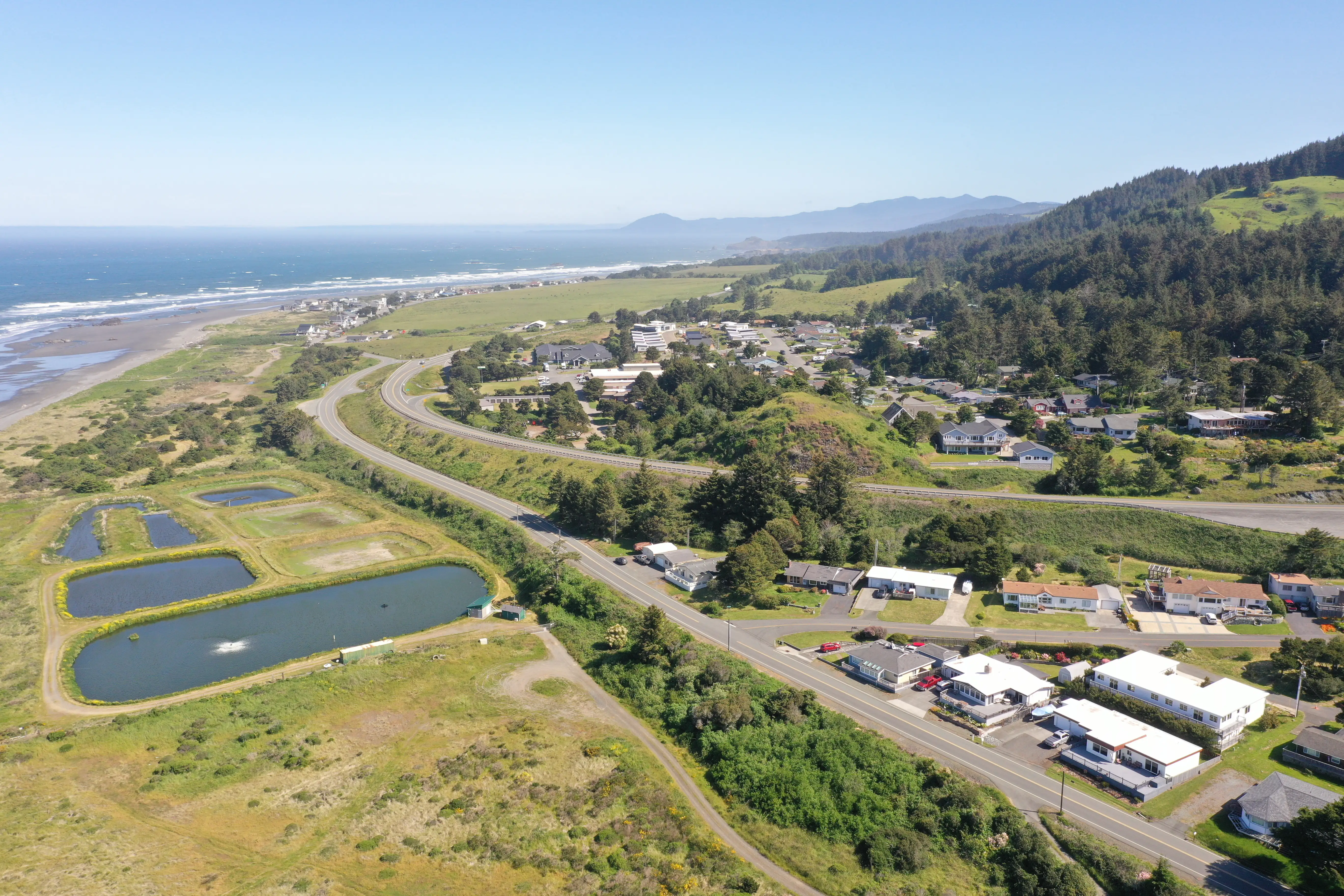
The wave of California 1031 capital moving into Oregon coastal markets is not accidental. Proposition 19 changed the inheritance calculus for many California families, and a decade of appreciation has left long-term Bay Area and SoCal owners sitting on seven-figure gains that become punishing tax events without a 1031 strategy. Gold Beach offers something increasingly rare: a coastal property market where a mid-six-figure exchange proceeds can actually buy a meaningful asset outright, or two.
A Bay Area seller closing on a $1.4 million property can realistically identify a Gold Beach duplex and a separate SFR as replacement properties, fund both without debt, and step into two income-producing coastal assets. The price-to-rent dynamic here rewards buyers who can purchase without financing constraints — eliminating debt service is what converts a 2.6% cap rate into actual monthly cash flow. Bay Area investors consistently underestimate how thin the Gold Beach broker community is; flying down with a pre-identified shortlist, not arriving blind with a 45-day clock, is the move.
Southern California sellers — particularly those exiting long-held rentals in the Inland Empire or San Fernando Valley — are often comparing Gold Beach to other "drive-to" coastal markets like Cambria or Morro Bay. The math favors Oregon once property taxes enter the conversation. A newly purchased $700,000 property in California carries a Prop 13 baseline tax on the purchase price; the same purchase in Curry County runs at approximately 0.59%, or roughly $4,130 annually. That $15,000–$20,000 annual tax difference on a comparable California coastal property is real money in the rental P&L.
Sacramento and Inland Empire investors tend to be the most cap-rate-focused buyers in the exchange market. They're often coming from older rental stock — 1970s and 1980s SFRs that have appreciated past $500,000 — and are looking for replacement assets with better yield characteristics. Gold Beach's STR market is the strongest pitch for this group. A 2019-built unit near the hospital with low deferred maintenance and strong STR access is a fundamentally different income story than a 50-year-old apartment in Modesto.
Looking to buy in Gold Beach? Estimate your payment.
Enter your numbers to see an estimated monthly mortgage payment.
Estimate only. Excludes HOA fees and mortgage insurance.
Oregon's tax profile for rental investors has genuine advantages and one significant cost that buyers from no-income-tax states need to price in. Starting with the upside: Oregon has no state sales tax, which means every dollar spent on materials, appliances, and furnishings for a rental rehab stays in the project. A kitchen renovation that costs $28,000 in Oregon costs $30,800 with California's 10% sales tax. For investors doing a value-add acquisition, that difference is meaningful at scale.
| Tax Item | California | Oregon |
|---|---|---|
| State income tax on rental income | Up to 13.3% | Up to 9.9% |
| Property tax rate on new purchase | ~1.1–1.25% (Prop 13 baseline) | ~0.59% (Curry County) |
| State sales tax | 7.25–10.75% | 0% |
| Capital gains treatment | Ordinary income rates | Ordinary income rates |
| 1031 exchange deferral | Yes (federal + state) | Yes (federal + state) |
Oregon does tax rental income at ordinary income rates up to 9.9%, but depreciation deductions, mortgage interest (where applicable), and operating expenses typically offset most net taxable income for leveraged properties. For cash buyers coming out of a 1031 with no debt service, the income tax exposure is real and worth modeling — but it's still 3.5 points lower than California's top rate. Oregon conforms to federal 1031 treatment, so the exchange defers both federal and Oregon state capital gains simultaneously. One note for passive investors: a Delaware Statutory Trust (DST) is an increasingly popular 1031 vehicle for buyers who want the tax deferral without any property management responsibility — several national DST sponsors include coastal Oregon properties in their current inventories.
The property tax differential is the clearest line item. On a $440,000 Gold Beach purchase, annual property taxes run approximately $2,596 at the 0.59% rate. A comparable $440,000 California coastal purchase would carry taxes in the $5,000–$6,000 range on a new purchase baseline. Over a 10-year hold, that gap compounds into a significant operating cost advantage.
Oregon passed the first statewide rent control law in the country, and while Gold Beach's market doesn't have the same pressure dynamics as Portland, the legal framework applies statewide. Rent increases are capped annually (the cap adjusts each year based on CPI — currently in the 10% range for 2026, down from prior years), and no-cause evictions are significantly restricted, particularly for tenants who have been in place more than a year. Out-of-state landlords who are used to California or Nevada's more landlord-flexible frameworks sometimes encounter the Oregon tenant protection structure as a surprise mid-tenancy.
Local property management in a town of 2,233 people is thin. RE/MAX Ultimate Coastal Properties handles both sales and property management for investor clients in the area, and All Access Management has verifiable rental listings active in Gold Beach. Typical management fees run 8–10% of gross collected rent, with additional fees for lease-up, maintenance coordination, and annual inspections. On a $1,600/month rental, that's $154–$160 per month off the top before any maintenance. For STR management, third-party platforms often run 20–30% of gross revenue — a number that dramatically affects the STR cap rate calculation.
The vacancy reality deserves its own sentence: Gold Beach's long-term rental vacancy rate is effectively at zero, which means a well-priced, well-maintained unit in a walkable location rarely sits empty. The bigger risk for out-of-state owners is not vacancy — it's deferred maintenance on a property they've never seen in person, managed by a company with a thin local contractor bench.
| Item | What to Verify | Local Resource |
|---|---|---|
| Title search | Clear title, no liens, easements affecting use | Local title company (First American, Fidelity) |
| Sewer vs. septic | Many rural/coastal parcels are on septic — verify age, condition, last pump | Curry County Environmental Health |
| Radon testing | Oregon has elevated radon zones in coastal counties | Oregon Health Authority radon map |
| Flood zone status | Rogue River estuary and coastal adjacency increase flood zone risk | FEMA flood map portal, local lender |
| Rental permit requirements | Verify STR license requirement with City of Gold Beach | City of Gold Beach Planning Dept. |
| HOA restrictions on rentals | Many coastal communities restrict STR or limit rental duration | HOA governing documents |
| Zoning for ADU potential | Adds rental income without new parcel — verify setbacks and permit path | Gold Beach Planning Dept. |
| School district | Central Curry School District affects tenant pool profile | District website |
| Current lease status | Existing tenants transfer with the property — review lease terms and rent levels | Seller disclosure |
| Deferred maintenance inspection | Roof age, HVAC, foundation, septic — coastal properties age differently | Licensed inspector familiar with coastal Oregon |
| Property management referral | Confirm management company is active and covers your property address | RE/MAX Ultimate Coastal Properties, All Access Management |
| Title company recommendation | Local escrow relationships speed closing — critical on a 180-day clock | Ask your QI for their preferred local title relationship |
| Well water / water source | Some rural Curry County properties are on well water — test water quality | Curry County Public Health |
| Wildfire risk | Inland and wooded parcels carry defensible space requirements | Oregon Department of Forestry |

Local Expert Takeaway: The biggest mistake California 1031 buyers make in Gold Beach is assuming the STR income projections they find online will hold for every property type. The 50% occupancy and $289 ADR data reflects the market broadly — but bottom-quartile STR properties here average 19% occupancy, and an inland SFR with no ocean view, no privacy, and dated finishes will land firmly in that bottom tier. Before identifying a property under 1031, have a local STR manager run a comparable set analysis on that specific address and its actual view, access, and condition — not just the zip code.
✅ Gold Beach's STR market is the primary investment thesis — long-term cap rates are thin at around 2.6%, but short-term rental cap rates in the 6–8% range make coastal SFRs and duplexes genuinely competitive replacement assets for California 1031 proceeds.
⚠️ Oregon's tenant protection laws are statewide — rent control, no-cause eviction limits, and annual rent increase caps apply to Gold Beach just as they do in Portland. Out-of-state investors should review current statutes before assuming California-style landlord flexibility.
📍 Inventory is the 1031 buyer's primary constraint — with fewer than 10 active investment-grade properties trading at any given time in Gold Beach, starting your property search before your relinquished property closes is not optional, it's essential.
Does a 1031 exchange work for out-of-state replacement property?
Yes, federal 1031 exchange rules allow you to sell property in any state and identify replacement property in any other state, including Oregon. Oregon conforms to federal 1031 treatment, so your gain is deferred at both the federal and state level. The only requirement is that you follow standard 1031 mechanics — qualified intermediary, 45-day identification, 180-day close — regardless of where the replacement property is located.
What is the cap rate on rental property in Gold Beach?
Long-term rental SFRs in Gold Beach are running estimated cap rates around 2.5–3% at the current median price point, based on market-rate rents and standard expense assumptions. Short-term rental properties configured for Airbnb/Vrbo use, with ocean proximity and good access, can reach estimated cap rates in the 6–8% range using current occupancy and ADR data for the market. Small multifamily properties — rare but occasionally available — typically land in the 5–7% range depending on unit condition and rent levels.
Do I need a local property manager for a 1031 investment in Oregon?
It's not legally required, but for out-of-state owners it's close to essential. Oregon's landlord-tenant law is detailed and tenant-protective, and self-managing from California or Nevada without local relationships — contractors, inspectors, emergency maintenance — creates meaningful liability exposure. Management fees of 8–10% of gross rent are standard in Gold Beach, and for STR properties, third-party STR management fees run 20–30% of gross revenue but typically include platform management, guest communication, and turnover cleaning.
Explore the full Gold Beach series: The Ultimate Gold Beach Relocation Guide · Is Gold Beach Safe? · Cost of Living in Gold Beach · Best Neighborhoods in Gold Beach · Gold Beach Schools & Family Life · Gold Beach Youth Sports · Gold Beach Parks & Recreation · Retiring in Gold Beach · 1031 Tax-Deferred Exchange in Gold Beach · Gold Beach First-Time Homebuyers Guide · · Moving to Gold Beach from California · Gold Beach Realtor's Perspective · Top 10 Questions a Realtor Gets About Gold Beach
Tell us what you need help with and we'll connect you with local resources.

About the Author
Todd Davidson is the founder of Living in Oregon and Living in Washington, where he publishes in-depth city guides, neighborhood resources, and local market insights covering more than 180 communities across the Pacific Northwest. While his background is in home financing and real estate, he created these digital platforms to help families research and compare regions before making a move.
Check Out the Oregon Coast Rankings: Oregon Coast Cost of Living — All 16 Cities Ranked · Best Places to Retire on the Oregon Coast · Best Oregon Coast Cities for Families · Best Oregon Coast Cities for Remote Workers · Oregon Coast Real Estate Market Report 2026 · Oregon Coast vs. Washington Coast