
Portland Metro · Oregon
Living in Gladstone: The Ultimate Relocation Guide (2026)
Maybe your company is moving you somewhere in the Portland metro and you've been circling a map, trying to figure out where $520,000 actually gets you a real house. Maybe you've been quoted Oregon City and Milwaukie prices and someone mentioned Gladstone as the alternative — the one right in between, at the confluence of two rivers, that most people can't quite place on a map. Maybe you drove through on Highway 99E and it felt quieter and more settled than you expected for a city this close to everything.
Here's what shapes Gladstone's reality: it's a 2.48-square-mile city pressed between the Clackamas and Willamette rivers, 12 miles south of Portland, with 11,898 residents who mostly chose this place specifically because it isn't trying to be anything bigger than it is. The housing stock runs from bungalows and Cape Cods built in the 1920s through solid mid-century ranches and some newer infill — unpretentious, reasonably priced by metro standards, and sitting on lots that back up to real outdoor space in ways that comparable Portland neighborhoods simply don't offer. The commute arithmetic works. I-205 connects you north in around 25 minutes on a good day, and the 99E corridor gives you commercial access without making you feel like you're living in a strip mall.
What this guide will help you sort out is whether Gladstone's particular trade-offs fit your life. The city offers genuine outdoor access, a school district that punches modestly above Oregon averages, and a price point that still allows first-time buyers and families to put down roots in the Portland metro. But it has real limitations — a limited restaurant and retail scene, a downtown still finding its footing, and a few honest reasons why some residents eventually move on. Read through all of it before you make an offer.
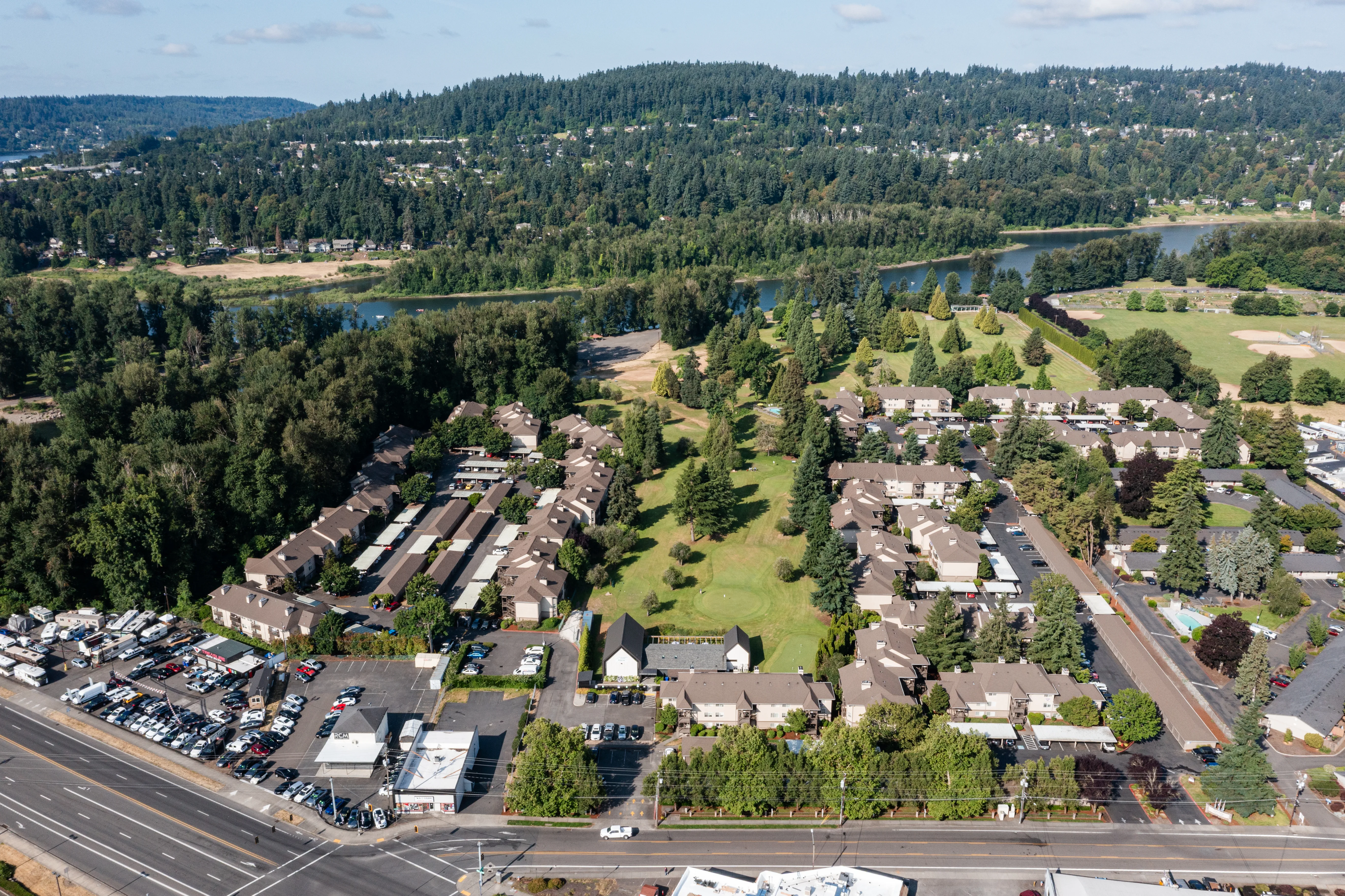
Gladstone appeals to a specific type of buyer, and it pays to be honest about that before you start touring open houses. The table below cuts through the real estate marketing noise and gives you a direct read on who tends to thrive here.
| Best For | Why |
|---|---|
| First-time buyers | $520,000 median with real housing stock — actual houses, not condos — is still achievable in this market for households earning in the $90K–$120K range |
| Outdoor-oriented households | Direct access to the Clackamas River, Maddax Woods, High Rocks Park, and Dahl Beach with no drive required |
| Commuters to Portland or Clackamas | I-205 and 99E deliver 25-minute Portland runs; Clackamas Town Center employment corridor is even closer |
| Families with school-age children | Small district with four schools, above-average graduation rates, and manageable class sizes relative to larger suburban districts |
| Retirees downsizing from pricier suburbs | Walkable-enough core, river access, and significantly lower price points than nearby Lake Oswego or West Linn |
| Remote workers prioritizing space and quiet | Established neighborhoods, larger lots relative to price, and genuine quiet without the rural trade-off of a longer supply drive |

Gladstone is one of those markets I've watched quietly outperform expectations for the past several years. Buyers who come in from higher-priced Portland-area suburbs are often caught off guard by the quality of the housing stock — we're talking solid mid-century construction on real lots, with mature trees and established neighborhoods that feel like they've been lived in by people who actually care about them. Park Place and Bolton in particular have seen consistent buyer interest, and for good reason: these are walkable, well-maintained residential pockets at price points that have become increasingly rare this close to Portland.
What buyers consistently underestimate about Gladstone is how much outdoor access is already baked into daily life here. The Clackamas River isn't a weekend destination — it's a ten-minute walk from most neighborhoods. When I'm advising buyers who are weighing Gladstone against Oregon City or Milwaukie, I usually ask them to visit on a weekday evening. The way families are actually using the river parks and trails tells you more about what living here feels like than any listing description will. If you're considering Gladstone and want insight into which neighborhoods align with your priorities and budget, I'd welcome the opportunity to share what I've learned from helping hundreds of families make this move successfully.
Gladstone doesn't have the urban commercial density of Milwaukie or the manicured polish of Lake Oswego, and it isn't trying to. What it has is a specific kind of settled quiet that people either connect with immediately or find underwhelming. The city center is compact — Linden Square serves as the civic and commercial anchor, home to Gladfest each summer and a handful of local businesses — but it's not the kind of downtown that competes for your Friday nights. Most residents drive to Oregon City or Milwaukee for dining and errands, accepting that trade as the cost of entry for everything else Gladstone offers.
Geographically, the city's small footprint is one of its defining characteristics. You're never more than a few minutes from the river, and the terrain has enough variation — some hillside neighborhoods to the east, flatter ground along the water — that it avoids the monotonous grid feel of some Portland-area suburbs. The Pow-Wow Tree, a massive Oregon white oak near the Willamette, has marked the center of Gladstone's sense of place for generations. It's a small thing, but it signals something real: this community has enough history and continuity that landmarks mean something.
The commute reality deserves an honest read. Twenty-five minutes to Portland is the number that shows up in listings, and it's accurate — at 10am on a Tuesday. Morning rush hour on I-205 northbound between Gladstone and the Hawthorne Bridge area can stretch to 40 minutes or more, and the 99E corridor through Milwaukie isn't much of an escape route during peak commute windows. If your office is in Clackamas, Tualatin, or Lake Oswego, the math improves significantly. What surprises most people after six months of living here is that the traffic stress is actually lower than they feared — not because the commute is magically fast, but because the residential streets themselves are genuinely quiet and the transition from freeway to neighborhood happens in under two minutes.
The community's median age of roughly 45 and the relatively high share of long-term homeowners gives Gladstone its characteristic stability. This isn't a transient renter-heavy city; the 64.5% family household rate means a lot of people with deep roots and a stake in what happens at city council meetings. That's an asset for quality of life and a mild friction for anyone hoping the city will transform into something hipper in the next few years.
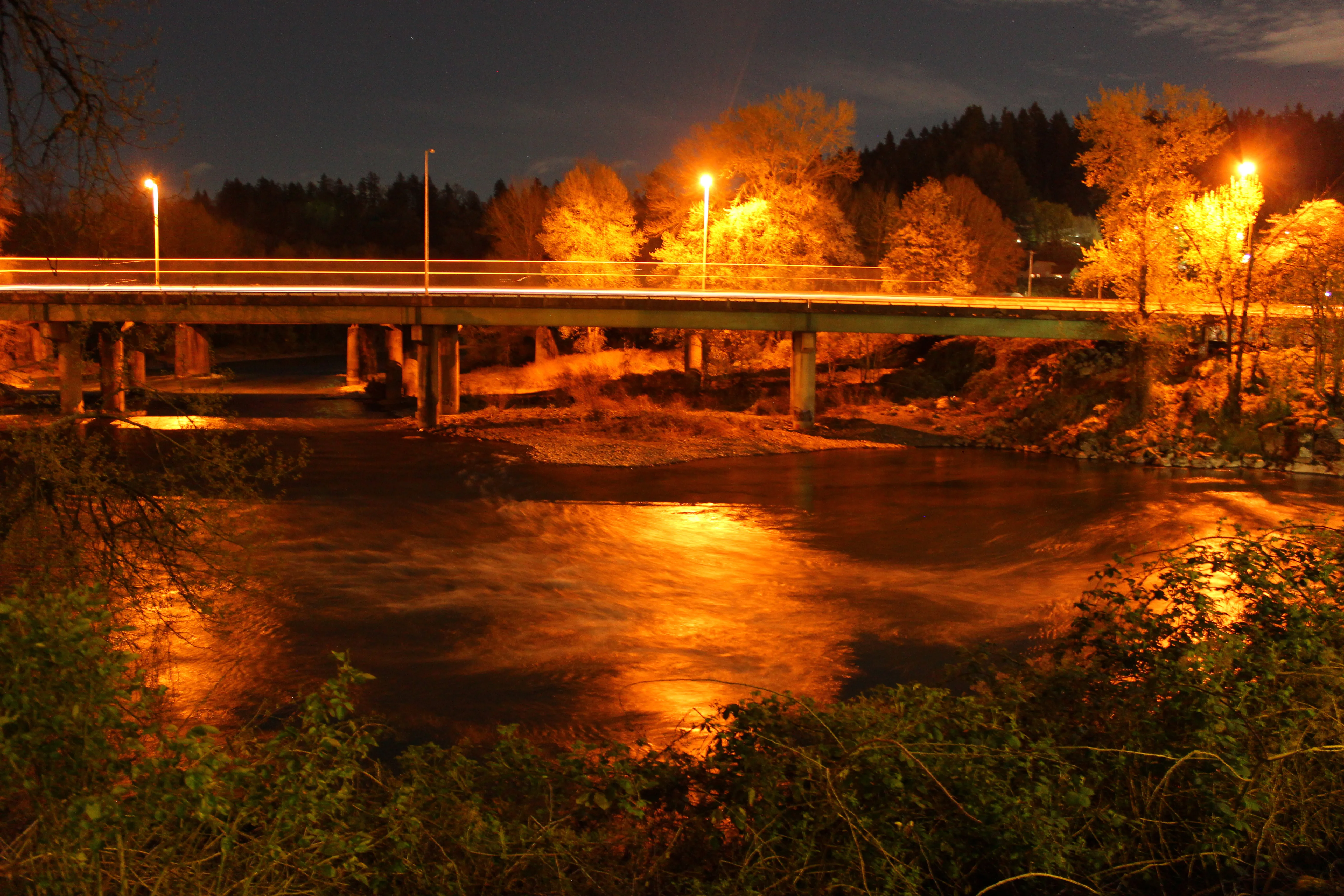
The river access is the single most underpriced amenity in the entire Portland metro. Dahl Beach and High Rocks Park on the Clackamas River are within walking or biking distance of most Gladstone addresses, offering swimming, kayaking, and the kind of summer afternoon that usually costs vacation money elsewhere. Maddax Woods and Burnside Park extend the trail network into forested hillside terrain that most residents don't fully explore until they've lived here a while. Gladstone City Park and Cross Park anchor the neighborhood recreation infrastructure. For a city of under 12,000 people, the outdoor recreation portfolio is genuinely exceptional.
The price point relative to neighboring cities is a concrete advantage, not just a relative one. Homes in neighboring Lake Oswego and West Linn regularly trade in the $700,000–$900,000 range for comparable square footage. Gladstone's median sits at $520,000 — a difference that represents years of equity building, a second vehicle, or a child's college fund depending on your priorities. Entry-level single-family homes come to market in the $445,000 range, which remains accessible for dual-income households in the $90,000–$110,000 income band.
The school district's size works in its favor in ways that standardized test percentages don't fully capture. With roughly 1,600 students across four schools, Gladstone School District 115 operates at a scale where individual students don't get lost. Gladstone High School's four-year graduation rate of approximately 85.5% exceeds Oregon's statewide average, and the district's per-student spending of around $16,700 annually signals meaningful educational investment. Career and technical education options — engineering technology, marketing, video production — give students practical pathways that large comprehensive high schools often dilute.
The city's location within the broader Clackamas County employment corridor gives residents meaningful employment diversity. Providence Health's regional presence, Clackamas Community College, and the broader Clackamas Town Center employment hub are all within a short drive. For residents who work in healthcare, education, or retail, the commute arithmetic often runs in reverse — Portland workers are driving past Gladstone to get to their jobs, while Gladstone residents are already there.
Looking to buy in Gladstone? Estimate your payment.
Enter your numbers to see an estimated monthly mortgage payment.
Estimate only. Excludes HOA fees and mortgage insurance.
The retail and dining scene requires adjustment for anyone coming from a more urban environment. Gladstone's own commercial corridor is thin — a Safeway, the locally-beloved Red White and Blue Thrift, and the Linden Square area businesses cover basic needs, but there's no concentrated food and beverage district that makes the city a dinner destination. Residents make regular runs to Oregon City or Milwaukie for anything beyond convenience shopping, and the lack of a strong coffee shop or restaurant culture is one of the most commonly cited friction points from newer arrivals.
The school district's academic metrics are mixed. The graduation rate story is genuinely positive, but math proficiency district-wide runs around 33% and chronic absenteeism at Gladstone High School has been reported in the 29%–38% range in recent years — a figure worth understanding before you make school quality a primary relocation driver. The district earns a B- rating in broader assessments, which means it's solid but not exceptional. Families with high-achieving students or specific academic program needs often supplement with private options or look seriously at neighboring districts.
Some buyers find Gladstone's limited commercial investment a signal about long-term appreciation trajectory. The city isn't aggressively attracting new development, and its small footprint and stable (slightly declining) population suggest organic growth rather than the kind of revitalization story playing out in Milwaukie or inner Southeast Portland. That's not inherently negative — property crime rates of approximately 17 per 1,000 are something to factor into your evaluation, though they're consistent with many comparable suburban communities. Homes that sit in lower-traffic residential pockets well removed from 99E tend to outperform that city-wide average.
The honest reason some people leave Gladstone is boredom, specifically the particular variety that comes from wanting more urban energy and not finding a realistic upgrade path within the city itself. Younger buyers who move here and later want access to a more walkable, restaurant-dense environment typically end up relocating to Milwaukie or inner Southeast Portland rather than building equity and staying. If you've been living in Portland proper and are accustomed to Saturday morning farmers markets, a dozen walkable restaurant options, and neighborhood bars, the transition to Gladstone's quieter rhythm takes genuine adjustment.
Park Place is one of the two most buyer-searched neighborhoods in Gladstone, and the interest is earned. It offers a mix of mid-century and craftsman-style housing on tree-lined streets with good walkability to the city's core, reasonably priced in the broad $480,000–$550,000 range for most single-family homes. The neighborhood's appeal is mostly its balance — residential without feeling isolated, accessible without sitting directly on a commercial corridor.
Best for: First-time buyers and families who want an established feel with reasonable access to daily needs.
Bolton competes with Park Place for buyer attention, and listings here have been tracking with active medians near $490,000. The neighborhood draws buyers who want slightly more room between houses and a quieter feel than the city center delivers, with mid-century construction making up most of the housing stock. The tradeoff is that Bolton's commercial access requires a short drive rather than a walk.
Best for: Buyers prioritizing residential quiet over walkability, with a slight price advantage over Park Place.
Ridgewood sits on Gladstone's hillside terrain to the east, giving it elevated positions and occasional views that flat-land neighborhoods don't offer. Housing here tends toward 1960s and 1970s ranch construction, with larger lots that attract buyers willing to trade some commute convenience for space. Prices generally track the citywide median, though hillside lots with good orientation can push higher.
Best for: Buyers who want outdoor proximity, larger lots, and don't mind the extra minute of navigation to reach 99E.
Sherwood Forest carries a well-deserved reputation for mid-century character — the kind of neighborhood where original architecture is preserved rather than flipped into a generic remodel. It appeals to buyers who care about housing stock personality and are less concerned with proximity to the city center. Price points are competitive with the broader city median and attract design-conscious buyers who might otherwise be looking at Portland's inner eastside.
Best for: Mid-century architecture enthusiasts and buyers who prioritize neighborhood character over new construction proximity.
Glen Echo is an established residential pocket that offers stability and quiet without a distinctive identity to hang a marketing pitch on — which, depending on your priorities, might be exactly what you want. Housing here is well-maintained and practical, with prices in the city's accessible range. It's a neighborhood that rewards buyers looking for livability over cachet.
Best for: Buyers who want solid housing in a settled neighborhood without paying a premium for a named lifestyle.
The City Center area gives you the closest thing Gladstone has to urban convenience — Linden Square is the commercial heart, host to Gladfest in the summer and the city's most concentrated retail and civic activity. Housing here tends to be older and sits on smaller lots, which keeps entry prices toward the lower end of the city range. The trade-off is the occasional traffic noise from 99E and a denser feel than Gladstone's residential neighborhoods deliver.
Best for: Buyers who prioritize walkability to whatever commercial activity Gladstone offers and don't need a large lot.
River Run Village is positioned near the 99E and I-205 junction, which makes it one of the most commuter-convenient addresses in the city. It's primarily known as an apartment community rather than a single-family neighborhood, offering rental options for people who want Gladstone proximity without an immediate purchase commitment. The freeway adjacency is an honest trade-off for the convenience.
Best for: Renters and commuters who want maximum highway access with a Gladstone address.
Healy Heights is consistently cited among Gladstone's safer and more desirable residential pockets, with a reputation for well-maintained housing and a neighborhood feel that attracts long-term owners rather than rotating renters. Homes here sit in the city's upper-middle price range, and the neighborhood's stability means inventory is limited — when something comes to market, it moves. The lack of walkability to commercial areas is the persistent trade-off.
Best for: Buyers prioritizing neighborhood safety, long-term stability, and a strong owner-occupancy culture.
| City | Best For | Median Home Price | Commute to Portland | Vibe |
|---|---|---|---|---|
| Gladstone | Value, river access, small-city quiet | $520,000 | ~25 min | Settled, residential, unpretentious |
| Oregon City | More retail/dining, historic character | ~$540,000 | ~30 min | Small-city with urban amenities |
| Milwaukie | Urban energy, proximity to Portland | ~$490,000 | ~15 min | Revitalizing, younger demographic |
| Oak Grove | Affordability, unincorporated flexibility | ~$480,000 | ~20 min | Looser, more rural feel |
| West Linn | Top-tier schools, premium amenities | ~$750,000 | ~30 min | Polished, family-oriented, expensive |
| Lake Oswego | Luxury market, top schools, walkable core | ~$825,000 | ~25 min | Affluent, high-amenity, highly competitive |
| Metric | Data |
|---|---|
| Population | ~11,898 |
| Median Home Price | $520,000 |
| Median Household Income | $91,250 |
| Property Tax Rate | ~1.02% |
| Commute to Portland | ~25 minutes (I-205) |
| School District | Gladstone School District 115 |
| School Rating | B- |
| Violent Crime per 1,000 | 2 |
| Property Crime per 1,000 | 17 |
| City Size | 2.48 square miles |
| Median Age | ~44.8 years |
| Distance from Portland | 12 miles south |
Gladfest is Gladstone's signature summer event and the city's clearest expression of community identity. Held at Linden Square, it brings out a level of resident participation that tells you something real about how connected people here feel to their city — this isn't a manufactured downtown festival grafted onto a suburb, it's the kind of event that locals actually plan around. If you're evaluating community fit, attending Gladfest before you buy is more useful than any neighborhood walk-through.
High Rocks Park on the Clackamas River has its own micro-culture that residents discover and then never stop talking about. The swimming holes below the basalt ledges draw Gladstone families from early June through September, and the informal gathering pattern — regulars know the good spots, newcomers learn them from neighbors — creates a social fabric that doesn't happen in cities where recreation requires a membership card or a drive. This is where families actually gather on summer weekends, and it's the amenity most often cited by long-term residents when asked why they stayed.
The Pow-Wow Tree, a centuries-old Oregon white oak near the Willamette riverbank, functions as an unofficial city symbol and a genuine piece of living history. It pre-dates the city itself and serves as a reminder that Gladstone's relationship with its river geography isn't marketing — it's structural. The tree marks the kind of continuity that takes generations to build.
What I would not do if moving to Gladstone: I would not buy on or immediately adjacent to 99E without spending time there on a weekday afternoon and a Saturday morning. The highway noise attenuation varies significantly by block, and listings within two blocks of the corridor that look competitively priced often carry a reason for that discount that isn't spelled out in the listing description. Stick to the established residential neighborhoods east of the highway for your first purchase.
Local Expert Takeaway: If you're comparing Gladstone to Oregon City or Milwaukie, the decision usually comes down to whether you want more commercial amenity at a slightly higher price (Oregon City) or a more urban edge at a slightly lower price (Milwaukie) versus Gladstone's quieter, river-forward residential identity. Buyers who tour Park Place and Bolton first tend to find the decision easier — the housing quality at that price point settles most of the debate. Budget for the first few months of driving to Oregon City for dinner; by month six, most residents have stopped noticing.
✅ Gladstone delivers genuine river access, a reasonable price point, and a stable residential community — the combination that most Portland metro buyers eventually realize they're actually looking for.
⚠️ The commercial and dining scene is thin — buyers coming from urban neighborhoods should give themselves an honest adjustment period and recalibrate expectations before month one.
📍 Park Place and Bolton are the entry points most worth knowing — they represent the city's best balance of neighborhood character, price, and buyer demand, and inventory in both areas moves quickly.
Is Gladstone a good place for families?
Yes, Gladstone offers a compelling case for families with school-age children. The Gladstone School District's graduation rate consistently tracks above Oregon's statewide average, the four-school district size keeps students from falling through the cracks, and the outdoor recreation access — rivers, trails, and parks within walking distance — gives kids genuine places to be active outside of organized programs.
What is the crime rate in Gladstone?
Gladstone's violent crime rate runs approximately 2 per 1,000 residents, which is low by Oregon metro standards. Property crime at roughly 17 per 1,000 is the more meaningful number to understand — it's consistent with comparable suburban cities and largely influenced by proximity to commercial corridors. Residential neighborhoods well east of 99E generally experience lower property crime frequency.
How does Gladstone compare to nearby Oregon City?
Oregon City and Gladstone share a price band and a general suburban character, but Oregon City offers meaningfully more retail, dining, and commercial infrastructure alongside its historic downtown. Gladstone counters with tighter river access, a smaller and more intimate community scale, and prices that can run slightly below Oregon City's median for comparable square footage. Buyers choosing between them are essentially choosing between more amenity and more quiet.
Explore the full Gladstone series: The Ultimate Gladstone Relocation Guide · Is Gladstone Safe? · Cost of Living in Gladstone · Best Neighborhoods in Gladstone · Gladstone Schools & Family Life · Gladstone Youth Sports · Gladstone Parks & Recreation · Retiring in Gladstone · 1031 Tax-Deferred Exchange in Gladstone · Gladstone First-Time Homebuyers Guide · · Moving to Gladstone from California · Gladstone Realtor's Perspective
Tell us what you need help with and we'll connect you with local resources.

About the Author
Todd Davidson is the founder of Living in Oregon and Living in Washington, where he publishes in-depth city guides, neighborhood resources, and local market insights covering more than 180 communities across the Pacific Northwest. While his background is in home financing and real estate, he created these digital platforms to help families research and compare regions before making a move.