
Portland Metro · Oregon
Moving to Gladstone from California: The Honest Comparison (2026)
The Bay Area software engineer who finally went fully remote stared at his Walnut Creek property tax bill, did the math, and started searching Oregon. The San Diego family that had been paying $400 a month to cool their house every summer ran a utility comparison and got serious. The Sacramento couple who sold their 1,100-square-foot townhome for $615,000 and realized they could buy a four-bedroom house on a real lot for less than their proceeds — these are the people actually moving to Gladstone. It's not abstract lifestyle aspiration driving California-to-Oregon migration. It's a very specific financial calculation, made real by remote work, equity windfalls, and the growing realization that California's cost structure has become genuinely unsustainable for middle-class homeownership.
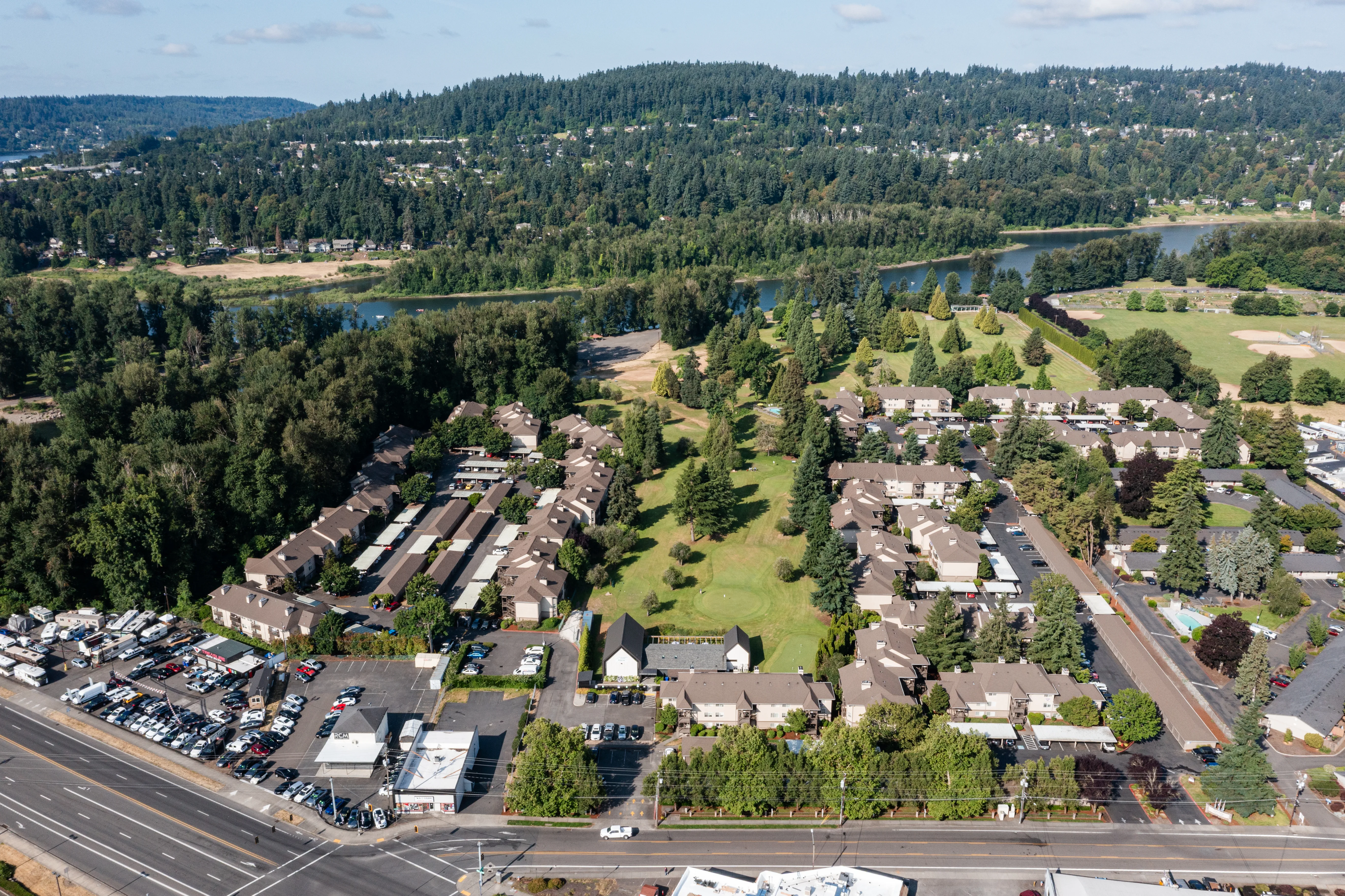
The honest part of this guide starts here: Gladstone is not California. It sits at the confluence of the Clackamas and Willamette rivers, twelve miles south of Portland, in a compact 2.49-square-mile city of roughly 12,000 people. The pace is different, the winters are substantially different, and the food and social scene you were embedded in for a decade simply does not transplant. Most California buyers who've made the move will tell you they don't regret it — and will also tell you nobody warned them about February.
This guide covers what the move actually looks like financially by California region, what your equity does in this specific market, the real tax picture, the weather reality most Oregon relocation content glosses over, and an interactive comparison tool to run your specific California city against Gladstone. The goal is to give you the information a trusted friend who made this move three years ago would actually share — not a brochure.
| Category | Gladstone, Oregon | Bay Area | Southern California | Sacramento Metro | Central Valley |
|---|---|---|---|---|---|
| Median Home Price (approx. 2026) | $520,000 | $1,400,000 | $927,000 | $530,000 | $375,000 |
| Property Tax Rate (effective) | ~1.02% | ~1.1–1.25% | ~1.1–1.25% | ~1.1–1.25% | ~1.1–1.25% |
| State Income Tax (top bracket) | 9.9% | 13.3% | 13.3% | 13.3% | 13.3% |
| State Sales Tax | None | 7.25–10.75% | 7.25–10.50% | 7.25–9.00% | 7.25–8.75% |
| Avg. Utilities (monthly est.) | $130–$160 | $200–$280 | $220–$320 | $180–$240 | $200–$280 |
| Avg. 1BR Rent | ~$1,708 | $2,800–$3,500 | $2,200–$2,900 | $1,700–$2,000 | $1,100–$1,500 |
A Bay Area buyer selling a $1.4 million home and purchasing in Gladstone at $520,000 is very likely eliminating their mortgage entirely — or carrying a small, low-LTV loan at terms that are almost irrelevant to their monthly cash flow. Even after Oregon's state income tax, that household is clearing $400 to $700 per month in sales tax savings alone on a typical family spending pattern, because California's 7.25% baseline (often 9–10.75% with local additions) hits every transaction from groceries to appliances to a new car. Over a decade, that adds up to real money.
Southern California buyers — think someone leaving Torrance, Irvine, or Rancho Cucamonga — see a similarly dramatic housing cost reset, even though the gap isn't quite as stark. The Sacramento comparison is the most nuanced: median home prices in parts of the Sacramento metro are close enough to Gladstone's that the financial win is narrower, but the lot sizes, mature trees, proximity to rivers, and Portland metro access make Gladstone genuinely competitive. Central Valley buyers coming from Fresno or Stockton see the smallest relative housing advantage but gain on tax savings and quality-of-life metrics that aren't captured in the spreadsheet.

The thing I consistently see California buyers underestimate about Gladstone is how competitive the market is relative to the price point. They arrive expecting a slower, more forgiving buying environment — because at $520,000, they're accustomed to California markets where that price range moves quickly. What they don't expect is that Gladstone homes average three competing offers and sell in around 40 days. A buyer from Pleasanton who's used to waiving contingencies on $1.4M properties sometimes goes too cautious here because the dollar amount feels so manageable — and they lose homes to buyers who've done their homework.
The other thing worth flagging specifically for California equity buyers: River Run Village and the hillside lots near Healy Heights represent Gladstone's clearest value play for buyers bringing $600,000-plus in equity. These are larger lots, better views, and homes that have appreciated steadily without hitting the stratospheric premiums you'd see in Lake Oswego three miles away. I've watched Bay Area buyers close all-cash in this corridor, rent back to the sellers for 60 days while finishing their California move, and land with zero mortgage and a house they'd have paid $2 million for in the South Bay. That transaction exists in Gladstone right now. If you're considering Gladstone and want insight into which neighborhoods align with your priorities and budget, I'd welcome the opportunity to share what I've learned from helping hundreds of families make this move successfully.
| Tax Item | California | Oregon | Net Impact |
|---|---|---|---|
| State Income Tax (top bracket) | 13.3% | 9.9% | Oregon wins by ~3.4 pts |
| State Sales Tax | 7.25–10.75% | None | Major Oregon win |
| Property Tax (effective rate) | ~1.1–1.25% | ~1.02% | Oregon slightly better |
| Property Tax Growth Cap | Prop 13 (2% cap) | Measure 50 (3% cap) | Similar, CA slightly better |
| Capital Gains (state) | Up to 13.3% | Up to 9.9% | Oregon wins |
| Estate/Inheritance Tax | None | Oregon estate tax on estates over $1M | California wins |
Oregon is not a tax-free state — a common assumption California transplants sometimes carry into the conversation. The state has no sales tax, which is real and meaningful, but Oregon's income tax reaches 9.9% at the top bracket. A household earning $150,000 in California is paying that income at a 9.3% marginal rate; in Oregon, they move into the 9.9% bracket. The net difference is modest — roughly $900 to $1,200 per year in income tax favor of California at that income level. What changes the equation significantly is that zero on every sales receipt.
Where Oregon long-term homeowners build a structural advantage is through Measure 50, which caps assessed value increases at 3% per year after purchase. A Gladstone buyer who purchases today at $520,000 locks in a tax base that grows slowly regardless of market appreciation — a meaningful hedge against the property tax volatility California buyers felt even under Proposition 13. Oregonians 62 and older also qualify for property tax deferral, which matters for buyers in the pre-retirement phase who want to preserve cash flow. The honest summary: this is a lateral tax move that gets meaningfully better at the grocery checkout and over a long hold period, not a dramatic tax haven switch.
A buyer leaving Palo Alto, San Jose, or Marin County with $1.4 to $1.8 million in home equity arrives in Gladstone with the ability to purchase the entire market outright — and still have meaningful capital remaining. At Gladstone's median of $520,000, an all-cash purchase from typical Bay Area proceeds leaves $700,000 to $1.2 million liquid or deployable. The upper tier of Gladstone's market — riverfront-adjacent properties, hillside homes near Healy Heights with territorial views, and renovated four-bedroom homes in Park Place — tops out in the $650,000 to $750,000 range. A buyer from Walnut Creek closing at $700,000 in Gladstone is purchasing what would cost north of $2 million in their origin market, with cash left over.
The strategic question for Bay Area buyers at this equity level isn't what they can afford — it's whether to deploy additional capital into a rental or income property rather than letting the remainder sit idle. Gladstone's rental demand, driven by proximity to Clackamas Community College and the broader Portland metro employment base, makes a small multi-unit or long-term rental a reasonable consideration. The 1031 exchange option is also worth exploring if the California property was an investment — more on that below.
A buyer leaving Irvine, Torrance, or Rancho Cucamonga with $800,000 to $1.1 million in equity still arrives in Gladstone with enormous buying power. At $520,000 median, that equity level allows an all-cash purchase or a very low LTV conventional loan with a payment that barely registers against California mortgage comparisons. In the $600,000 to $700,000 range — Gladstone's upper market — a SoCal buyer with $900,000 in equity is purchasing near-premium for the local market while retaining $200,000 to $300,000 in liquid capital. Sherwood Forest and Glen Echo represent solid value in this price band: established neighborhoods, mature landscaping, and homes that have appreciated consistently without inflated teardown pricing.
The SoCal buyer typically has the most straightforward financial transition of any California origin. They're not quite at Bay Area elimination-of-mortgage territory, but they're firmly in the "significantly reduced payment on a meaningfully better property" zone. The psychological adjustment, however, is often harder — Los Angeles and San Diego buyers tend to feel the weather shift most acutely, which the weather section addresses directly.
Sacramento buyers make the most apples-to-apples housing price comparison, and they often arrive slightly frustrated that the gap isn't as dramatic as what their Bay Area colleagues experienced. But the value equation here runs deeper than the sticker price. A buyer selling a $550,000 home in Elk Grove or Roseville and purchasing in Gladstone at $520,000 is making a near-even trade on price — but gaining Oregon's zero sales tax, a slightly lower property tax rate, and meaningfully more land per dollar in many Gladstone neighborhoods. City Center and Bolton offer three-bedroom homes in the $420,000 to $480,000 range that represent genuine value for buyers at this equity level who want to carry a small mortgage and preserve liquidity.
The Inland Empire buyer from Riverside or San Bernardino, coming with $450,000 to $600,000 in equity, typically arrives with clearer financial upside — California insurance costs, utility bills, and commute expenses have eaten significantly into their quality of life in ways that don't always show up in median price comparisons. The lifestyle win here is less about dramatic equity arbitrage and more about getting out from under a financial structure that was slowly grinding them down.
Fresno, Stockton, and Modesto buyers have the narrowest relative financial advantage in the Gladstone move — but "narrower" doesn't mean negligible. Property types in the $380,000 to $460,000 range in Gladstone's Ridgewood and Glen Echo neighborhoods represent a genuine step up in overall market quality, neighborhood infrastructure, and long-term appreciation trajectory. A buyer who sold a Central Valley home for $400,000 and carries that as equity is not purchasing Gladstone's premium tier, but they're entering a market with stronger fundamentals and a Portland metro tailwind that their origin market lacks.
The sales tax elimination is proportionally more impactful for buyers at this income and equity level — a family spending $60,000 annually on taxable goods saves $4,300 to $4,500 per year at California's effective rates, which is real money. Combined with lower utility bills in Gladstone's mild summers, the quality-of-life math still tilts toward Oregon even when the housing equity gain is modest.
Looking to buy in Gladstone? Estimate your payment.
Enter your numbers to see an estimated monthly mortgage payment.
Estimate only. Excludes HOA fees and mortgage insurance.
Here's what a good friend who made this move from San Diego three years ago would actually tell you: the summer is better than you expect, and the winter is harder than you expect, and everyone told you both of those things and you still weren't fully prepared. Gladstone averages approximately 144 to 150 rainy days per year, compared to roughly 35 in Los Angeles and 40 in San Diego. July brings an average of 332 hours of sunshine — genuinely spectacular — and June through September is legitimately dry, warm, and active. High Rocks Park on the Clackamas River becomes a local institution in that window, Dahl Beach draws families for swimming, and the outdoor culture here during summer rivals anything California's inland cities offer.
January and February are the honest answer to "what's the catch." Average daily sunshine in January runs around four hours, and the overcast is not occasional — it's structural. California transplants who didn't have a hobby, a gym, or a social anchor going into their first winter tend to feel it. The ones who did fine were already runners, hikers who don't mind rain gear, or people embedded in a community quickly. What most transplants genuinely love after twelve months: the summers exceed their expectations every time, traffic on their commute is a fraction of what they endured in Southern California, and the sense of community scale in a 12,000-person city is something they didn't know they wanted until they had it.
What they miss, honestly: year-round beach access, the food scene density of their California city, and in the case of Los Angeles transplants, the social energy of a massive, sprawling urban market. Gladstone is quiet in the way that takes adjustment. The pace is not a bug — most people come to value it — but it is genuinely different, and buyers who moved assuming it would feel like a California suburb at a lower price point tend to need a recalibration period.
If you want to see how Gladstone compares directly to the city you're leaving, use the tool below — it covers the 120 largest California cities with current housing and tax data.
Home prices: Redfin median sale data, Q1–Q2 2026. Select your city to compare.
Ready to talk through what your specific California equity could do in Gladstone? Todd can model your exact scenario in a single call.
Assuming the market is slow because the price is low. This is probably the most costly mistake California buyers make. Gladstone homes receive an average of three offers and move in roughly 40 days. Buyers who arrive from a Bay Area mindset where $520,000 represents a relaxed, uncrowded price point are surprised to find themselves competing against local buyers who know the market and move fast. Showing up without a pre-approval letter — or worse, planning to get pre-approved after finding the house — is a significant tactical error. The homes in Bolton and Park Place that are priced cleanly do not sit.
Skipping radon testing because they never thought about it in California. Oregon has elevated radon zones, and the Clackamas County area is no exception. This is a standard contingency item in Oregon purchase agreements, and experienced local buyers build it in automatically — but California transplants working with an out-of-state agent they brought with them sometimes overlook it. A radon test is inexpensive and the mitigation is straightforward, but discovering elevated levels after closing is a problem that didn't need to happen.
Not driving the commute at actual commute times before buying. The 25-minute Portland commute figure is real — on a clear mid-morning. McLoughlin Boulevard (99E), which is the primary north corridor out of Gladstone toward Portland, carries genuine rush-hour congestion between 7:30 and 8:45 a.m. Buyers who choose homes in City Center or the southern parts of Gladstone assuming they'll hit the freeway quickly via I-205 need to actually drive that route on a Tuesday morning before committing. The I-205 on-ramp at Sunnyside Road is the chokepoint California buyers should specifically test.
Expecting the neighborhood character to be uniform. Gladstone is 2.49 square miles, which sounds small, but there's meaningful character variation between areas. River Run Village near the Clackamas riverfront feels different from Healy Heights on the hillside, which feels different from the denser, older City Center stock near Portland Avenue. Buyers who drive through one neighborhood, decide it represents the city, and write an offer without touring the others are making a choice without complete information. The diversity of character within a compact geography is one of Gladstone's genuine strengths — but only if you use it.
Bay Area sellers with large equity arriving at an all-cash or near-cash position have a different decision framework than a conventional financing scenario. Rate matters less than terms, speed, and seller confidence — in a three-offer situation, a verified cash buyer or a buyer at 10% LTV with a 21-day close is a fundamentally different offer than a buyer at 80% LTV at conventional. Bay Area sellers who are moving investment properties rather than primary residences should also explore the 1031 exchange option before the California sale closes — the timeline requirement makes pre-planning essential. The Gladstone 1031 Exchange guide covers the mechanics in detail.
Southern California sellers at $700,000 to $1.1 million in equity are typically in strong conventional territory with a large down payment — Gladstone's price range rarely triggers jumbo loan thresholds, which start at $806,500 in Clackamas County. A SoCal buyer putting $400,000 down on a $520,000 purchase carries a $120,000 loan, which is essentially a formality. The more interesting conversation at that equity level is whether to leverage into a larger purchase or a rental property rather than concentrating all equity in a single primary residence.
Sacramento and Inland Empire buyers at $400,000 to $650,000 in equity who are purchasing in Gladstone's sub-$450,000 range may qualify for Oregon Housing and Community Services programs depending on income and first-time buyer status. The covers current OHCS programs and thresholds. Even buyers who don't qualify for DPA programs often find that a 20% conventional down payment on a $480,000 Gladstone home — roughly $96,000 — is well within reach after a California sale, which changes the mortgage conversation entirely.
Local Expert Takeaway: California buyers consistently underestimate Gladstone's market speed and overestimate how much time they have to decide. Homes in the $480,000–$580,000 range — the core of Gladstone's inventory — move in under six weeks with multiple offers, and the sellers here are experienced enough to recognize a hesitant out-of-state buyer. Get pre-approved before you arrive, drive McLoughlin Boulevard at 8 a.m. before you fall in love with a house near Portland Avenue, and take the radon contingency seriously. Those three things will save you from the mistakes most California transplants make in their first month of Gladstone house-hunting.
✅ California equity goes meaningfully further here. At $520,000 median, Bay Area sellers arrive with enough equity to purchase Gladstone's entire market tier outright — and Southern California sellers are close behind. Even Sacramento and Inland Empire buyers see real financial upside through sales tax elimination and long-term property tax structure.
⚠️ Oregon is not a tax haven — but the savings are real in specific places. The state income tax (up to 9.9%) is among the highest nationally, and it largely offsets the income tax savings from leaving California. The zero sales tax and Measure 50 property tax cap are where Oregon consistently wins over a long hold period.
📍 The winters require a genuine mindset shift. Gladstone averages 144 to 150 rainy days per year — roughly four times what Los Angeles sees. The summers are legitimately excellent, but buyers who arrive without a plan for February tend to struggle. Build your social infrastructure before winter, not after.
Is moving from California to Gladstone worth it?
For the majority of California buyers who've done the move, the answer after 12 months is yes — but the "worth it" is defined differently depending on origin. Bay Area sellers often describe it as the most financially transformative decision of their adult lives. Sacramento buyers more often describe it as a quality-of-life upgrade that makes sense on balance. The financial win is clearest for Bay Area and Southern California sellers; the lifestyle adjustment is hardest for Southern California transplants who expected more sun year-round.
How much cheaper is housing in Gladstone vs. California?
At $520,000 median, Gladstone is roughly 63% less expensive than the Bay Area median of $1.4 million, 44% less than the Los Angeles County median, and essentially comparable to Sacramento metro prices — though with meaningfully more land per dollar and a different long-term appreciation trajectory. At the price-per-square-foot level, Gladstone runs approximately $287 to $296 per square foot versus roughly $634 in Los Angeles and over $1,100 in San Francisco.
What do I need to know about moving from California to Oregon?
Three things matter most: Oregon has no state sales tax, which is meaningful over a year of household spending, but it does have a state income tax up to 9.9%, so this is not a tax reduction move on income. Oregon homes commonly have radon testing as part of the purchase process — include it in your contingencies. And Gladstone's real estate market moves faster than most California buyers expect at this price point, with multiple-offer situations common on well-priced homes — arrive pre-approved and ready to move.
Explore the full Gladstone series: The Ultimate Gladstone Relocation Guide · Is Gladstone Safe? · Cost of Living in Gladstone · Best Neighborhoods in Gladstone · Gladstone Schools & Family Life · Gladstone Youth Sports · Gladstone Parks & Recreation · Retiring in Gladstone · 1031 Tax-Deferred Exchange in Gladstone · Gladstone First-Time Homebuyers Guide · · Moving to Gladstone from California · Gladstone Realtor's Perspective
Tell us what you need help with and we'll connect you with local resources.

About the Author
Todd Davidson is the founder of Living in Oregon and Living in Washington, where he publishes in-depth city guides, neighborhood resources, and local market insights covering more than 180 communities across the Pacific Northwest. While his background is in home financing and real estate, he created these digital platforms to help families research and compare regions before making a move.