
Portland Metro · Oregon
Gladstone Schools & Family Life: Top Districts, Academics & Community (2026)
The school conversation in Gladstone tends to start with the district's B- grade and then immediately complicate itself. Gladstone School District 115 sits in the middle third of Oregon districts by most measures — not the academic powerhouse you'd find a few miles north in Lake Oswego, but a tighter, more community-rooted system than the label suggests. The district earns its graduation rate: consistently running in the 85–89% range, which clears the Oregon state average, and that single fact tells you more about what this district actually does for kids than any test score snapshot. For families relocating from high-performing suburban districts, the transition requires honest recalibration. For families coming from struggling urban systems, Gladstone will likely feel like a step up.
What shapes school quality here is scale. Four schools. Roughly 1,580 students. Every teacher is licensed, the student-teacher ratio runs about 18:1 at the district level, and the spending per student — around $16,700 annually — reflects a district that takes its small size seriously. The flip side is that small systems have real ceilings: fewer course electives, no IB program, no large-school magnet pathways. Families who arrive expecting the breadth of a 5,000-student district will need to supplement creatively.
This guide is built for the family six months out from a move, trying to decide whether Gladstone's schools are good enough — good enough for their kids, their priorities, and their specific situation. It covers every school in the district, what the ratings actually translate to at kitchen-table level, who this district serves well, who it genuinely doesn't, and what family life looks like beyond the school walls.
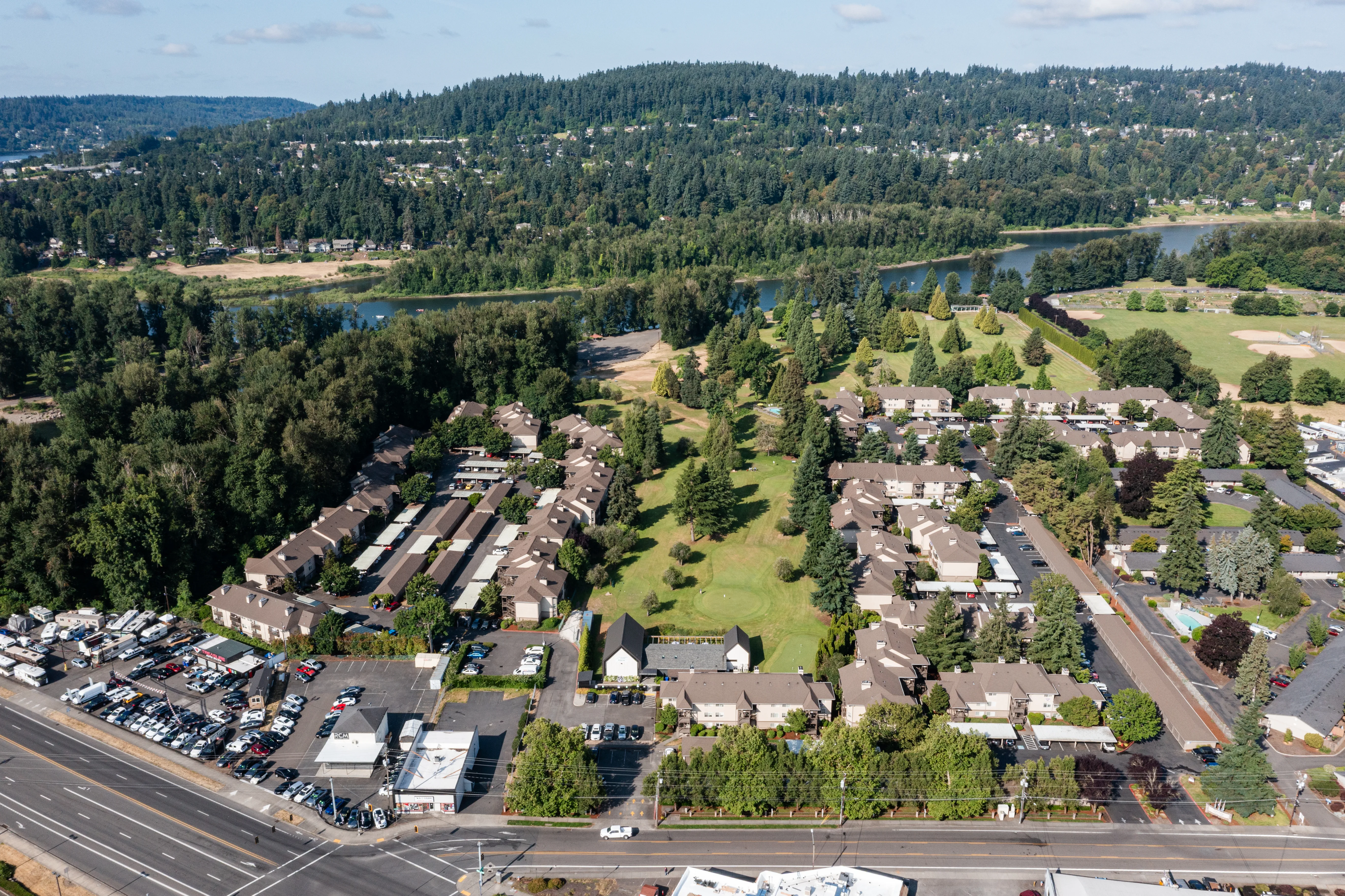
Gladstone School District 115 runs on a simple four-school structure: the Gladstone Center for Children and Families covers pre-K through kindergarten, John Wetten Elementary picks up grades one through five, Walter L. Kraxberger Middle School covers six through eight, and Gladstone High School carries students through graduation. The district's motto, "Growing Great People," shows up less as marketing copy and more as a description of how a small system actually operates — the same teachers, families, and traditions carry through from one building to the next. The sections below break down each school individually, along with what the district's overall ratings mean once you look past the headline grade.

Buyers searching specifically for schools tend to ask me the same question first: which neighborhood feeds which school? In Gladstone, the answer is refreshingly simple — John Wetten Elementary draws from the entire city, so you're choosing a neighborhood based on lot size, walkability, and price rather than gambling on a boundary line the way you would in Lake Oswego or West Linn. Families I've worked with in Park Place and Ridgewood specifically cite that flexibility as a reason they chose Gladstone over pricier districts where a few blocks can mean a completely different elementary assignment.
What I tell every family touring here is to separate the elementary decision from the high school decision, because you have time on the second one. Gladstone High's numbers are more complicated than the elementary results, but that's six-plus years away for most buyers walking through a starter home in Healy Heights or Park Place today. The families who move with the most confidence are the ones who've toured Wetten in person rather than going off the district's overall grade — a B- average doesn't capture what a specific building feels like day to day. If you're considering Gladstone and want insight into which neighborhoods align with your priorities and budget, I'd welcome the opportunity to share what I've learned from helping hundreds of families make this move successfully.
The district's elementary pipeline starts earlier than most families expect. The Gladstone Center for Children and Families on Portland Avenue serves pre-K through kindergarten and is genuinely unusual for a district this size. It's not a traditional elementary school — it's a collaborative model that wraps early childhood education, Head Start, family services, and kindergarten into one campus. No family is turned away from its health services due to inability to pay, which says something about how the district thinks about its role in the community. For parents with a kindergartener starting from scratch in Gladstone, this is your entry point, and the wraparound model tends to work especially well for families still getting settled.
John Wetten Elementary on East Exeter Street picks up in first grade and carries students through fifth. With roughly 595 students and a student-teacher ratio around 17.5:1, it's meaningfully smaller than many metro-area elementary schools, and the classroom continuity that comes with a neighborhood school shows in the culture. Wetten consistently outperforms both the district and state averages in ELA, math, and science for grades 3–5 — a fact that tends to surprise families who've already written off the district based on the high school numbers. The school also offers a Gifted & Talented program, which is worth flagging for families with identified high-ability students. One honest limitation: the building is currently mid-seismic upgrade, which means construction adjacency is part of campus life for the near term.
Walter L. Kraxberger Middle School serves grades 6–8 with an enrollment of around 345 students, a size that keeps it from feeling anonymous. The school consistently places in the top half of Oregon middle schools by academic ranking, which roughly tracks with the district's overall profile — middle of the pack statewide, but functioning competently for a small community school. For families coming from larger suburban systems, the adjustment is more about the social scale than the academics: students who struggled to find their group at a 700-student middle school often find Kraxberger's intimacy a genuine relief.
Gladstone High School is the full story, and it's worth sitting with honestly. The school enrolls about 533 students, making it one of the smallest public high schools in the Portland metro area. It competes in OSAA's 4A classification — 4A-2 Tri-Valley Conference — alongside schools like Estacada, Madras, and Molalla, which gives student-athletes a realistic shot at varsity playing time that simply doesn't exist at 5A and 6A programs. The Gladiators compete in orange and black, and the smaller athletic program has its own culture of genuine community investment that you don't see at mega-schools.
Academically, the honest picture at the high school level is more complicated. The graduation rate of roughly 85–89% exceeds the state average, which is meaningful. But proficiency rates in math and reading lag the state, and AP participation runs around 14% — a narrower advanced track than families accustomed to large-school districts typically expect. Chronic absenteeism has been a documented challenge, ranging from 29% to 38% in recent tracked years, which is the data point most worth discussing with the school directly before enrolling. The student who thrives at Gladstone High is social, wants to know their teachers personally, and benefits from the kinds of relationships that are harder to form in a 1,500-student building. The student who may struggle here is one who needs a deep elective catalog, a robust AP schedule, or a peer group of highly driven academic competitors.
The school earned a Blue Ribbon designation back in 1987 — the highest federal honor for schools at the time — and while that history doesn't define current performance, it reflects a community that has taken education seriously over time.
Looking to buy in Gladstone? Estimate your payment.
Enter your numbers to see an estimated monthly mortgage payment.
Estimate only. Excludes HOA fees and mortgage insurance.
The B- district grade and the mid-pack rankings are what most relocating families encounter first, and they tend to create either dismissal or false reassurance depending on which direction the buyer is coming from. The more useful frame is this: Gladstone's schools perform near or slightly above state averages at the elementary level and roughly at state averages through middle school, with the high school presenting a more complicated picture on test scores while genuinely outperforming on graduation outcomes.
Parents who moved here from suburban California or the Seattle area most commonly report two surprises after their first full school year. The first is how much they appreciate the access — teachers respond to emails the same day, IEP meetings happen with the actual classroom teacher present, and the principal at Wetten is someone your kid will know by name and vice versa. The second surprise, typically arriving around sophomore year, is the ceiling. Families who arrived with a student who was in the top 10% of their previous school sometimes find that the intellectual peer group at Gladstone High is smaller than they hoped, and that pushing beyond AP courses requires some self-direction.
Top schools in the district are accessible from any Gladstone neighborhood. Unlike larger cities where a specific elementary assignment can swing a home's value by $100,000, Gladstone's compact geography means John Wetten draws from across the city. The Gladstone Center for Children and Families similarly serves the whole community. You're not playing address games here — the district is small enough that boundaries aren't the battle they are in, say, Lake Oswego.
This is the section worth reading before you've decided. Gladstone School District 115 does not have an IB program, a large-school performing arts conservatory pathway, or a dedicated gifted magnet beyond Wetten's classroom-level G&T support. Families whose children have thrived in specialized gifted programs with pull-out curriculum and peer cohorts of similarly identified students will find Gladstone's offering limited. The district also does not offer the breadth of CTE pathways that larger 5A districts can sustain — if your student is serious about early vocational or technical specialization, the options here are thinner.
For students with complex special education needs, the district serves its IEP population with a reported 17% of students carrying disability designations — which is significant for a district this size — but intensive specialized programming beyond what a small district can staff may require looking toward Clackamas County ESD services. Families navigating this before a move should contact the district directly, but it's a conversation worth having before you're under contract.
Families who prioritize elite competitive athletics should also weigh 4A classification carefully. The Tri-Valley Conference is competitive within its tier, but a student-athlete with aspirations toward D1 recruitment will be playing at a lower-visibility level than at Clackamas, West Linn, or Lake Oswego. That's neither good nor bad — but it's real. Nearby alternatives worth researching for specific academic needs include Clackamas Community College (dual enrollment for advanced students), Oregon City High School (5A, broader AP catalog, just across McLoughlin), and St. John the Apostle Catholic School in Oregon City for a K-8 private option.
| School | Type | Grades | Location |
|---|---|---|---|
| Gladstone Center for Children & Families | Public early learning | Pre-K–K | 18905 Portland Ave, Gladstone |
| Gladstone Teaching Preschool (at GCCF) | Public preschool | Pre-K | 18905 Portland Ave, Gladstone |
| Head Start (at GCCF) | Federally funded pre-K | Pre-K | 18905 Portland Ave, Gladstone |
| St. John the Apostle Catholic School | Private Catholic | K–8 | Oregon City (nearby) |
| Concord Christian School | Private Christian | K–12 | Oregon City (nearby) |
The GCCF campus handles the bulk of formal early learning in Gladstone itself — the Teaching Preschool and Head Start programs operate inside the same building as the district kindergarten, which creates a warm handoff for families who start early. Private daycare and childcare capacity in Gladstone proper is more limited than in larger cities; families often look toward Oregon City and Milwaukie for licensed home daycares and center-based infant/toddler care. The McLoughlin Boulevard corridor has the most consistent options. Families relocating with children under three should begin their childcare search several months in advance — waitlists for licensed infant care in the immediate area are real.
The Gladstone Public Library on Exeter Street functions as a genuine community hub, hosting regular children's programming, summer reading events, and family story times throughout the year. It's the kind of branch library that still has a librarian who knows the regulars — a small-city quality worth naming because it doesn't survive everywhere. The library's programming calendar tends to fill around the same community rhythm as the schools, so summer transitions between grades often overlap with summer reading programming.
Gladstone Community Minds, the district's community education arm, runs enrichment programs, summer camps, and after-school activities that supplement the core academic calendar. The Cross Park and Gladstone City Park areas serve as the informal weekend gathering places for families with younger children, with park events organized through Parks & Recreation drawing mixed-age crowds from across the city. The Clackamas River waterfront — including Dahl Beach and High Rocks Park — functions as the de facto outdoor classroom for older kids and teenagers, particularly through spring and summer.
The Gladstone Athletic Association coordinates youth leagues in baseball, softball, and basketball, with fields at several parks throughout the city. Families with kids in travel sports often combine district athletics with club teams through the broader Clackamas County youth sports infrastructure. The sense of community here is real and not performative — Gladstone runs small enough that the families you meet at a Kraxberger back-to-school night are often the same families you'll see at the High Rocks parking lot on a Sunday afternoon.

Local Expert Takeaway: If you're choosing between Gladstone and Oregon City for the schools, the honest answer is that Oregon City's 5A district offers more course depth at the high school level — but Gladstone's smaller pipeline produces better daily relationships between students, teachers, and families, and the Wetten elementary results are consistently stronger than the district's B- grade suggests. Buy your home based on the elementary picture first; you have six-plus years before the high school question becomes urgent, and Clackamas Community College dual enrollment is a legitimate bridge for motivated students. Prioritize the Park Place and Healy Heights areas if John Wetten's program is driving your decision — both feed the school directly and give you strong resale access to families making the same calculation you are now.
Is Gladstone a good place for families?
Yes, Gladstone offers the kind of small-community school experience that's genuinely difficult to find in the Portland metro at this price point. The district's graduation rate exceeds the state average, John Wetten Elementary outperforms state proficiency benchmarks, and the four-school pipeline creates continuity and personal attention that larger districts simply can't match. Families who value relationships and community over course breadth tend to land here happily.
What are the main academic limitations of Gladstone School District 115?
The high school is the primary limitation for academically driven families. Proficiency rates in math and reading at the high school level run below the state average, the AP catalog is narrower than in larger 5A districts, and there is no IB program. Families with students pursuing advanced coursework typically supplement through dual enrollment at Clackamas Community College, which is accessible from Gladstone and has a strong track record with district students.
How does Gladstone School District compare to Oregon City and Milwaukie?
Oregon City School District generally offers more course depth and a broader athletics program at the 5A level, though Gladstone's elementary results are competitive and its district graduation rate is comparable. Milwaukie falls within North Clackamas School District, which is a significantly larger system with more magnet-style pathways but more variable building-to-building quality. Gladstone's advantage is consistency and community cohesion — every student in the district shares the same four-school pipeline with no attendance boundary complexities.
Explore the full Gladstone series: The Ultimate Gladstone Relocation Guide · Is Gladstone Safe? · Cost of Living in Gladstone · Best Neighborhoods in Gladstone · Gladstone Schools & Family Life · Gladstone Youth Sports · Gladstone Parks & Recreation · Retiring in Gladstone · 1031 Tax-Deferred Exchange in Gladstone · Gladstone First-Time Homebuyers Guide · · Moving to Gladstone from California · Gladstone Realtor's Perspective
Tell us what you need help with and we'll connect you with local resources.

About the Author
Todd Davidson is the founder of Living in Oregon and Living in Washington, where he publishes in-depth city guides, neighborhood resources, and local market insights covering more than 180 communities across the Pacific Northwest. While his background is in home financing and real estate, he created these digital platforms to help families research and compare regions before making a move.