
Portland Metro · Oregon
1031 Exchange & Investment Real Estate in Gladstone (2026)
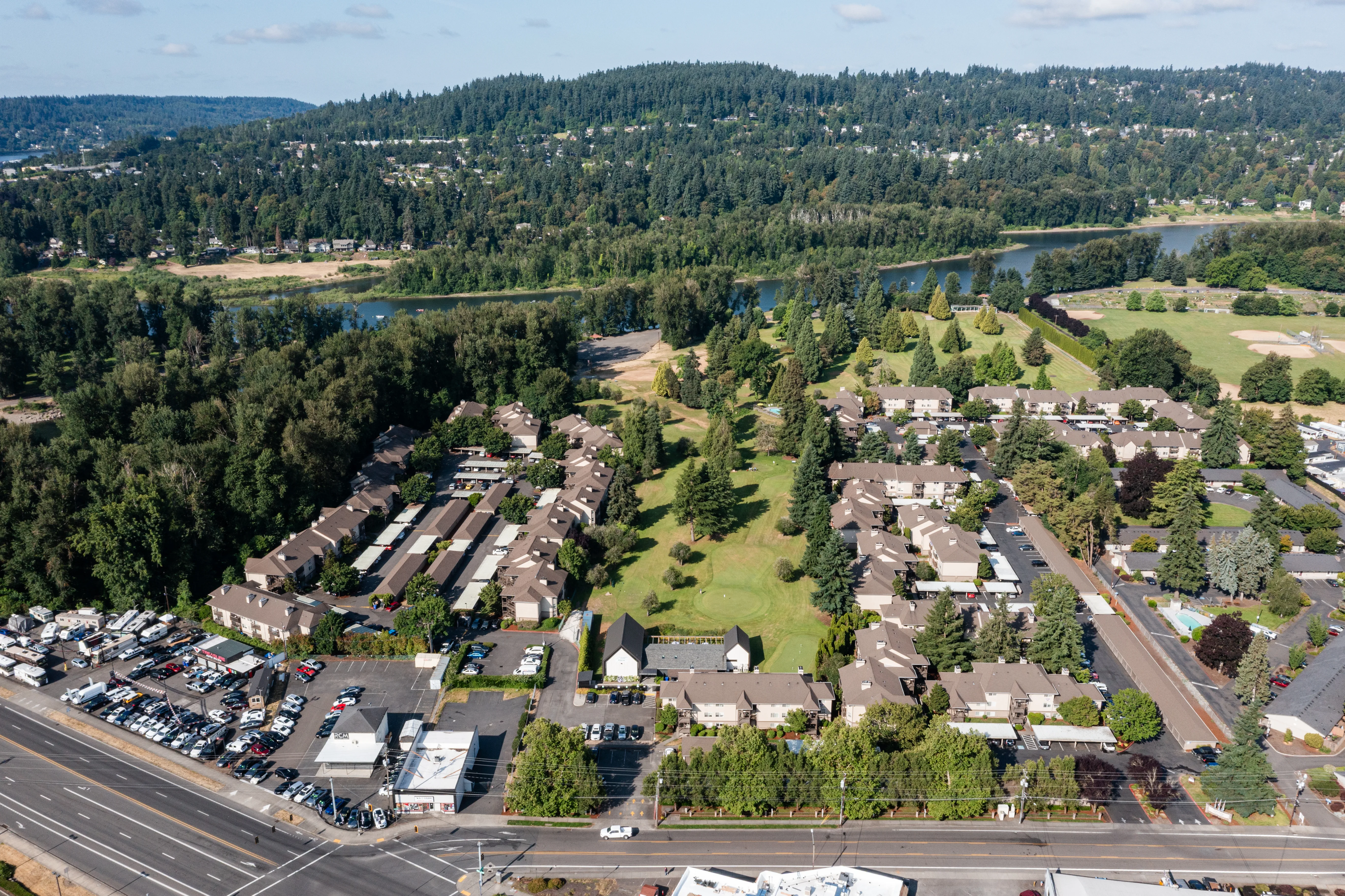
You don't have to be a professional investor to find yourself doing a 1031 exchange. A significant portion of the California capital flowing into the Portland metro right now belongs to homeowners — people who sold a Bay Area rental, a Sacramento investment property, or a Southern California duplex and realized they were sitting on a tax liability large enough to motivate a serious geographic move. Gladstone, Oregon keeps surfacing in those conversations. At a $520,000 median sold price, with a 3% local vacancy rate and a renter population that has stayed remarkably stable for years, it offers the kind of durable fundamentals that look genuinely attractive when you're deploying exchange proceeds on a deadline.
The rental demand here is structural, not speculative. Gladstone sits between Oregon City and Milwaukie, close enough to Portland's employment base for a 25-minute commute but priced well below the Lake Oswego and West Linn markets that have traditionally absorbed Portland-area renters priced out of the core. About 36% of Gladstone households are renter-occupied — a figure that has held steady, driven by a workforce that skews toward healthcare, education, and remote tech work. The most common rental profile is a two-bedroom unit, which accounts for roughly 58% of the city's rental stock. Single-family homes and small apartment buildings make up the bulk of what trades as investment property here.
This guide covers the mechanics of a 1031 exchange, the Gladstone investment property market as it stands in 2026, the Oregon tax landscape for out-of-state investors, property management realities, and a due diligence checklist built specifically for buyers working inside a 45-day identification window.
The core mechanic is straightforward: sell a qualifying investment property, park the proceeds with a qualified intermediary (QI) before or at closing, then identify a replacement property within 45 calendar days and close on it within 180 days. The 45-day clock is the one that kills deals. It starts the moment escrow closes on your relinquished property, it does not pause for weekends or holidays, and the IRS grants no extensions except in federally declared disaster areas. Investors who wait until after closing to start their property search frequently find themselves in trouble — particularly in a market like Gladstone where active duplex and small multifamily inventory can sit in the single digits at any given moment.
The like-kind rule is broader than most people realize. "Like-kind" in the 1031 context simply means real property for real property — a California beach bungalow can be exchanged for an Oregon commercial building, a duplex, or a raw land parcel. What you cannot do is exchange into a REIT, a primary residence, or any personal-use property. The qualified intermediary must hold your proceeds throughout the exchange; if those funds touch your hands at any point before the replacement property closes, the exchange collapses entirely.
The boot trap is the detail that surprises first-timers. If you walk away from the closing table with any cash — because you bought down, didn't fully reinvest the net proceeds, or had debt relief that wasn't offset — that portion is taxable in the year of the exchange. To fully defer your gain, you need to reinvest all net proceeds and replace any debt you retired, either with new financing or additional equity. Investors coming out of a highly appreciated California property often need to acquire multiple replacement properties to absorb the proceeds — which Oregon law accommodates, since you can identify up to three properties on your 45-day list.

What out-of-state investors consistently underestimate about Gladstone is how quickly the investment-grade inventory moves relative to the 45-day window. When a well-located duplex or a clean SFR in the Bolton or Park Place areas hits the market, it rarely stays available for more than two to three weeks — and those are exactly the properties that make sense as 1031 replacements. I tell California investors to treat the Gladstone market like a Portland-adjacent submarket, not a rural or secondary city where you can take your time. The competition here is local: landlords who already know the street, the school district, the rental history of the building. Coming in cold on day 30 of your identification period is a real disadvantage.
The thing I watch for in investment-grade properties in Gladstone is the gap between list price and what the property will actually rent for. With a median sold price around $520,000 and typical two-bedroom rents running roughly $1,688 to $1,702 per month, the gross yield on a stabilized SFR is in the 4.5% range before expenses — which means this is primarily an appreciation and stability play, not a cash flow machine. Investors who walk in expecting 7% or 8% cap rates are looking at the wrong market. Where Gladstone does reward patience is in small multifamily: a well-maintained duplex or triplex, purchased at the right basis, can generate meaningful cash flow while sitting in a city with historically low vacancy and a tenant pool that stays employed. If you're considering Gladstone and want insight into which neighborhoods align with your priorities and budget, I'd welcome the opportunity to share what I've learned from helping hundreds of families make this move successfully.
Single-family homes dominate the housing stock here — about 62% of all units — and they represent the most liquid investment product on the market. Duplexes and small apartment buildings exist, but the on-market inventory at any given time is thin. Small multifamily is the more compelling investment vehicle when it surfaces, but you may wait months for a qualifying property to appear. Commercial product trades rarely in Gladstone proper; most of the commercial activity anchors along Portland Avenue toward Oregon City.
The market itself has cooled slightly from pandemic-era peaks. Homes are averaging 38 days to sell — meaningfully faster than the national average of 58 days — and a typical listing receives around three offers. That pace matters for a 1031 buyer: you can realistically go under contract within a week or two of identifying a property, which leaves some buffer before the 180-day close deadline. Vacancy sits at approximately 3%, significantly tighter than the Oregon statewide average of around 7.6%, which keeps rental demand competitive and makes the landlord's position durable even in softer economic conditions.
| Property Type | Typical Price Range | Est. Cap Rate | Avg Days to Close |
|---|---|---|---|
| SFR (3BR/2BA) | $480,000–$560,000 | 2.7%–3.2% (net) | 30–45 days |
| Duplex | $580,000–$750,000 | 4.0%–5.2% (net) | 30–45 days |
| Small Multifamily (4–6 units) | $900,000–$1,400,000 | 4.8%–5.5% (net) | 45–60 days |
| Value-Add SFR | $420,000–$500,000 | 3.8%–4.5% (stabilized) | 30–45 days |
Duplexes and small multifamily move fastest when priced correctly — often before a 1031 buyer from out of state has completed their due diligence. SFRs with deferred maintenance sit the longest and offer the best negotiating leverage.

A Bay Area homeowner who sold a rental property at $1.4 million is sitting on exchange proceeds that can acquire a Gladstone duplex and a stabilized SFR simultaneously — both debt-free — while still staying under the exchange value. That purchasing power creates immediate diversification across two properties and two tenant streams. The price differential is stark enough that Bay Area investors often shift from a single high-value rental into a small portfolio in a single exchange.
Los Angeles and San Diego investors are typically trading compressed cap rates (sub-3% on stabilized SFR) for a market where the net yield, while modest, is measurably better and the gross rent multiplier is lower. A Gladstone two-bedroom apartment renting at $1,695 per month on a $520,000 asset represents a price-to-rent ratio around 25.5x — still high by Midwest standards, but more favorable than comparable Los Angeles product at 30x or above.
Sacramento and Inland Empire investors are often the closest to parity with Gladstone on price — which makes the case more nuanced. The draw here is Oregon's landlord-tenant environment relative to California's statewide rent control framework, combined with a Pacific Northwest tenant pool that has historically shown lower turnover in stable suburban markets. Gladstone's proximity to Portland employment and its strong school district rating for a city this size make it a credible long-term hold.
Looking to buy in Gladstone? Estimate your payment.
Enter your numbers to see an estimated monthly mortgage payment.
Estimate only. Excludes HOA fees and mortgage insurance.
Oregon charges no state sales tax. For an investor doing a rental rehab — replacing flooring, appliances, or fixtures — every material purchase arrives at face value with no sales tax layered on top. On a $40,000 renovation budget, that's a real line-item difference compared to California's 7.25% base rate.
Oregon does tax rental income at the state level, with rates scaling up to 9.9% on ordinary income. In practice, depreciation deductions and operating expense offsets reduce most leveraged investors' net taxable rental income substantially. Investors with significant depreciation recapture from prior exchanges should be aware that the depreciation basis carries over in a 1031 — it is not reset or stepped up on the replacement property, which affects long-term tax planning. For investors who want the capital gains deferral without active management, a Delaware Statutory Trust (DST) qualifies as a like-kind replacement property and offers a passive ownership structure worth discussing with your exchange attorney.
| Tax Item | California | Oregon |
|---|---|---|
| Income tax on rental income | Up to 13.3% | Up to 9.9% |
| Property tax rate on new purchase | ~1.1%–1.3% (Prop 13 reset) | ~1.02% (Clackamas County) |
| State sales tax | 7.25%+ (varies by county) | 0% |
| Capital gains treatment | Taxed as ordinary income at state level | Taxed as ordinary income at state level |
| Depreciation recapture at state level | Yes | Yes |
Oregon's landlord-tenant law is among the more tenant-protective in the country, and investors coming from states like Texas or Nevada often find the adjustment significant. Oregon prohibits no-cause evictions in most circumstances — landlords must cite a qualifying reason to terminate a tenancy. Rent increase notices require 90 days' written notice, and while Gladstone itself is not subject to Portland's local rent stabilization ordinance, state-level AB 1506 (Oregon's 2019 rent control law) caps annual rent increases at 7% plus CPI for buildings more than 15 years old. For a newly acquired property that clears the age threshold, that cap is a real constraint on yield growth.
Out-of-state owners consistently underestimate the documentation burden. Oregon requires landlords to provide a written rental agreement, maintain specific habitability standards, and follow strict protocols on security deposit handling, notice timing, and move-in/move-out documentation. Property management is not optional for most remote investors — it is the difference between a smooth operation and a costly compliance error. Typical management fees in the Gladstone area run 8% to 10% of gross collected rent, with leasing fees layered on top for tenant placement. Local firms serving the area include Certa Pro Property Management and several Oregon City-based residential management companies that cover the broader Clackamas County corridor.
Vacancy in Gladstone runs tight at approximately 3%, which means a well-priced unit rarely sits empty for more than a few weeks. The tenant pool draws from healthcare and education workers commuting to Providence and Clackamas Community College, as well as remote workers — roughly 21% of Gladstone's workforce works from home, which translates to tenants who stay put.
| Item | What to Verify | Local Resource |
|---|---|---|
| Title search | Clear title, no liens or encumbrances | Clackamas County title company (Oregon Title, First American) |
| Sewer vs. septic | Many older Gladstone homes are on septic — verify system age and permit status | Clackamas County Environmental Health |
| Radon | Oregon has elevated radon zones; test required | State-licensed radon inspector |
| Flood zone | Proximity to Clackamas River affects insurability and lender requirements | FEMA Flood Map Service Center |
| Rental permit requirements | Verify Gladstone does not require a business license or rental registration | City of Gladstone Development Department |
| HOA restrictions on rentals | Some associations cap rental percentages or prohibit short-term rentals | HOA CC&Rs via title disclosure |
| Zoning / ADU potential | R-1 and R-2 zones allow ADUs — verify lot size and setback requirements | City of Gladstone Planning Department |
| School district assignment | Gladstone School District 115 — affects tenant pool and long-term demand | Gladstone School District 115 |
| Current lease status | Month-to-month vs. fixed-term; Oregon notice requirements for inherited tenants | Review lease documents with local attorney |
| Deferred maintenance inspection | Roof, HVAC, foundation — Oregon weather accelerates wood rot and gutter failure | Licensed Oregon home inspector |
| Property management referral | Establish management before close — not after | Local Clackamas County PM companies |
| Title company recommendation | Use a QI-approved title company to streamline exchange closing | Coordinate with your qualified intermediary |
| Short-term rental compliance | Gladstone STR market is active (32 active listings) — verify zoning allows STR use | City of Gladstone Planning |
| Insurance verification | Landlord policy, liability coverage, umbrella — confirm before tenant occupancy | Oregon-licensed insurance broker |
| Rent roll verification | For multifamily, verify actual collected rents vs. pro forma — Oregon leases must be disclosed | Review with local real estate attorney |
Local Expert Takeaway: The most common mistake California 1031 buyers make in Gladstone is underwriting to a cap rate that simply doesn't exist at the SFR price point. A $520,000 home renting for $2,000 a month is not a cash flow investment — it's a stability and appreciation hold. If your exchange proceeds are large enough to acquire small multifamily, that's where the yield math starts to work. If you're buying SFR, model it as a 10-year hold with 3%–4% annual appreciation and a tenant base that stays employed, and resist the urge to over-leverage. The investors who struggle here are the ones who built their pro forma on Bay Area optimism instead of Portland-metro reality.
If you're 30 days into a 1031 clock and still haven't lined up financing, you're already behind. I work with investors specifically on DSCR loan structures — debt-service coverage ratio loans that qualify the property on rental income rather than your personal tax returns, which keeps the transaction off your DTI and simplifies the underwriting timeline. Getting pre-approved before your relinquished property closes is the single move that separates buyers who land their replacement property from those who scramble at day 44.
✅ Gladstone's 3% vacancy rate and stable renter base make it a durable long-term hold — not a high-yield play, but a low-volatility one with appreciation upside in a supply-constrained Portland submarket.
⚠️ Oregon's landlord-tenant law is tenant-protective and procedurally demanding — remote owners who self-manage frequently run into compliance issues on notice requirements, rent increase protocols, and security deposit handling. Budget for professional management from day one.
📍 The 45-day identification window is the real constraint in Gladstone — small multifamily inventory is thin, and the best properties move in under two weeks. Investors who start their search before their relinquished property closes have a measurable advantage.
Does a 1031 exchange work for out-of-state property?
Yes — the 1031 exchange has no geographic restriction on either the relinquished or replacement property. A California investor can sell a Los Angeles rental and acquire a Gladstone duplex as the replacement property, provided all IRS timing and intermediary rules are followed. The only requirement is that both properties qualify as investment or business-use real property.
What is the cap rate on rental property in Gladstone?
At the SFR level, net cap rates in Gladstone typically run in the 2.7%–3.2% range after expenses — consistent with other Portland metro suburbs at this price point. Small multifamily and value-add properties can reach 4.8%–5.5% net, which is where most serious 1031 investors direct their attention. This is an appreciation and stability market, not a high-yield one.
Do I need a local property manager for a 1031 investment in Oregon?
For out-of-state investors, professional property management is strongly advisable. Oregon's landlord-tenant statutes carry specific notice requirements, documentation obligations, and procedural rules around rent increases and evictions that are difficult to manage remotely without deep familiarity. Management fees in the Gladstone area typically run 8%–10% of gross collected rent, and the compliance protection that comes with professional management is worth the cost.
Explore the full Gladstone series: The Ultimate Gladstone Relocation Guide · Is Gladstone Safe? · Cost of Living in Gladstone · Best Neighborhoods in Gladstone · Gladstone Schools & Family Life · Gladstone Youth Sports · Gladstone Parks & Recreation · Retiring in Gladstone · 1031 Tax-Deferred Exchange in Gladstone · Gladstone First-Time Homebuyers Guide · · Moving to Gladstone from California · Gladstone Realtor's Perspective
Tell us what you need help with and we'll connect you with local resources.

About the Author
Todd Davidson is the founder of Living in Oregon and Living in Washington, where he publishes in-depth city guides, neighborhood resources, and local market insights covering more than 180 communities across the Pacific Northwest. While his background is in home financing and real estate, he created these digital platforms to help families research and compare regions before making a move.