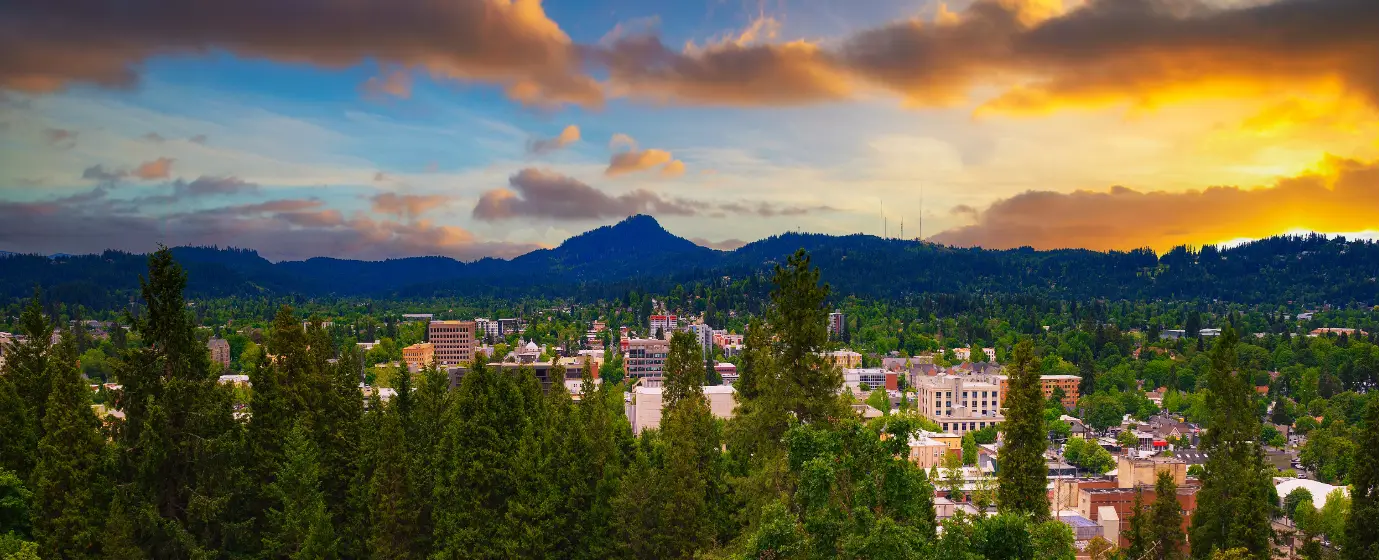
Willamette Valley · Oregon
Best Neighborhoods in Eugene: Where to Buy or Rent (2026)
Eugene is one of those cities where two buyers with identical budgets and similar priorities can end up in completely different worlds depending on which neighborhood they choose. A $475,000 budget in the Whiteaker puts you in a craftsman bungalow walking distance from farm-to-table restaurants and a bike-friendly street grid. That same budget in Cal Young buys you a quiet cul-de-sac, a two-car garage, and a neighborhood where the pace feels closer to a smaller Pacific Northwest town than a college city.
The city divides in ways that aren't obvious from a map. South Eugene — the hillier, greener, older half — carries a cultural identity shaped by the University of Oregon, established professional families, and decades of investment in parks and trail systems. North Eugene and West Eugene developed differently: flatter, more suburban, with newer construction, lower price points per square foot, and commute patterns oriented around I-105 and Highway 99. That divide shapes school boundaries, walkability, traffic, and daily life in ways that matter more than most buyers initially realize.
This guide is built for buyers and renters who are serious about understanding where the best places to live in Eugene actually are — not just which zip codes sound appealing on paper. You'll find neighborhood-by-neighborhood breakdowns, a buyer-type matching table, honest trade-offs, and the mistakes relocating buyers most commonly make.
| Neighborhood | Best For | Price Range | Vibe |
|---|---|---|---|
| Fairmount | Professionals, UO faculty, established families | $600K–$900K | Wooded, quiet, literary |
| South University | Walkability seekers, UO-adjacent buyers | $550K–$750K | Academic, leafy, urban-adjacent |
| Amazon | Families with kids, outdoor-active households | $475K–$625K | Active, park-centric, residential |
| Whiteaker | Creatives, renters transitioning to owners | $375K–$480K | Bohemian, bike-forward, eclectic |
| Downtown | Young professionals, renters, condo buyers | $300K–$420K | Urban, walkable, renter-majority |
| Cal Young | Families, professionals, suburban buyers | $450K–$600K | Quiet, suburban, school-focused |
| Friendly Area | First-time buyers, affordability seekers | $380K–$500K | Laid-back, community-minded |
| Harlow | First-time buyers, budget-conscious households | $350K–$460K | Suburban, accessible, practical |
| Jefferson Westside | Renters, creatives, value buyers | $350K–$475K | Transitional, walkable, eclectic |
| River Road | Budget-conscious buyers, value hunters | $320K–$430K | Flat, unpretentious, improving |
| Buyer Type | Best Neighborhood | Why |
|---|---|---|
| First-time buyer | Friendly Area or Harlow | Entry-level pricing, stable residential streets, room to build equity |
| Luxury buyer | Fairmount or South University | Top-tier zip code, established homes, Hendricks Park access |
| Walkability seeker | Whiteaker or South University | Bike infrastructure, walkable corridors, UO proximity |
| Families with kids | Amazon or Cal Young | Strong school access, parks, neighborhood stability |
| Commuters (Portland) | Harlow or Cal Young | Fast I-5 or I-105 access, less traffic maze than South Eugene |
| Large lot buyers | River Road or Santa Clara | Larger parcels at lower price points per square foot |
| Renters | Downtown or South University | Renter-majority infrastructure, transit access, walkable amenities |
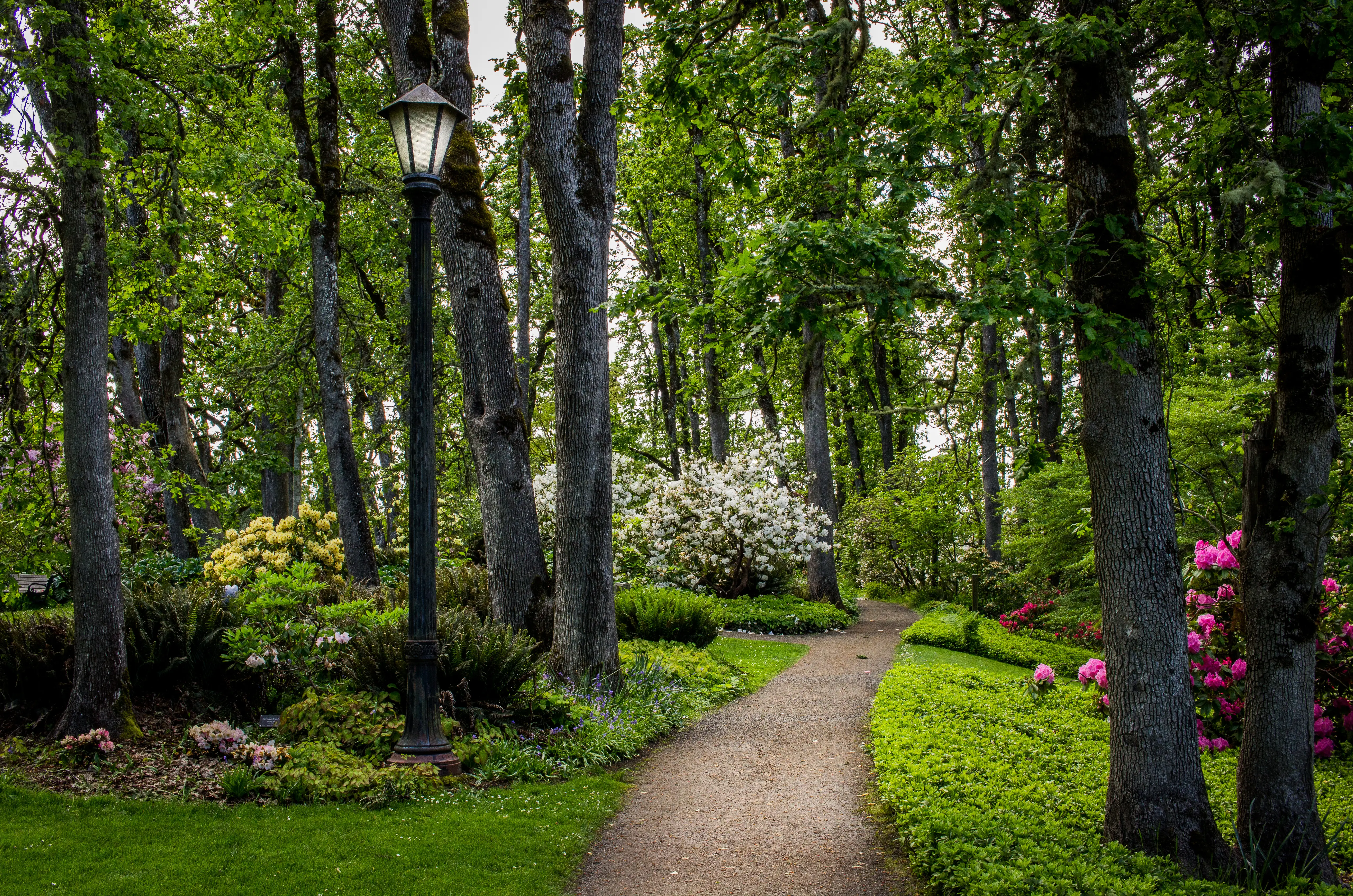
Fairmount sits on the eastern slope of South Eugene, bordered by the University of Oregon campus and anchored by Hendricks Park — 80 acres of forested trails that peak each spring when the rhododendron garden blooms in color. The housing stock is predominantly bungalows and early 20th-century revival homes built between 1900 and 1940, which means character and craftsmanship but also maintenance costs that buyers coming from newer construction sometimes underestimate. Prices in Fairmount consistently run toward the upper end of the Eugene market, with most homes trading in the $600K–$900K range; the neighborhood draws UO faculty, attorneys, physicians, and families who prioritize walkable access to trails over garage space.
Best for: Buyers who want South Eugene's most established address and can budget for older-home upkeep.
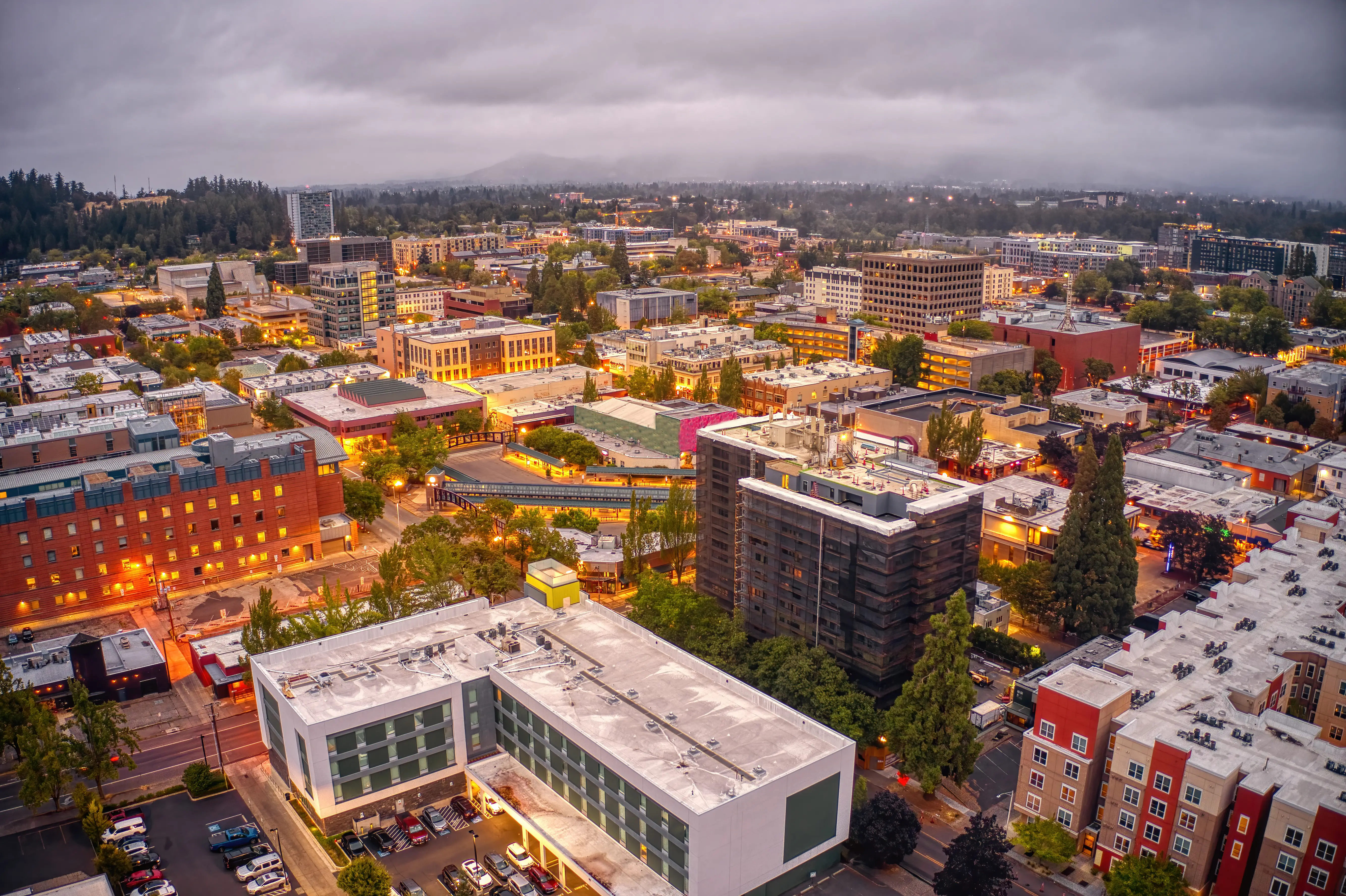
South University is Eugene's most walkable residential neighborhood, sitting directly south of the UO campus and close to both Washburne Park and the southern reaches of the Amazon trail system. Homes here run $550K–$750K, and the ZIP code (97403) consistently posts the tightest list-to-sold ratios in the city — around 99.4% — meaning sellers rarely discount. The catch is density: this neighborhood has genuine urban-adjacent feel, and parking, noise from the student population, and limited lot sizes are real considerations for buyers expecting a quieter suburban experience.
Best for: Walkability-focused buyers who want UO proximity without living in a student-heavy rental zone.
The Amazon neighborhood takes its name from the park at its center — a 100-acre green space with two community centers, the city's only outdoor pool, a 3-acre dog park, tennis courts, sports fields, a community garden, and Eugene's first fully-inclusive playground. Homes here are predominantly 1950s and 1960s ranch-style and mid-century modern construction, many of them thoughtfully remodeled; pricing runs $475K–$625K, with properties closer to the University of Oregon side commanding a premium. The neighborhood feeds into the same desirable South Eugene school boundaries as Fairmount and South University, which is a significant driver of buyer demand.
Best for: Families with school-age children who want park access and established neighborhood stability at the mid-range of South Eugene pricing.
The Whiteaker — locals just call it "the Whit" — has been Eugene's most talked-about neighborhood for buyers in the $375K–$480K range, and for good reason: it's culturally distinct in ways that don't exist elsewhere in the city. Ninkasi Brewing is based here, food carts and farm-to-table spots line its corridors, and the neighborhood reportedly has more daily bicycle commuters than 99.7% of all U.S. neighborhoods. The annual Whiteaker Block Party each summer draws residents citywide. The honest trade-off is that the Whit's eclectic energy comes with some rough edges — parts of the neighborhood border industrial zones along the Willamette, and property crime along certain corridors runs higher than in South Eugene's residential streets.
Best for: Creative buyers and renters-turned-owners who want Eugene's most distinctive neighborhood identity at a price point still below the South Eugene premium.
Downtown Eugene is primarily a renter's neighborhood — roughly 70% of its housing is renter-occupied — and it functions best for buyers who want a condo or smaller unit close to the Hult Center for the Performing Arts, the Saturday Market, and the WOW Hall music venue. Median sold prices run around $368K, though that figure reflects a small and volatile sample of mostly condo transactions. The corridor along Willamette Street south of the core offers improving walkability and bike access to the river trail system. What buyers give up downtown is residential quiet: street-level activity, event crowds, and the noise profile of a college city's urban center are genuine realities here.
Best for: Young professionals and condo buyers who prioritize urban walkability and cultural access over neighborhood quiet.
Cal Young sits in Eugene's northeast quadrant, developed primarily in the 1960s through the 1980s, and it's the neighborhood that most often surprises buyers relocating from larger metro areas — it's suburban in structure but priced below what comparable neighborhoods cost in Portland's suburbs. Homes run $450K–$600K on larger lots than anything in South Eugene at that price point, with good I-105 access for commuters heading south or connecting to I-5. The compromise is character: the streetscape lacks the mature canopy and walkable commercial strips of South Eugene, and buyers coming from more urban neighborhoods sometimes find the area feels generic after a few months.
Best for: Families who want suburban stability, good school access, and easier freeway commutes without paying South Eugene prices.
The Friendly Area neighborhood — south of 29th Avenue and west of Willamette Street — has long been one of Eugene's most genuinely community-minded residential addresses, with an active neighborhood association and a mix of older bungalows, 1970s contemporaries, and infill development. Pricing runs $380K–$500K, which puts it within reach of first-time buyers who've been priced out of the Fairmount and Amazon tiers. The area sits close enough to South Eugene amenities to feel connected, but the school boundaries here are distinct from the premium South Eugene corridor, which is something buyers with kids need to verify before making an offer.
Best for: First-time buyers and value-conscious households who want a connected, community-oriented neighborhood below South Eugene prices.
Harlow is one of Eugene's most practical neighborhoods for buyers who prioritize commute efficiency and budget headroom over neighborhood character. Located in northeast Eugene near the Beltline Highway, it offers the city's cleaner I-5 and I-105 access points, newer construction mixed with 1970s–1980s single-family homes, and pricing in the $350K–$460K range that remains among the most accessible in the city. The honest negative: Harlow lacks a commercial core, walkable amenities, and the kind of neighborhood identity that South Eugene and Whiteaker have — it's suburban in the most pragmatic sense, and buyers who move here for affordability sometimes find themselves driving for everything.
Best for: Budget-conscious buyers and commuters who need freeway access and functional suburban living at Eugene's most accessible price points.
Looking to buy in Eugene? Estimate your payment.
Enter your numbers to see an estimated monthly mortgage payment.
Estimate only. Excludes HOA fees and mortgage insurance.
Assuming South Eugene school boundaries follow neighborhood names. The most expensive mistake relocating families make is assuming that buying anywhere in South Eugene — or even in the Friendly Area near 29th — automatically means access to the most sought-after elementary feeders within Eugene School District 4J. School attendance boundaries in Eugene are drawn by address, not by neighborhood label, and two homes on opposite sides of a single street can feed into different schools. Buyers need to run their specific address through the district's boundary tool before making an offer, not after.
Underestimating the Beltline and 6th/7th Avenue bottlenecks. Eugene's traffic is genuinely manageable compared to Portland, but there are specific chokepoints that catch new residents off guard. The Beltline Highway between I-5 and Delta Highway backs up meaningfully between 7:30 and 8:30 a.m. and again after 5 p.m. Buyers who tour neighborhoods on a weekend and then commute from, say, west Eugene to PeaceHealth Sacred Heart on a Tuesday morning discover a different driving reality.
Buying in the Whiteaker without walking the adjacent blocks. The Whiteaker's western and southern edges along Blair Boulevard and the industrial riverfront corridor have a noticeably different character than its walkable interior streets. Buyers drawn by the neighborhood's reputation sometimes make offers on homes that are technically "in the Whit" but sit closer to light-industrial uses and higher-traffic corridors than the charming food-cart row they toured on a Saturday afternoon.
Overlooking the rental-housing conversion reality in older neighborhoods. Oregon's 2019 middle housing law requires Eugene to permit duplexes, triplexes, fourplexes, and cottage clusters across all residential zones. In practice, this means some of the city's most attractive older residential streets — particularly around the University of Oregon and in the Friendly Area — are seeing infill conversions that change neighborhood density and parking availability. Buyers who purchase a single-family home expecting a quiet owner-occupied block should walk the street, note the rental signs, and ask their agent about recent permit activity nearby.
| Area | Ideal For | Typical Rent Range | Trade-off |
|---|---|---|---|
| South University / ZIP 97403 | UO students, young professionals | $1,400–$2,200/month | Tight parking, student-heavy streets |
| Downtown | Urban professionals, newcomers | $1,800–$2,400/month | Street activity, limited storage |
| Whiteaker | Creatives, cyclists, culture seekers | $1,100–$1,600/month | Older stock, limited on-street parking |
| Amazon / South Eugene | Families, working professionals | $1,500–$2,100/month | Low vacancy, competitive for units |
| Harlow / North Eugene | Commuters, budget renters | $1,000–$1,500/month | Minimal walkability, car-dependent |
Eugene's rental market reflects the same inventory pressure as its for-sale side — renters make up 52% of the city's housing, and vacancy in neighborhoods like the Whiteaker sits below 2%. The University of Oregon creates a reliable annual wave of competition for units in the 97403 zip code each August and September, which means anyone planning a fall move near campus should begin their search at least 60 days out. The most overlooked rental value in the city is the stretch of Jefferson Westside just west of Downtown, where older stock keeps rents below South Eugene comparables while still offering reasonable walking distance to Willamette Street amenities.
Local Expert Takeaway: The single most important geographic insight for Eugene buyers in 2026 is this: the South Eugene school corridor — specifically the attendance zones for Edgewood, Camas Ridge, and Edison elementaries — is where demand most consistently outpaces supply, and that dynamic isn't going to change. If your timeline allows, buying slightly outside your target neighborhood and waiting for the right address in a preferred attendance zone will serve you better than grabbing the first available listing in a "good area." For buyers who don't have kids in school, the Whiteaker at current prices represents the most compelling value-to-character ratio in the city.
Is Eugene a good place for families?
Eugene offers genuine appeal for families with children, particularly in South Eugene neighborhoods like Amazon, Fairmount, and South University, which feed into some of the district's most competitive elementary schools. Eugene School District 4J holds a solid B rating, and the city's park system — including Amazon Park's 100-acre complex and Hendricks Park's trail network — gives kids extensive outdoor space within walking distance of residential streets.
What are the most affordable neighborhoods in Eugene to buy?
Harlow, River Road, and the Friendly Area offer the most accessible entry-level pricing in the city, with homes regularly trading in the $350K–$480K range. These neighborhoods sit outside South Eugene's premium zone, which means lower prices per square foot but also different school boundaries and less walkability than the neighborhoods that carry Eugene's highest demand.
How does Eugene compare to Springfield for housing?
Springfield, Eugene's eastern neighbor, generally offers lower median home prices — often 10–15% below Eugene's $475,000 citywide median — with newer suburban construction in areas like Thurston and Jasper Meadows. The compromise is that Springfield lacks Eugene's walkable commercial districts, university-adjacent energy, and the park infrastructure that defines South Eugene neighborhoods. Buyers who prioritize square footage and budget often find Springfield compelling; buyers who want the full Eugene experience tend to stay within city limits even at a higher price point.
Explore the full Eugene series: The Ultimate Eugene Relocation Guide · Is Eugene Safe? · Cost of Living in Eugene · Best Neighborhoods in Eugene · Eugene Schools & Family Life · Eugene Youth Sports · Eugene Parks & Recreation · Retiring in Eugene · 1031 Tax-Deferred Exchange in Eugene · Eugene First-Time Homebuyers Guide · · Moving to Eugene from California
Tell us what you need help with and we'll connect you with local resources.

About the Author
Todd Davidson is the founder of Living in Oregon and Living in Washington, where he publishes in-depth city guides, neighborhood resources, and local market insights covering more than 180 communities across the Pacific Northwest. While his background is in home financing and real estate, he created these digital platforms to help families research and compare regions before making a move.