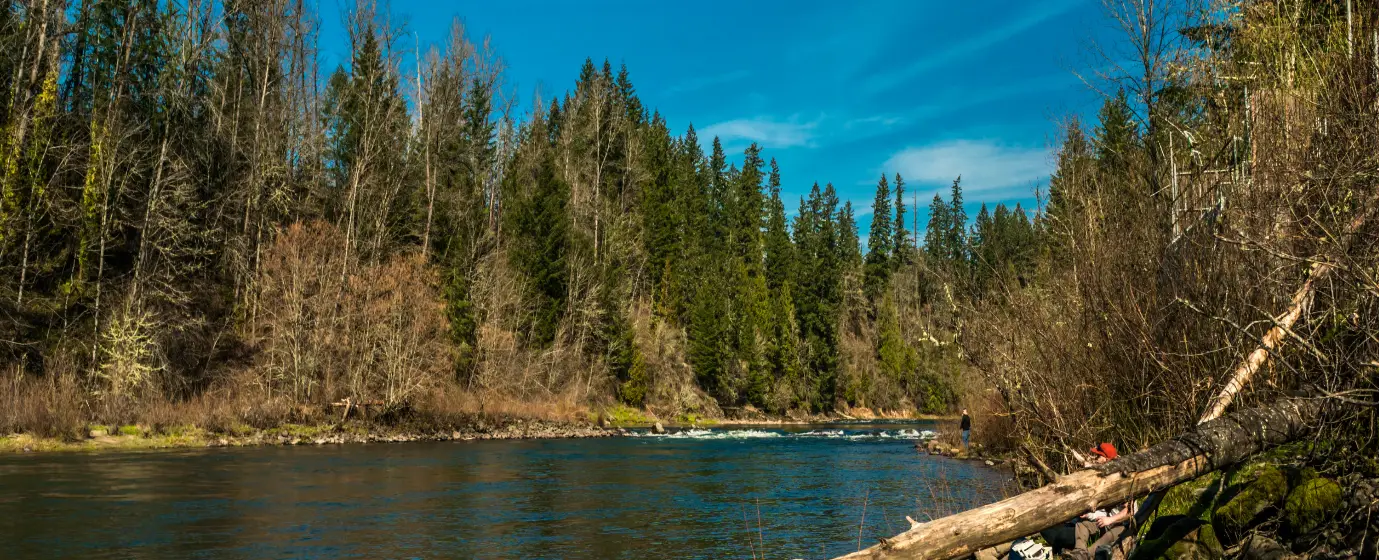
Mt Hood / Columbia Gorge · Oregon
Living in Estacada: The Ultimate Relocation Guide (2026)
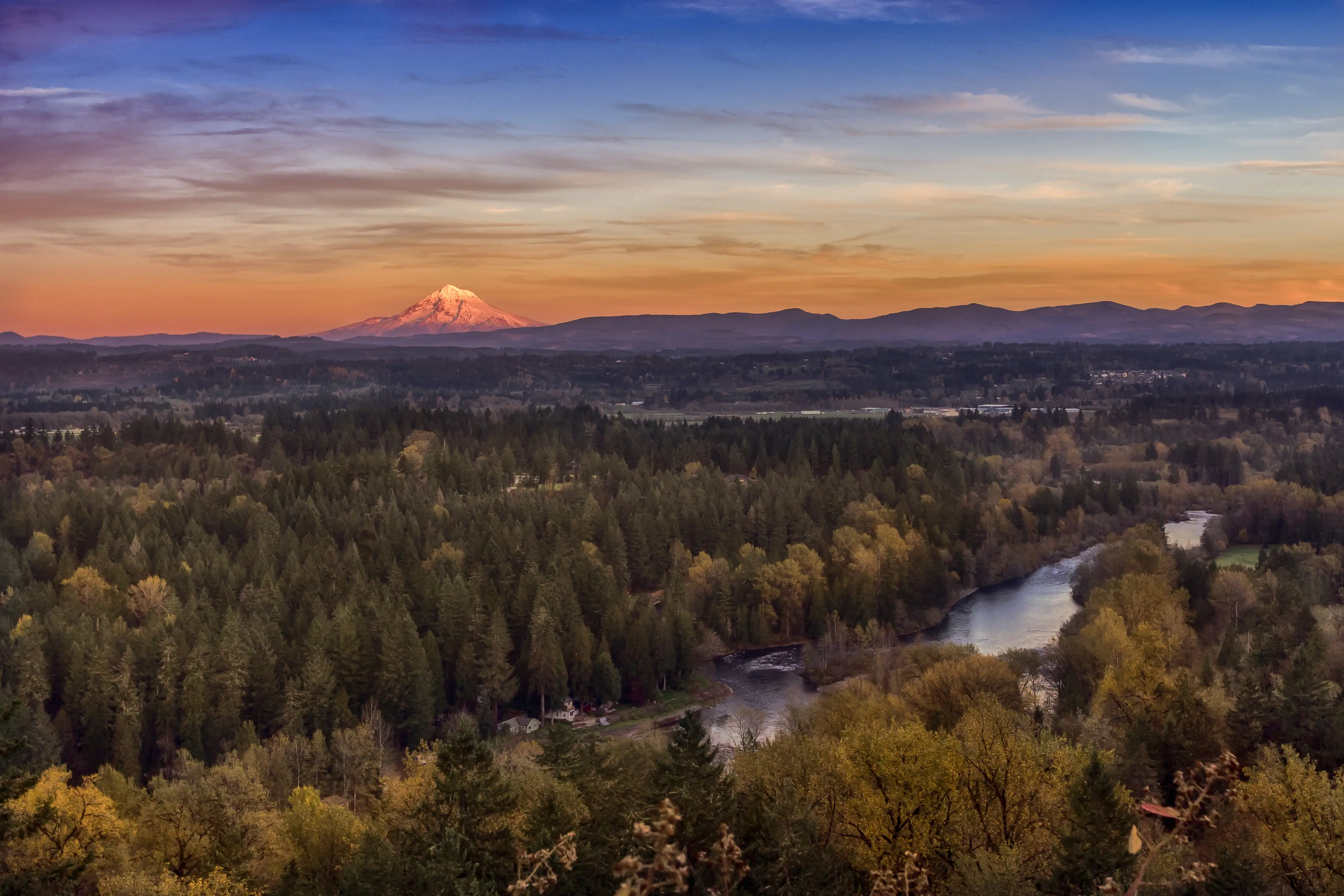
Maybe you've been priced out of Oregon City or Sandy and someone mentioned Estacada as the place where you can still get a house with a yard, maybe a view, and not feel like you're compromising on quality of life. Maybe your remote work setup finally gave you the freedom to stop fighting Portland traffic and actually live somewhere that looks like Oregon is supposed to look — rivers, forest, mountains in the distance. Or maybe you drove through on Highway 224 once, saw the murals on the buildings and the river glinting through the trees, and thought: what is this town, and why haven't I heard more about it? The central tension in Estacada is a straightforward one: you are trading urban convenience for something genuinely beautiful and increasingly affordable by Pacific Northwest standards, and whether that trade works for your life depends entirely on who you are.
Estacada sits about 30 miles southeast of Portland along the Clackamas River, tucked against the western edge of Mt. Hood National Forest in Clackamas County. Highway 224 is your lifeline — the only major road connecting this town of approximately 6,100 people to the broader metro — and that single corridor shapes everything from your grocery run to your job options to how you'll feel on a rainy Tuesday in February. The town itself covers just over a square mile of city limits, but the surrounding unincorporated areas of Eagle Creek and the broader Clackamas River valley extend the community's footprint considerably. New subdivisions are going up fast: Estacada has grown roughly 35% since the 2020 census, making it one of the faster-growing small cities in the state.
This guide will help you figure out whether Estacada fits your specific situation — your commute tolerance, your housing budget, your need for walkable amenities, your family's school requirements, and your honest threshold for small-town living. We'll cover the neighborhoods being built right now, the tradeoffs that don't show up in Zillow searches, the local traditions that make this place feel like a community rather than a bedroom community, and the honest reasons some people move away after a few years. Read all of it before you make an offer.

Not every buyer who falls in love with the Clackamas River scenery is actually suited for life in Estacada. This table cuts through the romanticizing.
| Best For | Why |
|---|---|
| Remote workers | No commute means the 46-minute drive to Portland is irrelevant. You get the space, nature access, and price point without the daily grind. |
| First-time buyers | The median home price around $546,345 is meaningful savings compared to Oregon City or Sandy — and new construction options exist at multiple price points. |
| Outdoor lifestyle households | Milo McIver State Park, the Clackamas River, and Mt. Hood National Forest access make this one of the best locations in the metro for active families. |
| Families with kids | Growing subdivision inventory means newer homes with larger lots; a close-knit school community with high visibility for student athletes and programs. |
| Retirees seeking quiet | Small-town pace, low traffic stress, river access, and a tight community calendar — without full rural isolation. |
| Commuters with flexible schedules | If you can shift your Portland drive to off-peak hours or go in two or three days a week, the commute becomes genuinely manageable. |
Highway 224 is the town's central fact of life. It connects Estacada to Boring, Damascus, and eventually Portland — and it also means there is no alternative route when there's a slide, a crash, or a major storm event. Pacific Northwest winters occasionally close or significantly slow 224, which is the kind of thing you learn to plan around rather than be surprised by. The drive to Portland averages around 46 minutes under normal conditions, but that number can double during peak hours or poor weather. People who thrive here have either eliminated the commute through remote work, shifted their schedules to avoid peak traffic, or simply made peace with the drive as part of the lifestyle they've chosen.
Inside city limits, the town feels like a genuine small-town main street that has been quietly getting more interesting over the past decade. SE Main Street has murals — more than 25 of them, a tradition started by the Artback Artists' Cooperative in 1992 — local wine and craft beer bars, a small gallery scene, and the kind of independently owned shops that feel authentic rather than curated. Wade Creek runs through the center of town, and Wade Creek Park gives the downtown area a green anchor. The food scene is small but specific: the Clackamas River Tap House pulls 32 taps on its back patio, and the Cazadero Steakhouse offers riverside dining with live music most weekends.
What surprises most people after six months of living here is how much of their life shifts toward Estacada rather than Portland. You start doing your weekend hiking from your own backyard instead of driving to a trailhead. You become a regular somewhere. You know the librarian at the Estacada Public Library, you know which night the Tap House is quieter, and you know to avoid Highway 224 between 4:30 and 6:00 on Fridays. The transition from "person living in a small town" to "person who is part of a small town" happens faster than most transplants expect — and for the right person, it's the whole point.
The grocery situation is the honest pain point most people underreport. Hi-School Pharmacy carries some basics, and Harvest Market serves the community, but for a full weekly shop, most residents are making a trip to Oregon City or Sandy. That's 20 to 30 minutes each way, which doesn't feel like a problem until it's a Tuesday evening and you've realized you're out of something you need. Smart Estacada residents batch their errands efficiently and keep a well-stocked pantry — it becomes second nature, but it's an adjustment if you're coming from a neighborhood where a grocery store is four minutes away.
The outdoor access here is not a marketing line. Milo McIver State Park sits practically in town, offering river access, trails, camping, disc golf, and some of the best flat-water kayaking in Clackamas County along the Clackamas River. The Clackamas Fish Hatchery on Fish Hatchery Road is a working facility open to visitors, and families with kids find it genuinely fascinating — watching salmon returns in season is a local ritual. The back roads east of town transition quickly into Mt. Hood National Forest territory, meaning mountain biking, hiking, and winter recreation are accessible without a two-hour drive. For buyers who have been measuring lifestyle by proximity to nature, Estacada's position is nearly impossible to beat at this price point.
The housing market remains accessible in a way that almost no comparable natural-access location in the Portland metro can claim. A median around $546,345 gets you substantially more square footage than the same budget in Oregon City, and considerably more than in Sandy or Canby. New construction in Dugan Estates ranges from approximately $505,000 to $685,000 depending on configuration and lot size — which means a buyer with a 20% down payment is looking at a realistic path into a modern home with today's finishes. That market position, combined with the 23% index appreciation Zillow has tracked recently, has attracted buyers who see both lifestyle value and investment logic in the purchase.
The school community — separate from the school district's academic rating — functions the way small-town school communities tend to: everyone knows what's happening, participation rates are high, and student athletes and artists get visible support. Estacada High School fields varsity programs across multiple sports, and the kind of personal attention that gets lost in large suburban district schools is more available here. For parents who value that environment, it matters in ways that don't show up in aggregate test score rankings.
The pace itself is an upside for a specific kind of person. Estacada is not a city that pretends to be Portland. There are no weekend festival crowds fighting for parking, no aggressive development pressure remaking the streetscape every 18 months, no sense that the neighborhood you chose is about to be unrecognizable. Residents who have moved from high-density urban areas consistently describe a decompression period followed by a genuine attachment to the slower rhythm. The town's population of just over 6,100 means that community involvement is immediate and visible — show up to a city council meeting or a local event twice and you are no longer a stranger.
Looking to buy in Estacada? Estimate your payment.
Enter your numbers to see an estimated monthly mortgage payment.
Estimate only. Excludes HOA fees and mortgage insurance.
The commute is the primary filter, and it needs to be examined honestly. Forty-six minutes to Portland under optimal conditions sounds manageable until you add the cost of a single-road dependency, occasional road closures, and the cumulative fatigue of driving that route five days a week. Buyers who are genuinely commuting daily to Portland — not hybrid, not two days a week, but full-time — will find the math gets harder to justify over time. The people who leave Estacada most commonly cite the commute as the breaking point, particularly once their commute schedule locked in more rigidly or they took a job that required earlier or later hours.
The service gap is real. Beyond the grocery situation, Estacada has limited medical specialization — Providence Milwaukie Hospital is a key healthcare employer in the region, but for specialist care, residents are typically heading to Oregon City or the broader Portland metro. The restaurant and entertainment options, while genuine and locally beloved, are narrow. If your lifestyle requires frequent access to diverse dining, live music venues beyond the weekend steakhouse, or late-night options, Estacada's downtown will start to feel limiting within the first year. This isn't a flaw in the town; it's a function of its size.
The school district's C+ rating reflects real constraints. Estacada School District serves a community with a poverty rate that research places at roughly 24% — a figure that shapes resource availability and academic outcomes in measurable ways. Families who have prioritized school district quality above other factors when choosing a suburb may find that other cities in the region better serve that specific priority. Families who value school community involvement, smaller class environments, and sports and arts participation may weigh that rating differently.
Property crime rates sit at approximately 45.2 incidents per 1,000 residents — a figure worth knowing, though much of it reflects the dynamics of a rural-adjacent community with some concentrated economic stress rather than pervasive neighborhood insecurity. The majority of buyers who research this number and speak with long-term residents come away feeling it's manageable context rather than a dealbreaker. That said, it's a number to examine rather than dismiss.
Currin Creek Heights represents Estacada's most active new construction frontier, occupying the northeast corner of the city on generous lots with territorial views and, in most cases, no HOA. Cedar Ridge Homes has been the primary builder across multiple phases — Phase 1 brought 43 lots, with subsequent phases adding dozens more — and the result is a neighborhood that feels spacious and private while remaining a short drive from downtown. New construction entry pricing runs from approximately $555,000, with the corresponding benefit of modern energy efficiency, current finishes, and the ability to customize early in the build process. The honest catch is that infrastructure and neighborhood maturity are still catching up to the lot sales — it's a neighborhood you're buying into, not one you're arriving to.
Best for: Remote workers and buyers who want a new construction home with room to breathe and don't need an established neighborhood feel.
Dugan Estates is Estacada's largest active development zone, with Phases 1 through 7 collectively delivering more than 240 single-family lots to a market that desperately needed inventory. Multiple builders are active here — Cedar Ridge, Lennar, and Northwest New Homes — which means more design variety than a single-builder neighborhood typically offers. Homes range from approximately $505,000 to $685,000 depending on size, lot, and builder, and the neighborhood connects to River Mill Elementary, Clackamas River Elementary, and the broader Estacada School District pipeline. The community is young in every sense — young trees, young residents, new concrete — and will take several years to develop the streetscape character that older neighborhoods have.
Best for: Families with children who want new construction at a range of price points and plan to build community alongside their neighbors.
Campanella Estates was one of the first large planned subdivisions to come online in the modern growth cycle, with 316 single-family lots approved in 2016 — giving it a relative maturity that the newer phases of Dugan and Currin Creek haven't yet achieved. The neighborhood includes Fred Campanell Memorial City Park, which gives residents immediate green space without a drive. Active listings near Campanella Way have run in the $430,000 range for smaller homes, making this one of the more accessible entry points in the city's established subdivision inventory. The tradeoff compared to newer phases is that you're getting an older build vintage, but buyers who want to avoid the dust and construction noise of an active build zone often prefer it.
Best for: First-time buyers looking for established subdivision living at a price point that leaves room in the budget.
The blocks around SE Main Street function as the cultural and social heart of Estacada in a way that exceeds what most towns this size can claim. The mural tradition — more than 25 works scattered through downtown, the result of 30-plus years of community arts investment — gives the area a visual identity that feels earned rather than installed. Homes closest to downtown tend toward older construction with smaller lots, but their walkability to the Clackamas River Tap House, Wade Creek Vintage Marketplace, and the Spiral Gallery is genuine. Pricing here is harder to generalize because the housing stock is more varied than in the subdivisions — expect a range reflecting age, condition, and lot size rather than a clean median.
Best for: Buyers who want to walk to town, value arts and community culture, and are comfortable with older home character.
Eagle Creek is technically an unincorporated community in Clackamas County rather than a neighborhood within Estacada's city limits — it has its own zip code (97022) — but it functions as a natural extension of Estacada's residential market for buyers seeking larger parcels and rural character. Acreage properties, hobby farms, and homes with significant privacy buffers are more common here than within city limits. The proximity to Estacada's downtown means residents can access the town center without committing to its density, which is a genuine draw for buyers who want rural land without full isolation.
Best for: Buyers who want land, agricultural zoning, or hobby farm potential within reasonable distance of a town center.
Park Place sits adjacent to Timber Park — one of Estacada's primary recreation anchors — giving residents immediate access to playground facilities and open space that families with young children find valuable. The neighborhood reflects a mix of housing vintages and lot configurations more typical of established Estacada residential stock rather than the large planned subdivision format of Dugan or Currin Creek. It's a quieter, more settled part of town with less construction activity in the immediate surroundings, which some buyers find appealing after months of touring active build zones.
Best for: Families with young children who want park-adjacent living in an established neighborhood.
River Mill is one of Estacada's older residential areas, taking its name from the historic industrial character of the Clackamas River corridor and the nearby Cazadero Dam. Homes here tend toward older construction with mature trees and a more rural-residential feel than the newer subdivisions, and the neighborhood has a settled quality that comes from decades rather than months of community life. River Mill Elementary School serves the area, giving families school access without complex district boundary navigation. Buyers who want character and history in their neighborhood rather than new construction efficiency tend to feel at home here.
Best for: Buyers seeking established neighborhood character, mature landscaping, and proximity to the Clackamas River corridor.
Cascadia Ridge offers some of the most elevated terrain within Estacada's residential footprint, with homes positioned to take advantage of the area's topographical variation for views that the flat-lot subdivisions can't match. The neighborhood tends toward a mix of established single-family homes, and its position within the broader Estacada growth zone means it benefits from improving infrastructure without being in the center of active construction. Buyers who prioritize the visual experience of living in the Pacific Northwest — tree lines, ridgeline views, seasonal changes — find that Cascadia Ridge delivers that in a way that more compact neighborhoods don't.
Best for: Buyers who want elevated terrain, views, and a quieter residential feel with proximity to Estacada's amenities.
| City | Best For | Home Price | Commute to Portland | Vibe |
|---|---|---|---|---|
| Estacada | Nature access, new construction value, small-town community | ~$546,345 | ~46 min | River town, growing fast, arts tradition |
| Sandy | Mt. Hood access, slightly larger town, more services | ~$580,000+ | ~45 min | Mountain gateway, blue-collar, outdoorsy |
| Oregon City | History, more retail, better services access | ~$520,000–$560,000 | ~30–35 min | Established suburb, mixed housing stock |
| Molalla | Rural feel, more land for the money, agricultural area | ~$430,000–$470,000 | ~55 min | Farming community, rodeo culture, very rural |
| Boring | Proximity to Portland, quirky small-town identity | ~$500,000–$540,000 | ~35–40 min | Suburban-rural hybrid, famous name, limited amenities |
| Damascus | Larger lots, rural character closer to metro | ~$550,000–$620,000 | ~35–40 min | Semi-rural, planning evolution, mixed development |
The most relevant comparison for most buyers is Estacada versus Sandy or Oregon City. Sandy offers comparable price points with slightly more services and faster Mt. Hood access but a similar single-road dependency. Oregon City brings meaningfully shorter commutes and better retail infrastructure at a comparable price, but it doesn't give you the river-and-forest lifestyle Estacada delivers.
| Metric | Detail |
|---|---|
| Population | ~6,117 (2026 estimate) |
| Median Home Price | $546,345 (Zillow ZHVI index, mid-2026) |
| Property Tax Rate | ~0.80% |
| Median Household Income | ~$94,435 |
| Commute to Portland | ~46 minutes via Highway 224 |
| School District | Estacada School District (rated C+) |
| Violent Crime per 1,000 | ~11.5 |
| Property Crime per 1,000 | ~45.2 |
| Cost of Living Index | ~100.2 (near U.S. average) |
| Key Recreation | Milo McIver State Park, Clackamas River, Mt. Hood National Forest access |
The mural walk is a real thing locals actually do. The Artback Artists' Cooperative launched Estacada's public art tradition in 1992, and the result — more than 25 murals spread through downtown — is now a self-guided walking tour that residents use to introduce newcomers to the town's character. It's not tourist infrastructure; it's how the community celebrates its own creative history. If you want to understand what Estacada values about itself, walk the murals before you walk a single open house.
The Clackamas River salmon returns are a seasonal ritual that the fish hatchery makes accessible. The Clackamas Fish Hatchery on Fish Hatchery Road is a working state facility, and during fall Chinook and coho returns, watching the fish come in is something families with kids do on a random Saturday afternoon the way other communities go to a farmers market. It's specific to this location, tied to the river's history, and it connects residents to the Pacific Northwest's ecological identity in a way that's hard to manufacture.
Estacada Lake is not what it sounds like. New residents sometimes expect a large recreational reservoir and are surprised to find a smaller impoundment near the Cazadero Dam that's more scenic than it is functional for swimming or boating. The Clackamas River itself is where the actual water recreation happens — fishing, kayaking, tubing in summer. Understanding the distinction early saves the disappointment of driving somewhere expecting something different.
What I would not do if moving to Estacada: I would not buy in the outermost phases of a new subdivision without first driving Highway 224 at 7:00 AM on a weekday. The commute from the northeastern edges of Currin Creek Heights into Portland during morning rush adds meaningful time to an already long drive, and buyers who tested the route on a Saturday afternoon have been genuinely surprised when their weekday reality set in. Drive it on a Tuesday morning before you sign anything.

Local Expert Takeaway: If you're choosing between Estacada and Sandy or Oregon City, the question is really whether you want the commute time or the lifestyle. Oregon City gives you 10 to 15 minutes back on your daily drive and more retail within arm's reach. Estacada gives you the Clackamas River, Milo McIver State Park, and a community that actually feels like one. For remote workers and hybrid commuters, the math lands clearly in Estacada's favor — especially in Dugan Estates or Currin Creek Heights, where new construction at the city-wide median means you're getting a modern home and serious nature access in the same package. Focus your search on those two areas before they fully absorb the growth.
✅ Estacada's nature access and new construction inventory make it one of the most compelling value plays in the Clackamas County market for remote workers and hybrid commuters in 2026.
⚠️ Highway 224 is your only route to Portland — full daily commuters should test the drive at peak hours before committing, because the reality differs from the map.
📍 Dugan Estates and Currin Creek Heights are where the most active new construction buying decisions are happening right now; both areas offer modern homes across a meaningful price range with room for continued appreciation as infrastructure matures.
Is Estacada a good place to raise a family?
Estacada works well for families who prioritize outdoor access, neighborhood community, and manageable housing costs over school district rankings or urban proximity. Milo McIver State Park, the Clackamas River, and a genuinely close-knit school sports and arts community give families with children strong lifestyle anchors. Parents who prioritize high academic performance metrics in the school district above other factors may find that other Clackamas County cities better match that specific priority.
What is the commute from Estacada to Portland like?
The drive via Highway 224 averages approximately 46 minutes under normal conditions, covering roughly 35 miles. The critical variable is that Highway 224 is the only direct route — there is no alternate path when accidents, weather, or road conditions affect the corridor. Remote workers and hybrid commuters who go into Portland two or three days a week typically find the commute quite manageable; five-days-a-week office workers consistently identify it as the most significant quality-of-life friction in Estacada living.
How does Estacada compare to Sandy for someone relocating to the Mt. Hood corridor?
Sandy offers a slightly larger town with more established retail and service infrastructure, and sits at a comparable commute distance from Portland. Estacada has the stronger river recreation identity — the Clackamas River and Milo McIver State Park are genuinely exceptional — and currently offers more active new construction inventory at comparable or lower per-square-foot costs. Buyers whose recreation priorities lean toward river access over ski-mountain proximity will generally favor Estacada; buyers who want the fastest possible access to Mt. Hood ski areas typically choose Sandy.
Explore the full Estacada series: The Ultimate Estacada Relocation Guide · Is Estacada Safe? · Cost of Living in Estacada · Best Neighborhoods in Estacada · Estacada Schools & Family Life · Estacada Youth Sports · Estacada Parks & Recreation · Retiring in Estacada · 1031 Tax-Deferred Exchange in Estacada · Estacada First-Time Homebuyers Guide · · Moving to Estacada from California
Tell us what you need help with and we'll connect you with local resources.

About the Author
Todd Davidson is the founder of Living in Oregon and Living in Washington, where he publishes in-depth city guides, neighborhood resources, and local market insights covering more than 180 communities across the Pacific Northwest. While his background is in home financing and real estate, he created these digital platforms to help families research and compare regions before making a move.