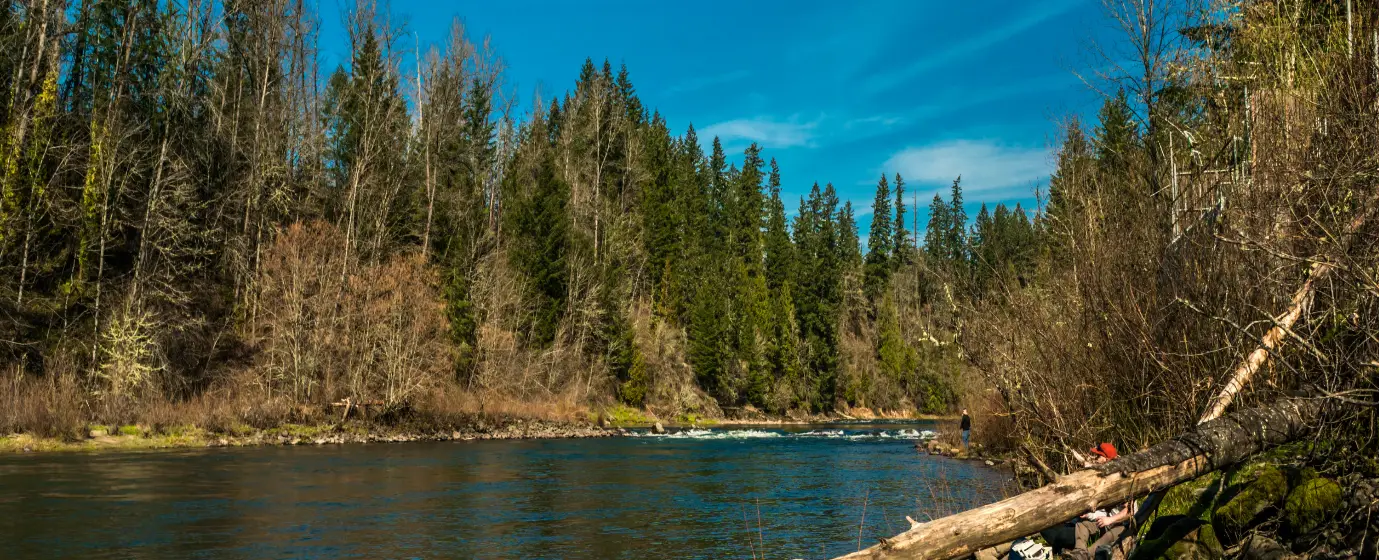
Mt Hood / Columbia Gorge · Oregon
1031 Exchange & Investment Real Estate in Estacada (2026)
Not every 1031 investor is a seasoned portfolio manager with a syndication team on speed dial. A significant number are California homeowners who spent 20 years in a house that appreciated far beyond what they ever expected, finally sold, and are now staring at a capital gains bill that could easily exceed $300,000 if they don't act. Estacada, Oregon — 30 miles southeast of Portland along the Clackamas River corridor — deserves a serious look as a replacement property market. The median sold price sits at approximately $500,000 to $525,000, the rental vacancy rate is near zero, and the region is drawing steady commuter demand from the I-205 employment corridor without the price compression visible in closer-in Portland suburbs.
The Estacada rental market runs on durable fundamentals. The tenant base skews toward families with kids, skilled trades workers, and an emerging cohort of remote workers who want square footage, a yard, and genuine outdoor access without paying West Portland prices. Single-family homes dominate the rental inventory, with larger-lot properties near new subdivisions commanding $1,800 to $2,200 per month for a standard three-bedroom. Newer or larger homes push closer to $2,895, while apartment-grade units run considerably lower. That spread matters for 1031 buyers because it determines which price tier generates the strongest net yield after management fees and reserves.
This guide walks through the mechanics of a 1031 exchange for investors unfamiliar with Oregon's market, explains the Estacada investment property landscape in 2026, and covers the tax environment, management reality, and due diligence checklist that out-of-state buyers on a 45-day clock consistently overlook.

The core of a 1031 exchange is tax deferral — not elimination. When you sell an investment property, the IRS allows you to roll your proceeds into a like-kind replacement property and defer capital gains tax indefinitely, as long as you follow the rules precisely. The first rule is the 45-day identification window: from the day your relinquished property closes, you have exactly 45 calendar days to formally identify potential replacement properties in writing to your qualified intermediary. Miss that deadline by even one day and the entire exchange fails — the proceeds become taxable immediately.
The 180-day closing rule runs concurrently. You must close on the replacement property within 180 days of your original sale closing, not 180 days from the identification deadline. The qualified intermediary — a third-party escrow holder who takes custody of your proceeds — is non-negotiable. You cannot touch the funds at any point during the exchange; the moment you receive them personally, the exchange is disqualified. The like-kind rule is broader than most people realize: any real property held for investment or business use qualifies, meaning you can exchange a bare land parcel for a rental duplex, or a commercial building for a single-family rental. The only trap worth highlighting is "boot" — if your replacement property costs less than your net sale proceeds, the difference becomes taxable income in the year of the exchange.
The dominant investment vehicle in Estacada is the single-family rental. Duplexes exist but are not abundant, and true small multifamily — four to eight units — is rare enough that when one trades, it draws interest from investors who have been waiting for months. Short-term rentals represent a genuinely underserved niche: the area surrounding Milo McIver State Park and the Clackamas River has strong vacation demand, but organized lodging supply is thin, which means a well-appointed STR near the river can perform at a gross yield well above what a long-term lease produces.
| Property Type | Typical Price Range | Est. Cap Rate | Avg Days to Close |
|---|---|---|---|
| Single-Family Rental (3BR/2BA) | $450,000 – $560,000 | 3.5% – 5.0% | 45 – 60 days |
| Single-Family Rental (4BR, larger lot) | $520,000 – $650,000 | 3.0% – 4.5% | 50 – 70 days |
| Small Multifamily (duplex) | $580,000 – $720,000 | 4.5% – 5.5% | 50 – 65 days |
| Short-Term Rental (riverfront/recreation) | $480,000 – $700,000 | 5.5% – 7.5% | 45 – 75 days |
| Vacant Land / Buildable Lot | $120,000 – $350,000 | N/A | 60 – 90 days |
Standard three-bedroom single-family rentals move fastest — typically leased within three weeks of listing and under contract for sale within 60 days when priced correctly. Vacant land and larger multifamily are the slowest categories, and for a 1031 buyer on a 45-day identification clock, moving on either requires a pre-identified pipeline, not reactive search.

Oregon's no-income-tax-at-the-state-level mythology is exactly that — Oregon does tax income. But the property tax story is real, and so is the raw purchasing power California equity unlocks in Clackamas County. A Bay Area seller walking away from a long-held property with $1.2 to $1.4 million in net proceeds is not looking at a modest upgrade in Estacada — they can potentially own two properties outright, or one well-positioned asset with substantial capital reserves.
A Bay Area homeowner who sold a modest Sunnyvale or Fremont property for $1.4 million can likely acquire a quality Estacada single-family rental and a duplex without leveraging either — meaning the portfolio generates income from day one with zero debt service. At $1,800 to $2,200 per month on the SFR and $2,800 to $3,400 combined on a duplex, that's a gross monthly income stream in the $4,600 to $5,600 range on a debt-free portfolio.
A Los Angeles or San Diego seller exiting a property in the $950,000 to $1.2 million range typically has $700,000 to $900,000 in net equity after transaction costs. That figure buys an Estacada investment property at or above the median price with room for a meaningful down payment on a second acquisition using DSCR financing, keeping the second transaction entirely off personal DTI.
Sacramento and Inland Empire sellers — often moving equity from properties in the $600,000 to $800,000 range — find Estacada pricing familiar but the rental yield stronger. What surprises Sacramento investors specifically is the near-zero vacancy rate in Estacada versus the softening they have observed in their own market, where urban rental supply has grown faster than demand since 2023.
Looking to buy in Estacada? Estimate your payment.
Enter your numbers to see an estimated monthly mortgage payment.
Estimate only. Excludes HOA fees and mortgage insurance.
Oregon's most investor-friendly tax feature isn't income-related — it's the complete absence of a state sales tax. For a landlord rehabbing a rental property, every dollar spent on materials, appliances, and furnishings is a dollar without a 7.25% to 10.75% California surcharge. On a $60,000 renovation budget, that delta is $4,300 to $6,450 that stays in the project.
| Tax Item | California | Oregon |
|---|---|---|
| State income tax on rental income | Up to 13.3% | Up to 9.9% |
| Property tax rate on new purchase | ~1.1% – 1.25% (newly assessed) | ~0.80% (Clackamas County) |
| State sales tax | 7.25% – 10.75% | 0% |
| Capital gains on investment property | Up to 13.3% state + fed | Up to 9.9% state + fed |
| Depreciation treatment | Standard federal rules | Conforms to federal rules |
Oregon's income tax rate on rental income reaches 9.9% at higher income levels, but leveraged properties with active depreciation schedules typically generate paper losses that substantially reduce or eliminate net taxable rental income in the early years of ownership. Worth noting briefly: in a 1031 exchange, the depreciation basis from your relinquished property carries over to the replacement — it does not reset to the new purchase price. For investors with a heavily depreciated California asset, this is a tax planning conversation worth having with a CPA before closing.
For investors who want the capital gains deferral of a 1031 without the management burden of direct property ownership, a Delaware Statutory Trust offers a passive ownership structure that qualifies as like-kind property under IRS guidelines. DSTs allow fractional ownership of institutional-grade assets, which can be a practical solution when the 45-day clock is running and suitable direct-purchase inventory is thin.
Oregon's landlord-tenant law is among the more protective in the country for tenants, and out-of-state owners who manage remotely without understanding the legal environment consistently create problems for themselves. Oregon prohibits no-cause evictions for fixed-term and month-to-month tenants in most circumstances, requires specific written notice periods for rent increases, and mandates relocation assistance in some termination scenarios. The details shift with legislative sessions, so staying current matters.
Typical property management fees in the Estacada area run 8% to 10% of gross collected rent, with leasing fees of one-half to one full month's rent for tenant placement. For a $2,000/month SFR, that's $160 to $200 per month ongoing plus a $1,000 to $2,000 leasing fee every time the unit turns. Property management companies serving the eastern Clackamas County corridor include Titus Property Management and various Portland-metro firms with regional reach — verifying which firms actively serve Estacada addresses specifically is a key due diligence step before closing.
What out-of-state owners consistently underestimate is the cost of deferred maintenance in Oregon's wet climate. Properties that look sound in August become problematic by December. A pre-purchase inspection that specifically checks roof condition, crawl space moisture, and gutter drainage is not optional in Estacada — it is the single most important line item in a 1031 due diligence budget.
| Item | What to Verify | Local Resource |
|---|---|---|
| Title search | Clear title, no liens, easement conflicts | Clackamas County title company |
| Sewer vs. septic status | Many rural-edge properties are on septic — confirm system age and last pump date | Clackamas County Environmental Health |
| Radon testing | Oregon has elevated radon zones; test before closing | Licensed inspector with radon certification |
| FEMA flood zone | Properties near the Clackamas River may carry flood zone designation | FEMA Flood Map Service Center |
| Rental permit requirements | Verify if City of Estacada requires rental registration or business license | City of Estacada Planning & Building |
| HOA restrictions on rentals | Some planned communities restrict STR or long-term rental density | Review CC&Rs from title documents |
| ADU zoning potential | Confirm county zoning allows ADU on subject lot size | Clackamas County Planning Division |
| School district boundary | Estacada SD boundary affects tenant pool; confirm enrollment options | Estacada School District |
| Current lease status | Verify tenant lease terms, rent amount, and any prepaid rent or deposits | Current landlord/property manager |
| Deferred maintenance inspection | Roof, HVAC, crawl space moisture, gutter condition | Local licensed general inspector |
| Property tax assessment | Confirm current assessed value and projected tax after sale | Clackamas County Assessor |
| Property management referral | Identify a local manager before close, not after | Regional PM firms serving eastern Clackamas County |
| Title company recommendation | Use a company familiar with 1031 coordination and QI handoff | Ask your QI for preferred local title contacts |
| Zoning confirmation | Verify property is zoned residential rental-permissible | City of Estacada or Clackamas County |
| Insurance quote | Estacada properties may require additional coverage for location near wildfire interface | Oregon-licensed landlord insurance broker |

Local Expert Takeaway: The single most common mistake California 1031 buyers make in Estacada is treating septic properties as equivalent to sewer-connected properties in their underwriting. A failed or aging septic system on an eastern Clackamas County rental can cost $15,000 to $30,000 to replace — an expense that isn't visible in a listing photo and won't surface without a specific inspection. Before your 45-day clock runs out, get a licensed inspector to camera the drain field on any property outside city sewer service, and build that cost scenario into your cap rate assumptions before you make the identification.
If you're approaching a 1031 close and need to move fast on a replacement property, the smartest thing you can do before your relinquished property hits the market is get pre-approved for investment financing — specifically a DSCR loan, which qualifies based on the property's projected rent income rather than your personal tax returns. This keeps the transaction off your personal debt-to-income ratio and dramatically expands what you can close on within the 180-day window. Todd can walk you through both the financing structure and the Estacada properties currently worth identifying.
✅ Estacada's near-zero rental vacancy and sub-$550,000 median price make it one of the most accessible 1031 replacement markets in the Portland metro orbit — especially for California investors rolling over mid-tier equity.
⚠️ Oregon's tenant protection laws are substantive and carry real financial consequences for landlords who manage remotely without a local property manager who knows current statutory requirements.
📍 The short-term rental opportunity near Milo McIver State Park and the Clackamas River is genuinely underserved — but verify zoning and Clackamas County STR regulations before identifying that property type on your 45-day list.
What is the cap rate on rental property in Estacada?
Single-family rentals in Estacada generate estimated net cap rates in the 3.5% to 5.0% range depending on purchase price, property condition, and whether the property is managed professionally. Riverfront or recreation-adjacent properties structured as short-term rentals can push gross yields to the 5.5% to 7.5% range, though STR income is less predictable than long-term lease income. Duplexes, when available, typically land in the 4.5% to 5.5% net cap range.
Are there 1031-eligible properties under $500K in Estacada?
Yes — the Estacada market includes properties in the $420,000 to $490,000 range, particularly older construction three-bedroom homes and properties on the rural edge of the city. These tend to require more deferred maintenance attention but offer the strongest entry-level gross yields. For a 1031 buyer replacing a California asset in the $700,000 to $900,000 range, combining two Estacada properties — one below $500,000 and one at market median — is a viable identification strategy that diversifies the replacement portfolio.
What is DSCR lending and can I use it for a 1031 replacement property?
A DSCR loan — Debt Service Coverage Ratio loan — qualifies the borrower based on the rental income the property generates rather than the investor's personal W-2 or tax return income. The lender looks at whether the property's projected rent covers the mortgage payment, typically at a ratio of 1.0 to 1.25. For 1031 investors who own multiple properties, are self-employed, or have complex personal income situations, DSCR lending is often the cleanest path to closing within the 180-day window without disrupting existing personal financing. It works as standard investment property financing and does not conflict with 1031 exchange requirements.
Explore the full Estacada series: The Ultimate Estacada Relocation Guide · Is Estacada Safe? · Cost of Living in Estacada · Best Neighborhoods in Estacada · Estacada Schools & Family Life · Estacada Youth Sports · Estacada Parks & Recreation · Retiring in Estacada · 1031 Tax-Deferred Exchange in Estacada · Estacada First-Time Homebuyers Guide · · Moving to Estacada from California
Tell us what you need help with and we'll connect you with local resources.

About the Author
Todd Davidson is the founder of Living in Oregon and Living in Washington, where he publishes in-depth city guides, neighborhood resources, and local market insights covering more than 180 communities across the Pacific Northwest. While his background is in home financing and real estate, he created these digital platforms to help families research and compare regions before making a move.