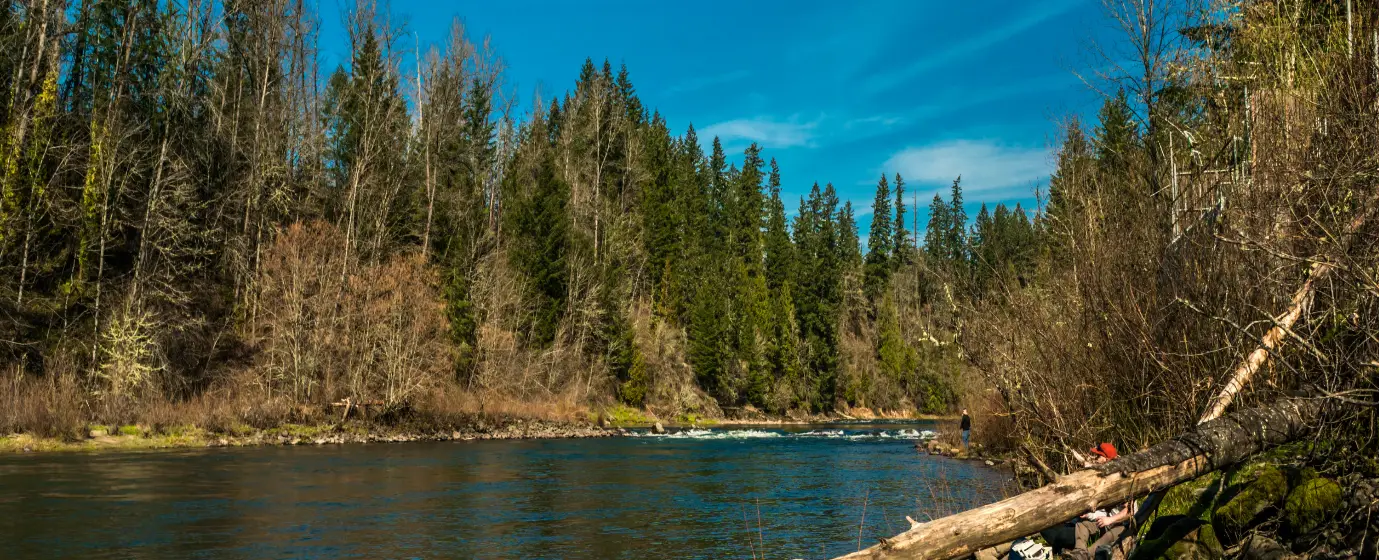
Mt Hood / Columbia Gorge · Oregon
Cost of Living in Estacada: Housing, Taxes, Utilities & Lifestyle (2026)
The first misconception most buyers bring to Estacada is that a small town 30 miles from Portland should cost considerably less than the metro. The reality is more nuanced. Estacada's median home value sits at $546,345 — not bargain territory, but meaningfully below what the same dollar buys in Oregon City, Lake Oswego, or even Sandy. The trade-off isn't price alone; it's what surrounds that price: Clackamas River access, a genuine small-town pace, and a development pipeline that's reshaping what this community will look like by 2030.
What shapes Estacada's cost picture most is its geography and its growth trajectory. The town is surrounded by forest, river, and Clackamas County ruralness — which limits supply and keeps prices from collapsing even as the broader market softens. Over 800 new single-family lots have been approved across eight subdivisions since 2021, which is a significant number for a city of just over 6,100 people. That pipeline is gradually shifting the buyer calculus from "whatever's available" toward something resembling real market choice.
This guide breaks down what housing actually costs at different budget levels, what property taxes and utilities add to monthly payments, how Estacada compares to its neighbors on total cost, and where your dollar goes furthest inside city limits. If you're trying to build an honest budget before making an offer, this is where to start.

Estacada's housing market has cooled noticeably from its pandemic-era peak. The most recent sold data shows a median transaction price in the $500,000–$525,000 range over the 90 days ending spring 2026 — a pullback of roughly 7–8% from the prior year. The Zillow Home Value Index benchmarks the typical home value at $546,345, which reflects the broader middle tier of the market rather than the current sold median. Buyers should plan around the $500,000–$546,000 range as an honest working figure.
That figure buys meaningfully different things depending on the neighborhood. In Campanella Estates, $430,000 gets you a 1,260-square-foot, three-bedroom home on a modest lot. Step up to Dugan Estates and the same budget approaches $505,000 for a 2,010-square-foot home with a more modern floorplan. New construction in Currin Creek Estates pushes closer to $700,000 for 2,200-plus square feet with a two-car garage and greenbelt views. The per-square-foot median runs approximately $270 — a number that reflects both the range of older stock and newer construction now entering the market.
The market is not competitive by metro standards. Homes are averaging around 78–92 days on market, receiving roughly one offer before selling, and buyers have room to negotiate in most transactions. The volume of active new development means inventory is improving, and that gives buyers leverage they simply don't have in closer-in suburbs.
| Budget Range | What You'll Typically Find |
|---|---|
| Under $430,000 | Smaller older homes, fixer-uppers, or rural land parcels |
| $430,000–$500,000 | Entry-level newer construction, smaller square footage (1,200–1,600 sq ft) |
| $500,000–$600,000 | Mid-range homes in Dugan Estates, Park Place, River Mill; 1,800–2,200 sq ft |
| $600,000–$750,000 | Larger new construction in Currin Creek, Cascadia Ridge; 2,200+ sq ft with upgrades |
| $750,000+ | Acreage properties, custom builds, rural estates on multiple acres |
Clackamas County applies a property tax rate of approximately 0.80% in Estacada. On a home purchased at $546,345, that translates to roughly $4,371 annually — or about $364 per month added to your housing cost. Oregon's Measure 50, passed in 1997, caps annual growth on assessed values at 3% regardless of what the market does, which means longtime homeowners often pay taxes on an assessed value well below their market value. Buyers purchasing today at current prices should plan on the full rate applying to their purchase price until their assessed value trails the market over time.
Estacada is overwhelmingly an ownership market. Approximately 86% of households own their homes, leaving a rental inventory that is thin by any measure. The city has limited multifamily stock, and most available rentals are single-family homes rented by individual landlords. A few multifamily lots are included in newer development approvals — Northbrook includes one three-acre multifamily parcel and Coyote Ridge includes two — but that supply hasn't materialized yet in any significant volume.
| Unit Type | Approximate Monthly Rent |
|---|---|
| Studio / 1-bedroom apartment | $1,200–$1,500 |
| 2-bedroom apartment or duplex | $1,500–$1,900 |
| 3-bedroom single-family home | $2,000–$2,600 |
| 4-bedroom single-family home | $2,400–$3,200 |
Renters often find that by the time they're paying $2,000–$2,200 a month for a three-bedroom home in Estacada, the math of buying becomes compelling — especially with property taxes as low as they are relative to the purchase price. The primary challenge for renters isn't price; it's availability. When a rental does hit the market here, it moves quickly and competes against a small pool but determined applicants.
Portland General Electric serves Estacada for electrical needs, and typical monthly bills run in the $120–$180 range for a mid-sized home depending on season — electric heating during colder months in Clackamas County river valleys adds up. Many newer construction homes in Currin Creek and Dugan Estates are set up for propane through Pacer Propane, which handles heating, cooking, and fireplaces in neighborhoods where natural gas doesn't extend. Water and garbage service runs through the City of Estacada. Internet is primarily handled by Reliance Connects, a regional provider — speeds are functional rather than exceptional, which is worth verifying if your household depends on high-speed remote work connectivity.
Car ownership is not optional in Estacada. Essentially zero percent of residents commute by public transit, and the city has no meaningful transit infrastructure connecting it to Portland or even Oregon City. The average commute runs approximately 31 minutes when measured locally, but the Portland-specific figure is closer to 46 minutes each way — meaning a typical downtown Portland commuter is looking at over an hour and a half daily in the car. The most common route follows Highway 224 through the river canyon; it's scenic but it's a single corridor with no bypass. Fuel and vehicle maintenance costs should be factored in if you're comparing total lifestyle cost against a closer-in suburb.
Grocery access is honest but not abundant. Estacada has a local IGA and Thriftway, supplemented by small specialty shops — but for Costco runs, Trader Joe's, or major appliances, most residents head to Oregon City or Clackamas, roughly 25–30 minutes west. Dining in town skews toward casual: local taverns, pizza, a handful of family restaurants. The Sportsman's Club has been a community anchor for years. Anyone accustomed to a wide restaurant rotation will supplement with Oregon City or Portland trips. Budget roughly $600–$850 per month for groceries for a household of two to four people, depending on how often supplemental shopping trips west happen.

Looking to buy in Estacada? Estimate your payment.
Enter your numbers to see an estimated monthly mortgage payment.
Estimate only. Excludes HOA fees and mortgage insurance.
| City | Median Home Price | Property Tax Rate | Commute to Portland | Walkability | Overall Cost Tier |
|---|---|---|---|---|---|
| Estacada | $546,345 | ~0.80% | 46 min | Low | Moderate |
| Oregon City | ~$485,000–$530,000 | ~1.15% | 30–35 min | Moderate | Moderate |
| Sandy | ~$480,000–$510,000 | ~1.10% | 35–40 min | Low-Moderate | Moderate |
| Molalla | ~$430,000–$460,000 | ~1.05% | 45–55 min | Low | Lower-Moderate |
| Damascus | ~$520,000–$570,000 | ~1.10% | 30–38 min | Low | Moderate-High |
| Boring | ~$490,000–$540,000 | ~1.05% | 35–42 min | Low | Moderate |
The most revealing column in that table isn't home price — it's property tax rate. Estacada's 0.80% rate is the lowest of this comparison group by a meaningful margin. On a $540,000 home, the difference between Estacada's rate and Oregon City's 1.15% rate is over $1,890 per year. That gap compounds over a decade of ownership and partially offsets the longer commute in pure financial terms. Molalla offers slightly lower home prices but doesn't close the commute gap and lacks Estacada's development investment and river-access lifestyle.
This table assumes a purchase at $546,345 with 10% down ($54,635), financing $491,710 at a 30-year fixed rate near current market rates.
| Expense Category | Monthly Estimate |
|---|---|
| Mortgage (principal + interest) | ~$3,100–$3,300 |
| Property taxes (0.80%) | ~$364 |
| Homeowners insurance | ~$130–$160 |
| HOA fees (if applicable) | $0–$80 (most Estacada neighborhoods have no HOA) |
| Electric (PGE) | $120–$180 |
| Propane (if applicable) | $80–$200 (seasonal) |
| Water/sewer/garbage (City of Estacada) | $70–$100 |
| Internet (Reliance Connects) | $60–$90 |
| Groceries (household of 3–4) | $700–$850 |
| Transportation (2 vehicles, fuel + maintenance) | $500–$700 |
| Dining out / entertainment | $300–$500 |
| Estimated Total | $5,424–$6,524/month |
At the median household income of $94,435 — roughly $7,870 per month before taxes — Oregon's income tax (more on that below) puts take-home closer to $5,900–$6,200 for a single-income household. The numbers work, but they're tight at the lower end of that budget range. Dual-income households earning closer to the $137,697 median for the 25–44 age bracket will find considerably more breathing room.
Oregon has no sales tax — none at the state level, none at the local level. Every grocery run, hardware store purchase, and vehicle transaction happens without an added percentage tacked on at the register. For households coming from California or Washington, this is a genuine monthly savings that often surprises people when they finally tally it up. A family spending $2,500 per month on taxable goods and services saves roughly $2,250–$3,000 annually compared to a comparable California cost-of-living situation.
The other side of that equation is Oregon's income tax, which runs 8.75% for income between $50,000 and $125,000, and 9.9% above that. That rate is one of the higher marginal rates in the country, and it applies to wages, retirement income, and capital gains. There is no deduction for Social Security income at the state level for most earners. Households considering Estacada after retiring with pension income or significant investment distributions should model the Oregon income tax impact carefully — it doesn't eliminate the advantage, but it changes the math compared to states like Nevada or Washington.
Oregon does offer a senior property tax deferral program for homeowners 62 and older who meet income qualifications. Under this program, the state pays your property taxes and places a lien on the property, recovered when the home is sold or transferred. For retirees with fixed incomes and significant equity, this program meaningfully reduces monthly housing costs without requiring a move.
Oregon also has no inheritance tax at amounts most Estacada buyers are working with, and the absence of an estate tax threshold at the state level benefits family wealth transfers in ways that are easy to overlook during the buying process.

Local Expert Takeaway: The number Estacada buyers most consistently underestimate isn't the mortgage — it's the transportation budget. With zero transit options and a 46-minute Portland commute, two-car households should plan for $500–$700 per month in vehicle costs before accounting for depreciation. If your household can structure remote work two or three days per week, that single change makes Estacada's total cost of living dramatically more competitive. The neighborhoods closest to Highway 224 — River Mill and Downtown — shave a few minutes off the commute and put you closer to everything that corridor connects.
Is Estacada affordable compared to the Portland metro?
Estacada sits below the Portland metro median and is meaningfully cheaper than close-in suburbs like Lake Oswego or Tualatin, but it isn't a budget market. The $546,345 typical home value reflects genuine demand driven by lifestyle, river access, and limited supply. Where buyers gain most is in property taxes and the lack of Oregon sales tax, which together can add up to real annual savings compared to equivalent towns.
What are the biggest ongoing costs besides the mortgage?
Transportation dominates the monthly budget in ways that surprise most newcomers. With no public transit and nearly all residents driving, two-car households in Estacada typically spend $500–$700 monthly on fuel, insurance, and maintenance. Propane heating in some newer neighborhoods adds a seasonal cost that doesn't show up on electric-only budgets. Grocery access is workable but requires supplemental trips west, which adds to the transportation figure.
How does the Oregon income tax affect buyers moving from Washington or California?
Oregon's income tax is substantial — 8.75% to 9.9% depending on income bracket — and applies to all earned and retirement income. Buyers relocating from Washington will feel this shift most acutely, as Washington has no state income tax. The no-sales-tax advantage partially offsets it for high-spending households, but the net tax picture for most working households is higher in Oregon than in Washington. The calculus is more favorable when compared against California, where combined state income tax plus high home prices often make Oregon a meaningful improvement.
Explore the full Estacada series: The Ultimate Estacada Relocation Guide · Is Estacada Safe? · Cost of Living in Estacada · Best Neighborhoods in Estacada · Estacada Schools & Family Life · Estacada Youth Sports · Estacada Parks & Recreation · Retiring in Estacada · 1031 Tax-Deferred Exchange in Estacada · Estacada First-Time Homebuyers Guide · · Moving to Estacada from California
Tell us what you need help with and we'll connect you with local resources.

About the Author
Todd Davidson is the founder of Living in Oregon and Living in Washington, where he publishes in-depth city guides, neighborhood resources, and local market insights covering more than 180 communities across the Pacific Northwest. While his background is in home financing and real estate, he created these digital platforms to help families research and compare regions before making a move.