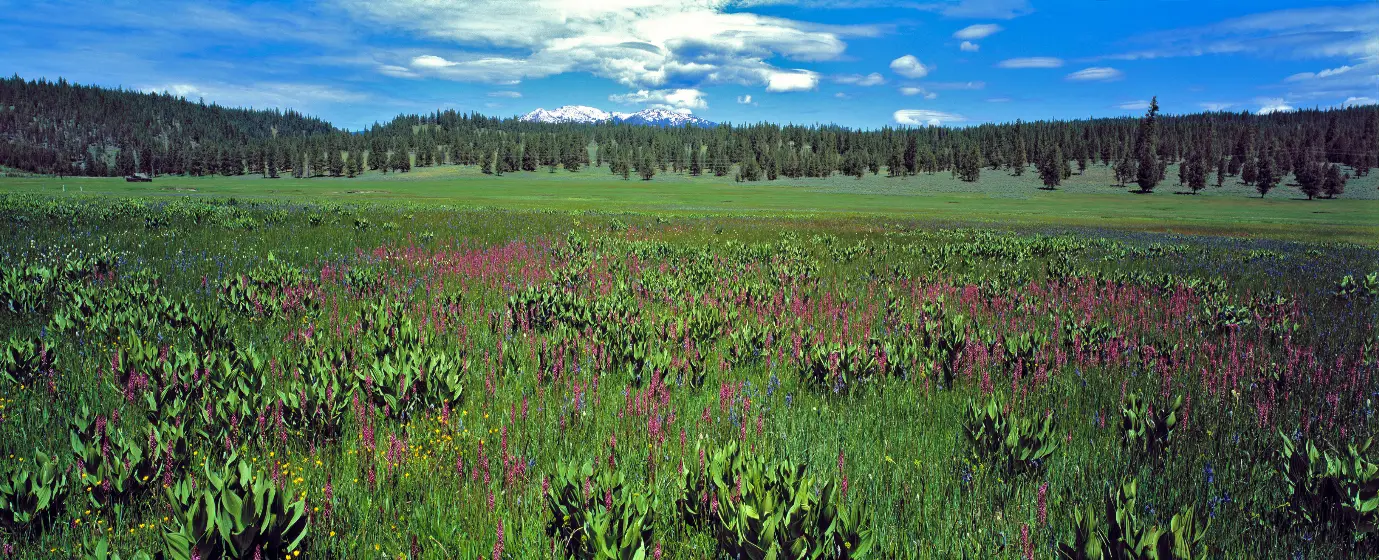
Eastern Oregon · Oregon
Living in Burns: The Ultimate Relocation Guide (2026)
Maybe you've been searching for a place where your paycheck actually stretches. Maybe someone mentioned eastern Oregon and you pulled up a map and thought, "where is that, exactly?" Maybe you're a federal land manager, a traveling nurse, or a remote worker who's done with Portland traffic and $500,000 starter homes. Or maybe you just want to live somewhere the sky is genuinely enormous and the nearest neighbor isn't twenty feet away. Burns, Oregon is the county seat of Harney County — the largest county by area in Oregon and the tenth largest in the United States — and it sits in the middle of all that space with a median home price of $174,332 and a population of roughly 2,700 people. The central tension here isn't subtle: Burns offers a quality of life tied directly to the outdoors, the landscape, and an unhurried pace that's genuinely hard to find elsewhere in Oregon, but it demands real trade-offs from anyone accustomed to urban services, career diversity, or a short drive to anything.
The high desert sets the terms of daily life in Burns. You're 130 miles southeast of Bend, which means you're not a suburb of anything. This is a standalone community surrounded by sagebrush, ranching land, Malheur National Wildlife Refuge, and the dramatic rise of Steens Mountain. The town itself covers just 3.56 square miles. Your grocery run, your school pickup, your coffee shop — all of it happens within a tight radius, which is either freeing or limiting depending on your temperament.
This guide will help you figure out whether Burns is genuinely the right move or just an appealing idea. You'll get an honest look at the neighborhoods, the employers, the schools, the outdoor access, the commute realities, and the things that surprise people after six months of living here.
Not every Oregon city works for every buyer. Burns has a clear profile — it rewards people who want land, quiet, and low cost of entry, and it frustrates people who need urban conveniences, career mobility, or a short commute to a major employer.
| Best For | Why |
|---|---|
| Federal & public employees | BLM, USFS, and Harney County are the dominant employers — many residents moved here specifically for these positions |
| Retirees on fixed incomes | $174,332 median home price, low cost of living index of 83.7, and a genuinely slow pace make it one of Oregon's most affordable retirement towns |
| Outdoor lifestyle seekers | Malheur National Wildlife Refuge, Steens Mountain, Crystal Crane Hot Springs, and Diamond Craters are all within an hour's drive |
| First-time buyers priced out elsewhere | Entry-level homes in Burns start well below the state average — this is one of the few Oregon markets where buying on a single income is realistic |
| Remote workers with established income | If your paycheck originates outside Harney County, the cost of living here becomes a significant financial advantage |
| Birdwatchers and naturalists | The Pacific Flyway runs directly through this region — Malheur hosts over 320 bird species, making Burns a legitimate destination for serious birders |
Burns operates on a scale that takes some adjusting if you're coming from anywhere with a population above 20,000. Broadway Avenue is the functional spine of the community — the post office, the county offices, the small businesses, and the Desert Historic Theatre are all within a few blocks of each other. The town has a working-western feel rather than a curated-small-town-for-visitors feel, which means it's authentic but not polished.
The commute reality is stark and worth sitting with. Bend is 130 minutes away under normal conditions — and on US-20 through the high desert, "normal conditions" disappears the moment there's ice, snow, or livestock on the road. Ontario, Oregon is roughly 130 miles to the east. If you work in Burns, the commute is a non-issue. If you need to travel to a larger city for medical specialists, shopping, or business, you're building half a day into every trip each way.
Daily logistics operate differently here than anywhere in the Willamette Valley. Spark Mercantile handles local retail needs, and there's a functioning grocery presence, but specialty items, medical specialists, and big-box retail require advance planning. Many residents do a monthly Bend run rather than weekly errands. The local food and supply chain is lean, and residents adapt by stocking up, ordering online, and learning to live without the convenience economy that metro Oregonians take for granted.
What surprises most people after six months of living here is how quickly the space stops feeling like isolation and starts feeling like freedom. The median age in Burns is approximately 52.8 years, which tells you something about the lifestyle pacing — this is a community where people have largely made peace with the trade-offs. Neighbors know each other by name. The Harney County Fair and Rodeo isn't just an event, it's a genuine social anchor. When someone's truck breaks down on US-20, the next car usually stops.
The land access is almost incomprehensible by Oregon standards. Malheur National Wildlife Refuge covers over 187,000 acres south of town, and you don't need a permit, a reservation, or a parking lottery to visit it. Steens Mountain rises to nearly 10,000 feet and has its own 59-mile loop road. Diamond Craters Outstanding Natural Area offers volcanic geology on a scale you won't see anywhere else in the state. Crystal Crane Hot Springs, 25 miles east on OR-78, gives you a natural soak in a pond fed by geothermal water. People who move here for the outdoor access often say they underestimated it — the reality exceeds the brochure.
The cost of living is genuinely transformative for households coming from higher-cost Oregon cities. A cost of living index of 83.7 means you're spending less on essentially every category — housing, services, utilities, and local goods — than the national average. On a fixed income or a remote work salary calibrated to Portland, the financial difference can be measured in thousands of dollars per year. Families with children often find that the single income that couldn't support homeownership in Bend or Medford creates a stable financial life in Burns.
The community size creates a social fabric that larger cities struggle to manufacture. You will know the people at your kids' school. You will recognize faces at the Harney County Library on Egan Avenue. The Desert Historic Theatre, which has been showing films in the same building for decades, is the kind of place where you know the person selling popcorn. For people who moved from cities where anonymity was the default, this kind of embedded community can feel like the missing piece.
Federal employment provides unusual job stability for a rural town. The Bureau of Land Management's Burns District Office and the U.S. Forest Service both maintain significant presences here, and Harney District Hospital anchors healthcare employment across the county. Unlike rural towns that depend on a single private employer, Burns has a diversified public employment base that doesn't disappear when a company downsizes or relocates.
Looking to buy in Burns? Estimate your payment.
Enter your numbers to see an estimated monthly mortgage payment.
Estimate only. Excludes HOA fees and mortgage insurance.
The school district is the biggest concern for families with children. Harney County School District 3 serves approximately 700 students across four schools, and academic performance metrics sit meaningfully below Oregon state averages — math proficiency is roughly 22% compared to the state's 31%, and reading proficiency runs around 34% against the state's 44%. The graduation rate has fluctuated significantly in recent years. Burns High School competes in OSAA's 2A classification, which means smaller rosters and limited athletic depth, though the school does field AP coursework with about 23% student participation. Families who prioritize academic outcomes at the district level should go in with clear eyes.
The economic reality of Harney County creates income ceiling pressures. The median household income is $41,858, and the local economy doesn't offer much ladder-climbing for professionals in competitive fields. Healthcare, education, government, and agriculture dominate the job market. If you're a nurse, a teacher, a rancher, or a federal employee, Burns likely has a path for you. If you're a tech worker, a marketing professional, or someone in a specialized private-sector field, remote work or career pivoting is the only realistic option.
The isolation hits hardest during medical emergencies. Harney District Hospital handles general medical and surgical needs, but any complex cardiac event, serious trauma, or advanced specialty care requires transport to Bend — a trip that can take well over two hours under normal conditions and much longer in winter. Residents with chronic health conditions or family members who may need emergency specialist care should factor this into the decision carefully.
Why some people leave Burns is usually one of three things: their kids age out of the local school system and they follow them elsewhere, their federal or government position transfers them, or the isolation compounds over time into something they didn't budget for emotionally. The broadband penetration rate is approximately 70.5% of households, which is workable but not the 95%+ figure remote workers expect in metro areas. Anyone considering remote work here should verify connectivity at the specific property before committing.
Burns is small enough that "neighborhoods" is a relative term — you're really talking about sections of a 3.56-square-mile town with distinct characters rather than the defined subdivisions you'd find in a larger city.
The blocks around Broadway Avenue and the adjacent streets hold the commercial heart of Burns — county offices, the Harney County Historical Museum, the Desert Historic Theatre, and the Harney County Library. Residential properties here tend to be older homes on modest lots, often single-story with mature trees. Prices in this corridor typically run at or below the city-wide median. The walk-anywhere convenience for a town this size is real, but the properties can require more updating than newer stock elsewhere.
Best for: Single buyers, retirees, and anyone who wants to be within walking distance of Burns's social and civic life.
The streets north of downtown toward the high school end of town have a mix of mid-century single-family homes and some newer construction. Families with school-age children tend to cluster here given the proximity to Burns High School on Oregon Avenue. The neighborhood has a quiet residential feel — lawns, pickup trucks, dogs — and pricing that generally aligns with the citywide median or slightly below.
Best for: Families with school-age children who want easy school access and a traditional neighborhood feel.
Properties along or near US-20 on the eastern approach to town include a mix of commercial, light industrial, and residential uses. This is where you'll find easier highway access, which matters when Bend runs are part of your regular routine. The downside is more highway noise and a less cohesive neighborhood character. Prices here can run slightly below average, making it attractive for first-time buyers focused purely on entry cost.
Best for: First-time buyers prioritizing low entry price and highway convenience over neighborhood aesthetics.
The southern edge of Burns blurs into the neighboring city of Hines, which shares the same regional identity and many of the same services. Properties in this zone are often larger lots with more land relative to price, and the feel shifts toward semi-rural. Residents here often have chickens, dogs, and outbuildings in a way that the denser downtown blocks don't accommodate. Pricing can vary based on lot size and condition.
Best for: Buyers who want a semi-rural feel with more land, without the full rural isolation of a property outside city limits.
For buyers willing to extend their search beyond the city boundary, Harney County offers rural parcels with acreage at prices that become exceptional relative to any comparison in western Oregon. Mobile homes on land, older farmhouses, and raw acreage all appear in the market here. The catch is that rural properties mean well water, septic systems, and greater distance from the already-limited services in town.
Best for: Buyers specifically seeking land, agricultural use, or maximum privacy with an understanding of the infrastructure responsibilities.
| City | Best For | Median Home Price | Commute to Bend | Vibe |
|---|---|---|---|---|
| Burns | Federal workers, retirees, outdoor lifestyle, maximum affordability | $174,332 | 130 min | Remote, high-desert, ranching community |
| Bend | Tech workers, amenity seekers, outdoor rec with urban services | ~$625,000 | — | Fast-growing mountain city |
| Hines | Burns overflow, slightly larger lots | Similar to Burns | 130 min | Quiet, residential, shares Burns identity |
| Ontario | Proximity to Idaho/Boise metro, agriculture | ~$200,000–$230,000 | 130 min (east) | Ag-focused, border community |
| Crane | True rural living, ranch country | Well below Burns | 140+ min | Ranching hamlet, minimal services |
| Riley | Extreme rural, very limited services | Minimal market | 100 min | Crossroads community, not a standalone town |
| Metric | Detail |
|---|---|
| Population | ~2,723 (ACS estimate) |
| Median Home Price | $174,332 |
| Median Household Income | $41,858 |
| Property Tax Rate | ~0.93% |
| Cost of Living Index | 83.7 (U.S. average = 100) |
| Commute to Bend | 130 minutes |
| School District | Harney County School District 3 |
| Violent Crime per 1,000 | 4 |
| Property Crime per 1,000 | 16 |
| Major Employers | Harney District Hospital, BLM, USFS, Harney County, School District, ranching |
| Median Age | ~52.8 years |
| County | Harney County (largest by area in Oregon) |
The Harney County Fair and Rodeo is the social event of the year — not in a tourism-brochure way, but in a genuine, half-the-town-shows-up way. Held annually in late summer, it's a working rodeo with deep ranching roots, and it draws people back to Burns the way high school reunions draw people to other places. If you move here in spring, plan your August around it.
The birding calendar shapes the town's rhythm in ways outsiders don't expect. Malheur National Wildlife Refuge brings serious birdwatchers to the region every spring migration season, and it's one of the few times Burns sees genuine visitor traffic. The Harney County Migratory Bird Festival is an annual event that draws naturalists from across the Pacific Northwest to the region around Malheur and The Narrows Interpretive Site. New residents are often surprised to discover that Burns has an international reputation in the birding world.
The Pete French Round Barn — a remarkable 19th-century lava-rock structure built by cattle baron Peter French on a historic land claim — sits about an hour south of town and has become one of eastern Oregon's most photographed landmarks. New residents often don't discover it for months, then kick themselves for waiting. It's the kind of historical artifact that makes you feel like you're living somewhere with genuine roots.
What I Would Not Do: I would not buy a property on the far eastern edge of Burns near the US-20 highway corridor without physically visiting on a weekday morning and a summer afternoon. The highway noise is more intrusive than it reads on a map, and the mix of commercial and residential use makes that section of town feel less settled than the rest. First-time buyers especially should focus their search on the residential blocks north and south of downtown before defaulting to highway-adjacent listings with slightly lower prices.

Local Expert Takeaway: Burns rewards buyers who do two things before making an offer: verify their internet connectivity at the specific address and confirm their employment or income source is genuinely portable or local. The $174,332 median price is real, not a data anomaly — but the buyers who regret Burns are almost always the ones who moved for the price without solving the income question first. If you're a federal employee transferring to the BLM or Forest Service, a healthcare worker at Harney District Hospital, or a remote worker with confirmed high-speed access, this market offers something almost impossible to find in Oregon right now: a genuine single-family home with land at a price that doesn't require a second income just to qualify.
✅ Burns delivers real affordability with real outdoor access — the $174,332 median home price and a cost of living index below 84 make it one of Oregon's most financially accessible places to own a home, and Malheur, Steens Mountain, and Crystal Crane Hot Springs are genuinely in your backyard.
⚠️ The school district and isolation are the honest concerns — academic performance metrics run below Oregon state averages, and the 130-minute distance to Bend means medical emergencies and specialty services require advance planning that metro residents don't have to think about.
📍 Federal employment is the economic anchor — the BLM, USFS, Harney County government, and Harney District Hospital provide the most stable employment in the region; remote work is the other realistic path, provided connectivity is verified at the property level.
Is Burns a good place for families?
Burns can work well for families who are coming specifically for federal employment, value outdoor access heavily, and are prepared to supplement the public school system where needed. The school district serves a small student population with a reasonable student-teacher ratio of approximately 14 to 1, and Burns High School does offer AP coursework. Families with children who are competitive athletes or who prioritize academic performance metrics should research thoroughly before committing.
What is the crime rate in Burns?
Burns reports a violent crime rate of approximately 4 per 1,000 residents and a property crime rate of approximately 16 per 1,000 — figures that are broadly comparable to many rural Oregon communities of similar size. The small population means individual incidents can move the rate noticeably, so residents tend to rely on community familiarity and the small-town visibility that comes with a 2,700-person city as much as on formal policing.
How does Burns compare to nearby Ontario, Oregon?
Ontario sits roughly 130 miles east of Burns near the Idaho border and serves a different economic base tied more closely to agriculture and proximity to Boise. Home prices in Ontario have historically run somewhat higher than Burns, and Ontario has more retail infrastructure and a larger population. Burns offers more dramatic outdoor access and the federal employment anchor; Ontario offers more commercial services and an easier path to a larger metro area. The choice often comes down to which direction your employment pulls.
Explore the full Burns series: The Ultimate Burns Relocation Guide · Is Burns Safe? · Cost of Living in Burns · Best Neighborhoods in Burns · Burns Schools & Family Life · Burns Youth Sports · Burns Parks & Recreation · Retiring in Burns · 1031 Tax-Deferred Exchange in Burns · Burns First-Time Homebuyers Guide · · Moving to Burns from California
Tell us what you need help with and we'll connect you with local resources.

About the Author
Todd Davidson is the founder of Living in Oregon and Living in Washington, where he publishes in-depth city guides, neighborhood resources, and local market insights covering more than 180 communities across the Pacific Northwest. While his background is in home financing and real estate, he created these digital platforms to help families research and compare regions before making a move.