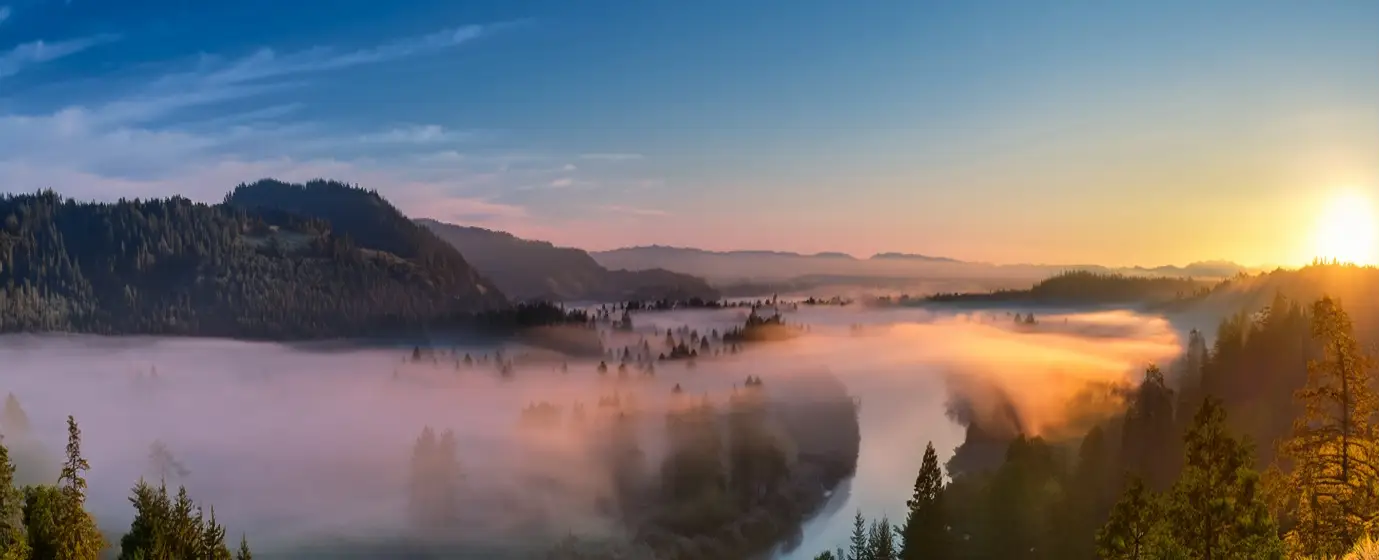
Mt Hood / Columbia Gorge · Oregon
Parks & Recreation in Boring, Oregon: Trails, Facilities & Outdoor Life (2026)
Most people assume a town of fewer than 2,000 people has little to offer outdoors beyond a couple of neighborhood playgrounds. Boring, Oregon makes that assumption look foolish — it sits at the eastern terminus of one of the Pacific Northwest's most celebrated multi-use trails, a 21-mile paved corridor that connects this rural community directly to downtown Portland.
What shapes outdoor life in Boring is geography more than municipal budget. The town itself maintains modest park infrastructure, but it's surrounded by Clackamas County holdings, Mt. Hood National Forest access, and the Sandy River corridor. Residents are trading urban amenity density for genuine open space, and most of them will tell you that's the whole point.
This guide covers every significant park within or adjacent to Boring, the Springwater Corridor in practical detail, what regional recreation facilities serve this community, and the outdoor destinations within a short drive that most newcomers discover in their first six months.
| Park / Facility | Highlights | Best For |
|---|---|---|
| Boring Station Trailhead Park | Springwater Corridor terminus, parking, restrooms, open stage | Cyclists, trail runners, community events |
| Tickle Creek Trail | 1.8-mile wooded trail, 5 wooden bridges, creek views | Families, dog walkers, casual hikers |
| Barton Park (Clackamas County) | Clackamas River access, camping, day-use, event space | Summer recreation, riverside camping |
| Eagle Fern Park | Old-growth forest, Eagle Creek, picnic areas, day hikes | Nature lovers, group picnics |
| Hogan Butte Nature Park | Walking trails, picnic areas, natural open space | Neighborhood walkers, quiet outdoor time |
| Sandy River Access (North Sandy) | 30 acres, 1,600 ft. of river frontage, fishing, kayaking | Anglers, paddlers, river access |
| North Clackamas Park (Milwaukie) | 45 acres, ballfields, dog park, horseshoe pits, playground | Youth sports, dog owners, family outings |
Boring's park system is lean by municipal standards — the town itself maintains limited dedicated green space, and the most significant assets are either county-managed or trail-adjacent. What's missing is a fully developed community park with sports courts, covered picnic shelters, and programmed recreation within Boring's boundaries. What's present, however, is genuine: trail access that most Portland neighborhoods would envy, and riverside land that doesn't require a weekend road trip.
Location: 28000 SE Dee St., Boring, OR
This seven-acre park is Boring's most significant outdoor asset — it's where the Springwater Corridor ends, which means it's also where cyclists, trail runners, and birders from across the metro area begin. The park features restrooms, ample parking, an open-air stage with electrical access, and water and sewer service — a community investment made possible by local organizations who helped restore the site on land Clackamas County purchased from Union Pacific Railroad in 1999. A monument on-site honors the property's history as a streetcar-era shipping hub, giving the trailhead a character most urban parks lack.
Best for: Cyclists completing the Springwater Corridor, trail runners, community event attendance, family weekend starts
Location: Barlow Ridge / Dubarko Road access point, west of Hwy 211, Sandy, OR
Administered by the City of Sandy but consistently listed in Boring-area recreation, Tickle Creek Trail covers 1.8 miles of wooded terrain following the creek from the Barlow Ridge neighborhood downstream through five wooden bridges. The bridges themselves have become a minor local landmark — kids treat crossing all five as a hike goal, and the creek provides ambient sound that makes this one of the quieter options in the corridor. It's not a long trail, but it's genuinely beautiful in a way that doesn't require driving to the mountain.
Best for: Families with young kids, dog walkers, anyone wanting a quiet wooded walk without elevation gain
Location: Clackamas River, Barton, OR (Clackamas County)
Barton Park sits on the Clackamas River and functions as the region's go-to destination for summer river recreation, combining camping, day-use areas, event facilities, and broad river access in a single county property. It draws far beyond Boring's immediate population, which means weekends in July and August get legitimately crowded — arrive early or choose weekdays if you're coming for riverside time rather than a scheduled event. For Boring residents, it's close enough for a spontaneous afternoon trip without requiring significant planning.
Best for: Summer camping, group events, river swimming and floating, family day trips
Location: Eagle Creek, Clackamas County
Eagle Fern Park offers something the sandy river parks don't: old-growth forest canopy and the particular quiet that comes with it. Situated along Eagle Creek, the park is designed for relaxed day hikes, creek-side time, and group picnics rather than high-intensity recreation. It's a favorite among Boring-area residents who want an escape that feels genuinely remote without committing to a full mountain drive.
Best for: Old-growth forest walks, picnics, low-key family outings, creek access
Location: North of Sandy, OR (Clackamas County property)
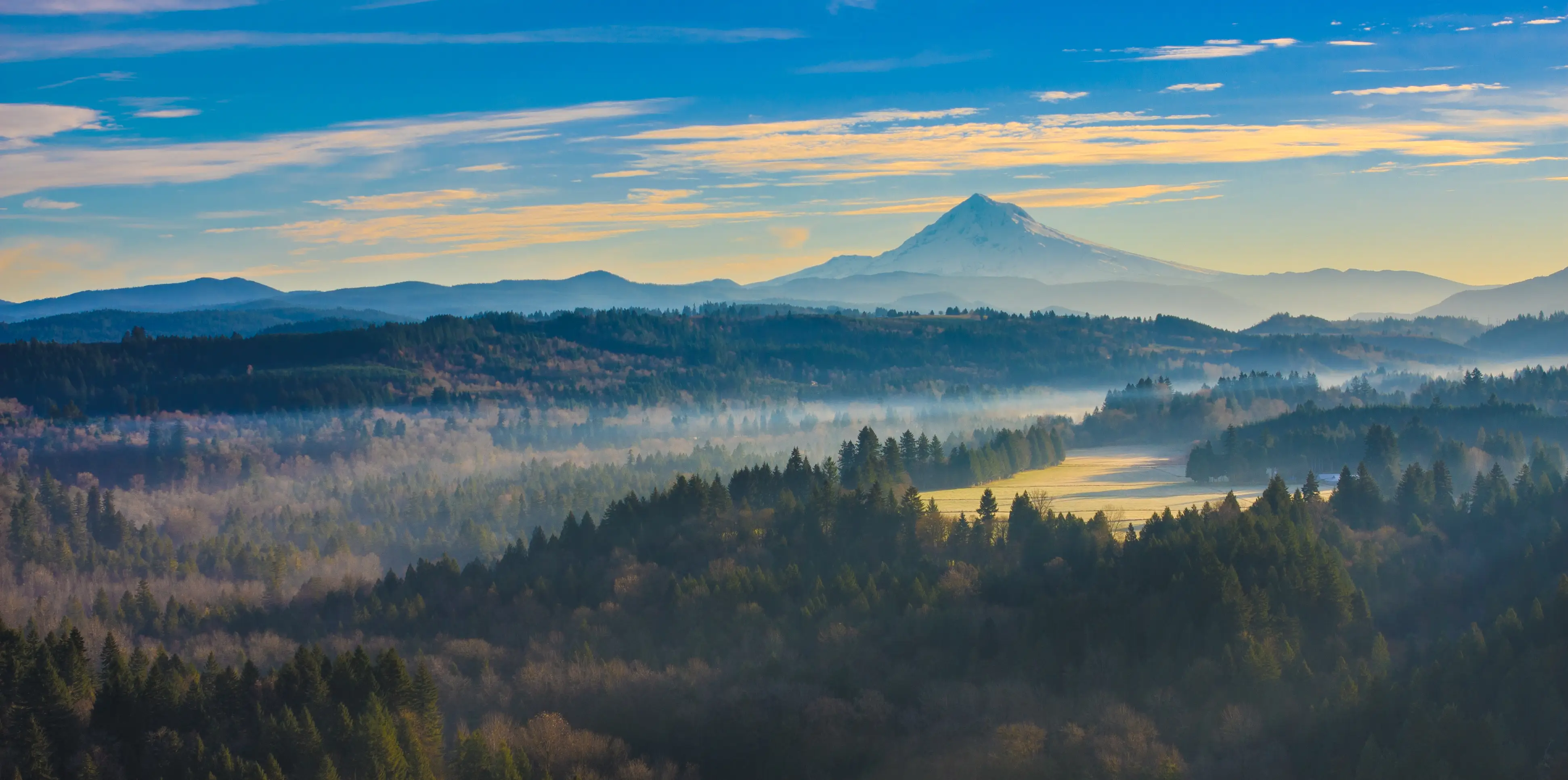
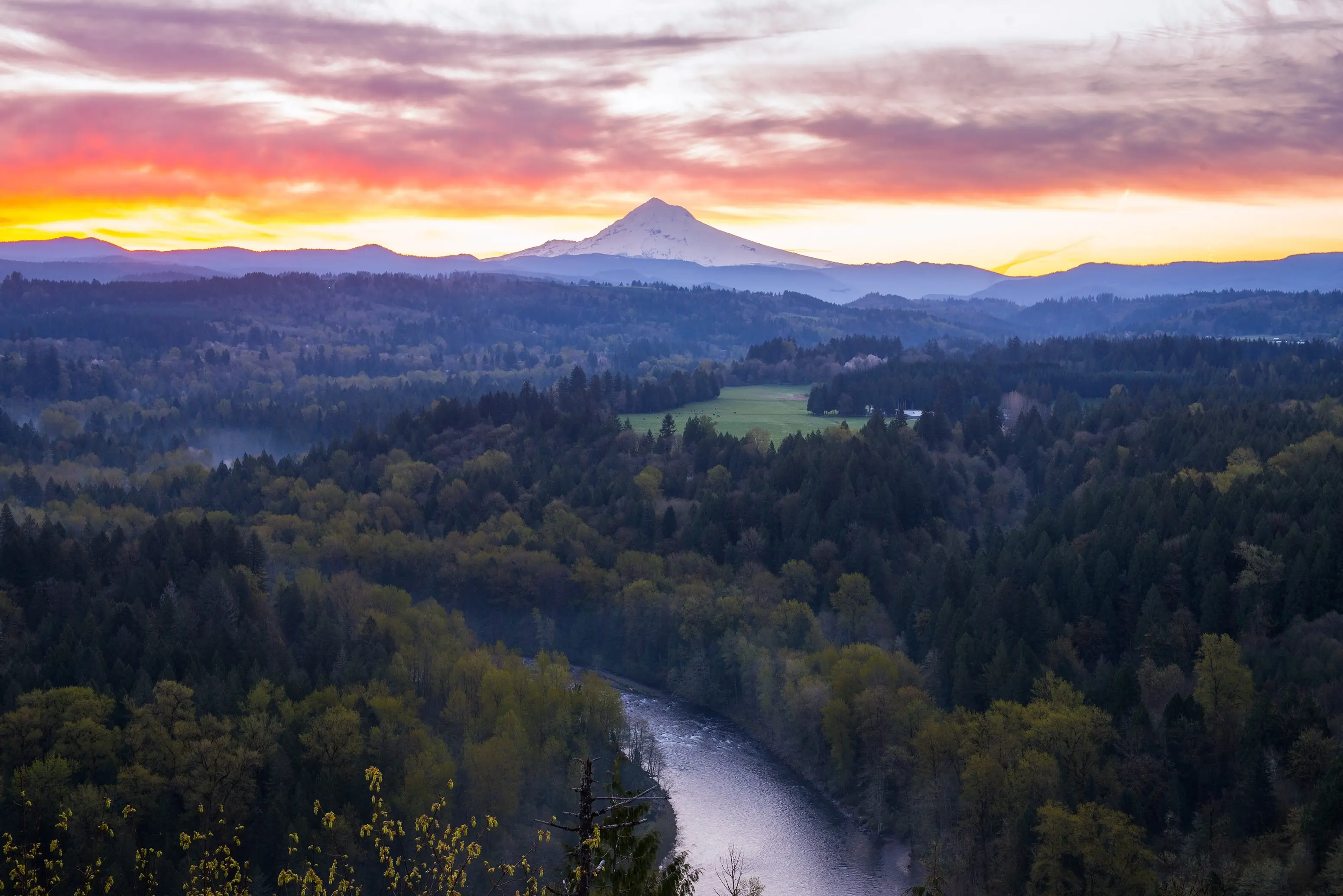
Clackamas County maintains a 30-acre property north of Sandy with 1,600 feet of Sandy River frontage — one of the better publicly accessible river stretches in the Mt. Hood corridor. Fishing and kayaking are the primary draws, and on a clear day the view of Mt. Hood from the riverbank is the kind of thing that convinces people to stop renting in Portland and start looking at Boring listings.
Best for: Fishing, kayaking, Mt. Hood views, outdoor photography
The Springwater Corridor is not a neighborhood trail. It's a 21.3-mile paved rail trail running from downtown Portland to Boring Station Trailhead, following a former railway right-of-way through industrial districts, wetlands, wildlife refuges, and eventually into the farm fields and wooded stretches that signal the approach to Boring. Elevation gain is minimal at roughly 200 feet across the full distance, making it accessible to cyclists of most fitness levels — a point-to-point ride takes between six and eight hours, though most locals ride shorter segments from the Boring end toward Gresham.
The segment from Rugg Road to Boring Station Trailhead Park — paved in 2013 — is the most scenic portion of the route, moving through woods, fields, and orchards with regular amenity stops. Dogs are welcome on-leash throughout. The corridor is open year-round, and birding along the eastern section draws a dedicated community that shows up on rainy February mornings in a way that surprises newcomers. There is an active proposal to extend the trail further, connecting the Springwater via the Cazadero Trail to the Pacific Crest Trail — a project that, if completed, would make Boring's trail system genuinely extraordinary.
Looking to buy in Boring? Estimate your payment.
Enter your numbers to see an estimated monthly mortgage payment.
Estimate only. Excludes HOA fees and mortgage insurance.
Boring has no municipal aquatic center or community recreation center of its own — it's a community of fewer than 2,000 people, and standalone facilities of that scale aren't typically viable at this population. Residents use North Clackamas Aquatic Park (7300 SE Harmony Road, Milwaukie, OR) as the primary regional option. The 45,400-square-foot indoor facility opened in 1994 and houses Oregon's only indoor wave pool — called "Big Surf" — alongside a lap pool, dive well, children's splash area, and a 29-foot indoor rock climbing wall. The main pool is maintained at 86 degrees and runs from zero to seven feet deep. Swim lessons, recreational swim sessions, and lap swim are all available, and the facility draws families from across eastern Clackamas County year-round.
For gym-based fitness, residents typically access facilities in Gresham or Sandy, both within a 15-minute drive of most Boring addresses.
| Destination | Distance from Boring | Highlights |
|---|---|---|
| Sandy Ridge Mountain Bike Trail System | ~12 miles east | Mt. Hood National Forest, flow trails, expert terrain |
| Mt. Hood National Forest | ~20 miles east | Hiking, skiing, snowshoeing, waterfalls |
| Timberline Lodge / Trail | ~35 miles east | Year-round skiing, Pacific Crest Trail access |
| Multnomah Falls / Historic Columbia River Hwy | ~25 miles north | Waterfall corridor, hiking, scenic drives |
| North Clackamas Aquatic Park | ~20 miles northwest | Indoor wave pool, lap swimming, climbing wall |
| Oxbow Regional Park | ~10 miles north | Sandy River canyon, camping, old-growth forest |
| Rooster Rock State Park | ~22 miles north | Columbia River beach, windsurfing, hiking |
Local Expert Takeaway: Boring's most underrated outdoor asset is the Springwater Corridor terminus at Boring Station Trailhead — and it matters for buyers because trail access at the front door of a $581,000 property is genuinely rare in the Portland metro. If you're comparing Boring to Damascus or Cottrell, ask yourself which one lets you ride a paved trail to a Portland coffee shop. That connectivity shapes resale value more than people expect, and it's the reason trail-oriented buyers typically compete harder for homes near SE Dee Street than anywhere else in the 97009 zip code.
Does Boring have its own parks department?
Boring operates as an unincorporated community, which means most parks and recreation infrastructure is managed at the county level through Clackamas County Parks. Boring Station Trailhead Park is the primary community-managed outdoor asset within the town itself.
Is the Springwater Corridor safe to use year-round?
The Boring-end section of the Springwater Corridor — particularly from Rugg Road to the Boring Station Trailhead — is generally well-maintained and open year-round. It passes through open farmland and wooded areas rather than urban stretches, which most trail users find to be among the safer and more pleasant segments of the full corridor.
What outdoor recreation is closest to Boring for families?
Tickle Creek Trail is the most family-accessible option immediately adjacent to Boring, offering a flat wooded walk with creek crossings that works well with younger children. Barton Park on the Clackamas River is the top pick for summer family outings with more space and river access.
Explore the full Boring series: The Ultimate Boring Relocation Guide · Is Boring Safe? · Cost of Living in Boring · Best Neighborhoods in Boring · Boring Schools & Family Life · Boring Youth Sports · Boring Parks & Recreation · Retiring in Boring · 1031 Tax-Deferred Exchange in Boring · Boring First-Time Homebuyers Guide · · Moving to Boring from California
Tell us what you need help with and we'll connect you with local resources.

About the Author
Todd Davidson is the founder of Living in Oregon and Living in Washington, where he publishes in-depth city guides, neighborhood resources, and local market insights covering more than 180 communities across the Pacific Northwest. While his background is in home financing and real estate, he created these digital platforms to help families research and compare regions before making a move.