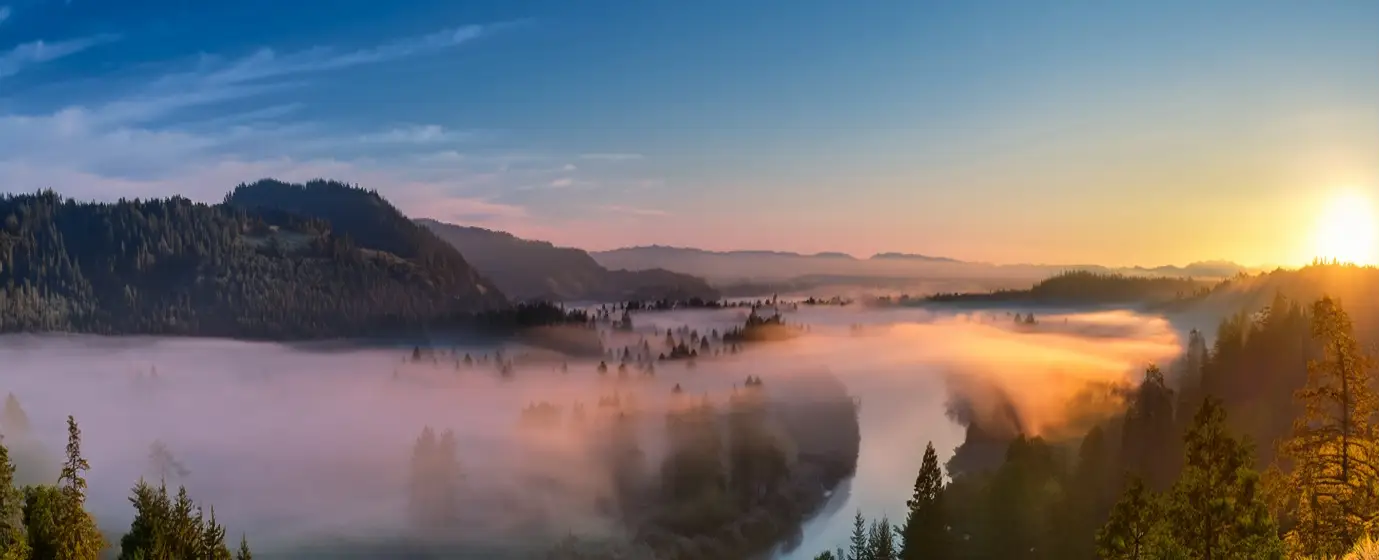
Mt Hood / Columbia Gorge · Oregon
Living in Boring, Oregon: The Ultimate Relocation Guide (2026)
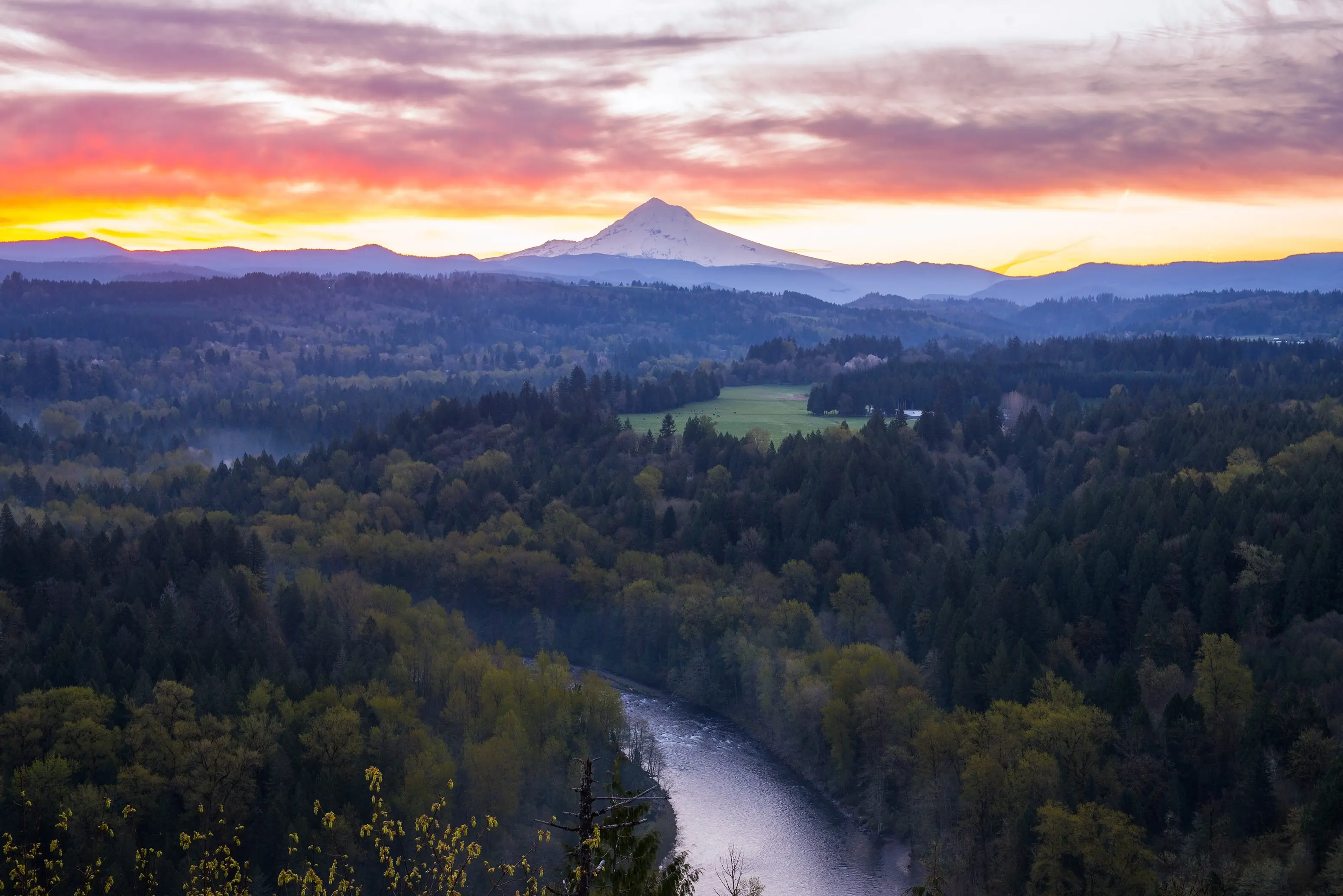
Maybe you've been priced out of Portland proper and someone in a Facebook group mentioned Boring as the move nobody talks about. Maybe you typed "affordable homes near Portland with good schools" into Google and ended up here, skeptical of both the name and the premise. Or maybe you drove out along Highway 212 one weekend, passed the famous "Boring — The Most Exciting Place to Live" sign, and thought: wait, this actually looks like something. Whatever brought you here, the reality of Boring, Oregon is harder to summarize than its name suggests. It is genuinely rural, genuinely affordable relative to the suburbs ringing Portland's south side, and genuinely disconnected from the urban grid in ways that matter daily. The tension at the center of every Boring buying decision is the same: how much of Portland's convenience are you willing to trade for elbow room, lower prices, and the kind of quiet that doesn't show up on a spreadsheet?
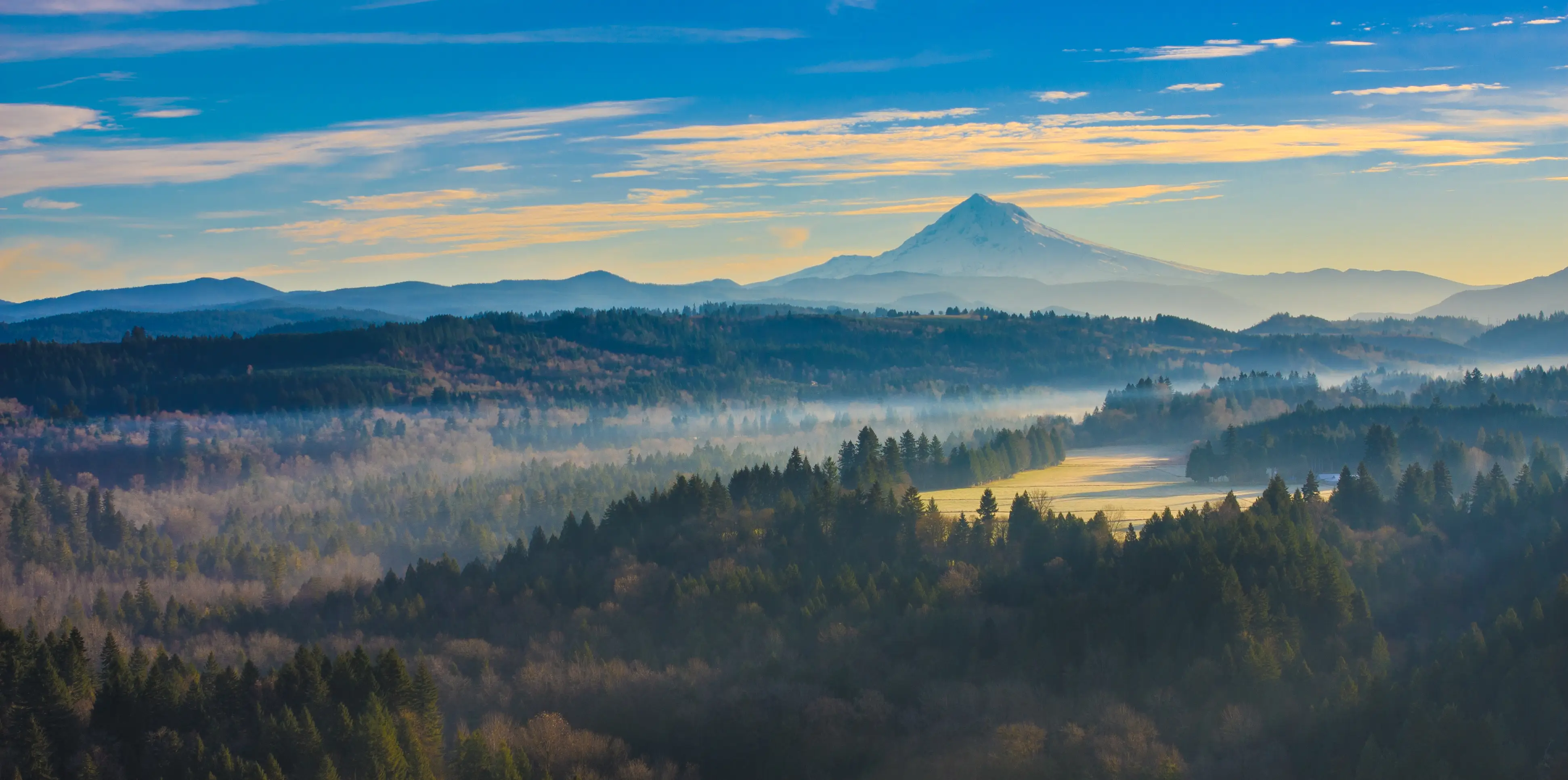
Boring sits about 12 miles southeast of downtown Portland along Oregon Route 212, tucked into rolling hills and volcanic soils at the base of the Cascades. It is an unincorporated community — a Census-Designated Place, not an incorporated city — which means no city hall, no city police force, and no city services delivering to your door. The Springwater Corridor, one of the region's most beloved multi-use trails, begins right here at the Boring Station Trailhead and runs 21 miles west to the Willamette River, which tells you something about this town's relationship to the outdoors. Damascus, Sandy, Gresham, Clackamas, and Oregon City form the ring of nearby communities, each offering varying levels of retail access, none of them replicating what you'd find inside Portland's urban core.
This guide is built for people making a real decision: whether Boring's median home price of $581,000, its 35-minute commute to downtown Portland, and its small-town rhythms actually match the life you're trying to build. We'll walk through who belongs here, what daily life looks like on the ground, the neighborhoods worth understanding, and the honest reasons some buyers fall in love with it while others quietly list their home two years later.
Not every buyer is right for Boring, and that's not a knock — it's useful information before you drive out to an open house. The table below breaks down who tends to thrive here and why.
| Best For | Why |
|---|---|
| Remote workers | Work-from-home flexibility eliminates the 35-minute commute penalty entirely; larger lots and quiet streets reward people home all day |
| Families with kids | Oregon Trail School District ranks among the top in the state; Naas Elementary and Boring Middle School both earn strong marks; outdoor access from day one |
| Move-up buyers from east Portland | Gresham and SE Portland equity stretches significantly further here; land and newer construction are both more accessible |
| Outdoor enthusiasts | Springwater Corridor trailhead, Sandy River access, and Mount Hood within 45 minutes create a lifestyle most suburbs can't match |
| Buyers seeking low property taxes | At 0.76%, Boring's effective rate runs below both the Oregon and national medians |
| Retirees on a fixed income | High homeownership rate, low poverty rate, small-town pace, and no state tax on Social Security income |
On a Tuesday morning in Boring, the defining sensation isn't quiet — it's space. The roads are wide, the properties are deep, and the neighborhood rhythms feel more like a small farm community than a Portland suburb. There is no traditional town center in the urban planning sense: no walkable main street, no coffee shop district, no transit hub. The Boring Station Trailhead area along Southeast Richey Road functions as something of a community anchor, with the Springwater Corridor drawing cyclists and walkers year-round, but the commercial fabric is thin. Your nearest grocery run is almost certainly in Gresham or Sandy, and you'll learn quickly which direction makes more sense based on where you land.
The 35-minute commute to downtown Portland is real under normal conditions — Highway 212 to I-205 is the primary route, and it performs well off-peak. What buyers sometimes don't model for is the chokepoint at the 212/SE Foster Road merge during afternoon rush hour, where a predictable slowdown can stretch that number closer to 50 minutes on weekdays between 4:30 and 6 p.m. The commute hacks locals rely on include departing downtown by 3:45 or later than 6:15, and using the Springwater Corridor itself as a cycling commute option into Gresham for connection to TriMet — unconventional, but popular with the outdoor crowd.
What surprises most people after six months of living in Boring is how completely they stop thinking about Portland's cultural infrastructure. The assumption going in is that you'll miss it. The reality for many is that the Sandy River, the Dodge Park picnic area, the Tickle Creek trails, and the social gravity of the Boring Lava Dome viewpoints become the weekend itinerary, and the trip to Portland starts feeling optional rather than necessary. Neighbors here tend to know each other in the way that residents of truly small communities do — not in a surveillance way, but in the sense that your kids play together, your dogs know each other by name, and the Boring Community Church serves as a genuine gathering point for a meaningful slice of the population.
The community's median household income of approximately $158,625 is notable — it runs higher than West Linn, traditionally considered one of the metro's wealthier communities, and it reflects a homeowner class that chose rural intentionally. This isn't a community of buyers who couldn't afford elsewhere; it's largely a community of buyers who decided elsewhere wasn't what they wanted.
The Springwater Corridor changes daily life in a measurable way. Starting at the Boring Station Trailhead on Southeast Richey Road, the trail runs 21 miles to the Willamette River's Eastbank Esplanade — paved, car-free, and accessible from your neighborhood. Families use it for weekend rides, commuters use it for cycling segments into Gresham, and dog owners treat it as the default morning routine. No other suburb at this price point offers this level of multi-use trail access right out the front door.
The school district is a genuine strength, not just a marketing line. Oregon Trail School District consistently ranks in the top 15 districts statewide by multiple measures, and Sandy High School — the primary high school for Boring students — reported a graduation rate of 96.3% for the class of 2025. The CTE pathway at Sandy High is exceptional even by Oregon standards, offering eight distinct Programs of Study and a middle college track where students can graduate with up to 72 college credits already banked. For households with school-age children, this is not a concession — it's an upgrade over many closer-in options.
The property tax picture is quietly significant. At an effective rate of approximately 0.76%, Boring's tax burden runs below the Oregon state median of 0.87% and well below the national median. On a $581,000 purchase, that translates to roughly $4,415 annually — a number that frees up meaningful monthly cash flow compared to equivalent purchases in higher-rate jurisdictions. Oregon's Measure 50 caps annual assessed value growth at 3%, which means your tax bill grows predictably and slowly over time.
The outdoor access compounds in a way that doesn't show up on any comparison table. Boring sits within 45 minutes of Mount Hood's ski areas, 20 minutes from the Sandy River's swimming holes and fishing runs, and adjacent to Dodge Park — one of Clackamas County's most beloved river parks — on the Bull Run River. Pleasant Valley Park and Tickle Creek Park add local trail and picnic options without requiring a drive. For households that organize their lives around the outdoors, this geography is the entire point.
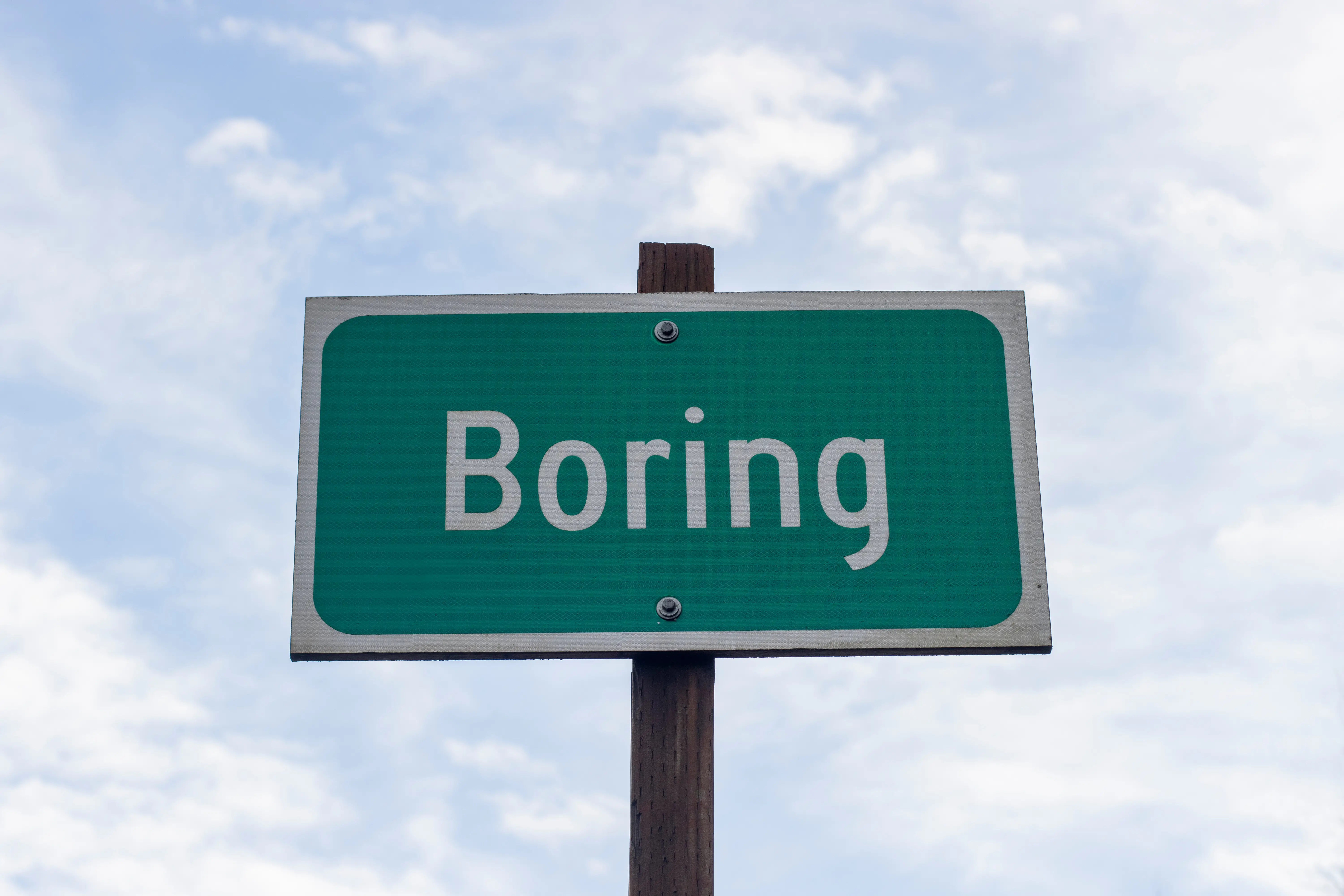
Finally, there's the community character itself. The North American Bigfoot Center on Highway 212 — an actual attraction with a serious research collection and no shortage of regional personality — tells you something about how Boring relates to itself. The town has always leaned into its own absurdity with good humor, from the "Boring, Oregon" signage to the official sister-city relationship with Dull, Scotland and Bland, Shire, Australia. Residents don't take themselves too seriously, and that cultural tone tends to self-select for a certain kind of neighbor.
Looking to buy in Boring? Estimate your payment.
Enter your numbers to see an estimated monthly mortgage payment.
Estimate only. Excludes HOA fees and mortgage insurance.
Boring's retail and service infrastructure is thin. There is no grocery store, no pharmacy, and no urgent care clinic within the community itself. Every essential errand requires a drive — typically 10 to 15 minutes to Gresham or Sandy depending on your location in the area. For buyers accustomed to suburban walkability or even suburban drivability, the first few months involve recalibrating assumptions about what "running a quick errand" means. This is the most common adjustment new residents cite, and it doesn't fully resolve with time — it just becomes the baseline.
The real estate market's thin transaction volume creates pricing volatility that can be disorienting. With so few homes changing hands in a given month, a single large-lot sale or a distressed property can swing reported medians dramatically in either direction. The practical takeaway for buyers: comparable analysis matters more than market-level statistics in Boring, and working with an agent who knows the specific roads and lot conditions is not optional — it's essential.
Why some people leave Boring generally comes down to one of two things: teenagers get restless without walkable social infrastructure, or remote work arrangements change and the commute suddenly becomes non-negotiable. Families with high schoolers who want to walk to a coffee shop, a movie theater, or friends' homes will find Boring difficult to navigate without a driver's license. If your household's quality of life depends on spontaneous social access for adolescents, that's a real limitation to weigh before closing.
Internet infrastructure in parts of the Boring area — particularly on properties with long rural driveways or acreage — can vary significantly. Fiber availability is not universal, and satellite-dependent connections remain a reality on some parcels. For remote workers especially, verifying connectivity at the specific address before making an offer is a step that should not be skipped.
North Boring runs along the upper stretches of Highway 212 and the roads north of Southeast Richey Road, offering some of the area's more spacious rural properties and direct Springwater Corridor access. Lot sizes here tend toward the generous end, with many parcels at half an acre or larger. The city-wide median applies broadly here, though parcels with acreage and outbuildings push above that range. The trade-off is distance: North Boring sits farthest from Sandy and requires navigating the most rural road network for daily errands.
Best for: Remote workers and outdoor-focused households who prioritize space over convenience.
Central Boring clusters around the intersection of Highway 212 and Southeast Richey Road — as close to a community center as the CDP offers. The Boring Station Trailhead, Boring Bark Park, and the small commercial pocket along 212 are all within reach here, making it the most "connected" part of town in relative terms. Properties here tend to be slightly smaller lots than North Boring but come with the practical advantage of the shortest drive to Gresham retail. For buyers wanting to be in the heart of whatever Boring considers its heart, this is the target zone.
Best for: Buyers who want Boring's rural character without maximizing rural isolation.
The Sandy River corridor encompasses properties along the river's western reaches as it flows toward the Columbia, offering direct water access that's genuinely rare at any price in the metro region. Homes here range widely depending on lot size and proximity to the riverbank, with premium parcels commanding prices well above the area median. Flood zone awareness is essential — buyers should verify FEMA flood designation at the parcel level before making any offer. What you get in exchange is access to some of the most sought-after recreational water in the Pacific Northwest, effectively from your backyard.
Best for: Buyers for whom water access is the non-negotiable feature, with appropriate flood risk tolerance.
Southeast Richey Road functions as one of Boring's primary residential arteries, with a mix of established ranch-style homes, newer construction on subdivided lots, and properties with workshop space that appeal to tradespeople and hobbyists. The road's connection to the Springwater Corridor makes it a draw for cyclists in particular. Price points along Richey Road tend to track closely with the area-wide median, making it one of the more consistently priced corridors for buyers trying to calibrate expectations.
Best for: Families with kids and tradespeople who want practical connectivity and trail access.
Telford Road runs south of the 212 corridor into quieter hill country, with properties that typically feature larger lots and older home stock. The agricultural character is more pronounced here than in Central or North Boring, and the road itself reflects that — lower traffic, more gravel, more distance between neighbors. Buyers who want genuine rural quiet with reasonable access to the 212 corridor tend to find Telford Road properties compelling, particularly when budget allows for a parcel with both a home and usable land.
Best for: Buyers seeking agricultural-adjacent quiet with manageable commute access via Highway 212.
The Dodge Park neighborhood takes its name from Clackamas County's Dodge Park on the Bull Run River — one of the most popular river day-use areas in the metro region. Residential properties in this corridor tend to be larger-lot rural parcels with significant tree cover, and the neighborhood draws buyers who want the Sandy River area's outdoor character without the flood zone exposure. It's not a dense neighborhood in any traditional sense; think scattered rural residential with river recreation as the shared amenity.
Best for: Outdoor households who want river-area living without the premium or flood risk of direct riverfront parcels.
Cottrell sits at the southeastern edge of the Boring area, where the terrain begins its more pronounced rise toward the Cascade foothills. Properties here are often the most rural in character among the named neighborhoods, with the greatest distance from the 212 commercial corridor. The tradeoff for that distance is acreage — Cottrell properties frequently include more land per dollar than closer-in options, attracting buyers who are genuinely prioritizing space over access. Cell coverage and utility infrastructure can vary more significantly at this end of the area.
Best for: Buyers who are explicitly rural-first and have remote work or flexible commuting arrangements.
Revenue Road and its surrounding properties represent one of the quieter residential pockets, with a mix of established homesteads and newer rural residential development. The name itself reflects the agricultural history of the broader Boring area. Pricing here generally aligns with the broader area median, though larger parcels with established outbuildings and water rights command meaningful premiums. For buyers who've done the Boring research and want something slightly off the beaten path even within the community, Revenue delivers that character.
Best for: Buyers who want rural residential character and don't need the community anchor of the Central Boring corridor.
| City | Best For | Median Home Price | Commute to Portland | Vibe |
|---|---|---|---|---|
| Boring | Outdoor lifestyle, low taxes, rural space | $581,000 | ~35 min | Unincorporated rural community |
| Sandy | Small-town services, Mount Hood gateway | $490,000–$530,000 | ~45 min | Incorporated small city with retail |
| Damascus | Rural residential, Clackamas County affordability | $550,000–$600,000 | ~30 min | Unincorporated, development-stage |
| Gresham | Urban amenities, TriMet access, affordability | $450,000–$480,000 | ~20 min | Oregon's fourth-largest city |
| Happy Valley | Master-planned neighborhoods, top-ranked schools | $650,000–$720,000 | ~30 min | Planned suburb, fast-growing |
| Oregon City | Historic character, Willamette access, amenities | $520,000–$570,000 | ~35 min | Incorporated city with downtown |
| Metric | Detail |
|---|---|
| Population | Approximately 1,869 (CDP) |
| County | Clackamas County |
| Median Home Price | $581,000 (mid-2026 sold data) |
| Median Household Income | $158,625 |
| Property Tax Rate | Approximately 0.76% effective rate |
| School District | Oregon Trail School District (primary) |
| Sandy High School Graduation Rate | 96.3% (class of 2025) |
| Commute to Downtown Portland | ~35 minutes via Highway 212 / I-205 |
| Springwater Corridor Access | Trailhead at Boring Station, 21 miles to Portland |
| Homeownership Rate | Approximately 80% |
Boring has a formal sister-city relationship with Dull, Scotland and Bland Shire, Australia — a trio of deliberately understated place names that launched a minor international tourism tradition in 2012. The annual "Dull and Boring Day" in August has become a genuine community celebration, drawing visitors who arrive specifically for the absurdity and stay because the town turns out to genuinely have personality. It is one of those local traditions that simultaneously makes fun of itself and takes real pride in what it actually offers, which is a fair summary of the community's overall character.
The North American Bigfoot Center on Highway 212 is not a joke, or at least not only a joke. It houses one of the more serious Sasquatch research collections in the country, with cast footprints, hair samples, and documentation from Pacific Northwest sightings dating back decades. Locals treat it with the appropriate mix of affection and amusement — it draws road-trippers who become unexpected local spending, and the people who run it are in earnest.
The Springwater Corridor functions differently than most people expect before they move here. It's not a weekend amenity — it becomes infrastructure. Boring residents use it for dog walking, cycling to Gresham for errands, connecting to TriMet, and general mental health maintenance. The trail's western terminus at the Willamette's Eastbank Esplanade means that a sufficiently motivated cyclist can commute to downtown Portland car-free, and a small but real contingent of Boring residents does exactly that.
What I would not do if moving to Boring: Buy on a rural parcel before personally verifying broadband connectivity. Fiber is not universal in the area, and on properties with long driveways or acreage setbacks from the road, the difference between a fiber-served lot and a satellite-dependent one is the difference between remote work being viable and remote work being a daily frustration. Drive to the address, confirm the specific service at that address, and get it in writing from the provider before closing. Several buyers skip this step and regret it within 90 days.
Local Expert Takeaway: Boring rewards buyers who've actually done the math rather than those chasing a rural aesthetic. The $581,000 median, 0.76% tax rate, and Sandy High School's 96.3% graduation rate are a legitimate combination that few communities in the metro can match at this price point. Concentrate your search on Central Boring and Richey Road corridors if daily convenience matters; move toward Cottrell or Telford Road only if remote work is locked in and you genuinely want maximum acreage. And verify broadband at the parcel level before you fall in love with the property — that one step saves more buyers from post-closing regret than anything else.
✅ Boring offers a rare combination: low property taxes, a top-15 school district, Springwater Corridor access, and Mount Hood within 45 minutes — at a median home price that remains below most of Portland's south and southwest suburbs.
⚠️ The honest catch: No grocery store, no walkable commercial core, and thin transaction volume that makes pricing research harder than in denser markets. The 35-minute commute has real-world variability during afternoon peak hours.
📍 The best entry point: Central Boring and the Richey Road corridor give buyers the most community connectivity and trail access while remaining closest to the area's modest commercial infrastructure on Highway 212.
Is Boring, Oregon a good place for families?
For families with school-age children and at least one flexible or remote work arrangement, Boring is a genuinely strong option. Oregon Trail School District ranks among Oregon's top performing districts, Sandy High School reports graduation rates above 96%, and the outdoor lifestyle infrastructure — from Tickle Creek Park to Sandy River access — gives kids real room to roam. The main friction point is adolescent social life, which requires a car and a driver in the absence of any walkable commercial or entertainment district.
What is the crime rate in Boring?
Boring's property crime rate runs at approximately 9 incidents per 1,000 residents — well below most Portland Metro communities. Clackamas County's violent crime rate is commonly reported around 44% below the national average. The unincorporated character of the community means Clackamas County Sheriff's Office handles coverage, and the low-density residential makeup keeps incident rates low.
How does Boring compare to nearby Sandy or Damascus?
Sandy offers the services Boring lacks — a grocery store, pharmacy, medical facilities, and an incorporated city structure — at a slightly lower median home price, with the trade-off of a longer commute to Portland at roughly 45 minutes. Damascus is closer to Portland and similarly rural in character, but still largely undeveloped and lacking Sandy's amenity base. Boring sits between them geographically and in character: closer to Portland than Sandy, more established than Damascus, but less served than either when it comes to everyday retail.
Explore the full Boring series: The Ultimate Boring Relocation Guide · Is Boring Safe? · Cost of Living in Boring · Best Neighborhoods in Boring · Boring Schools & Family Life · Boring Youth Sports · Boring Parks & Recreation · Retiring in Boring · 1031 Tax-Deferred Exchange in Boring · Boring First-Time Homebuyers Guide · · Moving to Boring from California
Tell us what you need help with and we'll connect you with local resources.

About the Author
Todd Davidson is the founder of Living in Oregon and Living in Washington, where he publishes in-depth city guides, neighborhood resources, and local market insights covering more than 180 communities across the Pacific Northwest. While his background is in home financing and real estate, he created these digital platforms to help families research and compare regions before making a move.