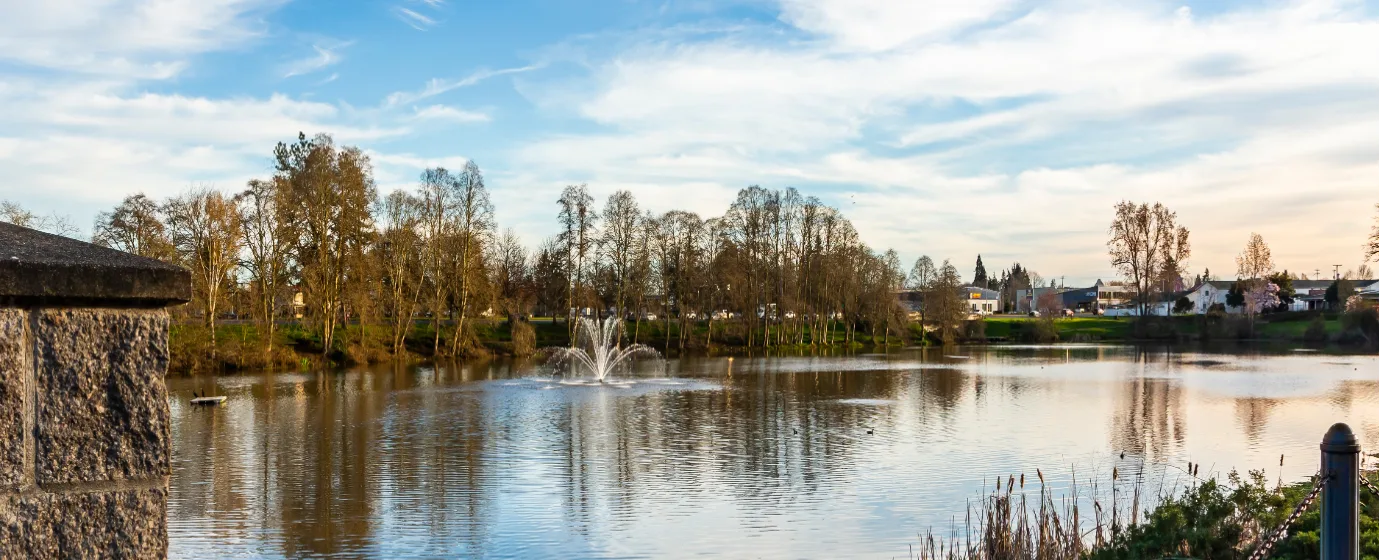
Willamette Valley · Oregon
Retiring in Albany, Oregon: Is It the Right Fit for Your Next Chapter? (2026)
Albany is not trying to be Bend. It doesn't have the mountain town mystique or the resort-town price tag that comes with it. What Albany has is a five-star rated community hospital, a median home price sitting right at $418,000, and a pace of life that retired teachers, engineers, and healthcare workers from across the Willamette Valley have quietly been choosing for decades. Whether that sounds appealing or underwhelming depends entirely on what you're looking for.
The retirees who land here and stay tend to share a common profile: they want Oregon's mild climate and natural beauty without paying Portland prices, they want a real hospital within ten minutes, and they're not particularly interested in curated resort amenities. Albany rewards the self-directed retiree — someone who will seek out the Talking Water Gardens at sunrise, drive twenty minutes to Corvallis for a restaurant they like, and feel genuinely content watching the Calapooia River from a downtown bench.
This guide covers what retirement actually looks like in Albany day to day — the tax picture, the hospital reality, the senior living landscape, how walkability plays out in practice, and how Albany stacks up against the Willamette Valley cities competing for your retirement dollars.

Oregon is frequently cited as a moderately tax-friendly retirement state, and the nuance is worth understanding before you move. The state has no sales tax, which puts real money back in your pocket on everyday purchases. But Oregon does impose income tax on most retirement income, including pension distributions and IRA withdrawals, at rates ranging from roughly 4.75% to 9.9% depending on your income bracket.
| Income / Asset Type | Oregon Tax Treatment |
|---|---|
| Social Security | Exempt from Oregon income tax |
| Public pension (Oregon PERS) | Taxable as ordinary income |
| Private pension / 401(k) distributions | Taxable as ordinary income |
| IRA / Roth IRA withdrawals | Traditional taxable; Roth generally exempt |
| Federal government pension | Taxable; limited deduction available |
| Military retirement pay | Taxable; partial exemption available at 62+ |
| Capital gains | Taxed as ordinary income |
| Property tax | ~0.97% of assessed value |
| Sales tax | None |
| Inheritance / estate tax | Oregon estate tax applies above ~$1M threshold |
For a retiree drawing $50,000 from a combination of Social Security and a 401(k), the practical effect is that the Social Security portion is shielded while the IRA or pension distribution is not. Oregon does offer a retirement income credit for taxpayers 62 and older, which phases out at higher income levels, but it meaningfully reduces the burden for middle-income retirees. On a $418,000 home in Albany, the annual property tax runs roughly $4,055 — well below what most California or Washington buyers are used to seeing on comparable homes.
Oregon also offers a Property Tax Deferral Program for seniors 62 and older (or disabled homeowners) who meet income qualifications, allowing the state to defer property taxes until the home is sold or transferred. For retirees on fixed incomes, this program can be the difference between staying in a home and being forced out by rising assessments. Compared to Washington, which has no state income tax but does tax Social Security in certain circumstances at the federal level, Oregon's no-sales-tax environment tends to favor retirees who have moderate, predictable income — especially those leaning heavily on Social Security. Higher-income retirees drawing large pension or investment distributions may find Washington's structure more favorable depending on their specific situation.
Samaritan Albany General Hospital sits at 1046 6th Ave SW and has been the medical anchor for this region since 1924. The 79-bed acute care facility holds a Level III trauma designation — meaning it can stabilize and manage most emergency presentations, though complex trauma requiring neurosurgical or cardiac intervention is typically transferred to a Level II or Level I center. What sets this hospital apart for a community its size is its CMS five-star quality rating, making it the first Samaritan-affiliated hospital to earn that designation. U.S. News rates it high-performing in both hip and knee replacement — two of the procedures most relevant to an aging population — and 90% of patients indicate they would recommend the hospital to others.
The broader Samaritan network adds meaningful depth. Within Albany's city limits, retirees have access to Samaritan Hematology & Oncology Consultants on 7th Ave SW, Samaritan Kidney Specialists on Elm St SW, Samaritan Medical Group Endocrinology on 7th Ave SW, orthopedic care through Samaritan Medical Group, and primary care through both the Heartspring Wellness Center on Pleasant View Way NW and the North Albany clinic on Hickory St NW. Urgent care centers operate in both North Albany and South Albany for lower-acuity needs. The practical implication is that most routine and specialty care stays in Albany — you're not making constant drives to Corvallis or Portland just to see a specialist.
For anything requiring the resources of a major academic medical center, Good Samaritan Regional Medical Center in Corvallis is roughly seven miles south and carries a Level II trauma designation with 188 beds. Oregon Health & Science University in Portland — the state's primary academic medical and research hospital — sits about 75 miles north, accessible via I-5. It's a realistic same-day drive for specialized consultations. One notable development: Washington-based MultiCare Health System announced in 2025 its intention to acquire Samaritan Health Services, which could bring additional resources and network connections to the region over the coming years.
With 31 senior living communities spread across the city, Albany has a depth of options that surprises most people researching the mid-valley. The average monthly cost across community types runs approximately $4,448 — below Portland metro comparables and competitive with Corvallis. Independent living communities in Albany carry an average resident rating of 4.2 out of 5 stars.
| Community | Type | Location | Est. Monthly Cost |
|---|---|---|---|
| Mennonite Village | CCRC (full continuum) | 5353 Columbus St SE | $3,500–$6,500+ |
| Bonaventure of Albany | Retirement / AL / Memory Care | South Albany | $3,800–$6,200 |
| Brookdale Heritage Plaza | Independent Living | Albany | $2,800–$4,500 |
| [Area Memory Care Facilities] | Memory Care only | Various | $5,000–$7,500+ |
| [Area Assisted Living] | Assisted Living | Various | $3,500–$6,000 |
Bonaventure of Albany occupies the middle ground between independent retirement living and more intensive support. Their memory care wing offers private suites across studio, one-bedroom, and two-bedroom configurations — the only local community offering couple accommodations within memory care, which matters enormously for spouses navigating different care needs. The retirement apartments range from 751 to over 1,000 square feet. For retirees who aren't ready for a CCRC but want something more structured than an independent apartment, Bonaventure fits a gap that Mennonite Village doesn't easily fill.
Looking to buy in Albany? Estimate your payment.
Enter your numbers to see an estimated monthly mortgage payment.
Estimate only. Excludes HOA fees and mortgage insurance.
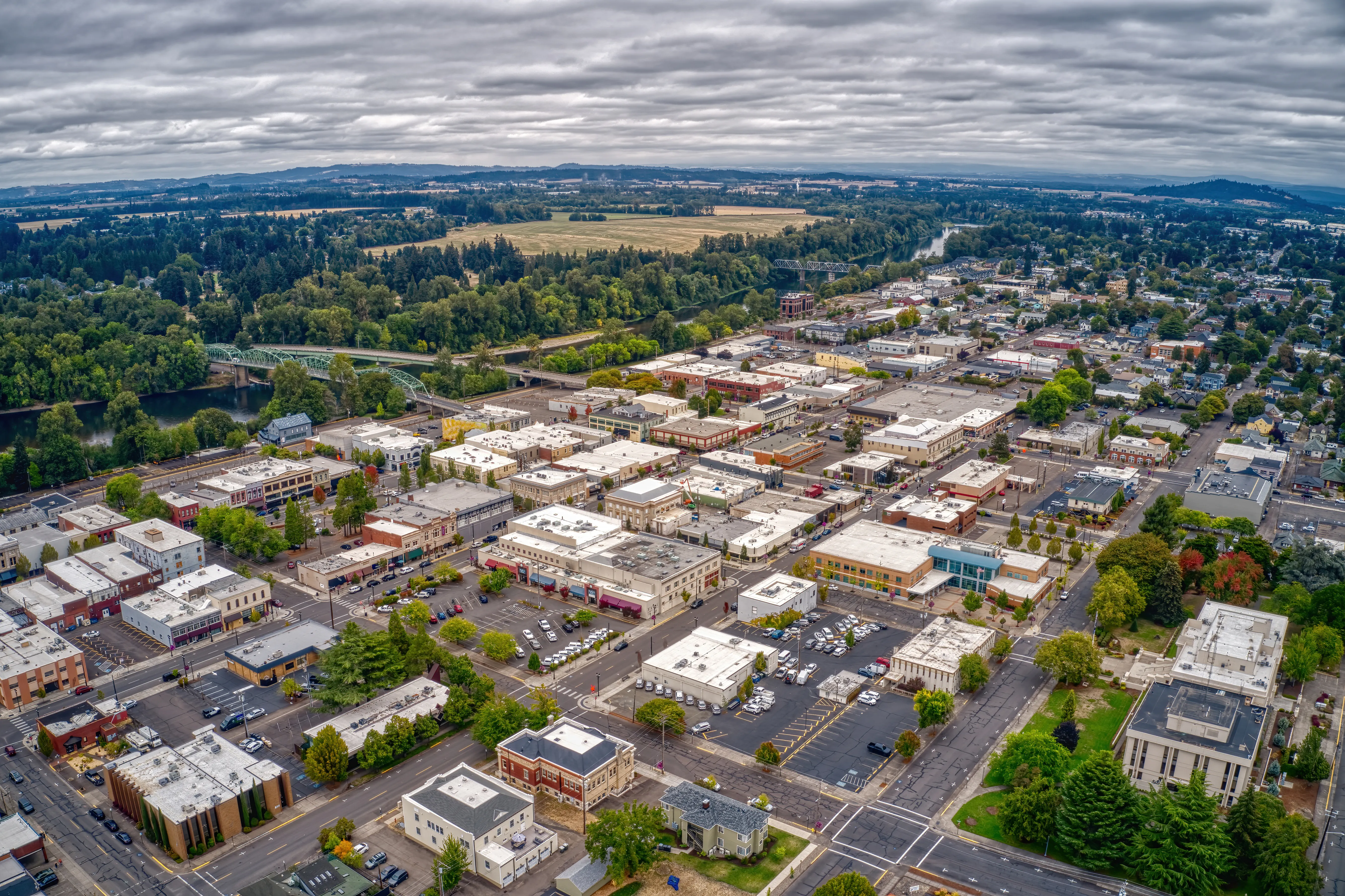
Albany carries a Walk Score of 33, which the data labels "minimally walkable" — and that's an honest assessment for most of the city. Retirees who want to walk to coffee, the pharmacy, or a farmers market will find the reality uneven depending on where they live. Downtown and the Hackleman Historic District are the exceptions, where compact blocks, historic storefronts, and a genuine walkable core exist. Monteith Riverpark, right along the Willamette, is a legitimate daily destination for morning walks. Most of the rest of the city, including South Albany and the newer subdivisions north of Oak Creek Drive, requires a car.
The cultural calendar is genuinely active for a city of 57,000. The Albany Timber Carnival, one of the oldest logging competitions in the nation, anchors the summer calendar. The Veteran's Day Parade is one of the largest in Oregon and draws crowds from across the mid-valley — it matters here in a way it doesn't in most cities. The Albany World Championship Timber Carnival typically runs in early July and fills the city with both locals and out-of-towners. The Albany Historic Carousel & Museum on First Ave offers a legitimately charming daily outing that residents never quite tire of, and the Talking Water Gardens — a constructed wetland water treatment facility that became an accidental wildlife sanctuary — is one of the region's best-kept bird-watching destinations. The Albany Regional Museum, also downtown, draws on a surprisingly deep collection of Willamette Valley history.
Getting around without a car is possible but limited. Linn-Benton Loop transit provides bus service connecting Albany to Corvallis, Lebanon, and Millersburg, with routes running through the city core. For retirees who give up driving later in life, the transit network is functional but not frequent enough to handle all daily needs. The realistic picture: a retiree who owns a car and can drive will find Albany highly convenient. One who cannot drive will find grocery access, medical appointments, and social life manageable only with planning and support.
Daily conveniences are well-distributed. The North Albany corridor along Hickory Street has grocery, pharmacy, and urgent care in close proximity. South Albany near the Pacific Blvd corridor covers similar needs. Downtown has a growing food and coffee scene anchored by the riverpark area. Corvallis — twenty minutes south — fills any gaps with a university town's selection of dining, cultural programming, and specialty retail.
| City | Median Home Price | Hospital Quality | Walkability | Senior Living Depth | Overall Retirement Fit |
|---|---|---|---|---|---|
| Albany | $418,000 | ⭐⭐⭐⭐⭐ CMS (Level III) | Low (33) | Excellent (31 communities) | ⭐⭐⭐⭐ |
| Corvallis | $530,000–$560,000 | Level II (Good Sam) | Good (62) | Good | ⭐⭐⭐⭐ |
| Salem | $390,000–$410,000 | Salem Hospital (Level II) | Moderate (45) | Excellent | ⭐⭐⭐⭐ |
| Lebanon | $315,000–$340,000 | Critical Access (Samaritan) | Low | Limited | ⭐⭐⭐ |
| Eugene | $450,000–$475,000 | PeaceHealth (Level II) | Moderate (58) | Excellent | ⭐⭐⭐⭐ |
| McMinnville | $430,000–$455,000 | Willamette Valley Med Ctr | Low-Moderate | Moderate | ⭐⭐⭐ |
Salem, to the north, is the largest city in the comparison set and offers strong senior living depth with Salem Hospital's Level II designation. But Salem's urban scale comes with more traffic and a larger-city feel that doesn't suit every retiree. Lebanon offers the deepest affordability in this group but sacrifices hospital resources significantly — the Samaritan Lebanon facility is a Critical Access Hospital, which means complex cases transfer out. For retirees who place healthcare access above all else, Lebanon's $30,000–$100,000 in savings over Albany may not feel like a trade worth making.
Local Expert Takeaway: Albany works best for retirees who prioritize healthcare quality and housing value over urban walkability. If those are your two anchor priorities, South Albany near Timber Linn Memorial Park and the neighborhoods closest to Samaritan Albany General — particularly the areas between 6th Ave SW and 34th Ave SW — offer single-story homes in the $380,000–$440,000 range with easy hospital access. Retirees who want daily walkability and don't want to drive for coffee should honestly look at Corvallis first, or focus specifically on the Hackleman Historic District or downtown Albany blocks nearest to Monteith Riverpark. The buyers who regret choosing Albany are almost always those who underestimated how much of daily life requires a car.
Is Albany a good place to retire on a fixed income?
Albany offers a compelling combination of a low median home price ($418,000), no Oregon sales tax, and a Social Security exemption from state income tax. Property taxes at roughly 0.97% of assessed value are manageable, and Oregon's senior property tax deferral program provides additional protection for income-limited retirees. The monthly cost of living, particularly for housing, runs well below Portland metro benchmarks.
How good is the hospital in Albany for retirees?
Samaritan Albany General Hospital carries a five-star CMS quality rating and is rated high-performing by U.S. News in both hip and knee replacement — two procedures central to senior healthcare. The Level III trauma designation covers most emergency needs, with Good Samaritan Regional Medical Center in Corvallis, a Level II facility, roughly seven miles south for complex cases. An extensive network of Samaritan specialty clinics operates within Albany's city limits, covering oncology, nephrology, endocrinology, orthopedics, and primary care.
How does Albany compare to Corvallis for retirement?
Albany and Corvallis are closely linked — twenty minutes apart, sharing the Samaritan hospital network — but they attract different retirement personalities. Corvallis has more walkability, a university-town dining and cultural scene, and a slightly stronger hospital in Good Samaritan Regional Medical Center. Albany has housing costs that run $100,000–$140,000 lower, a larger and more affordable senior living market, and a quieter pace. Retirees who plan to drive and prioritize value typically prefer Albany; those who want to walk more and live in a more active urban core often choose Corvallis.
Explore the full Albany series: The Ultimate Albany Relocation Guide · Is Albany Safe? · Cost of Living in Albany · Best Neighborhoods in Albany · Albany Schools & Family Life · Albany Youth Sports · Albany Parks & Recreation · Retiring in Albany · 1031 Tax-Deferred Exchange in Albany · Albany First-Time Homebuyers Guide · · Moving to Albany from California
Tell us what you need help with and we'll connect you with local resources.

About the Author
Todd Davidson is the founder of Living in Oregon and Living in Washington, where he publishes in-depth city guides, neighborhood resources, and local market insights covering more than 180 communities across the Pacific Northwest. While his background is in home financing and real estate, he created these digital platforms to help families research and compare regions before making a move.